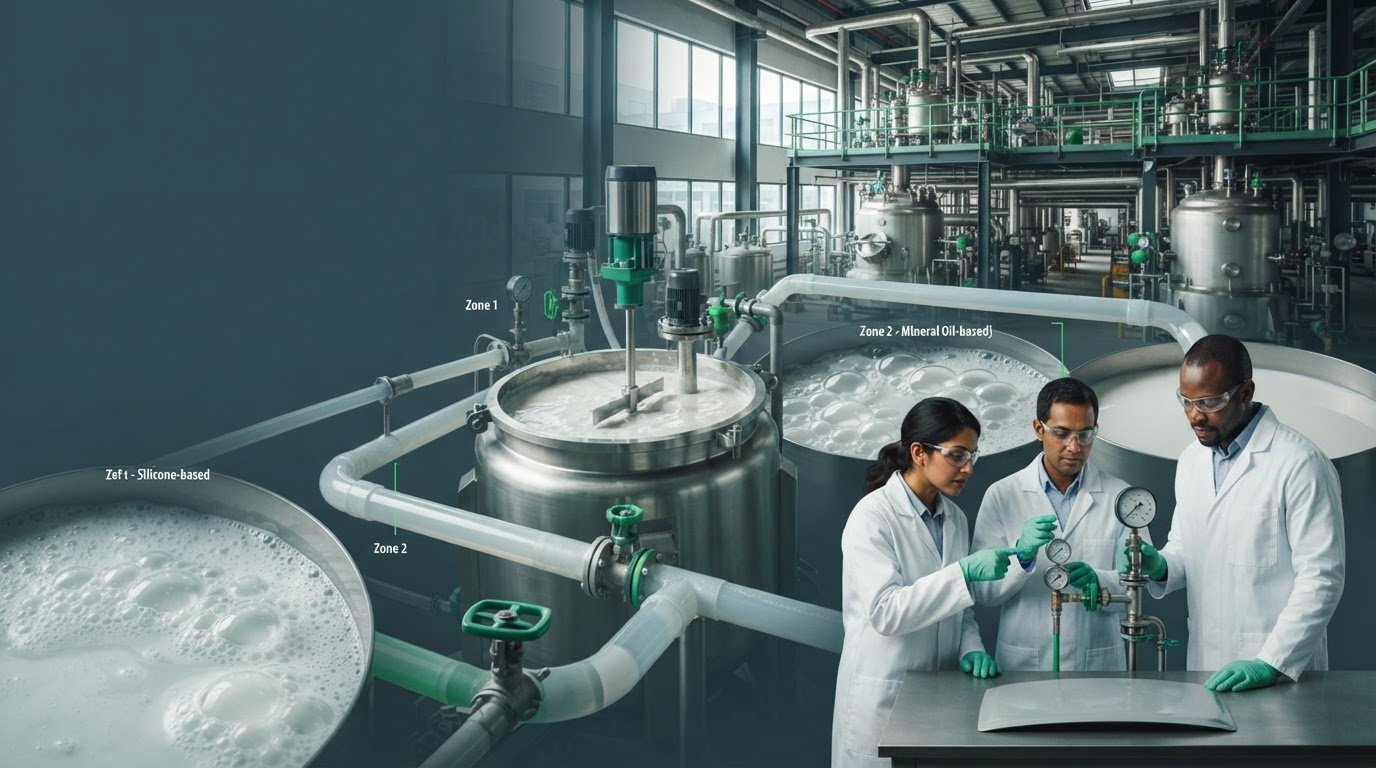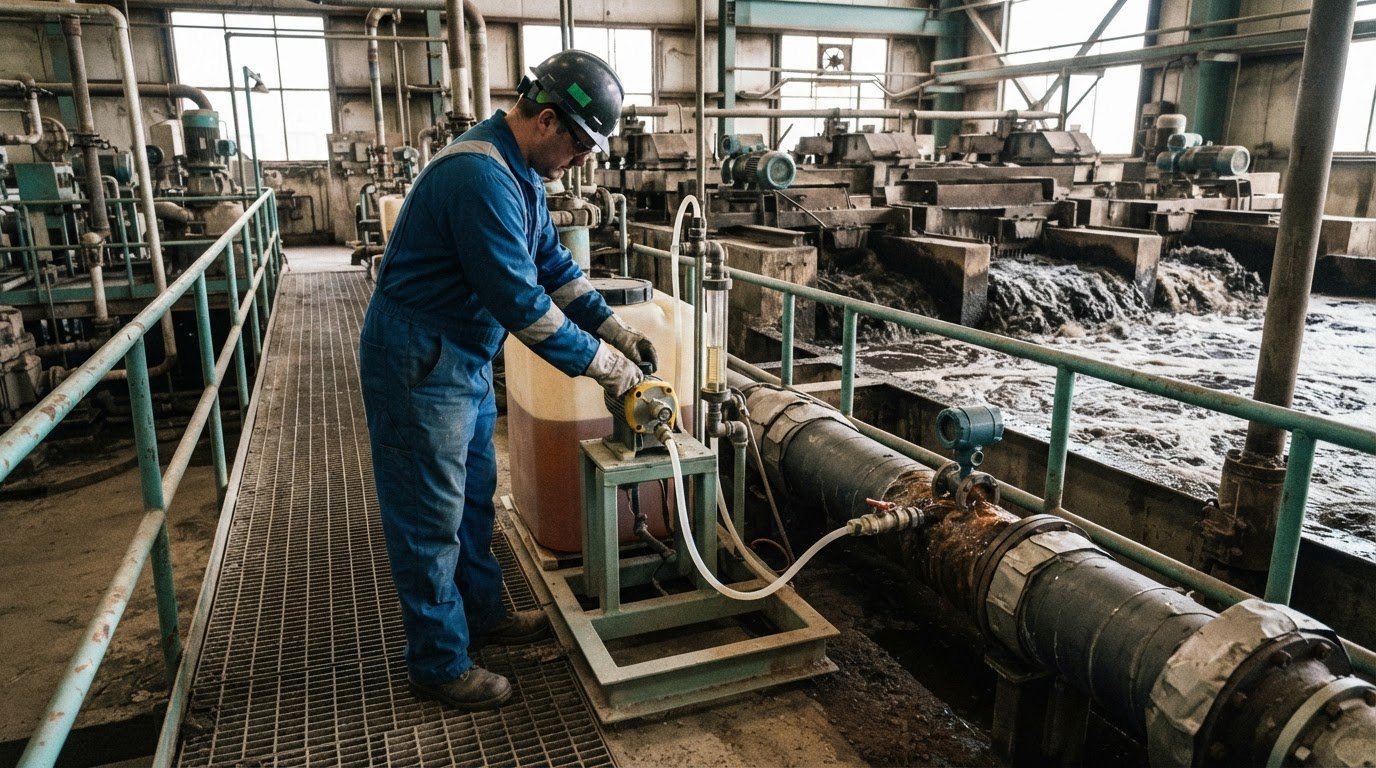



Foam control in coatings is not a single-stage fix. Silicone defoamers for industrial coatings use silicone-based ingredients to break surface foam and release entrained air. They address bubbles that may form during production, filling, or application. Their low surface tension helps them spread through foam and disrupt it.
Foam is more than a surface issue. Bubbles trapped within a coating can affect the finished film and its protective performance. The right approach depends on the coating system and when the foam forms, so a defoamer that works at one stage may not suit another.
This article explains what silicone-based defoamers are, how they work, where they are used in coating production and application, and what to consider when choosing one. Formulation compatibility and production stage matter when balancing foam control with surface quality.
Key Takeaways
- Track where foam develops, from mixing and filling through application, because its source and impact can differ by stage.
- Match the defoamer to the coating system and application method; a solution that works in one formulation may not suit another.
- Compare surface-foam knockdown with entrained-air release when assessing performance, and watch for effects on the finished film.
- Use controlled testing to assess foam behavior and recoating performance before settling on a formulation and addition point.
- Explore how silicone-based chemistry fits into coatings, alongside the distinct factors that guide selection for water-based, solvent-based, and powder systems.
Foam control during coating production and application
Foam can enter a coating during mixing, filling, or application, then remain as bubbles in the wet film. Effective control depends on where it forms, the coating’s liquid phase, and the conditions that keep bubbles stable.
Foam Formation in Coatings
Foam forms when gas bubbles are separated by thin liquid films, called lamellae, creating a large gas-liquid interface. In coatings, surfactant molecules can gather at this interface and lower interfacial tension, helping stabilize bubbles. In aqueous systems, electrical repulsion between similarly charged surfactant molecules can also slow the drying and collapse of foam films.
Mixing can draw air into the liquid during manufacture, while filling and application can introduce or spread bubbles later. The Gibbs-Marangoni effect helps explain why a stretched lamella can resist rupture: differences in surface tension draw water and surfactant toward the thinner region. Persistent bubbles may leave surface defects and affect both appearance and protective performance.
Foam Control Across Coating Systems
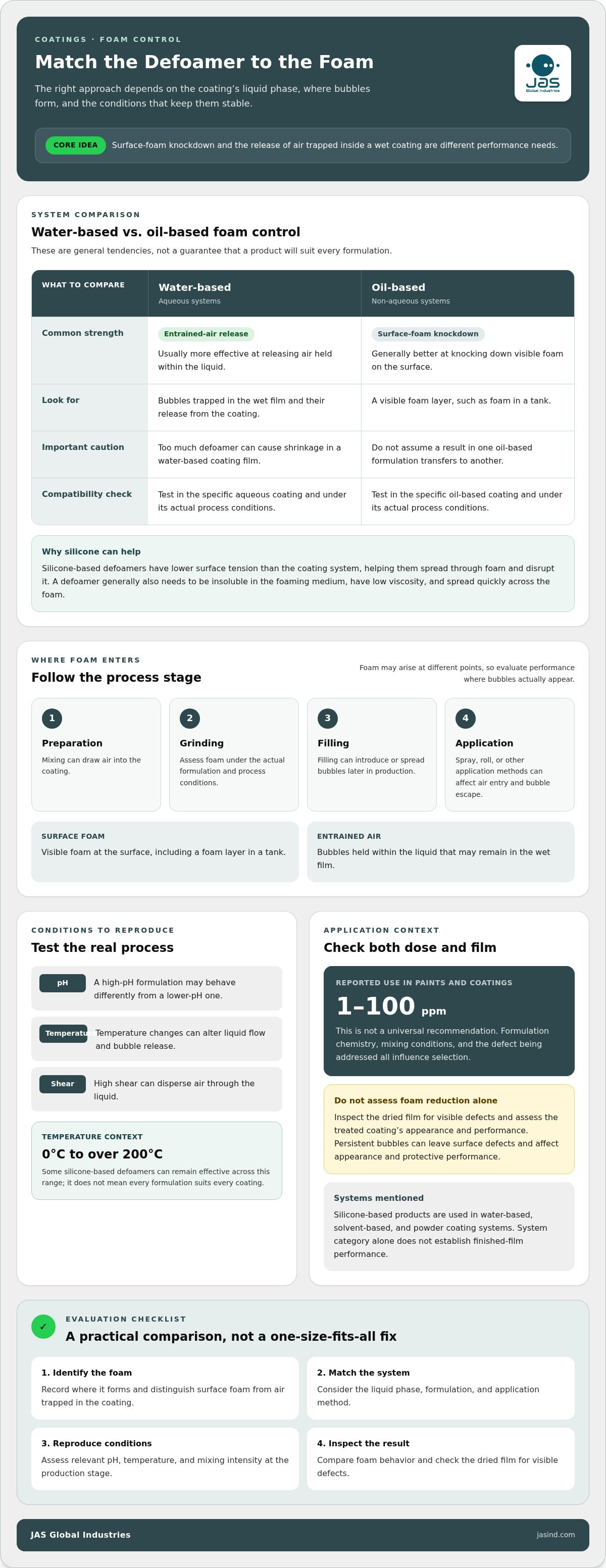
Water-based and oil-based coatings need foam control suited to their different liquid phases and foam behavior. Water-based defoamers are usually more effective at releasing entrained air, while oil-based defoamers are generally better at knocking down surface foam. This distinction matters when addressing bubbles within a wet film versus a visible foam layer in a tank.
Silicone-based defoamers can help rupture foam because their surface tension is lower than that of the coating system. A defoamer also generally needs to be insoluble in the foaming medium, have low viscosity, and spread quickly across the foam. Because coatings differ in formulation and application, performance in one water-based or oil-based system does not establish suitability in another.
Effects of Processing Conditions
pH, temperature, and shear affect how foam forms and how a defoamer performs during coating production. High shear can disperse air through the liquid, while temperature changes can alter liquid flow and bubble release. A high-pH formulation may also behave differently from a lower-pH one. Represent these conditions when assessing a formulation rather than treating them as interchangeable.
Some silicone-based defoamers can remain effective across temperatures from 0°C to over 200°C, but that range doesn’t make every formulation suitable for every coating. Consider the actual temperature, pH, and mixing intensity at each production stage. For example, foam generated under strong mixing may behave differently from surface foam that appears during container filling or roller application.
For practical foam control, assess the coating under the conditions where bubbles appear: preparation, grinding, filling, or application. Compare surface knockdown with the release of entrained air, then inspect the dried film for visible defects. These observations help distinguish a process-stage issue from a formulation mismatch and guide selection for the coating’s liquid phase and operating conditions.
Applications in wall, wood, automotive, and industrial coatings
Yes. In the United States, VOC and chemical requirements depend on the coating category and jurisdiction. Assess the finished formulation for its intended market rather than judging compliance from the silicone additive alone.
In wall coatings, foam control helps create an even surface across broad areas where pinholes and craters are visible. Wood coatings need a suitable balance: bubbles can mar a smooth finish, while excessive defoamer may cause film defects. Automotive coatings place particular importance on surface appearance, so assess foam control alongside leveling and finish quality. These examples show why one formulation may not work across every application.
Industrial coatings cover varied substrates and processes, from protective finishes on equipment to coatings applied by spray or roll. Application method affects how air enters the liquid and how quickly bubbles escape. Evaluate a silicone emulsion or another defoamer formulation in the actual coating and process. Silicone-based products are used in water-based, solvent-based, and powder coating systems, but system compatibility alone does not establish finished-film performance.
Dosage also needs context. Silicone-based defoamers are used in paints and coatings at 1 to 100 ppm, but that range isn’t a universal recommendation for every wall, wood, automotive, or industrial coating. Formulation chemistry, mixing conditions, and the defect being addressed all influence selection. Too much defoamer can cause shrinkage in a water-based coating film, so evaluate the treated coating’s appearance and performance rather than targeting foam reduction alone.
Cleaning in food facilities is a related but distinct application. Cleaning compounds may use surfactants that generate stable foam, while coating additives are designed for coating formulations. Do not assume a defoamer suitable for coating manufacture also suits cleaning chemistry. Assess each product in its intended process, including how foam forms during mixing and how the finished liquid performs during cleaning.
Oil and gas production is another industrial example. Silicone-based defoamers can suit non-aqueous foaming systems, including crude oil and oil refining, where the liquid phase differs from water-based paint. That does not make every coating defoamer suitable for oilfield conditions. Compare the operating medium and foam behavior, then select for that process rather than transferring a coating formulation unchanged.
For coating-specific selection, connect the target application with the additive’s compatibility and film impact. A focused review of coatings chemical solutions can help frame that formulation decision.
For industrial coatings, assess the complete formulation against the VOC and chemical requirements for its category and intended U.S. market.
What Is a Silicone Based Defoamer?
A silicone-based defoamer is a foam-control additive built around silicone oil or related compounds. Its formulation and compatibility determine how it performs in aqueous, solvent-based, and powder coating processes.
Silicone-Based Defoamer Properties
Modified polydimethylsiloxane, or PDMS, is used in silicone defoamers because it has lower surface tension than many coating liquids. Some formulations disperse hydrophobic silica in silicone oil, with emulsifiers helping the silicone spread through the foaming medium. Silicone-based defoamers have a surface tension of about 20-21 dynes/cm.
That combination can help a defoamer enter and disrupt foam. Silicone-based options are used in water-based, solvent-based, and powder coatings, but the carrier and formulation must suit the coating. Their reported effective temperature range extends from 0°C to over 200°C, illustrating their use across varied processes, not a universal operating guarantee.
Compatibility starts with the coating’s continuous phase. In an aqueous formulation, an emulsion can help distribute silicone through the liquid. In solvent-based coatings, the carrier must work with the organic medium. Powder coatings need a formulation designed for that system. Evaluate the actual coating and application process, since suitability in one medium does not establish performance in another.
Wax-based defoamers can suit selected coating formulations where silicone-related surface effects are a concern. Their behavior depends on dispersion and compatibility with the binder and other ingredients. Compare a wax option in the target coating rather than assuming it will deliver the same foam knockdown or air release as a silicone compound.
Silicone-boosted oil-based defoamers combine an oil carrier with silicone components to affect spreading and foam disruption. The balance matters: oil-based defoamers are generally best at knocking down surface foam, while water-based defoamers usually release entrained air more effectively. Choose according to whether the process problem is surface foam or bubbles held within the coating.
Coating Defects and Compatibility
Silicone can cause craters, fisheyes, poor adhesion, or other surface disturbances if it is incompatible, unevenly dispersed, or present in excess. These defects matter because a coating can lose finish quality even as visible foam falls. Assess foam reduction alongside the dried film’s appearance and adhesion.
Silicone oils can be effective defoamers, but they have also caused surface disturbances in paints. Do not treat faster foam collapse as the only measure of success. After application, inspect the film for craters, fisheyes, and adhesion problems.
Performance tests can measure foam height in a scaled cylinder. To assess compatibility and recoating, use high-speed mixing, then compare foam elimination time with foam suppression time. These tests help show whether a formulation controls both initial foam and its return.
For safe handling, follow the product’s safety data sheet for hazards, protective measures, spill response, and storage instructions. Keep containers closed and follow the stated storage conditions. These precautions protect product integrity and support controlled use during coating manufacture.
Selecting defoamers by system and production stage
Select a defoamer by matching the coating’s liquid phase, foam behavior, and production stage. The aim is controlled foam release without introducing defects or disrupting manufacturing.
Silicone and Non-Silicone Options
Silicone and non-silicone compounds offer different approaches to foam control, so compare them in the coating system they must treat. Modified polydimethylsiloxane (PDMS) and non-silicone solutions are both used in coatings to prevent foam or eliminate foam that has already formed. In aqueous systems, compatibility with the liquid phase and the ability to release entrained air matter. For surface foam, assess how quickly the candidate spreads and collapses bubbles.
Test at the stage where the problem occurs. For example, if high-shear grinding produces persistent foam, assess candidates after grinding, not just in an unmixed sample. A product that controls foam in the tank may still affect application or film quality. Compare foam suppression with the coating’s appearance and performance after application.
Antifoam and Defoamer Forms
Antifoams help limit foam formation, while defoamers target foam already present in the process. This distinction helps match a product to the production need: prevention during preparation or knockdown after foam appears. Silicone-based formulations may combine silicone oil with hydrophobic silica; emulsifiers can help the compound spread through the foaming medium.
Product form also affects how it enters the coating. Liquid and emulsion forms are used in coating formulations, while powder antifoams serve powder-related applications. Choose a form that can distribute through the relevant fluid without creating localized deposits. Poor dispersion may leave untreated areas or contribute to surface defects.
Dosage and Addition Methods
For general high-viscosity water-based coatings, a silicone antifoam dosage of 0.3-1.0% is recommended. In water-based coating production, the timing and amount of defoamer may depend on the formulation and process. These figures apply to the stated coating context, not every formulation or production line.
Add silicone defoamer while the aqueous coating system is mixing so it can enter the foam system. The addition point matters: early incorporation can address foam formed during preparation, while a later portion can address foam associated with grinding. Assess the result under actual mixing conditions and during application.
Production efficiency depends on controlling foam without compromising coating quality. Uncontrolled foam can interrupt manufacturing, reduce usable capacity, and add process costs. Compare foam height in a scaled cylinder, then evaluate elimination time and suppression time under high-speed mixing. Record results during preparation, after grinding, and during application to identify where the antifoam or defoamer helps.
Keep selection specific to the system: whether the coating is aqueous, whether foam is already present, and which process stage generates it. A silicone option may suit one case, while a non-silicone compound may fit another. Testing these conditions together helps distinguish effective foam control from a formulation that suppresses bubbles but causes defects.
Silicone defoamers in paints and coatings
In paints, silicone defoamers can help prevent foam formation or eliminate bubbles already present. Their value depends on controlling foam while preserving the coating’s surface and film performance.
A silicone defoamer works because its surface tension is lower than the coating system’s, helping it enter and rupture foam. This mechanism can address surface foam and air held within the paint. However, silicone oils can also cause surface disturbances in paints, so foam knockdown alone is not enough to measure success. Assess the dried film as well as the liquid coating.
For water-based coatings, compatibility matters as much as foam reduction. The formulation must disperse through the aqueous system, reach the foam, and avoid disrupting the film. Insoluble materials such as mineral oil, higher alcohols, or silicone resin are used as antifoaming agents in water-based coatings. They are not interchangeable: each interacts differently with coating ingredients and must be evaluated in the target paint.
Solvent-based coatings present a different formulation challenge. Non-aqueous systems commonly use substances insoluble in organic solvents, including lower alcohols and silicone resin, as defoamers. The choice should reflect the solvent medium and the coating’s finish requirements. A candidate that eliminates bubbles in a liquid sample may still cause defects after application, so compare foam control with the cured film’s appearance.
Dosage is another balance point. Silicone-based defoamers are used in paints and coatings at 1 to 100 ppm, a broad range rather than a single dose for every paint. Too much defoamer can cause shrinkage in water-based coating films. Begin evaluation with the coating’s foam behavior and addition stage, then assess the treated paint for surface defects, stability, and application quality.
Testing should represent how the paint is made and applied. Generate foam and measure its height in a scaled cylinder, then compare how quickly the agent eliminates foam and how long suppression lasts. To assess recoating performance, use high-speed mixing and compare foam elimination time with foam suppression time. Inspect the resulting film for craters, fisheyes, or shrinkage, not just visible bubbles.
The practical takeaway is to select for the complete coating system: water-based or non-aqueous, the source of foaming, and the required film finish. Silicone can be effective, but compatibility and dosage determine whether it controls bubbles without creating a new defect. For support with coating defoamer formulation needs, explore options suited to paints and coatings.
JAS Global Industries: Fertilizer Anti-caking Agents
JAS Global Industries provides fertilizer anti-caking agents for operations addressing caking during fertilizer handling and storage. Its fertilizer dust suppressants serve processes where dust control is a priority. These are distinct from foam management in coatings, but both involve selecting specialty chemicals for the material and process conditions.
Turn to JAS Global Industries when fertilizer handling calls for an anti-caking solution or dust suppression, rather than a coating defoamer. The company develops tailor-made formulations to align chemical solutions with operational requirements. This focused approach helps teams consider the specific process challenge and the intended role of an additive.
For fertilizer anti-caking or dust-suppression needs, contact JAS Global Industries or visit jasind.com.
Make the Next Formulation Decision with Confidence
Turn foam observations into a clear formulation brief. Record where bubbles appear, which production conditions are present, and what the finished coating must deliver. Include the coating type, application method, and any surface or adhesion issues. This gives technical discussions a practical starting point, rather than treating foam reduction as the only measure of success.
For silicone defoamers for industrial coatings, connect the foam-control objective with the coating system and the additive’s impact on the finished film. JAS Global Industries offers paints and coating defoamer solutions for this application. Share the process challenge and the performance priorities that matter to your operation.
Contact JAS Global Industries to discuss coating defoamer needs and identify a suitable path forward. A focused formulation conversation can help align process control with coating quality.
Frequently Asked Questions
Why Are Defoamers Important?
Defoamers help keep foam from disrupting production flow and subsequent quality checks. Bubbles trapped during mixing, for example, may later appear as pinholes or uneven areas, complicating inspection of the finished coating. Foam can also interfere with filling and make batch-to-batch results harder to compare. Assess whether the additive improves process consistency while maintaining the coating’s required appearance and protective performance.
What are silicone defoamers and how do they work in industrial coatings?
Silicone defoamers are additives that help control foam by disrupting bubbles in a coating. In practice, silicone defoamers for industrial coatings must work within a specific formulation and process, not just in a test liquid. Assess whether the additive addresses the source of foam without creating a new issue during application. Consider the intended finish and inspect the dried film alongside foam reduction.
Which types of industrial coatings are silicone defoamers used in?
Silicone defoamers are used in water-based, solvent-based, and powder coating systems, including paints for walls, wood, automotive, and industrial applications. The right choice depends on the coating formulation and how it is applied. For example, sprayed finishes and rolled wall coatings can introduce or release air differently. Assess the actual application process and finish requirements rather than choosing by coating label alone.
How do silicone defoamers compare with mineral oil and silicone-free defoamers?
Silicone defoamers can spread readily and disrupt foam, while mineral oil and silicone-free options work through different formulation behavior. Mineral oil is among the insoluble substances used as an antifoaming agent in water-based coatings. Silicone oils can be effective but may disturb paint surfaces. Compare candidates for foam knockdown, air release, and dried-film appearance in the same coating; none is automatically suitable for every system.
How do I choose a silicone defoamer for water-based versus solvent-based coatings?
Start by matching the additive’s carrier and compatibility to the coating’s liquid phase. In water-based coatings, assess dispersion in the aqueous formulation and whether entrained air is released. In solvent-based coatings, consider compatibility with the organic medium and control of surface foam. Then test the candidate under relevant mixing and application conditions, checking foam behavior and the dried film for surface defects.