
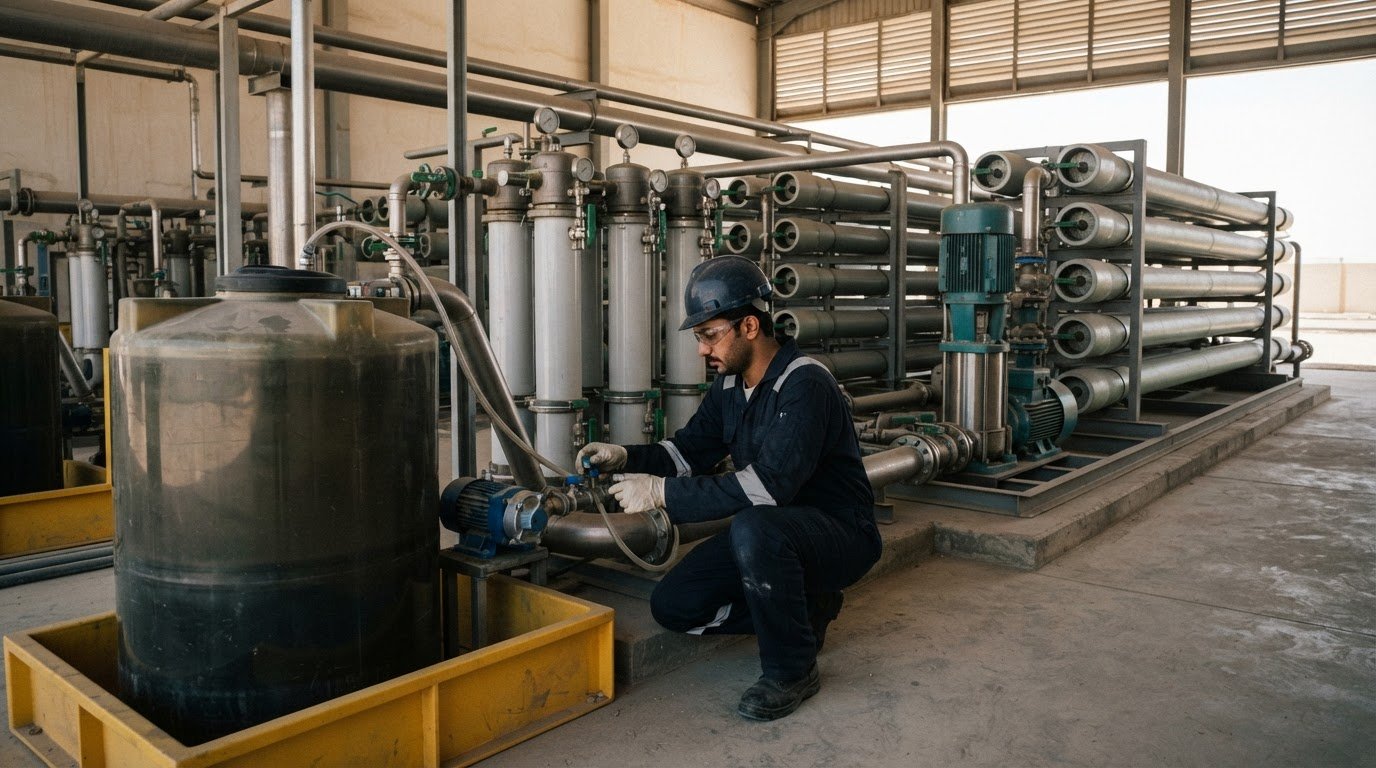
A company count is useful only when you know what it includes. The available Saudi Arabia matched-company figures record 16 companies in the 11-50 employee band, 6 in the 1-10 band, and 1 in the 501-1,000 band; they don’t establish a complete total of manufacturers. For anyone assessing a water treatment chemical company in Saudi Arabia, those figures offer a practical starting point for understanding the supplier landscape.
Choosing a water treatment chemical company in Saudi Arabia means looking beyond the company name. Treatment needs, location, ownership and organizational scale all affect how a supplier fits an industrial operation. This article explains common industrial water-treatment processes and compares the available company-profile details, including the concentration of matches in Riyadh. It also outlines how scale inhibitors, corrosion inhibitors, biocides and antiscalants address different challenges, and where specialty chemical solutions fit. The aim is to clarify the Saudi market and the factors that matter when matching chemical expertise to a facility.
How many water treatment chemical manufacturers are there based in Saudi Arabia?
There isn’t a complete manufacturer count in the available company-profile figures. As of November 6, 2026, the matched list records 6 companies in the 1-10 employee band, 16 in the 11-50 band, and 1 in the 501-1,000 band. That totals 23 companies across these bands, but it should not be read as a definitive count of manufacturers or manufacturing plants.
The market figures show the scale of demand. Saudi Arabia’s water and wastewater treatment chemicals market was valued at $1.14 billion in 2023, with an estimated value of $1.24 billion in 2024. It is forecast to grow at a CAGR of 8.50% from 2024-2034 and reach $2.80 billion by 2034. These figures describe the market, not the number of suppliers based in the kingdom.
Demand reflects the role of desalination, groundwater treatment and industrial water recycling in meeting water needs. Investment in large-scale desalination and wastewater recycling has also supported demand for treatment chemicals. Reverse-osmosis chemicals lead the market by application, while RO antiscalants are set to lead by product. In practice, these chemicals help limit scale, fouling and corrosion in membrane systems.
Industrial wastewater treatment needs vary with the incoming water and the process. A treatment system may combine chemical dosing with filtration or membrane treatment. Services can include process review, chemical selection and ongoing system support. For example, caustic soda can raise the pH of acidic wastewater and neutralize effluent before discharge. Scale inhibitors, corrosion inhibitors and biocides address other operating concerns, including deposits, equipment corrosion and microbial growth.
For facilities in Dammam and other industrial centres, the useful comparison is not simply the number of company names. Match a supplier’s treatment expertise and chemical range to the facility’s water source, process and treatment system. Plant costs and the high energy needs of desalination and wastewater treatment also shape infrastructure decisions.
Industrial chemical and biological treatment processes
Industrial treatment combines physical separation, chemical conditioning and, when wastewater contains biodegradable organics, biological treatment. In a membrane system, pretreatment controls suspended matter, while chemical dosing helps limit scaling and fouling. Reverse-osmosis antiscalants, for example, help protect membranes from mineral deposits; corrosion inhibitors help protect process equipment. The right sequence depends on feedwater, contaminants and the required outlet quality.
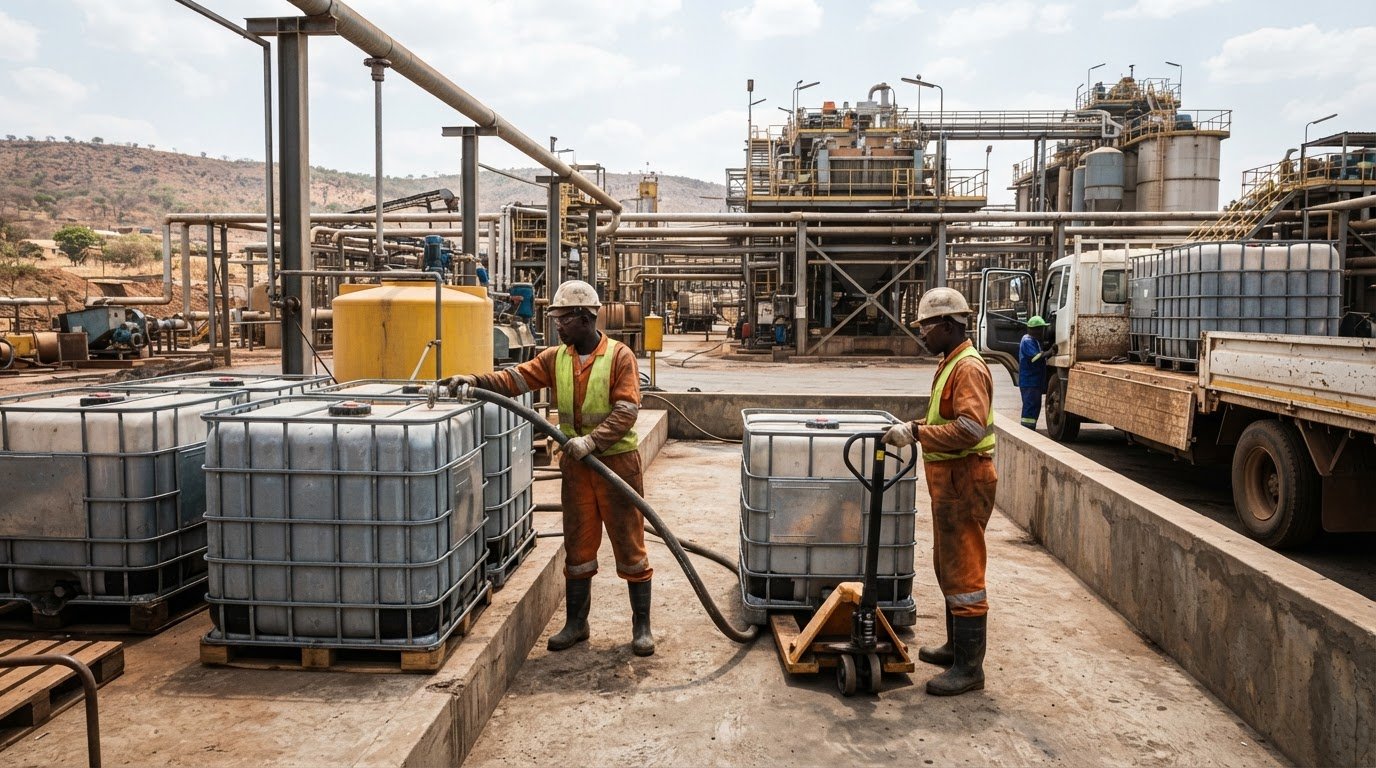
Safety, storage and transport depend on each chemical’s hazards and formulation. In Saudi Arabia, follow the current safety data sheet and the site’s applicable handling and transport controls. Keep products in labelled, compatible containers, separate incompatible materials, and provide secure storage, spill controls and suitable protective equipment. These precautions help protect workers and prevent contamination during delivery and use.
Municipal treatment often focuses on disinfection and consistent water quality. Calcium hypochlorite is used in Saudi Arabia to disinfect municipal and industrial water, control microbial growth and treat wastewater. Industrial applications vary by process: a Jubail manufacturing facility may need membrane protection, while an oil and gas operation may require corrosion control. Municipal and industrial chemical programs therefore differ according to water source, treatment objective, dosing method and system materials.
Biological treatment uses microorganisms to break down biodegradable material. Chemical treatment can support pH adjustment, disinfection or contaminant removal. Activated carbon can remove organic contaminants, chlorine, odours and colour, and help protect reverse-osmosis membranes from chlorine damage and organic fouling. These examples show why chemical selection should follow water analysis and process design, not sector labels alone.
Municipal, industrial, desalination and oil and gas projects are served by water-treatment chemical manufacturers, specialist formulators and chemical distributors. Saudi industrial-sector approvals and certifications are project-specific; procurement documentation should match the tender and intended application, with product identity, safety data and relevant quality records clearly presented. A supplier’s chemical expertise should align with the treatment train and supply plan. Explore industrial water treatment chemical solutions for process-specific treatment needs.
Company headquarters and employee-size bands
Location and employee size give a practical first view of Saudi Arabia’s supplier landscape. In the matched company profiles, Riyadh is the largest-city concentration, accounting for 32.5% of the companies as of November 6, 2026. This identifies a concentration in the profiles, not the location of every treatment plant, warehouse or operating team. A company’s listed headquarters and its facilities serving industrial customers can be in different places.
The median employee-size band among the Saudi Arabia matches is 11-50 employees. The list contains 6 companies in the 1-10 employee band and 16 in the 11-50 band, as of November 6, 2026. It also includes 1 company in the 501-1,000 employee band. These figures describe the matched list, rather than a complete count of manufacturers or their sites.
For a facility operator, headcount is context, not a direct measure of technical fit. A smaller specialist may focus on a defined treatment process, while a larger organization may have broader functions. Neither employee band alone establishes chemical production capacity, local stock, delivery reach or technical support. A reverse-osmosis plant, for example, needs membrane protection suited to its feedwater and operating conditions, regardless of a supplier’s staff size.
Use location and scale as screening details, then connect them to the plant’s operating needs. Identify whether the project involves filtration, reverse osmosis or another treatment stage. Clarify where the supplier’s technical support and product supply will serve the facilities. A partner’s proximity can matter for coordination, while process knowledge and consistent supply matter across plants. Riyadh’s 32.5% share offers a geographic reference point, but the right match depends on the facility’s treatment process and support requirements.
Company ownership and Saudi Arabian location
Location data places Riyadh at the centre of the matched company profile: the city accounts for 32.5% of matches as of November 6, 2026. This is a concentration measure, not proof that every company is headquartered there. A supplier’s registered headquarters, manufacturing site, storage point and service team can be located in different places. For water infrastructure, those distinctions affect how a supplier coordinates deliveries and technical support.
Which Saudi cities and regions do water treatment chemical companies serve? Riyadh has the largest concentration among the matched profiles. That figure does not establish nationwide delivery coverage. Project plans should specify the locations a supplier can deliver to and support.
Ownership is separate from location. A locally owned company, an international subsidiary and a joint venture are different business structures, each with its own decision-making and accountability arrangements. The matched location figures provide no ownership breakdown, so they cannot show which structure is most common. For a facility manager, the practical step is to identify the contracting entity and who is responsible for product supply, technical communication and issue resolution.
Service geography matters beyond a headquarters pin. A plant in Riyadh may have different delivery routes and cooling-water demands from a facility in another industrial area of Saudi Arabia. Project planning should connect the site address with chemical storage arrangements, delivery schedules, process needs and support expectations. A cooling circuit’s treatment plan, for example, depends on its water conditions and operating requirements, not simply the supplier’s city.
For facilities outside Riyadh, define delivery destinations and support responsibilities in the project scope. This connects supplier location to practical continuity: the right product must reach the correct plant, and technical guidance must suit its treatment process. A clear scope also helps purchasing, operations and the supplier coordinate across multiple sites without confusing a company’s headquarters with its service footprint.
Discuss water treatment needs for your facility and align chemical supply with site requirements.
JAS Global Industries
JAS Global Industries provides specialty chemical solutions for sectors including water treatment, helping industrial partners address process efficiency and operational reliability. Its research-led approach includes tailor-made formulations, which can be relevant when standard treatment options do not fit a facility’s operating conditions.
For a Saudi facility assessing suppliers, start by defining the treatment challenge, water source and process requirements. This gives the discussion a practical focus, whether the priority is reliable operation or a formulation suited to a particular industrial process. JAS Global Industries also serves the mining and fertilizer sectors, with offerings such as mining flotation collectors and fertilizer anti-caking agents.
Contact JAS Global Industries to discuss your facility’s water treatment requirements and explore a suitable chemical solution.
Set the next treatment priority
Make the next decision practical: identify the water source, the process stage causing concern and the outcome the facility needs. These details provide a focused basis for discussing chemical fit with a water treatment chemical company in Saudi Arabia. A membrane operation, for example, has different treatment priorities from a cooling-water circuit or wastewater process.
JAS Global Industries develops specialty chemical solutions for water treatment and other industrial sectors, with a focus on sustainability, technical expertise and global partnerships. Its wider portfolio includes Fertilizer Anti-caking Agents, Fertilizer Dust Suppressants and Mining Flotation Collectors. These products address distinct process needs, while water-treatment discussions can focus on a facility’s specific operating requirements.
Bring relevant process details into the conversation, including the treatment stage, water conditions and operational challenge. A clear starting point supports a useful technical discussion without reducing the decision to supplier location or company size.
Contact JAS Global Industries to discuss your facility’s water treatment needs and identify a suitable next step.
Frequently Asked Questions
How can prospective buyers request contact information from water treatment chemical companies in Saudi Arabia?
Use a company’s business inquiry channel and state the facility, treatment application and product category. Ask for the appropriate sales or technical contact, then share the process information needed to route the request. For example, a desalination project should specify whether it uses reverse osmosis or thermal treatment. Contact JAS Global Industries through its business inquiry channel to discuss specialty chemical requirements.
Which companies supply water treatment chemicals in Saudi Arabia?
JAS Global Industries supplies specialty chemicals for water treatment, including scale inhibitors, corrosion inhibitors, biocides, antiscalants, thermal desalination chemicals and reverse-osmosis chemicals. Suppliers in the broader market include manufacturers, specialist formulators and distributors. Their roles differ: a manufacturer produces chemicals, a formulator develops treatment blends, and a distributor handles product supply. Identify which role best aligns with your project’s technical and procurement needs.
What water treatment chemicals are available in Saudi Arabia, and what are they used for?
Available categories include antiscalants, scale inhibitors, corrosion inhibitors and biocides. Antiscalants help control scale in reverse-osmosis systems; corrosion inhibitors address corrosion in water circuits; and biocides control microbial growth. Thermal desalination and reverse-osmosis chemicals serve different treatment processes. Selection depends on water composition, system materials and the treatment objective. A membrane plant and a cooling circuit, for example, need different chemical programs.
How can buyers evaluate Saudi water treatment chemical suppliers by product range, quality, and service?
Assess whether the supplier’s product range covers the facility’s actual treatment stages, rather than judging breadth alone. Include product identification, safety documentation, batch records and quality procedures in procurement review. Then consider how technical support responds to operating changes, such as altered feedwater or increased membrane fouling. Compare these capabilities with the project specification, delivery points and communication responsibilities.
Which Saudi regulations and standards apply to water treatment chemicals and their import?
Applicable requirements depend on the chemical’s composition, classification, intended use and import circumstances. Establish the relevant Saudi requirements for the specific product before shipment and align procurement documents with the project specification. Useful starting documents include product identity, safety data and intended application. Import planning should account for product classification and required documentation, rather than relying on a generic checklist for every chemical.
What certifications and product approvals should Saudi water treatment chemical suppliers have?
Relevant approvals and certifications depend on the chemical, application, and project or tender requirements. No single certificate substitutes for product-specific documentation across every treatment use. Procurement teams can specify required evidence, including applicable quality records, safety information and product approvals. For membrane treatment, documentation should clearly identify the chemical intended for the system and its designated application.