
More plasticity can help a ceramic body form intricate profiles, but adding more isn’t automatically the answer. Improving ceramic plasticity for complex shapes means balancing the clay body’s ability to deform during extrusion with its ability to hold the shape and dry without defects. Bentonite and highly plastic ball clays can raise plasticity, while montmorillonitic clays can make drying harder to optimize.
If a profile twists, cracks, or loses definition, start by examining the clay body’s composition. Bentonite and ball clays affect plasticity, while particle size, mineralogy, organic matter, and salts also influence forming and drying. This guide explains how plasticity supports extrusion, why greater water retention can create trade-offs, and how controlled drying helps complex shapes retain their form. The goal is to balance workability with shape stability, not simply to increase plasticity.
Bentonite and ball clays
Bentonite and ball clays can increase the plasticity of ceramic bodies used for extrusion. Bentonite contains montmorillonitic clay minerals that interact strongly with water. Ball clay is also highly plastic and can help a body deform under pressure. Either may help an extruded profile retain detail, but the result depends on the body’s overall composition.
Particle size and mineral composition affect how a body forms. Fine particles offer more surface area for water interaction, while coarser particles can change how the mix packs and moves through a die. Mineralogy matters too: montmorillonitic bentonite can increase plasticity but may make drying harder to optimize. Ball clay can produce a different response because its mineral mix and particle characteristics differ.
To raise plasticity without increasing the risk of excessive shrinkage or warping, adjust the clay blend in controlled steps. Test bentonite or ball clay in small trial batches, comparing extrusion behavior with drying results. Don’t judge workability only by how easily the body passes through the die: the profile must also dry evenly and hold its shape. Montmorillonitic clays can complicate this balance, so slower, controlled drying may be needed.
Too much bentonite or another plasticizer can make a body overly sensitive to water. If the mix retains more water, more moisture must leave during drying, increasing the risk of shrinkage, distortion, or cracking. Excessive plasticity can also leave a fresh profile unable to support its own weight. Look beyond a soft feel: a body that extrudes smoothly but loses definition or dries unevenly may be too plastic for the application.
Assess the whole formulation. Particle size, mineralogy, organic matter, and salts all influence ceramic plasticity, so changing bentonite alone may not resolve a forming problem. Cellulosic compounds capture water and can make a body behave as though it were more plastic, easing extrusion. However, bodies containing these compounds need gentler drying to reduce cracking or blasts during desiccation. Weigh die performance, shape retention, and drying behavior together.
Ceramic plasticity and extrusion
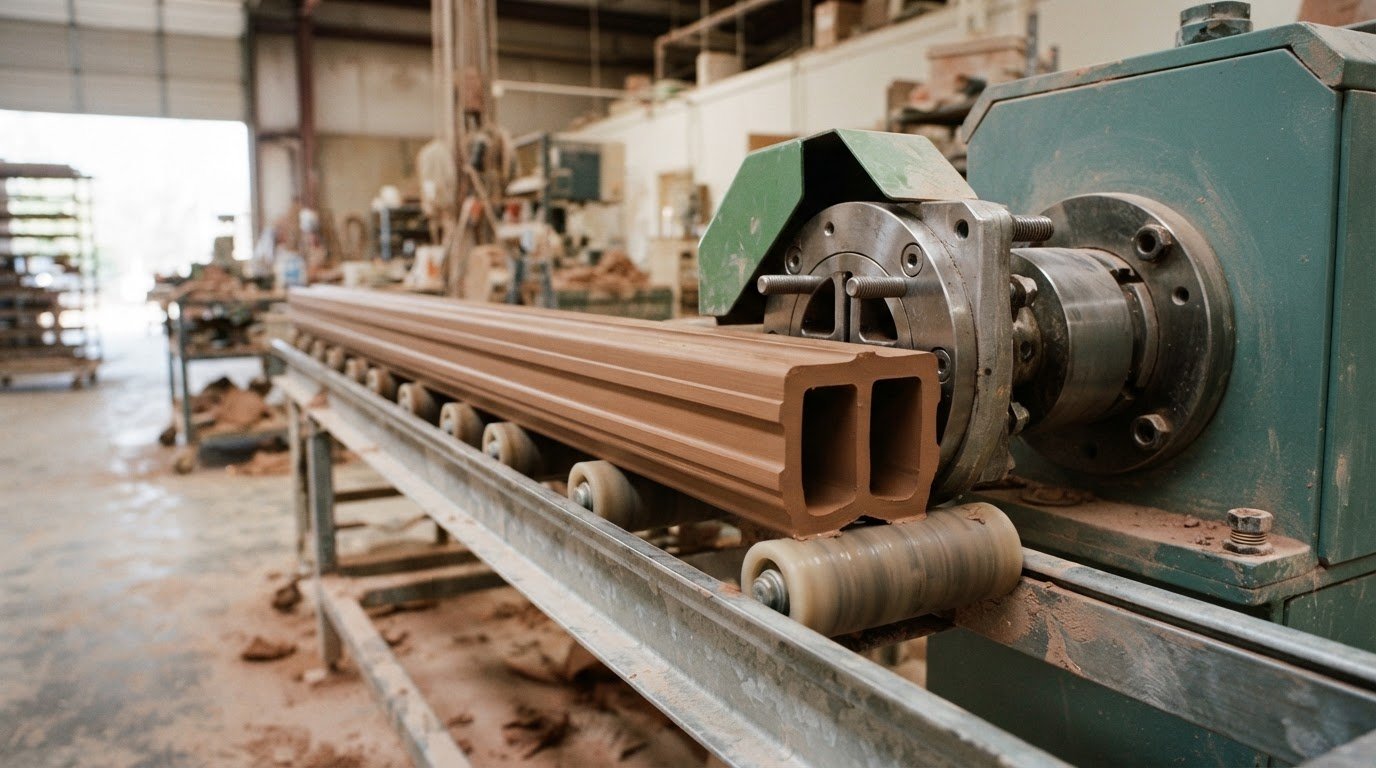
During extrusion, a ceramic body must deform under pressure, flow through the die, and retain the die’s profile afterward. Plasticity describes the capacity to deform without cracking, but it does not measure the strength of the freshly formed piece. Improving ceramic plasticity for complex shapes means balancing die flow with the profile’s ability to hold its form. A thin rib or sharp corner tests both properties, while a broad profile may tolerate a different body response.
Manufacturers can assess clay plasticity with a Pfefferkorn test, which measures deformation under a defined load. A trial through the intended die provides practical evidence: observe surface tearing, consistency of flow, and whether details hold after extrusion. Assess green strength by testing the formed piece’s resistance to bending or handling. To measure drying shrinkage, mark a test bar, measure it before and after drying, and compare the dimensions.
Consider these measurements together. A body that deforms readily may still produce a weak profile, while strong greenware may require excessive extrusion force. For example, a narrow channel that closes after leaving the die signals a shape-retention problem, not necessarily insufficient plasticity. Surface cracks at the die exit call for a closer assessment of flow and cohesion. Record the formulation and forming conditions for each trial so you can compare changes consistently.
Extrusion performance also depends on water distribution and the interaction among body ingredients. A dispersant can affect how particles move relative to one another, while a binder can contribute to the integrity of formed material. These components serve different formulation purposes; neither replaces testing the actual body and profile. Ceramic binders and deflocculants are relevant formulation categories when balancing process behavior with the needs of a specific ceramic application.
A practical strategy for improving ceramic plasticity for complex shapes is to assess plasticity, run an extrusion trial, test green strength, and measure drying shrinkage. If one result improves while another worsens, adjust the formulation or forming conditions and repeat the same sequence. This approach grounds decisions in the complete process, from die flow to the dried shape, rather than a single plasticity reading.
What factors determine plasticity and workability in ceramic clay bodies?
Four factors shape ceramic plasticity: particle size, mineralogy, organic matter, and salts. Together, they determine how a clay body responds to water, pressure, and forming. Changing one ingredient can shift the behavior of the whole mixture. For extrusion, assess the body as a system rather than focusing on a single clay additive.
Particle size influences how particles pack and interact within the body. Fine particles have more surface area in contact with water, while coarser particles change the blend’s structure. This balance affects how the body deforms under pressure and holds the intended profile. A narrow rib and a broad flange, for example, place different demands on flow and shape retention.
Mineralogy matters as well. Montmorillonitic clays, including bentonite, can increase plasticity but make drying harder to optimize. Ball clay provides another source of plasticity, with behavior shaped by its own mineral composition. Consider how each clay changes the complete body rather than assuming that two plastic clays will perform alike.
Organic matter can affect forming behavior by changing water retention. Cellulosic compounds capture water and can make a clay body behave as though it were more plastic, easing extrusion. That benefit comes with a drying consideration: ceramic bodies containing cellulosic compounds need gentler drying to reduce the risk of cracks or blasts during desiccation.
Include salts in the formulation assessment. Sodium chloride and phosphates are electrolytes that can cause acidic attack on kiln and dryer exhaust pipes, so their selection matters beyond forming behavior. Review the clay blend, added organic compounds, and electrolytes together, then assess extrusion and drying results against the intended shape.
- Particle size: assess how the blend packs and responds to water.
- Mineralogy: compare bentonite, ball clay, and the existing clay composition.
- Organic matter and salts: consider their effects on forming and the wider process.
How can aging or maturing clay improve plasticity, and for how long?
Aging gives water more time to distribute through a prepared clay body. More even moisture can make the body’s response during forming more consistent. A rested batch, for example, may feel less variable than freshly mixed clay if moisture was unevenly incorporated. Aging does not affect every body in the same way, so judge the result by forming behavior rather than elapsed time alone.
Keep the clay covered while it rests to limit moisture loss and surface drying. A sealed container or covered storage area helps maintain the batch’s moisture balance. Before extrusion, remix or knead the body thoroughly to redistribute wetter and drier portions. If a rested sample feels firmer or softer than a fresh batch, adjust the body consistently before comparing performance.
No single aging period suits every clay body. The useful duration depends on mineral composition, initial moisture distribution, and storage conditions. Compare a freshly prepared sample with portions rested for progressively longer periods, using the same forming method for each. Assess workability, extrusion flow, and shape retention, and continue resting only while the body’s behavior is becoming more uniform.
Keep a simple record for each trial: clay blend, water addition, storage condition, and resting stage. Note whether the body extrudes smoothly, retains the die profile, and handles consistently. If a longer rest makes no meaningful difference, further aging will not replace adjustments to formulation or moisture content. If drying reveals cracks or distortion, assess drying conditions separately rather than assuming that more resting will correct them.
For support with ceramic body formulation, discuss ceramic formulation options suited to your process.
JAS Global Industries: Ceramics Chemicals
JAS Global Industries offers Ceramics Chemicals for manufacturers addressing formulation challenges in ceramic processing. When extrusion behavior, shape retention, or drying response needs attention, ceramic chemical formulation can be part of a focused process review, supported by the company’s technical expertise.
The right approach depends on body composition and production requirements. Clay mineralogy, particle size, moisture behavior, and the intended profile all influence formulation decisions. Understanding these variables helps focus development on the specific process challenge instead of treating plasticity as an isolated target.
If you’re working on ceramic body formulation or extrusion performance, contact JAS Global Industries to discuss your application.
Set the next formulation priority
Identify the production issue that most limits the profile: difficult die flow, loss of detail after forming, or uneven drying. Use that priority to guide the formulation review, keeping the intended shape and process conditions in view. This makes improving ceramic plasticity for complex shapes a focused development goal, rather than a target pursued at the expense of the finished piece.
For a productive discussion, outline the clay body, the profile’s forming challenge, and the performance you want to improve. JAS Global Industries offers Ceramics Chemicals and technical expertise relevant to ceramic processing. Sharing a clear account of the application helps focus the conversation on your process needs.
Bring your ceramic formulation requirements to JAS Global Industries and explore a practical path forward for your production goals.
Frequently Asked Questions
Which additives improve ceramic clay plasticity for complex shapes?
Bentonite and ball clay can increase plasticity, while cellulosic compounds can help a body behave as though it were more plastic. The right option depends on the shape and process challenge. For example, a change intended to improve flow through a narrow die should also be assessed for detail retention and drying behavior. Compare trial bodies under the same forming conditions to identify useful adjustments.
How do bentonite and ball clay compare for increasing ceramic plasticity?
Both bentonite and ball clay can increase plasticity, but they affect the body differently. Bentonite contains montmorillonitic clay minerals, which can make drying harder to optimize. Ball clay is also highly plastic, though its effect depends on the body’s overall composition. Compare each in the same base formulation and extrusion profile, then assess the formed shape and dried result.