

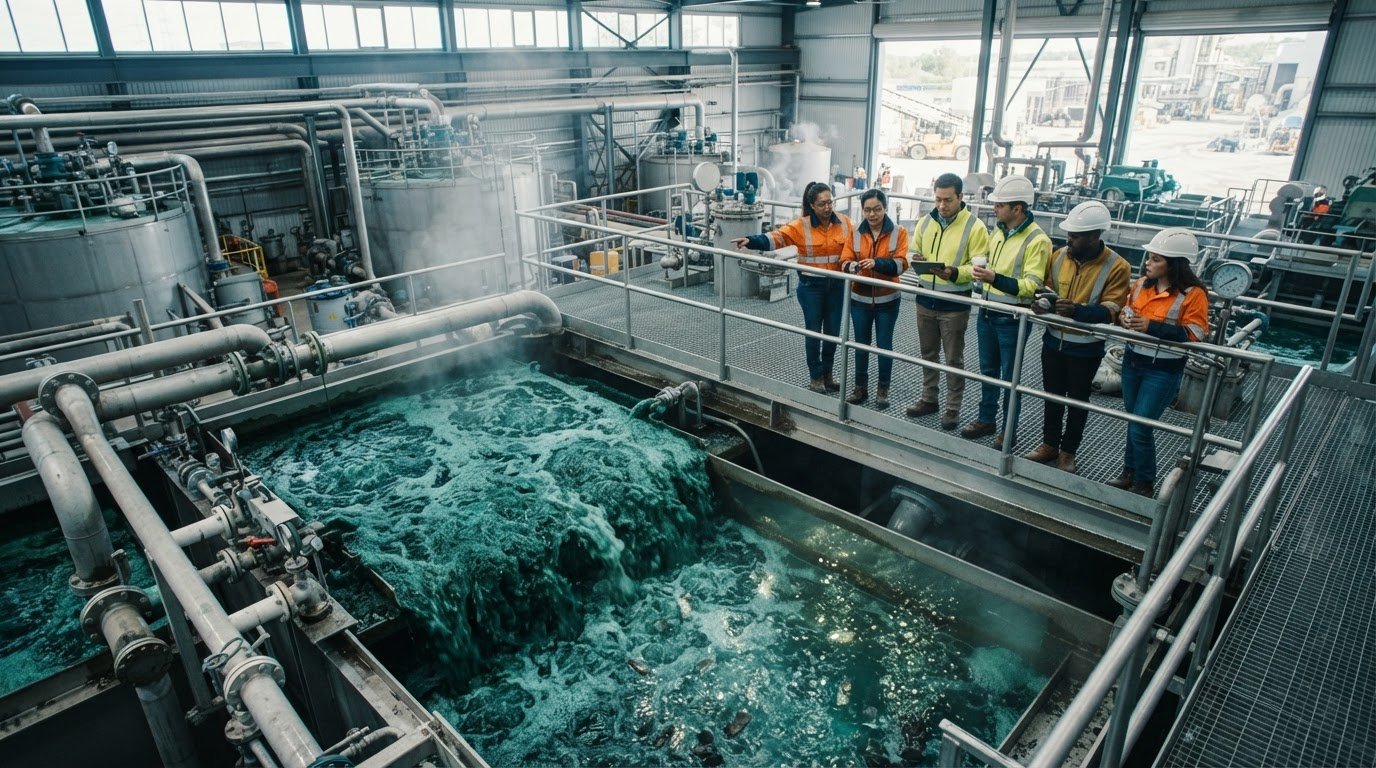
What if a reagent that improves separation in one ore blend reduces selectivity in another? In flotation, unwanted gangue can compete with valuable minerals for attachment to air bubbles, lowering concentrate quality or complicating recovery. Mining depressants help address this challenge by making selected minerals less likely to float. Their effect depends on the ore and the conditions in the circuit.
Choosing a depressant isn’t simply a matter of selecting a reagent category. Mineral composition, water chemistry, pH, and interactions with collectors and frothers can all influence performance. A strategy that works in one operating context may need adjustment in another.
This article explains how depressants influence flotation selectivity, which process factors shape reagent choice, and what to evaluate before adopting a strategy. It also covers practical testing considerations, from gangue rejection to effects on the wider reagent scheme. JAS Global Industries supplies mining depressants and supports mineral-processing chemistry through laboratory development, on-site implementation, and ongoing industrial support.
Key Takeaways
- Mining depressants help limit selected unwanted minerals in the froth, but their role depends on the separation objective.
- Assess a depressant alongside the collector, frother, ore mineralogy, and operating conditions, not as a standalone reagent.
- Compare candidate strategies using the same feed and process context to make test results more meaningful.
- Use a structured evaluation, from defining the separation challenge to assessing circuit-wide effects, before adopting a strategy.
- JAS Global Industries support spans laboratory development, on-site implementation, and ongoing industrial support for mineral-processing chemistry.
What Are Mining Depressants and Their Role in Flotation?
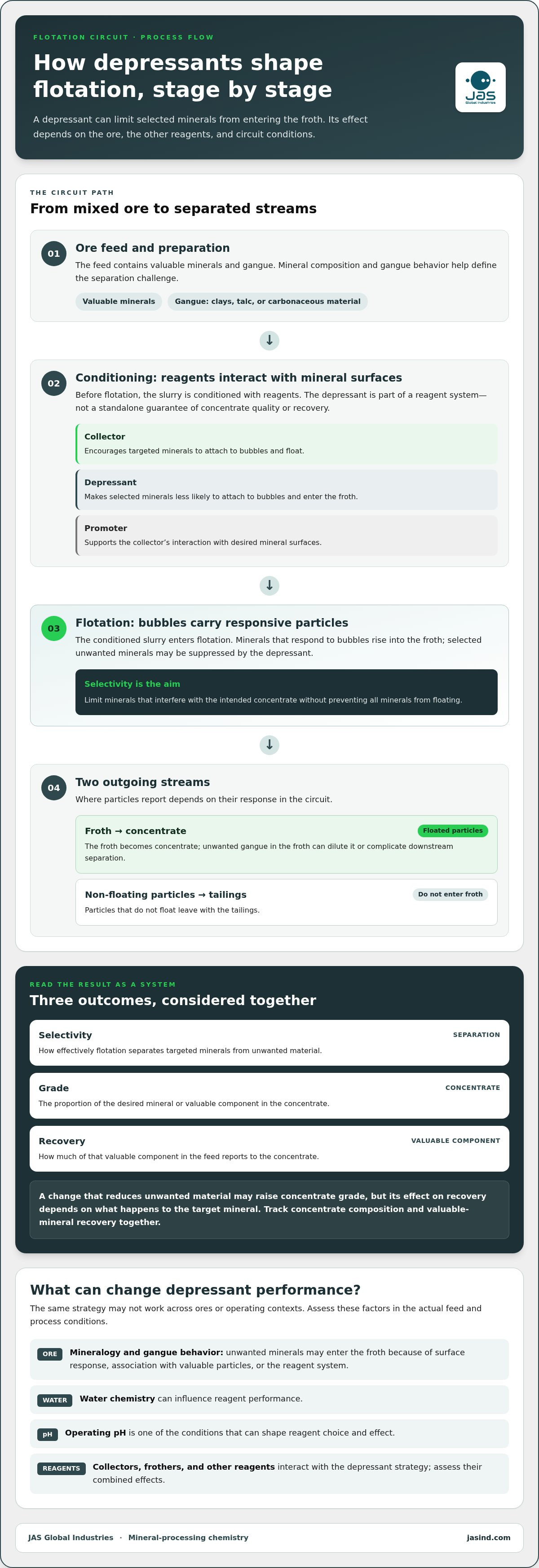
A flotation depressant is a reagent used to reduce the tendency of selected minerals to attach to air bubbles and enter the froth. It helps keep unwanted minerals out of the froth while the target mineral is recovered. Those unwanted minerals are often called gangue. The aim is selective suppression: limit minerals that interfere with the intended concentrate without preventing all minerals from floating.
A depressant has a different role from a collector. Collectors encourage attachment to the surfaces of targeted minerals, making those particles more likely to float. A depressant changes the response of selected minerals so they are less likely to report to the froth. The reagents can therefore work in opposing but complementary directions within a flotation system.
Flotation separates particles through differences in how mineral surfaces interact with water and bubbles. The general process is outlined in Flotation (mineral processing). A depressant’s effect depends on the ore’s mineral composition and operating conditions, including the other reagents present. Treat it as part of a process strategy, not a standalone guarantee of concentrate quality or recovery.
How depressants influence mineral selectivity
Selective suppression changes how particular minerals respond during flotation. If gangue enters the froth with the desired mineral, it can dilute the concentrate or make downstream separation more difficult. In phosphate flotation, for example, silica-containing gangue may report with the phosphate-bearing froth. A depressant strategy may aim to limit that unwanted flotation while allowing the target mineral to respond to the collector. The result depends on ore characteristics and circuit conditions.
Depressants, collectors, and promoters: different roles
Collectors promote flotation of the targeted mineral by encouraging particle attachment to bubbles. Depressants suppress flotation of selected unwanted minerals. Promoters support the collector’s interaction with desired mineral surfaces, helping the collector perform its intended role. These functions are distinct but connected: each can influence selectivity, and their combined effects matter more than any one reagent considered in isolation.
This distinction is useful when more than one mineral responds to the same reagent conditions. A collector may make the target float, while a depressant limits a competing mineral’s response; a promoter may assist the collector’s interaction with the target. The balance must suit the mineral assemblage and process objective. That is why mining depressants are evaluated against a specific ore and reagent system, rather than ranked as universally effective options.
How Mining Depressants Work Alongside the Rest of the Flotation Circuit
A depressant’s effect is easier to interpret across the circuit, from ore preparation to the final concentrate. The feed contains a mixture of valuable minerals and gangue. After preparation, it enters a conditioning stage where reagents interact with mineral surfaces. The conditioned slurry then moves to flotation, where air bubbles carry responsive particles into the froth. That froth becomes concentrate; particles that don’t float leave with the tailings.
Each stage shapes the next. A depressant can influence which minerals respond during flotation, but its effect also depends on the feed, collector chemistry, other reagents, and operating conditions. If a collector promotes the target mineral while gangue remains responsive to bubbles, the froth may still contain unwanted material. Conversely, suppressing minerals too broadly may work against the separation objective. Interpret circuit performance as a system, rather than attributing it to one reagent alone.
Ore mineralogy and gangue behavior
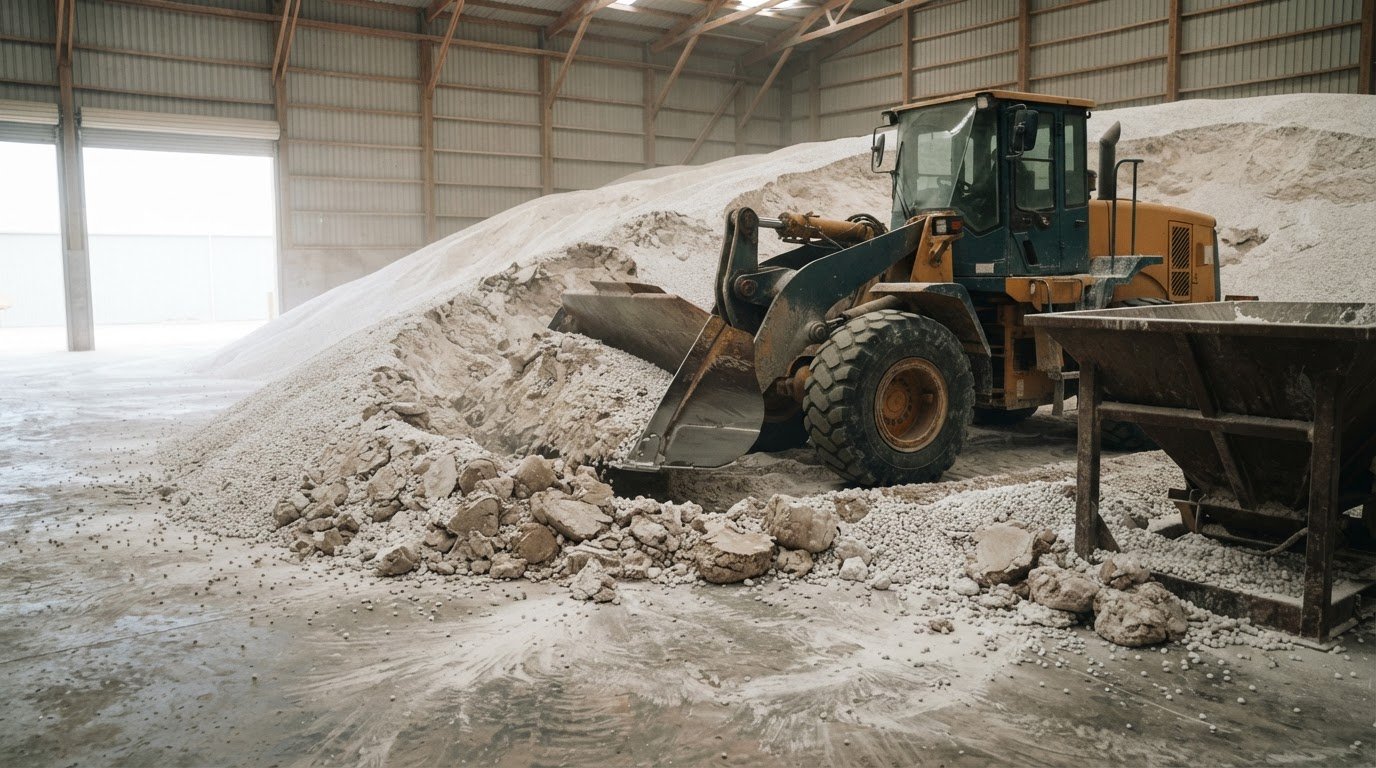
Mineralogy describes which minerals are present in the ore and how they behave under process conditions. Gangue can include clays, talc, or carbonaceous material. Some gangue may be naturally hydrophobic, meaning it can resist water and attach to bubbles. This behavior can complicate separation, but its effect varies by ore and needs to be assessed in the actual feed.
To frame the problem, consider whether unwanted minerals enter the froth because of their surface response, their association with valuable particles, or the way the reagent system affects them. These causes can look similar in a concentrate sample but may call for different process adjustments. Understanding the mineralogy helps identify the issue before changing depressant conditions.
Reading selectivity, concentrate grade, and recovery together
Selectivity describes how effectively flotation separates targeted minerals from unwanted material. Grade is the proportion of the desired mineral or valuable component in the concentrate. Recovery measures how much of that valuable component in the feed reports to the concentrate. They describe related but different outcomes. A change in one doesn’t automatically mean the others improve.
For example, a circuit change that reduces unwanted material in the froth could raise concentrate grade, but its effect on recovery depends on what happens to the target mineral as well. The trade-off is process-specific, so comparisons need evidence from the same feed and operating context. Track concentrate composition and valuable-mineral recovery together, then interpret them alongside reagent conditions and the circuit stage where the change appears. The Society for Mining, Metallurgy & Exploration (SME) provides broader professional resources on mining and mineral processing.
Mining depressants help control the response of unwanted minerals within the wider reagent system. To consider this approach alongside other mineral-processing chemicals, explore JAS Global’s mining depressant solutions.
How to Compare Mining Depressants for Different Ores and Process Goals
Start a comparison with the separation problem, not a generic ranking of reagent types. The same candidate can behave differently as ore composition, gangue, collector chemistry, or operating conditions change. Compare options against the same feed and process context, and distinguish a product’s stated purpose from results demonstrated in relevant tests. Without comparable evidence, a broad performance claim may not predict what will happen in your circuit.
Match criteria to ore and circuit conditions
First define the valuable minerals and the gangue affecting separation. Then record the existing collector system and flotation conditions that may influence reagent response. Assess the chemistry in relation to the material being processed and the circuit objective. Phosphate, high-purity quartz or silica sand, and iron beneficiation, for example, are distinct mineral-processing contexts with different feed characteristics and separation priorities.
Use a consistent framework to compare candidates:
| Evaluation factor | What to document | Why it matters |
|---|---|---|
| Ore mineralogy | Valuable minerals and relevant mineral associations | Defines which particles the separation must distinguish. |
| Gangue | Unwanted minerals affecting concentrate quality or separation | Identifies what the depressant strategy is intended to suppress. |
| Collector system | Collectors already used and the target mineral response | Depressant performance needs to be interpreted alongside collector action. |
| Process conditions | Relevant operating conditions held consistent in the comparison | Differences can change reagent response and complicate conclusions. |
| Target outcome | Priority measure, such as selectivity, grade, or recovery | Clarifies what success means and what else must be monitored. |
Compare objectives, not one metric alone
Choose the primary objective before comparing results. Better selectivity or concentrate grade may be valuable, but neither alone shows how much of the target mineral reaches concentrate. Grade, recovery, and other circuit measures can move differently, so assess them together and note observed trade-offs. A result from one ore or set of conditions isn’t proof of performance on another.
Keep the feed and operating context comparable across tests. Record the reagent system and conditions, then review results against the stated objective and broader circuit effects. This helps separate demonstrated evidence from a candidate’s intended purpose without relying on unsupported dosage, chemistry, or numerical performance assumptions. For wider context on how reagents fit together, the mining solutions guide by JAS Global Industries covers adjacent mineral-processing chemistry.
How to Evaluate a Depressant Strategy Without Overlooking Circuit Effects
A responsible evaluation starts with a defined separation problem and ends with evidence relevant to the operating circuit. A depressant may affect more than the unwanted mineral response, so plan to monitor connected process measures and record changes that could influence results. Site-specific testing and qualified technical review are important before changing operating practice.
- Define the issue. Describe what the circuit is showing, such as unwanted gangue reporting to concentrate, and identify where the concern appears. Use process observations and sample data to distinguish the separation problem from assumptions about its cause.
- Characterize the ore. Record the valuable minerals, relevant gangue, and any known feed variation. Mineral composition affects how results should be interpreted, so note what feed was tested and how representative it is of the ore being processed.
- Review the current reagent system. Document the existing collector and other relevant reagents, along with operating conditions that could influence flotation response. This baseline helps separate the effect of a depressant change from other process adjustments.
- Test under controlled conditions. Compare the current approach with the proposed strategy using comparable feed and operating conditions. Change the factor being evaluated deliberately, keep other relevant variables consistent where practical, and record unavoidable differences.
- Assess the full response. Compare results with the baseline using measures aligned to the site objective. Review grade, recovery, and selectivity together where data are available, and document feed or operating changes that may explain variation.
Set a clear baseline and test objective
Make the test question specific. If unwanted gangue is entering the concentrate, for example, define whether the primary aim is to reduce that material, improve selectivity, or address another site priority. Record the existing reagent approach and process context before testing. Then select measures that reflect the objective while keeping related outcomes visible, so a change in one result doesn’t conceal an effect elsewhere.
Interpret results in the context of the whole circuit
A test result is meaningful only in relation to its baseline and feed. Compare like with like, and note changes in ore characteristics or operating conditions that could affect the comparison. Laboratory observations can help assess a strategy, but they don’t guarantee the same response at full scale. Qualified technical review can help determine what the evidence supports before operational changes are made.
JAS Global Industries supports mineral-processing chemistry through laboratory development, on-site implementation, and ongoing industrial support. To discuss a tailored approach to mining depressants and process conditions, connect with JAS Global.
How JAS Global Supports Mining Depressant Evaluation
Depressant evaluation is most useful when it reflects the ore and separation objective, rather than treating a reagent as an isolated purchase. JAS Global Industries supplies mining depressants as part of its mineral-processing chemical solutions. Its technical support spans laboratory development, on-site implementation, and ongoing industrial support, connecting reagent evaluation with the conditions of a working operation.
Mineralogy, gangue behavior, collector chemistry, and flotation conditions can all shape how a depressant strategy performs. A clear evaluation begins with the site’s observed separation issue and defines what the test should examine. For example, a team may investigate unwanted gangue reporting to concentrate while also tracking how the target mineral responds. The goal is to assess the chemistry in context, not assume a particular result.
Technical support from development through implementation
Laboratory development provides a setting to examine reagent approaches against defined ore and process considerations. Test observations can inform further evaluation, while remaining specific to the sample and conditions used. They provide a basis for discussion, not a guarantee of full-scale performance.
On-site implementation brings support into the operating environment, where ore feed and circuit conditions form part of the evaluation. Ongoing industrial support extends that technical relationship beyond initial implementation. Together, these stages provide a framework for considering a depressant strategy from development through plant application, without assuming every circuit requires the same approach.
A partnership focused on process efficiency and reliability
As a specialty chemical partner serving mining and mineral processing, JAS Global connects its depressant offering with broader process chemistry considerations. The company is a global supplier with a strong presence in the GCC. Its industry focus supports a practical discussion grounded in the site’s ore, current reagent system, operating conditions, and evaluation measures.
For a productive technical discussion, prepare a concise account of the separation challenge, relevant ore characteristics, the existing reagent approach, and the outcomes the site needs to evaluate. This context can guide laboratory development and inform on-site implementation and ongoing support. It also keeps the assessment focused on evidence from the particular process rather than generic expectations.
JAS Global has operated since 1998 and states that it brings three decades of hands-on mining experience. Its support model includes technical engagement across laboratory development, on-site implementation, and ongoing industrial support. For broader context on adjacent reagents and mineral-processing chemistry, explore JAS Global's mining solutions.
Make the Next Flotation Decision Evidence-Led
As ore characteristics and operating priorities evolve, reagent decisions benefit from a clear reference point. Define what the circuit needs to achieve, identify the measures that matter, and use representative testing to guide the next step. This keeps the evaluation of mining depressants connected to the process, rather than relying on assumptions or results from a different operating context.
A well-framed discussion can start with the separation challenge, the ore being treated, and the outcomes the operation wants to assess. Technical collaboration can then help shape an evaluation suited to those conditions. The goal is a considered decision, supported by relevant evidence and an understanding of how reagent choices fit the wider mineral-processing approach.
Explore how JAS Global’s mining chemical solutions may fit your process priorities. Explore JAS Global's mining solutions and take the next step toward a more informed evaluation.
Frequently Asked Questions
What are mining depressants used for?
Mining depressants are used in flotation to suppress selected unwanted minerals so they’re less likely to enter the froth with valuable minerals. Their role depends on the ore and separation objective; a depressant suitable for one mineral system may not suit another. Collectors have a different purpose: they promote flotation of targeted mineral surfaces. A circuit may, for example, aim to limit a particular gangue mineral while preserving the target mineral’s response.
How do depressants improve flotation selectivity?
Depressants can reduce the flotation response of selected unwanted minerals, which may help limit gangue in the concentrate. The degree of selectivity depends on the ore’s mineralogy, collector chemistry, and operating conditions, so improvement is a process objective, not a guaranteed result. To judge a change, compare representative test data and interpret selectivity alongside concentrate grade and valuable-mineral recovery. A cleaner-looking froth alone isn’t sufficient evidence.
Can mining depressants be used with flotation collectors?
Yes. Depressants are considered alongside collectors in a flotation reagent system, but the reagents have different intended roles. Collectors promote flotation of targeted minerals; depressants suppress flotation of selected unwanted minerals. Their compatibility and overall response depend on the ore, collector chemistry, and circuit conditions. A collector already used to float the target can affect how a depressant strategy should be evaluated. There’s no universal combination or recipe.
Which minerals can depressants target in flotation?
The target depends on the ore and separation objective, not on one universal depressant function. Gangue examples include clays, talc, and carbonaceous material, but these aren’t a complete list or proof that every depressant targets each material. Start by identifying the minerals present in the feed and determining which ones affect separation. Reagent selection should follow mineralogical and process evaluation.
Are depressants used only in phosphate flotation?
No. Depressants aren’t limited to phosphate flotation; their potential use depends on the ore, the minerals being separated, and the circuit objective. Other mineral-processing contexts may also involve depressants where unwanted minerals interfere with separation. That doesn’t mean the same reagent approach applies across applications. Assess the feed and process conditions, then use relevant testing to determine whether a candidate strategy suits the operation.
How should a mine assess a change to its depressant strategy?
Start by describing the separation issue and recording a baseline, including the feed and current reagent approach. Test the candidate under comparable conditions, then review relevant measures together and note feed or operating changes that could affect the comparison. A shift in ore composition, for example, may influence results independently of a reagent change. Laboratory findings can guide further assessment, but don’t guarantee full-scale performance. A site-specific technical review supports a responsible decision.