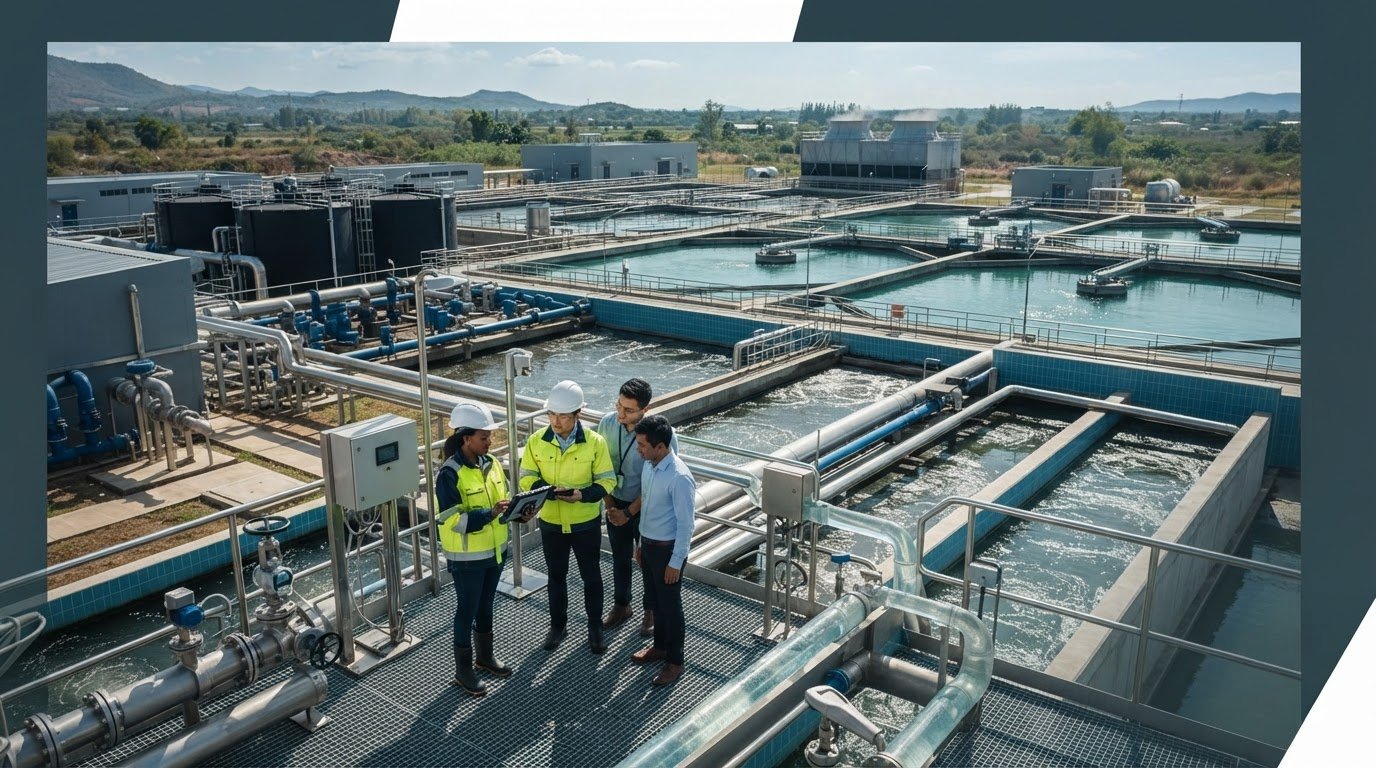


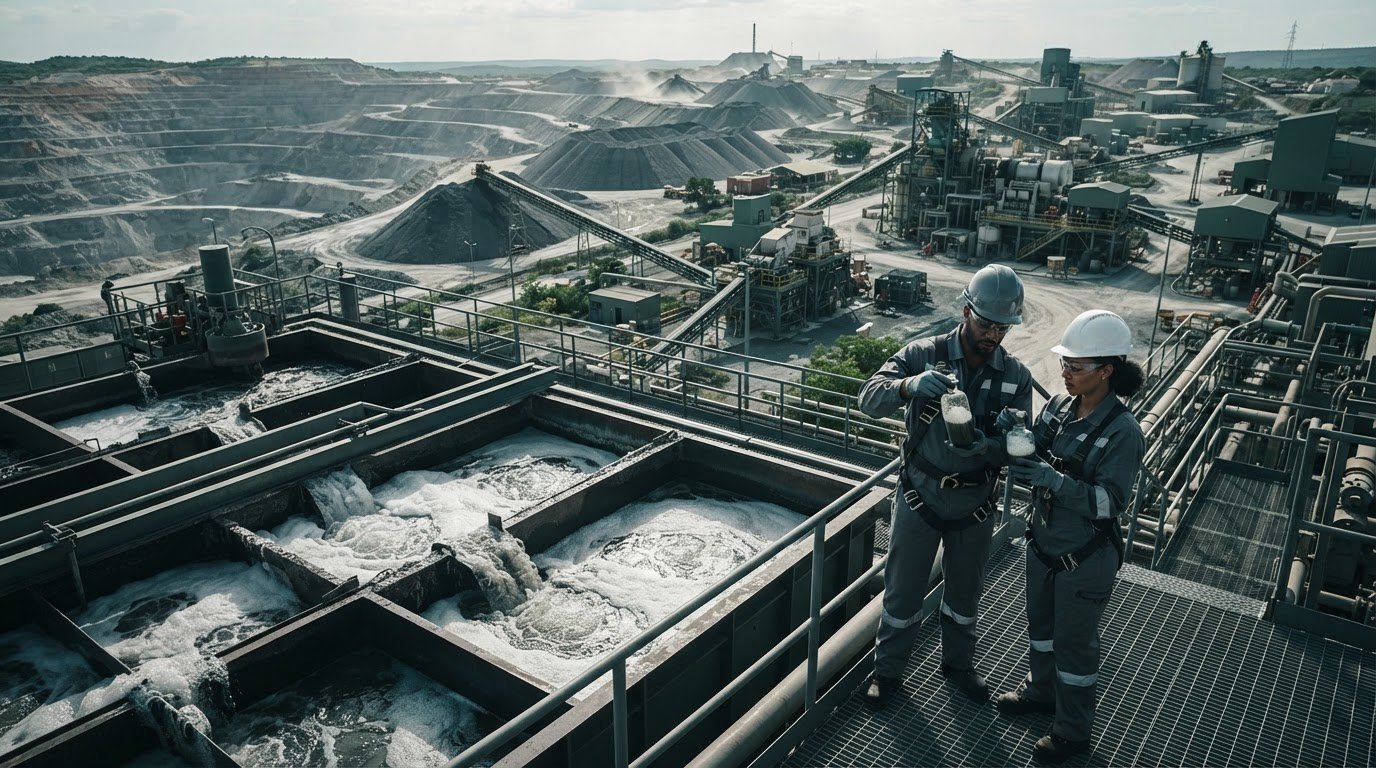
The collector that produces the strongest flotation response isn’t automatically the best fit for your phosphate ore. Comparing phosphate flotation collectors by product label alone can hide the factors that matter most: ore mineralogy, selectivity, and the balance between recovery and concentrate quality.
A collector may perform well in laboratory tests yet respond differently under plant conditions, where feed characteristics and operating variables shape results. A useful comparison starts with a clear objective and consistent test conditions, not a single headline metric.
This guide explains how to compare collector approaches by ore response, selectivity, and practical process indicators. You’ll learn what to assess in laboratory and plant testing, how to interpret recovery and concentrate quality together, and how to structure an evaluation around your operation’s priorities. JAS Global Industries supports phosphate collector evaluation through laboratory development, on-site implementation, and ongoing technical support, helping teams assess options in the context of their ore and process.
Key Takeaways
- Start with your ore’s mineralogy and process objective to define what a suitable collector needs to achieve.
- When comparing phosphate flotation collectors, assess chemistry families in their reported phosphate applications and weigh selectivity alongside limitations.
- Use the same representative ore and documented test conditions to make comparisons meaningful.
- Track recovery and concentrate quality against your operation’s priorities rather than relying on one indicator.
- Use laboratory screening to narrow the options, then validate promising results under plant conditions with appropriate technical support.
Why comparing phosphate flotation collectors starts with the ore
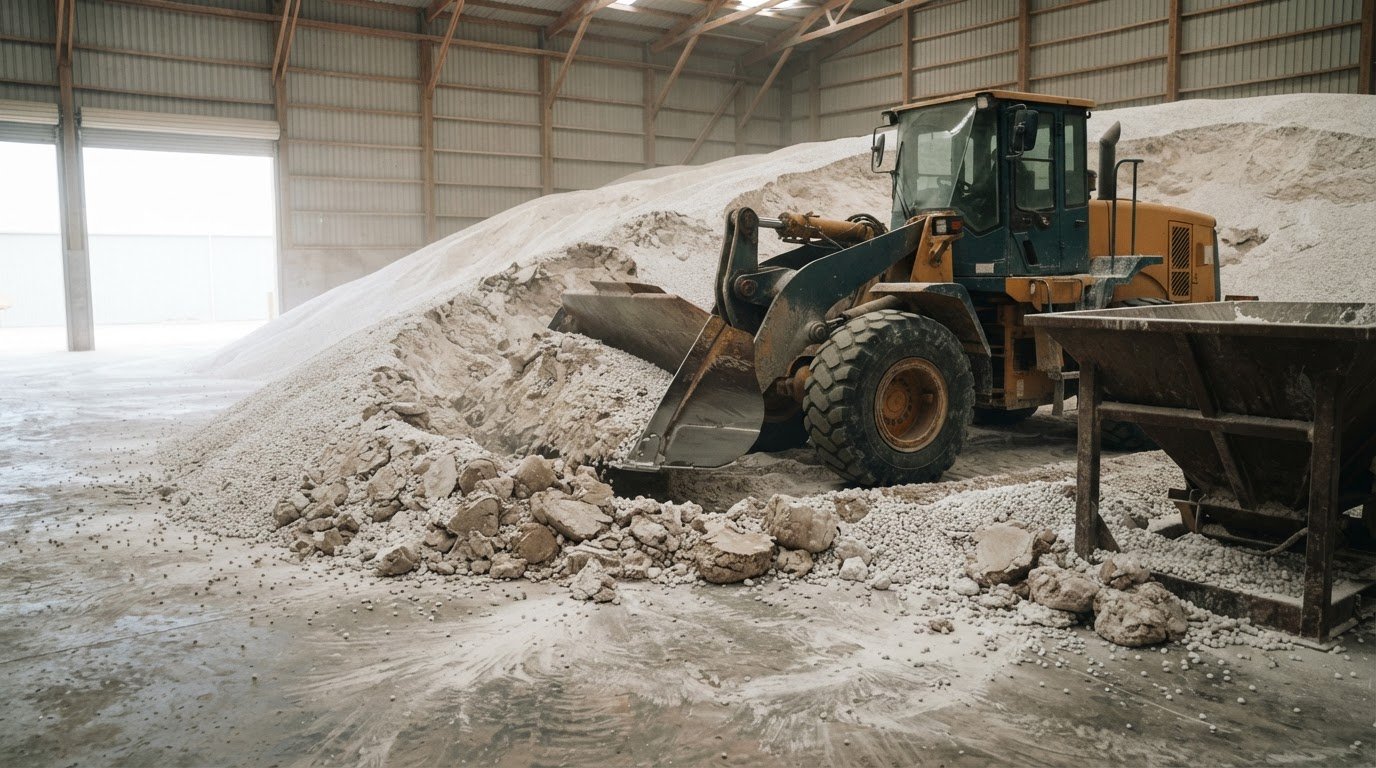
Collector performance can’t be judged from a label alone. A reagent that promotes flotation in one phosphate deposit may respond differently when mineral surfaces, gangue, or degree of liberation changes. That’s why comparing phosphate flotation collectors should begin with the ore and the operation’s objective, not a general ranking of chemistries.
Collector selection is an ore and process decision: which reagent, under defined conditions, best supports the required separation? The priority may be higher phosphate recovery, improved concentrate quality, or a practical balance between the two. State that priority before testing. A recovery increase, for example, has a different value if it also brings more gangue into the concentrate.
What a phosphate flotation collector does
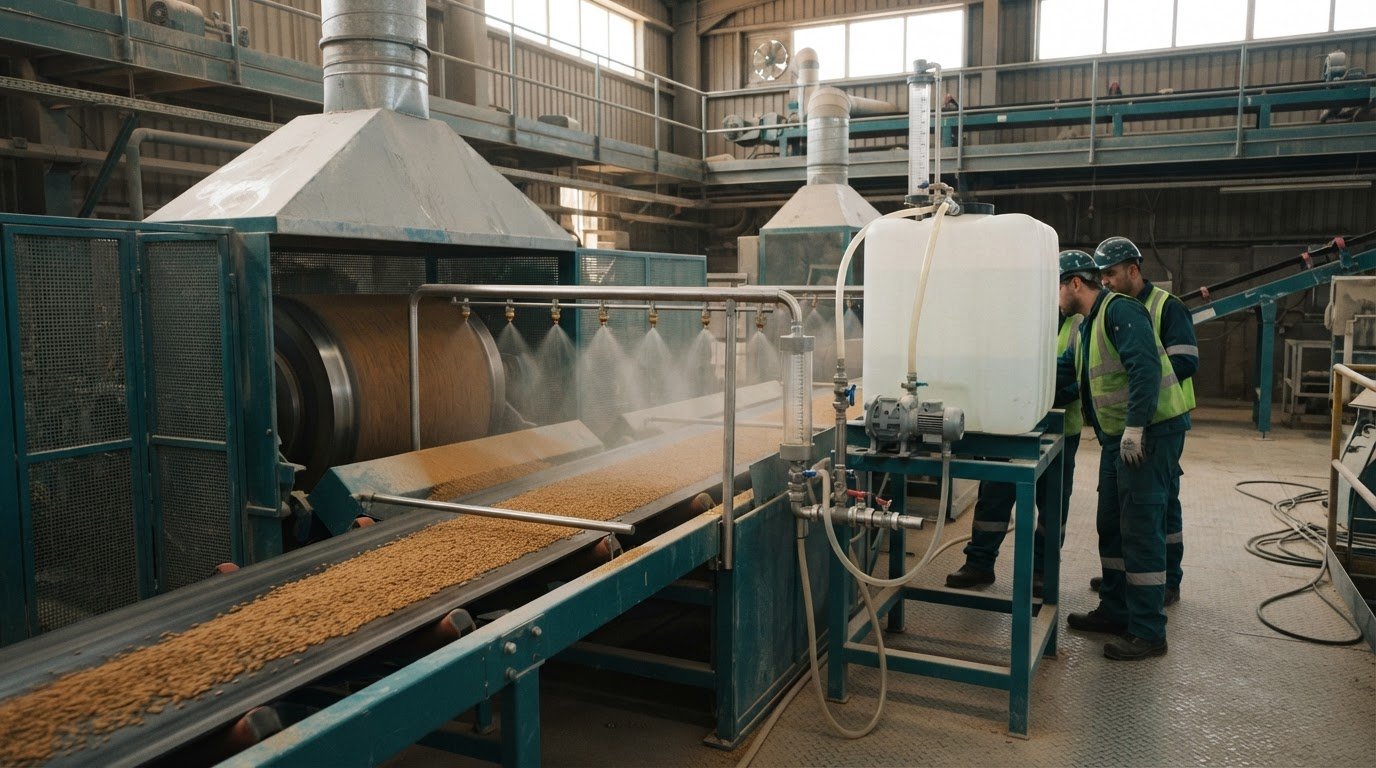
A collector interacts with mineral surfaces, making selected particles more hydrophobic, or more likely to attach to air bubbles and report to the froth. The surface interaction varies with the reagent and mineral, so no single mechanism applies to every collector and ore system. Wills and Finch’s Wills’ Mineral Processing Technology describes collectors as reagents that promote particle attachment to bubbles, while frothers help create and stabilize suitable bubbles. Depressants have a different role: they reduce the flotation response of selected minerals. These reagents may be used in the same flowsheet, but they are not interchangeable.
The collector works within a reagent scheme and process environment. Its observed effect can depend on pulp conditions and interactions with other reagents. Record those conditions with the collector identity. Otherwise, a difference in results may not be attributable to collector chemistry alone.
Why ore characteristics change the comparison
Phosphate ores commonly contain apatite, but the accompanying minerals vary by deposit. Carbonate minerals such as calcite can complicate separation where they occur. Sis and Chander’s review, “Reagents Used in the Flotation of Phosphate Ores: A Critical Review,” discusses reagent selection in relation to phosphate minerals and associated gangue. The practical lesson is to evaluate selectivity against the minerals in your ore, rather than infer it from a reagent family name.
Liberation matters too. If apatite remains locked with gangue, a collector’s surface response alone may not deliver a clean separation. Mineral association and particle size can affect what enters the concentrate, making recovery and quality harder to interpret. A result from one deposit is a useful reference, not a forecast for another.
Keep the comparison grounded in the site context. An operation supplying a global phosphate chain, including producers such as OCP Group, a major player in the phosphate industry, still needs decisions based on its own ore and process objectives. This site-specific approach makes collector evaluation more useful for process efficiency and responsible resource use.
How phosphate collector chemistries differ in flotation applications
Collector families are starting points for evaluation, not performance rankings. Their role depends on which minerals the circuit is designed to float, the ore’s surface properties, and operating conditions. In “Reagents Used in the Flotation of Phosphate Ores,” Sis and Chander discuss established fatty-acid collectors and the selectivity challenges that can arise when phosphate minerals and gangue, such as apatite and calcite, have similar surface behavior. Newer chemistries reported for phosphate applications are candidates to test, not automatic replacements.
Direct and reverse flotation: different comparison contexts
In direct flotation, the phosphate-bearing mineral is made hydrophobic and floated, while gangue is intended to remain in the non-floating stream. In reverse flotation, selected gangue is floated and phosphate minerals are retained in the other stream. The Beneficiation of Phosphate Ore by SME provides broader context on phosphate beneficiation routes and reagent roles. Because each route targets different particles, compare collectors within a defined flowsheet. Neither route is inherently superior without comparable ore, conditions, and performance measures.
Collector family, selectivity, and operating conditions
Fatty acids are an established collector family in phosphate flotation, but selectivity can be limited when apatite and carbonate gangue respond similarly. Research also reports amine oxides, amphoteric collectors, and surfactants such as sodium N-lauroyl sarcosinate (SNLS) as chemistries under investigation for more selective responses in particular mineral systems. These reports don’t establish universal performance. Results depend on the specific ore and test conditions.
pH and water chemistry can influence mineral-surface interactions and reagent response. Record them alongside dosage, conditioning, and flotation results. If several conditions change at once, it’s difficult to distinguish a chemistry effect from an operating-condition effect. The table separates broad evidence from questions that require site testing.
| Collector approach | What published evidence supports | What to validate on site |
|---|---|---|
| Fatty acids | Established use in phosphate flotation; selectivity may be challenging for mineral pairs with similar responses. | Response of phosphate and relevant gangue under the operation’s route and conditions. |
| Amine oxides and amphoteric collectors | Reported as newer chemistries studied for selective phosphate applications. | Whether selectivity and concentrate quality hold for the actual ore and water conditions. |
| SNLS and related surfactants | Reported as candidates for specific mineral systems, not universal solutions. | Repeatability and process relevance beyond the reported test context. |
For a practical comparison, match candidate chemistry to the circuit objective, then test it against the same ore under documented conditions. JAS Global Industries’ mining flotation collectors and depressants can be considered within this structured assessment, supported by process-specific flotation evaluation support.
A fair framework for comparing phosphate flotation collectors
A useful comparison is controlled enough to isolate collector effects and broad enough to reflect the operation’s priorities. When comparing phosphate flotation collectors, use the same representative ore sample, a consistent test procedure, and clearly recorded conditions. Assess every result against the same decision criteria. Otherwise, differences may reflect sample variation or a changed reagent scheme rather than the collector itself.
Report collector performance with the ore tested, the conditions applied, and the outcome measures used. This makes results easier to interpret and gives technical teams a sound basis for deciding which candidates merit further evaluation.
Which performance indicators belong in the comparison?
Recovery describes the share of the target phosphate component in the feed that reports to the concentrate. Concentrate grade describes the concentration of that component in the concentrate, commonly reported as P2O5 for phosphate. The measures answer different questions: how much target material is captured, and how rich the resulting concentrate is. Read them together, since a change in one may come with a change in the other.
Choose measures that match the operation’s specification. If impurity limits or separation selectivity matter, include the relevant gangue or impurity measures. Define each measure, its calculation basis, analytical method, and units before comparing results. Consistent reporting helps prevent differences caused by reporting choices rather than collector performance.
How to make test results comparable
Build the comparison around a controlled test plan. Keep sample preparation, feed characteristics, and procedures consistent wherever practicable. If ore samples vary between tests, document the differences and avoid treating the results as a clean head-to-head comparison.
- Record the feed: identify the sample source and characterize relevant mineral content, particle size, and preparation.
- Document the conditions: note pH, water source where relevant, solids conditions, conditioning procedure, and other material process settings.
- List the full reagent scheme: record collector additions alongside frother, depressant, and other reagent additions, including order and dosage.
- Use consistent reporting: apply the same methods, units, and calculation basis to every candidate.
Separate observations from interpretation. Report measured values first, then explain what they may mean for the operation’s stated objective. Note limitations such as sample representativeness, test scope, or conditions that differ from the plant. A laboratory result can guide the next evaluation step, but it shouldn’t be presented as a guaranteed plant outcome.
This framework turns test data into a traceable decision record. It shows which collector performed differently, what was held constant, what changed, and how confidently the result can inform further testing.
From laboratory screening to a phosphate collector decision
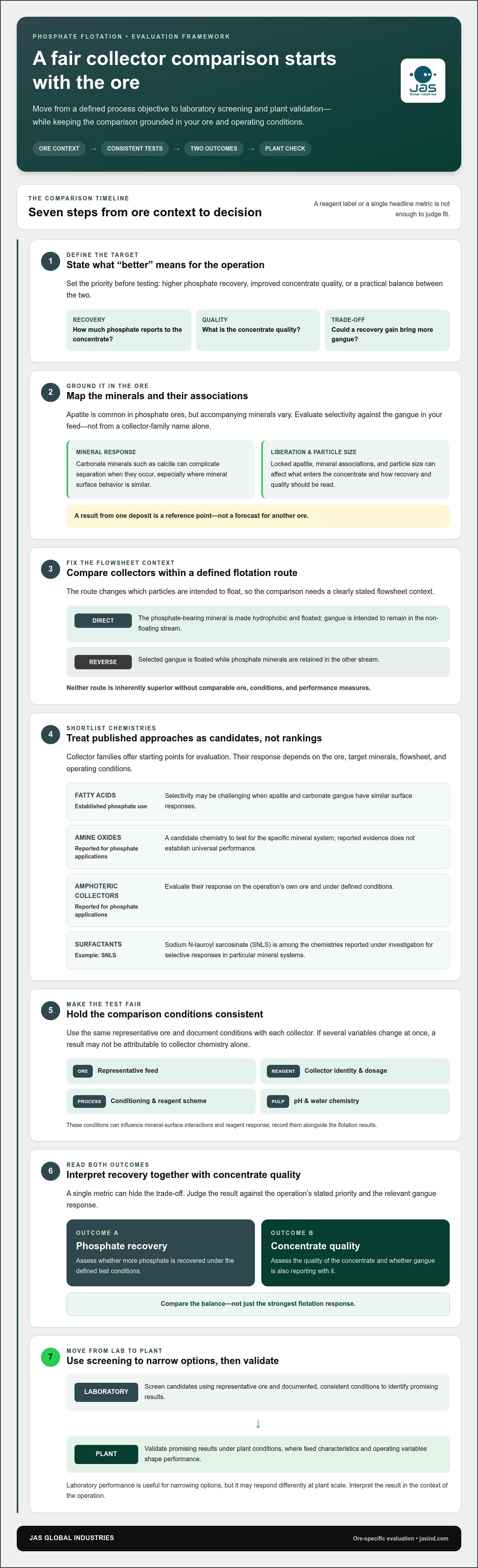
A laboratory result is a decision aid, not a plant-performance guarantee. A disciplined evaluation moves from the operation’s objective to ore characterization, controlled screening, and validation under relevant site conditions. Set a decision gate at each stage so the team knows what evidence is needed before advancing a candidate or changing an established reagent scheme.
Design a focused screening programme
Begin with the plant objective and representative feed, not a preferred reagent label. Define the required balance of recovery and concentrate quality, then identify relevant collector candidates and test conditions. A controlled plan makes results easier to interpret. Record repeat tests, variability, limitations, and responses that merit further investigation instead of treating one result as decisive.
- Set the objective and gates. Define the site’s target outcomes and the requirements for advancing a candidate. Include relevant safety, handling, and operational criteria alongside metallurgical measures.
- Characterize the feed. Select a representative sample and document its relevant mineralogical and feed properties. Confirm what the sample can and cannot represent about the ore delivered to the plant.
- Screen candidates consistently. Compare relevant collectors using a documented test plan. Keep key variables consistent where practicable, and record reagent additions, process conditions, methods, and outcomes.
- Decide what advances. Review measured performance against the criteria set at the outset. A candidate that merits additional work is not yet an approved plant change.
This structure makes comparing phosphate flotation collectors a staged technical decision, rather than a search for a universal winner. It also records why a candidate progressed, stalled, or required another test.
Validate relevance before operational adoption
Laboratory tests simplify plant conditions. Feed variability, water conditions, equipment, and the wider reagent scheme can influence plant response. Before adoption, compare laboratory observations with process constraints and plant-relevant measures. Use the differences between test and operating conditions to define what further evaluation is needed, rather than assuming bench-scale results will transfer unchanged.
Validation may involve further testing with representative material, review of the complete reagent scheme, and a technical assessment of how a change could fit existing operations. Keep scale-up conclusions conditional on site data and engineering review. Separate measured results from interpretation, and document unresolved questions so the decision reflects both the evidence and its limits.
A sound decision gate asks whether the candidate meets the operation’s stated metallurgical objectives and its safety, handling, and operational requirements, based on evidence relevant to the conditions where it would be used. JAS Global Industries supports process-specific evaluation through laboratory development, on-site implementation, and ongoing technical support. Discuss a phosphate collector evaluation with a technical team to frame the next step around your ore and process requirements.
How JAS Global supports phosphate flotation collector evaluation
A sound collector decision needs more than a reagent name. It needs an evaluation connected to the ore, circuit, and operation’s priorities. JAS Global Industries supplies mining flotation collectors and depressants, including solutions for phosphate mining, and supports technical evaluation through laboratory development, on-site implementation, and ongoing technical support. These capabilities help teams work through process-specific requirements without assuming a particular recovery, concentrate grade, or plant outcome.
Technical support across the evaluation process
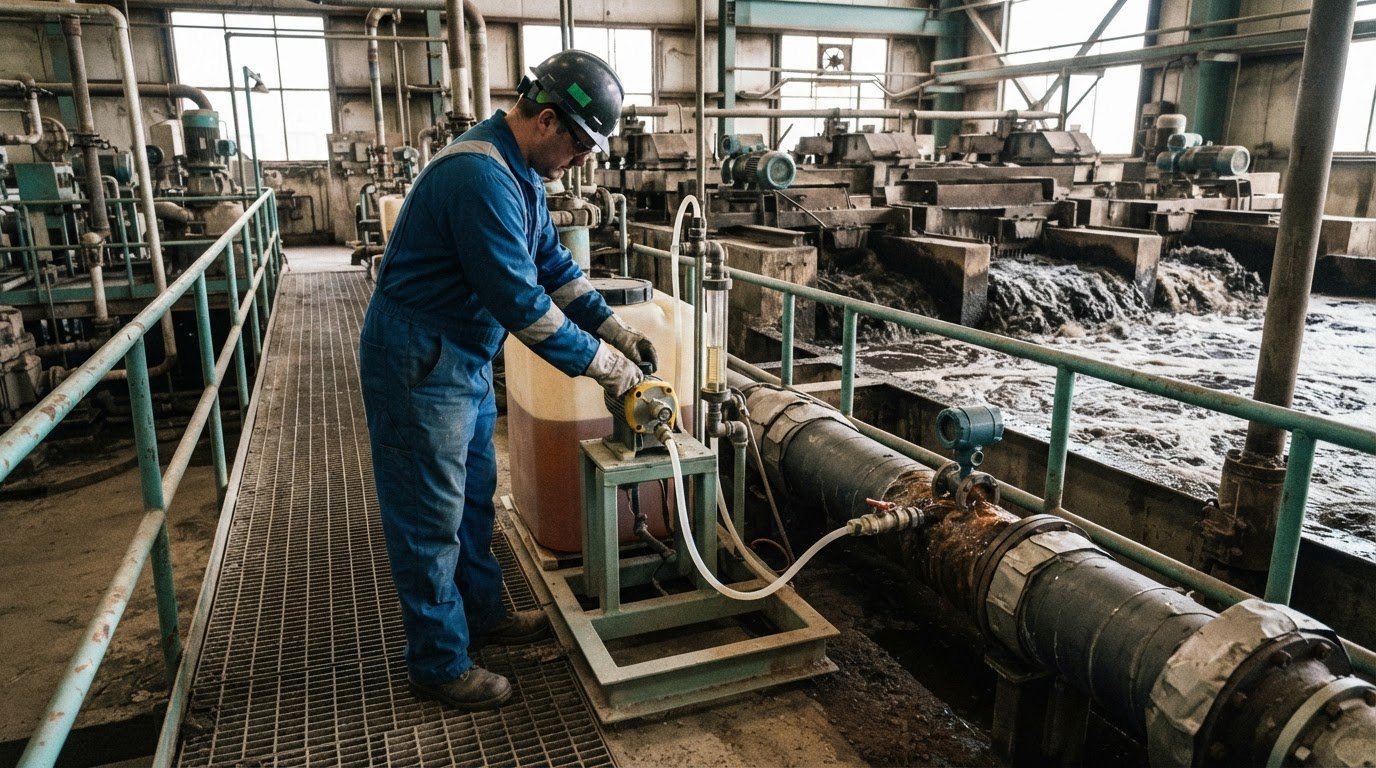
Laboratory development can help frame a collector evaluation around the questions that matter to a site. Start with the operation’s process context: its flotation route, feed characteristics, existing reagent scheme, and target balance between recovery and concentrate quality. This helps focus the evaluation on relevant needs rather than treating a chemistry label as a prediction of performance.
As the evaluation develops, on-site implementation and ongoing technical support can connect reagent decisions with operating realities. The aim is to support a considered process assessment, not bypass site procedures or assume that laboratory observations will transfer unchanged. Clear communication about test conditions, observed results, and unresolved questions helps teams make informed decisions.
Organize a practical technical discussion around a few shared reference points:
- Process objective: What outcome is the operation prioritizing, and how will success be assessed?
- Ore and circuit context: What feed characteristics and flotation route shape the evaluation?
- Test evidence: Which conditions, reagent additions, and measures were used to compare candidates?
- Operational considerations: What safety, handling, and site requirements must inform further evaluation?
This evidence-led approach keeps the discussion grounded in the operation’s requirements. It also supports operational reliability by making assumptions visible and giving technical teams a shared basis for reviewing next steps. For teams comparing phosphate flotation collectors, technical collaboration can connect screening observations to a site-specific evaluation while keeping conclusions tied to the available evidence.
Turn the comparison into a project discussion
Bring the process objective and relevant operating context into the discussion. Useful starting information includes the flotation route, representative feed characteristics, current reagent scheme, test conditions, and the recovery or concentrate-quality measures the site uses. These details help focus the technical conversation on the questions the operation needs to resolve. No single laboratory result guarantees plant performance; further assessment depends on site evidence and operating requirements.
JAS Global’s technical team can discuss phosphate flotation requirements and evaluation support for your process. Contact JAS Global to discuss your phosphate collector evaluation.
Make the next evaluation decision count
Turn the comparison into a clear decision record: what the operation needs, which evidence would justify moving forward, and what remains uncertain. That record can guide future trials as ore conditions or process priorities shift, helping teams make deliberate adjustments instead of relying on reagent labels or isolated test results.
Keep the objective practical. Define the decision to be made, identify the operating context that could affect it, and set out what further evidence would build confidence. This creates a stronger foundation for technical discussion and supports process decisions grounded in site requirements.
If your team is planning an evaluation or reviewing its phosphate flotation approach, discuss your phosphate flotation requirements with JAS Global. A focused conversation can help shape the next step for your operation. With a clear objective and relevant evidence, comparing phosphate flotation collectors can become a more confident, site-specific decision.
Frequently Asked Questions
What is a phosphate flotation collector?
A phosphate flotation collector is a reagent that helps selected mineral particles attach to air bubbles by changing their surface response. The interaction can vary with the mineral and reagent, so don’t assume one adsorption mechanism applies to every system. Wills and Finch’s Wills’ Mineral Processing Technology describes collectors in this broader role. For a plant decision, interpret a collector’s function alongside the flotation route and the feed being treated.
Can one phosphate collector work for every phosphate ore?
No. Comparing phosphate flotation collectors for a deposit requires evidence from ore and process conditions relevant to that site. A candidate tested on feed with one gangue assemblage may behave differently on material with different associated minerals or degrees of liberation. Published results can help identify candidates, but they don’t establish performance elsewhere. Use representative material and treat transfer to another deposit as a question to evaluate.
How do direct and reverse phosphate flotation differ?
Direct flotation targets the phosphate-bearing minerals for flotation. Reverse flotation targets selected unwanted minerals while phosphate remains in the other fraction. The distinction matters when reading test reports: a collector’s role and the meaning of a recovery figure depend on which stream carries the target. Process routes may include multiple stages, so check the study’s flowsheet before applying its results to a different circuit.
Does pH affect phosphate flotation collector performance?
Yes, pH can affect mineral-surface conditions and how reagents interact with minerals, though the response depends on the ore and reagent scheme. A result obtained at one pH shouldn’t be treated as an operating recommendation for a different feed. Record where and when pH was measured, since changes during conditioning or flotation may complicate comparisons between otherwise similar trials.
What should be measured when comparing phosphate flotation collectors?
Select measures that reflect the decision: how much phosphate reports to the target product and the quality of that product. Where specifications require it, track relevant impurities or separation measures as well. Use consistent sampling, analytical methods, units, and calculation bases. A useful report also identifies the feed and product streams so readers can interpret the result rather than rely on an isolated number.
How can laboratory flotation tests help select a collector?
Laboratory tests help narrow the field of candidates and identify which options deserve further investigation. Where practical, include a baseline test using the current reagent scheme and compare candidates against it. This helps clarify whether a change is worth exploring. Lab findings alone can’t establish plant performance; use them to guide further assessment against actual process constraints and site evidence.