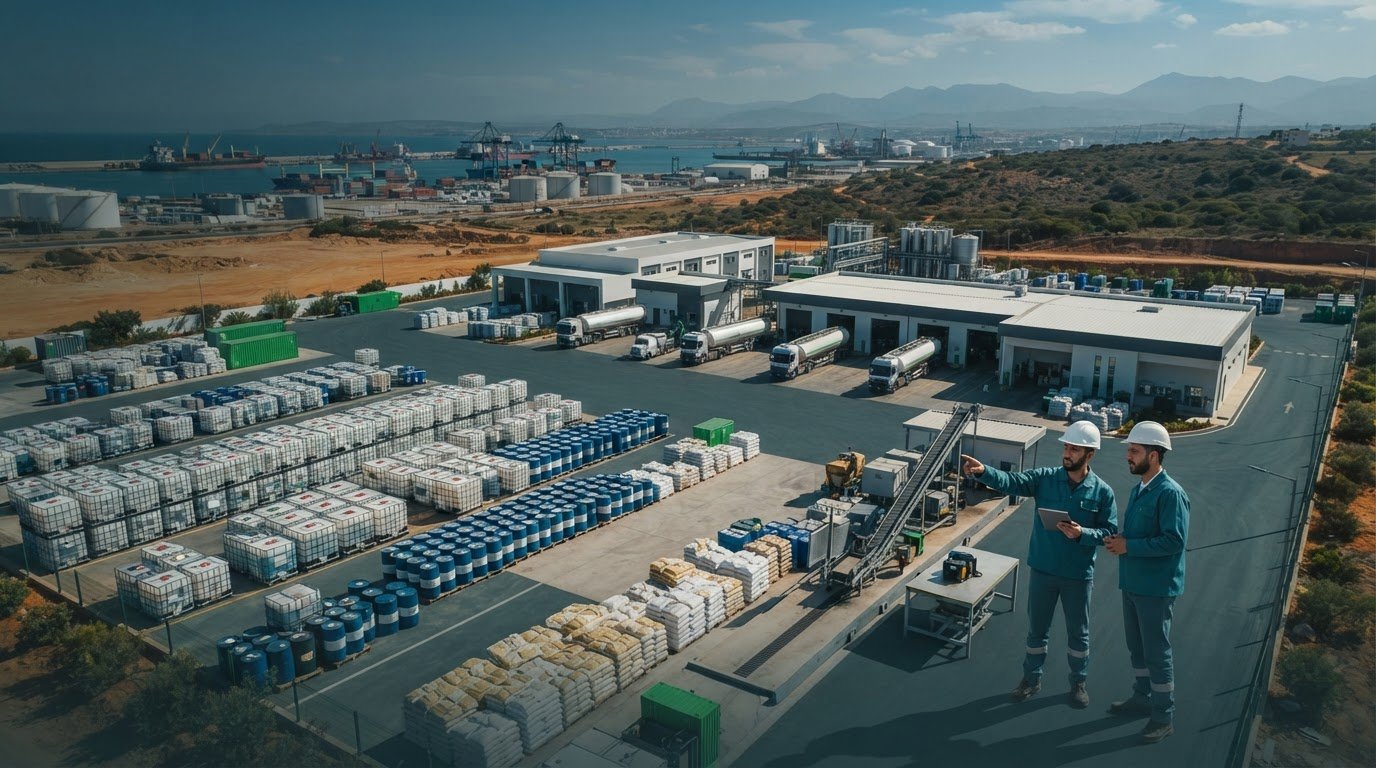

Uncontrolled microbial growth doesn't just slow your operation down; it dismantles it from the inside out. For plant managers and water treatment engineers, the threat of biofouling and Microbial Induced Corrosion isn't theoretical. It's the heat exchanger that fails ahead of schedule, the unexpected shutdown, and the repair invoice that reshapes the quarterly budget. Water Treatment Biocides are the frontline defense against these outcomes, yet deploying them effectively requires far more than simply adding a chemical to a dosing pump.
You already know that microbial control is non-negotiable in industrial water systems. The real challenge is building a program that balances the rapid knockdown of oxidizing biocides with the persistent, penetrating power of non-oxidizing chemistries, all while staying within tightening discharge regulations and managing supply costs over the long term.
This guide is built for that challenge. You'll gain a clear framework for selecting, rotating, and monitoring biocide programs across cooling water, process water, and related industrial systems, covering the science, the strategy, and the compliance considerations that separate reactive chemical spend from a proactive water security program.
Key Takeaways
- Not all biocides are equal: understanding the difference between oxidizing and non-oxidizing chemistries is the foundation of any effective industrial microbial control program.
- A strategic Water Treatment Biocides program matches chemistry to your specific water matrix, accounting for pH, temperature, organic load, and system design rather than applying a universal solution.
- Rotating biocide types on a planned schedule is a proven defense against microbial resistance, protecting long-term program efficacy and reducing the risk of costly system failures.
- Dosing strategy directly impacts ROI — the choice between automated continuous dosing and slug dosing can determine whether your chemical spend is optimized or wasted.
- Custom formulations developed through technical audits and laboratory analysis consistently outperform off-the-shelf products in complex industrial water systems.
The Critical Role of Biocides in Industrial Water Security
At their core, Water Treatment Biocides are precisely formulated chemical reagents designed to neutralize bacteria, algae, fungi, and other harmful microorganisms that colonize industrial water circuits. But reducing them to a simple definition understates their strategic weight. In cooling towers, process water loops, thermal desalination plants, and mining circuits, microbial control isn't a maintenance task. It's a pillar of operational continuity and, on a broader scale, a contributor to global resource stability.
The shift happening across industrial sectors in 2026 is a fundamental one: the move from reactive chemical treatment to proactive water security strategies. Plant managers who once responded to microbial problems after they surfaced are now building structured programs that anticipate biological threats before they translate into equipment failures or unplanned downtime. That shift in posture changes everything, from procurement cycles to dosing protocols to long-term capital planning.
There's a sustainability dimension here that's often overlooked. Effective microbial control directly reduces water waste by extending system run times and maintaining water quality at higher cycles of concentration. It also cuts energy consumption. A heat exchanger operating with clean, biofilm-free surfaces transfers heat at its designed efficiency. One compromised by microbial growth does not. The energy penalty compounds over time, silently inflating operating costs.
The Economic Impact of Biofouling and Slime
Biofouling, the accumulation of biological matter on wetted surfaces, is a primary driver of industrial energy inefficiency. The mechanism is straightforward but the consequences are severe. Biofilm acts as a thermal insulator on heat exchanger surfaces, forcing systems to work harder to achieve the same heat transfer. Flow restrictions develop in piping as slime layers thicken, increasing pumping pressure and mechanical wear across the system. The costs aren't always visible on a single invoice; they accumulate quietly in elevated energy bills, accelerated maintenance schedules, and shortened asset lifespans.
Microbial Induced Corrosion (MIC): The Silent Infrastructure Killer
Sulfate-Reducing Bacteria (SRB) are among the most destructive microorganisms found in industrial water systems. Operating in low-oxygen environments, SRB metabolize sulfate compounds and produce hydrogen sulfide as a byproduct, a substance that aggressively attacks carbon steel, stainless steel, and copper alloys from beneath existing corrosion deposits. The damage is internal and localized, which is precisely why MIC so often goes undetected until a pipe wall fails or a heat exchanger bundle is compromised beyond repair.
For capital-intensive assets like thermal desalination plants and mineral processing circuits, the financial exposure is substantial. Replacing corroded infrastructure in these environments isn't a scheduled maintenance event; it's an emergency that halts production and reshapes project economics. Protecting these assets through a disciplined biocide program isn't a cost center. It's risk management at the infrastructure level.
The Chemistry of Control: Categorizing Water Treatment Biocides
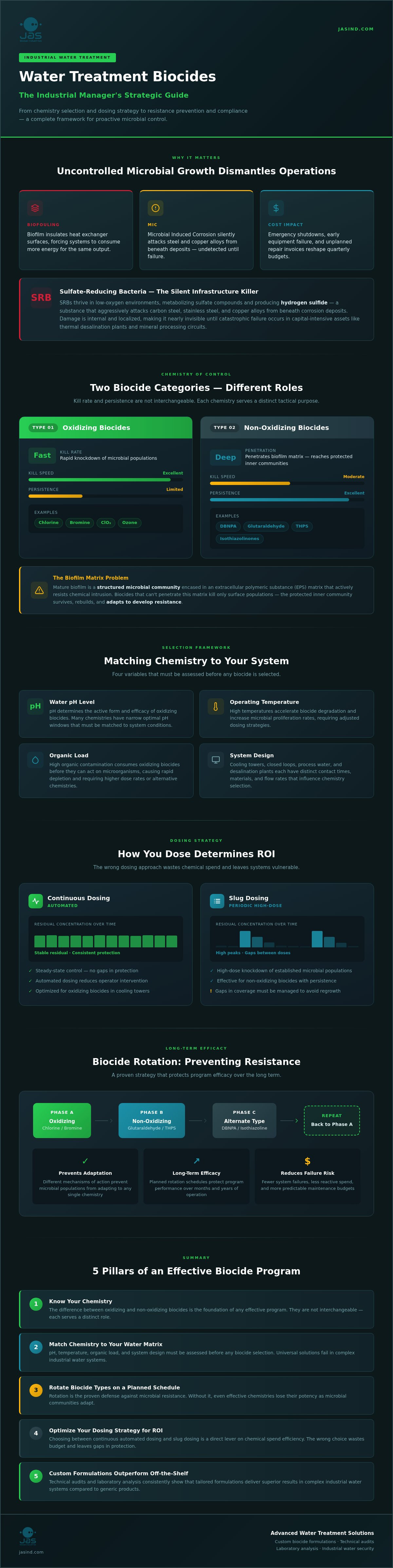
Two performance metrics define every biocide selection decision: kill rate and persistence. Kill rate measures how quickly a chemistry reduces microbial populations to acceptable levels. Persistence measures how long that control is maintained after the initial dose. These aren't interchangeable qualities, and confusing one for the other is a common source of program failure. A chemistry that delivers rapid knockdown may leave a system vulnerable hours later. One engineered for persistence may act too slowly to interrupt an active bloom. Effective Water Treatment Biocides programs are built around deploying the right chemistry for the right objective, not defaulting to a single product for every scenario.
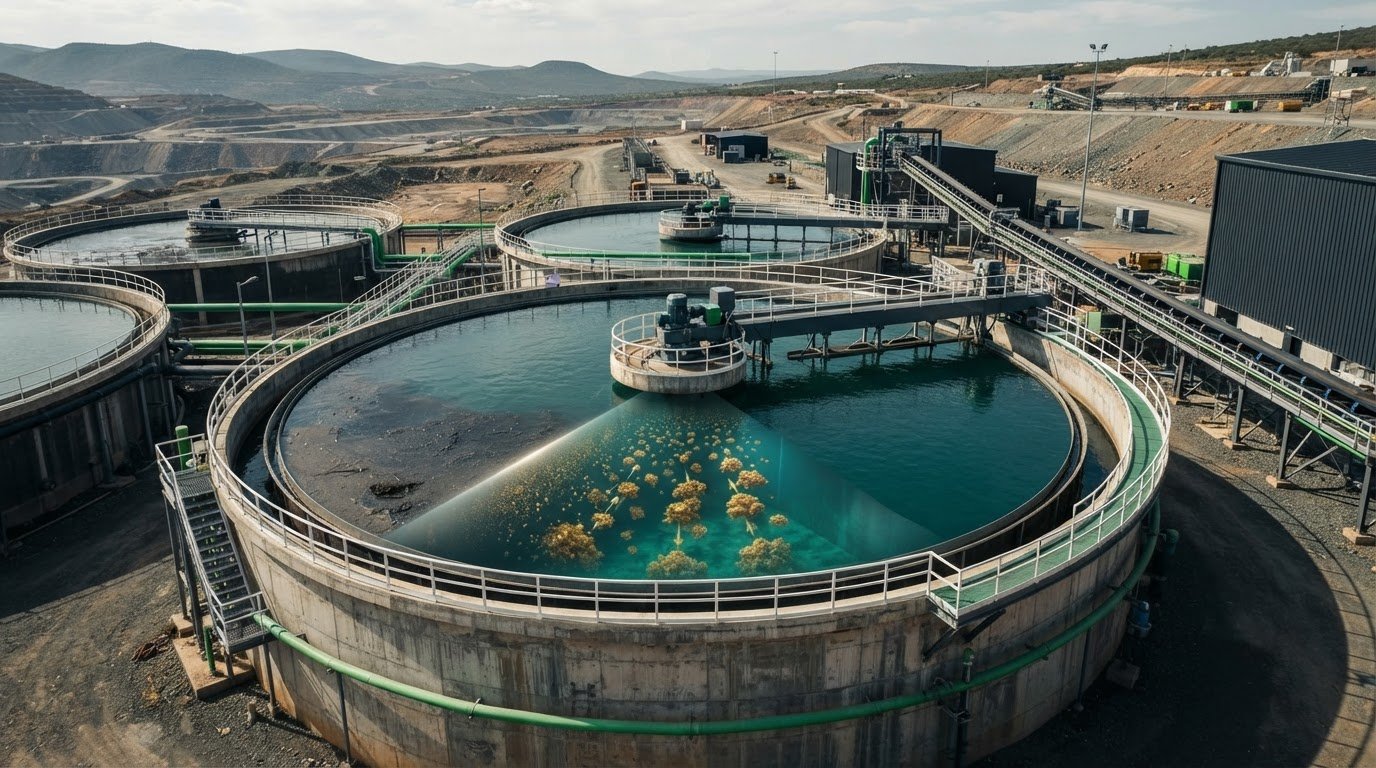
The mechanism of penetration matters enormously here. Mature biofilm isn't simply a collection of free-floating bacteria; it's a structured microbial community encased in an extracellular polymeric substance matrix that actively resists chemical intrusion. Biocides that can't penetrate this matrix address only the surface population while the protected inner community survives, rebuilds, and adapts. Selecting chemistries based on their biofilm penetration capability, rather than their performance against planktonic cells in a laboratory flask, is a distinction that separates technically grounded programs from superficially adequate ones.
Regulatory context adds another layer of complexity. In the Middle East, where thermal desalination and large-scale cooling infrastructure dominate, biocide approvals are governed by national environmental and industrial authorities with specific discharge thresholds for residual oxidants and biocide metabolites. European markets operate under the Biocidal Products Regulation framework, which imposes rigorous active substance approvals and product authorization requirements before any chemistry can be placed on the market. A biocide that's standard practice in one region may be restricted or prohibited in another. Global programs must account for this from the outset, not as a compliance afterthought.
Chemical stability under operating conditions is equally non-negotiable. High-temperature environments, such as those found in thermal desalination circuits or process water systems operating above 60°C, can degrade certain biocide actives before they reach their target. High-salinity water matrices, common in coastal industrial facilities and brine-handling systems, can alter pH, shift chemical equilibria, and accelerate the decomposition of less stable formulations. Stability testing against the actual water matrix isn't optional; it's the foundation of a reliable dosing strategy.
Oxidizing Biocides: Rapid Disinfection and Slime Removal
Chlorine, bromine, and chlorine dioxide each disrupt microbial function through oxidation, attacking cellular membranes, disrupting enzyme activity, and breaking down the extracellular matrix that holds biofilm communities together. This dual action, killing active cells while degrading the biofilm scaffold, makes oxidizing chemistries highly effective for rapid microbial knockdown in open recirculating cooling systems where biological loads can escalate quickly.
The tradeoffs are real. Residual oxidant concentrations that are high enough to be effective against established biofilm can accelerate corrosion on carbon steel and copper alloy components, particularly at elevated temperatures or low pH. Chlorine is also highly sensitive to pH; its active disinfecting species, hypochlorous acid, becomes significantly less effective as pH rises above 8.0, which is a common operating range for many cooling towers running scale inhibitor programs. Chlorine dioxide offers broader pH stability and stronger biofilm penetration than free chlorine, but it requires on-site generation and careful handling protocols. Bromine-based chemistries perform more consistently across wider pH ranges and are often preferred in systems where alkaline conditions are unavoidable.
Non-Oxidizing Biocides: Targeted Persistence and Cellular Disruption
Where oxidizing chemistries act fast and dissipate, non-oxidizing biocides are engineered to persist. Isothiazolinones inhibit microbial respiration by reacting with thiol groups in cellular enzymes, disrupting the metabolic processes cells depend on for energy and reproduction. Quaternary Ammonium Compounds, commonly referred to as QUATS, work through a different mechanism: they disrupt the structural integrity of the microbial cell membrane, causing leakage of cellular contents and ultimately cell death. Both chemistries offer meaningful advantages in systems where continuous oxidant residuals are impractical or where equipment sensitivity makes corrosive chemistries unacceptable.
Non-oxidizing biocides are particularly well-suited to closed-loop systems, where the absence of atmospheric oxygen limits the self-degradation that occurs in open systems, and where the same water volume circulates repeatedly. Their pH stability across a broad operating range, typically effective from pH 6.0 to pH 9.0 depending on the specific formulation, makes them reliable in systems where water chemistry fluctuates. They also serve a critical strategic function as a secondary defense in rotation programs targeting microbial strains that have developed tolerance to oxidizing treatment.
Selecting the right chemistry combination for your specific system conditions is where technical expertise becomes the differentiating factor. Exploring specialist water treatment biocide formulations developed against your actual water matrix parameters will consistently outperform generic off-the-shelf selections in complex industrial environments.
Strategic Selection: Matching Biocides to Industrial Applications
A biocide program that performs reliably in a municipal cooling tower will not automatically transfer to a mineral processing circuit or a thermal desalination plant. The variables that define efficacy, pH range, temperature ceiling, organic load, dissolved solids concentration, and dominant microbial species, shift dramatically across industrial environments. Applying a universal solution to fundamentally different water matrices is one of the most consistent drivers of program failure in industrial water management.
Strategic biocide selection starts with a honest assessment of your actual system conditions, not the conditions assumed by a product data sheet. Three diagnostic factors carry the most weight:
- pH and temperature: Both parameters directly govern how quickly a biocide degrades and how effectively its active species perform. A chemistry with strong efficacy at neutral pH may lose significant activity in alkaline operating ranges common to scale-controlled cooling circuits.
- Organic load: High organic content in process water consumes oxidizing biocides rapidly, reducing effective contact time and demanding higher dosing rates to compensate. Non-oxidizing chemistries are often more appropriate where organic demand is elevated and unpredictable.
- Dominant microbial threat: Sulfate-Reducing Bacteria require different chemical targeting than Legionella pneumophila or algal blooms. Identifying which organisms are driving your risk profile shapes both chemistry selection and dosing frequency from the outset.
There's also a downstream consequence that's rarely discussed in generic biocide guidance: chemical carryover into adjacent processes. In fertilizer production environments, biocide residuals that migrate into granulation or coating circuits can interfere with product quality, affecting solubility profiles or surface characteristics. That's a consideration that demands formulation precision, not a standard product pulled from a catalogue.
Microbial Control in Mining and Mineral Processing
Process water in flotation circuits carries a specific vulnerability that most water treatment guides overlook entirely. Microbial activity in these systems doesn't just create infrastructure risk; it directly compromises reagent selectivity. Certain bacteria metabolize flotation collectors and frothers, degrading their surface-active properties and reducing mineral recovery rates before the chemistry ever reaches the ore. Biocide selection in this context must account for compatibility with the flotation reagent suite, ensuring that microbial control doesn't introduce a new source of process interference.
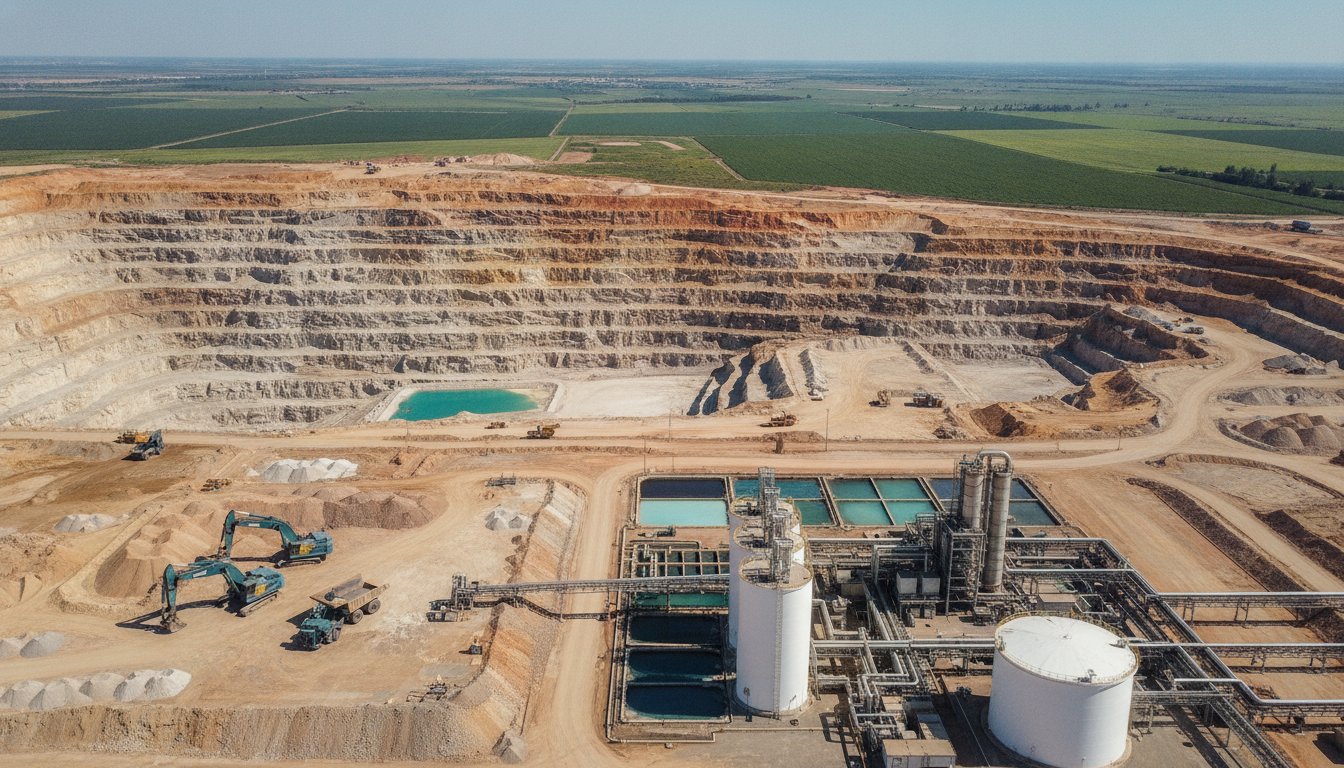
Tailings management presents a separate but equally serious challenge. Anaerobic microbial communities, particularly SRB populations established in oxygen-depleted tailings storage facilities, generate hydrogen sulfide at concentrations that create occupational hazards, corrode containment infrastructure, and trigger regulatory reporting obligations. Controlling these populations through targeted biocide treatment is a core component of responsible tailings management, not an optional add-on. Advanced mining solutions that integrate biocide programs with broader process chemistry reflect how total process integration delivers outcomes that isolated water treatment programs simply can't match.
Cooling Towers and Thermal Desalination Infrastructure
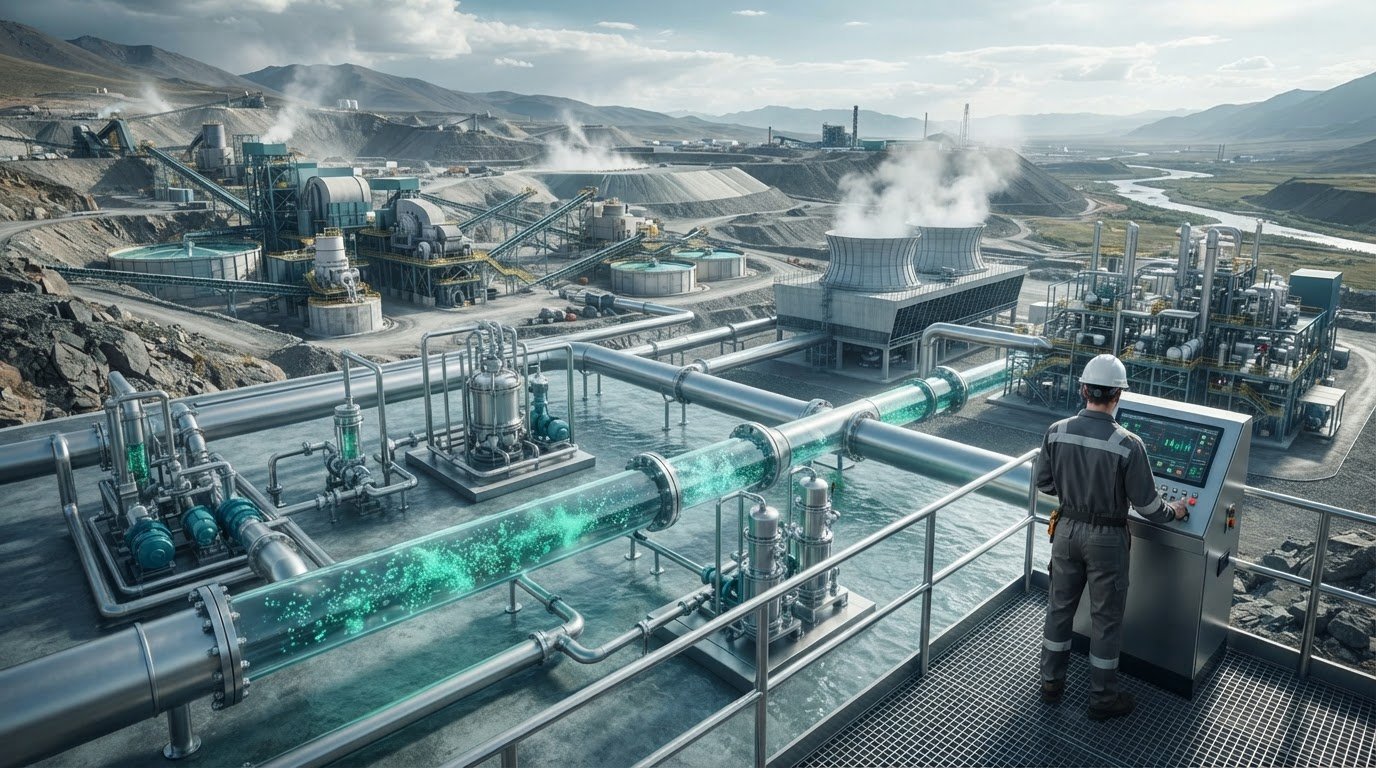
High-salinity water matrices found in coastal industrial facilities and thermal desalination plants create conditions that accelerate biocide degradation and shift the pH equilibria that govern oxidizing chemistry performance. Brackish water feed streams introduce elevated chloride concentrations that interact with oxidant residuals, generating disinfection byproducts that may trigger discharge threshold concerns. Selecting Water Treatment Biocides with demonstrated stability across high-conductivity, high-salinity matrices is a non-negotiable baseline for these environments.
Legionella control in cooling towers demands a structured, documented biocidal protocol rather than opportunistic treatment. The organism's ability to survive within protozoan hosts inside biofilm communities means that surface-level microbial counts can appear acceptable while protected Legionella populations remain viable. Effective programs combine oxidizing shock doses with persistent non-oxidizing treatment to address both the planktonic and biofilm-protected fractions of the microbial community.
In Reverse Osmosis systems, membrane longevity depends directly on preventing biofouling at the membrane surface. Oxidizing biocides are incompatible with polyamide RO membranes and must be fully quenched before the feed stream reaches membrane elements. Non-oxidizing chemistries, selected for membrane compatibility and validated against the specific feed water matrix, provide the persistent protection these systems require without the capital cost of premature membrane replacement.
Optimization: Dosing Strategies and Chemical Synergies
Selecting the right biocide chemistry is only half the equation. How you deploy it determines whether your program delivers genuine protection or simply consumes chemical budget without proportional results. Dosing strategy, rotation discipline, and synergistic program design are where operational outcomes are won or lost.
Microbial resistance is a real and documented threat in industrial water systems. Repeated exposure to the same biocide chemistry at sub-lethal concentrations creates selective pressure, gradually favoring resistant strains that survive treatment cycles and repopulate faster than susceptible populations. The defense is structured rotation: alternating between oxidizing and non-oxidizing chemistries on a planned schedule disrupts the adaptive mechanisms that drive resistance development. This isn't a precautionary measure; it's a fundamental program design principle that protects long-term efficacy.
Automated continuous dosing and periodic slug dosing serve different objectives, and conflating them is a consistent source of wasted chemical spend. Continuous dosing maintains a low-level residual that suppresses planktonic populations and prevents biofilm initiation. Slug dosing delivers a concentrated, time-limited dose designed to penetrate and disrupt established biofilm communities that continuous dosing can't fully address. High-performing programs use both, sequencing slug doses to coincide with seasonal microbial bloom periods or following operational changes that introduce elevated organic loads.
Surfactants play a supporting but critical role that's frequently underestimated. Thick biofilm matrices resist chemical penetration not just through their extracellular polymeric substance structure, but through surface tension effects that prevent aqueous biocide solutions from fully contacting protected cell layers. Surfactant additions reduce this surface tension barrier, improving biocide distribution through the biofilm depth and increasing effective contact time with target organisms. The result is measurably better kill performance without proportional increases in biocide dose rate.
Monitoring program success requires quantitative validation, not visual inspection. ATP bioluminescence testing measures active microbial biomass directly, providing near-real-time data on population trends that dip slides and colony counts can't match for speed. Combining ATP monitoring with periodic dip slide verification gives a complete picture: ATP tracks dynamic changes between sampling intervals, while dip slides confirm the viable organism spectrum. Together, they allow dosing adjustments to be made on evidence rather than schedule.
Synergy with Scale and Corrosion Inhibitors
Water Treatment Biocides don't operate in isolation. Biofilm matrices actively trap scale-forming minerals, creating localized deposits that are significantly harder to remove than scale formed on clean surfaces. Controlling microbial populations prevents this bio-matrix from developing, which directly improves the performance of Water Treatment Scale Inhibitors by keeping surfaces accessible. Film-forming corrosion inhibitors depend on the same clean surface conditions; biofilm disrupts the protective film, creating gaps where corrosion initiates. Compatibility between biocide actives and inhibitor chemistries must be validated before deployment, since certain cationic biocides can interact with anionic inhibitor formulations and cause precipitation that compromises both programs simultaneously.
Custom Dosing Strategies for Operational Reliability
Seasonal microbial dynamics demand adaptive dosing schedules, not static ones. Warmer months accelerate biological growth rates and shift dominant organism profiles, requiring higher dose frequencies and chemistry adjustments that a fixed annual program can't accommodate. Technical consulting that maps dosing schedules against historical microbial data and seasonal temperature profiles consistently reduces total chemical consumption by eliminating reactive overdosing during low-risk periods while ensuring adequate protection during peak bloom windows. A professionally audited biocide program typically recovers its consulting investment through reduced chemical spend, extended asset service intervals, and avoided unplanned downtime. Connect with JAS Global Industries to develop a tailored biocide program built around your system's specific operating conditions and microbial risk profile.
JAS Global Industries: Advanced Formulations and Technical Expertise
Since 1998, JAS Global Industries has operated at the intersection of industrial chemistry and critical infrastructure protection. That's not a marketing position; it's a track record built across thermal desalination plants, mineral processing circuits, cooling systems, and process water operations spanning the Middle East, Africa, Asia, and Europe. Where distribution-focused suppliers offer product catalogues, JAS Global offers something fundamentally different: the technical depth to diagnose your specific microbial risk profile and engineer a response to it.
The distinction matters because no two industrial water systems present identical challenges. A coastal desalination facility operating high-salinity feed water at elevated temperatures faces a completely different Water Treatment Biocides requirement than a mining flotation circuit managing fluctuating organic loads and anaerobic SRB populations. Generic solutions address neither effectively. That's the gap JAS Global's approach is built to close.
Tailor-Made Solutions for Complex Industrial Plants
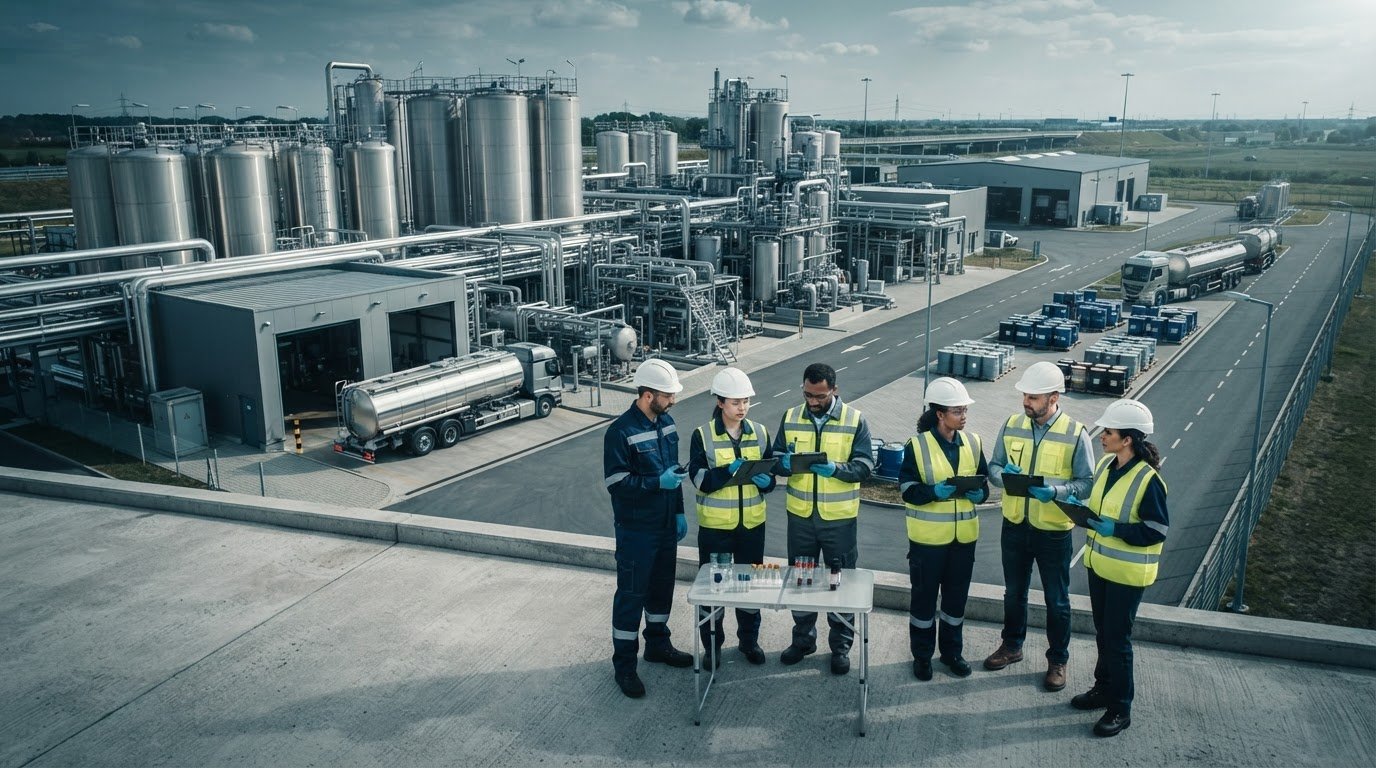
Every JAS Global engagement begins with a technical audit of your actual operating conditions, not assumptions drawn from industry averages. Water matrix analysis covers pH range, temperature profile, dissolved solids concentration, organic load, and dominant microbial species. From that foundation, custom biocide formulations are developed and validated through laboratory testing against your specific water chemistry before a single litre enters your system.
This process consistently identifies optimization opportunities that standard programs miss. Facilities running fixed dosing schedules often discover they're overdosing during low-risk periods and underdosing during seasonal bloom windows simultaneously. Correcting that imbalance through data-driven dosing design reduces chemical consumption while improving protection outcomes. It's a commitment to sustainable, cost-effective chemistry that treats your operational budget as seriously as your microbial risk.
JAS Global's global Research and Innovation centers provide the analytical infrastructure to tackle site-specific challenges that fall outside standard formulation parameters. High-conductivity brine systems, membrane-sensitive RO circuits, process environments where biocide residuals must remain compatible with downstream product quality: these aren't edge cases to be managed around. They're engineering problems with engineered solutions.
Partnering for Long-Term Infrastructure Protection
Supply reliability is non-negotiable when biocide continuity is the difference between controlled microbial populations and an unplanned shutdown. JAS Global's global logistics network and bulk chemical supply capabilities ensure that program continuity isn't disrupted by procurement gaps, particularly for operations running large-scale cooling or desalination infrastructure where dosing interruptions carry immediate consequences.
The Dubai presence provides a strategic service hub for rapid technical response across Gulf and regional operations, supporting both scheduled program reviews and urgent field consultations when system conditions shift unexpectedly.
Effective Water Treatment Biocides programs aren't installed and forgotten. They evolve with your system, your seasonal microbial dynamics, and your regulatory environment. That's the partnership model JAS Global brings to every client relationship.
Contact JAS Global Industries for a Technical Audit of your Water Treatment Program and build a biocide strategy grounded in your actual operating conditions, not catalogue defaults.
Build a Biocide Program That Protects What Matters
Effective Water Treatment Biocides programs don't happen by default. They're built through deliberate chemistry selection, disciplined rotation schedules, and dosing strategies grounded in your actual system conditions rather than generic industry assumptions. The difference between a reactive chemical spend and a proactive water security program comes down to that precision.
Three principles carry the most weight: match your chemistry to your water matrix, rotate biocide classes to stay ahead of microbial adaptation, and validate performance with quantitative monitoring rather than visual checks. Get those right, and the downstream benefits, protected assets, reduced energy costs, and avoided downtime, follow.
JAS Global Industries brings over two decades of field-proven expertise, advanced custom formulations developed through dedicated R&I centers, and a global logistics network serving operations across the Middle East, Africa, and Asia. Every engagement starts with a technical audit built around your specific operating conditions.
Your infrastructure deserves a program engineered for it. Optimize your microbial control with JAS Global Industries' technical consulting and take the first step toward lasting water security.
Frequently Asked Questions About Water Treatment Biocides
What is the difference between oxidizing and non-oxidizing biocides?
Oxidizing biocides, such as chlorine, bromine, and chlorine dioxide, kill microorganisms by chemically attacking cellular membranes and breaking down biofilm matrices. They act fast but dissipate quickly. Non-oxidizing biocides, including isothiazolinones and quaternary ammonium compounds, work by disrupting cellular metabolism or membrane integrity and persist longer in the system.
The practical implication is that neither class alone provides complete protection. Oxidizing chemistries deliver rapid knockdown during active blooms; non-oxidizing chemistries maintain suppression between doses and penetrate established biofilm communities that oxidants can't fully reach. Most effective industrial programs use both in a coordinated rotation.
How often should biocides be dosed in an industrial cooling tower?
Dosing frequency depends on your system's organic load, water temperature, microbial risk profile, and seasonal conditions rather than a universal schedule. Continuous low-level dosing suppresses planktonic bacteria day-to-day, while periodic slug doses are used to disrupt established biofilm, typically every one to two weeks or following any operational change that elevates biological load.
Warmer months accelerate microbial growth rates significantly, often requiring higher dose frequencies and chemistry adjustments. A fixed annual schedule rarely reflects these dynamics accurately. Dosing programs tied to real-time ATP monitoring data will consistently outperform calendar-based approaches in both protection and chemical efficiency.
Can biocides cause corrosion in stainless steel heat exchangers?
Yes, under specific conditions. Oxidizing biocides, particularly free chlorine at elevated concentrations, can accelerate pitting corrosion on stainless steel surfaces, especially in high-chloride environments or at elevated temperatures. The risk is concentration-dependent: residuals maintained within recommended operating ranges present significantly lower corrosion risk than uncontrolled overdosing.
Non-oxidizing biocides are generally more compatible with stainless steel metallurgy and are often preferred in heat exchanger circuits where corrosion risk is a primary concern. Regardless of chemistry selected, biocide compatibility should be validated against your specific alloy grades and operating conditions before program deployment, not assumed from generic product data sheets.
Is it necessary to alternate between different types of biocides?
Rotation isn't optional if long-term program efficacy matters to you. Repeated exposure to the same biocide chemistry at sub-lethal concentrations creates selective pressure, favoring microbial strains that survive treatment and repopulate faster than susceptible populations. Over time, a single-chemistry program loses effectiveness without any change in dosing rate or frequency.
Structured rotation between oxidizing and non-oxidizing Water Treatment Biocides disrupts the adaptive mechanisms that drive resistance development. The rotation schedule should be planned, not reactive; switching chemistries only after a program fails is a costly lesson that a disciplined rotation calendar prevents from the outset.
How do biocides affect the performance of reverse osmosis membranes?
Oxidizing biocides are chemically incompatible with polyamide RO membranes and will degrade membrane performance irreversibly if they reach the membrane surface. Any oxidizing treatment applied upstream must be fully neutralized, typically with sodium bisulfite, before the feed stream contacts membrane elements. Residual oxidant testing before the membrane stage is a non-negotiable operational control.
Non-oxidizing biocides are the appropriate chemistry for protecting RO systems, but selection must be validated for membrane compatibility against your specific feed water matrix. Biofouling on RO membranes accelerates differential pressure rise and reduces permeate flux, shortening membrane service life and increasing replacement costs. Persistent, membrane-compatible biocide treatment is a direct capital protection measure.
What are the environmental regulations regarding biocide discharge in 2026?
Regulatory frameworks vary significantly by region, and programs must account for this from the design stage. European operations are governed by the Biocidal Products Regulation, which requires active substance approval and product authorization before any chemistry can be placed on the market. Middle Eastern jurisdictions apply national environmental authority thresholds for residual oxidants and biocide metabolites in discharge streams.
It's advisable to verify current discharge limits with the relevant regulatory authority in your operating jurisdiction, since thresholds and approved substance lists are subject to periodic revision. Generic compliance assumptions drawn from other regions create real legal and operational exposure. A technically audited program built with local discharge limits as a design parameter is far more defensible than one adapted retrospectively.
How can I monitor the effectiveness of my biocide program in real-time?
ATP bioluminescence testing is the most responsive tool available for real-time microbial monitoring. It measures active microbial biomass directly in your system water within minutes, allowing dosing decisions to be made on current biological data rather than a fixed schedule. ATP results reflect population trends quickly enough to catch an emerging bloom before it establishes as biofilm.
Combining ATP monitoring with periodic dip slide verification gives a more complete picture. ATP tracks dynamic changes between sampling intervals; dip slides confirm the viable organism spectrum present. Together, they provide the quantitative validation that a biocide program requires to demonstrate performance, support regulatory documentation, and justify dosing adjustments with evidence rather than assumption.
Do biocides interfere with scale inhibitors or flocculants?
Compatibility between biocide actives and other treatment chemistries is a genuine concern that must be validated before deployment. Certain cationic biocides, including some quaternary ammonium compounds, can interact with anionic scale inhibitor or flocculant formulations, causing precipitation that compromises both programs simultaneously and can introduce new fouling deposits rather than preventing them.
The risk is manageable with proper formulation selection and dosing sequence design, but it can't be assumed away. Jar testing and compatibility screening against your actual water matrix and full treatment chemical suite should precede any program change. This is particularly important in systems where biocide additions coincide with flocculant dosing points, since the interaction risk is highest at those contact zones.