
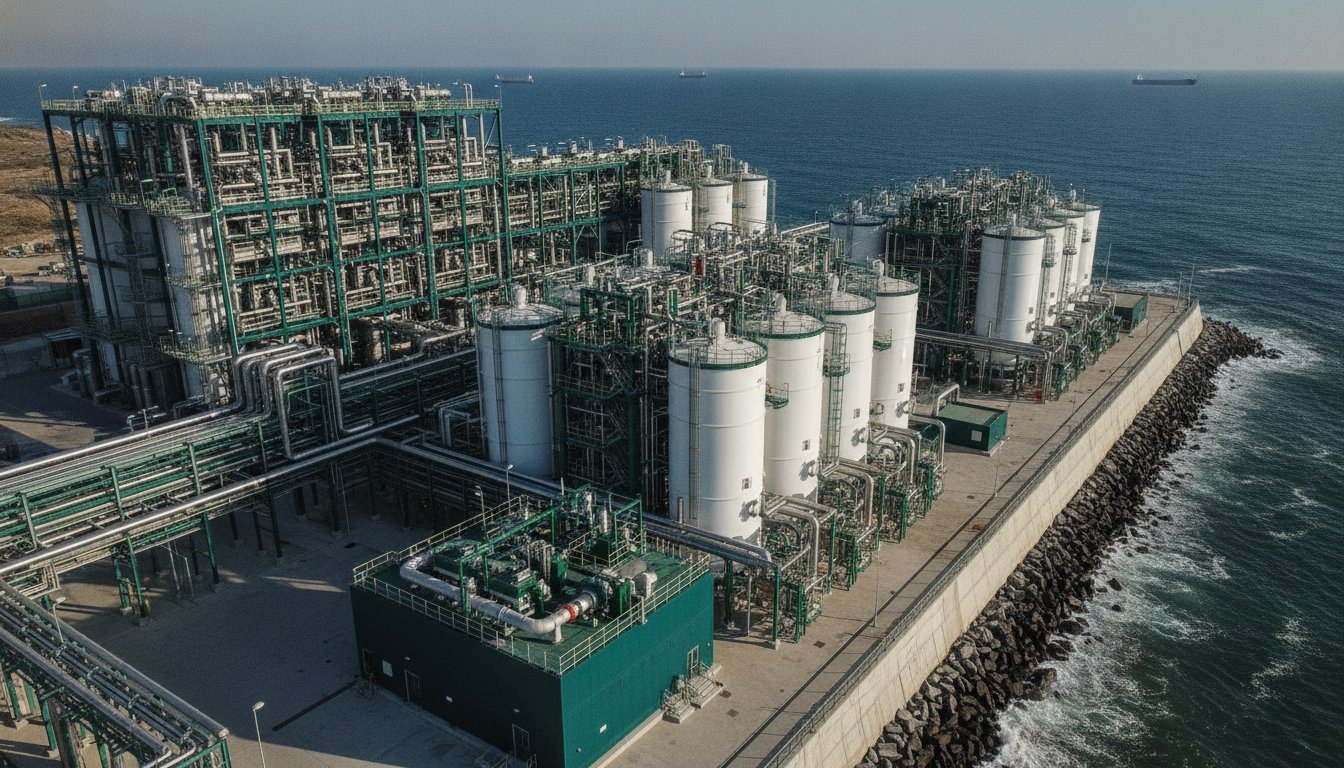
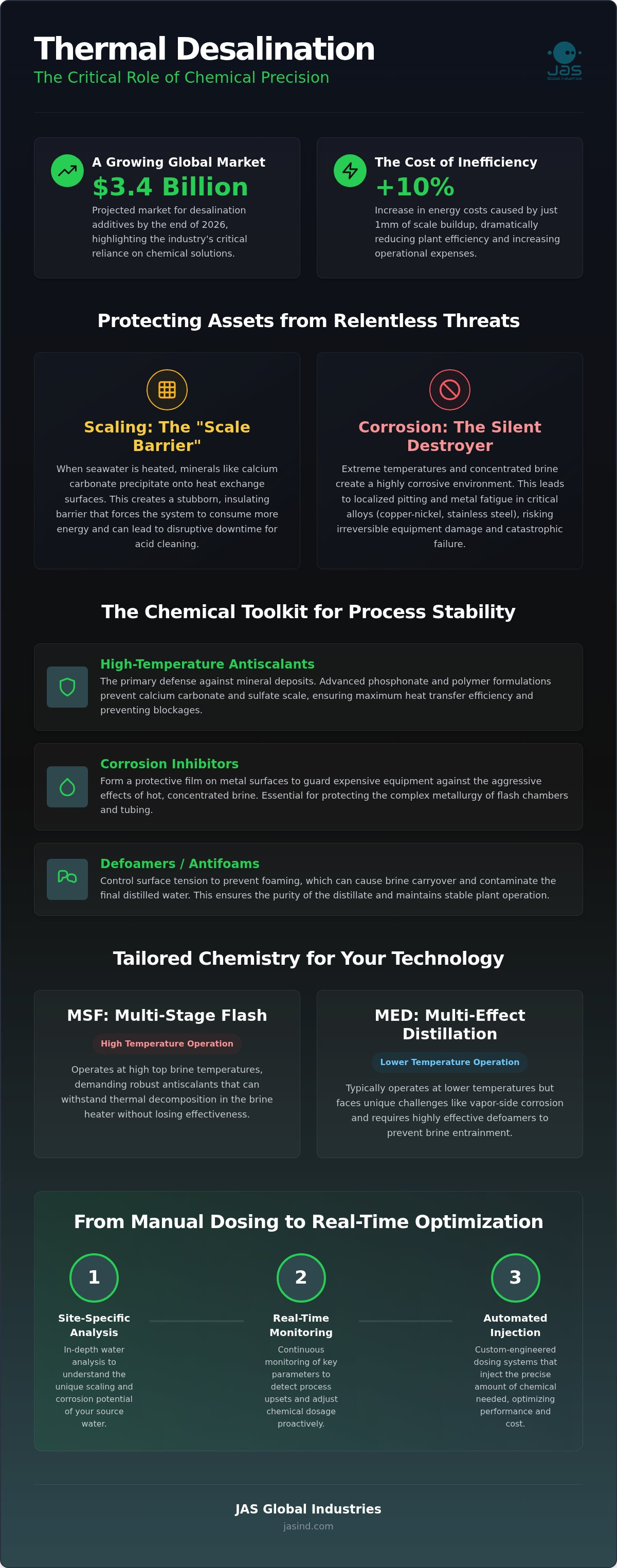
Did you know the global market for desalination additives is projected to reach $3.4 billion by the end of 2026? This massive investment reflects a critical reality: chemical precision is the primary safeguard for the immense energy required by modern water infrastructure. For operators of MSF and MED plants, the challenge is constant. You already know that even minor scale buildup can spike energy costs and lead to frequent, disruptive downtime for acid cleaning. It is a persistent struggle to maintain distillate purity while defending expensive equipment against the relentless threat of corrosion.
This guide demonstrates how advanced Thermal Desalination Chemicals stabilize your processes and ensure long-term operational reliability. We will explore how custom formulations prevent costly scaling, mitigate foaming issues, and act as a vital guardian for your plant's performance. By the end of this article, you'll understand the essential chemical strategies needed to protect your resources and optimize every stage of the thermal desalination cycle. We'll look at the specific roles of antiscalants and corrosion inhibitors in maintaining the stability of your most critical industrial assets.
Key Takeaways
- Learn how specialized Thermal Desalination Chemicals manage extreme heat to prevent the rapid acceleration of scale and metal fatigue in MSF and MED units.
- Understand the critical role of antiscalants in stopping calcium deposits and how defoamers maintain the purity of your distillate by controlling surface tension.
- Discover why even 1mm of scale can increase energy costs by 10% and how to mitigate localized corrosion in copper-nickel and stainless steel alloys.
- Explore the transition from manual dosing to real-time monitoring through site-specific water analysis and automated injection systems.
- See how custom formulations and technical consulting from global R&I centers ensure the long-term stability of critical water infrastructure.
What are Thermal Desalination Chemicals and Why are They Vital?
Thermal Desalination Chemicals are not mere additives; they are the fundamental stabilizers of the world's most energy-intensive water production processes. These specialty reagents are engineered specifically to manage the volatile conditions found inside multi-stage flash and multi-effect distillation units. In these environments, seawater is subjected to extreme temperatures and pressures. This creates a catalyst for rapid mineral deposition and metal degradation. Without a precise chemical strategy, the very heat used to purify water becomes the primary cause of system failure.
The primary challenge is the thermal acceleration of scale. When seawater is heated, calcium carbonate and other minerals precipitate onto heat exchange surfaces. This creates a stubborn, insulating barrier. Even a thin layer of scale forces the system to consume more energy to achieve the same distillate output, driving up the energy-per-cubic-meter cost. Beyond efficiency loss, the chemical neglect of these systems leads to localized pitting and metal fatigue. These structural failures are often irreversible and lead to catastrophic equipment replacement costs.
Precision chemistry is the only way to maintain heat transfer efficiency over decades of operation. High-performance Thermal Desalination Chemicals ensure that the capital investment in these massive facilities is protected. By preventing the "Scale Barrier," operators can maintain high distillate quality while minimizing the environmental footprint of the desalination process. It is a balance of industrial power and chemical finesse.
MSF vs. MED: Differing Chemical Requirements
The chemical strategy must adapt to the specific technology in use. Multi-Stage Flash (MSF) plants operate at high top brine temperatures. They require robust antiscalants that can withstand thermal decomposition in the brine heater. In contrast, Multi-Effect Distillation (MED) systems typically operate at lower temperatures but face unique challenges like vapor-side corrosion and foaming. A "one-size-fits-all" approach fails because it ignores the distinct thermodynamic profiles of these processes. Effective Desalination requires a bespoke chemical profile for every facility to ensure maximum uptime.
The Link Between Chemistry and Global Water Security
In arid regions like the Middle East, thermal desalination is a pillar of societal stability. It's the primary source of potable water for millions of people. Chemical stability ensures this supply remains continuous and safe. As a global guardian of these critical resources, JAS Global Industries provides the specialized Thermal Desalination Chemicals and technical expertise required to protect this infrastructure. By optimizing chemical dosing and preventing equipment failure, we help secure the future of water for communities across the globe. We believe that reliable water is a fundamental right, and reliable chemistry makes it possible.
Essential Chemical Formulations for Thermal Processes
Maintaining the structural integrity of a distillation plant requires more than just mechanical maintenance. It demands a sophisticated suite of Thermal Desalination Chemicals tailored to the specific thermodynamics of the facility. These formulations act as the primary defense against the aggressive nature of concentrated brine and high-temperature steam. Without these reagents, the efficiency of the heat exchange process would degrade within days, leading to unsustainable energy consumption.
The chemical toolkit for thermal plants centers on four pillars. Antiscalants prevent mineral deposits. Defoamers ensure distillate purity. Corrosion inhibitors protect the complex metallurgy of the flash chambers. Finally, biocides manage biofouling in the intake systems before the water enters the thermal cycle. Each component must work in harmony to protect the plant's lifecycle. Modern Chemical Use in Water Treatment has moved toward high-efficiency, multi-functional products that reduce the overall chemical footprint while maximizing protection.
High-Temperature Antiscalants
Antiscalants are essential for managing calcium carbonate and sulfate deposits. The industry has seen a significant evolution from polyphosphates to advanced phosphonate technologies. Polyphosphates often degrade at temperatures exceeding 90°C, losing their efficacy in the critical brine heater stage. Phosphonates provide the necessary thermal stability to remain active throughout the process. Threshold inhibition is the mechanism for preventing crystal growth by interfering with the lattice structure at sub-stoichiometric concentrations. This allows for extremely low dosing rates while maintaining clean heat transfer surfaces.
Specialized Defoaming Agents
Boiling brine naturally generates foam that can compromise water quality. If left uncontrolled, this foam rises into the vapor space, causing "carry-over." This happens when brine droplets contaminate the steam, resulting in high conductivity and poor distillate purity. Operators typically choose between silicone-based formulations, which offer high efficiency at low concentrations, and non-silicone alternatives. These choices depend on downstream requirements and strict potable water standards. For those seeking to optimize these complex dosing strategies, JAS Global Industries provides the custom formulations and technical consulting necessary to safeguard critical infrastructure.
Protecting expensive metallurgy from the corrosive effects of hot seawater is equally vital. Corrosion inhibitors form a protective film on copper-nickel and stainless steel alloys, preventing pitting and stress corrosion cracking. By integrating these specialized Thermal Desalination Chemicals into a comprehensive treatment program, plant managers can ensure the long-term reliability of their most critical industrial assets.
Operational Challenges: Mitigating Scaling and Corrosion
The "Scale Barrier" is more than a technical hurdle. It's a direct threat to economic viability. Research indicates that just 1mm of scale accumulation on heat transfer surfaces can increase energy costs by 10%. In the high-stakes environment of thermal distillation, this inefficiency compounds rapidly. Operators must manage the delicate balance between maximum output and the physical limits of their hardware. Efficient Thermal Desalination Chemicals act as the primary defense against this energy drain. Protecting equipment. Optimizing energy.
Corrosion presents an equally severe risk to infrastructure longevity. Pitting and crevice corrosion often target stainless steel and copper-nickel alloys. These failures are frequently localized and difficult to detect until a leak occurs. Managing dissolved oxygen levels is vital to mitigate these risks. When oxygen levels aren't strictly controlled, the rate of metal degradation accelerates. This creates a direct link between chemical precision and the long-term security of global water resources. Protecting assets. Securing supply.
Effective industrial water treatment is not just about maintenance. It's a strategic pillar for operational uptime. By integrating advanced chemical strategies, plants can avoid the heavy costs of unplanned downtime and premature equipment replacement. This holistic approach ensures that every cubic meter of water is produced with maximum efficiency and minimum waste.
Identifying Scale Types in Thermal Units
Scale formation depends heavily on the Top Brine Temperature (TBT). At lower temperatures, alkaline scales like calcium carbonate and magnesium hydroxide are the primary concern. As temperatures rise, the risk of non-alkaline deposits like calcium sulfate increases significantly. Preventing these deposits requires a proactive approach. While chemical cleaning cycles are necessary for remediation, the goal of any high-performance Thermal Desalination Chemicals program is prevention. Constant monitoring allows operators to adjust dosing before scale becomes a permanent barrier.
Protecting Critical Metallurgy
Heat exchanger tubes are vulnerable to seawater impingement and aggressive brine concentrations. These components are the heart of the desalination process. JAS Global formulations are engineered to create microscopic protective films on metal surfaces. These films act as a barrier against both chemical attack and physical erosion. In regions with high-salinity feedwaters, this protection is the difference between a decade of service and a mid-cycle failure. We focus on providing the stability needed for plants to operate at peak performance, regardless of the feedwater's complexity.
Strategic Selection and Dosing for Process Optimization
Operational excellence begins with data. Selecting the right Thermal Desalination Chemicals is not a generic procurement task. It is a strategic decision that requires rigorous, site-specific water analysis. Seawater chemistry fluctuates based on geography and seasonal changes. A formulation that works in the North Sea will likely fail in the Arabian Gulf. Precision is the only way to avoid suboptimal yields and protect the massive capital investment of a thermal plant.
Modern facilities are rapidly moving away from manual injection. Dosing automation now integrates real-time sensors to monitor brine concentration, pH, and temperature. This ensures the exact volume of reagent is used at every stage. No waste. No risk. Technical audits supplement this automation by analyzing distillate purity and brine chemistry to identify hidden bottlenecks. These audits reveal how chemical interactions affect heat transfer coefficients over time, allowing for proactive adjustments before efficiency drops.
Environmental compliance is a core pillar of modern operations. As global water scarcity drives the desalination chemicals market toward a projected $3.4 billion valuation by 2026, the environmental impact of brine discharge is under intense scrutiny. Using biodegradable additives ensures that your facility meets tightening discharge standards without sacrificing performance. It's about being a responsible corporate citizen while maintaining industrial power. Stability and sustainability must go hand in hand.
Custom Formulations and R&I
Off-the-shelf solutions often compromise plant efficiency because they ignore the unique mineral profiles of local feedwaters. Tailor-made formulations are engineered for the specific thermodynamics of your facility. JAS Global leverages dedicated R&I centers to develop high-performance Water Treatment Antiscalants. These custom reagents are tested against your specific water chemistry to ensure maximum crystal inhibition. This bespoke approach transforms chemicals from a simple consumable into a vital guardian of your process.
Cost-Benefit Analysis of Advanced Chemistry
The ROI of a premium chemical program is found in reduced downtime and extended equipment life. It's about protecting the plant's entire lifecycle. In hybrid facilities, effective chemistry prevents fouling that could damage expensive downstream membranes. It also significantly reduces the frequency of aggressive acid cleaning procedures. These cleanings are not only costly but also damage the protective oxide layers on metallurgy. By investing in advanced chemistry, you secure the long-term reliability of your infrastructure. Consult with our specialists to design a dosing strategy that maximizes your plant's ROI.
JAS Global Industries: Your Partner in Desalination Excellence
JAS Global Industries operates as a vital global guardian for the world's most critical resources. Since 1998, we've established a legacy of trust within the mining and water treatment sectors. We recognize that thermal desalination is more than an industrial process; it's a pillar of stability for arid regions. Our commitment goes beyond being a mere supplier. We act as a foundational industry presence, focusing on the fundamental needs of society through the provision of high-performance Thermal Desalination Chemicals. Protecting resources. Powering progress.
Our reach is truly global, yet our focus remains deeply local. From our headquarters in Dubai, we support massive infrastructure projects across the Middle East, Africa, Asia, and Europe. This geographic diversity allows us to understand the unique challenges of different seawater chemistries and regulatory environments. We prioritize long-term partnerships over transactional agreements. This ensures our technical industrial expertise contributes directly to your plant's operational reliability and ethical purpose. We believe that sustainable water production is the bedrock of modern society.
Global Logistics and Supply Reliability
Desalination is a 24/7 operation that can't afford interruptions. A break in the chemical supply chain is a direct threat to water security. To mitigate this risk, we maintain strategic manufacturing plants located near major industrial hubs. This ensures a steady, logical flow of reagents to your facility. Our logistics network is built on the principles of safety and stability. We don't just deliver products; we provide the security of an uninterrupted supply chain. Reliability is our signature. Protection is our promise.
Expert Technical Consulting
Every plant has a unique thermodynamic profile. Our multiple R&I centers focus on developing custom dosing strategies that optimize Thermal Desalination Chemicals for your specific MSF or MED units. We offer comprehensive support through on-site laboratory testing and detailed process audits. These services identify inefficiencies and protect your metallurgy from premature failure. By moving from a macro vision of global protection to the micro-details of chemical interaction, we ensure your facility operates at peak performance. Our dedicated internal environmental responsibility program guides every formulation we create. Contact our specialists today for a comprehensive water treatment audit to secure your operational future.
Securing the Future of Global Water Infrastructure
Stabilizing thermal distillation requires a balance of industrial power and chemical finesse. We've explored how specialized Thermal Desalination Chemicals serve as the primary defense against energy-intensive scale buildup and corrosive degradation. By implementing site-specific water analysis and automated dosing, operators can protect their capital investments while ensuring a continuous supply of potable water. These strategies transform chemical management into a vital guardian of plant longevity. No waste. No risk. Just reliable performance.
Reliability is the bedrock of modern infrastructure. Since 1998, JAS Global Industries has acted as an indispensable partner for the world's most critical industries. From our headquarters in Dubai's industrial hub, we leverage global R&I centers to develop custom formulations that meet your plant's unique thermodynamic needs. We provide the stability you need to operate with confidence and the expertise to ensure long-term sustainability.
Optimize Your Thermal Desalination Plant with JAS Global Chemicals
Take the next step in securing your operational future today. We look forward to building a long-term partnership that protects your assets and our global water resources.
Frequently Asked Questions
What are the most common chemicals used in thermal desalination?
The primary reagents include high-temperature antiscalants, specialized defoamers, and robust corrosion inhibitors. Antiscalants prevent mineral deposits on heat exchange surfaces while defoamers manage the surface tension of boiling brine to ensure vapor purity. Biocides are also used in the intake systems to manage biofouling before the water reaches the thermal stages.
How do antiscalants improve the efficiency of MSF plants?
Antiscalants improve MSF efficiency by preventing the formation of hard alkaline scales like calcium carbonate in the brine heater. Without these reagents, a 1mm layer of scale can increase energy consumption by 10%. By maintaining clean heat transfer surfaces, antiscalants allow the plant to operate at its design Top Brine Temperature without frequent acid cleaning shutdowns.
Can defoamers affect the quality of the produced distillate?
Defoamers directly impact distillate quality by controlling foam height in the flash chambers. If foam levels are too high, brine droplets can be carried into the vapor stream. This "carry-over" results in high conductivity and poor water purity. High-performance defoamers maintain low surface tension; this ensures that only pure steam reaches the condensers.
Why is corrosion more aggressive in thermal desalination than in RO?
Corrosion is more aggressive in thermal processes because heat significantly accelerates chemical reaction rates. The combination of high temperatures and concentrated seawater creates a highly corrosive environment for stainless steel and copper-nickel alloys. Unlike RO, which operates at ambient temperatures, thermal plants must defend against pitting and stress corrosion cracking driven by thermal stress.
Are thermal desalination chemicals environmentally safe for brine discharge?
Modern Thermal Desalination Chemicals are increasingly formulated to be biodegradable and compliant with strict environmental discharge standards. The industry is shifting toward phosphorus-free and biodegradable antiscalants to minimize the impact on marine ecosystems. JAS Global prioritizes these sustainable formulations to ensure that brine discharge meets both local and international environmental regulations.
How often should a thermal desalination plant undergo a technical audit?
A comprehensive technical audit should be conducted at least once per year to ensure optimal dosing and process efficiency. More frequent audits may be necessary if the feedwater salinity or temperature fluctuates significantly between seasons. Regular audits help identify hidden bottlenecks and allow for the adjustment of chemical strategies before they lead to costly equipment failure.
What is the difference between MSF and MED chemical requirements?
The primary difference lies in the operating temperatures and thermodynamics of the two processes. MSF plants operate at higher Top Brine Temperatures and require antiscalants with extreme thermal stability. MED plants operate at lower temperatures but face unique vapor-side corrosion and foaming issues. A tailored chemical approach is essential because a reagent optimized for MSF might not perform efficiently in an MED environment.
How does JAS Global Industries develop custom formulations for specific plants?
JAS Global Industries uses its global R&I centers to conduct rigorous site-specific water analysis. We analyze your plant's unique feedwater mineral profile and historical operational data. This allows our specialists to engineer custom Thermal Desalination Chemicals that address specific scaling and corrosion risks. Our approach ensures that every formulation is a precise match for the facility's thermodynamic demands.