

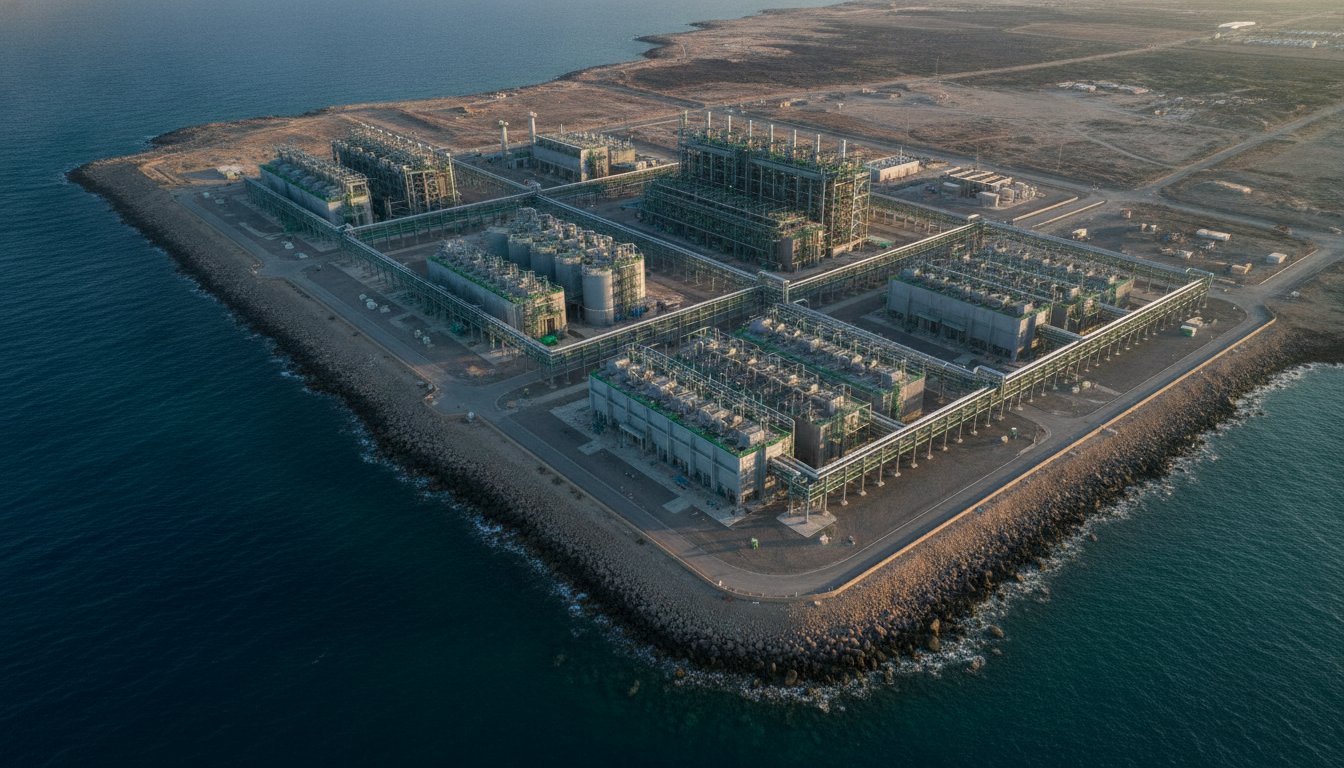
The integrity of a Multi-Stage Flash (MSF) or Multi-Effect Distillation (MED) plant is only as strong as its defense against the relentless chemistry of the sea. You likely recognize that even a thin layer of scale on a heat exchanger can drive energy costs into the red and force an expensive, unscheduled shutdown. It's a constant struggle to protect copper-nickel and titanium components from the threat of corrosion. High-performance Thermal Desalination Chemicals aren't just simple additives. They're the primary shield for your most capital-intensive infrastructure.
We believe that safeguarding these critical resources is a fundamental global responsibility. This guide explores how advanced chemical formulations ensure water security by reducing downtime and optimizing dosing precision. We'll examine technical strategies for scale inhibition, the necessity of high-temperature defoamers, and the latest innovations in infrastructure protection. You'll discover how a mission-oriented approach to chemical management extends the life of your plant and stabilizes operational costs for the long term.
Key Takeaways
- Learn how advanced scale inhibitors use threshold inhibition to maintain heat transfer efficiency and prevent mineral buildup on heat exchangers.
- Identify strategies to combat pitting and galvanic corrosion, safeguarding expensive titanium and copper-nickel alloy infrastructure.
- Discover how to match Thermal Desalination Chemicals to specific feed water salinity and seasonal temperature shifts for precise, cost-effective dosing.
- Understand the impact of foaming on vapor purity and how specialized defoamers prevent salt carryover in high-temperature distillation units.
- Explore how technical audits and tailor-made formulations optimize plant yield and contribute to long-term global water security.
The Critical Role of Chemical Treatment in Thermal Desalination Systems
Thermal desalination stands as the primary pillar of water security for arid regions, particularly across the Middle East where 45% of the world's capacity is located. Without these systems, the stability of entire nations would be at risk. However, the process of turning seawater into a life-sustaining resource is physically aggressive. Desalination through thermal methods involves extreme temperatures that transform the chemical profile of seawater. If left untreated, the salts and minerals within the brine don't just stay in solution; they transition into a destructive force.
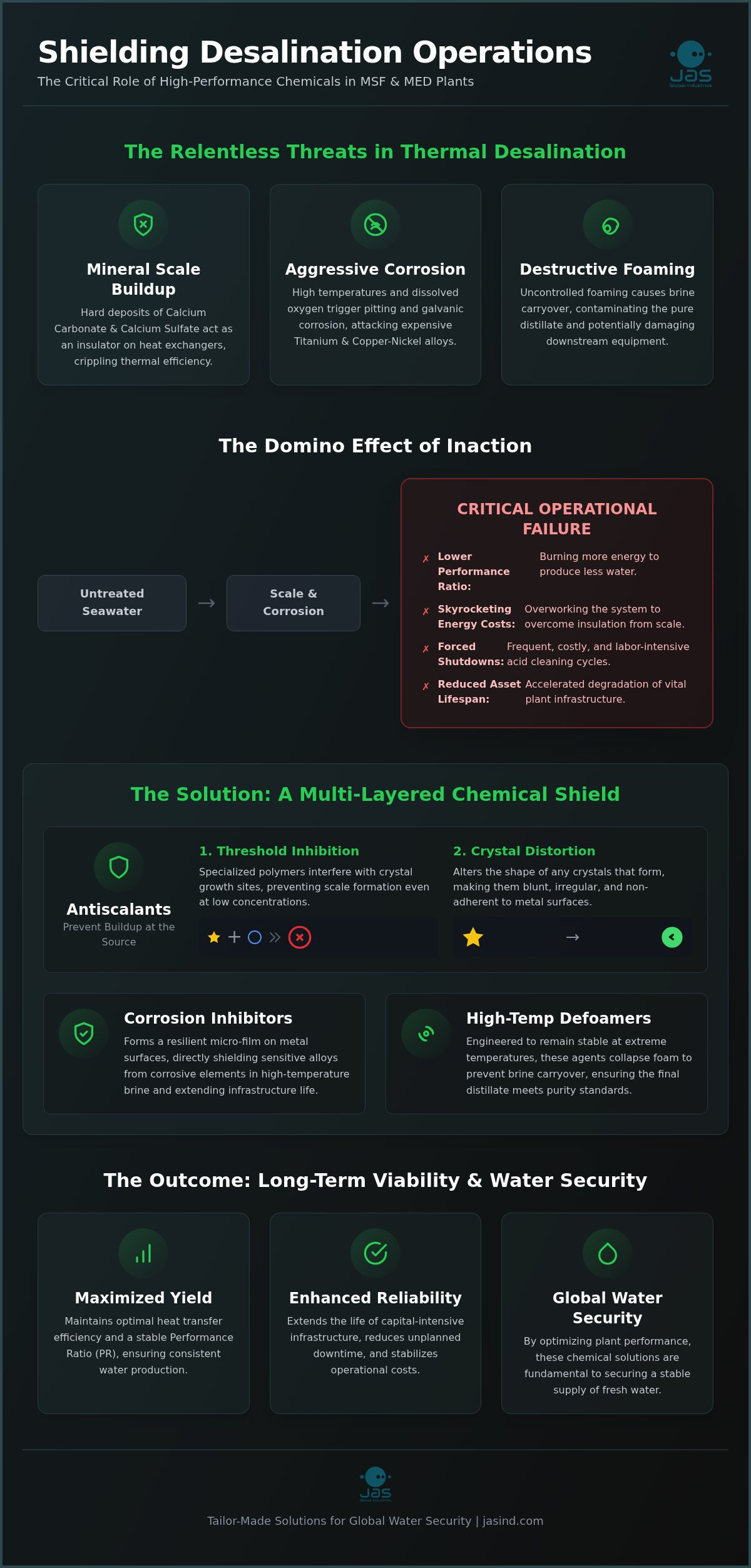
Untreated seawater causes near-instantaneous operational failure at high temperatures. The primary threats include alkaline scales like calcium carbonate and non-alkaline scales such as calcium sulfate. Additionally, dissolved oxygen triggers rapid corrosion in metallic components. The choice of Thermal Desalination Chemicals is what determines the operational ceiling of the plant. Specifically, these chemicals allow operators to push the Top Brine Temperature (TBT) higher. A higher TBT increases water production, but it also increases the rate of mineral precipitation. Without precise chemical intervention, the plant can't reach its design capacity safely.
Understanding MSF and MED Scaling Challenges
Multi-Stage Flash (MSF) plants operate under high-velocity and high-temperature conditions. This environment makes the brine heater a prime target for hard scale. In contrast, Multiple-Effect Distillation (MED) plants rely on falling film evaporation. Here, the heat transfer tubes are exceptionally vulnerable. Even microscopic deposits on these surfaces disrupt the thermal exchange. When scale accumulates, the Performance Ratio (PR) of the plant begins to drop. This loss of efficiency means the facility is burning more energy to produce less water, directly compromising the mission of resource stability.
The Economic Impact of Mineral Deposition
Mineral deposits act as a powerful thermal insulator. This insulation forces the system to consume significantly more steam to maintain production levels. Beyond energy waste, the hidden costs of scale are found in acid cleaning cycles. Frequent cleaning causes plant downtime, demands high labor costs, and accelerates the wear of expensive alloys. In the context of thermal efficiency, the Performance Ratio is defined as the mass of distillate produced per unit of heating steam consumed. Protecting this ratio through advanced Thermal Desalination Chemicals is the only way to ensure the long-term viability of the infrastructure.
Advanced Antiscalants and Scale Inhibitors for High-Temperature Operations
Thermal desalination operates at the razor's edge of physical limits. Seawater chemistry changes rapidly as temperatures rise, necessitating specialized Thermal Desalination Chemicals that remain active under extreme stress. Standard water treatment fails when Top Brine Temperatures (TBT) exceed 110°C. At these levels, the risk of corrosion and scaling increases exponentially, requiring a sophisticated defense strategy to maintain plant integrity.
Mechanism of Threshold Inhibition and Crystal Distortion
Threshold inhibition is a sophisticated chemical process. It allows antiscalants to stop mineral precipitation at sub-stoichiometric levels. Instead of reacting with every mineral ion, the chemical "poisons" the active growth sites on nascent crystals. This interference prevents them from developing into a hard, adherent lattice on heat transfer surfaces. It's a high-efficiency approach that minimizes chemical consumption while maximizing protection.
Crystal distortion goes a step further. It alters the physical shape of any crystals that manage to form, making them blunt and irregular. These distorted crystals lack the structure to bond to metallic alloy surfaces. While older polyphosphates were once common, they often hydrolyzed at high temperatures, losing their efficacy. Modern synthetic polymers, such as polymaleates and polyacrylates, offer far superior thermal stability. The efficacy of these Thermal Desalination Chemicals depends heavily on molecular weight distribution. If the chain length is too short, it won't bind effectively. If it's too long, the polymer itself may precipitate and cause fouling.
Managing Calcium Carbonate and Magnesium Hydroxide
Operators traditionally used the Langelier Saturation Index (LSI) to predict the likelihood of calcium carbonate scale. In modern thermal plants, the focus has shifted toward managing magnesium hydroxide. This becomes the dominant scale threat as TBT increases in MSF and MED systems. Magnesium hydroxide is particularly stubborn and can lead to immediate drops in the Performance Ratio.
Historically, plants relied on aggressive acid dosing to lower pH and prevent scale. This method was effective but hazardous for the infrastructure. It often led to accelerated corrosion of expensive copper-nickel or titanium components. The industry has decisively moved toward high-performance alkaline scale inhibitors. These formulations provide a protective buffer. They allow for high-efficiency operation without the risks associated with bulk acid handling. By using these advanced inhibitors, plants can maintain peak yield while extending the life of their alloy components. Ensuring that your facility uses a tailor-made chemical formulation is the most reliable way to protect your capital investment.
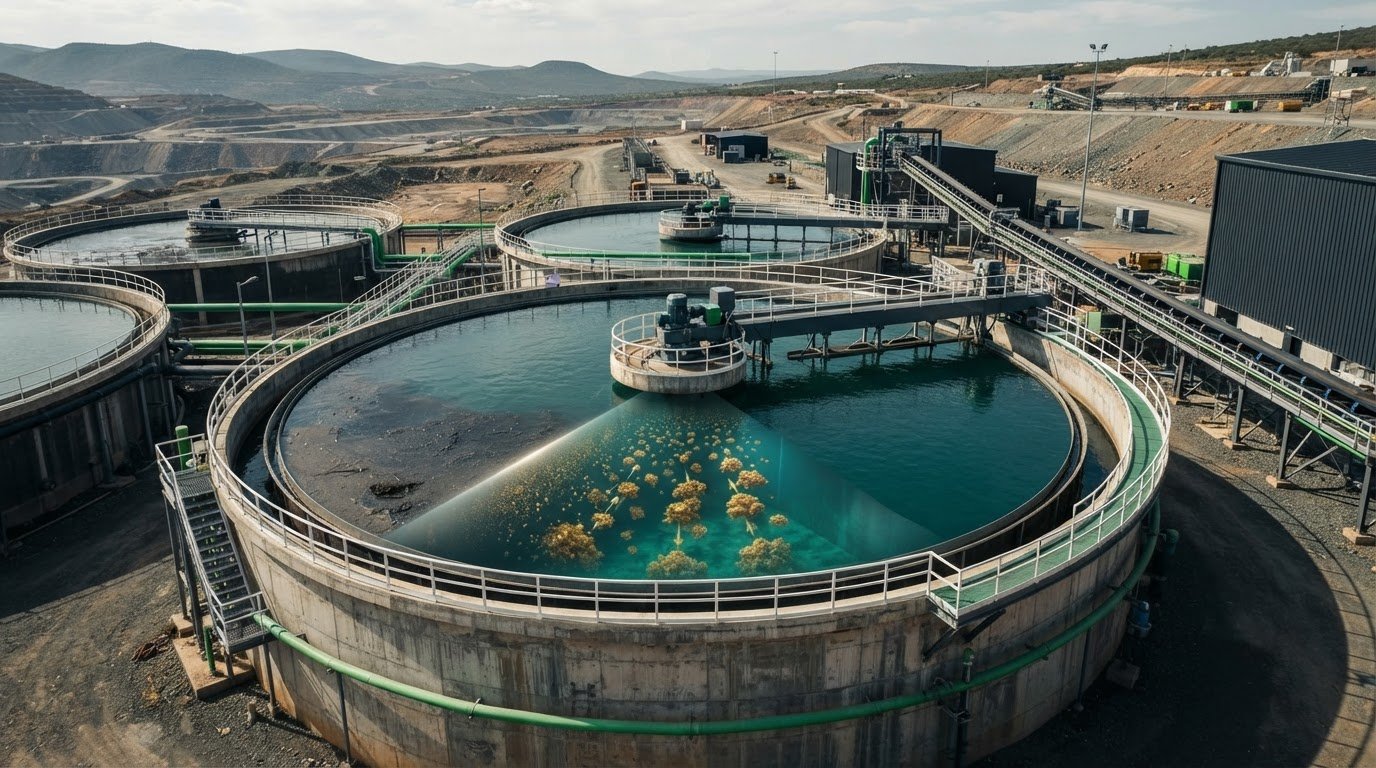
Thermal stability is non-negotiable. Polymers must remain chemically active at temperatures exceeding 100°C without breaking down. Additionally, dispersant agents play a vital role. They keep suspended solids in the brine stream, preventing silt and organic matter from settling in low-velocity zones. This multi-layered chemical approach is essential for the continuous, reliable production of fresh water.
Combating Corrosion and Foaming in Distillation Units
Scaling isn't the only threat to a plant's longevity. While mineral deposits act as insulators, corrosion acts as a silent destroyer of capital-intensive infrastructure. High-temperature brine is an aggressive electrolyte that doesn't discriminate between alloys. Protecting these assets requires a multi-faceted approach where Thermal Desalination Chemicals work in synergy to provide total system security. It's a mission of preservation as much as production.
Specialized Corrosion Inhibitors for Metallic Surfaces
Thermal plants rely on premium materials like copper-nickel, stainless steel, and titanium. Despite their resilience, these metals face three primary threats: pitting, crevice, and galvanic corrosion. Pitting is especially dangerous; it creates localized holes that can bypass the structural integrity of a tube wall in a very short time. Understanding the broader context of Industrial Water Treatment reveals that corrosion control starts at the pre-treatment stage and must be maintained throughout the thermal cycle.
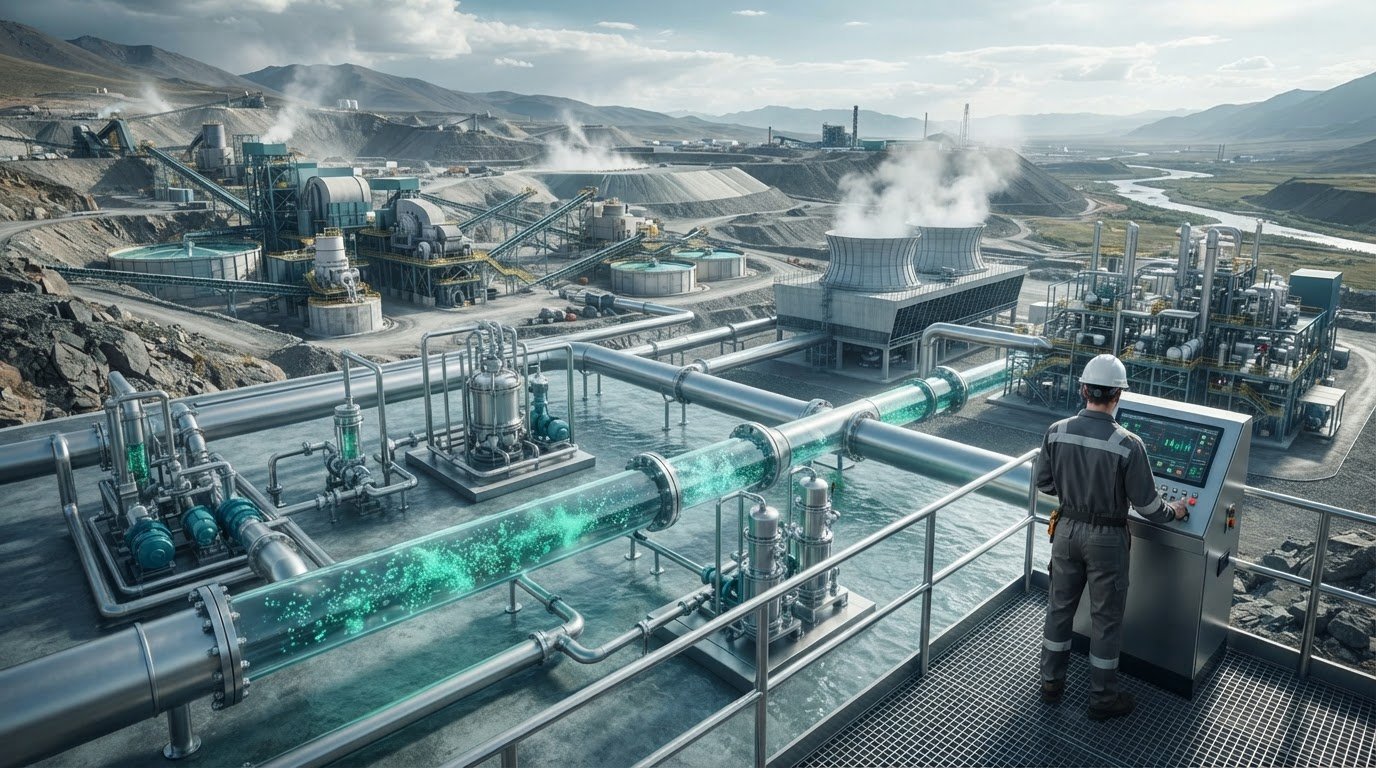
Effective protection involves the use of film-forming amines and oxygen scavengers. These chemicals create a microscopic barrier on the metal surface, shielding it from the corrosive effects of dissolved oxygen and aggressive chlorides. This protective layer is essential during both active operation and standby periods. Current Solar Desalination Research emphasizes that as we move toward higher temperatures, the chemical stability of these inhibitors becomes the deciding factor in infrastructure survival. When inhibitors and antiscalants are used together, they provide a dual layer of defense that keeps surfaces clean and metallic lattices intact.
High-Performance Defoamers for Vapor Purity
Foaming is a physical challenge with chemical consequences. In Multi-Stage Flash (MSF) plants, the rapid pressure drop during the flashing process causes seawater to foam violently. This foam is more than just a nuisance. It reduces the purity of the vapor and leads to "salt carryover," where seawater droplets are swept into the distillate. This increases the conductivity of the product water, potentially making it unfit for consumption or industrial use.
Maintaining vapor purity requires high-performance defoamers. Silicone-based options often fail in high-temperature environments or cause fouling on heat transfer surfaces. Instead, the industry relies on non-silicone defoamers designed for thermal stability. These Thermal Desalination Chemicals collapse foam quickly and prevent it from reforming, ensuring a clean separation between the brine and the distillate. Because the final product is often destined for human use, all additives must meet strict food-grade compliance standards. Protecting the water supply means ensuring that every chemical used is as safe as it is effective.
Strategic Chemical Selection: Matching Formulations to Plant Logistics
Selecting the right Thermal Desalination Chemicals isn't just a procurement task; it's a strategic operation. Feed water salinity, measured as Total Dissolved Solids (TDS), is the primary driver of chemical concentration. High-salinity seawater increases the ionic strength of the brine. This makes mineral precipitation more aggressive. Precision dosing ensures that the concentration of inhibitors matches the specific mineral load of the intake water, preventing both waste and infrastructure damage.
Seasonal temperature variations also dictate dosing strategies. In regions like the Arabian Gulf, intake temperatures fluctuate significantly between summer and winter. These shifts affect the kinetics of scale formation. Operators must adjust chemical feed rates to maintain the protective barrier without over-dosing. Additionally, compatibility testing is essential. Different additives must work in harmony. If an antiscalant and a corrosion inhibitor are incompatible, they can neutralize each other, leaving the infrastructure vulnerable. This coordination is the foundation of reliable plant performance.
MSF vs. MED: Dosing Requirements and Temperature Profiles
Multi-Stage Flash (MSF) plants are the workhorses of the industry. They often operate at Top Brine Temperatures (TBT) exceeding 110°C. This extreme heat demands robust thermal stabilizers that won't break down under pressure. In contrast, Multiple-Effect Distillation (MED) plants operate at lower temperature profiles. While the heat is less intense, the heat transfer tubes are often thin-walled and highly sensitive to fouling. even a minor scaling event can compromise the entire effect. For detailed strategies on protecting these specific alloys, see our analysis of Corrosion Inhibitors for Thermal Desalination Plants.
Environmental Compliance and Brine Management
Global resource protection requires a commitment to environmental stewardship. Regulatory trends in the Arabian Gulf and the Mediterranean are moving toward stricter discharge limits. There's a growing demand for phosphorus-free and biodegradable Thermal Desalination Chemicals. The goal is to provide high-performance protection that breaks down naturally in the environment. Balancing biodegradability with thermal stability is a complex engineering challenge. However, optimized dosing remains the most effective tool for reducing the environmental footprint. By using only what is necessary, plants minimize the chemical load in the brine stream. You can consult with our technical team to align your dosing strategy with the latest environmental standards.
JAS Global Industries: Tailor-Made Solutions for Global Water Security
JAS Global Industries acts as a vital guardian of the world's most essential resources. Since 1998, we've provided more than just industrial additives; we've served as a mission-oriented partner for nations relying on thermal desalination. We understand that water security is the foundation of social and economic stability. By framing our Thermal Desalination Chemicals as a shield for critical infrastructure, we elevate our role from a supplier to a dedicated protector of global assets. Reliability and trust are our core pillars.
Custom Formulations and Technical Audits
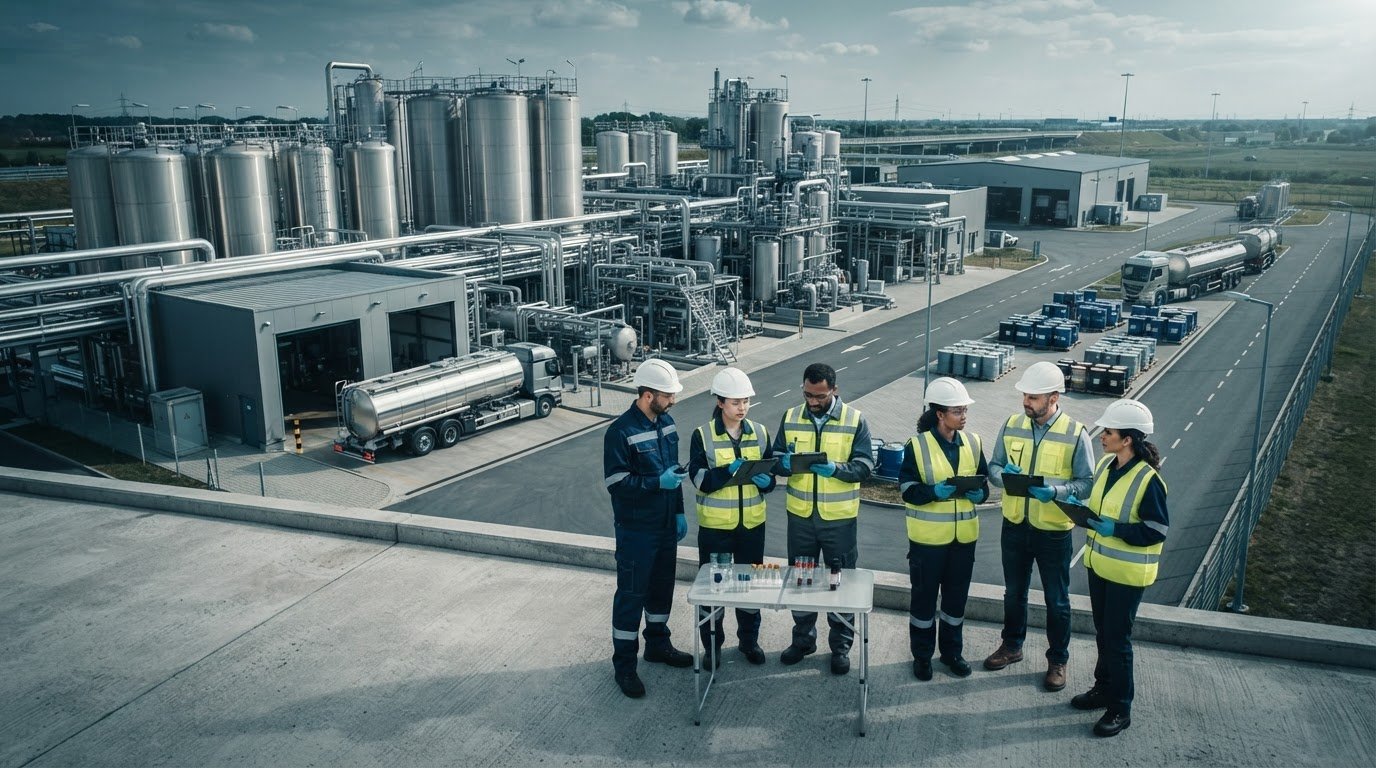
Generic, off-the-shelf chemicals often fail to address the unique chemical stressors of a specific site. We move beyond standard applications through our 'Technical Audit' process. This specialized audit analyzes existing plant yields and identifies bottlenecks in chemical efficiency. Our technical team conducts on-site laboratory testing to understand the exact mineral load and thermal profile of your facility. This data allows us to optimize dosing precision, reducing waste and extending the life of your heat exchangers.
Our R&I centers in Dubai and across the globe develop bespoke solutions for complex seawater profiles, ensuring every plant receives the specific protection it requires. These tailor-made formulations are designed for high-temperature stability, matching the rigorous demands of MSF and MED systems. By refining the chemistry at a molecular level, we help operators achieve a higher Performance Ratio while maintaining environmental compliance. Protecting your infrastructure is our primary objective.
Global Logistics and Supply Reliability
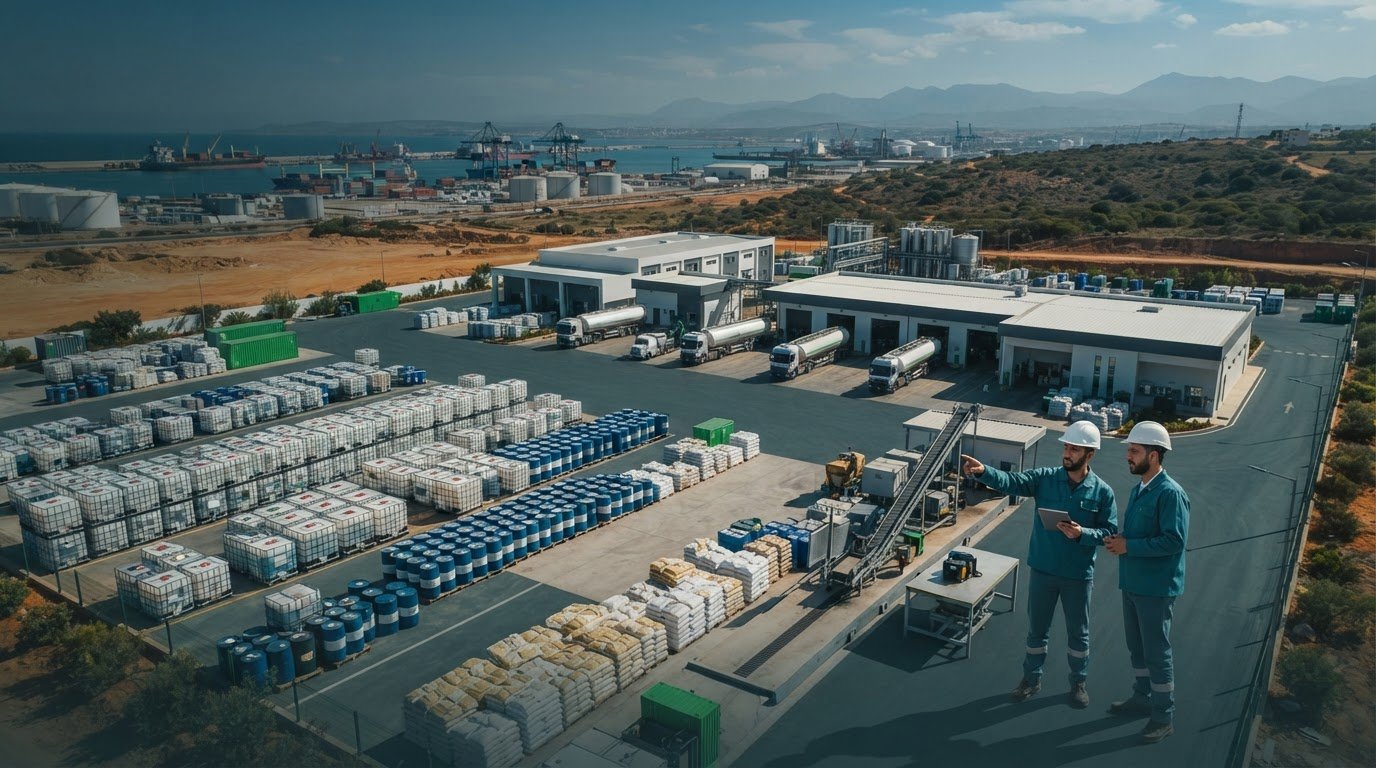
Critical infrastructure cannot afford a break in the supply chain. We manage bulk chemical supply contracts for some of the world's largest industrial-scale operations. Our global logistics network is built for stability and rapid response. With regional offices strategically located across the Middle East, Africa, and Asia, we ensure that specialized Thermal Desalination Chemicals are available whenever and wherever they're needed. This regional presence allows our experts to provide immediate technical support and process optimization.
We treat every contract as a long-term partnership rooted in safety and resource security. Our logistics team is experienced in the complexities of transporting large volumes of specialty chemicals to remote or high-demand locations. This commitment to supply reliability ensures that your plant remains operational and your community remains hydrated. If you're looking to enhance your facility's efficiency and protect your capital investment, Contact JAS Global for a Technical Audit of your Desalination Facility. We're ready to help you secure the future of your water production.
Securing the Future of Global Water Infrastructure
Efficiency in MSF and MED plants isn't just about thermodynamic design; it's about the chemical precision that protects those designs from the aggressive nature of seawater. We've explored how advanced scale inhibitors and corrosion inhibitors serve as the primary shield for your capital-intensive infrastructure. By matching Thermal Desalination Chemicals to your site's specific water chemistry and temperature profiles, you ensure long-term stability and resource security.
JAS Global Industries remains committed to this mission of global resource protection. Since 1998, we've provided the reliability needed to keep critical water infrastructure operational across the Middle East, Africa, and Asia. Our expert technical audits and custom-tailored formulations ensure your facility operates at peak yield while minimizing its environmental footprint. It's time to move beyond standard additives toward a strategic partnership that prioritizes the longevity of your assets.
Optimize Your Desalination Performance with JAS Global Chemicals and secure the stability of your water production for the years ahead. We're ready to protect your future.
Frequently Asked Questions
What are the most common scale types in thermal desalination plants?
The most common scale types include alkaline scales like calcium carbonate and magnesium hydroxide, alongside non-alkaline calcium sulfate. Calcium carbonate usually forms at lower temperatures, while magnesium hydroxide becomes the dominant threat as Top Brine Temperature increases. These minerals precipitate from seawater and adhere to heat transfer surfaces, acting as insulators. Without precise chemical intervention, these deposits rapidly reduce the thermal efficiency of the plant and increase energy consumption.
How do antiscalants improve the Performance Ratio (PR) of an MSF plant?
Antiscalants improve the Performance Ratio by keeping heat exchanger surfaces free from mineral deposits, ensuring maximum heat transfer efficiency. In Multi-Stage Flash plants, a clean brine heater allows for higher distillate production per unit of steam consumed. By preventing the insulating effect of scale, these Thermal Desalination Chemicals maintain the design PR for longer operational periods. This reduces the frequency of acid cleanings and ensures the plant meets its water production targets reliably.
Are thermal desalination chemicals safe for producing drinking water?
Yes, high-performance chemicals used in desalination are specifically formulated to be safe for producing potable water. These additives must comply with strict international food-grade standards and certifications, such as NSF/ANSI 60. Because the distillation process involves vapor separation, the chemicals remain in the brine stream and don't carry over into the distillate. This ensures that the final product water is pure, safe, and meets all World Health Organization guidelines for human consumption.
What is the difference between threshold inhibition and crystal modification?
Threshold inhibition involves using sub-stoichiometric amounts of chemicals to "poison" the active growth sites of nascent crystals, stopping them from developing further. Crystal modification, or distortion, physically alters the shape of any crystals that do manage to form. These distorted crystals become blunt and irregular, which prevents them from bonding effectively to metallic surfaces. Together, these mechanisms ensure that minerals remain suspended in the brine rather than forming a hard, adherent scale on tubes.
How does the Top Brine Temperature (TBT) affect chemical selection?
Higher Top Brine Temperatures increase the rate of mineral precipitation and require chemicals with exceptional thermal stability. When a plant operates at a TBT exceeding 110°C, standard polyphosphates often break down and lose their efficacy. Operators must select advanced synthetic polymers, such as polymaleates, that remain chemically active under extreme heat. Choosing the right Thermal Desalination Chemicals for your specific TBT is essential for pushing production limits without risking immediate scaling or infrastructure damage.
Can I use the same antiscalant for both MSF and MED processes?
While some broad-spectrum inhibitors exist, it's generally better to use formulations tailored to the specific process. MSF plants handle high-velocity, high-temperature brine, requiring robust thermal stabilizers. MED plants operate at lower temperatures but feature thin-walled tubes that are highly sensitive to fouling. Using a site-specific formulation ensures that the chemical kinetics match the plant's unique temperature profile and flow dynamics. Tailor-made chemistry is the most reliable way to optimize efficiency and protect capital-intensive assets.
How often should a technical audit of chemical dosing be performed?
A technical audit should be performed at least annually, or whenever there's a significant change in feed water quality or seasonal intake temperatures. Regular audits allow operators to refine dosing rates based on current plant performance and seawater salinity. JAS Global Industries recommends specialized audits to identify process bottlenecks and optimize chemical consumption. Frequent monitoring ensures that the dosing strategy remains cost-effective while providing maximum protection against the evolving chemical stressors of the sea.
What are the environmental regulations for brine discharge containing chemicals?
Environmental regulations vary by region, but there's a global shift toward stricter limits on phosphorus and non-biodegradable additives in brine discharge. In areas like the Arabian Gulf and the Mediterranean, authorities increasingly demand chemicals that demonstrate low toxicity and rapid environmental breakdown. Optimized dosing is the most effective way to comply with these regulations. By using high-performance, biodegradable formulations, plants can protect their infrastructure while minimizing the chemical load returned to the marine ecosystem.