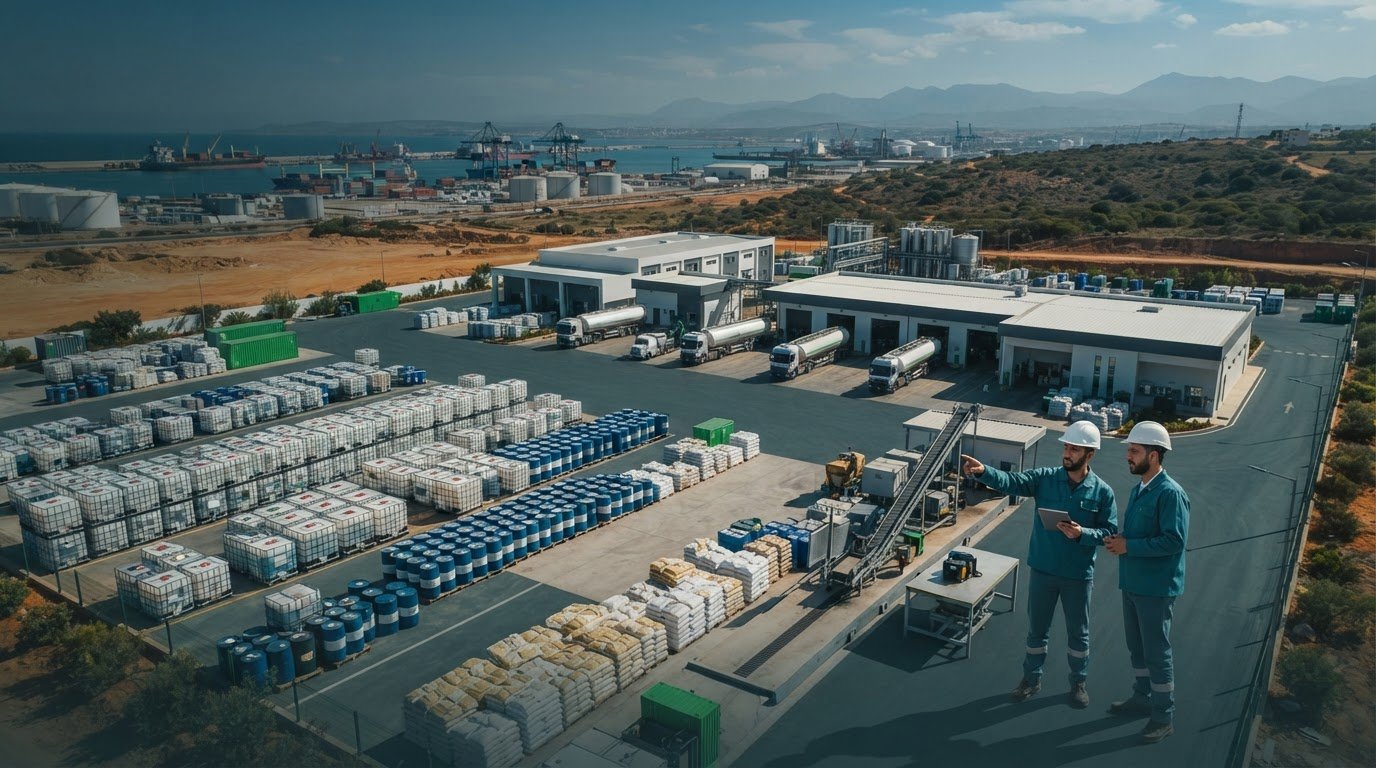

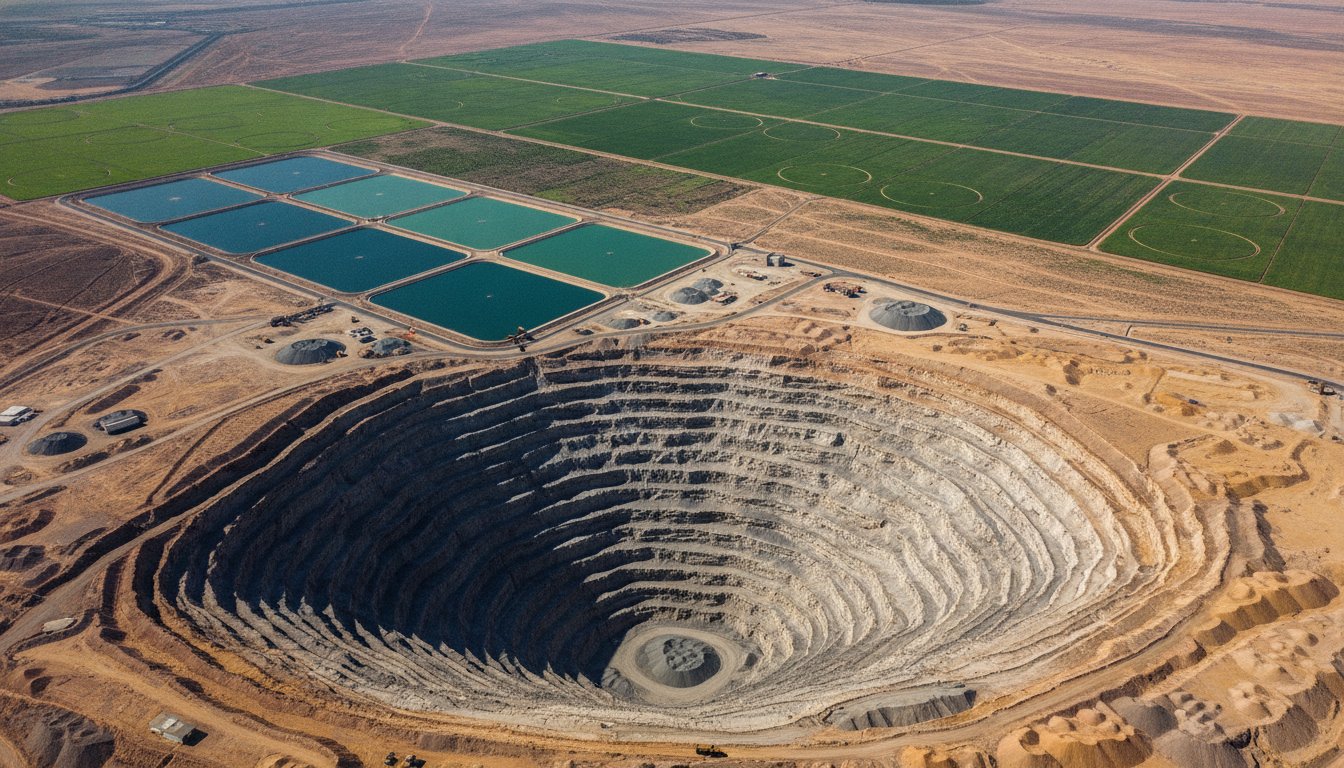
In 2026, the global landscape shifted when both China and the United States officially designated phosphate rock as a strategic national resource. This isn't just about industrial output; it's about the security of our global food supply. You likely feel the mounting pressure of declining ore quality and the urgent need to improve recovery rates in complex deposits. It's a challenge that demands more than standard solutions. It requires a sophisticated approach to Phosphate Mining Chemicals that balances high-yield extraction with responsible resource management.
This strategic guide shows you how advanced chemical formulations optimize mineral recovery and ensure process efficiency. We'll explore the transition from commoditized reagents to tailor-made collectors and grinding aids designed for specific ore bodies. You'll learn how to reduce energy consumption and equipment wear while meeting strict environmental standards. We're moving from simple extraction to a model of total resource protection, ensuring your operations remain sustainable and cost-effective in an increasingly volatile global market.
Key Takeaways
- Understand why phosphate is now classified as a strategic national resource and how chemical intervention stabilizes the global food supply chain.
- Learn how specialized Phosphate Mining Chemicals, including custom flotation collectors and frothers, maximize mineral recovery from complex, low-grade ores.
- Discover how to reduce energy consumption in grinding circuits and prevent operational bottlenecks caused by scale accumulation in phosphoric acid plants.
- Identify the critical link between mining reagents and the physical integrity of final fertilizer granules to ensure stability during storage and transport.
- Explore how technical consulting and tailor-made formulations transform standard extraction processes into sustainable, high-yield industrial assets.
The Strategic Importance of Phosphate Mining Chemicals in 2026
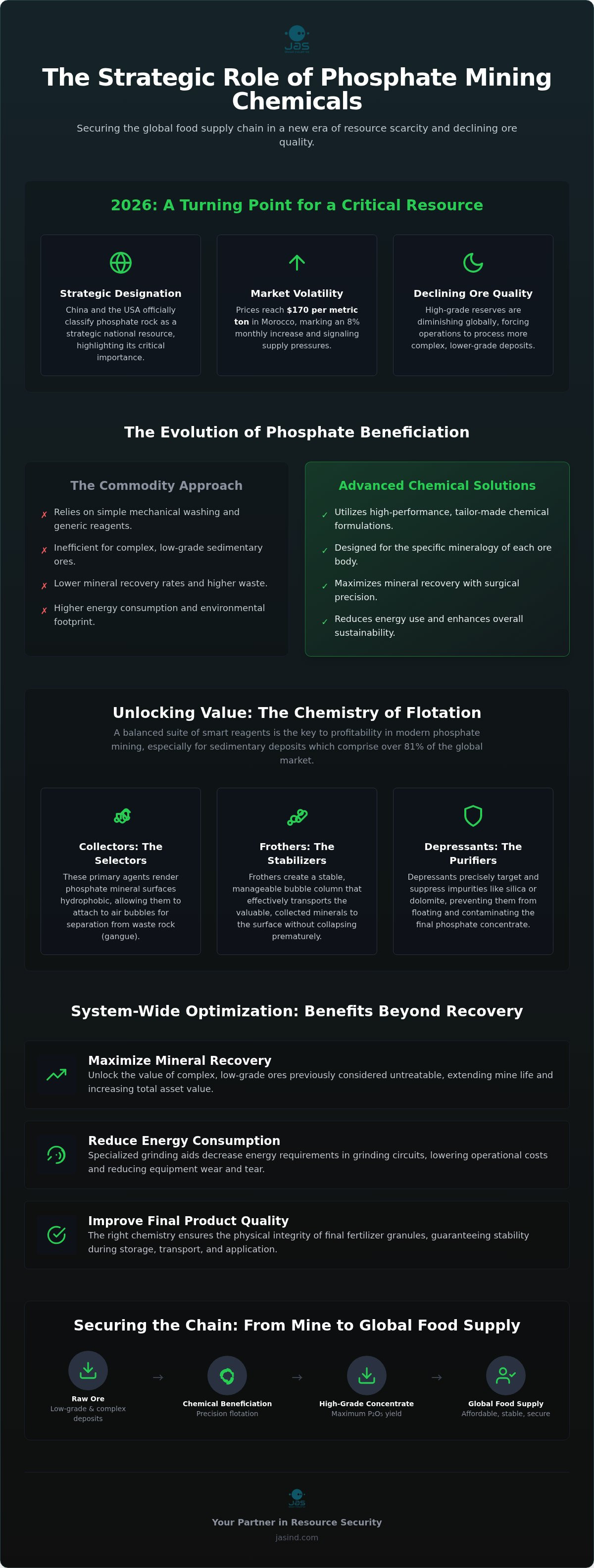
2026 represents a turning point for the mineral industry. Phosphate rock is now a strategic national mineral in major economies, including China and the United States. Prices in Morocco reached $170 per metric ton in July 2026, marking an 8% monthly increase. This volatility reflects a global reality: high-grade reserves are disappearing. In this environment, Phosphate Mining Chemicals are no longer optional additives. They're the essential enablers of phosphorus recovery. Without advanced chemistry, the economic viability of complex, lower-grade deposits disappears. We provide the technical foundation for this new era of extraction.
Securing Global Food Stability through Chemistry
Efficient phosphorus extraction is the first line of defense against global nutrient shortages. There's a direct link between mining yield and fertilizer affordability. When recovery rates drop, the cost of food production rises. We view chemical innovation as a vital response to global resource scarcity. By optimizing the beneficiation process, we protect the stability of the entire supply chain. Our mission is to transform volatile raw materials into reliable agricultural inputs. This ensures that the foundational link in the food chain remains secure and cost-effective for a growing population. Protecting resources means securing futures.
The Evolution of Phosphate Beneficiation
The industry has moved far beyond simple mechanical washing. Most global reserves consist of sedimentary Phosphate rock, which presents unique mineralogical challenges. Modern operations rely on complex chemical flotation circuits to separate valuable minerals from gangue. We're seeing a decisive shift toward smart reagents. These specialty formulations target specific impurities like dolomite or silica with surgical precision. Phosphate beneficiation chemicals serve as the bridge between raw ore and agricultural utility. This evolution allows miners to process ores that were previously considered waste, extending the life of existing mines.
The era of simple commodity chemicals is ending. Today's complex ores demand high-performance specialty formulations that offer superior selectivity. These products do more than just recover minerals; they reduce energy consumption in grinding and minimize the environmental footprint of mining. By prioritizing performance over volume, we help operators achieve higher mineral grades. This transition represents a move from simple extraction to comprehensive resource guardianship. We provide the reliability and technical expertise needed to manage these critical global assets. Our solutions turn industrial challenges into stable, long-term value.
Advanced Beneficiation: The Chemistry of Flotation and Recovery
Beneficiation is the technical heart of the mining operation. As ore quality declines globally, the chemistry within the flotation circuit becomes the deciding factor between a profitable mine and an abandoned asset. High-performance Phosphate Mining Chemicals allow operators to navigate these complexities with surgical precision. Success depends on a balanced suite of collectors, frothers, and depressants that work in harmony with the unique mineralogy of the deposit. We provide the stability needed to transform raw earth into a strategic resource.
Mining Flotation Collectors and Frothers
In the flotation cell, collectors are the primary agents of selection. Anionic collectors typically target apatite, rendering the mineral surface hydrophobic to facilitate bubble attachment. Conversely, cationic collectors are essential for reverse flotation, where the goal is to float silicate impurities away from the phosphate. The choice between these paths is never generic. Since sedimentary marine deposits account for over 81% of the global market, tailor-made collectors are necessary to handle the fine-grained, complex textures of these ores. We don't believe in one-size-fits-all chemistry.
Mining frothers provide the structural stability required for mineral transport. If the froth is too brittle, valuable minerals drop back into the pulp. If it's too persistent, the circuit overflows and contaminates downstream processes. Precise dosage ensures a stable, manageable bubble column that carries the target mineral to the surface without compromising the final grade. Balancing these reagents is an art that requires deep technical expertise and a commitment to operational efficiency.
Managing Impurities with Depressants
Managing gangue minerals like silica and carbonates is a constant battle for grade. High-magnesium ores, often rich in dolomite, are particularly challenging because they interfere with phosphoric acid production. Specialized mining depressants solve this by selectively coating impurity surfaces, preventing them from attaching to air bubbles. This keeps the magnesium and silica in the tailings, where they belong. We focus on the protection of the final product by eliminating contaminants at the source.
Dosing accuracy is critical. Over-dosing can suppress the target phosphate, while under-dosing leads to a contaminated concentrate. By applying precision chemical strategies, we help mines achieve the high P2O5 grades required for premium fertilizer production. This level of technical process optimization transforms challenging ores into stable, high-value resources. Our approach treats every flotation circuit as a unique chemical environment that requires a bespoke solution. We act as a guardian of your mineral assets, ensuring every ton of ore reaches its full potential.
Maximizing Efficiency: Grinding Aids and Scale Control
The comminution process is often the most energy-intensive stage of any mining operation. As miners encounter harder, more complex ores, the mechanical force required to achieve the necessary liberation size increases dramatically. Specialized Phosphate Mining Chemicals, specifically grinding aids, act as foundational tools for operational efficiency. These surface-active agents reduce the energy required for particle breakage, allowing for higher throughput without the need for additional capital expenditure. We focus on providing the technical stability needed to keep these massive operations running at peak performance.
Energy Optimization with Grinding Aids
Grinding aids work by reducing the "Bond work index" of the ore. They prevent the re-agglomeration of fine particles and reduce the cushioning effect during the milling process. This results in a more uniform particle size distribution, which is critical for the success of downstream flotation circuits. When particles are ground to the ideal size, the efficiency of collectors and frothers is maximized. By optimizing comminution efficiency, grinding aids significantly lower the carbon footprint of mining operations through reduced kilowatt-hour consumption per ton of ore processed.
Scale and Corrosion Management
Operational bottlenecks often occur far beyond the grinding circuit. In phosphoric acid plants, the accumulation of calcium sulfate and fluosilicic acid scale can lead to catastrophic downtime. These deposits restrict flow, reduce heat transfer efficiency, and force frequent, costly mechanical cleanings. Advanced scale inhibitors prevent these crystals from adhering to equipment surfaces, maintaining steady-state production. This ensures that the transition from rock to acid remains uninterrupted.
The role of industrial water treatment is central to protecting this critical infrastructure. By integrating corrosion inhibition strategies with scale control, operators extend the lifespan of expensive alloy components. This protective approach moves the focus from reactive maintenance to long-term asset reliability. It's about securing the infrastructure that secures the resource.
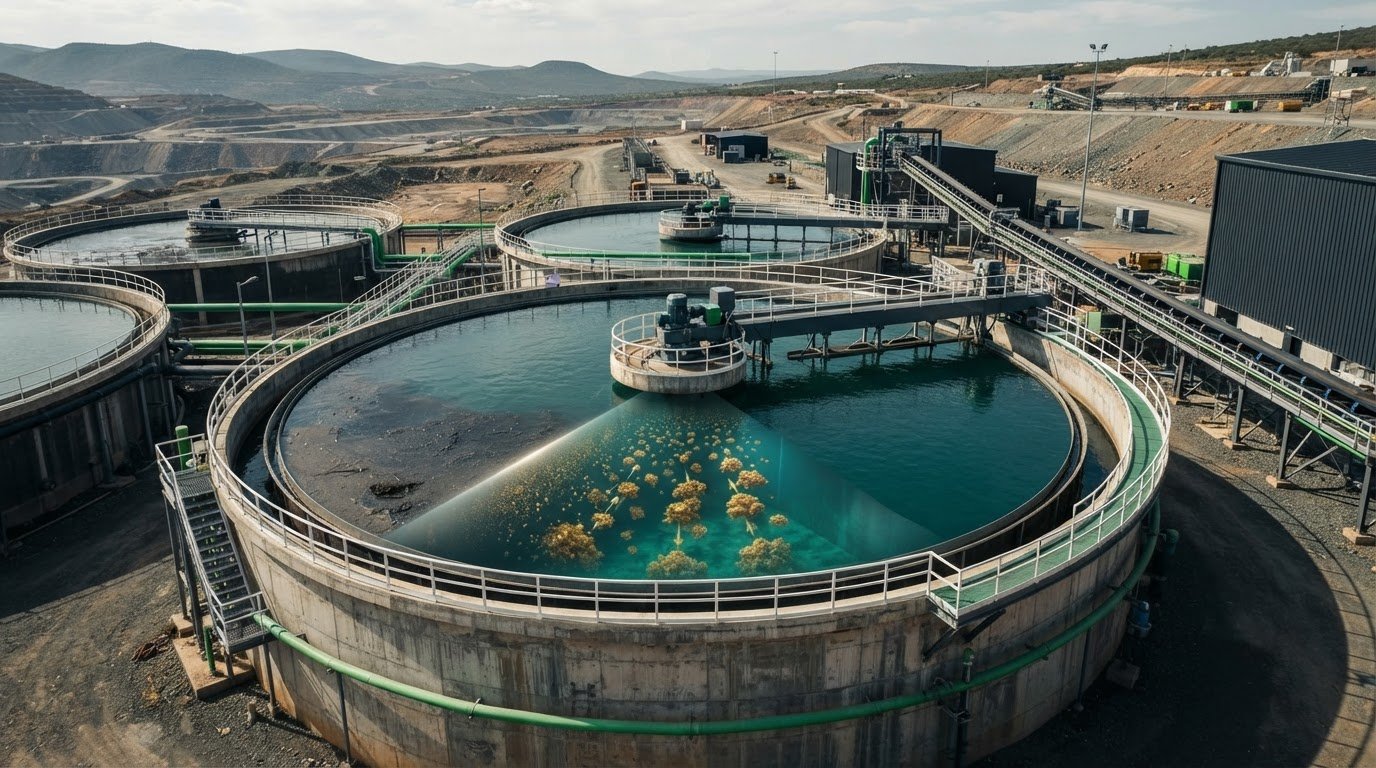
Efficiency also extends to the management of liquid assets. Mining flocculants are essential for rapid solids settling in thickeners, enabling immediate water recovery for reuse. This closed-loop approach is vital in water-stressed regions where phosphate mining often occurs. Additionally, chemical lubrication within the mill reduces mechanical wear, addressing one of the highest hidden costs in the industry. We provide the specialized chemistry that transforms these industrial challenges into sustainable, cost-effective operations.
Integrating Mining Chemistry with Fertilizer Quality
The journey of phosphate doesn't end at the concentrate thickener. The chemical profile established by Phosphate Mining Chemicals during flotation directly influences the physical integrity of the final fertilizer product. Residual reagents can alter the surface tension of the phosphoric acid slurry, affecting how granules form, harden, and resist moisture. We bridge the gap between mineral extraction and final utility. This holistic view ensures that the phosphate rock extracted with such effort remains a high-value asset until it reaches the farmer's field. Protecting the mineral's quality is as important as the extraction itself.
The Role of Anti-caking and Dust Suppression
Phosphate-based fertilizers like MAP and DAP are notoriously hygroscopic. During long maritime transport or storage in high-humidity environments, these granules form chemical bridges that lead to severe caking. Our anti-caking agents provide a sophisticated molecular barrier that maintains flowability from the plant to the farm. This stability is vital for global food security, as caked fertilizer cannot be applied accurately by modern agricultural machinery.
Similarly, fertilizer dust suppressants are essential for protecting workers and reducing product loss during bulk handling operations. Dust represents a significant loss of sellable product and creates respiratory hazards at transfer points. Our formulations ensure that the fertilizer remains intact, reducing the environmental impact of dust and preserving the economic value of every shipment. We treat dust control as a matter of both safety and operational efficiency.
Granulation and Coloring Innovations
Granule strength is a primary hallmark of industrial quality. Specialized granulation aids improve the internal bonding of the fertilizer, which reduces breakage and the formation of "fines" during shipping and handling. To help producers differentiate their products in a competitive global market, we offer fertilizer coloring agents. These provide consistent branding and serve as safety markers for different nutrient grades. A distinct, uniform color builds trust with the end-user and reinforces the brand's commitment to quality.
We also integrate defoamers to optimize the phosphoric acid digestion process. During the reaction of phosphate rock with sulfuric acid, the release of carbon dioxide can create massive foam volumes that disrupt production cycles. Effective foam control allows for higher reactor loading and more stable operations. If you are looking to enhance your downstream finishing and ensure product stability, consult with our technical specialists to develop a customized formulation strategy. Our expertise covers the entire lifecycle of the resource, from the mine to the final granule.
JAS Global Industries: Your Partner in Resource Security
Operating since 1998, JAS Global Industries has evolved from a specialty supplier into a vital global guardian of industrial resources. With over 25 years of technical expertise, we provide the mining solutions required to navigate the complexities of modern mineral extraction. Our role is clear. We stabilize the foundational links of the global food supply chain through advanced chemistry and unwavering reliability. This mission-oriented approach ensures that our partners achieve long-term value and operational stability in a volatile global market. Reliability is our foundation; security is our goal.
Custom Formulations and Technical Audits
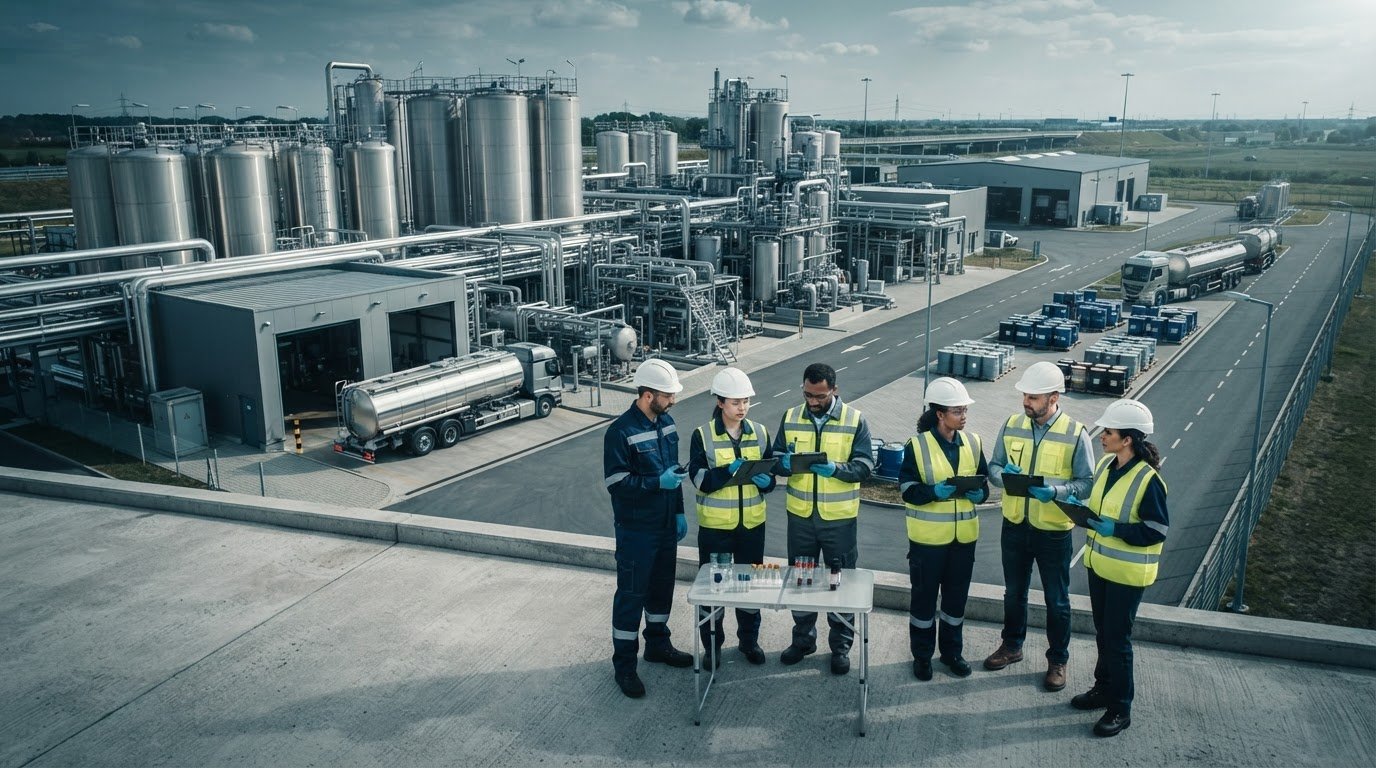
Every ore body is unique. A generic chemical approach often leads to wasted resources and poor recovery rates. Our global R&I centers specialize in developing tailor-made Phosphate Mining Chemicals that address the specific mineralogy of your site. We don't just ship products; we provide comprehensive technical consulting and process optimization as a core service. Our team conducts rigorous technical audits and on-site laboratory testing to identify the exact dosing strategies needed to maximize P2O5 recovery while minimizing costs. We focus on the micro-level details to ensure macro-level success.
- Site-specific flotation collectors designed for complex sedimentary deposits.
- Advanced grinding aids that reduce energy consumption and mechanical wear.
- Custom scale inhibitors to prevent operational bottlenecks in processing plants.
This precision-driven strategy turns challenging industrial environments into efficient, high-yield assets. We provide the stable infrastructure necessary for sustainable resource management. By optimizing every stage of the process, we help you transition from simple extraction to a model of total resource protection. Our mission is to provide stable, cost-effective industrial infrastructure that stands the test of time.
A Legacy of Reliability and Global Guardianship
Our presence across the Middle East, Africa, Asia, and Europe allows us to offer localized technical support on a global scale. We understand that the stability of critical resources depends on long-term partnerships, not simple supply contracts. This commitment to industrial leadership means we prioritize safety, sustainability, and ethical purpose in everything we do. We act as an integrated partner, working alongside your team to solve the most pressing challenges in phosphate beneficiation and fertilizer production. Our personality is serious, focused, and results-driven.
The transition toward more sophisticated chemistry is essential for securing our collective future. We invite you to partner with JAS Global for optimized mining solutions and experience the reliability of a true industry leader. Together, we can protect the resources that sustain the world. Protecting resources means securing futures.
Securing the Future of Global Mineral Resources
The designation of phosphate as a strategic mineral marks a new era in resource management. Success in this landscape depends on moving beyond commodity reagents to high-performance Phosphate Mining Chemicals that maximize recovery from complex ores. By optimizing flotation circuits and reducing energy consumption in grinding, operators can transform challenging deposits into stable, high-value assets. This shift is essential for maintaining the stability of the global food supply chain.
JAS Global Industries supports this transition through specialized technical audits designed to improve industrial plant yields. We offer proven formulations for phosphate, potash, and feldspar minerals, backed by global sales and service offices across four continents. It's about protecting the entire lifecycle of the resource; we ensure quality from the initial extraction to the final fertilizer granule. This integrated approach minimizes waste and maximizes long-term reliability.
We invite you to Partner with JAS Global for optimized Phosphate Mining Solutions. Our team is ready to help you achieve sustainable, cost-effective operations that contribute to global stability. Let's work together to secure the foundational resources the world depends on. Your operational success is the key to a more secure future.
Frequently Asked Questions
What are the primary chemicals used in phosphate flotation?
The primary reagents include collectors, frothers, and depressants. Anionic collectors, often based on fatty acids, target apatite minerals in direct flotation. Cationic collectors, such as amines, are essential for removing silica in reverse flotation circuits. Frothers provide the bubble stability needed for mineral transport, while depressants selectively suppress gangue minerals like dolomite. These chemicals work in harmony to ensure high-grade concentrate recovery.
How do mining grinding aids reduce operational costs?
Grinding aids lower operational costs by decreasing energy consumption and improving mill throughput. These surface-active agents prevent fine particles from re-agglomerating, which reduces the cushioning effect that often wastes mechanical energy. This results in more efficient particle breakage and less wear on expensive mill liners. Lowering the energy required per ton processed directly impacts the bottom line while reducing the overall carbon footprint.
Can specialty chemicals help in processing low-grade phosphate ores?
Advanced Phosphate Mining Chemicals are the only viable solution for processing low-grade ores economically. As high-grade deposits disappear, specialty collectors and depressants provide the selectivity needed to separate apatite from high-magnesium or high-silica impurities. Tailor-made formulations allow mines to process complex sedimentary deposits, maintaining high P2O5 grades that meet the strict requirements of phosphoric acid plants. This extends the lifespan of existing mineral assets.
How does phosphate mining chemistry affect fertilizer shelf life?
Reagents used in the flotation circuit can leave residuals that impact the physical integrity of the final fertilizer. These substances can alter how granules form and respond to moisture during maritime transport. By coordinating mining chemistry with downstream anti-caking agents, producers ensure that the fertilizer remains flowable and stable. This prevents caking and dust formation, protecting the product's value throughout the global supply chain.
What is the role of flocculants in sustainable phosphate mining?
Flocculants enable sustainable operations by facilitating rapid water recovery and effective tailings management. These polymers cause fine particles to aggregate and settle quickly in thickeners, allowing clarified water to be recycled back into the process. This is particularly important in water-stressed mining regions. High-performance flocculation also ensures that tailings are more compact, reducing the environmental risk and the physical footprint of storage facilities.
Why is scale control critical in phosphoric acid production?
Scale control is vital for preventing the buildup of calcium sulfate and fluosilicic acid in processing equipment. These deposits act as thermal insulators in heat exchangers and restrict fluid flow in piping, creating significant operational bottlenecks. Effective scale inhibitors maintain steady production rates and reduce the frequency of costly mechanical cleanings. This protection ensures that phosphoric acid plants operate at peak efficiency with minimal downtime.
How does JAS Global customize chemical formulations for different mines?
Customization starts with a comprehensive technical audit of the mine's unique mineralogy. Our R&I centers perform site-specific testing to develop Phosphate Mining Chemicals that address the exact impurities present in the ore. We don't believe in universal solutions. Instead, we adjust chemical dosing and formulations based on laboratory results and real-world pilot tests. This bespoke strategy ensures that our partners achieve the highest possible recovery rates and process efficiency.
What environmental standards should phosphate mining chemicals meet in 2026?
By 2026, mining chemicals must adhere to rigorous global standards for biodegradability and environmental safety. Regulations now prioritize low-toxicity formulations that minimize the impact on local ecosystems and water sources. Standards also emphasize the reduction of chemical footprints and the use of ethically sourced ingredients. Meeting these requirements is essential for maintaining compliance and demonstrating a commitment to responsible resource guardianship in a more regulated global market.