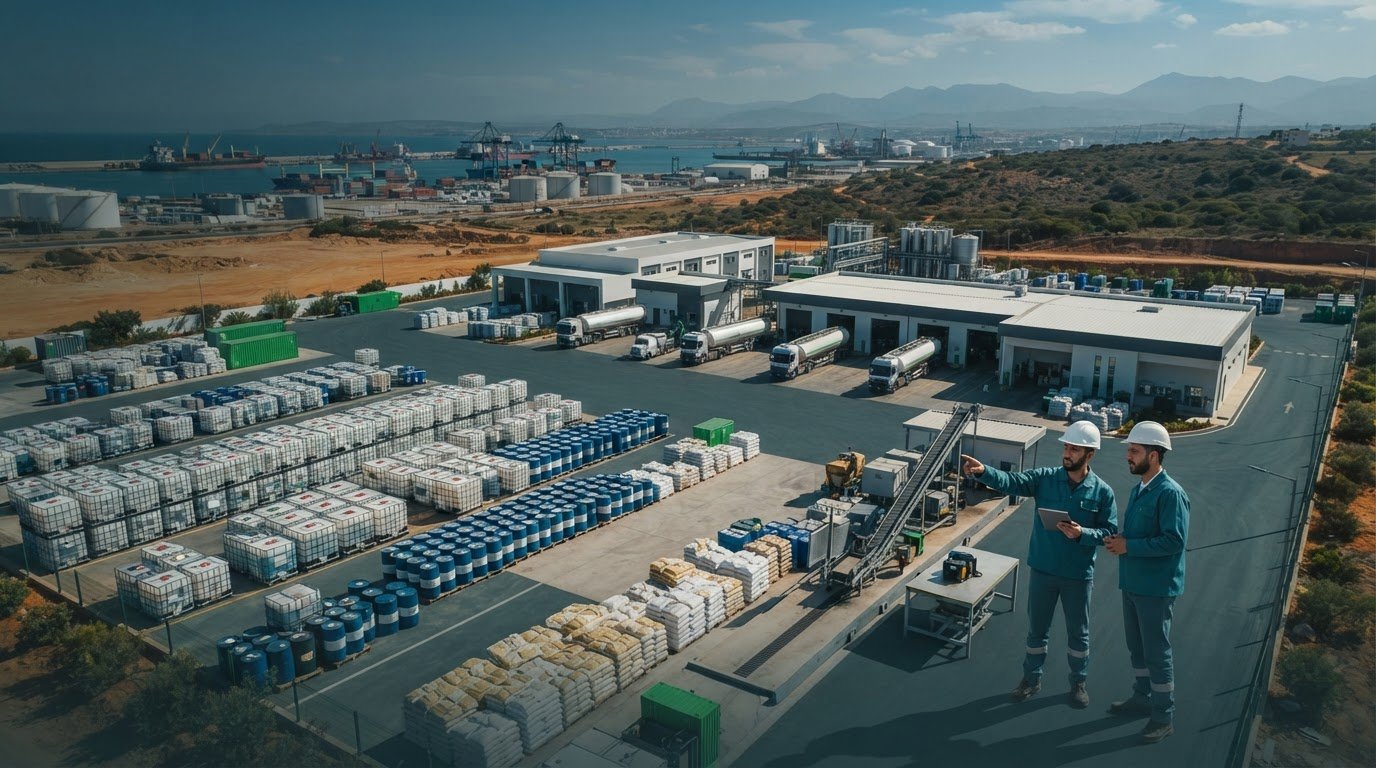


What if the foam rising in your processing tanks isn't just a nuisance but a direct threat to global resource security? In high-output sectors like mining and fertilizer production, persistent foam leads to process overflow and significant product loss. Stabilizing these environments requires more than a temporary fix. It demands a high-performance Silicon-based Defoamer engineered for chemical resilience and long-term stability.
You already know that over-dosing inefficient agents only inflates your chemical footprint without solving the underlying compatibility issues. It's a costly cycle that compromises both yield and safety. This guide promises to provide the technical roadmap you need to transform foam control from a reactive expense into a strategic advantage. We'll preview expert-backed dosing strategies, analyze the impact of the February 2026 Quality Management System Regulation (QMSR) updates, and demonstrate how custom formulations provide the process security necessary for an industry projected to reach $14.56 billion by 2034. By mastering these operational benefits, you ensure your facility remains a reliable, efficient pillar of modern infrastructure.
Key Takeaways
- Understand how Polydimethylsiloxane (PDMS) compounds achieve rapid bubble destabilization by spreading across foaming mediums with superior surface tension dynamics.
- Learn why a high-performance Silicon-based Defoamer relies on a precise three-part system of silicone oil, hydrophobic silica, and emulsifying agents to maintain industrial resilience.
- Evaluate the differences between silicone and organic alternatives using a framework that prioritizes temperature, pH, and downstream process sensitivity.
- Discover specialized strategies for managing organic impurities and gas release in phosphoric acid and potash flotation circuits to protect production yields.
- Optimize your facility's chemical footprint by transitioning from generic products to tailor-made formulations backed by global technical audits and laboratory precision.
Understanding the Mechanism: How Silicon-Based Defoamers Control Industrial Foam
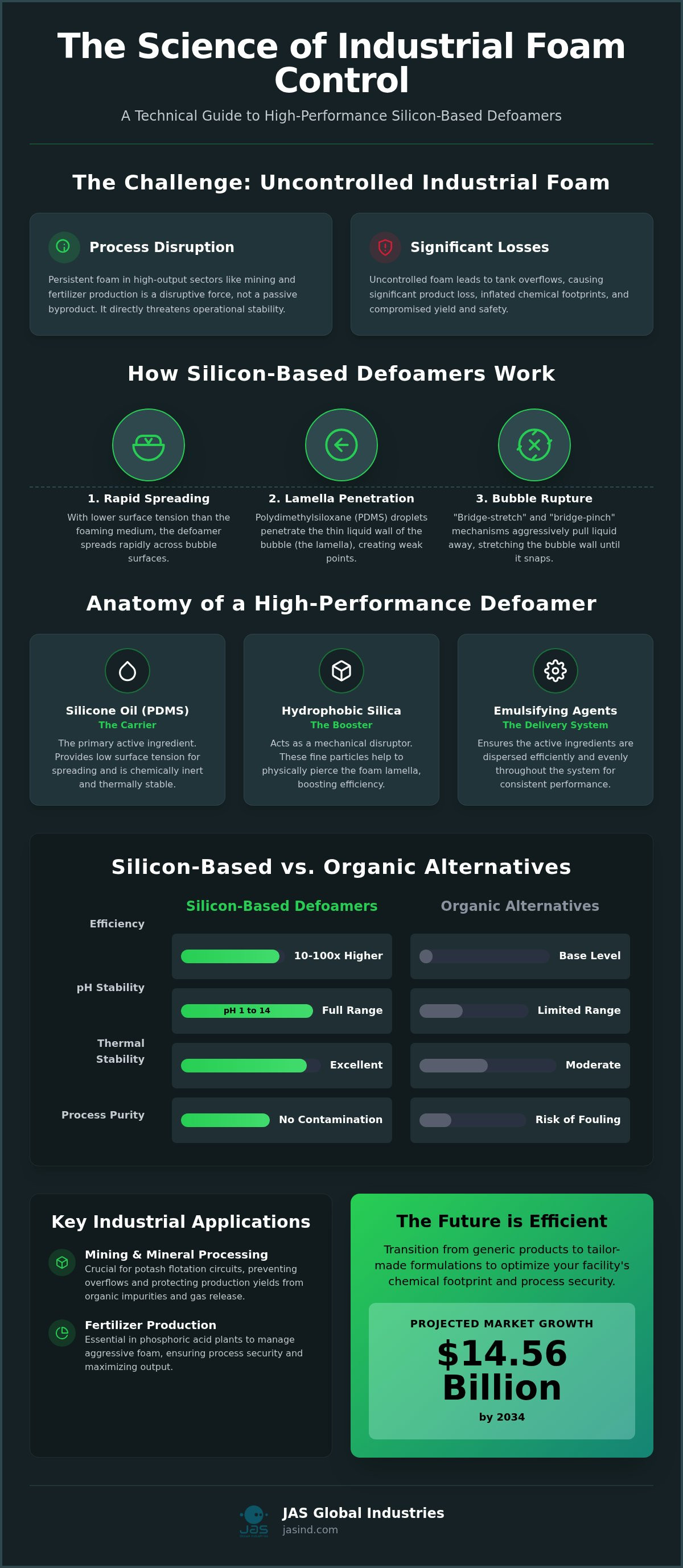
Industrial foam is rarely a passive byproduct. In phosphoric acid plants or potash flotation circuits, it's a disruptive force that causes overflows and product loss. To reclaim control, operators rely on specialized chemical intervention. A Silicon-based defoamer is a high-performance compound, typically utilizing Polydimethylsiloxane (PDMS), designed specifically for rapid bubble destabilization.
Effective foam control hinges on surface tension dynamics. For a defoamer to work, it must possess a lower surface tension than the foaming medium. This allows the chemical to spread rapidly across the bubble surface. Hydrophobicity acts as the driving force here. It ensures the chemical remains insoluble, forcing it to migrate to the air-liquid interface where it can do its job.
While the terms are often used interchangeably, there's a functional distinction between defoamers and antifoams. Defoamers are curative agents; they eliminate existing foam. Antifoams are preventative; they're added to the process to stop foam from forming in the first place. High-performance silicone emulsions often provide both functions, ensuring total process security.
The Role of Polydimethylsiloxane (PDMS) in Foam Rupture
The backbone of modern foam control is the PDMS molecule. These chains are characterized by their extreme chemical inertness and thermal stability, making them ideal for harsh industrial environments. When introduced into a foaming system, PDMS droplets enter the lamella, which is the thin liquid wall of a bubble. As the droplet penetrates this wall, it causes localized thinning and instability. PDMS serves as the primary active ingredient in modern industrial foam control.
Entry and Spreading Coefficients: The Physics of Efficiency
The physics of bubble rupture involves complex mechanisms known as bridge-stretch and bridge-pinch. When a silicone droplet bridges the two surfaces of a foam lamella, it creates a structural weak point. Because the silicone spreads so aggressively, it pulls the surrounding liquid away from the droplet, stretching the bubble wall until it snaps.
This mechanical efficiency is why a Silicon-based Defoamer is so highly valued in high-stakes processing. These agents often work at concentrations 10 to 100 times lower than traditional organic alternatives. For a global operation, this efficiency translates directly into reduced chemical storage requirements and lower logistics costs. It allows for a smaller chemical footprint while maintaining maximum production yields.
Chemistry and Composition: Formulating for Industrial Resilience
A high-performance Silicon-based Defoamer is more than just silicone oil. It's a sophisticated three-part system engineered to survive the rigors of industrial circuits. This synergy involves a carrier, typically Polydimethylsiloxane (PDMS), a booster such as hydrophobic silica, and a delivery system comprised of emulsifying agents. While the oil provides the low surface tension required for spreading, the silica particles act as mechanical disruptors that pierce the foam lamella. This specific approach to formulating for industrial resilience ensures the chemical remains active even when faced with extreme agitation.
Operators rarely use "neat" or pure silicone oil in large-scale processes. Pure oil lacks the necessary dispersion characteristics; it often leads to inefficient dosing or surface defects. Instead, high-performance emulsions dominate the market. These formulations utilize precise particle sizes to optimize longevity. Smaller particles offer better initial dispersion, while larger particles provide sustained deaeration in deep tanks. This balance is critical for maintaining stability across a pH range of 1 to 14, where mineral oil-based alternatives often fail.
Silicone Emulsions vs. Concentrates
Choosing between a water-based emulsion and an oil-based concentrate depends on your process water chemistry. Water-based emulsions are the standard for most mining and water treatment applications because they allow for easy, automated dosing. They disperse instantly. This prevents the formation of "oil slicks" that can contaminate downstream equipment or foul sensors. Oil-based concentrates are essential for anhydrous systems where water introduction is prohibited. JAS Global Industries specializes in developing tailor-made emulsions that match your specific plant water profile, ensuring that your foam control strategy remains both effective and economical.
Thermal and Chemical Stability in Harsh Circuits
In many industrial environments, temperatures frequently exceed 100°C. This is common in potash evaporation or phosphoric acid digestion. Silicone resists oxidation far better than mineral oil-based products, which can degrade and lose efficacy under heat. This thermal resilience ensures that the defoamer remains active throughout the entire residence time of the circuit. To understand how these agents interact with the broader chemical environment, you can explore our guide on surfactant chemistry. This knowledge helps plant managers select agents that won't interfere with flotation collectors or other critical process chemicals.
Silicone vs. Organic Defoamers: A Strategic Evaluation Framework
Selecting the right foam control chemistry requires a data-driven evaluation of your specific industrial circuit. While organic agents like fatty alcohols or mineral oils are common, they often lack the resilience needed for complex environments. A strategic framework for choosing a Silicon-based Defoamer focuses on three critical pillars: chemical stability, volumetric efficiency, and downstream impact. In environments with extreme pH levels or temperatures exceeding 60°C, organic agents frequently lose their structural integrity. Silicone remains stable, providing consistent process security where others fail.
A common industry myth involves "silicone spotting," where residual oil causes surface defects or equipment fouling. This isn't an inherent flaw of silicone itself. It's almost always a symptom of poor emulsification or over-dosing. High-performance formulations utilize advanced delivery systems to ensure the active silicone stays perfectly dispersed. This precision leads to superior volumetric efficiency. Because silicone is effective at significantly lower concentrations, the total cost-per-ton of treated product is often lower than organic alternatives, despite a higher price per kilogram. You're buying performance, not just volume.
Performance Benchmarks: Concentration and Longevity
Silicone maintaining its "knock-down" power longer than fatty alcohols is a primary operational advantage. In continuous flow industrial circuits, organic agents can be consumed rapidly by the process or degraded by bacteria. Silicone is chemically inert. It persists. Consider these typical dosing benchmarks:
- Organic Agents: Often require concentrations between 100 and 500 ppm to maintain control.
- Silicon-based Defoamer: Typically achieves the same results at 5 to 50 ppm.
This reduction in dosing volume simplifies logistics. It reduces the frequency of chemical deliveries and minimizes the footprint of your storage infrastructure.
Downstream Compatibility and Process Sensitivity
Process managers often worry about downstream sensitivity, particularly regarding membrane fouling in Reverse Osmosis (RO) systems or selectivity in mineral flotation. Modern silicone chemistry is engineered to be non-interfering. In mining circuits, the right defoamer won't blind the surfaces of target minerals or disrupt the delicate balance of your flotation collectors. This is essential for maintaining high recovery rates. For a deeper look at optimizing these complex environments, our specialized Mining Solutions provide insights into advanced chemistry for global resource security. Whether you're managing discharge toxicity or protecting sensitive membranes, a well-formulated silicone agent offers a safer, more predictable profile for industrial discharge compared to more reactive organic compounds.
Application Spotlight: Foam Control in Mining and Fertilizer Production
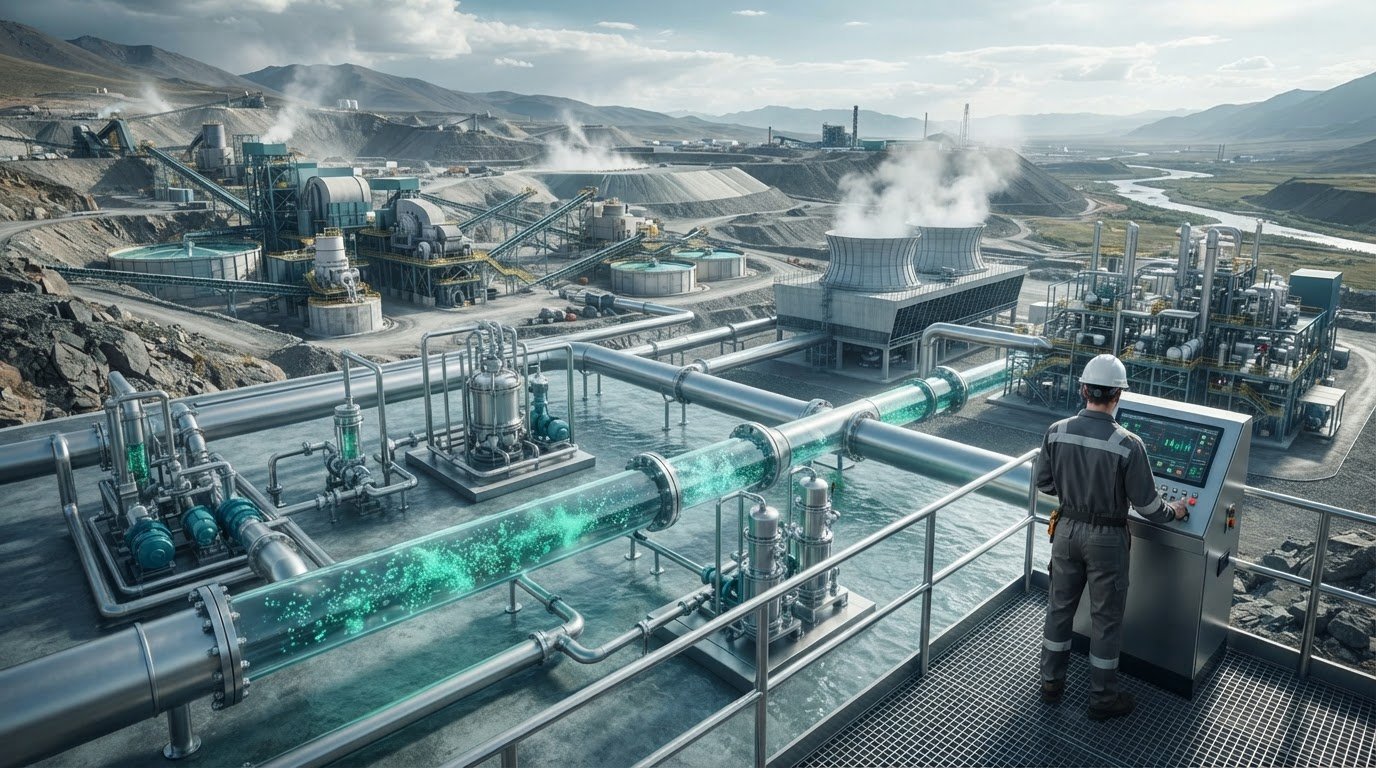
In the heavy industrial circuits of mining and fertilizer manufacturing, foam control is a critical component of process security. Uncontrolled foam leads to vessel overflows, equipment fouling, and significant product loss. A Silicon-based Defoamer provides the chemical resilience required to stabilize these volatile environments. Whether managing gas release in acid digestion or stabilizing mineral recovery—often in conjunction with separation technology from Sacor—these agents act as vital guardians of production stability.
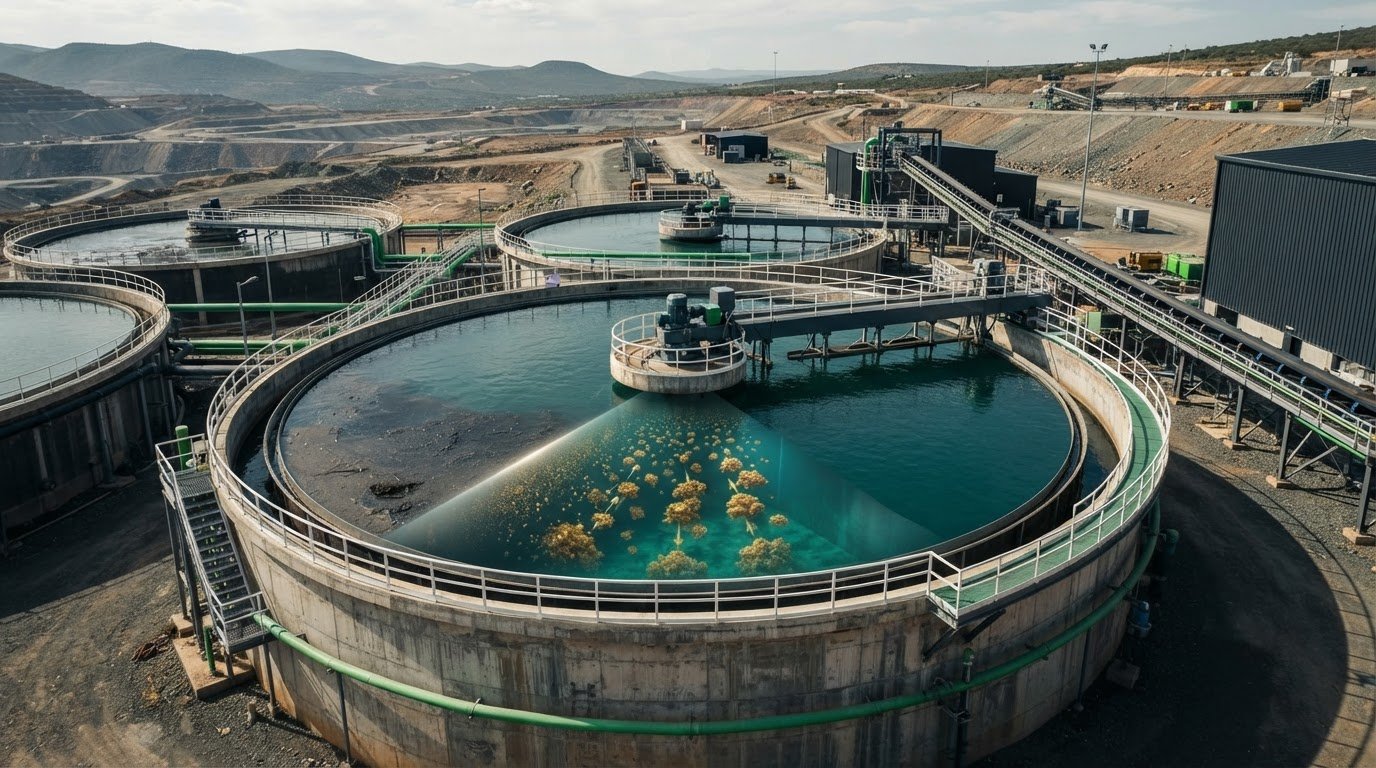
Beyond the primary reactors, foam control prevents carry-over in industrial evaporators and scrubbers. In these units, foam leads to salt build-up and mechanical failure. Similarly, in large-scale wastewater treatment, defoamers accelerate the settling of mining tailings. This process security allows for faster water recovery and more sustainable site management. Effective intervention ensures that critical infrastructure remains operational and efficient; for those in the energy sector looking for similar reliability in process fluid maintenance, you can discover TEG Reclamation Services for specialized reclamation and dehydration support.
Optimizing Phosphoric Acid Yields
Phosphoric acid production involves the digestion of phosphate rock with sulfuric acid. This reaction releases massive quantities of carbon dioxide. When combined with organic impurities in the rock, the result is a persistent, high-solids foam that occupies valuable reactor volume. This foam reduces the effective capacity of the digester. It forces plants to operate at lower throughput. It also leads to entrainment, where valuable P2O5 is lost through gas exhaust. Rapid "knock-down" is essential here. A high-performance Silicon-based Defoamer can reclaim significant reactor capacity by suppressing this reactive layer. This stability is a key part of total fertilizer quality management, which also includes the use of Anti-caking Agents to protect the final product during storage.
Flotation Circuit Stability
Flotation circuits represent one of the most delicate chemical balances in mining. Operators must use frothers to create stable bubbles for mineral attachment while simultaneously preventing "gangue" foam from overwhelming the system. Silicone agents are uniquely capable of managing this balance. They target unwanted foam without affecting the surface chemistry of the target minerals. This selectivity is vital for maintaining high recovery rates in Potash and Phosphate circuits. Every ore body has a unique chemical signature. Custom-formulated defoamers are necessary to ensure the agent doesn't interfere with flotation collectors or compromise mineral attachment. To optimize your specific flotation circuit, you can consult with our technical team to develop a dosing strategy that protects your yields.
Maximizing Process Efficiency with JAS Global Industries
Foam control is often viewed as a simple chemical purchase. At JAS Global Industries, we reframe it as a vital component of process security. Generic, off-the-shelf products often fail to account for the specific mineralogy of an ore body or the unique organic load in a phosphoric acid digester. A Silicon-based Defoamer only reaches its full potential when it's part of a broader optimization strategy. We prioritize tailor-made formulations that align with your specific plant yields and operational goals.
Our approach transforms chemical supply into a long-term partnership focused on resource security. By stabilizing production and reducing chemical over-dosing, we help you lower your overall environmental footprint. This commitment to reliability is rooted in a history of supporting critical global infrastructure. We don't just sell chemicals; we provide the stability necessary for modern industry to thrive through technical precision and ethical responsibility.
Technical Consulting and Process Audits
Success begins with a deep understanding of your circuit. JAS Global Industries engineers conduct comprehensive on-site technical audits to identify the precise points where foam compromises efficiency. We use laboratory-backed dosing strategies to troubleshoot yield bottlenecks. These audits determine the exact concentrations required for maximum "knock-down" and persistence. Our global R&I centers focus on developing sustainable, cost-effective formulas that resist degradation in harsh pH and high-temperature environments. This ensures your Silicon-based Defoamer performs exactly as intended under real-world conditions.
Global Logistics and Supply Reliability
Operational reliability depends on a secure supply chain. From our strategic headquarters in Dubai to our service footprint across Europe and beyond, JAS Global Industries ensures your facility never faces a stock-out. We offer bulk chemical supply contracts designed for industrial-scale operations. This logistics precision provides the certainty you need to maintain continuous production. Our manufacturing plants are positioned to serve international markets with speed and consistency. This global reach, combined with our technical expertise, positions us as an indispensable pillar of your production cycle. Partner with JAS Global Industries for advanced foam control solutions and secure the long-term stability of your industrial processes.
Securing the Future of Industrial Process Stability
Achieving operational stability in high-stakes environments requires more than reactive chemical dosing. We've analyzed how the unique physics of PDMS chemistry and a strategic evaluation of volumetric efficiency can transform your facility's output. By choosing a high-performance Silicon-based Defoamer, you move beyond simple foam suppression toward true process security. This transition protects your yields and reduces your chemical footprint in an increasingly regulated global market.
Operational since 1998, JAS Global Industries provides the technical industrial expertise necessary to navigate these complexities. Our global R&I and manufacturing footprint ensures that specialized solutions are always within reach. We don't just supply products; we offer technical consulting for yield optimization that addresses your specific ore bodies and process water chemistries. It's time to elevate your foam control strategy from a commodity purchase to a long-term partnership for resource security. Optimize your process efficiency with JAS Global specialty chemicals and build a more resilient, sustainable future for your industrial operations.
Frequently Asked Questions
What is the difference between a silicone defoamer and a non-silicone defoamer?
Silicone agents utilize Polydimethylsiloxane (PDMS) to achieve rapid bubble rupture at significantly lower concentrations than organic alternatives. While a non-silicone agent might rely on fatty alcohols or mineral oils, a Silicon-based Defoamer offers superior thermal stability and chemical inertness. This allows operators to reduce their chemical storage footprint while maintaining consistent process security in high-stakes environments. Organic agents often require higher volumes, whereas silicone performs efficiently at minimal parts-per-million levels.
Are silicon-based defoamers safe for water treatment and reverse osmosis?
Silicon-based agents are safe for water treatment provided they are precisely emulsified to prevent membrane fouling. In reverse osmosis systems, the primary concern is residual oil deposits. High-performance formulations ensure the silicone remains active at the air-liquid interface rather than adhering to sensitive equipment. By maintaining this stability, these agents protect critical water infrastructure and ensure operational reliability. Proper formulation prevents the silicone spotting myth from becoming a reality in your treatment circuit.
How do I determine the correct dosing rate for a silicone defoamer in my plant?
Determining the correct dosing rate requires a comprehensive on-site technical audit. Factors such as agitation levels, temperature, and the specific organic load of your process water influence the requirement. Most industrial plants find success by starting with laboratory-backed dosing strategies to establish a baseline. JAS Global Industries engineers typically troubleshoot yield bottlenecks by identifying optimal injection points. This precision avoids the high costs associated with over-dosing inefficient agents and ensures long-term process stability across the entire circuit.
Can silicone defoamers withstand high-temperature industrial processes?
Silicone defoamers excel in high-temperature industrial processes, often maintaining efficacy well above 100°C. This thermal resilience is vital for potash evaporation and phosphoric acid digestion where mineral oil-based products often degrade. Because silicone resists oxidation, it provides consistent deaeration throughout the entire residence time of the circuit. This stability ensures that your foam control remains a reliable pillar of your production infrastructure, even when faced with the extreme thermal demands of heavy industrial processing.
Will silicone-based agents affect the quality of the final fertilizer product?
Silicone-based agents don't negatively impact the quality of the final fertilizer product. In fact, they enhance yields by suppressing reactive foam during the digestion stage of phosphoric acid production. This prevents the loss of valuable P2O5 through gas exhaust and ensures a more consistent slurry. These agents are chemically compatible with downstream additives, including anti-caking agents and dust suppressants. By stabilizing the initial reaction, you protect the fundamental integrity of the global food supply chain.
What are the environmental implications of using PDMS-based defoamers?
PDMS-based defoamers are considered environmentally responsible because they are chemically inert and non-toxic to aquatic life. Once discharged, these compounds typically adsorb to solids and undergo abiotic degradation in soil. The 2026 EPA Safer Choice program evaluates these polymers against strict environmental safety criteria. Using a high-performance Silicon-based Defoamer also reduces your overall chemical footprint. Because you use significantly less volume compared to organic alternatives, you minimize the environmental impact of chemical logistics and storage.
How does JAS Global Industries customize defoamers for specific mining ores?
JAS Global Industries customizes defoamers by analyzing the specific mineralogy and organic load of your ore body. Our global R&I centers develop tailor-made formulations that ensure the defoamer doesn't interfere with flotation collectors or mineral recovery rates. This level of customization is essential for potash and phosphate circuits where selectivity is critical. We move beyond commodity supply to provide technical consulting that optimizes your specific plant yields. This ensures your foam control strategy matches your unique geology.
Can silicon-based defoamers be used in food-grade applications?
Silicon-based agents are widely used in food-grade applications and comply with international safety standards. In the United States, the primary regulation for food-contact silicone is 21 CFR 177.2600. Additionally, the FDA's February 2026 Quality Management System Regulation (QMSR) update has increased traceability requirements for these substances to ensure consumer safety. These regulations allow for the use of high-purity silicone in food processing. Manufacturers must maintain rigorous quality control and documentation throughout the entire production and supply chain.