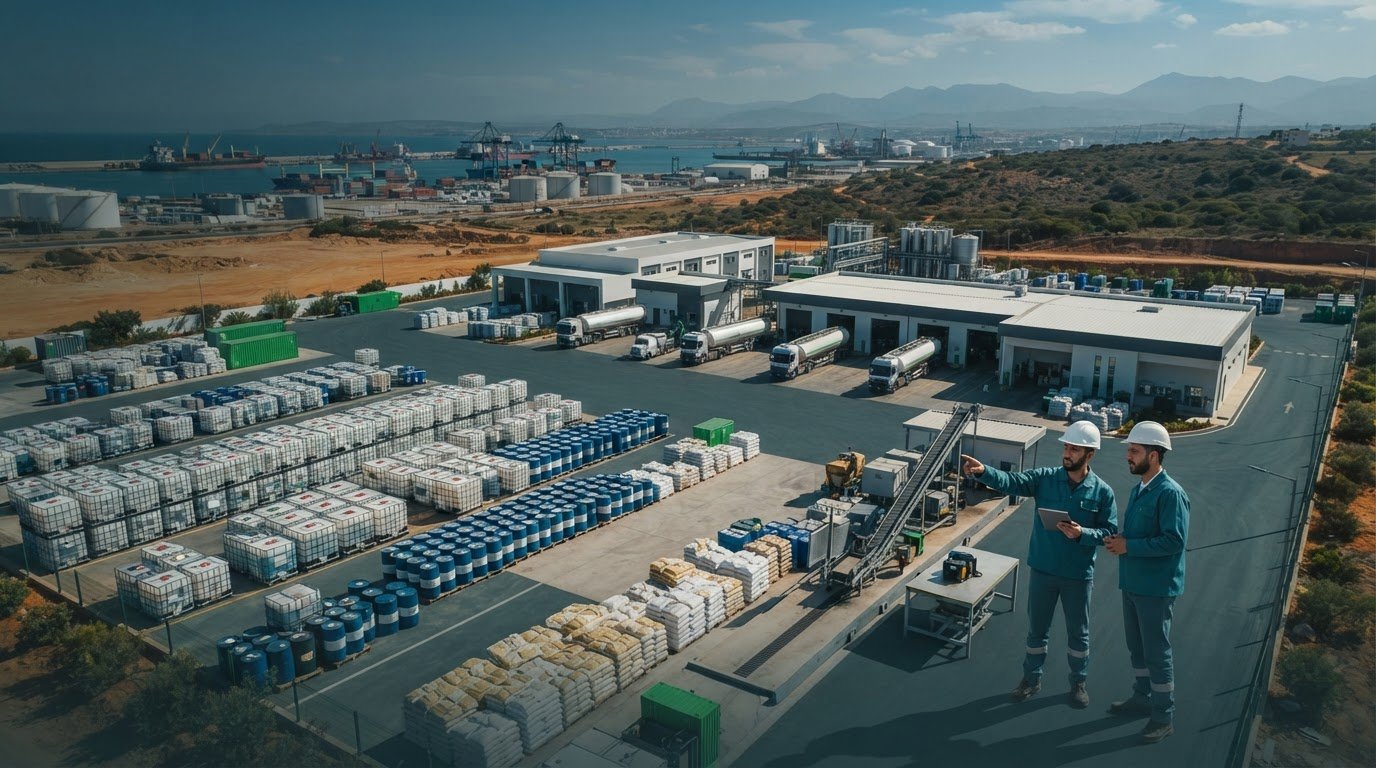

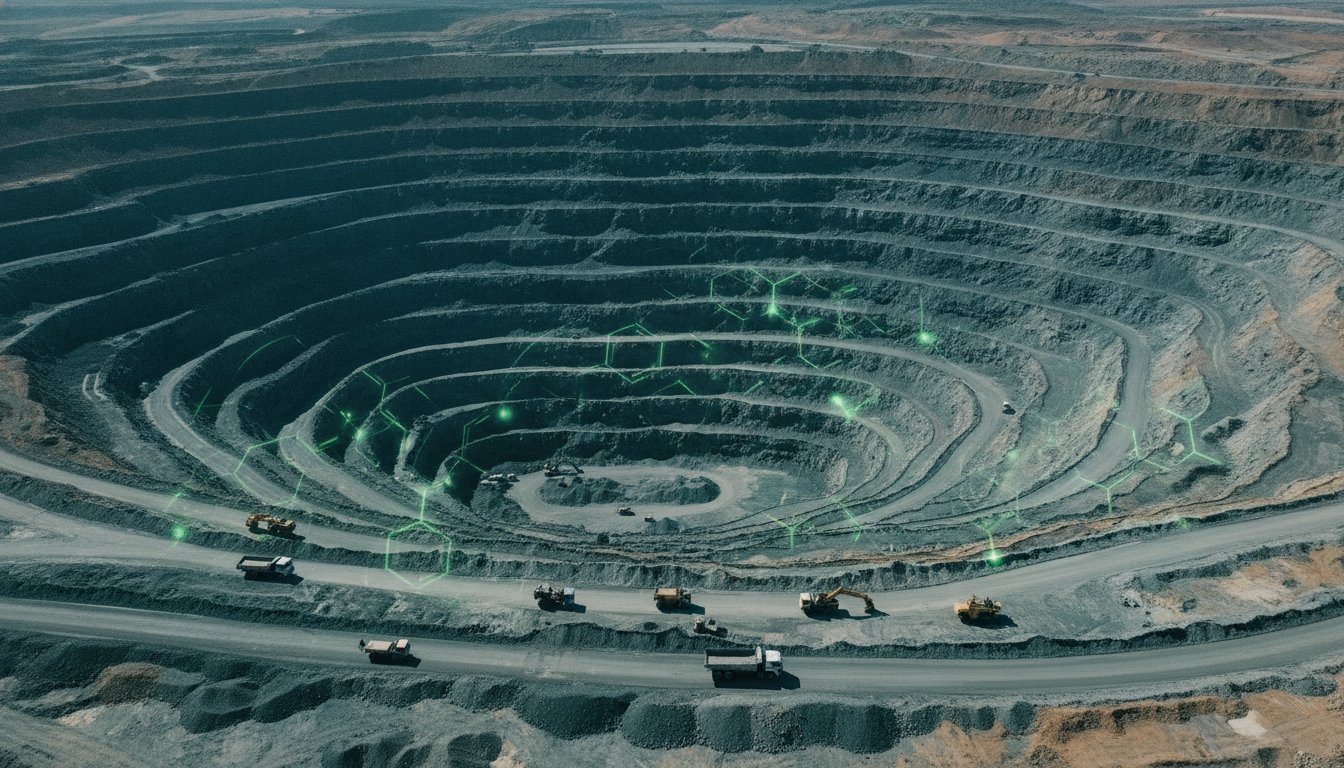
With China and the United States officially classifying phosphate rock as a strategic national mineral in 2026, the race to secure this critical resource has moved from the boardroom to the chemical laboratory. You've likely felt the mounting pressure of declining ore grades and skyrocketing sulfur prices, which surged past $1,000 per ton this summer. It's increasingly difficult to maintain high recovery rates when complex beneficiation requires more energy and persistent scale buildup threatens your equipment uptime. These aren't just operational hurdles; they're direct threats to the stability of the global food and energy supply chains.
This article explores how advanced Phosphate Mining Chemicals are transforming these industrial burdens into distinct competitive advantages. You'll discover how specialized formulations maximize P2O5 recovery, slash moisture levels in final concentrates, and shield your infrastructure from corrosion. We'll examine the vital synergy between custom dosing strategies and global resource security. By focusing on precision chemistry, you can lower your cost-per-ton and ensure your operation remains a reliable pillar of modern infrastructure. Modern mining is no longer just about extraction. It's about the chemistry that protects our future.
Key Takeaways
- Understand how declining ore grades necessitate a shift toward advanced chemical interventions to safeguard global resource security.
- Learn to maximize P2O5 recovery through tailored flotation collectors and frothers designed for complex mineralogies.
- Discover methods to reduce energy consumption and eliminate equipment downtime using specialized grinding aids and scale inhibitors.
- Explore the impact of high-performance flocculants on tailings management and closed-loop water recovery in arid environments.
- Identify the strategic role of custom Phosphate Mining Chemicals in optimizing the entire value chain from the mine to the final fertilizer product.
Phosphate Mining Chemicals: Driving Recovery in a Resource-Constrained Era
The global demand for high-purity minerals is rising while the quality of accessible ore is steadily falling. This paradox defines the modern extraction landscape. Strategic intervention is no longer a luxury. It's a necessity. Specialty reagents have shifted from being secondary process additives to becoming the primary drivers of mineral recovery. Without high-performance Phosphate Mining Chemicals, the industry cannot meet the rigorous demands of a growing global population. The transition from commodity reagents to performance-based specialty chemicals is the only path forward for operations facing declining ore grades.
The Evolution of Phosphate Beneficiation
The industry has moved far beyond simple mechanical washing. Today's operations require complex, multi-stage flotation circuits to handle increasingly difficult mineralogies. High-carbonate and high-silica ores present significant challenges that traditional methods can't solve. These impurities often behave similarly to the target minerals, leading to poor separation and wasted resources. Advanced chemistry allows for the precise isolation of Phosphate from its gangue material. Phosphate beneficiation is the critical link in global food security. It bridges the gap between raw earth and the essential nutrients required for life.
Resource Security and the Global Value Chain
The stability of the global fertilizer supply chain depends on the efficiency of the mine. If recovery rates drop, the entire value chain feels the strain. This results in higher costs for producers and, ultimately, higher prices for food. Performance-based specialty chemicals provide the reliability needed to maintain industrial flow. JAS Global Industries acts as a vital partner in this ecosystem. By providing custom-tailored mining solutions, the company ensures that industrial operations remain stable and productive.
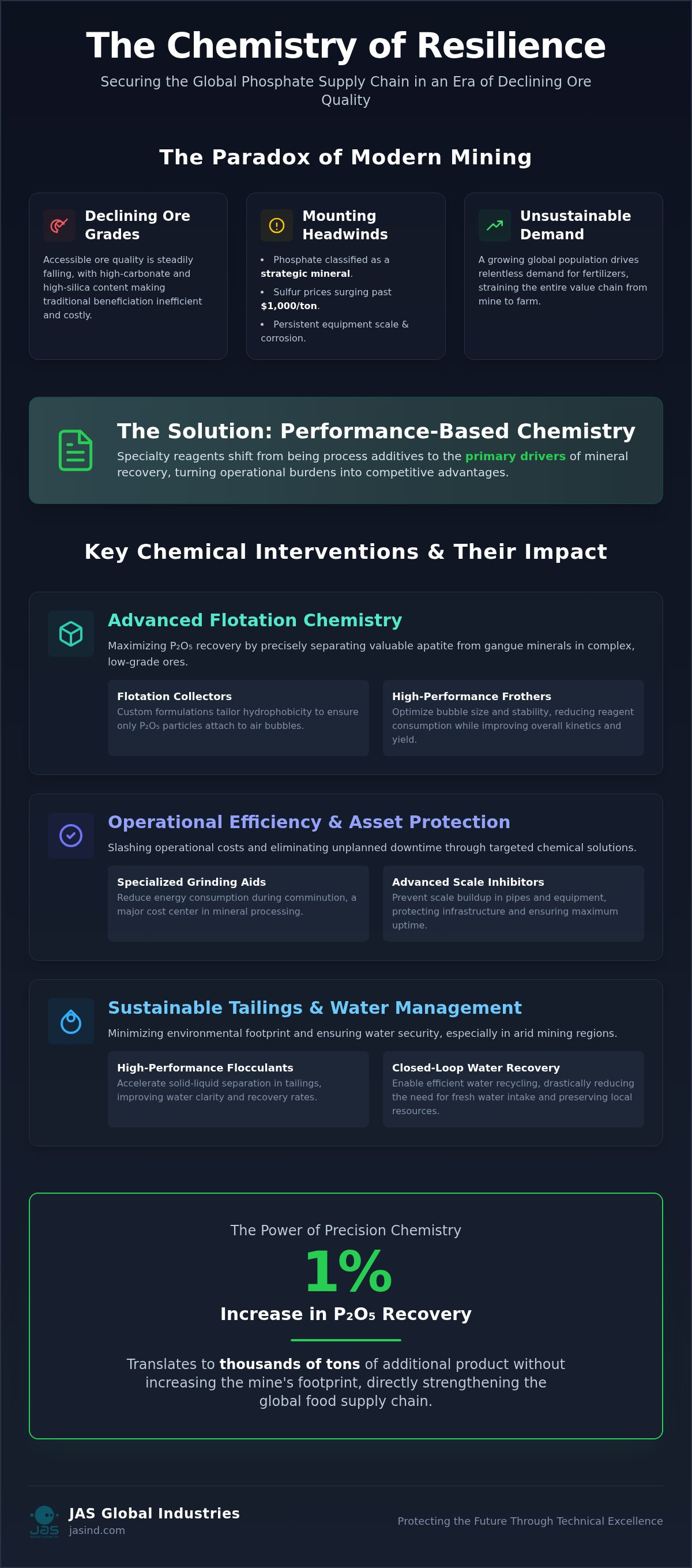
This chemical efficiency directly impacts the global P2O5 supply. When a mine optimizes its recovery process, it extends the life of the reserve and reduces the environmental footprint per ton produced. It's about protecting the future through technical excellence. Reliability is built in the lab and proven in the field. When recovery rates fluctuate, the economic ripples are felt across continents. A 1% increase in recovery can translate to thousands of tons of additional product without increasing the mine's footprint. This commitment to performance over price ensures that the global value chain remains resilient against geopolitical and geological volatility. High-quality Phosphate Mining Chemicals are the silent guardians of this stability.
Advanced Flotation Chemistry: Maximizing P2O5 Recovery
The heart of any phosphate operation is the flotation circuit. Here, the subtle manipulation of surface chemistry determines the economic viability of the entire mine. As ore bodies become more complex, the reliance on advanced Phosphate Mining Chemicals increases. These reagents must be specifically engineered to distinguish between valuable apatite and chemically similar gangue minerals. It's no longer enough to use generic solutions. Success depends on the molecular precision of the reagents used in the cell.
Collectors and Frothers: The Dynamic Duo of Recovery
Mining Flotation Collectors are the primary drivers of mineral attachment. In apatite flotation, fatty acid-based collectors are standard. However, off-the-shelf versions often lack the selectivity required for modern ores. Custom formulations tailor the hydrophobicity of the mineral surface. This ensures that only the target P2O5 particles attach to air bubbles. By focusing on molecular precision, operators can achieve higher recovery rates even from low-grade feedstocks. It's a critical step in maintaining the stability of the global phosphate value chain.
Froth stability is equally vital. Mining Frothers manage the air-water interface to prevent bubble coalescence. This ensures a stable, manageable froth layer that can carry a heavy mineral load to the launder. By optimizing bubble size, operators can reduce reagent consumption and improve overall kinetics. High-selectivity formulas allow for lower dosing while maintaining high recovery rates. This synergy between collectors and frothers maximizes yield while minimizing waste.
Managing Impurities with Specialty Depressants
Effective separation requires more than just floating the target. It requires the active rejection of impurities. Mining Depressants are essential for inhibiting the flotation of dolomite, calcite, and quartz. This is particularly vital for high-carbonate ores where the chemical signatures of the waste and the product are nearly identical. According to the latest U.S. Geological Survey phosphate data, managing these impurities is a global challenge that impacts the quality of phosphoric acid produced downstream.
High levels of magnesium or silica in the concentrate can lead to sludge formation and increased acid consumption in the fertilizer plant. Specialty depressants prevent the locking of gangue minerals within the apatite matrix by selectively deactivating the surfaces of waste particles. This ensures they remain in the tailings rather than contaminating the final P2O5 concentrate. Refining these processes requires a deep understanding of site-specific mineralogy. For operations looking to optimize their flotation stages, exploring customized reagent strategies can provide the necessary technical edge. This precision chemistry protects the value of the resource, optimizing recovery and securing stability.
Optimizing Operational Efficiency: Grinding Aids and Scale Control
Efficiency in phosphate processing isn't just about what you recover. It's about what you preserve. High energy costs and equipment degradation are silent profit killers that can undermine the economic viability of even the richest deposits. Advanced Phosphate Mining Chemicals bridge the gap between simple extraction and sustainable profitability. By focusing on the mechanics of grinding and the integrity of the water loop, operators can significantly lower their total cost of ownership while maintaining the stability of the global supply chain.
Energy Reduction through Grinding Aids
Grinding is the most energy-intensive stage of mineral processing. In high-volume phosphate operations, ball and sag mills consume massive amounts of electricity to achieve the fineness required for effective flotation. Mining Grinding Aids optimize this stage by preventing particle re-agglomeration. During fine grinding, small particles often clump together due to surface charges, which leads to over-grinding and wasted energy. These specialty chemicals neutralize those charges, keeping particles discrete and ensuring the mill's energy is spent on breaking new surfaces rather than re-grinding old ones.
The impact on slurry rheology is immediate. Improved flow characteristics lead to a better mill discharge and more consistent particle size distribution. This consistency is vital for the downstream flotation stages discussed earlier. Quantifiable energy savings in large-scale operations often reach double-digit percentages, directly improving the mine's carbon footprint and operational budget. It's a clear example of how technical industrial expertise translates into global responsibility.
Scale and Corrosion Management
Slurry pipelines and recycling circuits are the arteries of the mine. However, they're prone to mineral deposition that can choke flow velocity and force expensive downtime. Calcium sulfate and phosphate scale are common culprits in phosphate loops, especially when process water is recycled. Strategic use of scale inhibitors and antiscalants prevents these minerals from precipitating onto pipe walls. This keeps the lines open and the process moving at peak velocity. Protecting these assets requires a comprehensive approach to industrial water treatment within the mining loop.
Infrastructure protection doesn't stop at scale control. Corrosion inhibitors are essential for shielding metal components from the aggressive nature of process water. These chemicals form a protective barrier that extends the life of pumps, valves, and pipelines. By managing these risks, operators achieve several key outcomes:
- Reduced maintenance costs by extending the intervals between equipment overhauls.
- Minimized downtime through the prevention of sudden scale-related blockages.
- Enhanced safety by maintaining the structural integrity of high-pressure systems.
- Consistent throughput that ensures a steady supply of concentrate for the fertilizer value chain.
Reliability is the foundation of modern infrastructure. When Phosphate Mining Chemicals are used to optimize operational efficiency, the benefits extend far beyond the balance sheet. They ensure that the mine remains a stable pillar of global resource security.
Sustainable Tailings Management and Water Recovery
Responsible resource management extends far beyond the point of extraction. In the modern industrial landscape, the treatment of waste is as critical as the recovery of the mineral itself. Sustainable tailings management is no longer just a regulatory requirement. It's a foundational pillar of global resource security. By implementing advanced chemical strategies, operations can minimize their environmental footprint while maximizing water recovery. This is especially vital in arid regions where water is a precious shared resource. The strategic application of Phosphate Mining Chemicals ensures that process water is cleaned, recycled, and returned to the circuit with maximum efficiency.
Flocculation and Dewatering Strategies
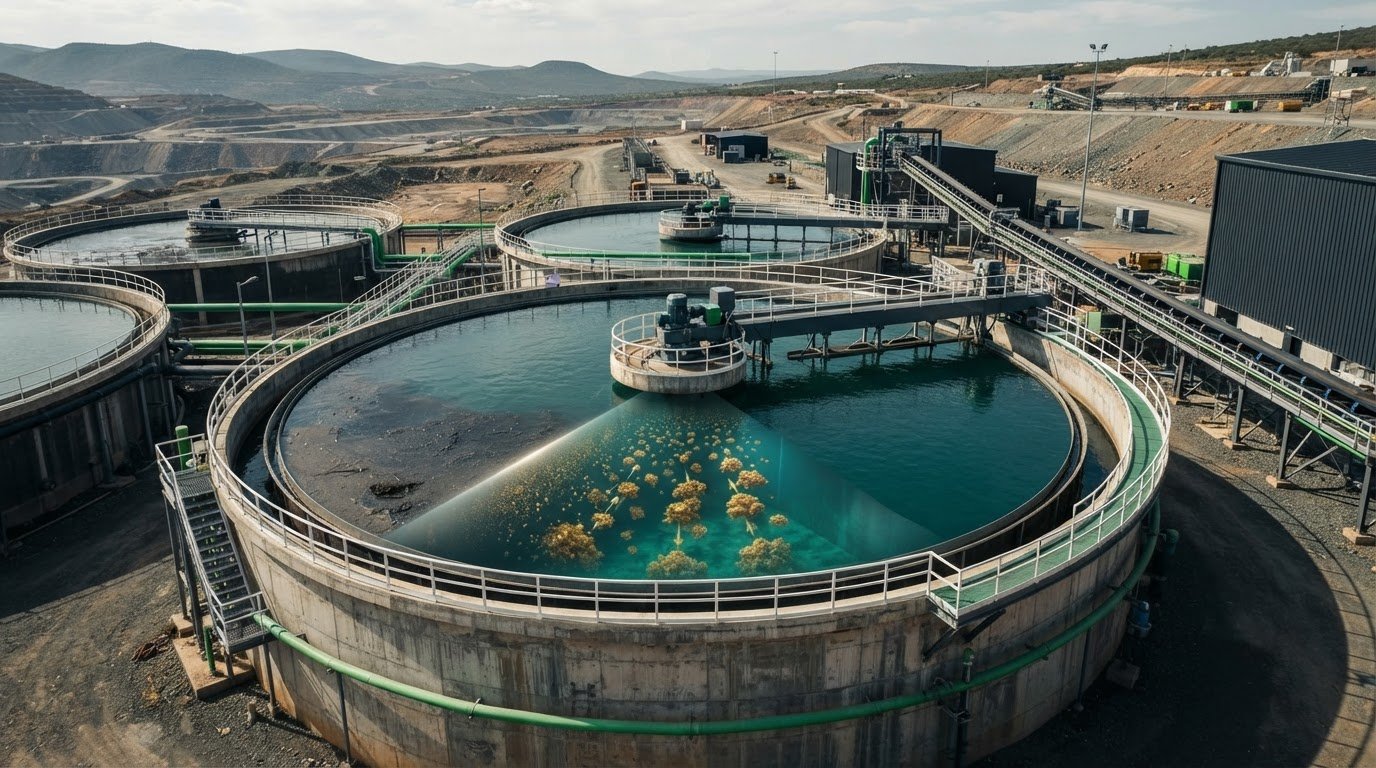
The primary challenge in phosphate tailings is the high concentration of ultra-fine clay particles. These fines settle slowly, tying up massive volumes of water in tailings storage facilities (TSFs). Mining Flocculants are essential for accelerating solids-liquid separation in thickeners. By selecting high-molecular-weight polymers specifically designed for clay-heavy mineralogies, operators can bridge the fine particles into larger flocs. This process results in:
- Enhanced water clarity for immediate reuse in flotation and grinding circuits.
- Faster sediment compaction, which reduces the total footprint of the TSF.
- Improved dam stability by increasing the density of the stored solids and mitigating the risk of structural failure.
Effective dewatering transforms a liquid waste stream into a stable, manageable material. This technical precision protects both the environment and the long-term viability of the mining operation.
Odor and Gas Treatment in Mining
Mining operations located near communities face unique challenges regarding air quality. The processing of certain phosphate ores can release hydrogen sulfide (H2S) and volatile organic compounds (VOCs). Managing these emissions is essential for maintaining social license and ensuring worker safety. Implementing specific Mining Odor & Gas treatment solutions allows plants to neutralize these compounds at the source. For comprehensive safety protocols and management strategies, operators should consult established h2s treatment guidelines.
Process water foam is another operational hurdle that impacts efficiency. The presence of organic matter or residual reagents can lead to excessive foaming in thickeners and recycling tanks. Defoamers are used to destabilize these foams, ensuring that sensors and pumps function correctly and preventing overflow events. By integrating these solutions, mines achieve a truly closed-loop system. This commitment to industrial guardianship ensures that every drop of water is protected and every byproduct is managed with care. To optimize your tailings and water management strategy, contact our technical specialists today for a comprehensive audit of your chemical dosing protocols.
JAS Global Industries: Securing the Phosphate Value Chain
JAS Global Industries stands as a foundational pillar in the industrial landscape. Since 1998, we've provided the technical expertise required to navigate the complexities of mineral extraction. We don't just sell products; we offer long-term partnerships rooted in reliability and trust. Our specialized Phosphate Mining Chemicals are the starting point for a value chain that feeds the world. Through on-site technical audits and dedicated laboratory testing, we identify specific dosing strategies that maximize yield and protect critical infrastructure. This mission-oriented approach ensures that every operation we touch becomes a reliable contributor to global stability.
From Mine to Market: Holistic Quality Control
The chemical signature of the mineral concentrate directly dictates the quality of the final fertilizer. If the beneficiation stage is poorly managed, downstream processes suffer. Integrating mining output with Fertilizer Anti-caking Agents ensures that the end product remains free-flowing and stable during global transit. We look at the entire lifecycle of the mineral to prevent issues before they reach the market.
- Fertilizer Dust Suppressants: Essential for maintaining air quality and safety during maritime logistics and bulk handling.
- Fertilizer Granulation Aids: Improving the structural integrity of the granule to prevent crushing and waste.
- Fertilizer Coloring Agents: Establishing brand identity and ensuring product uniformity for the end consumer.
This comprehensive oversight reduces the total cost of ownership. It transforms raw output into a premium, market-ready resource. By managing the synergy between mining and finishing, we help producers maintain a steady industrial flow across international borders.
Partnering for Global Resource Security
Our commitment to sustainable mineral extraction is backed by dedicated R&I centers located across the Middle East, Africa, Asia, and Europe. These facilities allow us to solve unique mineralogical challenges that off-the-shelf products cannot address. We understand that no two ore bodies are identical. Our mission is to act as a global guardian of resource stability, moving from the macro vision of food security to the micro precision of chemical formulation.
Reliability is our signature. We offer bulk chemical supply contracts that guarantee logistics and supply chain stability for global producers. It's time to move beyond transactional supply and toward a technical partnership. Contact JAS Global Industries today for a comprehensive process audit and discover how our Phosphate Mining Chemicals can secure your operational future and enhance your global impact.
Advancing Global Stability through Chemical Precision
The landscape of mineral extraction is fundamentally changing. Declining ore grades and rising operational costs require a transition from commodity reagents to high-performance specialty chemicals. By optimizing flotation recovery and reducing energy consumption in grinding circuits, you protect both your bottom line and the global phosphate value chain. Sustainable water management and tailings compaction further ensure that your operation remains a responsible pillar of modern infrastructure. Success in this resource-constrained era depends on the molecular precision of your Phosphate Mining Chemicals.
JAS Global Industries is ready to support your mission. We provide specialized formulations for complex mineralogies and back them with global manufacturing and R&I capabilities. Our team conducts on-site technical audits and laboratory testing to ensure every dosing strategy maximizes your yield. We don't just supply chemicals; we guard the stability of critical resources through technical excellence and long-term partnership.
Partner with JAS Global Industries for Advanced Mining Solutions and secure the future of your phosphate production today. We look forward to building a resilient and sustainable resource future alongside you.
Specialized Knowledge: Frequently Asked Questions
What are the primary chemicals used in phosphate flotation?
Primary chemicals include Mining Flotation Collectors and Mining Frothers. Collectors selectively attach to apatite to make the mineral surface hydrophobic, allowing it to attach to air bubbles. Frothers stabilize the air-water interface to carry the mineral load to the launder efficiently. Mining Depressants are also used to inhibit the flotation of gangue minerals like dolomite or silica. These formulations are essential for high-yield separation and protecting the economic value of the deposit.
How do grinding aids reduce energy costs in phosphate mining?
Mining Grinding Aids work by preventing particle re-agglomeration during the fine-grinding process in ball or sag mills. By neutralizing surface charges on particles, these chemicals keep materials discrete and improve slurry rheology. This ensures the mill's energy is efficiently spent on breaking new surfaces rather than re-grinding clumps. The result is a significant decrease in electricity consumption per ton of processed mineral. It's a critical step for improving the carbon footprint of the operation.
Can specialty chemicals help in recovering phosphate from low-grade ores?
Yes, specialty Phosphate Mining Chemicals are specifically designed to handle the complex mineralogies found in low-grade deposits. These advanced formulations provide higher selectivity than generic reagents, allowing for the precise separation of apatite from high levels of carbonate or silica impurities. Custom dosing strategies help operators maintain economic viability even as ore quality declines globally. This ensures a steady supply of P2O5 for the global fertilizer value chain.
Why is scale control important in phosphate processing plants?
Scale control is vital because mineral deposition can choke slurry pipelines and recycling circuits. Calcium sulfate and phosphate scale often precipitate when process water is reused, reducing flow velocity and forcing expensive equipment downtime. Using Water Treatment Scale Inhibitors and antiscalants provides several benefits:
- Consistent flow velocity and throughput
- Extended lifespan for pumps and valves
- Prevention of sudden operational blockages
What is the role of flocculants in tailings management?
Mining Flocculants accelerate the solids-liquid separation process in thickeners by bridging fine clay particles into larger flocs. This results in faster settling and improved water clarity for immediate reuse in the processing circuit. Beyond water recovery, effective flocculation ensures better solids compaction in tailings storage facilities. This reduces the total environmental footprint of the mine and enhances the structural stability of storage dams, acting as a safeguard for surrounding communities.
How does phosphate mining chemistry affect final fertilizer quality?
The beneficiation stage determines the purity of the concentrate, which directly impacts downstream fertilizer production. Effective removal of magnesium and silica prevents sludge formation and excessive acid consumption in phosphoric acid plants. Additionally, the chemical profile of the concentrate influences the performance of Fertilizer Anti-caking Agents and granulation aids. High-quality mining chemistry ensures that the final product remains stable, free-flowing, and ready for maritime transport. It's the foundation of a reliable global supply chain.
Are there sustainable chemical options for phosphate mining?
Sustainability is achieved through the use of high-performance chemicals that reduce waste and resource consumption. Advanced formulations allow for closed-loop water systems, which significantly lower the environmental impact in water-stressed regions. By improving recovery rates and reducing energy usage through grinding aids, these chemicals ensure that mineral extraction is both efficient and responsible. Modern industrial solutions focus on maximizing resource security while minimizing the ecological footprint of the operation.
What services does JAS Global Industries provide for mining optimization?
JAS Global Industries offers comprehensive technical consulting and process optimization services to improve industrial plant yields. Our experts perform on-site technical audits and laboratory testing to develop custom chemical dosing strategies tailored to specific mineralogies. We also provide bulk chemical supply contracts to ensure logistical reliability. Through our global R&I centers, we help partners solve unique operational challenges and maintain the stability of the entire Phosphate Mining Chemicals value chain.