
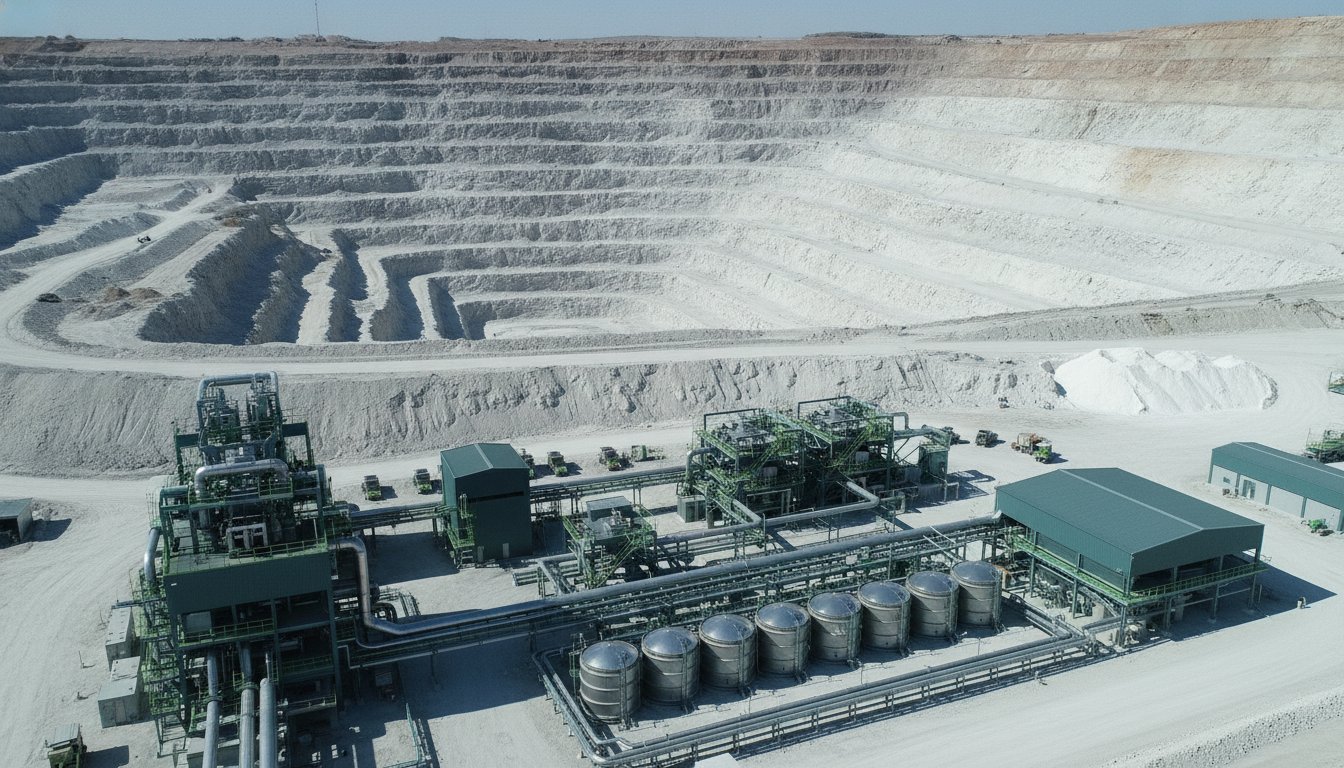
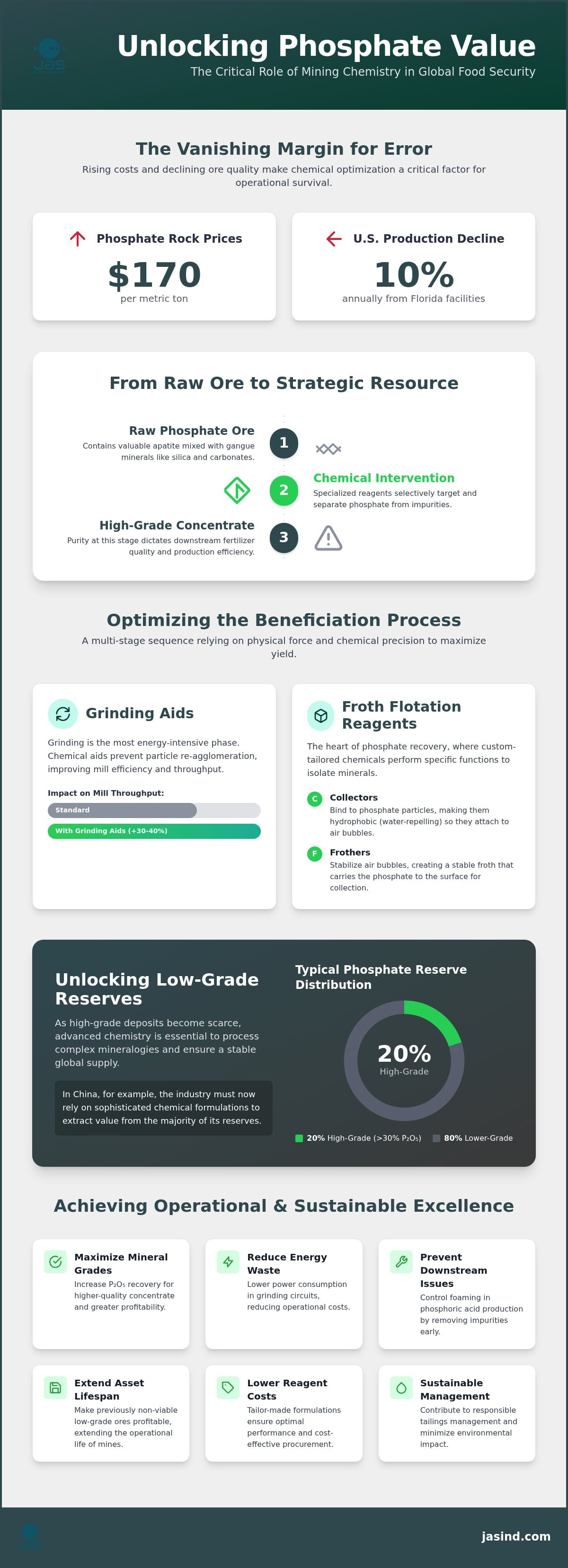
With Morocco phosphate rock prices reaching $170 per metric ton and U.S. production from Florida facilities declining by 10% annually, the margin for error in mineral processing has vanished. You're likely facing the pressure of lower-grade feed and rising costs, making the choice of Phosphate Mining Chemicals a critical factor in your operational survival. It's a challenging reality where energy consumption during grinding and unpredictable foaming in phosphoric acid production can compromise your entire output.
We believe that phosphate is more than a commodity; it's a strategic resource essential for global food security. This article demonstrates how specialized chemical reagents transform extraction into a high-yield, sustainable process. You'll discover how the right combination of collectors, frothers, and grinding aids can increase mineral grades and reduce operational downtime. We'll examine the technical precision required to optimize recovery while maintaining a focus on sustainable tailings management. You'll learn how to secure your supply chain through cost-effective reagent procurement and tailor-made formulations that protect your long-term value.
Key Takeaways
- Understand how high-performance chemical reagents serve as the foundation for global resource security by maximizing phosphate rock extraction.
- Learn to optimize the beneficiation process through precise grinding and flotation strategies that reduce energy waste and improve mineral recovery.
- Discover the specific functions of Phosphate Mining Chemicals, including how custom-tailored collectors and frothers stabilize flotation circuits for higher-grade yields.
- Identify ways to prevent downstream production issues like foaming by integrating specialized mining chemistry early in the processing chain.
- Gain insights into achieving sustainable tailings management and cost-effective operations through on-site technical audits and advanced laboratory testing.
The Essential Role of Phosphate Mining Chemicals in Global Agriculture
Phosphate rock is the foundational pillar of the global food supply. It provides the essential phosphorus required for high-yield agriculture and stable crop production. However, raw ore is seldom found in a usable state. Phosphate Mining Chemicals serve as the "silent engine" of this critical industry. These specialized reagents allow processors to separate valuable apatite from non-productive gangue minerals like silica and carbonates. Without chemical intervention, the vast majority of the world's low-grade phosphate deposits would be economically unviable to process. This technical necessity is growing as high-grade reserves become scarce. In China, for example, high-grade rock with P2O5 levels above 30% accounts for only 20% of total reserves. The industry must now rely on more sophisticated, tailor-made chemical formulations to unlock value from complex mineralogies.
From Phosphate Rock to Phosphoric Acid
The transition from raw ore to high-purity industrial feedstock is a delicate chemical balancing act. Purity at the mining stage is the primary driver of downstream fertilizer quality. If impurities like magnesium, iron, or aluminum remain in the concentrate, they compromise the entire production chain. These contaminants reduce the efficiency of phosphoric acid plants and increase maintenance costs. Effective Phosphate rock beneficiation is the only way to ensure these elements are removed before they reach the reactor. By achieving higher concentrate grades, operators reduce the volume of sulfuric acid required and minimize the generation of unwanted byproducts. This precision at the start of the process ensures a stable, high-quality output for the global market.
Global Resource Security and Sustainability
Global resource security is tied directly to the longevity of our mines. Advanced chemistry extends the operational life of existing phosphate assets by making it possible to process ores that were previously bypassed as waste. This capability is essential for maintaining a steady supply of critical minerals in a volatile market. JAS Global Industries serves as a vital partner in this effort. We prioritize the protection of global resources through technical innovation and specialized reagent development. Our approach to Mining Solutions: Advanced Chemistry for Global Resource Security focuses on maximizing recovery while minimizing environmental impact. By providing reliable chemical solutions, we help stabilize the infrastructure of modern agriculture. We ensure that even as ore quality declines, the global food system remains secure and productive.
Optimizing the Beneficiation Process: Flotation and Grinding
Beneficiation is the technical bridge between low-grade raw ore and high-purity industrial feedstock. It's a sophisticated multi-stage sequence that relies on physical force and chemical precision to isolate valuable minerals from waste. The process follows a logical, categorical progression designed to maximize yield. It begins with crushing and grinding to achieve the optimal liberation size. Next, desliming removes ultra-fine particles that can coat mineral surfaces and interfere with reagent performance. The core of the operation is froth flotation, where specific collectors and frothers isolate the phosphate. Finally, dewatering and tailings management ensure the process meets environmental compliance standards. Each of these stages requires high-performance Phosphate Mining Chemicals to maintain a stable and profitable circuit.
The Impact of Mining Grinding Aids
Grinding is the most energy-intensive phase of any mining operation. It's often the primary bottleneck for plant throughput. Mining grinding aids address this by preventing particle re-agglomeration within the ball mill. These chemical additives maintain slurry fluidity, which allows for a more consistent particle size distribution and higher mill efficiency. By reducing the "circulating load," operators can maximize the throughput of the grinding circuit without increasing power consumption. This efficiency doesn't just lower costs; it protects the operational lifespan of heavy equipment and ensures the downstream flotation circuit receives a perfectly prepared feed.
Froth Flotation: The Heart of Phosphate Recovery
Froth flotation is where the most complex chemical interactions occur. The success of the entire recovery operation depends on the precise attachment of air bubbles to phosphate particles. This becomes increasingly difficult when treating dolomitic or silicious phosphate ores, where the gangue minerals share similar physical properties with the target apatite. Advanced Beneficiation Techniques and Reagents utilize pH regulators and modifiers to create the specific chemical environment needed for separation. Selective collectors must identify and coat the phosphate while ignoring impurities. Simultaneously, frothers stabilize the air bubbles to carry the mineral to the surface for collection.
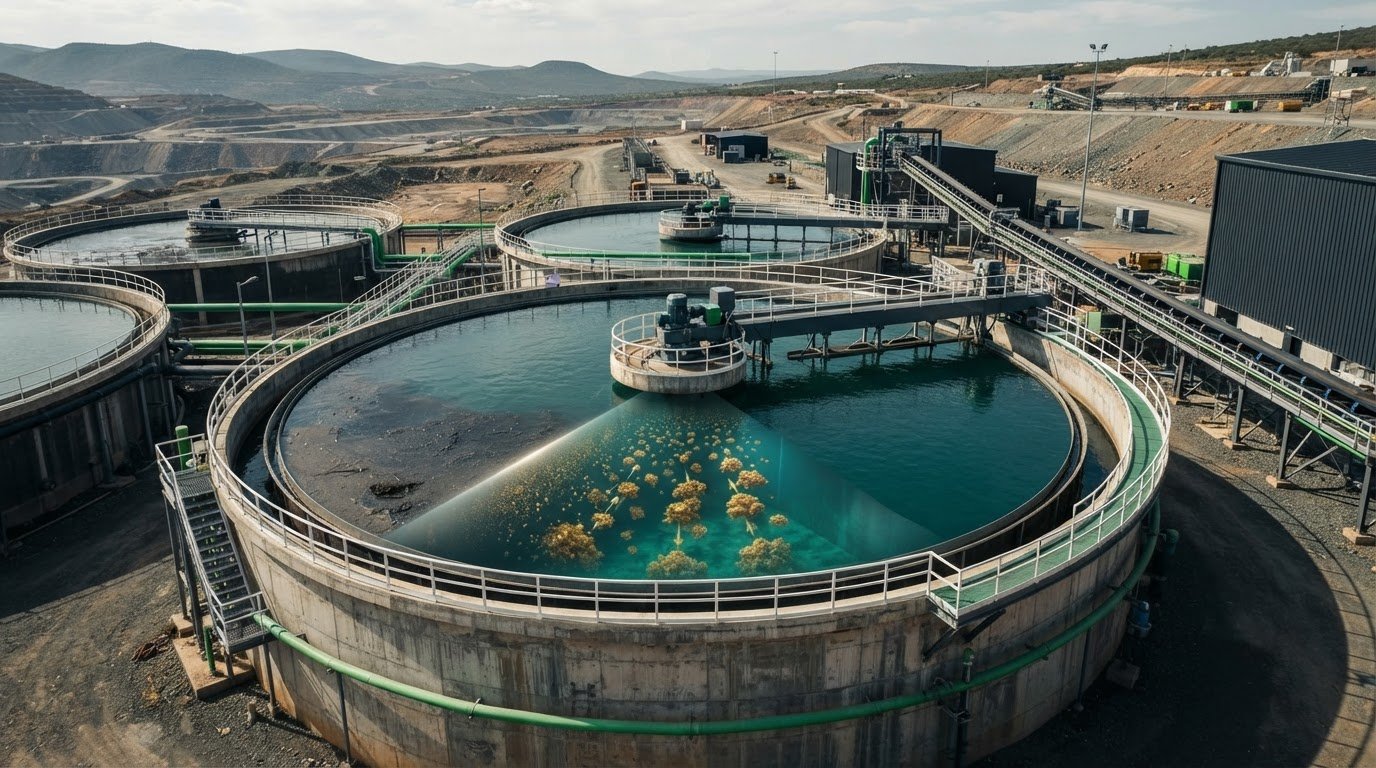
Effective tailings management is the final step in a responsible beneficiation strategy. It's about more than just waste disposal; it's about protecting the surrounding environment and managing water resources wisely. Modern Phosphate Mining Chemicals include advanced flocculants that speed up the settling process, allowing for faster water recovery and more stable tailings storage. This holistic approach to chemistry ensures that the mine remains a responsible corporate citizen while maintaining high-grade output. For operators looking to refine these complex circuits, we recommend a technical audit of your current flotation and grinding chemistry to identify hidden recovery gaps.
Specialty Reagents: Collectors, Frothers, and Depressants
Precision in beneficiation depends on a sophisticated chemical toolkit. While physical grinding prepares the ore, specialty reagents perform the actual separation. These Phosphate Mining Chemicals act as the primary drivers of mineral recovery and operational stability. A successful flotation circuit relies on a balanced interaction between several specialized agents:
- Mining Flotation Collectors: These surfactants selectively coat phosphate minerals, making their surfaces hydrophobic so they can attach to air bubbles.
- Mining Frothers: These chemicals stabilize the air bubbles within the flotation cell, ensuring they're strong enough to carry minerals to the surface without collapsing.
- Mining Depressants: Essential for high-purity yields, these reagents prevent unwanted gangue minerals, such as silica or carbonates, from floating along with the apatite.
- Defoamers: These are critical for managing the aggressive froth generated in phosphoric acid reactors during downstream processing, preventing costly overflows.
Customizing Collectors for Complex Ores
Generic reagents rarely deliver optimal results in varied geological deposits. Every mine site presents a unique mineralogical challenge that standard chemicals can't solve. Our JAS Global R&I centers focus on developing tailor-made formulations that address these specific site conditions. This customization is vital for balancing selectivity and recovery, especially in high-carbonate phosphate ores where the target mineral and waste share similar chemical signatures. We don't just supply chemicals; we act as a global guardian of your resource. By refining the molecular structure of our collectors, we ensure maximum recovery without sacrificing concentrate grade. This technical precision protects the long-term value of your ore body and ensures every ton of rock reaches its full potential.
Managing Slurry with Flocculants
Efficient solid-liquid separation is a cornerstone of modern mining sustainability. Mining Flocculants play a decisive role in this stage by aggregating fine particles into larger clusters for faster sedimentation. This process significantly enhances water recycling rates within the operation, reducing the reliance on fresh water. Beyond process efficiency, effective flocculation ensures stable tailings dam construction. Achieving the correct slurry density allows operators to manage waste more securely and minimize environmental risks. Our approach integrates Phosphate Mining Chemicals with on-site technical audits to ensure that every drop of water and every ton of tailings is managed with corporate responsibility. This focus on stability and safety reflects our commitment to the broader human impact of our technical solutions.
Operational Reliability and Downstream Integration
Operational reliability depends on looking far beyond the flotation cell. Phosphate Mining Chemicals play a decisive role in determining the physical integrity of the final concentrate. When mining chemistry is perfectly aligned with downstream fertilizer production, it prevents a host of logistical and processing failures. This integration is essential for maintaining the stability of the entire supply chain. It ensures that the value extracted at the mine is fully realized at the manufacturing plant.
One of the most persistent challenges in this industry is material handling. Phosphate products often face significant degradation during long-distance transport. Dust generation and agglomeration are not just minor inconveniences; they are threats to industrial efficiency and safety. Implementing high-performance Anti-caking Agents: The Science of Maintaining Industrial Flow and Global Food Security preserves the quality of the product. It ensures that the phosphate remains free-flowing and ready for use upon arrival at the destination. This level of protection is vital for maintaining the continuity of global resource distribution.
Preventing Foam and Scale in Processing
The conversion of phosphate rock into phosphoric acid is a high-intensity chemical reaction. In these environments, foaming can rapidly reduce reactor capacity and lead to dangerous overflows. Specialized defoamers suppress these reactions, allowing for maximum throughput and safer operations. Simultaneously, scale inhibitors are required to maintain heat exchanger efficiency during evaporation stages. This synergy between water treatment and Phosphate Mining Chemicals protects the mechanical integrity of the plant. It ensures that the infrastructure remains reliable under the most demanding conditions, reducing the need for unscheduled maintenance.
Odor and Gas Treatment in Mining
Protecting the workforce and the surrounding community is a fundamental corporate responsibility. Mining environments often generate volatile gases, including hydrogen sulfide (H2S), which pose severe health risks and cause environmental non-compliance. Effective chemical treatment is the primary line of defense against these hazards. We provide specialized solutions for H2S Treatment: A Comprehensive Guide to Industrial Hydrogen Sulfide Management to ensure full regulatory safety. These treatments neutralize odors and toxic gases at the source. This maintains a stable and secure environment for everyone involved in the production process.
To see how our integrated chemical approach can stabilize your downstream operations, explore our full range of industrial mining and water treatment solutions.
JAS Global Industries: Your Strategic Partner in Phosphate Chemistry
JAS Global Industries operates as an essential pillar of the mineral processing industry. Since 1998, we've provided the technical foundation for global resource stability through advanced Phosphate Mining Chemicals. Our manufacturing footprint spans across Europe, Asia, and Africa, ensuring that high-performance reagents are always within reach of the world's most critical mining hubs. We balance technical industrial expertise with a profound sense of global responsibility. By framing our chemical solutions as essential contributors to resource security, we elevate our role from a mere supplier to a vital global guardian. This reliability is rooted in a long-standing corporate history that creates a stable atmosphere for our long-term partners.
Expert Technical Consulting
Operational success depends on precision at the mine site. Our engineers don't just ship products; they conduct comprehensive on-site technical audits to identify specific recovery bottlenecks. Every phosphate deposit has unique mineralogical characteristics that require a bespoke approach. We use on-site laboratory testing to develop custom chemical management plans tailored to your industrial-scale operations. These custom dosing strategies ensure your plant achieves the highest possible mineral grade while significantly reducing reagent waste. Our commitment to reliability extends to a robust global logistics network. We offer recurring supply contracts that protect your operation from market volatility and supply chain disruptions. This steady, logical approach to partnership ensures your mine remains productive, efficient, and secure over the long term.
Innovative Research and Development
The next generation of mining reagents is currently under development in our multiple global R&I centers. We focus on sustainability-driven chemistry that reduces the environmental footprint of mining activities. This innovation serves as a brand signature, humanizing our large-scale industrial entity and providing a moral compass for our technical solutions. We develop tailor-made formulations that address the increasing complexity of modern, low-grade ores. Our focus remains on long-term value and the broader human impact of our work. We protect the stability of critical resources through a constant cycle of improvement and ethical purpose. We believe that true industrial leadership requires a balance between powerful scale and conscientious social concern. Our foundational presence is essential, reliable, and focused on the fundamental needs of society.
To secure your production yield and optimize your chemical usage, Contact JAS Global Industries for a Technical Audit of your Phosphate Circuit. Our specialists are ready to help you transform your extraction process into a high-yield, sustainable operation that meets the fundamental needs of society.
Securing the Future of Global Phosphate Production
The path to high-yield extraction requires a shift from generic methods to chemical precision. We've explored how Phosphate Mining Chemicals serve as the essential link between raw rock and industrial-grade feedstock. By optimizing flotation circuits and integrating mining chemistry with downstream processing, operators can overcome the challenges of declining ore quality and rising energy costs. This technical maturity ensures that critical resources are protected for future generations.
JAS Global Industries remains a dedicated guardian of these vital resources. Since 1998, we've delivered specialty chemical solutions through our global R&I and manufacturing network. Our focus on tailor-made formulations for complex ores allows you to maximize mineral recovery while maintaining a sustainable environmental footprint. We invite you to Optimize Your Mineral Recovery with JAS Global Mining Solutions. Together, we can build a more stable and productive future for the global phosphate industry. Your commitment to operational excellence is the foundation of global resource security.
Frequently Asked Questions
What are the primary chemicals used in phosphate mining?
The primary Phosphate Mining Chemicals include collectors, frothers, and depressants used in flotation circuits to separate minerals. Grinding aids optimize the initial crushing phase, while flocculants manage solid-liquid separation in tailings management. Defoamers and scale inhibitors are also essential for downstream phosphoric acid production. These reagents work together to ensure maximum mineral recovery and operational stability throughout the extraction process, protecting the long-term value of the ore body.
How do collectors improve phosphate recovery rates?
Collectors improve recovery by selectively attaching to phosphate mineral surfaces and rendering them hydrophobic. This chemical coating allows air bubbles to adhere to the target particles during the flotation stage. The bubbles then lift the valuable minerals to the surface for collection. High-performance collectors are engineered to distinguish between apatite and gangue, ensuring a high-grade concentrate with minimal waste and maximum process efficiency.
Why are grinding aids necessary in phosphate processing?
Grinding aids are necessary to prevent the re-agglomeration of fine particles within the ball mill. By maintaining slurry fluidity, these chemicals reduce the energy required to reach the optimal liberation size. This increased efficiency improves mill throughput and prevents operational bottlenecks. It ensures a consistent feed for the downstream flotation circuit, which is vital for maintaining steady production rates and protecting heavy equipment from unnecessary wear.
Can specialty chemicals help in processing low-grade phosphate ores?
Specialty chemicals are essential for the economic processing of low-grade phosphate ores. Tailor-made formulations allow for precise separation even when the target mineral is heavily intergrown with impurities like silica or carbonates. These advanced reagents unlock value from deposits that were previously considered waste. This capability extends the life of existing mines and supports global resource security in an era where high-grade reserves are increasingly scarce.
What is the role of defoamers in phosphoric acid production?
Defoamers suppress the aggressive foam generated during the chemical reaction between phosphate rock and sulfuric acid. Uncontrolled foaming reduces reactor capacity and can lead to operational downtime or safety hazards. By managing these gas-liquid interfaces, defoamers allow plants to operate at maximum capacity. They ensure a stable, continuous flow in the production of high-purity phosphoric acid, which is the foundational feedstock for global fertilizer manufacturing.
How does JAS Global customize chemical formulations for specific mines?
We customize formulations through comprehensive on-site technical audits and laboratory testing at our global R&I centers. Our engineers analyze the specific mineralogy and water chemistry of each mine site. This data allows us to develop bespoke Phosphate Mining Chemicals that address local recovery bottlenecks. We don't believe in one-size-fits-all solutions; instead, we prioritize long-term partnerships and site-specific precision to ensure the stability of your production.
Are phosphate mining chemicals environmentally safe?
Our commitment to environmental responsibility drives the development of sustainable chemical formulations. We focus on reducing the environmental footprint of mining operations by improving reagent efficiency and biodegradability. By maximizing mineral recovery, our chemicals also reduce the volume of waste generated per ton of product. We act as a responsible global guardian, ensuring that industrial progress aligns with community well-being and the long-term protection of natural resources.
How do flocculants assist in tailings management?
Flocculants assist in tailings management by accelerating the settling of fine solids in thickeners and settling ponds. This process allows for rapid water recovery and recycling back into the plant, which reduces fresh water consumption. Effective flocculation also creates more stable and compact tailings deposits. This stability is critical for the long-term safety of storage facilities and the protection of local ecosystems from industrial runoff and contamination.