
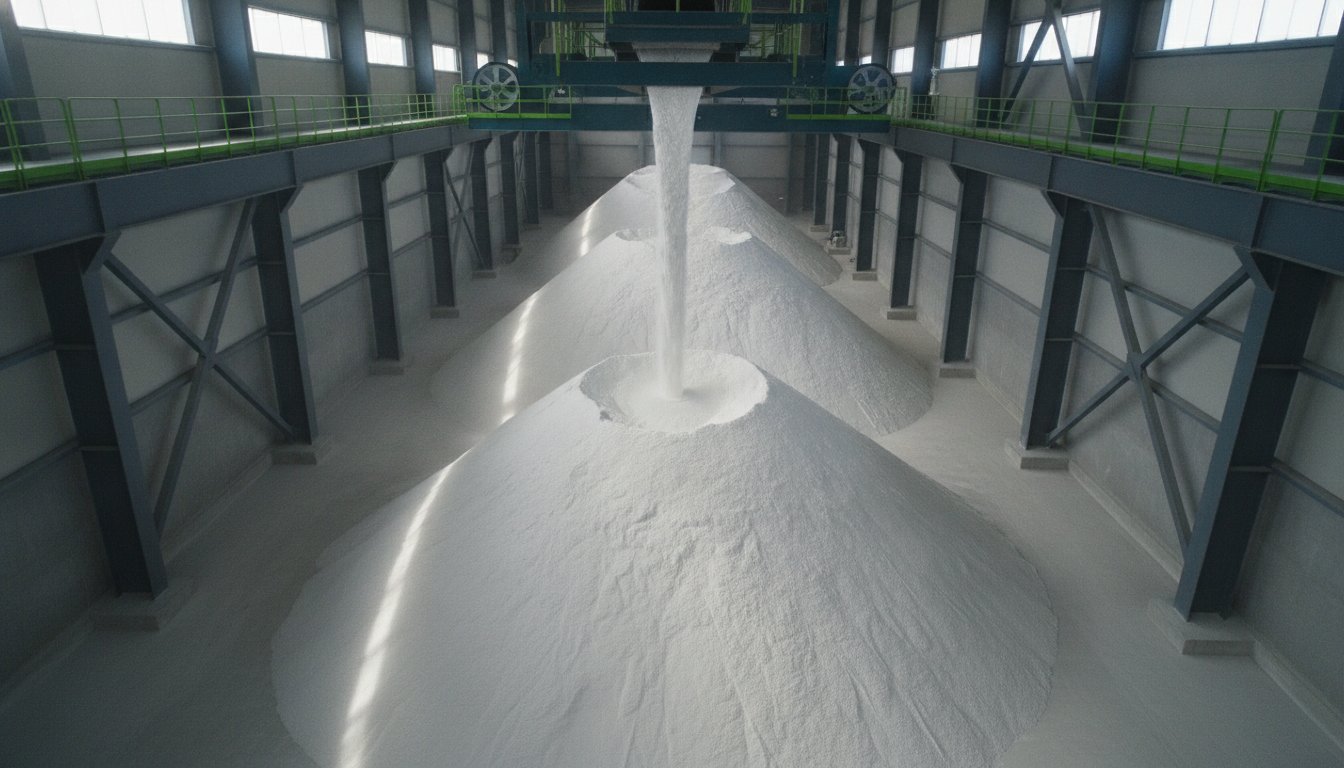
A single moisture spike in a warehouse can transform a high-value shipment of MAP or Urea into a solid, unsellable block of stone. When industrial flow stops, the economic impact ripples through the entire supply chain. You've likely faced the costly reality of equipment downtime caused by blockages or the reputational damage of end-user complaints regarding poor spreadability. These aren't just logistical hurdles. They're direct threats to the security and stability of global agricultural resources.
Integrating advanced Fertilizer Anti-caking Additives is the most effective strategy to protect your product's integrity from the plant to the field. We'll show you how specialized chemical treatments prevent degradation and maintain free-flowing properties regardless of the climate. You'll discover how to secure your shipments, reduce hazardous dust during handling, and optimize dosing costs to maintain profitability. This guide examines the technical consulting and custom formulations required to turn your fertilizer from a vulnerable commodity into a stable, high-performance asset.
Key Takeaways
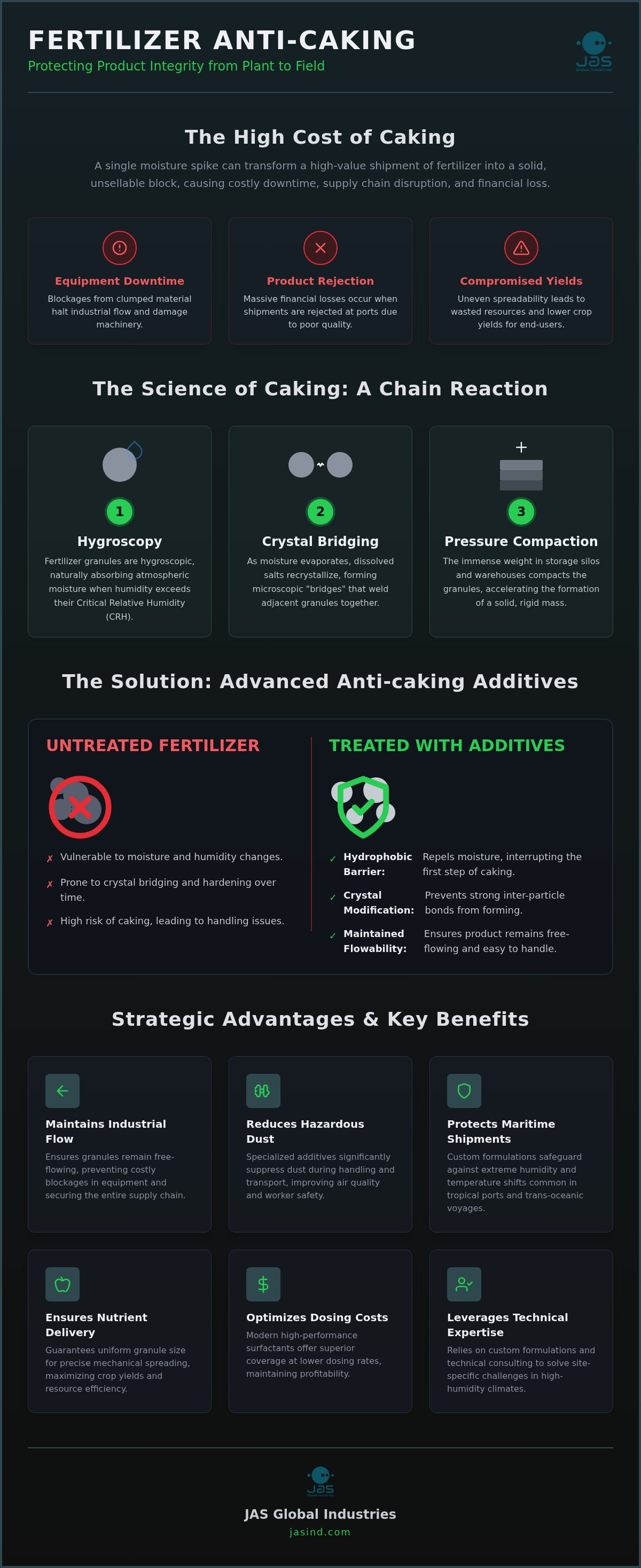
- Understand the fundamental mechanisms of hygroscopy and crystal bridging that compromise granular fertilizer during extended storage and handling.
- Evaluate the strategic application of Fertilizer Anti-caking Additives to maintain industrial flow and protect the integrity of global agricultural resources.
- Implement specialized protocols for maritime transport to safeguard shipments against the extreme humidity and temperature shifts common in tropical port environments.
- Leverage custom chemical formulations and technical consulting to optimize dosing efficiency while significantly reducing dust and equipment downtime.
The Critical Role of Anti-caking Agents in the Global Food Supply Chain
Fertilizer Anti-caking Additives are specialized surface-active agents designed to maintain the physical integrity of granular nutrients. An anti-caking agent works by reducing the adhesion between particles, ensuring that bulk materials remain free-flowing during storage and transport. In the context of industrial agriculture, flowability is the pulse of the entire system. If the product clumps, the machinery of global food production falters. We view these chemical solutions as more than mere additives; they are a form of chemical security for the world's most critical infrastructure. By preventing degradation, these agents directly reduce global food waste and ensure that essential nutrients reach their destination in peak condition. Maintaining the stability of these commodities is essential for economic predictability and the long-term sustainability of modern farming.
Beyond the Granule: Why Flowability Matters
When fertilizer clumps, the consequences extend far beyond a difficult handling process. Mechanical spreading equipment relies on precise granule size and flow to achieve uniform distribution. Even minor clumping leads to uneven application, which compromises crop yields and wastes expensive resources. At the industrial level, the economic stakes are even higher. Bulk product rejection at international ports due to caking can result in massive financial losses and supply chain bottlenecks. Reliable flow ensures consistent nutrient delivery across diverse soil types, securing the harvest for end-users worldwide. It's about maintaining the reliability of the resource from the factory to the farm, ensuring that every kilogram of product performs as intended.
The Evolution of Industrial Fertilizer Protection
The industry has moved past simple inert powders. Today, we utilize sophisticated, high-performance surfactants that offer superior coverage at lower dosing rates. The 2026 focus has shifted toward biodegradable and environmentally conscious formulations that meet tightening global regulations, such as the EU's Fertiliser Action Plan adopted in May 2026. Modern R&I centers now develop site-specific Fertilizer Anti-caking Additives to solve the "clumping crisis" in high-humidity and tropical climates. These advanced formulations allow for maritime transport stability, ensuring that fertilizer remains a viable resource despite the challenges of trans-oceanic shipping and volatile weather patterns. Our mission is to provide the technical expertise that keeps these critical supply chains moving without interruption.
Understanding the Science of Caking: Moisture, Pressure, and Crystallization
Fertilizer salts are inherently hygroscopic. They possess a natural affinity for atmospheric moisture, which triggers surface dissolution when ambient humidity exceeds a specific threshold. This threshold is known as the Critical Relative Humidity (CRH). For common NPK blends, the CRH varies significantly based on the chemical composition. When the environment surpasses this point, granules begin to absorb water, creating a thin film of saturated salt solution on their surfaces. Fertilizer Anti-caking Additives are engineered to interrupt this process by providing a hydrophobic barrier that repels moisture. Without this protection, even minor environmental shifts can compromise the entire bulk shipment. Understanding these chemical interactions is the first step toward securing your industrial flow and preventing the economic loss associated with clumped, unsellable product.
The Mechanics of Crystal Bridging
Crystal bridging occurs when the moisture absorbed during periods of high humidity evaporates as temperatures rise or humidity levels drop. This cycle of dissolution and recrystallization causes the dissolved salts to solidify between adjacent granules. Temperature fluctuations, common in both storage and transport, accelerate this solubility shift. Crystal bridging is the chemical weld between particles. These microscopic "bridges" grow in strength over time, eventually turning a free-flowing pile into a rigid mass. Advanced Fertilizer Anti-caking Additives work by modifying the crystal habit of these salts, preventing the formation of strong inter-particle bonds even when moisture is present. This technical intervention ensures that the fertilizer remains easy to handle and spread, regardless of the storage duration.
Physical Factors: Pressure and Particle Deformation
Mechanical caking is often driven by the physical environment of the warehouse or silo. In deep storage facilities, the immense weight of the fertilizer stack exerts significant pressure on the granules at the bottom. This pressure causes particle deformation, increasing the contact area between granules and providing more sites for crystal bridging to take place. Granule strength is a critical factor here; weaker particles deform more easily under load. Additionally, the accumulation of fine dust acts as a secondary catalyst. Dust fills the voids between granules, increasing the capillary action that draws moisture deeper into the bulk. Conducting a technical audit of your storage environment can help identify these physical risks before they lead to significant product degradation. By addressing both the chemical and physical drivers of caking, producers can optimize their storage strategies and maintain long-term product integrity.
Advanced Anti-Caking Technologies: Internal vs. External Additives
Effective protection requires a multi-layered chemical strategy. While the previous section detailed the science of crystal bridging, managing these risks involves a choice between internal and external applications. Modern Fertilizer Anti-caking Agents are no longer one-size-fits-all solutions. They're precision-engineered formulations. We categorize these into external coatings that act as barriers and internal modifiers that alter the chemical structure of the granule itself. Choosing the right system depends on the fertilizer's chemical profile, the expected storage duration, and the environmental conditions of the target market.
Modern formulas often rely on fatty amines and sulfonates to achieve optimal performance. These surfactants reduce the surface tension of moisture films on the granule. The delivery system, whether aqueous or oil-based, is equally critical. Oil-based systems generally provide more durable hydrophobic protection; aqueous systems can be more cost-effective for specific industrial applications. There's also a vital synergy between Fertilizer Anti-caking Additives and dust suppressants. By combining these functions, producers can secure their product's flowability while simultaneously improving workplace safety and reducing environmental impact. It's a comprehensive approach to resource stability.
External Coatings: The First Line of Defense
External coatings function as a primary shield against hygroscopy. These surfactants lower the surface tension of any moisture that settles on the granule, preventing the liquid from spreading and dissolving the salt surface. By creating a robust hydrophobic barrier, these coatings block moisture ingress during high-humidity cycles. Precision is key. We customize the coating thickness based on the porosity of the granule. High-porosity granules require a more viscous or concentrated application to prevent the additive from being absorbed into the core. This ensures the protective layer remains on the surface where it's needed most.
Internal Additives: Modifying the Crystal Lattice
Internal additives take a different approach by integrating directly into the granulation process. These modifiers change the habit or shape of the salt crystals as they form. By disrupting the natural crystal lattice, they make it harder for granules to form the chemical welds known as crystal bridging. These additives also improve the overall hardness of the granule. This increased structural integrity helps the product resist deformation in deep silos where pressure is highest. For high-value or highly sensitive fertilizers, we often recommend a hybrid approach. Combining internal modifiers with an external coating provides the ultimate level of resource protection. This ensures the product remains free-flowing from the factory to the most distant global ports.
Best Practices for Maintaining Quality During Maritime Transport
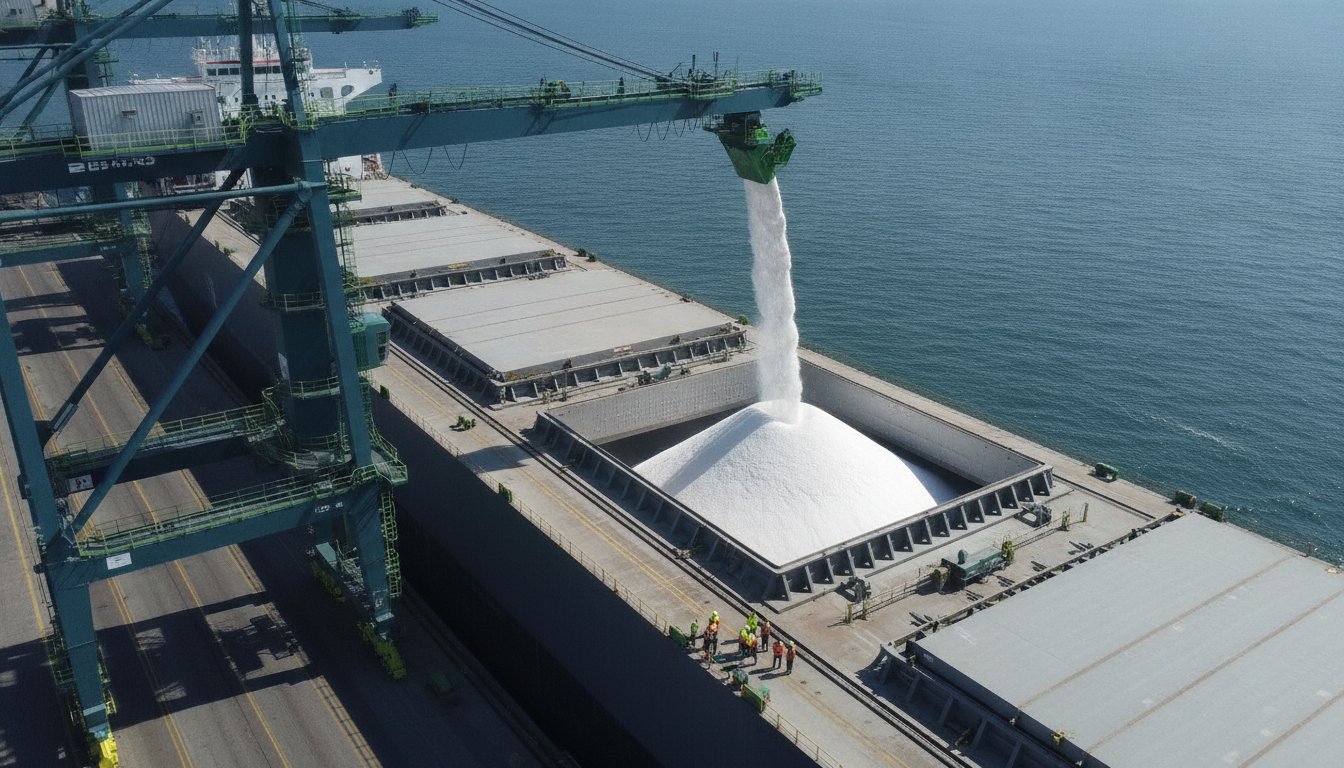
Trans-oceanic shipping is the ultimate test of resilience for bulk nutrients. As vessels cross varying climate zones, the environmental load on the product increases exponentially. In tropical port environments, temperature-induced caking becomes a primary threat to cargo stability. Securing these shipments requires advanced formulated solutions designed specifically for the rigors of bulk handling. Without the right Fertilizer Anti-caking Additives, a high-quality product can arrive as a solid mass, leading to rejection at the port and massive economic loss. We view maritime stability as an essential component of global resource protection. It's a commitment to ensuring that essential nutrients reach their destination in a usable, free-flowing state.
Managing the "Rainforest Effect" in Cargo Holds
Cargo holds are prone to the "rainforest effect." This occurs when moisture-laden air cools against the ship's hull, causing condensation to drip directly onto the fertilizer surface. These cycles of wetting and drying trigger the recrystallization and crystal bridging discussed earlier. Vibration and settling during the voyage also take a toll. Constant movement can wear down the integrity of the anti-caking film, exposing the granule surface to moisture ingress. Protecting the product during loading and unloading in wet weather is equally critical. Producers must ensure that the applied film is durable enough to withstand mechanical stress and environmental exposure throughout the entire journey.
Stability Audit: Testing for Long-Distance Resilience
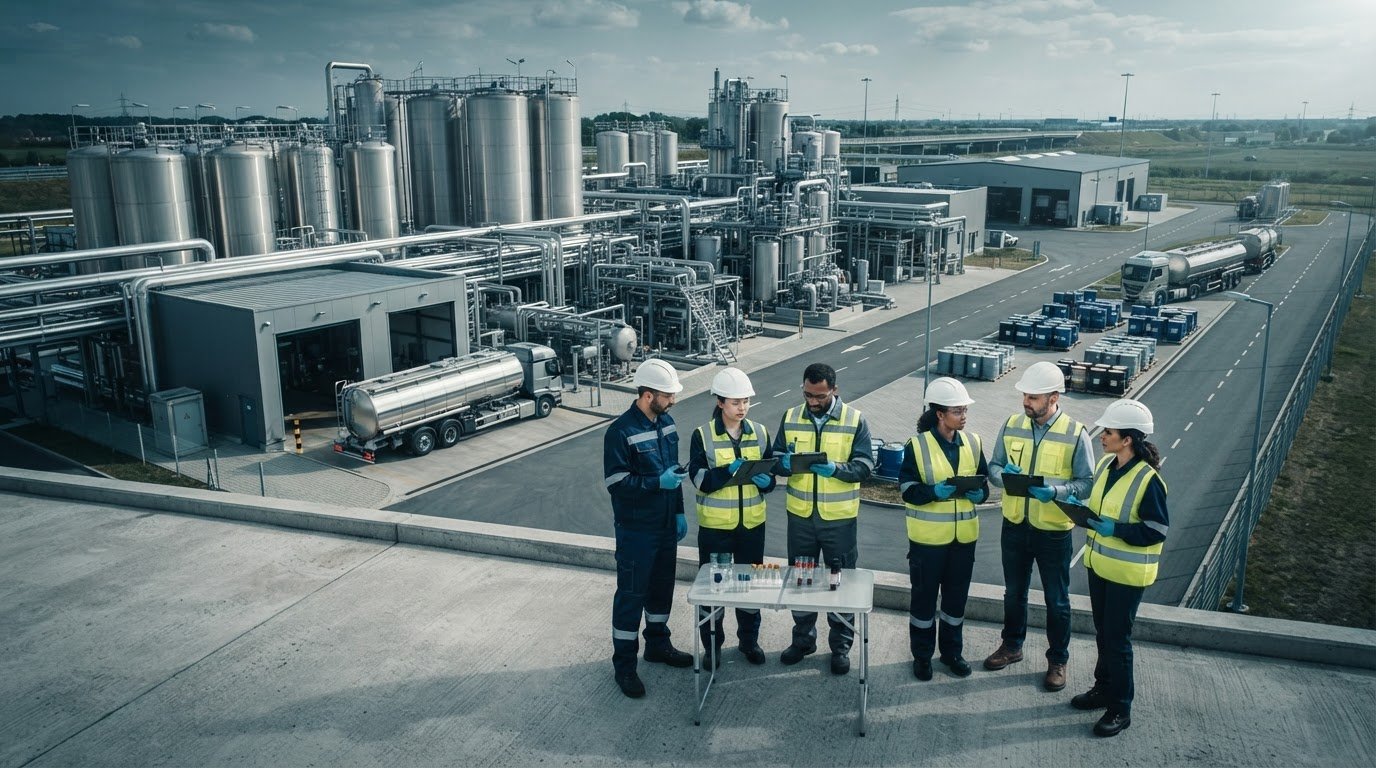
Proactive testing is the only way to guarantee performance across thousands of miles. We utilize laboratory simulations, such as Accelerated Caking Tests, to replicate the intense pressure and humidity found in a ship's hold. These tests help determine the optimal dosage of Fertilizer Anti-caking Additives for extended shelf-life requirements. It's not enough to apply a standard coating; the formula must be tailored to the specific route and destination. A technical audit is a necessity before initiating global export. This process identifies potential failure points and optimizes chemical application for maximum security. To ensure your shipments maintain their integrity across every ocean, you can request a technical audit from our global R&I centers.
Use this checklist to monitor stability during long-term storage and transport:
- Atmospheric Monitoring: Track relative humidity levels against the product's Critical Relative Humidity (CRH).
- Visual Inspection: Check for signs of surface moisture or "sweating" on the granules during loading.
- Temperature Tracking: Document shifts in storage temperature to predict potential recrystallization cycles.
- Film Integrity: Assess the durability of the protective coating after mechanical handling and vibration.
Strategic Chemical Partnerships: Custom Formulations for Industrial Efficiency
Generic, off-the-shelf chemicals often fail to address the specific environmental and chemical stressors of a local production site. Securing the global agricultural supply chain requires more than just a supplier; it demands a strategic partner. We position ourselves as the guardian of resource security and stability. By providing custom Fertilizer Anti-caking Additives, we ensure that industrial infrastructure remains resilient against the volatility of climate and commodity markets. Our approach integrates multiple protective layers, such as coloring agents and dust suppressants, into a single, streamlined process. This efficiency allows producers to maintain product integrity while optimizing their operational overhead.
The Technical Audit: Optimizing Your Plant Yield
Every NPK blend has a unique chemical signature and a specific set of caking triggers. Our technical consulting services begin with an on-site audit to analyze these variables in real-time. We don't just provide a product; we develop a dosing strategy that minimizes waste and maximizes effectiveness. For phosphate and potash producers, this includes the seamless integration of mining solutions into the broader production cycle. Precise chemical dosing reduces the volume of additives required, lowering costs and lessening the environmental footprint. It's a technical intervention designed to protect both the resource and the producer's bottom line.
Our technical audit process focuses on three core pillars of industrial efficiency:
- Identifying specific hygroscopic triggers for unique NPK and specialty fertilizer blends.
- Reducing operational costs through precision dosing strategies and reduced chemical waste.
- Optimizing plant yields by ensuring that storage and handling do not compromise product quality.
Global Reach, Local Expertise: The JAS Global Advantage
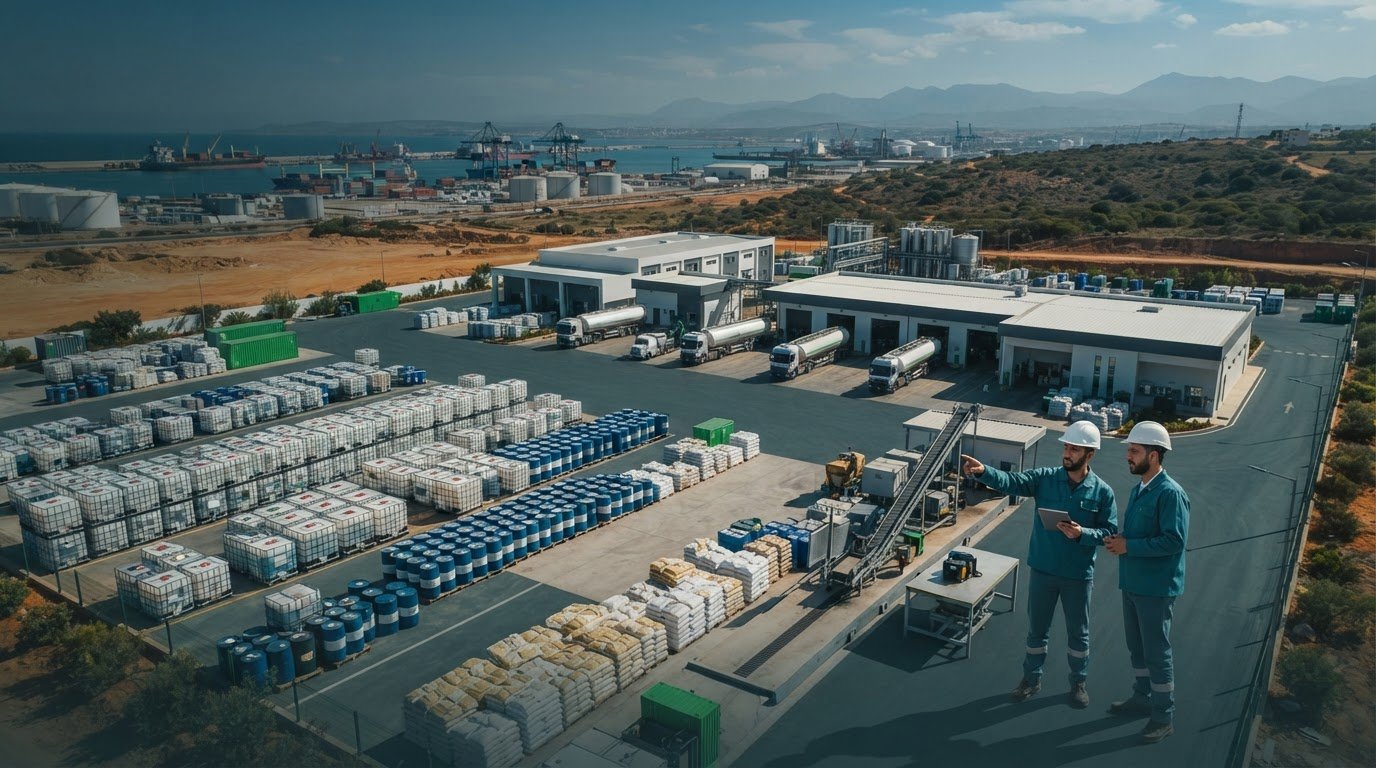
Reliability is the foundation of industrial stability. With manufacturing plants in Dubai and other key global locations, we provide a secure supply chain for our partners. This global footprint allows us to leverage local expertise while maintaining a grand vision of resource protection. Our R&I centers are dedicated to developing site-specific Fertilizer Anti-caking Additives that address the "clumping crisis" in diverse climates. These centers act as the engine of our innovation, testing thousands of formulations to find the perfect balance for your specific logistics. We're driven by an ethical purpose to support sustainable farming practices through bio-based and organic chemical advancements. This commitment to sustainability ensures our technical solutions meet the regulatory demands of 2026 and beyond. We act as a foundational industry presence, essential and reliable. We invite you to move beyond transactional agreements and enter into a long-term partnership focused on safety, stability, and the fundamental needs of society.
Securing Global Resource Stability through Technical Excellence
Protecting the integrity of granular nutrients is an essential mission for the modern industrial landscape. We've explored the complex mechanisms of crystal bridging and the physical pressures that threaten bulk storage. You now understand why generic treatments often fall short and how custom-engineered Fertilizer Anti-caking Additives provide a vital shield against environmental volatility. Reliability is not a luxury. It's a foundational requirement for global food security. Since 1998, industrial leaders have relied on our expertise to maintain free-flowing products through the most challenging maritime routes. Our global R&I centers continue to pioneer specialized formulations that secure your shipments and optimize plant efficiency. Don't leave your product stability to chance. Partner with JAS Global Industries for tailor-made chemical solutions that protect your resources and your reputation. Together, we can ensure a stable and sustainable future for global agriculture.
Frequently Asked Questions
What is the primary cause of fertilizer caking in humid climates?
The primary driver is hygroscopy, where fertilizer salts absorb atmospheric moisture once the humidity exceeds the product's Critical Relative Humidity (CRH). This creates a saturated brine on the granule surface. When temperatures shift or humidity drops, this brine recrystallizes to form solid chemical welds known as crystal bridges. These bridges turn free-flowing granules into unmanageable blocks. Storage pressure in deep silos further accelerates this process by increasing the contact points between particles.
How do anti-caking agents affect the nutrient release of the fertilizer?
Advanced Fertilizer Anti-caking Additives are engineered to be agronomically inert. They form a microscopic hydrophobic barrier that prevents inter-particle bonding during storage but doesn't interfere with soil solubility. Once the fertilizer is applied to the field, soil moisture quickly breaks down this thin protective layer. This ensure that nitrogen, phosphorus, and potassium release occurs according to the intended schedule, providing consistent nutrient delivery to the crops without any delay or residue.
Can anti-caking additives be used for all types of NPK fertilizers?
Yes, but the chemical formulation must match the specific NPK blend. Different salts have varying levels of sensitivity to moisture and pressure. For instance, urea-based fertilizers require different surface-active agents than those used for ammonium nitrate or phosphate-heavy blends. We develop tailor-made solutions at our global R&I centers to ensure the additive is compatible with your product's unique chemical signature, protecting its integrity across diverse industrial applications and climate zones.
What is the difference between an anti-caking agent and a dust suppressant?
These chemicals serve distinct but complementary roles in resource protection. Anti-caking agents focus on preventing crystal bridging and moisture absorption to maintain flowability during long-term storage. Dust suppressants are designed to bind fine particles to the granule surface, reducing product loss and improving air quality during handling. While they address different pains, we often integrate both functions into a single process to optimize dosing costs and secure the stability of the global supply chain.
How much anti-caking agent is typically required per ton of fertilizer?
Typical dosage rates range from 0.5 to 2.0 kilograms per ton of finished product. The exact requirement depends on factors like granule porosity, chemical composition, and the expected duration of maritime transport. Precision is essential to avoid over-application while ensuring total coverage. We use technical audits and laboratory testing to determine the most efficient dosing strategy for your specific industrial infrastructure, ensuring maximum protection with minimal chemical waste and optimized operational overhead.
Are modern fertilizer additives safe for the environment and soil health?
Modern formulations are developed with a deep commitment to sustainability and global responsibility. Many current agents utilize biodegradable surfactants and organic components that align with the 2026 EU Fertiliser Action Plan. These additives are designed to decompose naturally in the soil without leaving harmful residues or impacting microbial activity. By choosing advanced Fertilizer Anti-caking Additives, producers can support long-term agricultural productivity while meeting the increasingly strict environmental regulations governing the global industry.
How can I test the effectiveness of an anti-caking additive before bulk purchase?
Effectiveness is verified through Accelerated Caking Tests in a controlled laboratory environment. These simulations subject treated fertilizer samples to intense temperature and pressure cycles that replicate months of warehouse storage in just a few days. This data-driven approach allows producers to evaluate the resilience of different formulas before committing to bulk contracts. Our R&I centers provide these technical audit services to ensure your chosen formulation can withstand the specific stressors of your logistics chain.
Do anti-caking agents prevent clumping during long-term maritime storage?
Specialized maritime formulations are essential for preventing clumping during trans-oceanic voyages. These agents are engineered to withstand the "rainforest effect" in cargo holds, where heavy condensation and temperature fluctuations are common. Since 1998, we've focused on creating durable films that resist the mechanical stress of vibration and settling. These advanced treatments ensure that bulk shipments arrive at international ports in a free-flowing state, protecting the economic value of the cargo and the stability of the supply chain.