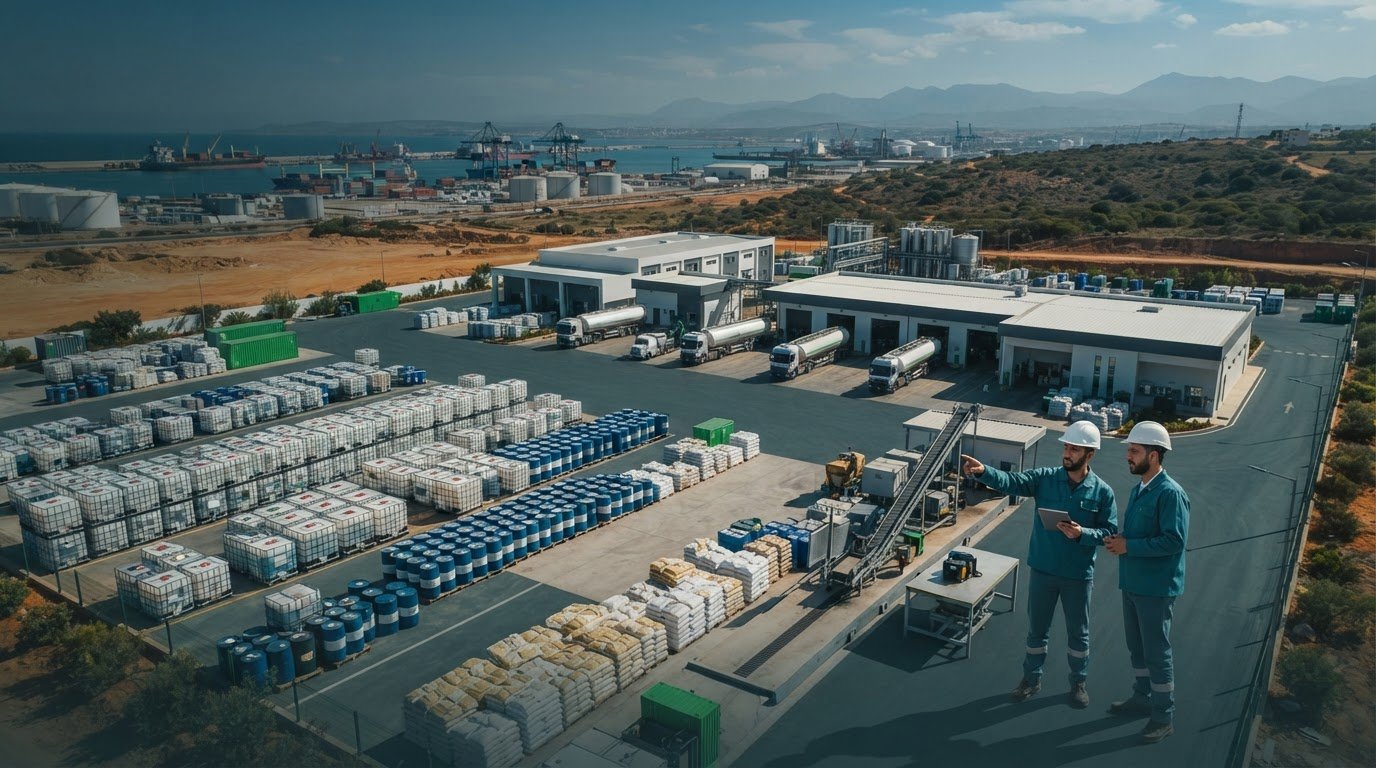


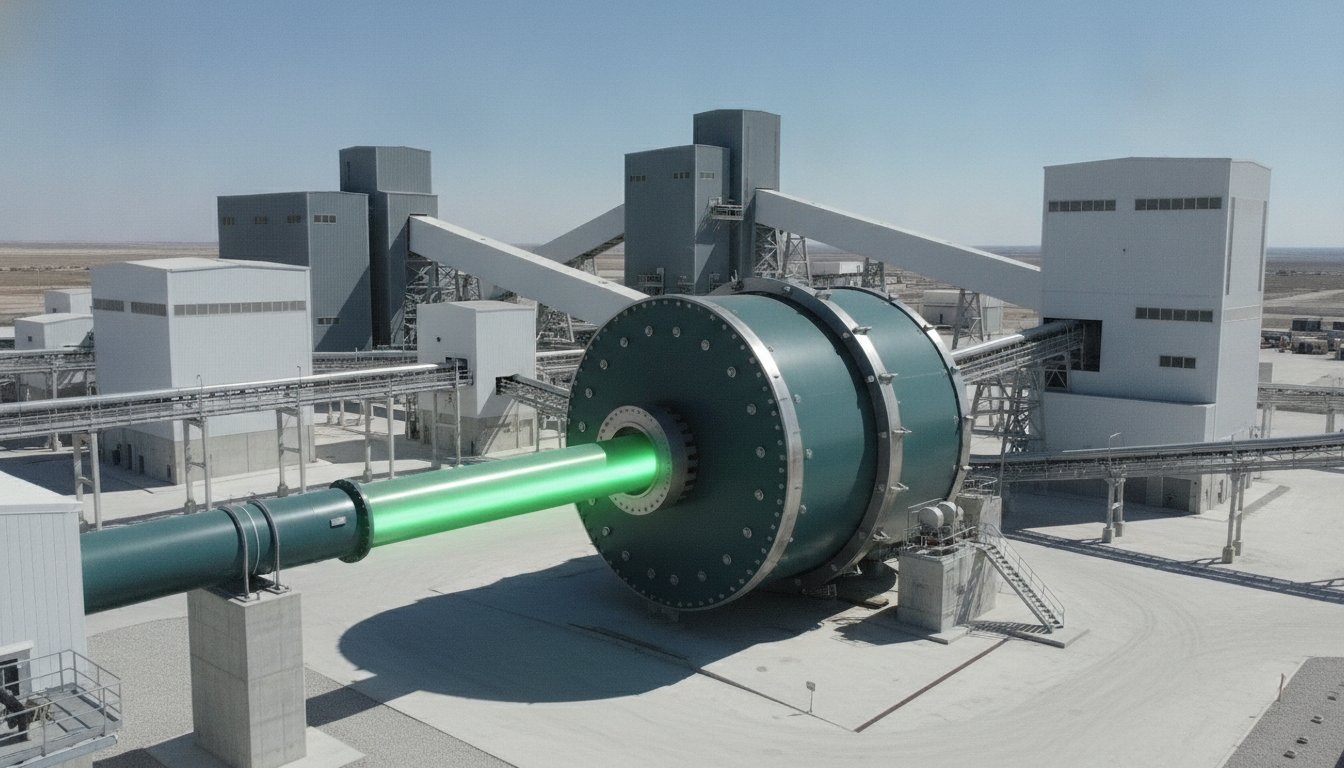
Comminution remains the most energy-intensive phase of mineral processing, yet a 10% reduction in specific energy consumption is often hidden within the chemistry of the mill load. For global operators facing declining ore grades, the challenge isn't just grinding more rock; it's protecting the stability of the entire recovery circuit. Advanced Mining Grinding Aids have evolved into essential tools for energy security, bridging the gap between mechanical throughput and chemical efficiency.
You recognize that mill bottlenecks and the agglomeration of fine particles don't just waste power; they threaten your site's long-term viability. This article demonstrates how modern chemical formulations transform these obstacles into opportunities for increased mill capacity and optimized particle size distribution. You'll discover how to secure higher mineral yields and reduce your kWh/t through technical partnerships that prioritize both performance and global responsibility. We'll explore the latest advancements in chemical dispersion and how they stabilize your path toward sustainable mineral recovery in 2026.
Key Takeaways
- Recognize the critical role of chemical intervention in reducing comminution energy, which frequently accounts for half of a mine site's total power consumption.
- Identify how specialized chemistries, including glycols and alkanolamines, prevent fine particle agglomeration to maintain consistent mill throughput.
- Quantify the operational advantages of high-performance Mining Grinding Aids, targeting a 5-15% increase in mill capacity and reduced specific energy consumption.
- Implement a strategic optimization framework starting with a comprehensive technical audit to define baseline metrics and recovery goals.
- Leverage tailor-made formulations and global research expertise to secure long-term stability in complex mineral processing circuits.
What are Mining Grinding Aids and Why are They Essential?
Mining Grinding Aids are specialized chemical reagents designed to optimize the fracture and liberation of minerals during the comminution process. These additives act at the molecular level, modifying the physical and chemical environment within the mill to enhance efficiency. While often viewed as simple performance boosters, these chemicals serve as a vital defense against the rising costs of mineral extraction. They ensure that energy is used to break rock rather than being lost to heat or mechanical friction.
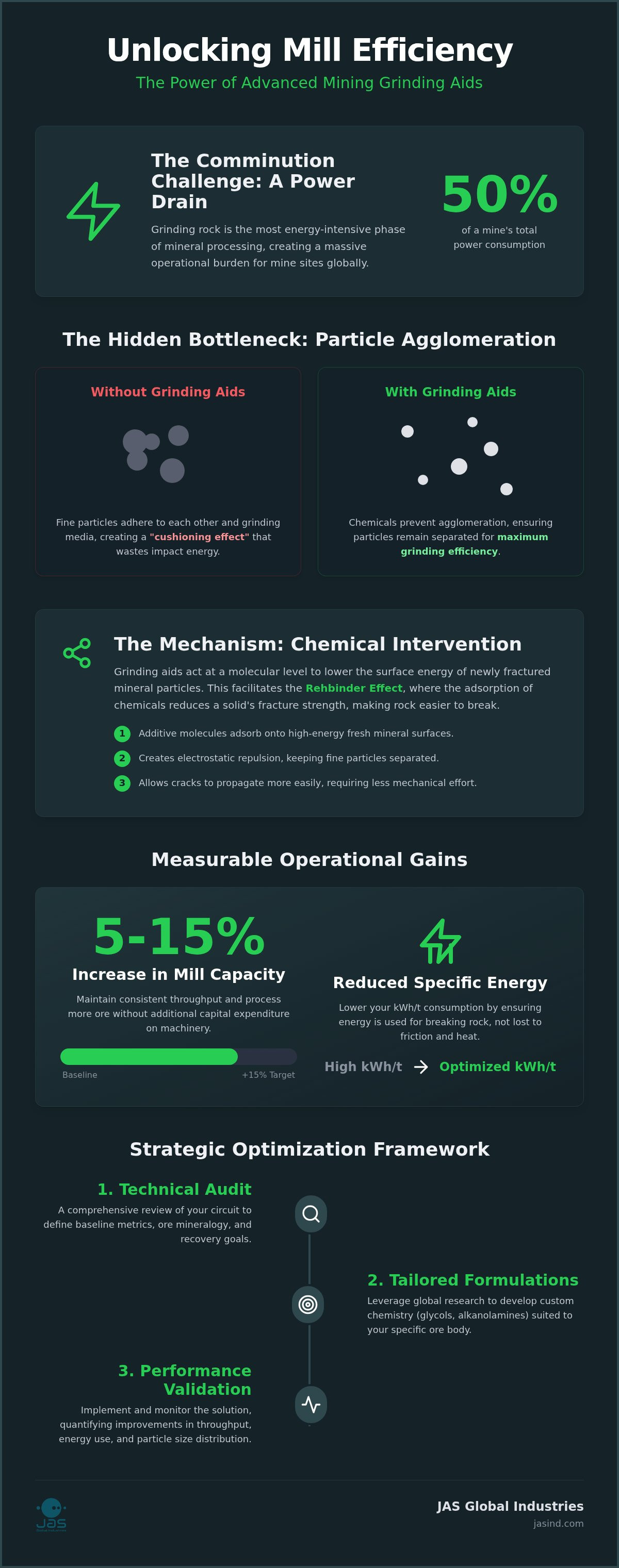
The comminution challenge is a significant hurdle for modern operations. Grinding is notoriously energy-intensive; industry studies indicate it often consumes up to 50% of a mine site's total power budget. As ore grades decline globally, mines must process larger volumes of harder rock to maintain production levels. This creates a massive energy burden. Mining Grinding Aids address this by preventing "coating," a phenomenon where fine particles adhere to the grinding media and the ball mill liners. When media is coated, it creates a cushioning effect that absorbs impact energy. Removing this layer ensures that every strike contributes to particle size reduction, protecting the site's energy security and operational stability.
The Mechanism of Surface Energy Reduction
At the core of these additives is the ability to lower the surface energy of mineral particles. During grinding, new surfaces are constantly created. These fresh surfaces possess high energy and naturally seek to bond with other particles, leading to re-agglomeration. Grinding aids introduce specific molecules that adsorb onto these surfaces, creating electrostatic repulsion that keeps particles separated. This chemical intervention facilitates the Rehbinder effect. Specifically, the Rehbinder effect is the reduction in a solid's fracture strength caused by the adsorption of surface-active agents, which allows cracks to propagate more easily through the mineral matrix. By making the rock "easier" to break, operators can achieve the desired fineness with significantly less mechanical effort.
Dry vs. Wet Grinding Applications
The application of these chemicals varies significantly depending on the grinding environment. In dry circuits, such as those found in vertical roller mills or cement applications, the primary goal is to improve powder flowability. Without chemical intervention, fine powders act like a fluid that is too viscous to move, causing internal bottlenecks. In contrast, wet grinding requires sophisticated management of slurry rheology. High-performance additives ensure that the slurry remains fluid even at high solids concentrations. This allows for increased throughput without sacrificing the particle size distribution required for downstream flotation. JAS Global Industries specializes in these tailor-made formulations, recognizing that the chemistry must be as unique as the ore body itself to secure optimal mineral recovery.
The Chemistry Behind High-Performance Grinding Additives
The efficacy of modern Mining Grinding Aids depends on the precise selection of molecular structures. High-performance additives typically utilize three primary chemical families: glycols, alkanolamines, and specialized polyethers. Glycols are favored for their ability to manage moisture and improve powder flow in dry circuits. Alkanolamines, including triethanolamine and triisopropanolamine, play a crucial role in modifying the surface charge of mineral particles. Specialized polyethers are often deployed to provide superior control over slurry viscosity in wet grinding environments.
Effective Mining Grinding Aids must also account for the specific ore mineralogy at each site. A formulation that works for copper porphyry might not yield the same results in a gold-bearing quartz vein. Molecular weight is a decisive factor here. High-molecular-weight polymers provide steric stabilization, while lower-weight variants are better at penetrating tight mineral structures. As we move through 2026, the industry is shifting toward biodegradable and sustainable chemical solutions. JAS Global Industries prioritizes these green chemistries to ensure that operational gains don't come at the cost of environmental integrity.
Rheology Modifiers and Slurry Stability
In wet grinding, managing the yield stress of high-density mineral slurries is essential. If the slurry is too viscous, the grinding media cannot move freely. This reduces the effective "impact zone" within the mill. Technical experts often study How Grinding Aids Work to ensure that chemical dosing maintains stability across varying pH levels and water qualities. Proper rheology modification ensures that energy remains focused on mineral fracture rather than overcoming internal fluid resistance.
Surface Activity and Fracture Propagation
Chemicals facilitate easier mineral breakage by penetrating micro-cracks before the full force of the grinding media is applied. This adsorption process reduces the fracture toughness of the rock. Surfactants reduce the energy required for new surface creation by lowering the interfacial tension at the mineral-liquid boundary. This molecular-level protection prevents the immediate re-welding of newly formed surfaces. By stabilizing these micro-fractures, the chemicals allow for faster liberation at lower power settings.
Achieving these results requires more than a standard product. It requires a partner who understands the synergy between your ore and your reagents. If you are looking to optimize your site's performance, you can consult with our technical team to develop a custom dosing strategy.
Operational Benefits: Energy Savings and Recovery Optimization
The deployment of Mining Grinding Aids offers measurable improvements in Specific Energy Consumption (SEC), a metric that directly correlates with site profitability. By reducing the internal friction and agglomeration discussed previously, these reagents allow the mill to operate at higher solids concentrations without a corresponding spike in power draw. Industry data indicates that energy consumption can decrease by 5% to 10% when dosing is optimized. This isn't just a technical win. It's a fundamental shift in how mines manage their most expensive resource: electricity.
Mill throughput serves as the primary lever for revenue. Implementing advanced chemistry can trigger a 5% to 15% boost in mill capacity. For a high-volume operation, this translates to thousands of additional tons processed monthly without capital expenditure on new hardware. Beyond volume, the quality of the grind is paramount. Optimizing Particle Size Distribution (PSD) ensures that the ore is liberated to the ideal size for recovery. This precision prevents the loss of valuable minerals in coarse tails or the creation of over-ground slimes that complicate downstream processing. Protecting the infrastructure is equally vital. These additives reduce the mechanical stress on grinding media and mill liners, extending maintenance cycles and ensuring long-term operational stability.
Synergy with Downstream Flotation Reagents
A common concern for metallurgists is whether grinding chemistry interferes with recovery. Modern formulations are designed to be inert or even synergistic with Mining Flotation Collectors. When the grind is precise, the collectors can bond more effectively to the target mineral surfaces. This improved liberation leads to higher grade concentrates and lower reagent consumption in the flotation cells. Balancing throughput and recovery is a delicate trade-off. With the right chemical partner, it becomes a controlled optimization process rather than a gamble.
Economic Impact and Operational Reliability
Calculating the ROI of chemical additives requires looking beyond the price per kilogram. The true value lies in the delta between power cost savings and the cost of the reagent. Additionally, Mining Grinding Aids reduce "over-grinding," which minimizes the production of problematic slimes that often plague recovery circuits. This precision supports corporate sustainability goals by reducing the carbon footprint per ton of metal produced. Reliable chemical dosing ensures that the plant remains a stable pillar of global resource production, even when ore quality fluctuates.
Implementation Strategy: How to Optimize Your Grinding Circuit
Successful chemical integration requires a transition from reactive supply to proactive partnership. You can't simply add reagents and expect peak performance without establishing a rigorous baseline. A comprehensive technical audit is the first step. This process identifies current bottlenecks and documents existing performance metrics, including throughput rates, Particle Size Distribution (PSD), and Specific Energy Consumption. Without these figures, quantifying the impact of Mining Grinding Aids remains impossible.
Determining the optimal dosing point is a critical operational decision. Most circuits benefit from addition at the mill feed, where the chemical has maximum contact time with the ore. However, re-grind circuits might require dosing at the cyclone underflow to manage high-density slurries. Continuous monitoring is the only way to account for ore hardness variability. As the mineralogy changes, your dosing strategy must adapt to maintain stability. This agility prevents energy waste and ensures that throughput remains consistent even when facing harder ore bodies.
Laboratory Testing and Benchmarking
Precise optimization starts in the lab. Conducting Bond Ball Mill Work Index (BBMWI) tests provides a clear comparison of energy requirements with and without specific aids. We analyze the relationship between particle size surface area, often measured as Blaine fineness, and total energy input. These tests allow our technical teams to develop custom dosing curves. These curves ensure that the chemical load matches the physical resistance of the ore, preventing waste and maximizing efficiency. This data-driven approach secures the reliability of the entire comminution process.
On-Site Dosing and Control Systems
Reliability on the plant floor depends on automated dosing systems. Modern pumps integrate directly with your DCS or PLC systems to adjust reagent flow in real-time based on mill load. Troubleshooting is a vital part of this lifecycle. Over-dosing can lead to excessive foaming or downstream interference, while under-dosing leaves energy savings on the table. Technical consulting ensures that your staff can manage these variables effectively. We act as a foundational industry presence, providing the expertise needed to maintain these complex systems.
Our approach focuses on long-term circuit stability rather than short-term fixes. To begin your site-specific evaluation, you can schedule a technical audit with our engineering team to identify your optimization potential.
Advanced Mining Solutions from JAS Global Industries
JAS Global Industries operates as an indispensable pillar of modern infrastructure and sustainability. Our commitment to custom-formulated chemical technologies goes beyond standard supply. We recognize that every ore body possesses a unique chemical signature. Consequently, our Mining Grinding Aids are never "off-the-shelf" products. They're the result of rigorous analysis conducted within our global R&I centers. These facilities solve complex mineral processing challenges by bridging the gap between molecular chemistry and industrial-scale production. We don't just sell chemicals; we secure yields.
This "Global Guardian" approach ensures that critical resources remain accessible and stable for future generations. By prioritizing operational reliability, we help mines navigate the volatility of declining ore grades and rising energy costs. Our chemistries integrate seamlessly with our broader suite of Mining Solutions. This end-to-step optimization secures the entire value chain, from the primary mill load to the final concentrate. We provide the stability needed for long-term industrial growth.
Tailor-Made Formulations for Complex Ores
Phosphate and Potash mining present distinct rheological hurdles that standard reagents often fail to address. High-clay content frequently leads to viscosity spikes that stall production and waste energy. Our tailor-made formulations address these specific challenges by modifying particle interactions at the source. We've conducted numerous technical audits where on-site dosing adjustments led to immediate yield improvements. These real-world applications prove that specialized Mining Grinding Aids are essential for handling high-viscosity ores that would otherwise cause circuit failure. We focus on the fundamental needs of the operation to ensure every ton is processed efficiently.
Global Logistics and Technical Support
Global presence defines our reliability and corporate maturity. With strategic centers across the Middle East, Africa, Asia, and Europe, we ensure supply chain security for critical industrial reagents. We don't just provide logistics; we provide stability. Our team partners with site managers for long-term optimization and sustainable mining practices. This steady, results-driven focus transforms the supplier-client relationship into a vital partnership for global resource protection. We act as a foundational industry presence, delivering the expertise and chemicals required to keep the world's most critical industries moving forward.
Securing the Future of Global Mineral Production
The transition toward sustainable mineral extraction depends on the synergy between mechanical power and advanced chemistry. As ore grades fluctuate, the role of Mining Grinding Aids becomes even more critical for maintaining circuit stability and energy security. By reducing specific energy consumption and preventing particle agglomeration, these reagents ensure that global mining operations remain resilient against rising operational costs. Protecting your site's throughput isn't just about processing more rock; it's about optimizing every kilowatt and securing every gram of mineral wealth.
Since 1998, JAS Global Industries has acted as a vital guardian of industrial efficiency. We leverage our global R&I centers and specialized technical audits to deliver plant yield improvements that are both measurable and sustainable. Our custom formulations provide the reliability you need to meet modern infrastructure demands while minimizing your carbon footprint. It's time to transform your comminution circuit into a high-performance asset through specialized technical partnership. Optimize your mining operations with JAS Global Grinding Aids today. Together, we can build a more stable and efficient future for the world's most critical resources.
Frequently Asked Questions
Do mining grinding aids affect the downstream flotation process?
Modern chemistries are designed to be inert or synergistic with downstream recovery phases. High-performance Mining Grinding Aids don't block the active mineral sites required for collector attachment. Our technical teams conduct thorough audits to ensure that the additives don't interfere with concentrate grades or recovery kinetics in the flotation cells.
What is the typical dosage rate for a ball mill grinding aid?
Typical dosage rates range from 100 to 500 grams per ton of dry ore. The exact requirement depends on your specific mineralogy and the target fineness of the final product. We develop site-specific dosing strategies through on-site audits to ensure you achieve maximum energy efficiency with the lowest chemical consumption.
Can grinding aids reduce the wear rate of grinding balls and liners?
Yes, these additives protect your infrastructure by preventing fine particles from coating the grinding media and liners. This elimination of the "cushioning effect" ensures that impact energy is directed at the ore rather than being lost to friction. Efficient grinding cycles mean less mechanical stress and extended maintenance intervals for your mill components.
How do grinding aids help in processing high-clay or sticky ores?
They function as dispersants that neutralize the electrostatic charges causing clay particles to agglomerate. This prevents the "sticky" behavior that often leads to mill bottlenecks and throughput restrictions. By maintaining slurry fluidity, these chemicals allow you to process problematic ores without the need for excessive water dilution.
Are grinding aids environmentally safe for tailings management?
Our formulations prioritize global responsibility and environmental security. Most modern additives are biodegradable and designed to comply with international standards like REACH. These chemicals are formulated to remain stable within the tailings or degrade naturally, ensuring they don't compromise your site's water management or environmental compliance.
What is the difference between a grinding aid and a rheology modifier?
A grinding aid reduces the surface energy of minerals to facilitate fracture, while a rheology modifier manages the flow and viscosity of the slurry. In many advanced applications, Mining Grinding Aids perform both roles simultaneously. They assist in the physical breakage of the rock and ensure the resulting pulp remains fluid enough for efficient transport.
How do I calculate the ROI of using a grinding aid in my circuit?
Calculate your ROI by comparing the cost of the chemical against the combined value of power savings and increased throughput revenue. You should measure the reduction in specific energy consumption (kWh/t) and the additional tons processed per hour. These operational gains, along with reduced liner wear, typically provide a significant net profit increase.
Can these chemicals be used in both dry and wet grinding circuits?
Yes, though the specific chemistries are tailored to each environment. Dry circuits generally require glycol-based formulations to manage powder flow and moisture. Wet circuits utilize water-soluble polyethers or alkanolamines that are optimized for slurry stability. Both applications focus on protecting the mill's efficiency and securing higher mineral yields.