

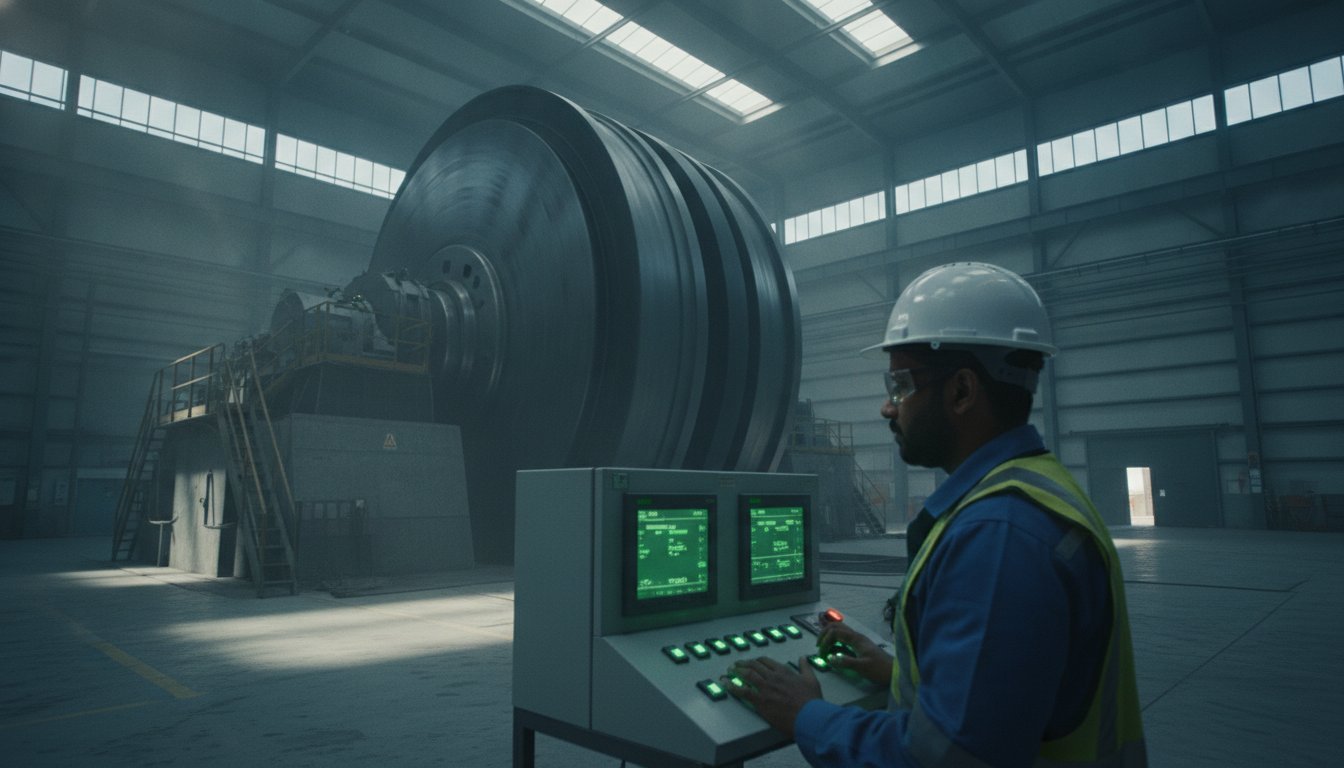
Could a subtle shift in chemical strategy be the defining factor in your mine's profitability? In an era where the global mining machinery market is projected to reach 200.50 billion dollars by 2026, the pressure to maintain a competitive edge has never been higher. Most operators recognize that the comminution circuit is a relentless energy sink, often accounting for the largest portion of site electricity costs. You've likely seen how fine particles tend to re-agglomerate, creating a coating effect that reduces mill efficiency and stalls throughput. It's a frustrating bottleneck that impacts the entire value chain.
We understand that operational security depends on more than just hardware; it requires precision chemistry. This guide demonstrates how high-performance Mining Grinding Aids can lower your energy cost per tonne while significantly increasing the specific surface area of your ground ore. You'll learn how to optimize your mill's performance without compromising the delicate balance of your downstream flotation collectors. We will examine the technical consulting and custom dosing strategies that transform these chemicals into essential pillars of global mineral recovery and long-term resource stability.
Key Takeaways
- Understand how specialty reagents prevent particle re-agglomeration to reduce the energy intensity of ball mills.
- Discover the mechanical science behind the Rehbinder effect and how reducing surface energy facilitates faster ore fracture.
- Learn how to select specific Mining Grinding Aids that enhance downstream mineral separation rather than interfering with flotation collectors.
- Master the essential steps for mill benchmarking and determining optimal chemical dosages based on ore hardness and fineness requirements.
- Explore how tailor-made formulations and global technical consulting secure the stability of critical mineral processing operations.
What are Mining Grinding Aids? Foundations of Comminution Efficiency
Mining Grinding Aids are specialized chemical reagents that serve as the foundation for modern comminution efficiency. They are not merely consumables; they are strategic tools designed to prevent the re-agglomeration of fine particles during the grinding process. Without these agents, the energy required to achieve the desired fineness would be unsustainable for most industrial operations. Since 1998, JAS Global Industries has focused on delivering these essential formulations from our headquarters in Dubai. We recognize that the stability of global infrastructure depends on the reliable recovery of minerals, and that recovery begins with an optimized mill circuit.
The Problem of Energy in Mineral Processing
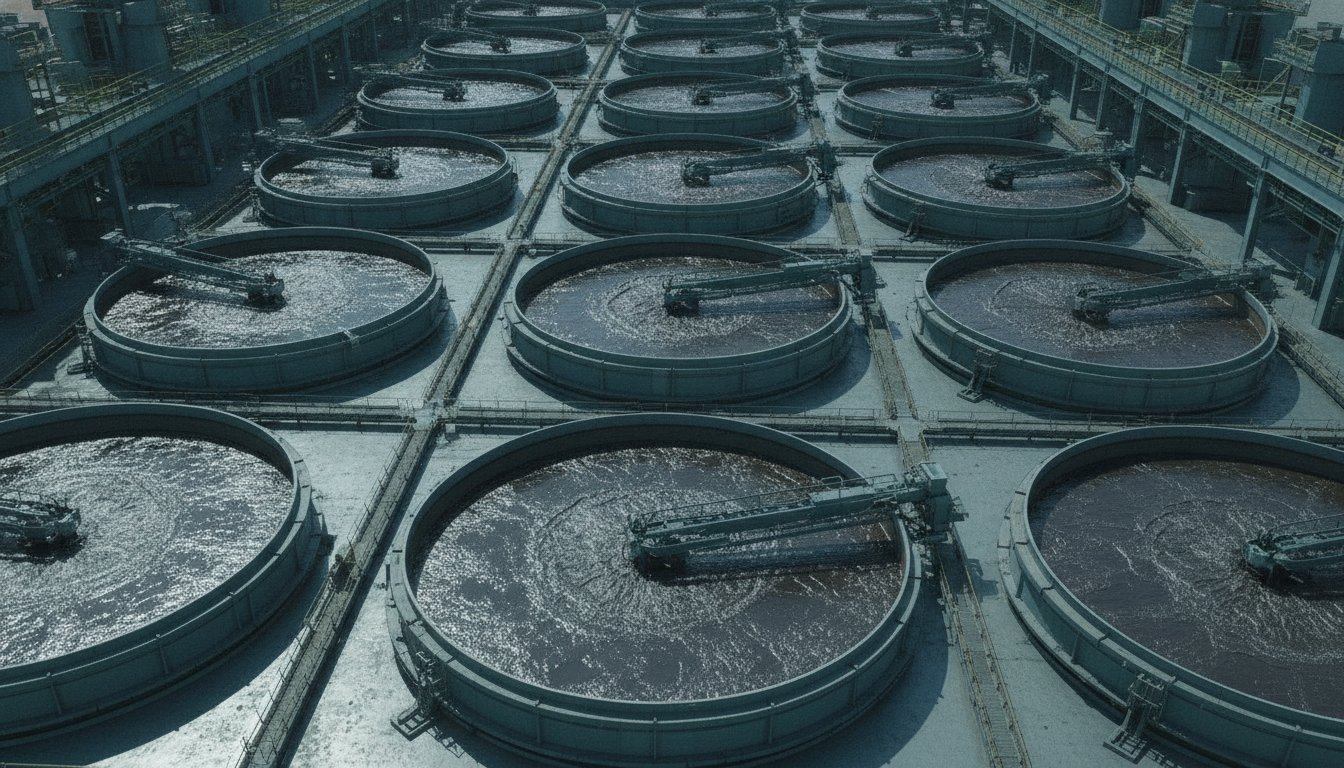
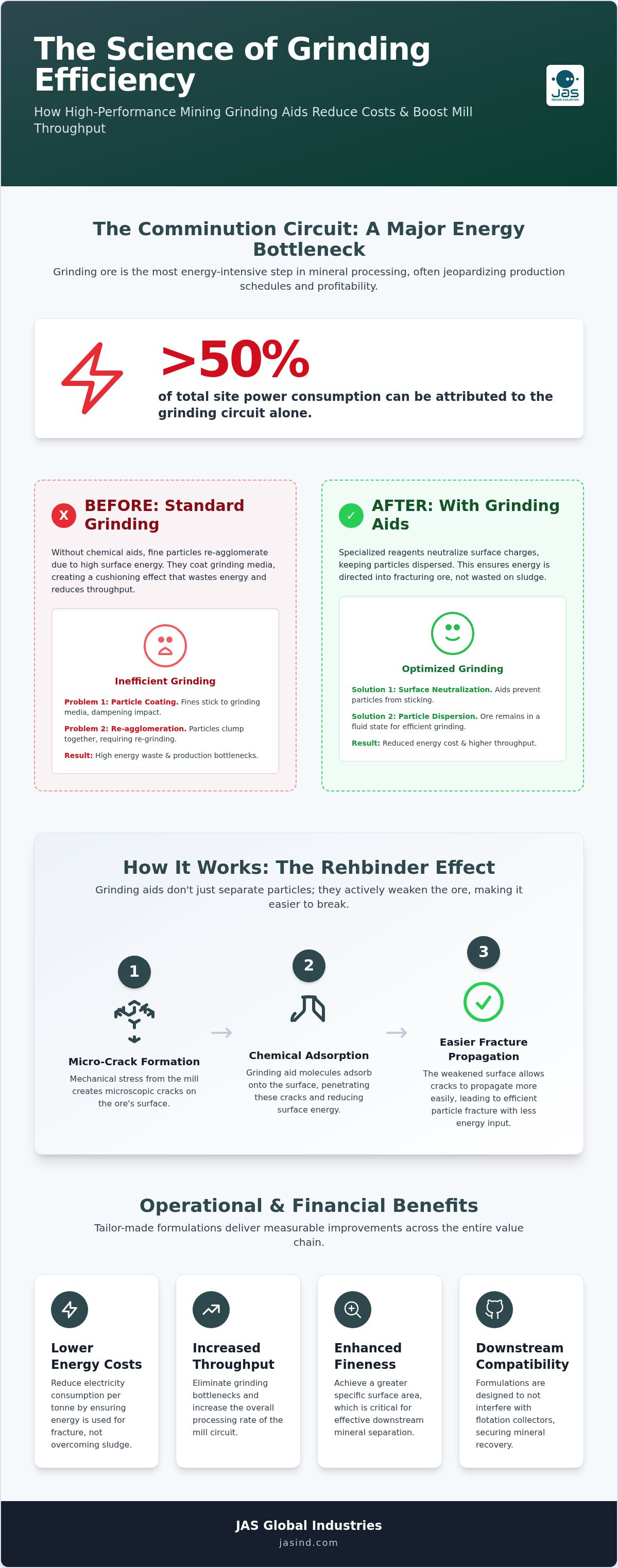
Grinding is undeniably the most energy-intensive step in mineral beneficiation. In many large-scale operations, the comminution circuit accounts for over 50% of the total site power consumption. Within a standard ball mill, energy is often wasted when fine particles begin to "coat" the grinding media. This coating creates a physical cushion that dampens the impact of the media against the ore. The result is a sharp decline in the grinding rate and a significant increase in the electricity required to process each tonne. These throughput bottlenecks don't just increase costs; they jeopardize the entire production schedule. By using Mining Grinding Aids, operators can maintain a clean media surface, ensuring that mechanical energy is directed toward particle fracture rather than being absorbed by a layer of fine sludge.
Surface Energy and Particle Agglomeration
The mechanical breakdown of ore creates vast amounts of new surface area. These freshly exposed surfaces carry high levels of surface energy due to broken atomic bonds. In a high-energy mill environment, these charged particles naturally seek stability by adhering to one another or to the mill liners. This re-agglomeration creates a cycle of wasted effort where the mill is essentially "re-grinding" clumps of already-fine material. Our chemical solutions work by neutralizing these surface charges. By adsorbing onto the mineral faces, the aids provide electrostatic or steric repulsion that keeps the particles dispersed. This fluidization is a critical element of our integrated mining solutions framework. It ensures that the ore remains in a state that is optimal for downstream separation, protecting both the efficiency of the mill and the security of the global resource supply.
The Chemistry of Efficiency: How Grinding Aids Work
The science of efficiency in comminution relies heavily on the Rehbinder effect. This phenomenon involves the adsorption of chemical molecules onto the solid surface of the ore, which significantly reduces its surface energy. Lower surface energy makes the material more brittle; it facilitates easier fracture under mechanical stress. By weakening the molecular bonds at the ore surface, Mining Grinding Aids allow mill forces to propagate cracks more effectively. This isn't just about breaking rocks. It's about precision chemical intervention that ensures energy is used to create new surfaces rather than being lost to heat or vibration.
Delivery method and molecular architecture are equally critical. Liquid-phase delivery is the industry standard for wet circuits, though vapour-phase applications can be utilized in specialized dry environments. We also evaluate molecular weight and charge density during the formulation process. These factors dictate the durability of the chemical film on the particle surface. If the charge density doesn't match the ore's mineralogy, the aid won't provide the necessary repulsion. Precision is mandatory. A well-designed formulation remains active through multiple impact cycles, providing consistent performance from the mill feed to the discharge.
Surface Tension and Fracture Propagation
Chemical molecules act as microscopic wedges. During the mill's impact cycle, these molecules penetrate micro-cracks in the ore, preventing them from "healing" or closing back up. This stops the fine particles from creating a cushioning effect that would otherwise absorb the energy of the grinding media. Without this intervention, the mill's efficiency drops as the power is wasted on compressed sludge rather than rock breakage. Surface energy reduction is a catalyst for mill throughput. By maintaining a high-energy environment at the crack tip, the chemistry ensures that every revolution of the mill contributes to the final product fineness.
Custom Chemistry for Variable Ore Types
No two ore bodies are identical. Magnetite requires a different chemical approach than potash or phosphate. Our R&I centers conduct detailed technical audits to match reagents to specific mill shear forces and mineral structures. In dry processing, there's a clear synergy between these aids and anti-caking agents. Both focus on maintaining industrial flow and preventing unwanted adhesion. Selecting the right chemistry ensures that the final product meets strict purity standards, a topic explored in research regarding Downstream Impacts: Grinding Aids and Flotation Recovery. For operators seeking to stabilize their output, a technical consultation can identify the ideal formulation for your specific mineralogy.
Downstream Impacts: Grinding Aids and Flotation Recovery
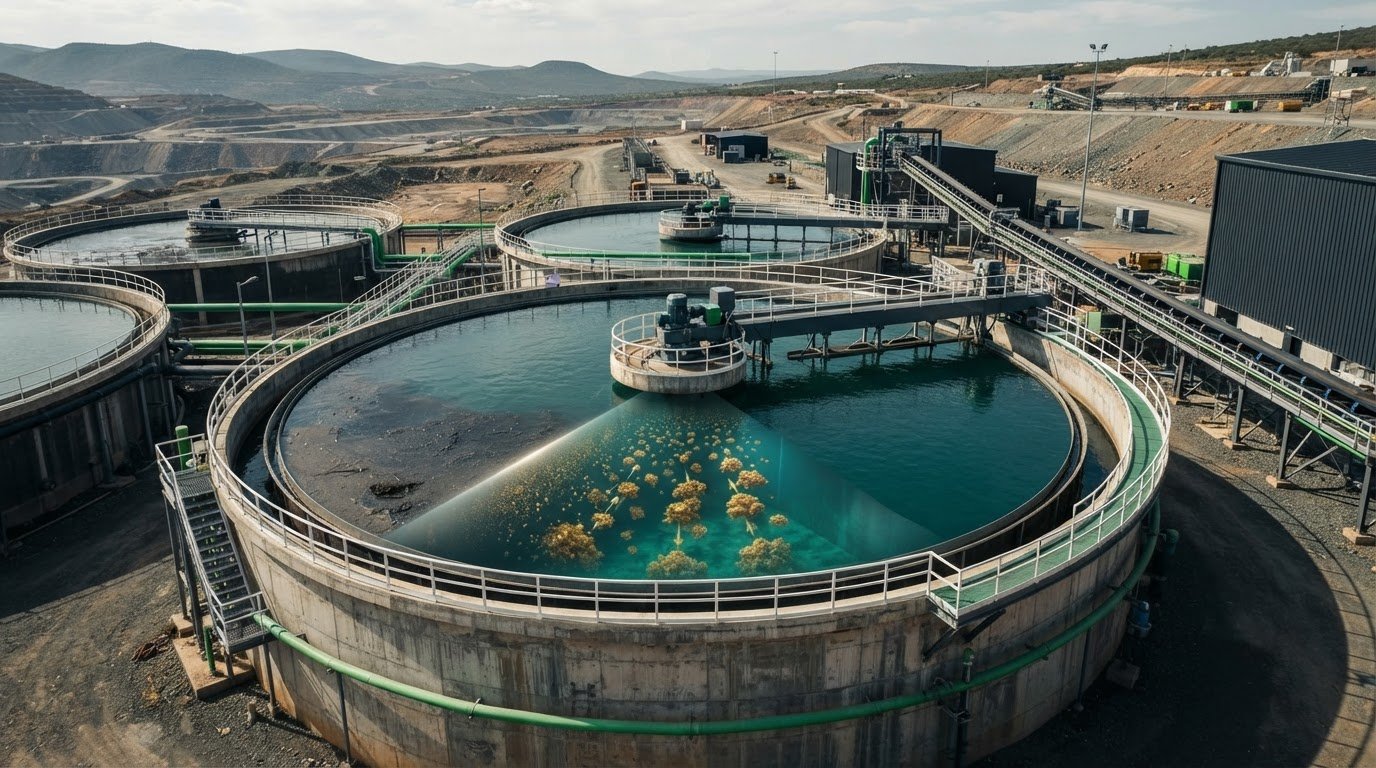
A common concern in mineral processing is the potential for chemical interference in the flotation circuit. Many operators worry that reagents added to the mill will shield mineral surfaces from downstream collectors. This fear is understandable. If a grinding aid creates a permanent, hydrophobic coating, it can indeed suppress recovery rates. However, properly formulated Mining Grinding Aids are designed to be temporary facilitators rather than permanent barriers. They ensure a clean mineral surface is presented to the flotation reagents. This precision prevents the loss of valuable minerals and secures the overall stability of the recovery operation.
JAS technical consulting acts as a vital safeguard for your circuit's integrity. We don't just supply chemicals; we protect the entire mineral value chain. By analyzing the interaction between the mill discharge and the flotation cells, we ensure that the grinding chemistry supports, rather than hinders, the final separation process. Our mission is to provide the reliability you need to maintain consistent output in volatile global markets.
Synergy vs. Interference in the Circuit
The choice between non-ionic and ionic aids is a critical decision for process stability. Non-ionic variants often provide the safest path for complex ores. They don't compete for the same attachment sites as ionic collectors, which directly impacts bubble attachment and froth stability. Beyond chemical compatibility, these aids improve flotation kinetics by narrowing the particle size distribution. A tighter distribution reduces the presence of ultra-fines that cause "slime coating" and oversized particles that are too heavy for bubbles to lift. This holistic approach is why we emphasize the strategic importance of industrial water treatment in recycled mill water. Managing the chemical load in your water ensures that reagents from the grinding stage don't accumulate and cause unforeseen downstream disruptions.
Optimising the Total Recovery Chain
True operational security requires "closed-loop" laboratory flotation tests. We test our Mining Grinding Aids against your specific ore and collector suite to identify any potential antagonism. This rigorous benchmarking prevents chemical "overdose." Too much reagent in the mill can lead to frother instability, causing "wild" froth or total bubble collapse. Custom dosing strategies ensure that the chemistry remains effective in the mill while leaving the flotation stage unburdened. This synergy is particularly important when using mining frothers in complex ore beneficiation. When the grinding and flotation stages work in harmony, the result is a stable, high-yield operation that maximizes global mineral recovery.
Operational Best Practices: Dosing, Audits, and Selection
Operational excellence in comminution starts with a rigorous baseline. Successful implementation of Mining Grinding Aids requires more than just introducing reagents into a mill circuit. It demands a systematic approach to benchmarking that ensures every gram of chemistry contributes to measurable throughput gains. We view this process as a long-term partnership. By aligning chemical strategy with mechanical performance, we secure the industrial stability required for global resource protection.
Consistency depends on calibrated dosing systems. Manual or erratic dosing leads to process instability and wasted reagents. High-precision pumps ensure that the chemical film on the ore remains optimal throughout the fracture cycle, preventing the re-agglomeration discussed in previous sections. For large-scale operations, this reliability is a prerequisite for maintaining a steady supply of critical minerals to the global market.
Conducting a Technical Mill Audit
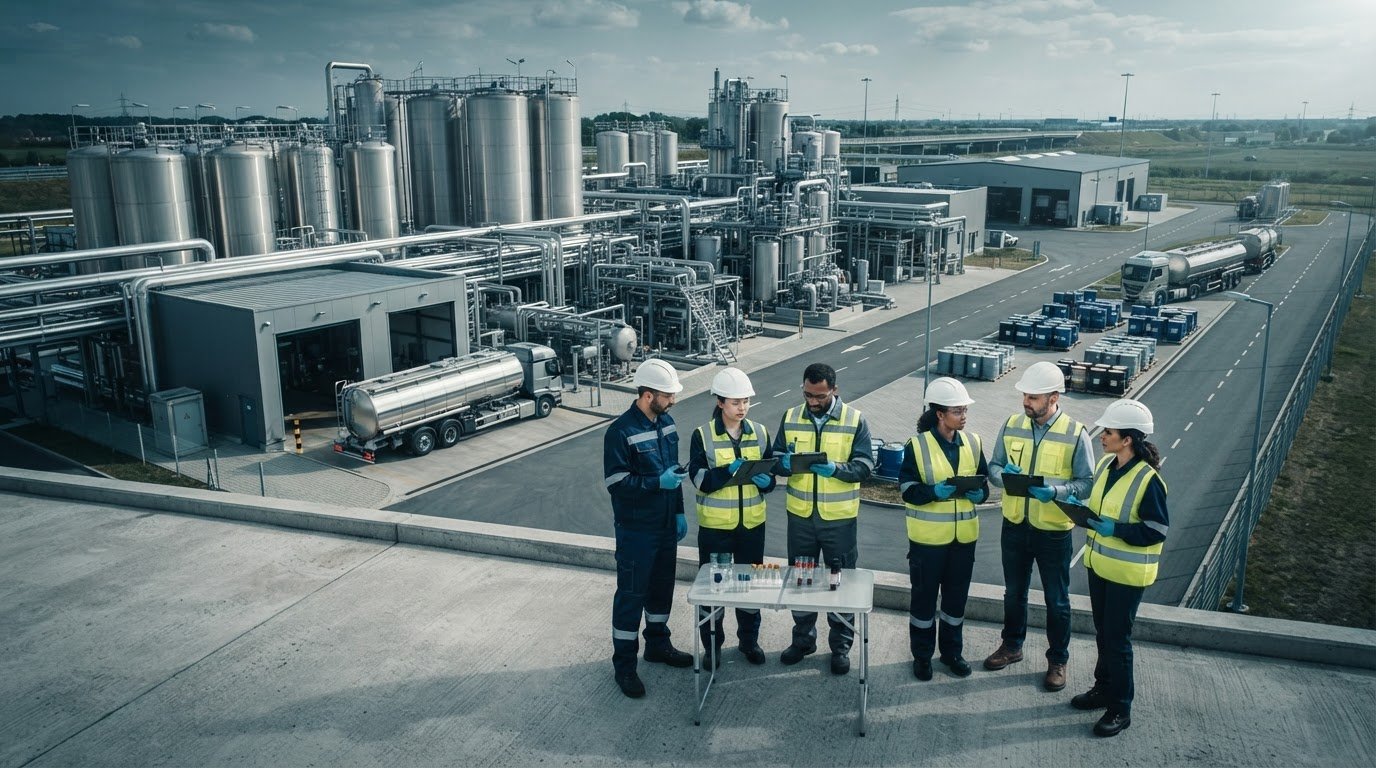
A comprehensive audit is the first step toward process optimization. You must monitor several key technical parameters to establish an accurate ROI. These include the power draw per tonne, the recirculating load, and the P80 particle size distribution. These data points reveal the specific bottlenecks where energy is being wasted. On-site laboratory testing then verifies chemical performance under real-world conditions. While technical consulting involves an initial investment, these fees are rapidly offset by significant energy savings and increased mill throughput. A data-driven audit ensures that the chemistry is tuned to the specific mechanical stresses of your equipment, turning a standard mill into a high-efficiency recovery engine.
Selecting the Right Aid for the Ore
Choosing the delivery form and chemical composition is the next critical hurdle. Liquid additives are the standard for wet milling circuits, while powder variants serve specific dry applications. For those operating in specialized sectors, such as phosphate or potash mining, the chemical profile must be even more precise. Compatibility across the entire circuit is paramount. You must ensure the chosen aid does not interfere with the mining flotation collectors used later in the beneficiation stage. Mismatched chemistry can cause downstream recovery losses that far outweigh any grinding gains. To ensure your circuit is fully optimized, we recommend scheduling a technical mill audit to identify the ideal formulation for your specific ore hardness and fineness requirements.
JAS Global Industries: Your Partner in Global Mining Excellence
JAS Global Industries has operated as a foundational presence in the specialized chemical sector since 1998. From our headquarters in Dubai, we bridge the gap between advanced chemical science and global industrial logistics. This location serves as a strategic gateway; it ensures the timely delivery of Mining Grinding Aids to the world's most remote extraction sites across the globe. We view our role as more than a mere supplier. We are guardians of resource stability, providing the technical security necessary for modern infrastructure to thrive. Our mission is to transform industrial challenges into sustainable, long-term value for our partners.
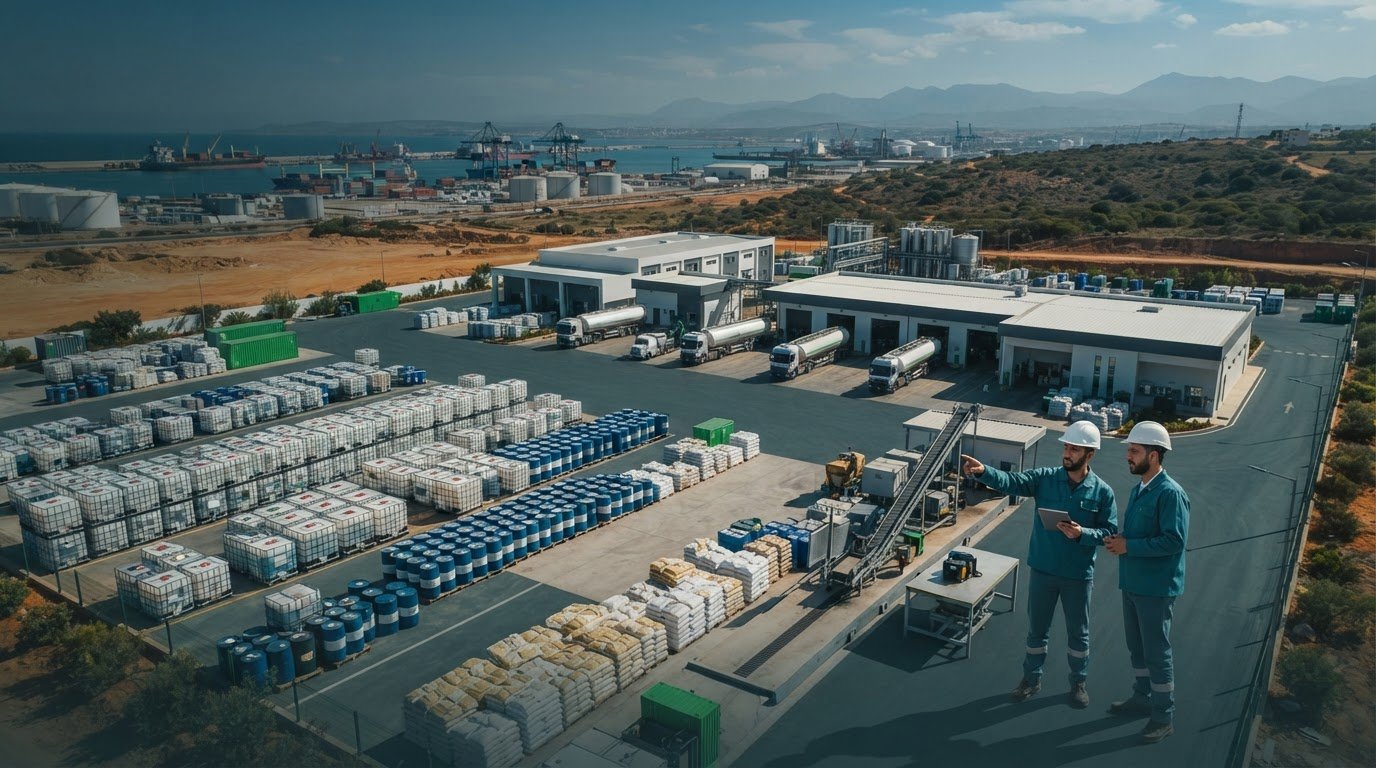
We invite global mining operators to explore our sustainable and cost-effective bulk chemical supply contracts. These agreements are built on a foundation of transparency and reliability. By securing your chemical supply chain with a proven global leader, you protect your operation from market volatility and logistical bottlenecks. We don't just provide reagents; we provide the peace of mind required to manage large-scale mineral assets effectively.
Tailor-Made Formulations for Global Challenges
Our R&I centers don't produce generic products. They develop custom reagents specifically engineered for unique geological conditions and specific mineralogies. We understand that a mine in a high-altitude environment faces different operational hurdles than one in a tropical region. Operational reliability is non-negotiable in these remote locations. Our chemicals ensure that your mill remains a steady, predictable contributor to the global supply chain. This commitment to site-wide safety extends across our entire portfolio. For example, our expertise in H2S treatment provides a comprehensive guide to managing industrial hydrogen sulfide risks. By addressing both grinding efficiency and gas management, we provide a holistic shield for your workforce and your production targets.
A Legacy of Reliability and Ethical Leadership
Reliability is built through consistent performance over decades. With manufacturing plants and sales offices spanning Europe, Asia, and Africa, JAS Global Industries provides a localized response to complex global challenges. We act as an indispensable pillar of modern industrial infrastructure. Our personality is serious, focused, and deeply integrated into the world's most critical industries. We remain approachable through our unwavering commitment to sustainability and community well-being. The stability of the world's resources depends on precision chemistry and ethical leadership. Contact us today to schedule a technical audit and begin a partnership focused on process optimization and long-term operational security.
Securing the Future of Global Mineral Recovery
The transition from energy-heavy comminution to a high-yield, efficient circuit requires more than basic reagents. It demands a sophisticated understanding of surface chemistry and mechanical interaction. We've explored how Mining Grinding Aids act as essential stabilizers; they reduce the energy cost per tonne while maintaining the integrity of downstream separation. By neutralizing surface charges and preventing media coating, these solutions transform the mill from a bottleneck into a source of competitive advantage.
Operational security is built on precision. Since 1998, JAS Global Industries has provided the technical audits and on-site testing necessary to secure these gains. Our global R&I centers and manufacturing plants develop specialized formulations tailored to the most complex mineral ores. We remain committed to your operational stability and the broader protection of global resources. Let's work together to build a more efficient, reliable industrial future.
Optimise your mining throughput with JAS Global Industries technical consulting
Frequently Asked Questions
What is the primary function of a mining grinding aid?
The primary function is to prevent particle re-agglomeration by neutralizing the high surface energy of freshly ground minerals. By adsorbing onto particle surfaces, these aids provide electrostatic repulsion that keeps the material fluid. This prevents the ore from coating the grinding media, ensuring that mechanical energy is directed toward fracture rather than being absorbed by a layer of fine sludge. It's a critical step for maintaining consistent mill throughput.
How much energy can be saved by using a grinding additive?
Energy savings vary based on ore mineralogy and mill configuration, but some industry professionals report reductions in power consumption between 5% and 15%. These efficiencies directly lower the electricity cost per tonne. Over the long term, these savings contribute significantly to the economic stability and resource security of a global mining operation. Reducing the energy intensity of comminution is a vital goal for any modern industrial facility.
Will a grinding aid interfere with my downstream flotation process?
Properly formulated Mining Grinding Aids don't interfere with downstream mineral separation. Our technical consulting ensures that the chosen chemistry is temporary and doesn't shield mineral surfaces from flotation collectors. This precision approach protects the entire recovery chain, allowing for optimized grinding without compromising the final grade or recovery rates. We focus on maintaining a clean mineral surface to ensure that flotation kinetics remain high and predictable.
What is the typical dosage rate for a mineral grinding aid?
Typical dosage rates for Mining Grinding Aids generally fall between 0.005% and 0.1% by weight of the dry ore feed. The exact requirement depends on ore hardness, moisture content, and the target P80 fineness. We utilize on-site laboratory testing to determine the precise dosage needed to maintain maximum throughput while avoiding chemical waste. Calibrated dosing systems are essential to ensure the chemistry remains consistent across varying operational shifts.
Can grinding aids be used in both wet and dry grinding circuits?
Yes, these chemical solutions are effective in both wet and dry environments. Liquid-phase delivery is standard for wet ball mills, while specialized additives are used in dry circuits to manage rheology and prevent clumping. Both applications focus on maintaining a clean grinding media surface to ensure consistent operational reliability. In dry grinding, the chemistry also helps to reduce the build-up of material on mill liners, further extending the life of the equipment.
How do I determine if my mill is a candidate for chemical optimization?
Your mill is a candidate if it suffers from throughput bottlenecks, high power draw, or excessive recirculating loads. These symptoms often indicate that fine particles are cushioning the grinding media and dampening the impact force. A technical mill audit can verify if chemical intervention will improve fracture propagation and reduce the energy intensity of your circuit. Most operations processing hard or complex ores will see a measurable benefit from chemical optimization.
What is the difference between the Rehbinder effect and Pitt’s theory?
The Rehbinder effect focuses on reducing the surface energy of the solid ore to facilitate easier fracture. In contrast, Pitt’s theory emphasizes the rheological changes in the slurry. While Rehbinder addresses the mechanical strength of the rock itself, Pitt’s theory looks at how chemistry improves the flow and transport of particles through the mill. Both theories highlight different aspects of how chemical reagents improve the overall efficiency of the comminution process.
How often should a chemical dosing audit be performed?
A technical audit should be conducted at least once per year or whenever there is a notable shift in ore mineralogy. Regular audits ensure that dosing remains calibrated to the current mechanical and geological conditions of the site. This proactive monitoring is essential for maintaining the long-term stability and efficiency of your industrial infrastructure. It allows you to adjust the chemical strategy as the ore body changes, ensuring consistent recovery rates.