
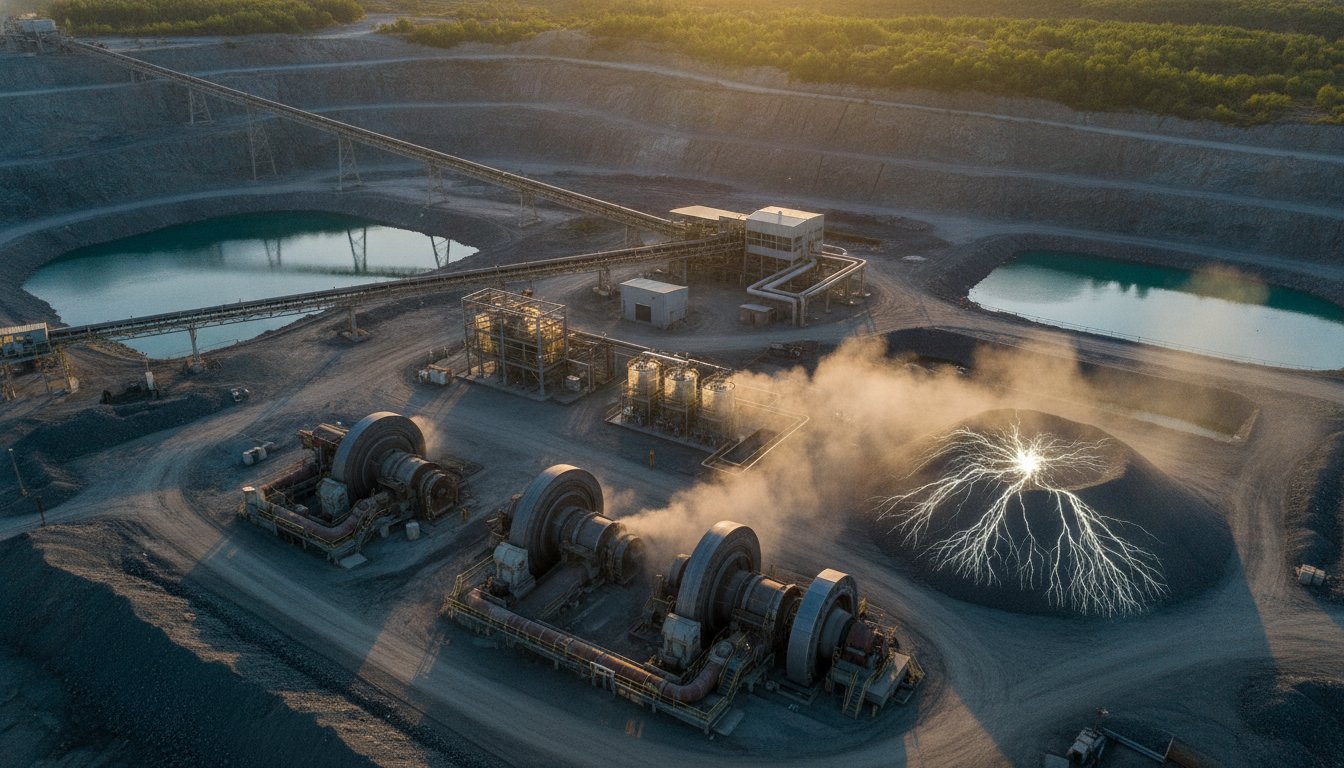
Comminution is the single largest energy consumer in most mineral processing operations, and yet the grinding circuit is often the last place engineers look when costs spiral out of control. If your mill is drawing maximum power while throughput stagnates, the problem may not be your equipment. It may be what's happening at the particle level. Mining Grinding Aids offer a chemically precise answer to one of the industry's most persistent and costly inefficiencies.
You already know the pressure. Electricity bills that climb with every tonne processed, fine particles that re-agglomerate before they ever reach the classifier, and the constant worry that any chemical intervention will disrupt your downstream flotation collectors. These aren't minor inconveniences; they're operational risks that compound across every shift.
This article cuts through the complexity. You'll learn how advanced grinding aid formulations reduce energy consumption per tonne, increase the specific surface area of ground ore, and support stable mineral separation without compromising your recovery circuits. From the chemistry of particle dispersion to the practical realities of dosing strategy and circuit compatibility, what follows is a grounded, technical guide to making your grinding circuit work harder, smarter, and more sustainably.
Key Takeaways
- Mining Grinding Aids are specialty chemical reagents that prevent particle re-agglomeration, directly reducing the energy intensity of ball mills and unlocking meaningful cost savings per tonne processed.
- The Rehbinder effect explains how these formulations lower surface energy at the particle level, making fracture easier and grinding more efficient without demanding additional mechanical input.
- Properly selected grinding aids do not compromise flotation recovery — when formulated with downstream compatibility in mind, they can actively support mineral separation performance.
- Effective implementation depends on structured mill auditing and precise dosing strategies calibrated to ore hardness and target fineness, not a one-size-fits-all chemical addition.
- Partnering with an experienced global formulator gives operations access to tailor-made chemical solutions and technical consulting that generic off-the-shelf products simply cannot match.
What are Mining Grinding Aids? Foundations of Comminution Efficiency
At their core, Mining Grinding Aids are specialty chemical reagents introduced into the grinding circuit to prevent freshly fractured particles from re-agglomerating. That single function carries enormous consequences for operational performance. When particles clump together after fracture, the mill expends energy grinding material it has, in effect, already processed. Grinding aids interrupt this cycle by adsorbing onto newly created particle surfaces, neutralising the electrostatic and Van der Waals forces that drive re-agglomeration, and keeping the ground material in a dispersed, flowable state.
The science underpinning this is well-established. Comminution efficiency is fundamentally a surface energy problem: every new surface created by fracture carries excess energy that particles seek to resolve by bonding with neighbours. Grinding aids resolve this thermodynamic tension chemically, rather than mechanically, which is precisely what makes them so valuable in high-throughput operations.
The Problem of Energy in Mineral Processing
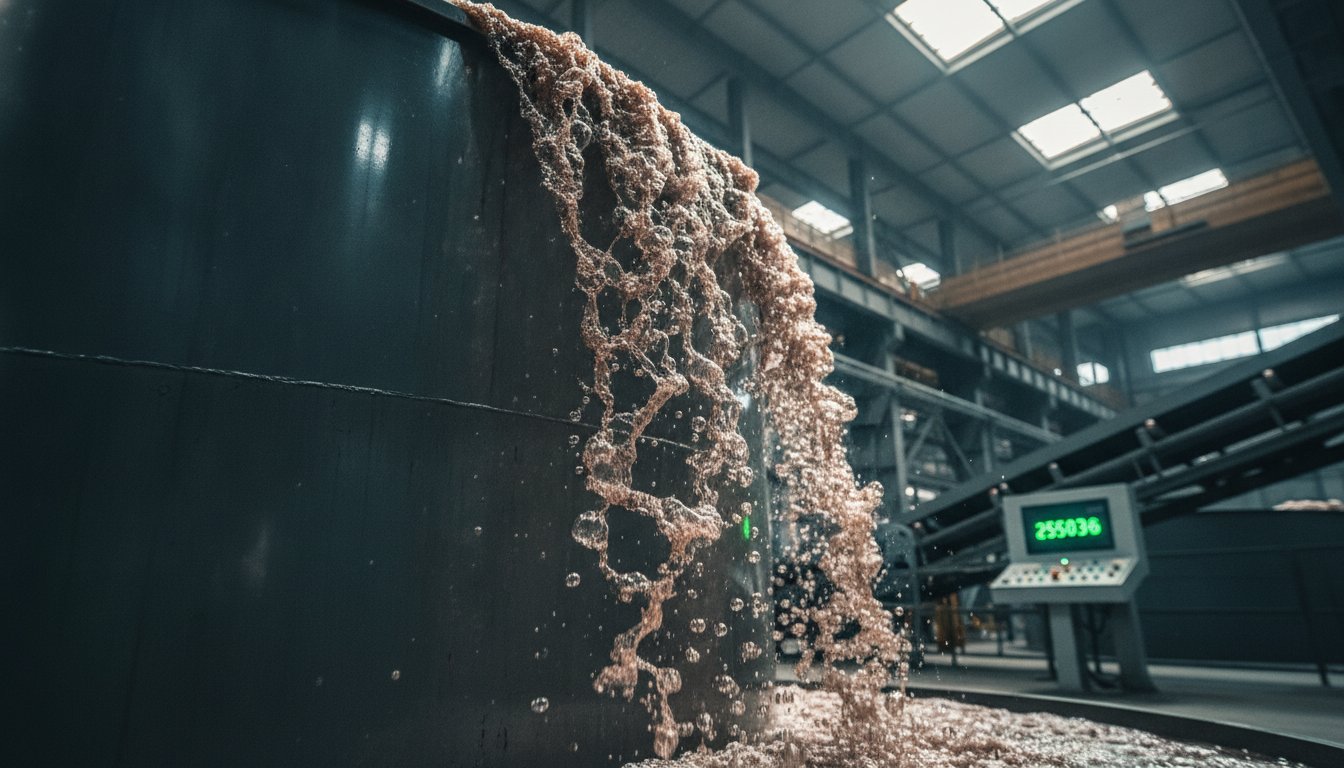
Grinding consistently ranks as the most energy-intensive step in mineral beneficiation. Ball mills and SAG mills draw substantial power continuously, yet a significant portion of that energy is wasted on re-grinding agglomerated fines rather than producing new surface area. Compounding this is the "coating" effect: fine particles accumulate on grinding media surfaces, forming a cushioning layer that reduces impact efficiency and accelerates liner wear. The result is a circuit that consumes maximum power while delivering sub-optimal throughput, a bottleneck that translates directly into cost pressure across every shift.
Surface Energy and Particle Agglomeration
When ore fractures, the freshly exposed surfaces are chemically reactive and energetically unstable. Particles don't remain discrete; they aggregate rapidly, effectively reversing the work the mill has already done. Grinding aids neutralise these surface charges by forming a thin molecular film across particle surfaces, reducing the tendency to bond and allowing the ground material to flow freely toward classification.
This isn't simply a matter of process chemistry. It connects to a broader mining solutions strategy: when grinding circuits operate at genuine efficiency, operations extract more value from every tonne of ore processed, reducing the resource intensity of mineral production at a global scale.
JAS Global Industries, operating since 1998 with manufacturing and R&I capabilities across Africa, Asia, Europe, and its headquarters in Dubai, approaches this challenge as more than a product supply question. The company's mission is to provide stability through advanced chemical technology, delivering tailor-made formulations and technical consulting that address the specific ore characteristics, target fineness, and downstream requirements of each operation. That depth of engagement is what separates a genuine chemical partnership from a commodity reagent supply arrangement.
The Chemistry of Efficiency: How Grinding Aids Work
The Rehbinder effect sits at the heart of every effective grinding aid formulation. First described by Soviet physicist Peter Rehbinder in the 1940s, the principle is precise: when surface-active molecules adsorb onto a solid, they reduce its surface energy, lowering the mechanical force required to propagate a crack through the material. In practical terms, this means ore fractures more readily under the same mechanical input, and the mill converts a greater proportion of its draw into productive new surface area rather than heat and vibration. The implications for global mineral recovery and production are substantial, given how tightly grinding efficiency is coupled to overall resource yield at the circuit level.
Delivery mechanism matters as much as chemistry. Liquid-phase addition allows active molecules to penetrate the aqueous film surrounding ore particles, reaching micro-crack tips directly and accelerating fracture propagation from the inside. Vapour-phase delivery, by contrast, is slower to achieve uniform distribution in a wet mill environment and is generally less effective for high-throughput comminution. Liquid-phase formulations dominate industrial practice for this reason, though the precise carrier chemistry must be matched to the slurry conditions of each circuit.
Two molecular properties determine how durable and effective a grinding aid will be under the shear forces inside a ball mill: molecular weight and charge density. Higher molecular weight compounds tend to form more robust surface films, but they can also increase slurry viscosity if overdosed. Charge density governs selectivity: a molecule with the right charge profile will preferentially adsorb onto freshly fractured surfaces, where surface energy is highest, rather than distributing indiscriminately across the slurry. Getting this balance right is not guesswork. It requires formulation expertise grounded in the specific mineralogy of the ore being processed.
Surface Tension and Fracture Propagation
As grinding aid molecules penetrate micro-cracks in the ore, they weaken the cohesive forces holding crack faces together, allowing fracture to propagate at lower applied stress. This also eliminates the cushioning effect: fine particles coated with active molecules don't compact onto media surfaces, so impact energy transfers directly to the ore. Surface energy reduction is the primary catalyst for measurable mill throughput gains. It's a chemical solution to what most engineers treat as a purely mechanical problem.
Custom Chemistry for Variable Ore Types
Magnetite, potash, and phosphate each present distinct surface chemistry, hardness profiles, and liberation requirements. JAS Global Industries' research and innovation centres identify optimal formulations by analysing ore mineralogy alongside mill operating parameters, matching reagent charge density and molecular architecture to the specific shear environment of each circuit. Technical audits are central to this process, translating mill performance data into precise dosing specifications. In dry processing applications, there's also a meaningful synergy between Mining Grinding Aids and anti-caking agents: where grinding aids maintain particle dispersion during size reduction, anti-caking agents preserve that flowability through storage and handling, protecting product quality across the full processing chain.
Generic formulations can't account for this complexity. If you're assessing whether your current reagent programme is genuinely matched to your ore type and circuit conditions, exploring a tailored grinding aid consultation is a practical starting point.
Downstream Impacts: Grinding Aids and Flotation Recovery
The most persistent concern among metallurgists considering Mining Grinding Aids isn't energy savings. It's whether the chemistry will interfere with flotation collectors and compromise mineral recovery. It's a legitimate question, and the honest answer is that formulation quality determines everything. A poorly matched reagent can suppress bubble attachment and destabilise froth. A well-engineered one can actually improve flotation kinetics by delivering a cleaner, more uniform feed to the separation circuit.
The distinction matters because it separates a genuine chemical partnership from a commodity purchase. Getting it right requires understanding how grinding aid chemistry interacts with the full recovery chain, not just the mill.
Synergy vs. Interference in the Circuit
Non-ionic grinding aids present the lowest risk to flotation performance. Because they carry no net charge, they don't compete with ionic collectors for active mineral surface sites, and they don't alter the electrochemical environment that governs bubble-particle attachment. Ionic aids, by contrast, require careful selection: anionic formulations can depress sulphide mineral surfaces if overdosed, while cationic variants risk destabilising the froth phase by interacting with frother molecules.
Beyond reagent type, particle size distribution itself is a flotation variable that grinding aids directly influence. A tighter, more uniform distribution reduces the proportion of ultrafine slimes that coat coarser particles and blind collector sites. Narrower size distributions improve flotation kinetics by ensuring more particles fall within the optimal size window for bubble attachment, reducing both recovery losses and reagent overconsumption.
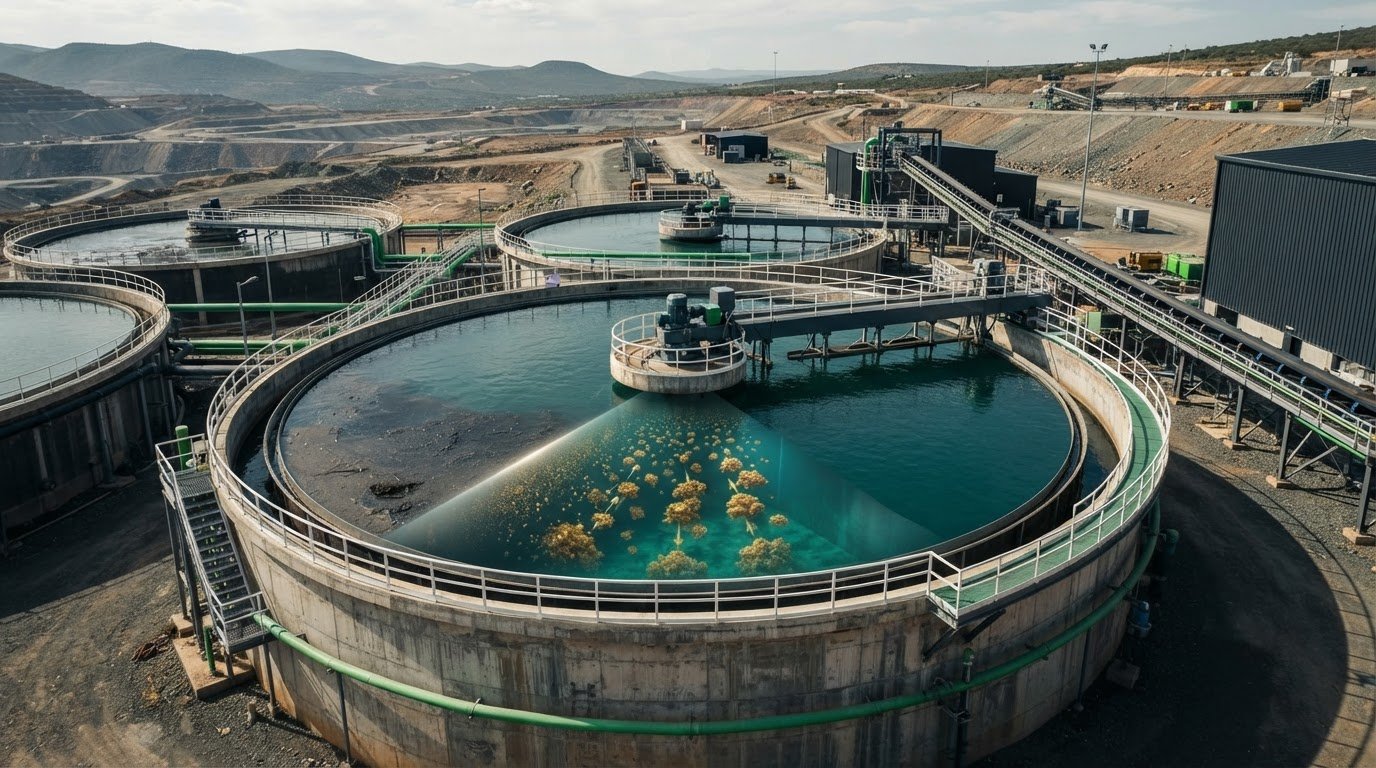
Water chemistry adds another layer of complexity. Recycled mill water carries residual reagents, dissolved salts, and fine solids that accumulate across process cycles. Effective industrial water treatment is therefore not a peripheral concern; it's a prerequisite for stable grinding aid performance. Contaminants in process water can alter reagent adsorption behaviour and unpredictably shift the electrochemical balance the flotation circuit depends on.
Optimising the Total Recovery Chain
Closed-loop laboratory flotation testing is the only reliable method for validating grinding aid compatibility before plant-scale introduction. These tests replicate actual circuit water chemistry, collector dosing, and frother concentrations, exposing any interaction effects under controlled conditions. No grinding aid should enter a flotation circuit without this validation step.
Dosing discipline is equally critical. Overdosing doesn't produce proportionally better results; it introduces excess surface-active material that competes with mining frothers and disrupts froth stability in complex ore beneficiation scenarios. Precise, calibrated dosing strategies, developed from circuit-specific audit data, prevent this instability and protect recovery performance.
JAS Global Industries' technical consulting process is structured around exactly this kind of integrated assessment. Rather than treating the mill and the flotation bank as separate optimisation problems, the company's specialists evaluate the full processing chain, ensuring that every Mining Grinding Aid formulation it deploys supports, rather than undermines, the downstream recovery circuit it feeds.

Operational Best Practices: Dosing, Audits, and Selection
Chemical implementation without prior benchmarking is, at best, guesswork. Before any Mining Grinding Aid enters your circuit, you need a clear picture of where your mill currently stands. That means establishing baseline performance metrics across three core parameters: power draw relative to throughput, recirculating load, and P80 size distribution. These figures aren't just diagnostic. They become the reference points against which every subsequent chemical intervention is measured, and they're the foundation of any credible return-on-investment calculation.
Conducting a Technical Mill Audit
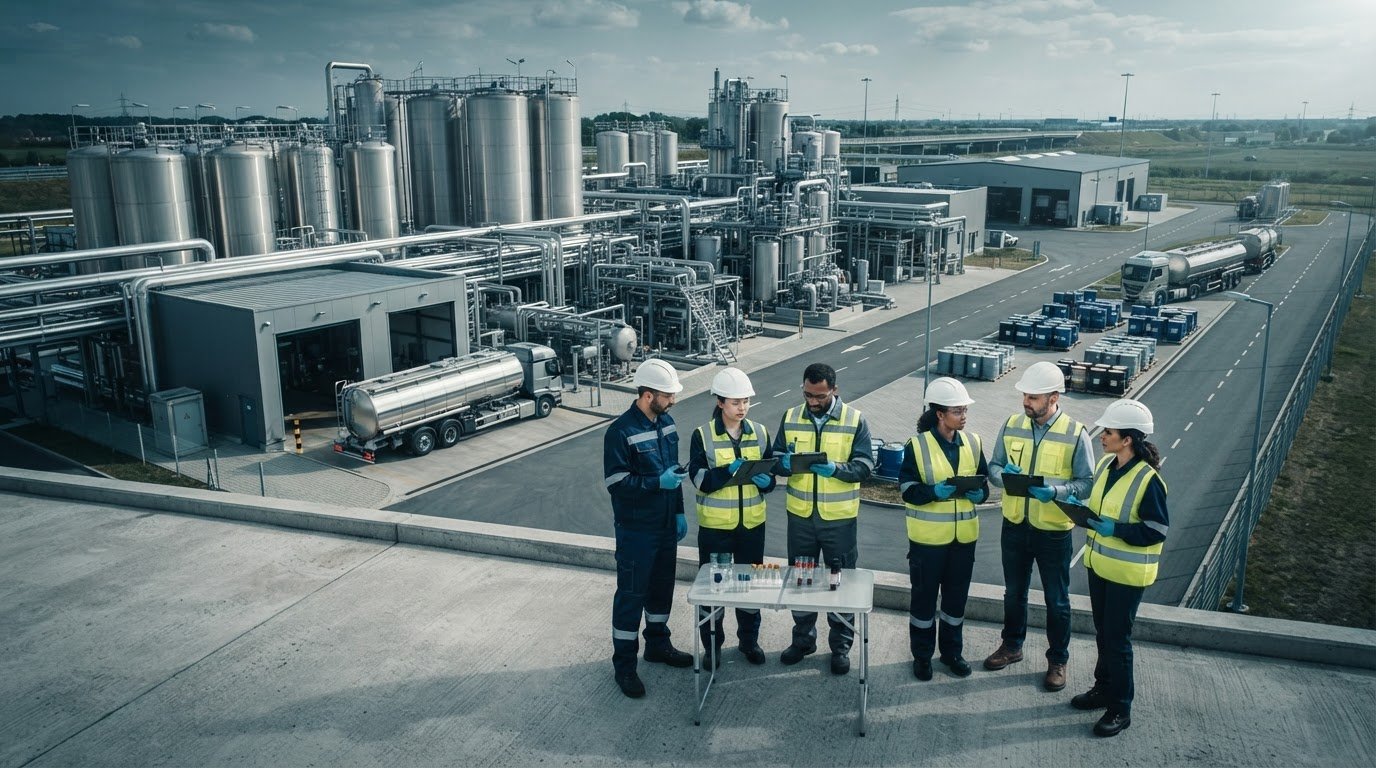
A structured mill audit examines power draw trends across shifts, quantifies recirculating load by sampling the cyclone feed and overflow streams, and maps P80 against target fineness under current operating conditions. On-site laboratory testing runs in parallel: fresh ore samples are ground with and without candidate reagents under controlled conditions, giving metallurgists direct evidence of performance before any plant-scale commitment is made. The cost of this audit process is consistently offset by the energy savings and throughput gains that follow a properly calibrated implementation. Operations that skip this step often underdose, see marginal results, and incorrectly conclude that grinding aids don't work for their ore type.
Dosage optimisation follows directly from audit data. Ore hardness, target fineness, and slurry density all influence the effective dose window. Harder ores with higher Bond Work Index values generally respond to higher addition rates, while softer ores with naturally lower surface energy require less chemical intervention to achieve dispersion. Calibrated dosing systems, whether peristaltic pumps tied to mill feed tonnage or automated feedback loops linked to power draw sensors, are non-negotiable for consistent performance. Manual addition introduces variance that undermines both the chemistry and your ability to attribute results accurately.
Selecting the Right Aid for the Ore
Liquid formulations dominate wet milling applications because they distribute uniformly through the slurry and reach micro-crack surfaces efficiently. Powder additives are better suited to dry grinding circuits where slurry viscosity isn't a variable. Beyond physical form, mineralogy drives selection:
- Phosphate mining chemicals require formulations that account for the naturally high carbonate content in phosphate ore, which can compete with active molecules for surface sites.
- Potash mining chemicals demand reagents compatible with high-salinity brine environments, where standard formulations lose adsorption efficiency.
- Compatibility with mining flotation collectors must be verified through closed-loop testing before plant introduction, not assumed.
Process optimisation isn't a one-time event. Ore feed characteristics shift with mine depth and geology, and reagent programmes need to evolve alongside them. That's precisely why the most productive approach is a long-term technical partnership rather than a transactional reagent purchase. Contact JAS Global Industries to discuss a structured mill audit and tailored grinding aid programme built around your specific ore type and circuit conditions.
JAS Global Industries: Your Partner in Global Mining Excellence
Since 1998, JAS Global Industries has operated at the intersection of advanced chemical science and global resource responsibility. What began as a commitment to tailor-made formulations has grown into a multinational technical partnership that serves some of the world's most demanding mineral processing operations. The company doesn't sell reagents off a shelf. It engineers solutions around the specific geological, operational, and logistical realities each client faces.
That distinction matters more than it might initially appear. Generic suppliers can quote a price per tonne. They struggle to explain why their product underperforms in a high-salinity brine environment or why it's disrupting froth stability three circuits downstream. JAS Global Industries is built for precisely these situations, where ore complexity, remote site conditions, and downstream sensitivity demand chemistry that's been developed with a specific operation in mind.
Tailor-Made Formulations for Global Challenges
JAS Global Industries' research and innovation centres develop Mining Grinding Aids formulations calibrated to the geological fingerprint of each ore body. Carbonate-rich phosphate deposits, brine-saturated potash environments, and hard-rock magnetite circuits each require distinct molecular architecture. Beyond chemistry, operational reliability at remote mine sites is a non-negotiable design criterion. Reagents must perform consistently under variable ambient temperatures, fluctuating water quality, and supply chain constraints that urban operations never encounter. The company's broader chemical portfolio, including H2S treatment solutions for mine safety, reflects this integrated approach to site-wide operational protection, not just point-of-mill optimisation.
A Legacy of Reliability and Ethical Leadership
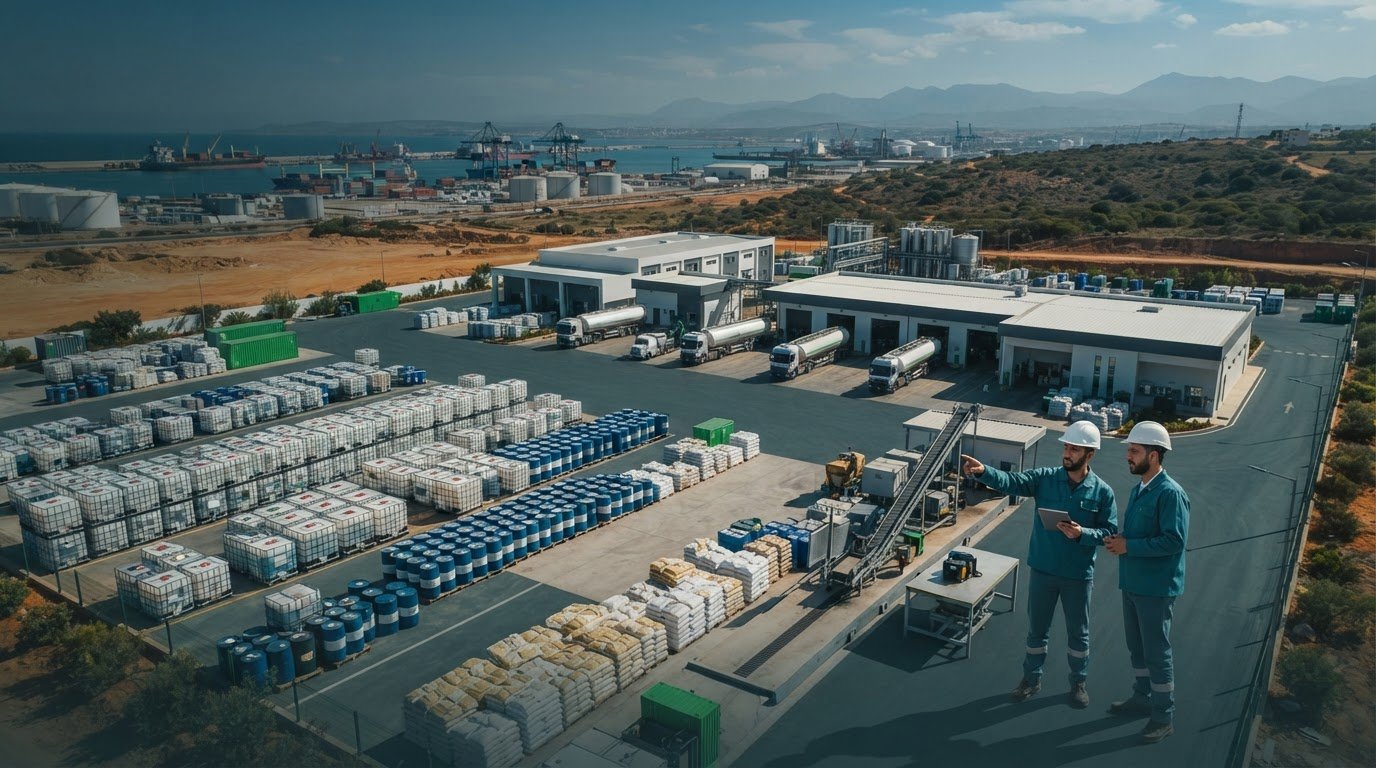
Headquartered in Dubai, JAS Global Industries holds a genuine strategic advantage in global chemical logistics. The location sits at the crossroads of Africa, Asia, and Europe, enabling efficient supply chain management to mine sites that generic Western or Asian suppliers routinely deprioritise. Manufacturing plants and sales offices across all three continents mean that technical support isn't routed through a distant head office; it's delivered by regional specialists who understand local geology, regulation, and infrastructure.
This reach, sustained over more than two decades, has established the company as an indispensable pillar of modern industrial infrastructure across critical mining sectors. Its ethical purpose extends beyond chemistry: protecting global mineral resources means ensuring that every tonne of ore processed yields maximum value with minimum waste, a standard that shapes every formulation JAS Global Industries brings to market.
If your operation is ready to move beyond commodity reagent supply toward a structured technical partnership, the starting point is a process audit and a conversation about what your circuit actually needs. Explore bulk chemical supply contracts and tailored Mining Grinding Aids programmes built around your ore type, your site conditions, and your recovery targets. Contact JAS Global Industries to begin that conversation.
Turn Grinding Efficiency Into a Competitive Advantage
Energy waste in the grinding circuit isn't inevitable. Mining Grinding Aids address the problem at its source, reducing particle re-agglomeration, lowering energy intensity per tonne, and delivering cleaner feed to downstream separation circuits without compromising recovery performance.
Three principles hold across every operation that gets this right: chemistry must be matched to ore mineralogy, dosing must be calibrated through structured audits, and the grinding circuit can't be optimised in isolation from what follows it. Generic reagents don't meet that standard. Purpose-built formulations, developed with your specific ore body and circuit conditions in mind, do.
JAS Global Industries has been engineering tailor-made chemical solutions since 1998, backed by global R&I centres, manufacturing plants across Africa, Asia, and Europe, and decades of on-site technical consulting in complex mineral processing environments. That depth of experience translates directly into formulations that perform where it matters.
Your circuit's full potential is within reach. Optimise your mining throughput with JAS Global Industries technical consulting and start building a grinding programme that works as hard as your operation demands.
Frequently Asked Questions About Mining Grinding Aids
What is the primary function of a mining grinding aid?
A mining grinding aid prevents freshly fractured ore particles from re-agglomerating inside the mill. When particles clump together after fracture, the mill wastes energy re-grinding material it has already processed. Grinding aids adsorb onto newly created particle surfaces, neutralising the electrostatic and Van der Waals forces driving that re-agglomeration, and keeping ground material in a dispersed, flowable state that moves efficiently toward classification.
How much energy can be saved by using a grinding additive?
Energy savings depend heavily on ore hardness, circuit configuration, and baseline operating conditions, so no universal figure applies across all operations. Operations with significant recirculating loads and measurable coating on grinding media tend to see the most substantial reductions, because those are the conditions where re-agglomeration is consuming the most wasted power. A structured mill audit establishing your baseline power draw relative to throughput is the only reliable way to quantify what your specific circuit stands to recover.
Will a grinding aid interfere with my downstream flotation process?
Formulation quality determines the answer. Non-ionic grinding aids carry no net charge and don't compete with ionic flotation collectors for active mineral surface sites, making them the lowest-risk option for circuits with sensitive downstream separation. Ionic formulations require careful selection and dosage control. Closed-loop laboratory flotation testing using your actual circuit water chemistry, collector dosing, and frother concentrations is the only reliable validation method before any plant-scale introduction.
What is the typical dosage rate for a mineral grinding aid?
Dosage rates vary with ore hardness, target fineness, and slurry density. Harder ores with higher Bond Work Index values generally respond to higher addition rates, while softer ores require less chemical intervention to achieve effective particle dispersion. Rather than applying a generic industry figure, the correct approach is calibrating dosage through circuit-specific audit data and on-site laboratory testing. Overdosing doesn't produce proportionally better results and can introduce surface-active material that disrupts downstream froth stability.
Can grinding aids be used in both wet and dry grinding circuits?
Yes, but the physical form of the reagent must match the circuit type. Liquid formulations dominate wet milling applications because they distribute uniformly through the slurry and reach micro-crack surfaces efficiently. Powder additives are better suited to dry grinding circuits where slurry viscosity isn't a variable. In dry processing, there's also a practical synergy between grinding aids and anti-caking agents: grinding aids maintain particle dispersion during size reduction, while anti-caking agents preserve that flowability through subsequent storage and handling.
How do I determine if my mill is a candidate for chemical optimization?
Three indicators point clearly toward a grinding circuit that would benefit from chemical optimisation: power draw that remains high while throughput stagnates, a recirculating load that's climbing without a corresponding increase in product fineness, and visible coating on grinding media surfaces. If your P80 is consistently coarser than your target despite maximum mill draw, re-agglomeration is almost certainly consuming productive energy. A technical mill audit sampling cyclone feed and overflow streams will confirm the diagnosis with measurable data.
What is the difference between the Rehbinder effect and Pitt's theory?
The Rehbinder effect describes how surface-active molecules adsorbing onto a solid reduce its surface energy, lowering the mechanical force required to propagate a crack through the material. Pitt's theory extends this by examining how adsorbed molecules specifically weaken cohesive forces at crack tips, accelerating fracture propagation from within micro-cracks rather than simply at the external particle surface. In practical grinding aid design, both principles inform formulation: molecular architecture must support both surface energy reduction and effective penetration into propagating fractures.
How often should a chemical dosing audit be performed?
Ore feed characteristics shift with mine depth and geological variation, which means a dosing programme calibrated for one ore zone can become mismatched as the mine advances. At minimum, a dosing review should accompany any significant change in ore source, feed hardness, or target fineness. Beyond those trigger events, a periodic audit, typically aligned with scheduled mill maintenance windows, ensures that automated dosing systems remain accurately calibrated and that reagent performance is still being measured against a current baseline rather than an outdated one.