
Could a single chemical shift determine the survival of your operation in an era of declining ore grades? With Mining Flotation Collectors accounting for 42% of the global flotation chemical market in 2026, these reagents are no longer just commodities. They're the primary guardians of your mineral recovery. As ore bodies grow more complex, the margin for error in your reagent suite has effectively vanished.
It's a challenge we all recognize. Maintaining high recovery rates while managing rising operational costs and strict environmental standards, such as the 2026 EU CLP updates, feels like a constant battle. This article will show you how advanced collector chemistry enhances recovery, overcomes ore complexity, and secures long-term operational reliability. We'll explore how custom-formulated reagents reduce chemical waste and provide the technical stability necessary for a sustainable, high-yield mining future.
Key Takeaways
- Understand how high-efficiency reagents secure the global mineral supply chain against the challenges of declining ore grades.
- Explore the molecular mechanics of hydrophobicity and how precise chemical selection dictates the success of bubble-particle attachment.
- Identify the distinct applications for anionic, cationic, and non-ionic Mining Flotation Collectors to maximize recovery across diverse mineralogies.
- Learn to optimize complex flotation circuits through the strategic synergy of collectors, frothers, and specialized depressants.
- Discover how technical audits and dedicated R&I support ensure long-term operational stability and consistent mineral grades.
The Strategic Role of Flotation Collectors in Global Resource Security
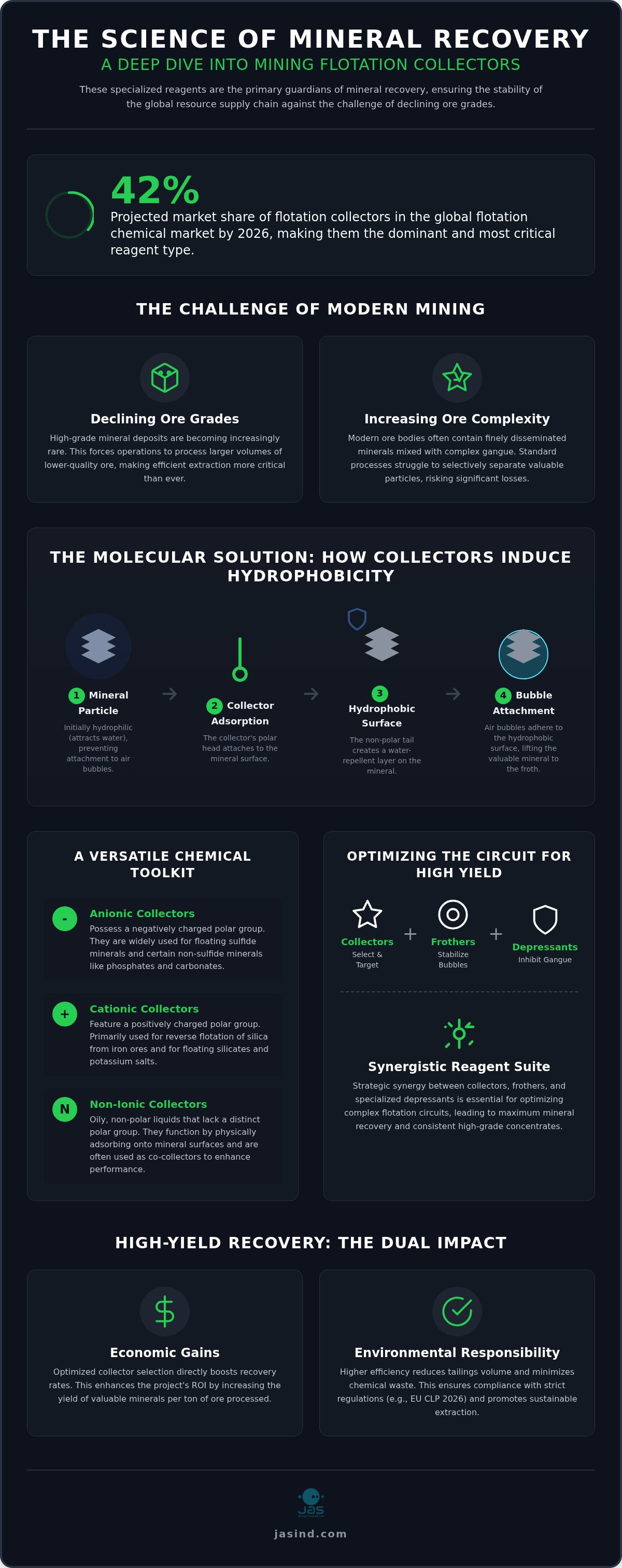
Global resource security depends on the precision of mineral extraction. Modern infrastructure requires a consistent flow of critical minerals, from copper for electrification to phosphate for food security. As high-grade deposits become increasingly rare, Mining Flotation Collectors serve as the primary tools for ensuring this stability. These reagents are the dominant chemical type in the industry, accounting for an estimated 42% of the market share in 2026. They don't just assist in production; they act as the tactical intelligence within the circuit.
Flotation success is no longer a matter of simple logistics. It's a matter of chemical accuracy. In the face of declining global ore grades, standard processes often fail to separate valuable minerals from complex gangue. Specialty collectors provide the necessary selectivity to maintain high yields. They function as the gatekeepers of the flotation circuit, determining the success of the entire separation process before the first bubble reaches the surface.
Defining Collector Chemistry: Beyond Basic Separation
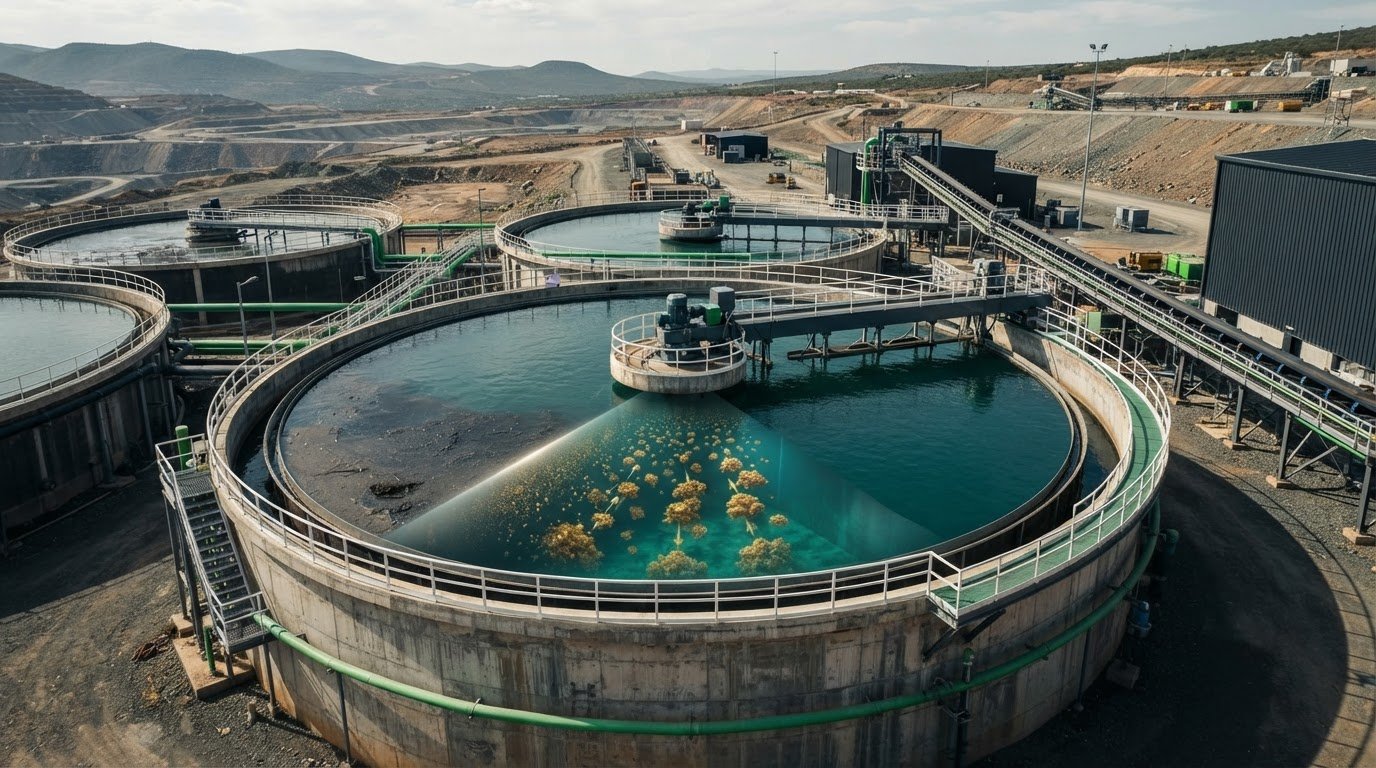
The Froth flotation process is often described through its physical mechanics. While air bubbles provide the necessary lift, the actual success of the operation rests on chemical selectivity. Collectors are specialty reagents that selectively induce hydrophobicity in valuable minerals. They don't just move material; they identify it. Through a precise adsorption process at the mineral-water interface, these molecules transform the surface properties of specific particles while leaving others untouched. Flotation collectors act as the chemical bridge that allows valuable minerals to attach to air bubbles.
The Economic and Environmental Impact of High-Yield Recovery
Efficiency in the flotation circuit directly influences the project's environmental footprint. Optimized collector selection reduces tailings volume and minimizes chemical waste. When recovery rates improve, the volume of discarded material decreases. This efficiency protects the surrounding ecosystem and lowers the cost per ton of recovered mineral. In an era of strict environmental regulations, such as the 2026 CLP updates, maximizing recovery is a compliance necessity. We provide mining solutions that serve as the foundation of sustainable mineral extraction. This approach secures the ROI of the operation while honoring the responsibility to protect local resources for future generations. Reliability in the circuit creates stability in the global supply chain.
Understanding the Mechanism: How Collectors Induce Hydrophobicity
The efficiency of any flotation circuit rests on the molecular behavior of the reagents. Mining Flotation Collectors possess a heteropolar structure. This includes a polar, hydrophilic head group and a non-polar, hydrophobic hydrocarbon tail. The head group anchors to the mineral surface through specific chemical or physical interactions. Meanwhile, the tail extends into the water, creating a barrier that repels hydration. This dual nature is what allows a mineral particle to transition from being water-loving to being water-repellent.
This transformation is governed by the thermodynamics of the contact angle. A successful attachment occurs when the collector increases the contact angle to a point where the air bubble can displace the water film. In high-velocity circuits, the induction time becomes a critical performance metric. This is the period required for the thin liquid film between the bubble and particle to rupture. If this time is too long, the particle will bypass the froth zone entirely and be lost to the tailings. Current research into Quantum chemistry in flotation highlights how these electronic interactions determine the stability of the reagent film under turbulent conditions.
Surface interactions generally fall into two categories: physical adsorption and chemisorption. Physical adsorption relies on weaker van der Waals forces or electrostatic attraction. It's often reversible and sensitive to changes in the pulp environment. Chemisorption involves a more robust chemical bond between the collector and the mineral's surface atoms. This creates a more stable hydrophobic layer that can withstand the mechanical stresses within a large-scale flotation cell.
The Polar vs. Non-Polar Dynamic
The hydrocarbon tail length is a primary lever for process control. Longer chains provide higher hydrophobicity, which increases the collector's pulling power. However, this strength often comes at the cost of selectivity. High-power collectors risk floating gangue minerals alongside the target ore, diluting the final concentrate grade. Achieving a balance requires a precise understanding of the specific ore body's mineralogical DNA. Engineers looking to optimize these molecular interactions often benefit from on-site laboratory testing. You can consult with our technical experts to audit your current circuit chemistry and identify opportunities for dosage reduction.
Factors Affecting Adsorption Efficiency
Environmental conditions in the pulp directly influence reagent performance. Pulp pH is perhaps the most significant factor, as it dictates the ionization state of both the collector and the mineral surface. Surface oxidation also plays a role; oxidized minerals often require different chemical head groups to achieve effective bonding. Effective mineral recovery requires the collector to overcome the natural hydration layer of the particle. This requires a collector that is both chemically compatible with the target mineral and robust enough to displace competing water molecules.
Classification of Mining Collectors: Anionic, Cationic, and Non-Ionic
Selecting the right chemical class is the most critical decision in flotation design. Mining Flotation Collectors are categorized based on the electrical charge of their polar head groups. This charge determines which mineral surfaces the reagent will target. While early mining relied on a few standard chemicals, modern operations use a sophisticated array of three primary classes: anionic, cationic, and non-ionic. Each class serves a specific role in securing mineral recovery and maintaining concentrate grade across diverse geological profiles.
The complexity of today's ore bodies often requires more than a single reagent. We're seeing a significant rise in amphoteric and mixed-collector systems designed for complex mineral suites. These systems combine different ionic charges to improve recovery in "dirty" or highly variable ores. The success of these formulations depends heavily on surfactant chemistry. By balancing surface tension and adsorption rates, these advanced mixtures provide a level of selectivity that single-component reagents cannot match.
Anionic Collectors: Xanthates and Beyond
Anionic collectors are the workhorses of the industry, carrying a negative charge in their polar head. They're divided into two main groups based on their chemical structure:
- Sulfhydryl Collectors: These include Xanthates and Dithiophosphates. They're the standard for sulfide ore processing, such as copper, lead, and zinc. Short-chain versions offer high selectivity, while long-chain variants provide stronger pulling power for difficult-to-float minerals.
- Oxyhydryl Collectors: This group includes fatty acids and alkyl sulfates. They're primarily used for industrial minerals, oxides, and alkaline earth metals like calcium and magnesium.
Cationic and Non-Ionic Systems
Cationic collectors carry a positive charge and are dominated by amines. These are essential for the flotation of potash, feldspar, and silica. However, cationic systems are notoriously sensitive. They're easily affected by slime coating and minor pH fluctuations, which can lead to rapid drops in recovery if not managed correctly. Engineers focused on Optimizing flotation circuits often use these reagents in highly controlled environments to ensure consistent performance.
Non-ionic collectors operate through a different mechanism. These non-polar oils and surfactants don't ionize in water. Instead, they coat mineral surfaces to enhance natural hydrophobicity. They're the primary choice for recovering coal and molybdenite. In many modern circuits, non-ionic surfactants are added to ionic Mining Flotation Collectors to improve the attachment of coarse particles to air bubbles. This synergy reduces reagent waste and ensures a more stable froth zone, protecting the operation's bottom line.
Optimizing Flotation Circuits for Complex Ores and High Yields
Success in the flotation cell isn't an isolated chemical event. It's the result of a strategic alignment between the ore's mineralogy and the reagent suite. As global mining faces increasingly low-grade and "dirty" deposits, treating Mining Flotation Collectors as off-the-shelf commodities becomes a liability. Achieving high yields requires a tailor-made approach that accounts for every impurity and mineralogical nuance in the circuit. This is where process intelligence transforms a standard operation into a high-performance asset.
A balanced circuit relies on the synergy between collectors, frothers, and depressants. While collectors provide the necessary hydrophobicity, mining frothers are essential for stabilizing the mineralized froth. Without this stability, even the most efficiently collected particles will drop back into the pulp. Depressants complete the triad by ensuring that unwanted gangue remains submerged. This chemical coordination is the only way to maintain grade stability in the face of fluctuating feed quality. Reliability in these interactions is the foundation of operational security.
Overcoming Ore Mineralogy Challenges
High clay content and oxidized mineral surfaces often act as recovery killers. Clays increase pulp viscosity and consume reagents, while oxidation prevents collectors from anchoring to the particle surface. We address these challenges by introducing secondary collectors or promoters that boost the recovery of difficult-to-float particles. Documented performance shows that custom-tailored dosing strategies can reduce overall reagent consumption by 15% to 20%. This reduction directly improves the project's economic viability and reduces the environmental burden of chemical waste.
The Role of Technical Consulting
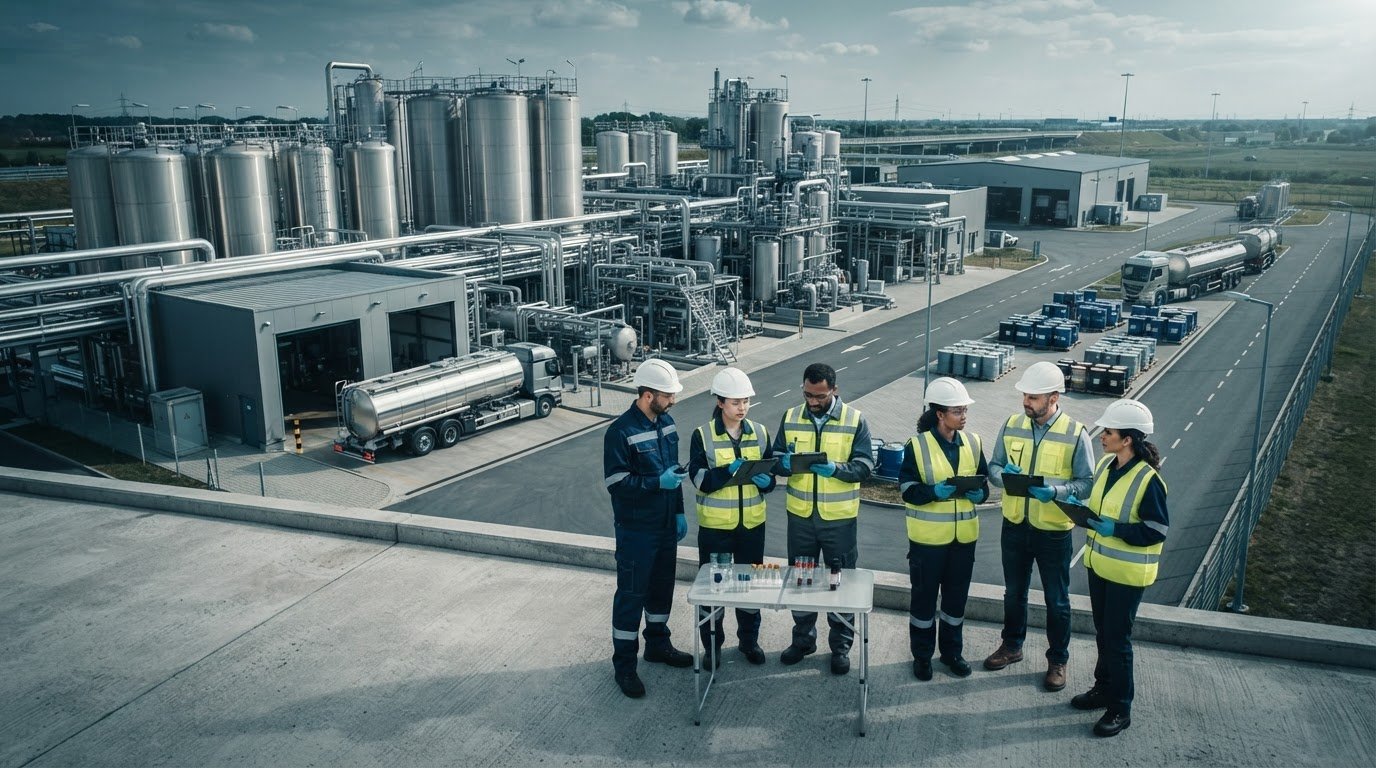
Transitioning from a bulk chemical supplier to a process optimization partner is fundamental for long-term stability. Professional technical audits identify recovery bottlenecks that are often invisible during routine operation. By using laboratory flotation tests, such as Denver or JK cells, we create a precise chemical blueprint that translates directly to full-scale plant performance. These audits aren't just troubleshooting sessions; they're strategic investments in resource security. They ensure that your chemistry evolves alongside your ore body.
To maximize your plant's efficiency and secure your recovery rates, you can request a comprehensive technical audit from our global R&I team.
Strategic Reagent Partnership: Enhancing Operational Reliability
Operational stability in mining isn't achieved through transactions. It's built through trust. Since 1998, JAS Global Industries has served as a foundational presence in the mineral processing sector, moving beyond the role of a traditional supplier to become a global guardian of resource security. Our approach to Mining Flotation Collectors focuses on the long-term health of the circuit, ensuring that every chemical intervention contributes to the stability of the global mineral supply chain. We don't just provide reagents; we provide the technical infrastructure necessary for industrial success.
The reliability of your operation depends on the reliability of your partners. We maintain specialized R&I centers dedicated to solving the industry's most pressing metallurgical challenges. These centers allow us to develop custom formulations that adapt to changing ore bodies, ensuring that your recovery rates remain consistent even as grades decline. By integrating technical expertise with large-scale manufacturing, we bridge the gap between chemical innovation and practical plant performance. This commitment ensures that your facility remains an indispensable pillar of modern infrastructure.
Global Reach and Local Expertise
Mineral resources are global, and our support structure reflects that reality. We maintain a robust presence across the Middle East, Africa, Asia, and Europe, providing regional expertise that understands local geological conditions. Our logistics network is designed for the demands of industrial-scale operations, managing bulk chemical supply contracts with a focus on supply security. We understand that a disruption in reagent availability is a disruption in global resource protection. Our manufacturing plants are strategically positioned to ensure that critical Mining Flotation Collectors reach your site on time, every time, regardless of geographical complexity.
Commitment to Innovation and Sustainability
True leadership requires a focus on the future. Our research and innovation efforts prioritize the development of sustainable formulations that meet the strictest modern environmental standards. We recognize that the mining industry faces increasing pressure regarding tailings management and chemical toxicity. Our reagents are designed to support safer tailings disposal and reduce the environmental footprint of the flotation process. This focus on sustainability doesn't compromise yield; it enhances it by creating a more efficient, responsible, and cost-effective circuit.
We view every client relationship as a long-term technical partnership. Our goal is to secure your recovery, protect your ROI, and ensure the stability of your mineral assets for years to come. To move beyond commodity chemicals and toward process excellence, you can consult with our mining experts for process optimization and discover how our custom chemistry can transform your operational reliability.
Securing the Future of Mineral Extraction
The stability of the global mineral supply chain rests on the precision of your flotation circuit. As we've explored, the strategic selection of Mining Flotation Collectors isn't just a technical preference; it's a foundational requirement for navigating declining ore grades and complex mineralogies. Success requires more than a standard reagent suite. It demands a deep understanding of molecular mechanisms and a balanced synergy between collectors, frothers, and depressants.
True operational reliability is born from innovation and technical oversight. Our specialized R&I centers focus on creating tailor-made solutions that protect your ROI while meeting modern environmental standards. With a global service network supporting mining operations since 1998, we provide the expert technical consulting needed to troubleshoot bottlenecks and optimize plant yields. Don't settle for off-the-shelf commodities when you can secure a long-term technical partnership focused on resource protection.
Optimize your mineral recovery with JAS Global Industries and ensure your operation remains a steady pillar of global infrastructure. We're ready to help you unlock the full potential of your ore body.
Frequently Asked Questions
What is the primary difference between anionic and cationic collectors?
The fundamental difference lies in the electrical charge of the polar head group. Anionic collectors carry a negative charge and are the industry standard for sulfide ores and metallic oxides. In contrast, cationic collectors carry a positive charge and are primarily used for floating silicates, potash, and feldspar. Selecting the wrong ionic charge results in zero selectivity and a total failure in mineral recovery.
How do I choose the right collector for a complex sulfide ore?
Selecting the right reagent for complex sulfides requires a detailed mineralogical analysis of the ore body. Standard xanthates often lack the selectivity needed for "dirty" ores with high arsenic or pyrite content. In these cases, engineers often turn to dithiophosphates or specialized thionocarbamates. These Mining Flotation Collectors provide higher selectivity for the target mineral while leaving unwanted iron sulfides in the tailings.
Can custom collector formulations improve the recovery of low-grade minerals?
Custom formulations are often the only way to make low-grade deposits economically viable. As ore grades decline globally, standard reagents often fail to capture enough valuable particles to maintain ROI. Tailor-made collectors utilize specific hydrocarbon chain lengths to increase pulling power without sacrificing selectivity. This precision allows operators to recover fine or oxidized particles that would otherwise be lost to the tailings.
What role does pH play in the efficiency of flotation collectors?
pH acts as the primary control lever for reagent ionization and mineral surface charge. Most collectors only function within a specific window of alkalinity or acidity. For example, xanthates are typically most effective in alkaline circuits where they can maintain stability. If the pH shifts outside the target range, the collector may decompose or lose its affinity for the mineral surface, leading to a rapid drop in recovery.
How do collectors interact with frothers and depressants in the circuit?
These chemicals work in a tactical triad to ensure successful separation. The collector induces hydrophobicity on the target mineral, while the frother stabilizes the air bubbles to prevent them from bursting. Simultaneously, depressants coat unwanted gangue particles to ensure they remain hydrophilic and submerged. If these reagents aren't chemically compatible, the froth zone becomes unstable, and valuable minerals will drop back into the pulp.
What are the environmental considerations for mining flotation chemicals?
Modern mining demands reagents that balance performance with ecological responsibility. New environmental standards, including the 2026 EU CLP updates, require stricter labeling and lower toxicity for chemical reagents. Sustainable Mining Flotation Collectors are increasingly bio-based or biodegradable to minimize the impact on tailings water. Reducing chemical dosage through higher efficiency also lowers the environmental burden and simplifies long-term tailings management.
How can on-site technical audits reduce chemical waste in mining?
On-site technical audits identify the precise point where reagent waste occurs. Many operations over-dose chemicals to compensate for circuit instability, which increases costs and environmental risks. An audit uses laboratory testing to establish the exact minimum dosage required for maximum recovery. By optimizing addition points and conditioning times, operators can often reduce chemical consumption by 15% to 20% while maintaining their mineral grade.
What is the typical induction time for bubble-particle attachment?
Induction time is the critical interval required for the thin liquid film between a bubble and a particle to rupture. This process typically occurs in the range of 10 to 100 milliseconds. If the collector hasn't induced sufficient hydrophobicity, the induction time will exceed the contact time in the turbulent flotation cell. In high-velocity circuits, achieving a short induction time is essential to prevent valuable minerals from bypassing the froth zone.