
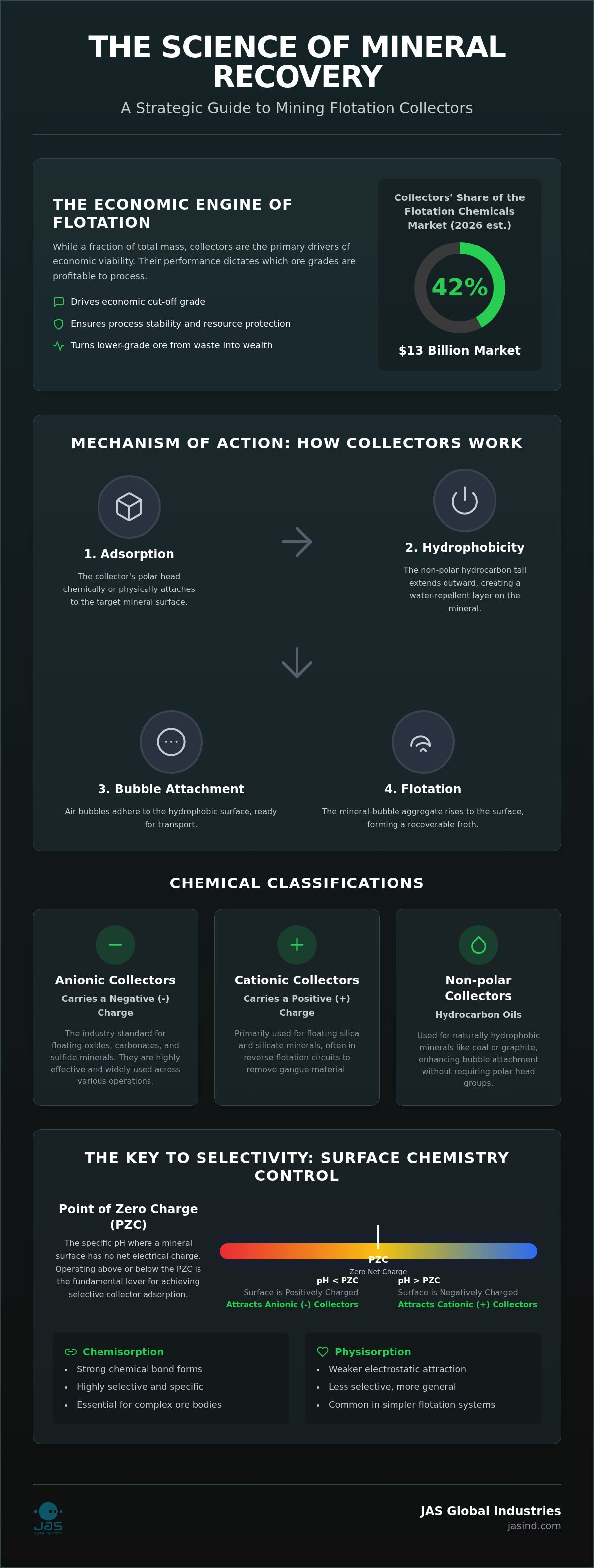
Did you know that while they represent a fraction of the total mass in a circuit, Mining Flotation Collectors account for approximately 42% of the $13 billion flotation chemicals market in 2026? This statistic underscores a critical reality for modern operations. These surface modifiers are the primary drivers of economic viability. Resource protection. Process stability. You likely recognize the mounting pressure of declining ore grades and the struggle to maintain selectivity in complex mineralogies. High reagent consumption often erodes your margins, while low recovery rates threaten the stability of your resource output.
We understand that your goal is to balance peak industrial performance with global responsibility. This strategic guide promises to help you master the chemical mechanisms and selection criteria necessary to optimize your flotation circuit. You'll learn how to reduce the cost per ton of recovered mineral and implement sustainable chemical strategies that meet the latest 2026 EU CLP hazard classifications. We explore the shift toward biodegradable reagents, the impact of new hazard regulations, and the precise technical audits required to secure your mineral recovery for the long term.
Key Takeaways
- Understand how collector efficiency directly determines the economic cut-off grade and long-term viability of an ore body.
- Learn to manipulate surface chemistry through pH control and the point of zero charge to ensure precise reagent adsorption.
- Discover specialized chemical strategies for maximizing recovery in complex phosphate, potash, and silicate operations.
- Implement advanced dosing and troubleshooting protocols for Mining Flotation Collectors to minimize reagent waste and operational costs.
- Explore how tailor-made formulations and on-site technical audits bridge the gap between laboratory testing and industrial-scale stability.
The Essential Role of Flotation Collectors in Mineral Processing
Mining Flotation Collectors are precision-engineered surfactants. Their primary function is to selectively impart hydrophobicity to target mineral surfaces. This chemical modification is the engine of the Froth flotation process. It allows valuable minerals to attach to air bubbles and rise to the surface. Efficiency here isn't just a technical metric; it's an economic mandate. Collector performance directly dictates the cut-off grade of an ore body. When a collector performs with high selectivity and power, lower-grade ores become commercially viable. This turns waste into wealth. The industry is moving away from generic reagents toward specialized mining solutions designed for complex mineralogies. This transition is vital for global resource security.
Operators must maintain a critical balance between selectivity and power. Selectivity determines the final concentrate grade. Power determines the overall recovery rate. A collector that is too aggressive may recover gangue, while one that is too selective may lose valuable minerals to the tailings. Achieving this equilibrium requires deep technical expertise and tailor-made formulations. Reliability in this balance ensures the stability of the entire flotation circuit.
Mechanism of Action: Hydrophobicity and Bubble Attachment
Collectors function by orienting themselves at the solid-liquid interface. The polar head group of the molecule chemically or physically adsorbs onto the mineral surface. Meanwhile, the non-polar hydrocarbon tail extends outward into the aqueous phase. This creates a water-repellent layer that facilitates the attachment of air bubbles. The contact angle is the primary measure of hydrophobicity. A higher contact angle indicates a stronger attachment between the mineral particle and the bubble, ensuring stable transport to the froth zone.
Chemical Classifications: Anionic, Cationic, and Non-ionic
Selecting the right Mining Flotation Collectors begins with understanding their chemical classification. Each class interacts differently with the mineral's surface charge and crystal structure. Common classifications include:
- Anionic Collectors: These carry a negative charge. They are the industry standard for floating oxides, carbonates, and sulfide minerals.
- Cationic Collectors: These carry a positive charge. They are primarily utilized in the flotation of silica and silicate minerals, often in reverse flotation circuits.
- Non-polar Collectors: These consist of hydrocarbon oils. They are used for naturally hydrophobic minerals like coal or graphite, where they enhance bubble attachment without the need for polar head groups.
Surface Chemistry and Selectivity: How Collectors Work
Efficiency in mineral recovery begins at the molecular level. The Point of Zero Charge (PZC) serves as the chemical compass for reagent selection. This is the specific pH at which a mineral surface carries no net electrical charge. Operating strategically above or below this point determines how Mining Flotation Collectors will adsorb onto the target mineral. Precision pH control is not merely a process variable; it's the fundamental lever for achieving selectivity in complex circuits. When pH is mismanaged, even the most advanced reagents fail to distinguish between valuable minerals and gangue.
Selectivity challenges often arise when dealing with chemically similar minerals. Distinguishing between apatite and calcite, for instance, requires more than generic chemistry. Ongoing research into Mineral Structure Specific Collectors demonstrates that molecular design must account for overlapping surface characteristics to ensure grade purity. Modern operations now utilize advanced surfactants as boosters. These secondary agents enhance the performance of primary collectors, which reduces total reagent consumption and lowers the overall cost per ton of recovered mineral.
Adsorption Mechanisms: Chemisorption vs. Physisorption
Collectors attach to mineral surfaces through two primary mechanisms. Chemisorption involves the formation of a strong chemical bond between the collector's polar head and the mineral surface. This mechanism is essential for high-selectivity applications where precision is paramount. Physisorption relies on weaker electrostatic forces. While physisorption allows for broader mineral recovery, it often lacks the target-specific focus required for complex or low-grade ores. Determining the optimal adsorption path requires rigorous laboratory bench testing to ensure the chemistry aligns with the specific mineralogy of the deposit.
The Impact of Water Chemistry on Collector Performance
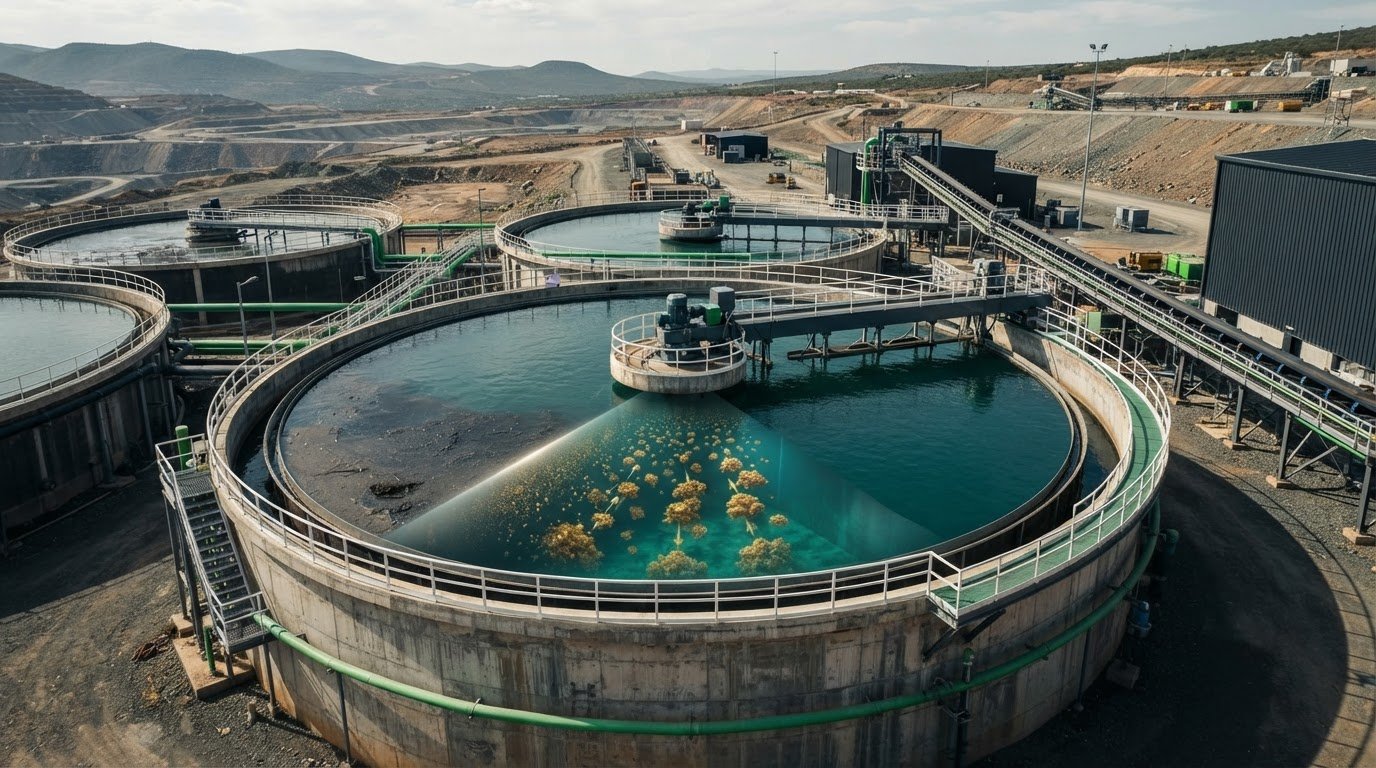
Water is the medium of recovery. Dissolved ions, high salinity, and fluctuating hardness can neutralize collector activity or cause premature reagent precipitation. Integrating effective industrial water treatment into the flotation circuit is therefore a strategic necessity. As global operations move toward closed-loop systems, the recycling of process water introduces accumulated salts and residual reagents that can interfere with bubble attachment. Managing these variables is critical to maintaining the stability of the flotation froth. For mines facing these complex geochemical hurdles, exploring custom formulations can provide the technical stability needed to protect resource recovery.
Optimizing Recovery for Specific Industrial Minerals
Mining Flotation Collectors aren't universal solutions. Each ore body presents a unique chemical fingerprint that requires a calibrated approach. The molecular architecture of a collector—specifically its hydrocarbon chain length and degree of branching—directly influences its performance in the circuit. Long-chain collectors offer superior hydrophobicity but often suffer from reduced solubility in cold process water. Conversely, branched chains can improve selectivity by sterically hindering adsorption on unwanted gangue minerals. Achieving the highest yields in complex oxide ore circuits depends on these fine-tuned adjustments. In many industrial applications, moving from a commodity reagent to a precision-engineered formulation has increased recovery rates by 3% to 5% while simultaneously improving concentrate grade.
Phosphate and Potash Flotation Strategies
Phosphate recovery often relies on anionic collectors, traditionally centered on fatty acids. However, modern high-carbonate phosphate ores require specialized blends to distinguish between apatite and dolomite. These custom formulations ensure that the collector targets the phosphate mineral while leaving the carbonate gangue in the tailings. Potash flotation typically employs cationic, amine-based reagents. These collectors are highly effective but notoriously sensitive to brine temperature and clay content. Precise temperature management and the use of clay-blind collectors are essential to maintain process stability. Once these minerals are recovered and processed into fertilizers, maintaining their physical integrity is the next priority. Implementing high-performance anti-caking agents ensures that the final product remains free-flowing during global transport and storage.
Challenging Minerals: Feldspar and Fluorspar
Separating feldspar from quartz presents one of the industry's most significant selectivity hurdles. Traditionally, this required the use of hydrofluoric acid (HF), which poses severe safety and environmental risks. Modern technical audits now focus on HF-free separation methods. These rely on specific pH modulation and tailor-made Mining Flotation Collectors that exploit subtle differences in the surface charges of the two minerals. Fluorspar flotation faces a different challenge: achieving acid-grade purity. Success here requires rigorous temperature control in the cleaning stages and exact reagent dosing. By managing impurity levels through precise chemical application, operators can secure the high-grade concentrates required for critical industrial infrastructure. This level of control doesn't just improve the bottom line; it protects the long-term viability of the mineral resource.
Operational Best Practices and Troubleshooting
Establishing a robust dosing strategy is a cornerstone of process stability. While single-point addition is simpler, stage addition often yields superior results by maintaining a consistent reagent concentration throughout the circuit. This prevents the "starving" of later cells and ensures that late-stage recovery doesn't drop off. Monitoring pulp density and residence time ensures that Mining Flotation Collectors have sufficient contact time to modify mineral surfaces without being diluted by excessive water or flushed out by high flow rates. High pulp density can improve throughput but risks insufficient reagent distribution, while low density may lead to excessive reagent consumption per ton.
Troubleshooting requires a systematic approach to common plant failures. Low recovery often stems from improper conditioning or mineral surfaces being blinded by slime coating. Slime coating occurs when fine gangue particles electrostatically adhere to the target mineral, effectively preventing collector adsorption. Conversely, over-frothing can lead to excessive water carryover and reduced concentrate grade, often caused by an imbalance between the collector and frother concentrations. Identifying these issues early protects the economic output of the operation and prevents the loss of valuable minerals to the tailings pond.
Synergistic Reagent Interactions
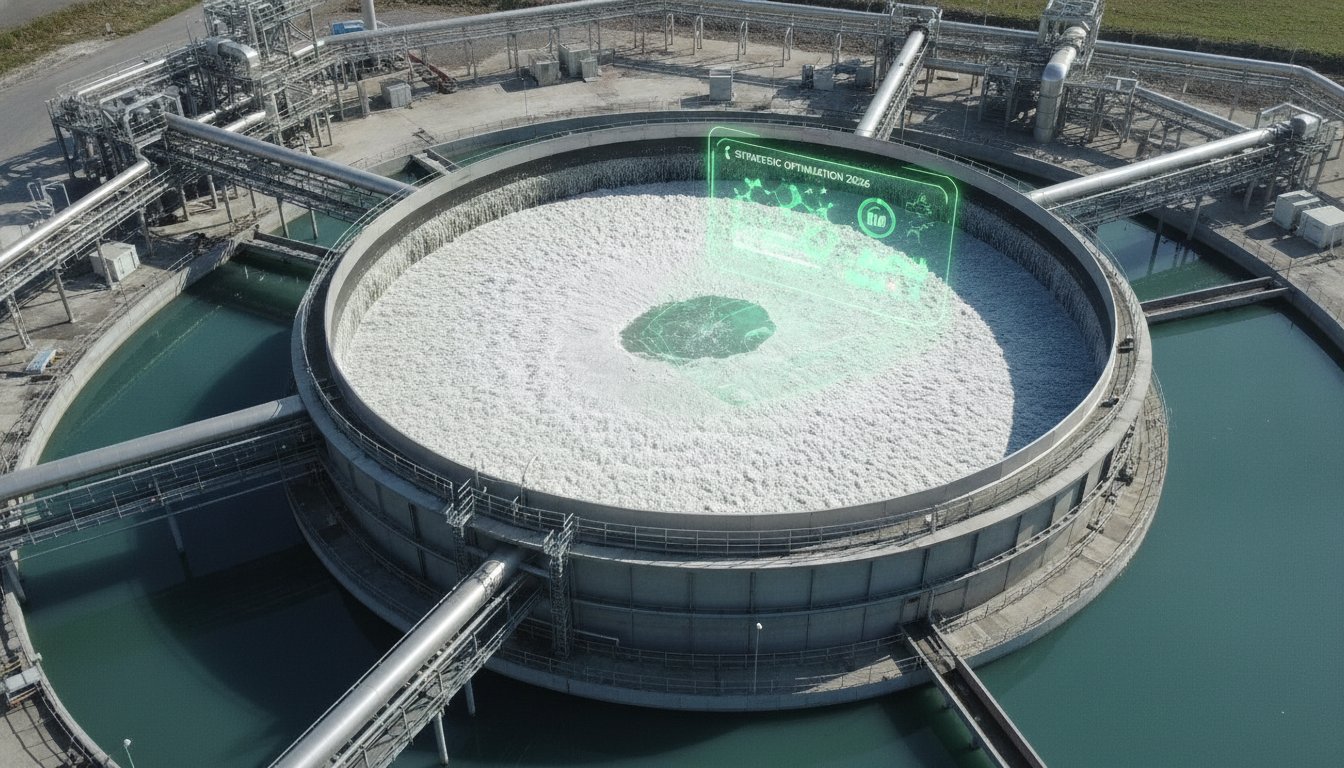
The performance of Mining Flotation Collectors is rarely a solo act. Frothers influence bubble size and stability, which directly impacts the carrying capacity of the mineral-laden air bubbles. Using depressants is equally vital; they selectively inhibit gangue flotation, ensuring that only the target minerals reach the concentrate. pH modifiers act as activators for specific collector types by conditioning the mineral surface for optimal bonding. This chemical harmony transforms a standard circuit into a high-efficiency recovery system.
Sustainability and Environmental Stewardship
Modern mining mandates a shift toward global responsibility. Transitioning to biodegradable and low-toxicity collector formulations isn't just about compliance; it's about long-term resource security. Reducing the carbon footprint involves optimizing reagent usage to lower the energy required for downstream refining. Adhering to ESG standards ensures that industrial success doesn't come at the cost of community well-being. For operators looking to optimize their chemical footprint and improve recovery, request a technical audit to align your plant performance with modern sustainability goals.
JAS Global Industries: Tailor-Made Formulations for Global Mining
Operational excellence requires more than off-the-shelf reagents. Since 1998, JAS Global Industries has served as a vital global guardian for resource recovery. Our Mining Flotation Collectors are not commodities. They are precision-engineered solutions born in our global Research and Innovation (R&I) centers. We recognize that every ore body possesses a unique chemical fingerprint. This understanding drives our commitment to custom formulations that address specific mineralogical challenges. Our global manufacturing plants operate with the categorical precision required to support massive industrial infrastructure. By balancing technical expertise with ethical purpose, we ensure that your operation remains both competitive and stable. We engineer stability. We protect resources.
Technical Consulting and Process Optimization
Our approach begins with on-site technical audits. These professional evaluations go beyond surface-level observations to identify hidden inefficiencies in your flotation circuit. We analyze pulp density, residence time, and reagent interactions to refine your process. Collaborative development is the core of our strategy. We work alongside your engineering teams to develop custom chemical dosing strategies that maximize grade and recovery. Continuous support defines our long-term partnerships. From initial laboratory testing to full-scale plant implementation, we provide the troubleshooting expertise needed to maintain operational stability. We don't just provide chemicals; we provide the technical foundation for your success.
A Commitment to Global Resource Security
Resource protection is our mission. JAS specialty chemicals contribute directly to the stability of critical mineral supplies worldwide. We support diverse mining operations across MEA, Asia, and Europe, providing local expertise backed by global manufacturing power. Our logistics network ensures operational reliability through secure supply chains, preventing costly downtime. We envision a mining industry where efficiency and sustainability coexist. This vision is grounded in concrete technical solutions that reduce chemical waste and energy consumption. Protecting resources. Securing futures. Our global reach allows us to deliver specialized solutions to the world's most remote mining regions, ensuring that essential minerals are recovered responsibly.
Our technical team is ready to provide a comprehensive process evaluation for your facility. Contact us to learn how our tailor-made Mining Flotation Collectors can optimize your recovery rates and reinforce your ESG standards. Let's build a partnership rooted in reliability and shared responsibility.
Securing the Future of Global Mineral Recovery
Achieving superior grade and recovery is no longer about simple logistics. It's about mastering the surface chemistry that defines the economic viability of your ore body. We've explored how precise pH control and molecular design transform complex mineralogies into stable assets. By aligning your circuit with advanced Mining Flotation Collectors, you don't just improve yield; you protect the fundamental stability of global resource supply. Reliability in the froth zone translates to reliability in your financial forecast.
Since 1998, JAS Global Industries has acted as a vital global guardian for the mining sector. Our specialty chemical expertise and global R&I centers enable the creation of custom formulations that generic suppliers can't match. We invite you to optimize your mineral recovery with JAS custom flotation solutions through our comprehensive technical audits. Our teams are ready to bridge the gap between laboratory potential and industrial-scale performance. Let's work together to build a more efficient, reliable, and sustainable industrial future. Your recovery is our mission.
Frequently Asked Questions
What is the difference between a collector and a frother in mining?
Collectors selectively attach to the mineral surface to create water-repellency, while frothers work within the liquid phase to stabilize air bubbles and control their size. This distinction is vital because collectors manage the attachment of particles, whereas frothers manage the transport of those particles to the froth zone. Without the right balance, the flotation circuit can't maintain the stable froth necessary for high-grade recovery. It's essential. It's reliable.
How do I determine the correct dosage of a flotation collector?
Determining the correct dosage requires rigorous laboratory bench testing followed by pilot plant trials to account for real-world scaling. Factors such as pulp density, mineralogy, and feed grade all influence the specific reagent requirements. Continuous monitoring of tails and concentrate grades allows operators to fine-tune dosing in real-time. This precision prevents the unnecessary operational costs associated with reagent over-consumption while also preventing the loss of valuable minerals to the tailings.
Can I use the same collector for different types of ore bodies?
Most ore bodies require unique reagent strategies because gangue composition and mineral liberation sizes vary significantly between different deposits. Using a generic collector across different sites often leads to poor selectivity or high reagent waste. Tailoring Mining Flotation Collectors to the specific geochemical profile of a mine ensures that the reagent interacts exclusively with target minerals. This customized approach protects the economic viability of the entire operation. It's about engineering stability.
How does pH affect the performance of anionic collectors?
pH levels directly modify the electrical charge on a mineral surface, which determines how effectively an anionic collector can adsorb. If the pH is too high or too low relative to the mineral's point of zero charge, the collector may be repelled or might adsorb onto unwanted gangue. Precise pH modulation acts as a fundamental activation lever. It ensures the chemical stability of the flotation process while maximizing the selectivity of the target mineral surfaces.
What are the environmental impacts of traditional mining collectors?
Traditional collectors often contain substances with high aquatic toxicity or poor biodegradability, leading to stricter global regulations like the 2026 EU CLP updates. These legacy chemicals can complicate wastewater treatment and increase environmental liabilities. Modern mining solutions prioritize biodegradable and low-toxicity formulations. This transition helps operators meet ESG standards while maintaining the process stability required for critical resource security. It's about global responsibility. It's about ethical purpose.
Why is selectivity more important than total recovery in some mining operations?
Selectivity is often prioritized because high impurity levels in the final concentrate can trigger heavy economic penalties at the smelter or refinery. While total recovery captures the maximum mass, poor selectivity increases the cost of downstream processing and reduces the overall value of the product. Achieving a high-grade concentrate through precise Mining Flotation Collectors ensures that the recovery remains economically sustainable while meeting the stringent quality specifications required by modern industrial infrastructure.
How often should I conduct a technical audit of my flotation reagents?
A comprehensive technical audit should be conducted at least once a year or whenever there is a significant shift in the ore body's mineralogy. Ore deposits aren't static; as mining progresses into deeper or different zones, the chemical requirements of the flotation circuit change. Regular audits identify hidden inefficiencies and allow for the optimization of reagent dosing. This proactive approach ensures that the plant operates at peak performance while maintaining the stability of global resource supply.
What are the benefits of using tailor-made formulations over off-the-shelf chemicals?
Tailor-made formulations provide a precise chemical match for your specific mineralogy, whereas off-the-shelf chemicals offer only a broad, generalized approach. Custom reagents improve selectivity and reduce the total volume of chemicals required, lowering the cost per ton of recovered mineral. This specialized approach bridges the gap between standard laboratory results and the complex realities of industrial-scale mining. It's a foundational presence for your plant. It's reliable. It's focused.