
What if the greatest threat to your plant's productivity isn't a mechanical failure, but a microscopic layer of mineral scale forming silently within your membranes? For industrial operators, this invisible buildup represents a constant battle against downtime and escalating costs. Integrating a high-performance reverse osmosis antiscalant is no longer just a chemical choice. It's a strategic necessity for protecting critical infrastructure and ensuring resource stability.
You're likely familiar with the frustration of frequent membrane cleaning cycles and the high price of early replacements. It's a common challenge when feedwater quality fluctuates and threatens your recovery rates. This guide will show you how advanced antiscalant chemistry maximizes membrane lifespan and ensures industrial reliability. We'll explore the technical precision of scale inhibition, the reduction of energy consumption per cubic meter, and how custom formulations provide the security your facility requires.
Key Takeaways
- Identify how mineral scaling compromises industrial membranes and recognize the specific chemical culprits that threaten your plant's operational stability.
- Understand the dual mechanisms of a high-performance reverse osmosis antiscalant, focusing on how threshold inhibition and crystal modification prevent mineral adherence.
- Learn why analyzing unique feedwater profiles is the only way to move beyond ineffective, one-size-fits-all chemical treatments.
- Discover the direct link between advanced scale control and improved ROI, including lower energy consumption and significantly extended membrane lifespans.
- Explore how tailor-made formulations and global technical expertise provide the security needed to protect large-scale water infrastructure.
Scaling: The Silent Threat to Industrial Reverse Osmosis Efficiency
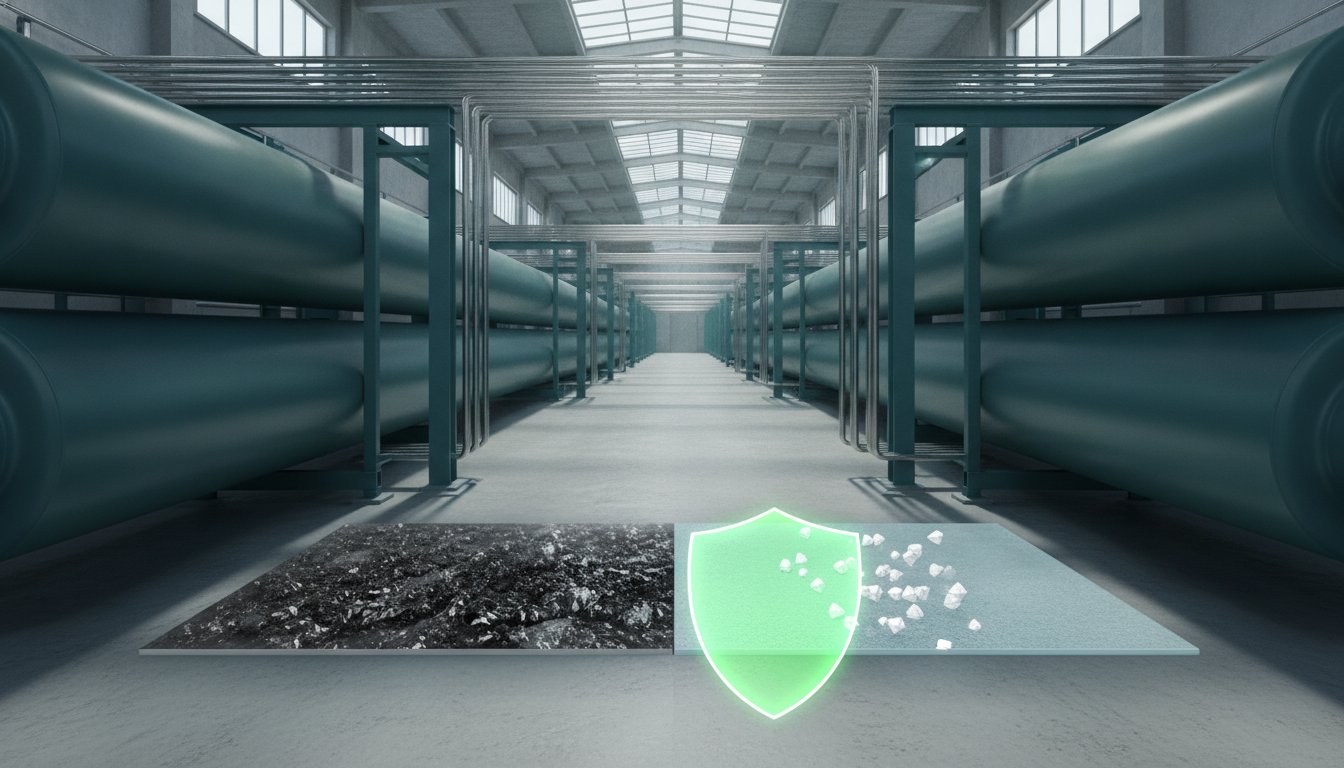
Scaling is more than a technical nuisance. It's the precipitation of supersaturated salts onto membrane surfaces, creating a physical barrier to clean water production. When mineral concentrations exceed their natural solubility limits, they crystallize directly on the polymer matrix. This process isn't just a maintenance hurdle; it's a fundamental threat to the stability of critical water infrastructure. Protecting these assets is a matter of global resource security.
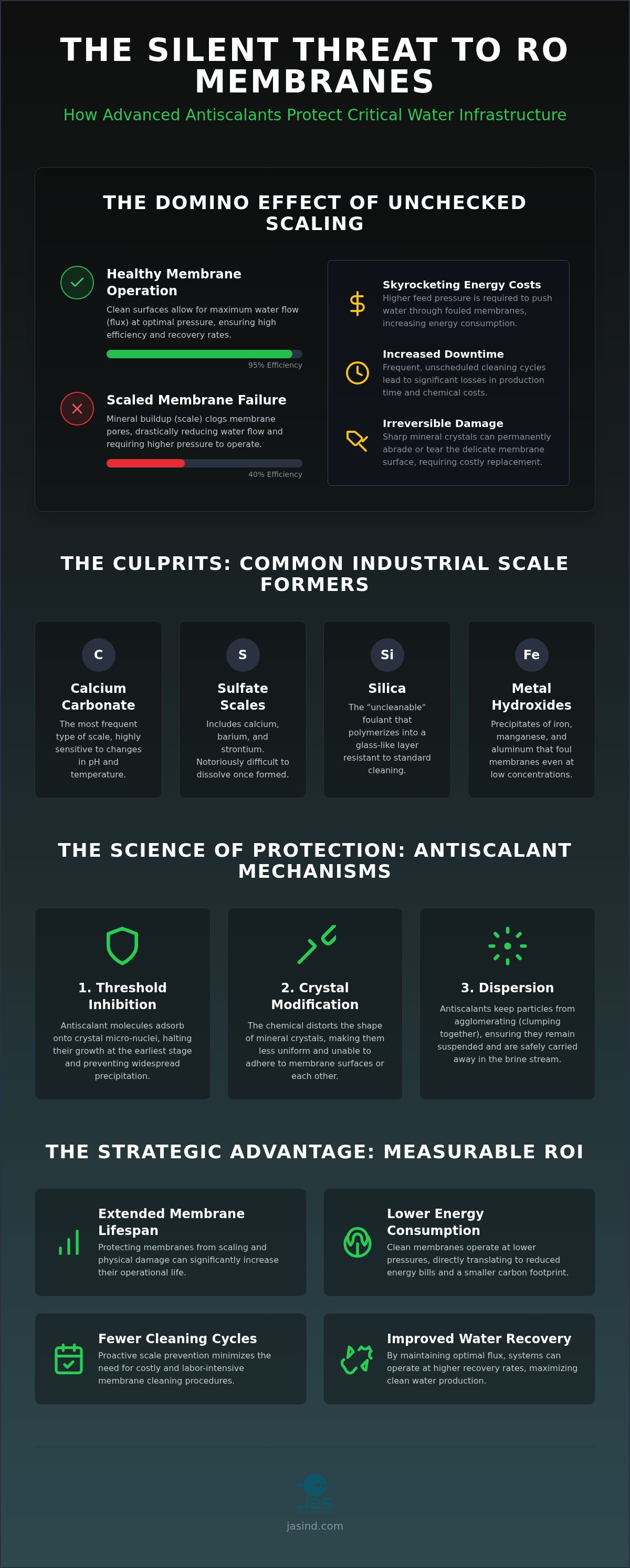
The "Domino Effect" of scaling begins almost immediately. Even a microscopic layer of calcium carbonate or metal hydroxides triggers concentration polarization. This phenomenon increases the osmotic pressure at the membrane surface, leading to a sharp flux decline. Without a strategic reverse osmosis antiscalant protocol, these minor precipitates quickly evolve into a systemic failure. The result is a compromised system that fails to meet industrial demands.
The Economic Cost of Membrane Fouling
The true cost of scaling is often hidden within the operational budget. Unscheduled cleaning cycles represent a significant drain on resources, encompassing both chemical costs and lost production time. Beyond the immediate downtime, scale formation accelerates irreversible membrane degradation. As mineral crystals grow, they can physically abrade the delicate membrane surface or become embedded in the feed spacers. This damage is permanent.
Energy consumption is another critical factor. As the scaling layer thickens, the system requires significantly higher feed pressure to force water through the fouled barrier. This energy penalty doesn't just raise costs; it undermines the sustainability goals of the entire facility. Maintaining high yields requires a proactive approach to membrane protection and operational reliability.
Types of Scale in Industrial Feedwater
Industrial feedwater profiles are rarely static. Understanding the specific chemical triggers for different scale types is vital for long term stability. Common culprits include:
- Calcium Carbonate: The most frequent scale, highly sensitive to pH shifts and temperature changes.
- Sulfate Scales: Includes calcium, barium, and strontium sulfates, which are notoriously difficult to dissolve once formed.
- Silica: Known as the "uncleanable" foulant, silica polymerizes into a glass-like layer that resists standard cleaning chemicals.
- Metal Hydroxides: Precipitates of iron, manganese, or aluminum that can foul membranes even at low concentrations.
Understanding how antiscalants inhibit mineral precipitation allows operators to select the right chemistry for their specific feedwater DNA. A targeted reverse osmosis antiscalant doesn't just treat the water; it secures the infrastructure against the diverse mineral threats found in complex industrial environments. This chemical precision ensures the longevity of the world's most vital water resources.
The Chemistry of Protection: How Antiscalants Inhibit Mineral Precipitation
Effective scale control requires more than just masking mineral presence. It demands a sophisticated chemical intervention that targets the very physics of crystal growth. A premium reverse osmosis antiscalant utilizes three primary mechanisms to protect industrial membranes: threshold inhibition, crystal modification, and dispersion. These processes work in tandem to ensure that critical water infrastructure remains operational even under high stress conditions.
Threshold Inhibition Mechanisms
Threshold inhibition is a remarkable chemical phenomenon where sub-stoichiometric dosages of an antiscalant prevent the precipitation of much larger quantities of salts. The molecules interact with micro-nuclei at the earliest stages of formation, adsorbing onto the crystal surface and halting further growth. Threshold inhibition serves as the primary defense against supersaturation by interfering with the early stages of crystal formation. By delaying the onset of precipitation, these formulations allow the brine stream to carry higher mineral loads safely out of the system.
This efficiency is vital for high-volume industrial systems where dosing large quantities of chemicals would be cost-prohibitive. Modern formulations rely on specialized polymers and phosphonates that maintain stability across varying pH and temperature ranges. Research from the Bureau of Reclamation highlights that mastering these chemical thresholds is a cornerstone for extending membrane life and reducing energy consumption across diverse feedwater profiles.
Crystal Distortion and Dispersion
When minerals manage to form crystals despite inhibition, the antiscalant shifts its focus to morphology. Crystal distortion involves the chemical interfering with the natural geometric growth of the mineral. Instead of forming hard, "sticky" structures that bond to the membrane, the crystals become irregular, blunt, and soft. This change in shape prevents them from interlocking or adhering to the polymer surface, keeping them mobile within the brine spacer.
Dispersion adds a final layer of security. By imparting a high negative charge to the particles, the antiscalant causes them to repel one another. This prevents the agglomeration of colloidal matter and keeps potential foulants suspended in the liquid phase. Maintaining this "flowability" ensures that the brine stream effectively flushes solids away, preserving flux and reducing the need for aggressive cleaning. For facilities facing unique mineral challenges, utilizing tailor-made reverse osmosis antiscalant formulations can provide the specific ionic balance required to optimize these protective mechanisms.
Strategic Selection: Matching Antiscalant Formulations to Feedwater Profiles
Feedwater isn't just water; it's a complex chemical matrix. Relying on commodity chemicals often leads to sub-optimal results because they don't account for specific ion concentrations or seasonal shifts. A reverse osmosis antiscalant must be selected based on rigorous data, not convenience. This involves a deep scientific analysis of membrane scaling to identify the exact precipitation risks unique to your source water. Without this precision, you're merely guessing at the security of your infrastructure.
JAS Global Industries treats every plant as a unique ecosystem. We move beyond "one-size-fits-all" by analyzing TDS, pH, and temperature to create tailor-made antiscalant formulations. Software-based dosing projections allow for precision modeling, ensuring you don't over-dose or under-protect your membranes. This level of technical consulting transforms chemical supply into a long-term partnership for resource stability. It's about optimizing the plant yield while minimizing the environmental footprint of the treatment process.
Seawater vs. Brackish Water Challenges
Seawater reverse osmosis (SWRO) environments face immense pressure from sulfate-based scales, particularly barium and strontium sulfates. These minerals precipitate quickly as recovery rates increase, demanding high-performance inhibition. Brackish groundwater (BWRO) presents a different set of obstacles, often dominated by high silica concentrations that are notoriously difficult to remove once they polymerize. Seasonal shifts in water temperature also alter solubility limits. A strategy that works in the winter may fail during peak summer heat, necessitating dynamic dosing adjustments to maintain membrane security.
Wastewater Reclamation and Reuse
Reclaiming wastewater adds layers of complexity that standard mineral inhibitors can't handle alone. High phosphate levels and organic matter create a high-fouling environment that requires a synergistic approach. In these systems, the reverse osmosis antiscalant must work in harmony with biocides to prevent biofouling while simultaneously inhibiting mineral precipitation. Compatibility with pre-treatment coagulants and flocculants is also non-negotiable. If the antiscalant reacts negatively with upstream chemicals, it can form a gummy precipitate that ruins membranes instantly. Selecting the right formulation is about understanding the entire process chain from extraction to permeate.
Operational ROI: Extending Membrane Life and Reducing Energy Consumption
ROI in water treatment is often measured by what doesn't happen. It's the absence of downtime and the avoidance of premature membrane failure. A precision reverse osmosis antiscalant strategy enables higher system recovery rates. By pushing the limits of mineral solubility, plants can extract more permeate from the same volume of raw water. This efficiency directly impacts the bottom line while supporting global resource conservation. Higher recovery means less raw water extraction and reduced brine discharge volumes, creating a more sustainable cycle.
Sustainability is now a core operational requirement for global infrastructure. The shift toward "Green" chemistry has introduced phosphorus-free antiscalant options that mitigate environmental impact without sacrificing performance. These formulations help facilities meet increasingly strict discharge regulations in sensitive ecosystems. Optimizing your chemical dosing reduces the total volume of additives required, shrinking the plant's overall chemical footprint. A clean membrane surface isn't just about water yield; it's a critical component in reducing the carbon footprint of industrial operations.
Reducing Cleaning Frequency (CIP)
Every Clean-In-Place (CIP) cycle subjects membranes to harsh chemical environments and mechanical stress. Over time, these aggressive cleanings degrade the thin-film composite layer, shortening the membrane's useful life. By using a targeted reverse osmosis antiscalant, operators can significantly extend the intervals between cleanings. This translates to quantifiable savings in labor, specialized cleaning chemicals, and the disposal of hazardous neutralized waste. Each avoided CIP cycle preserves the integrity of the polymer matrix, ensuring the system remains an indispensable pillar of your facility. Effective scale management is a foundational element of Industrial Water Treatment Pillar strategies that prioritize long-term asset protection and operational reliability.
Energy Efficiency and Pressure Management
Energy is the largest variable cost in RO operations. Even a slight layer of scale increases the feed pressure required to maintain design flux, a phenomenon known as "pressure creep." Maintaining a pristine membrane surface keeps the Specific Energy Consumption (SEC) at its lowest possible level. This proactive approach prevents high-pressure pumps from working harder than necessary, which reduces mechanical wear and extends the maintenance intervals for expensive rotating equipment. When membranes stay clean, energy is used for desalination, not for overcoming mineral resistance. This creates a stable, predictable operational environment that protects both the budget and the equipment. To maximize your system's efficiency, you can consult with JAS Global on optimized antiscalant dosing for your facility.
JAS Global Industries: Specialized Solutions for Global Water Infrastructure
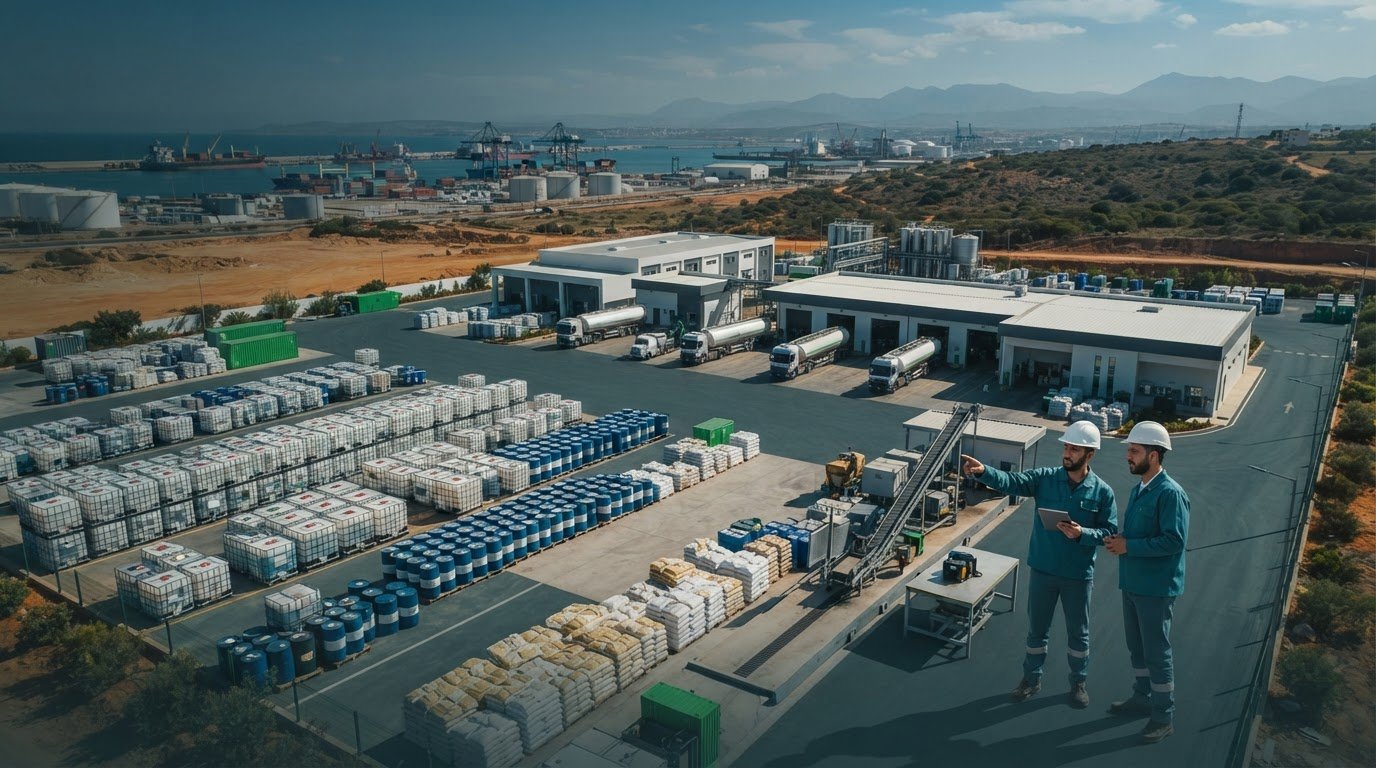
JAS Global Industries operates as more than a chemical supplier. We are a vital guardian of the resources that sustain modern society. Since 1998, we've provided the technical expertise needed to secure critical water infrastructure across the globe. Our approach to reverse osmosis antiscalant technology is rooted in the belief that every plant has a unique chemical DNA. We don't believe in generic solutions. Instead, we offer custom chemical engineering that addresses the specific mineral challenges of your facility.
From our headquarters in Dubai, we manage a sophisticated logistics network that serves the Middle East, Africa, Asia, and Europe. This global footprint ensures that our partners receive reliable supply and technical support, regardless of their location. We provide comprehensive technical auditing, including on-site laboratory testing and process optimization fees. These services ensure that your system operates at peak efficiency, converting scaling risks into operational stability. Our mission is to protect global water security through the precise application of industrial chemistry.
Advanced R&I Centers and Manufacturing
Our multiple Research and Innovation (R&I) centers are the engine of our specialized formulations. Here, we develop sustainable and cost-effective chemicals that meet the highest industrial standards. JAS Global benefits from multi-sector expertise, drawing insights from our work in the fertilizer and mining industries to solve complex water treatment puzzles. This cross-industry knowledge allows us to create superior scale inhibitors that others might overlook. For facilities with integrated mineral processing, our Mining Solutions provide the same level of advanced chemistry and resource protection.
Tailored Dosing Strategies
Technical consulting is at the heart of our partnership model. We work closely with plant operators to improve industrial plant yields through precision dosing. By analyzing the unique ionic profile of your feedwater, we ensure that your reverse osmosis antiscalant is utilized at the optimal concentration. This prevents chemical waste and maximizes membrane protection. We prioritize long-term stability over short-term transactions. Our recurring supply contracts and ongoing support provide the security you need to focus on your core operations. We act as an indispensable pillar of your infrastructure, ensuring that your water resources remain stable and your membranes remain protected for years to come.
Securing the Future of Industrial Water Infrastructure
Scaling is a silent threat that compromises the stability of global resources. By implementing a high-performance reverse osmosis antiscalant, you transform a significant operational risk into a foundation for reliability. We've explored how technical precision in chemical selection reduces energy consumption, extends membrane life, and minimizes the environmental footprint of your facility. It's clear that protecting these critical assets requires more than a standard supplier; it demands a partner dedicated to resource security.
JAS Global Industries has served as a vital industry pillar since 1998. Our specialized R&I centers focus on developing tailor-made formulations that address your plant's unique chemical DNA. We're committed to a mission-driven approach that ensures the long-term stability of global water infrastructure. It's time to move beyond commodity chemicals and embrace a strategy rooted in technical excellence and global responsibility. We invite you to contact our technical experts for a custom RO process audit. Let's work together to ensure your system remains a reliable contributor to global resource stability.
Frequently Asked Questions
What is the difference between an antiscalant and a dispersant?
An antiscalant prevents the initial formation of mineral crystals through threshold inhibition, while a dispersant keeps existing particles from agglomerating. Antiscalants interfere with the crystallization process of salts like calcium carbonate. Dispersants work on colloidal matter and silt, ensuring they stay suspended in the brine stream. High-performance reverse osmosis antiscalant formulations from JAS Global often combine these mechanisms to provide comprehensive protection against both scaling and fouling in complex, high-stress industrial feedwater environments.
How much antiscalant should be dosed in an RO system?
The optimal dosage depends entirely on your feedwater's specific chemical DNA, including TDS, pH, and temperature. Industrial systems typically require between 2 and 5 milligrams per liter, but precise calculations are essential to avoid waste. JAS Global utilizes advanced software projections and on-site technical audits to determine the exact requirements for your facility. This data-driven approach ensures that you don't over-dose or under-protect your membranes, maintaining the stability of your critical water infrastructure.
Can I use an antiscalant instead of a water softener?
In large-scale industrial operations, an antiscalant is often a more efficient and cost-effective alternative to a water softener. Softeners rely on ion exchange to remove hardness, which requires significant salt consumption and creates a large wastewater footprint. A reverse osmosis antiscalant inhibits the precipitation of hardness minerals without removing them, allowing for higher recovery rates and lower energy consumption. This makes it the preferred choice for protecting critical water infrastructure and maintaining the operational reliability of the plant.
Are reverse osmosis antiscalants safe for potable water production?
Many industrial chemicals are specifically formulated and certified for potable water production. It's vital to verify that the product carries NSF/ANSI Standard 60 certification, which ensures the chemical is safe for drinking water applications. JAS Global provides a range of certified formulations that meet these rigorous safety standards. Always consult with a technical expert to ensure the chosen formulation aligns with the specific regulatory requirements of your local region and the safety of the community.
What happens if I over-dose or under-dose the antiscalant?
Under-dosing is a critical risk that leads to rapid mineral scaling, flux decline, and permanent membrane damage. Over-dosing is also problematic, as it can lead to chemical fouling of the membrane surface or create unnecessary operational costs. It's essential to maintain the correct balance for operational reliability. Our technical consulting services include recurring process audits to ensure your dosing remains optimized as feedwater conditions shift throughout the year, protecting your investment from microscopic mineral threats and ensuring stability.
Is there a phosphorus-free reverse osmosis antiscalant for environmental compliance?
Yes, phosphorus-free formulations are available for facilities that must comply with strict environmental discharge regulations. Traditional phosphonate-based chemicals can contribute to nutrient loading in sensitive ecosystems, leading to algae blooms. JAS Global develops specialized green chemistry options that provide high-level scale inhibition without the use of phosphorus. These solutions allow industrial plants to maintain high yields while upholding their commitment to global resource security and environmental responsibility, ensuring compliance with evolving local and international standards.
How do I know if my antiscalant is working effectively?
Effectiveness is measured by monitoring normalized permeate flux and salt rejection rates over time. If these parameters remain stable despite high mineral concentrations in the feedwater, your antiscalant protocol is working. A sudden increase in feed pressure or a drop in water quality indicates that scaling may be occurring. Regular technical audits and on-site laboratory testing help verify that your protective strategy is keeping the membrane surface clean, preserving flux, and ensuring the long-term stability of the system.
Can antiscalants prevent silica scaling?
Specialized antiscalants are highly effective at preventing silica scaling, which is one of the most difficult foulants to remove. Silica precipitation is governed by temperature and pH, making it a complex challenge in brackish groundwater. JAS Global provides tailor-made formulations specifically engineered to inhibit silica polymerization. These custom chemicals allow plants to operate at higher recovery rates even when facing feedwater with silica levels that would normally cause irreversible membrane damage, ensuring the security of the infrastructure.