


A single day of unscheduled downtime doesn't just stall production. It compromises the security of the global resources your facility is built to protect. You understand that equipment scaling, fertilizer caking, and poor mineral recovery are more than just technical hurdles. They're direct threats to your operational reliability and your bottom line. Achieving true chemical process optimization requires moving beyond off-the-shelf fixes. It demands a strategy where advanced molecular science meets rigorous on-site technical auditing.
Since 1998, we've seen how industrial stability serves as the foundation for global progress. We refine specialty solutions that safeguard critical infrastructure and protect essential resources. In this guide, you'll discover how custom formulations and proactive troubleshooting drive sustainable, cost-effective production. We'll preview the essential methods for eliminating product loss in fertilizers and maximizing yields in mining circuits. You'll learn how a dedicated technical partnership doesn't just solve immediate problems. It secures your facility's role as a vital pillar of modern industry. By prioritizing resource security and operational health, you can transform your plant into a model of efficiency and reliability.
Key Takeaways
- Transition from bulk commodities to precision specialty chemicals that safeguard global resource security and long-term operational stability.
- Protect critical infrastructure using targeted mining flotation collectors and water treatment inhibitors designed to prevent costly scaling and corrosion.
- Implement a strategic framework for chemical process optimization by identifying production bottlenecks through rigorous on-site technical audits and laboratory testing.
- Reduce operational waste and hidden costs by replacing generic reagents with custom formulations tailored to your site's unique chemical environment.
- Gain actionable insights into building a technical partnership that ensures sustainable production yields and reliable resource protection across global industrial circuits.
Defining Chemical Process Optimization in 2026
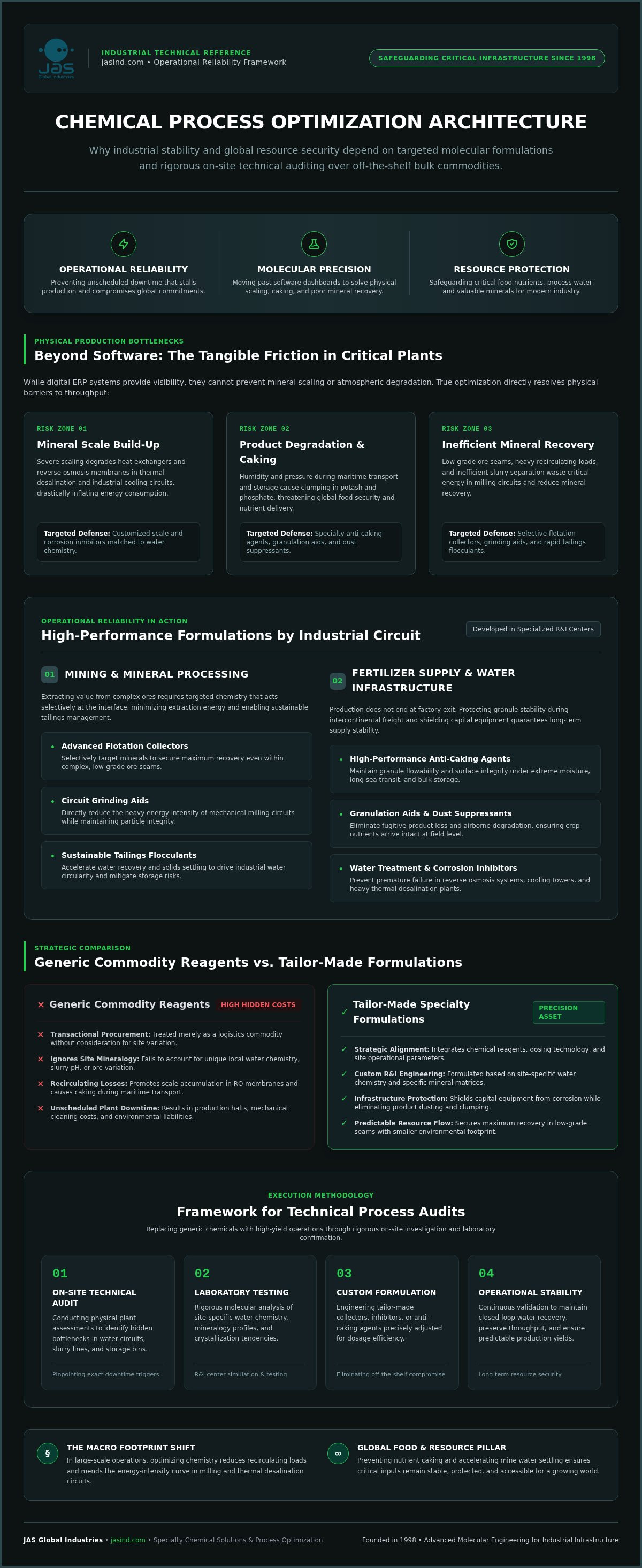
Industrial leaders in 2026 view efficiency as more than a financial metric. It's a moral and operational imperative. Chemical process optimization is the strategic alignment of chemical reagents, dosing technology, and operational parameters. While many associate process optimization with digital dashboards, the true gains happen at the molecular level. We've moved past the era of generic commodities. Today, success depends on precision specialty chemicals that protect infrastructure and maximize yield. This evolution positions chemical management as a vital guardian of global resources.
The Macro Impact of Process Efficiency
Large-scale mining and thermal desalination operations consume immense energy. Optimization directly reduces this footprint by improving throughput and reducing recirculating loads. In fertilizer supply chains, product loss through caking or dusting isn't just an expense; it's a threat to global food security. Specialized anti-caking agents and dust suppressants ensure that nutrients reach their destination intact. By 2026, meeting global sustainability standards requires chemicals that perform better with less environmental impact. This shift ensures that critical resources remain available, stable, and secure for a growing global population.
Beyond Software: The Physical Reality of Optimization
Digital ERP systems offer visibility, but they can't stop physical equipment from scaling. They won't prevent fertilizer from clumping in a humid warehouse. Physical chemical stability is the prerequisite for digital success. Optimization addresses tangible bottlenecks that halt production and erode profits. These include:
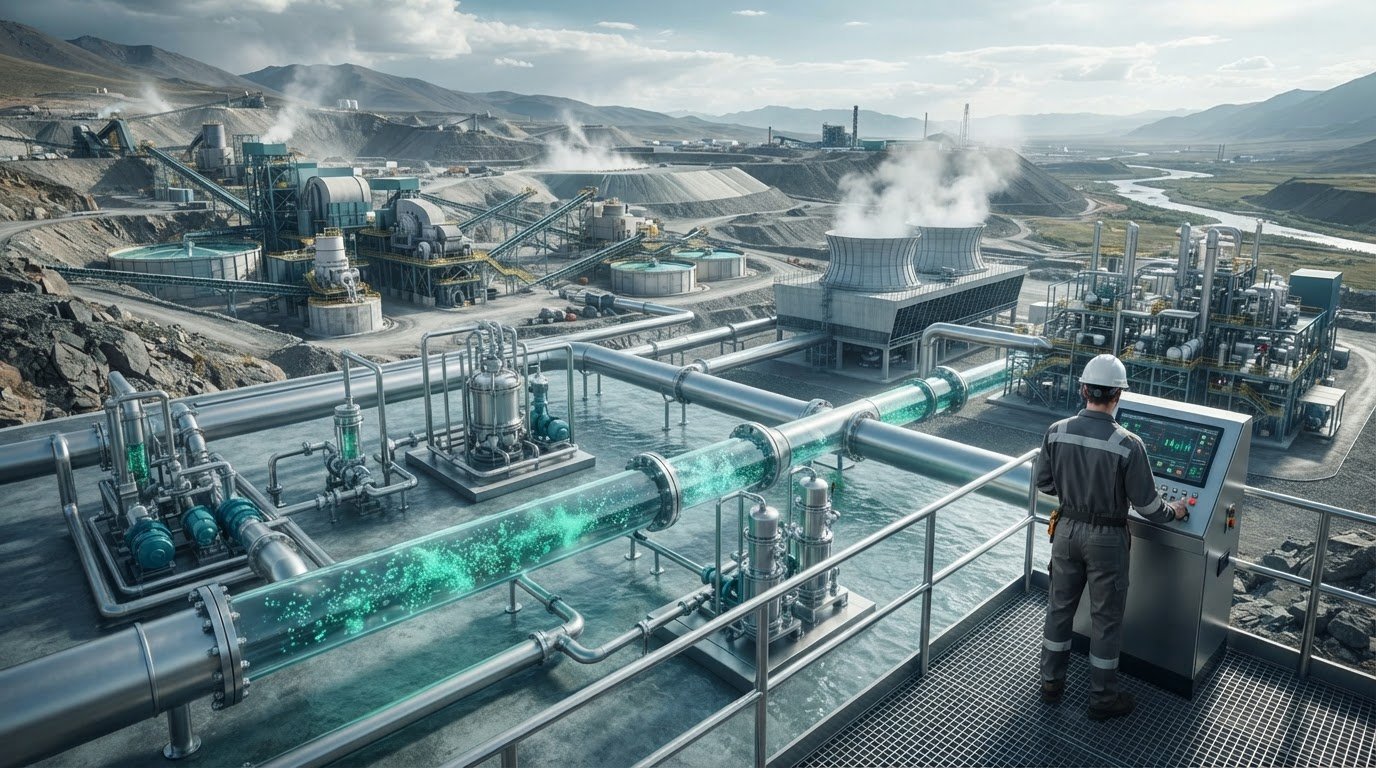
- Mineral scale build-up in reverse osmosis membranes and heat exchangers.
- Product degradation through caking in potash and phosphate storage.
- Inefficient mineral recovery in complex flotation circuits.
Tailor-made solutions, developed in specialized R&I centers, consistently outperform off-the-shelf reagents. They account for site-specific water chemistry and mineralogy. This approach transforms chemical management from a transactional logistics cost into a foundational pillar of operational reliability. It's about protecting the equipment that protects our future. This includes the implementation of robust infrastructure, such as the bulk storage solutions provided by Liquimech, to safeguard water resources before and after treatment. True chemical process optimization ensures that every drop of water and every gram of mineral is used to its full potential.
The Role of Specialty Chemicals in Operational Reliability
Operational reliability is the heartbeat of industrial stability. It's the difference between a facility that meets its global commitments and one that fails due to technical friction. Specialty chemicals serve as the invisible infrastructure within the plant. They ensure that physical processes remain fluid and predictable. By integrating high-performance formulations into your chemical process optimization strategy, you transform volatile production cycles into reliable resource streams. These solutions act as a proactive safeguard, preventing the mechanical failures and product losses that lead to unscheduled downtime.
Mining and Mineral Processing Optimization
Extracting value from complex ores like potash and phosphate requires more than mechanical force. Advanced mining flotation collectors selectively target minerals, ensuring maximum recovery even in low-grade seams. This precision is vital for the security of global nutrient supplies. Grinding aids further enhance this by reducing the energy intensity of milling circuits, directly lowering the operational cost of extraction.
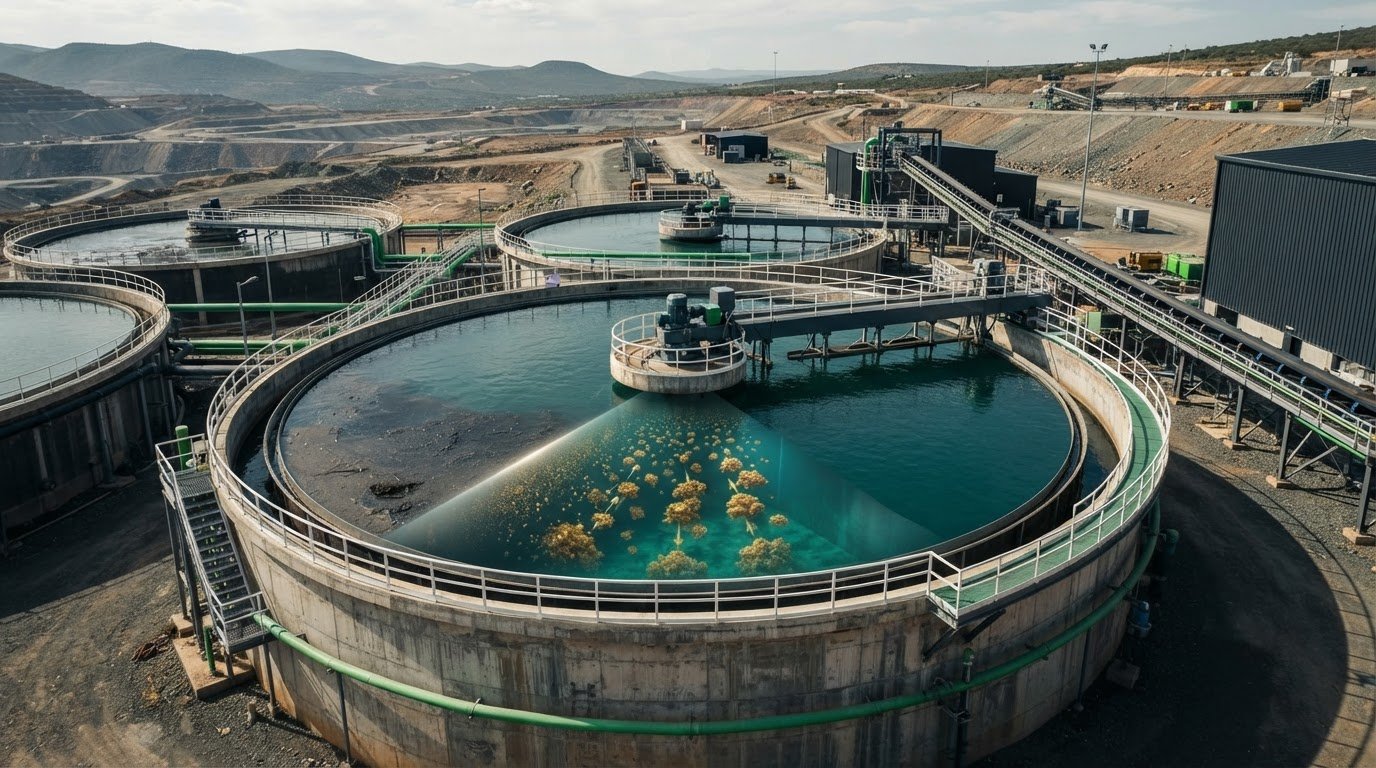
Sustainable tailings management is equally critical for modern reliability. Advanced mining flocculants accelerate water recovery and solids settling, allowing mines to operate with greater circularity and less environmental risk. These chemicals don't just improve yield; they protect the long-term viability of the mining site and the community it serves. For those looking to stabilize their extraction rates, exploring specialty chemical solutions is a necessary step in achieving total process stability.
Fertilizer Integrity and Handling
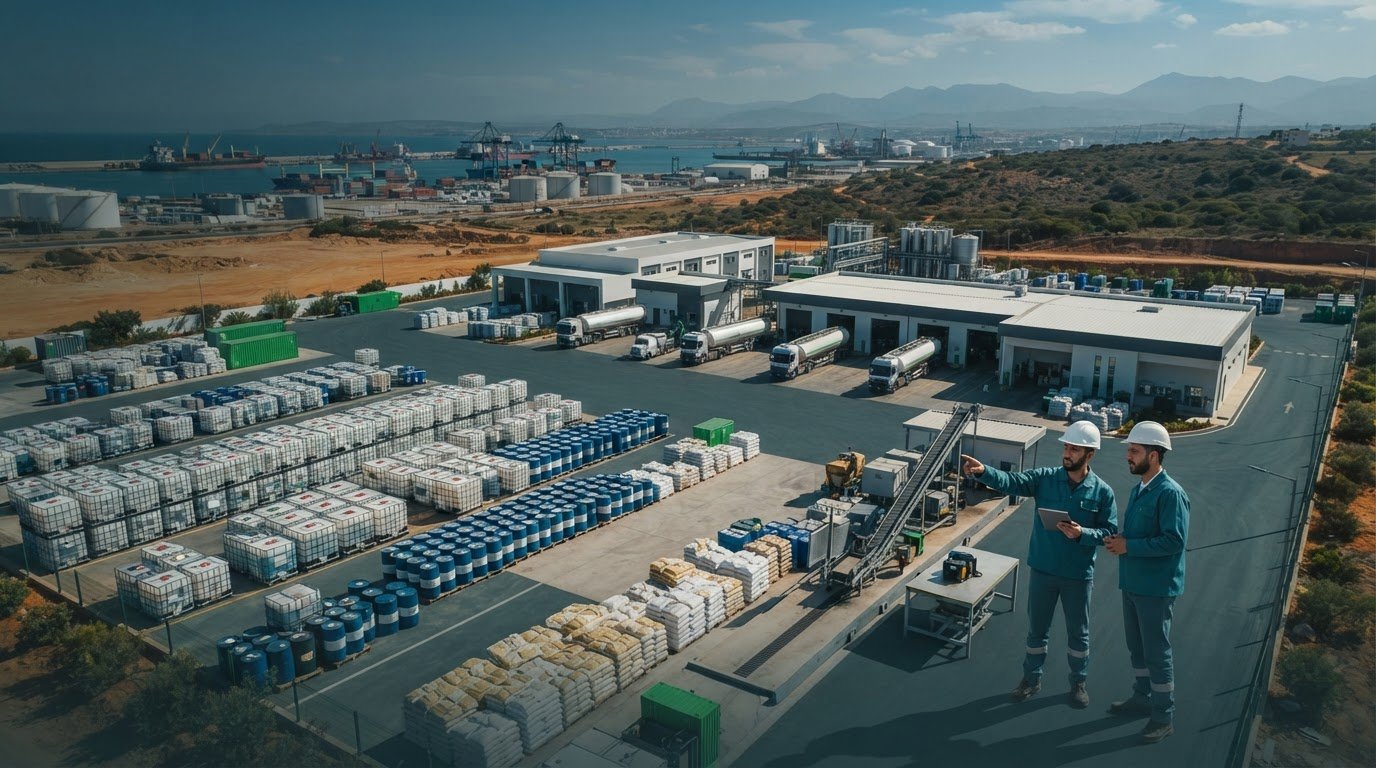
Fertilizer production doesn't end at the factory gate. The journey through long-distance maritime transport and regional storage exposes granules to extreme humidity and physical pressure. High-performance fertilizer anti-caking agents and granulation aids maintain product integrity. They prevent the caking and degradation that renders nutrients unusable by the time they reach the field.
Dust suppressants work in tandem with these agents to ensure worker safety and environmental compliance during bulk handling. Dusting isn't just a safety hazard; it's a loss of valuable product. Consistent fertilizer coloring agents also play a role in maintaining brand value, signaling quality and reliability to the end-user. By managing these physical properties, you secure the entire value chain from the plant to the farm. This holistic approach to chemical process optimization bridges the gap between raw material extraction and final product delivery, ensuring that critical global resources are never wasted.
Comparing Generic Reagents vs. Tailor-Made Formulations
Procurement strategies often prioritize the lowest price per kilogram. This focus on bulk commodity costs creates a false sense of economy. True chemical process optimization requires a shift from viewing chemicals as simple consumables to seeing them as strategic assets. Generic reagents fail to account for the unique variables of your facility, such as fluctuating water chemistry or specific mineralogy. When reagents aren't precisely matched to the environment, they introduce hidden risks that erode the stability of your entire operation.
The Limitations of Standard Industrial Chemicals
Standard chemicals often lead to the trap of over-dosing. Because a generic reagent is not optimized for a specific site, operators frequently increase volume to achieve the desired effect. This doesn't just raise costs. It introduces chemical instability that can foul downstream processes. Incompatible generic inhibitors also pose a significant risk of equipment damage. A scale inhibitor that works in one circuit may be corrosive to the metallurgy of another. Additionally, generic commodities often suffer from batch-to-batch variability. This inconsistency forces constant manual adjustments, undermining the reliability of automated dosing systems and increasing the likelihood of unscheduled maintenance.
The Advantage of Formulated Specialty Solutions
Specialty formulations are engineered in dedicated R&I centers to solve specific physical challenges. For example, achieving precise H2S removal requires a treatment strategy that accounts for gas concentration and flow rates. Standard scavengers often leave dangerous residuals or create solids that clog pipelines. Custom formulations eliminate these risks. These solutions are also essential for operations in extreme climates, such as the Middle East and Africa, where high ambient temperatures alter chemical kinetics.
Custom dosing strategies ensure that every drop of chemical performs a specific function. This precision is what makes our mining solutions so effective for global mineral recovery. By aligning chemical properties with the physical reality of the ore, we protect the yield and the infrastructure simultaneously. Long-term value isn't found in a cheap drum of chemicals. It's found in the technical partnership, recurring audits, and expert troubleshooting that keep your process secure. Choosing tailor-made solutions means choosing the security of your global resources over the illusion of a bargain.
A Framework for Implementing Technical Process Audits
Systemic change in an industrial plant doesn't happen by accident. It requires a rigorous, data-driven roadmap. Chemical process optimization in 2026 is an iterative cycle designed to align chemical performance with physical operational realities. Moving from a reactive "fix-it" mindset to a proactive security model ensures that your facility remains an indispensable pillar of global infrastructure. This framework provides the structure needed to transition from generic chemical usage to a precision-managed environment.
- Step 1: Baseline Data Collection. We begin with comprehensive on-site laboratory testing to establish current performance metrics and identify variances.
- Step 2: Bottleneck Identification. Our engineers pinpoint where chemical friction, such as scaling or caking, restricts throughput or compromises product quality.
- Step 3: Custom Formulation Development. Leveraging our R&I centers, we engineer site-specific reagents and dosing protocols tailored to your unique mineralogy or water chemistry.
- Step 4: Real-World Pilot Testing. New strategies are validated through controlled performance monitoring on live circuits to ensure reliability.
- Step 5: Continuous Optimization. We implement recurring technical reviews to adjust for seasonal changes or raw material fluctuations.
On-Site Laboratory Testing and Diagnostics
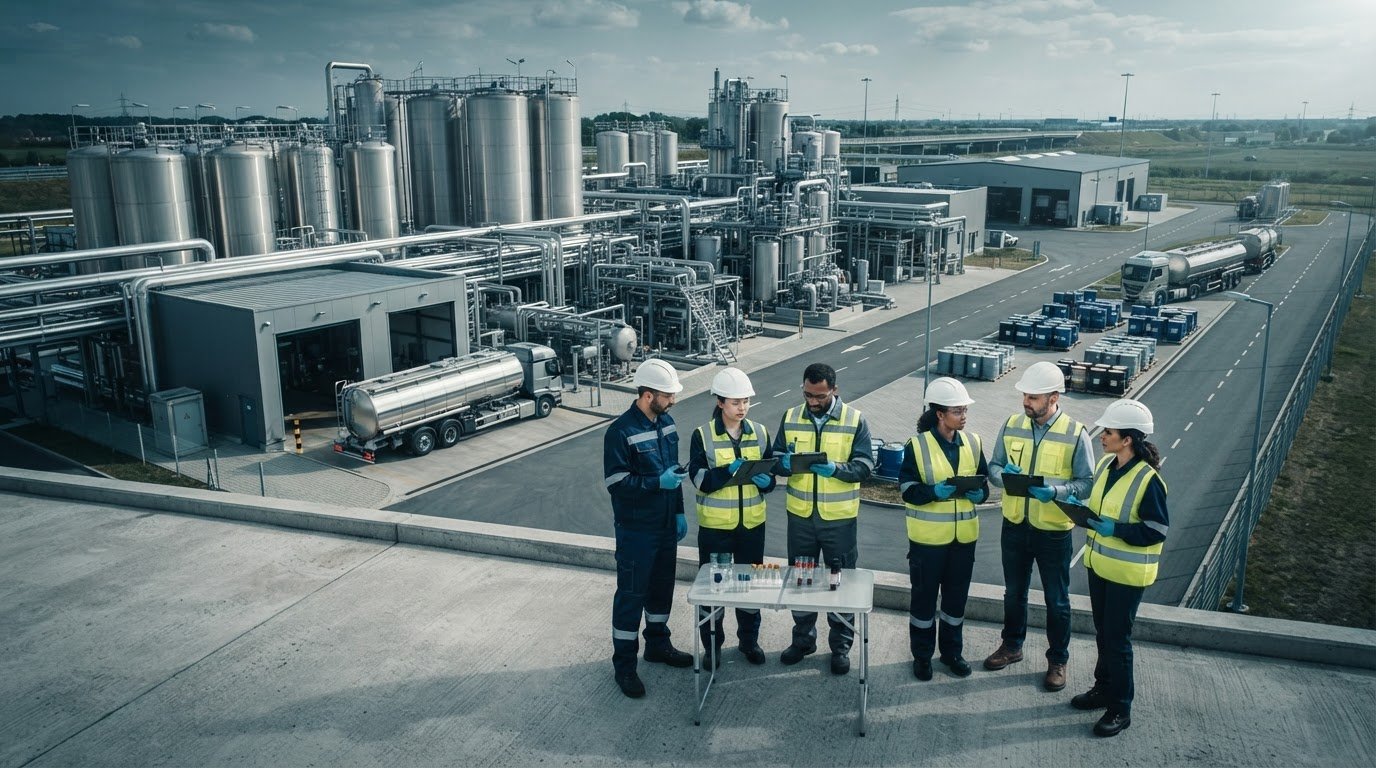
Diagnostics are the foundation of resource security. We analyze water quality to meet specific industrial water treatment needs, ensuring that membranes and cooling systems remain free from mineral fouling. For fertilizer producers, we test samples for moisture absorption and caking tendencies under simulated storage conditions. In mining, evaluating ore mineralogy allows us to select the exact flotation collectors needed to maximize yield. These tests transform raw data into actionable intelligence.
Operational Troubleshooting and Dosing Strategies
Precision dosing is the primary defense against chemical waste. Many plants suffer from over-dosing due to inadequate monitoring, which leads to unnecessary costs and downstream instability. We correct these rates using automated injection systems and real-time feedback loops. When foaming issues threaten to disrupt production, we deploy specialized defoamers that maintain process clarity without interfering with mineral recovery. Safety is also paramount. We implement rigorous h2s treatment safety protocols to protect personnel and infrastructure from corrosive gases. To secure your facility's operational future, request a technical audit from our global engineering team today.
JAS Global Industries: Your Partner in Global Resource Security
Operational excellence is built on a foundation of trust and technical depth. Since 1998, JAS Global Industries has served as a vital guardian of industrial stability. We provide the expertise required to navigate the complexities of modern extraction and production. Headquartered in Dubai, our reach extends across global manufacturing plants and specialized R&I centers. We don't just deliver chemicals. We deliver the certainty that your facility will meet its production targets while maintaining the highest standards of safety and sustainability. Our commitment to chemical process optimization ensures that your operations remain resilient in an increasingly volatile global market.
Our R&I centers are the engine of our innovation. This is where our engineers develop the next generation of surfactant and mineral chemistry solutions. By focusing on the specific molecular interactions within your process, we create formulations that drive cost-effective yields. We understand that every industrial site has a unique chemical signature. Our role is to decode that signature and provide the precise reagents needed to protect your infrastructure and maximize your resource recovery.
A Mission-Oriented Approach to Industry
We view industrial success as a fundamental contribution to global stability. When a mining circuit operates efficiently or a fertilizer plant prevents product loss, the entire global supply chain becomes more secure. This perspective elevates our work from simple supply to a strategic partnership. We prioritize long-term technical collaborations over transactional contracts. This approach allows us to deeply integrate with your team, providing the steady, authoritative guidance needed to troubleshoot emerging challenges. Safety and reliability aren't just metrics for us. They're the pillars of our corporate identity and our promise to the industries we serve.
Strategic Global Logistics and Support
Reliability depends on more than just chemistry. It requires a logistics network capable of reaching the world's most remote mining and industrial sites. Our global network of sales and service offices ensures that expert support is always within reach. We manage the complexities of chemical transport so you can focus on core operations. Whether you're managing a desalination plant in the Middle East or a potash mine in North America, our steady supply chain remains an indispensable part of your infrastructure. To begin securing your facility's operational future, Contact JAS Global Industries for a Technical Process Audit and discover the impact of precision chemical process optimization.
Securing the Future of Industrial Stability
Operational reliability is the cornerstone of global resource security. Transitioning from generic reagents to site-specific formulations isn't just a technical upgrade. It's a commitment to protecting the critical infrastructure that supports our world. By adopting a data-driven framework for chemical process optimization, your facility can eliminate the physical bottlenecks that erode productivity. This strategic shift ensures that every gram of mineral and every drop of water is utilized to its maximum potential.
Since 1998, JAS Global Industries has acted as an essential pillar for the world’s most critical sectors. From our Dubai-based headquarters to our dedicated specialty R&I centers, we provide the technical depth required to safeguard your operations and improve your yields. We don't just supply chemicals; we build long-term partnerships rooted in safety and stable production. It's time to elevate your plant from a standard operation to a model of global efficiency. Optimize Your Industrial Yield with JAS Global Industries and secure your operational future today. We're ready to lead the way together.
Frequently Asked Questions
What is the difference between chemical process optimization and digital ERP optimization?
Chemical process optimization focuses on the physical and molecular interactions within a production circuit, such as mineral recovery or scale prevention. Digital ERP optimization manages data, inventory, and logistics through software. While ERP provides visibility into resource planning, chemical optimization addresses the tangible bottlenecks like equipment fouling or product degradation. Successful industrial operations require both digital oversight and the physical stability provided by precision specialty chemical formulations. To support the computational demands of modern industrial AI and data analytics, you can discover E-Circles LLC for high-performance GPU server solutions.
Specialty anti-caking agents create a protective microscopic barrier on fertilizer granules to prevent moisture absorption. This barrier reduces the formation of crystal bridges between particles, which is the primary cause of clumping. By maintaining the physical integrity of the product, these agents extend storage life and ensure that fertilizers remain flowable during maritime transport. This protection is essential for preserving the commercial value of the nutrients for end-users.
Can custom chemical formulations really reduce industrial operational costs?
Custom formulations lower costs by eliminating the inefficiencies of generic, one-size-fits-all reagents. Precision dosing prevents chemical waste and reduces the frequency of equipment repairs caused by scaling or corrosion. By integrating a strategy for chemical process optimization, plants avoid the massive expenses associated with unscheduled downtime. Long-term technical partnerships provide the troubleshooting needed to keep production yields high and operational expenses predictable throughout the year.
What are the key steps in a technical process audit for a mining plant?
A technical audit begins with baseline data collection and on-site laboratory testing to understand current plant performance. Engineers then identify specific physical bottlenecks, such as poor mineral recovery or high energy consumption in milling circuits. Following this, we develop custom dosing protocols and validate them through real-world pilot testing. The final stage involves recurring technical reviews to ensure the chemical strategy adapts to fluctuations in raw material quality or environmental conditions.
Why is site-specific water testing necessary for choosing antiscalants?
Water chemistry is unique to every geographic location and industrial source. Parameters like pH, alkalinity, and specific mineral concentrations dictate how scale forms on membranes and heat exchangers. A generic antiscalant may fail or even cause fouling if it's incompatible with the local water profile. Site-specific testing allows for the formulation of custom inhibitors that target the exact scaling species present, ensuring maximum protection for your water treatment infrastructure.
How does JAS Global Industries ensure the sustainability of its chemical solutions?
Sustainability is integrated into our research through our dedicated R&I centers. We focus on developing specialty chemical solutions that reduce the environmental footprint of heavy industry. This includes mining flocculants that improve water recycling rates and grinding aids that lower energy consumption. By enhancing the efficiency of critical industrial processes, we help our partners meet 2026 sustainability standards while maintaining cost-effective production and safeguarding global resources for the future.
What industries benefit most from custom surfactant chemistry?
Mining, fertilizer production, and water treatment sectors see the most significant gains from custom surfactant chemistry. In mining, these chemicals act as flotation collectors and frothers to selectively recover valuable minerals. In the fertilizer industry, they are used as anti-dusting and anti-caking agents to ensure product stability. Other sectors like ceramics, paints, and home care also rely on specialized dispersants and defoamers to maintain product quality and operational reliability.
How does H2S treatment impact overall plant safety and efficiency?
Effective H2S treatment is a critical component of plant safety and infrastructure protection. Hydrogen sulfide is highly toxic and corrosive, posing a severe risk to both personnel and metallic equipment. By implementing specialized scavengers and safety protocols, plants can neutralize these gases before they cause damage. This proactive management prevents the corrosion-related failures that lead to expensive downtime, ensuring that the facility operates with continuous reliability and meets environmental regulations.