

What if the greatest threat to your facility's water security isn't a mechanical failure, but an invisible layer of microscopic growth? Biofouling remains the most persistent challenge in modern water treatment, silently driving up energy consumption and forcing expensive, unscheduled membrane replacements. Selecting the correct biocides for reverse osmosis is not a simple commodity purchase. It's a critical act of protection for your industrial infrastructure and the global resources your business supports.
You likely recognize the strain of frequent cleaning cycles and the performance drops that signal your system is under siege. It's a cycle that compromises both your operational budget and your long-term reliability. We promise to show you how advanced, non-oxidizing biocide formulations can safeguard your membranes from biological fouling while avoiding the harsh degradation caused by traditional chemicals. This guide provides a clear look at modern dosing strategies and technical audits designed to extend membrane lifespan, stabilize permeate quality, and ensure your facility remains a pillar of industrial efficiency.
Key Takeaways
- Understand how biofouling creates an energy-intensive barrier on membrane surfaces, leading to increased pressure drops and higher operational costs.
- Learn to select high-performance biocides for reverse osmosis by comparing the rapid cellular destruction of oxidizing agents against the metabolic disruption of non-oxidizing chemistries.
- Protect the delicate thin-film composite layers of your membranes from chemical degradation and premature flux loss through precise compatibility assessments.
- Identify the most reliable dosing protocols, such as intermittent shock dosing or continuous injection, to balance microbial control with environmental compliance.
- Discover how technical audits and custom-formulated solutions from specialized R&I centers can optimize plant yields and ensure long-term water security.
The Impact of Biofouling on Reverse Osmosis Efficiency
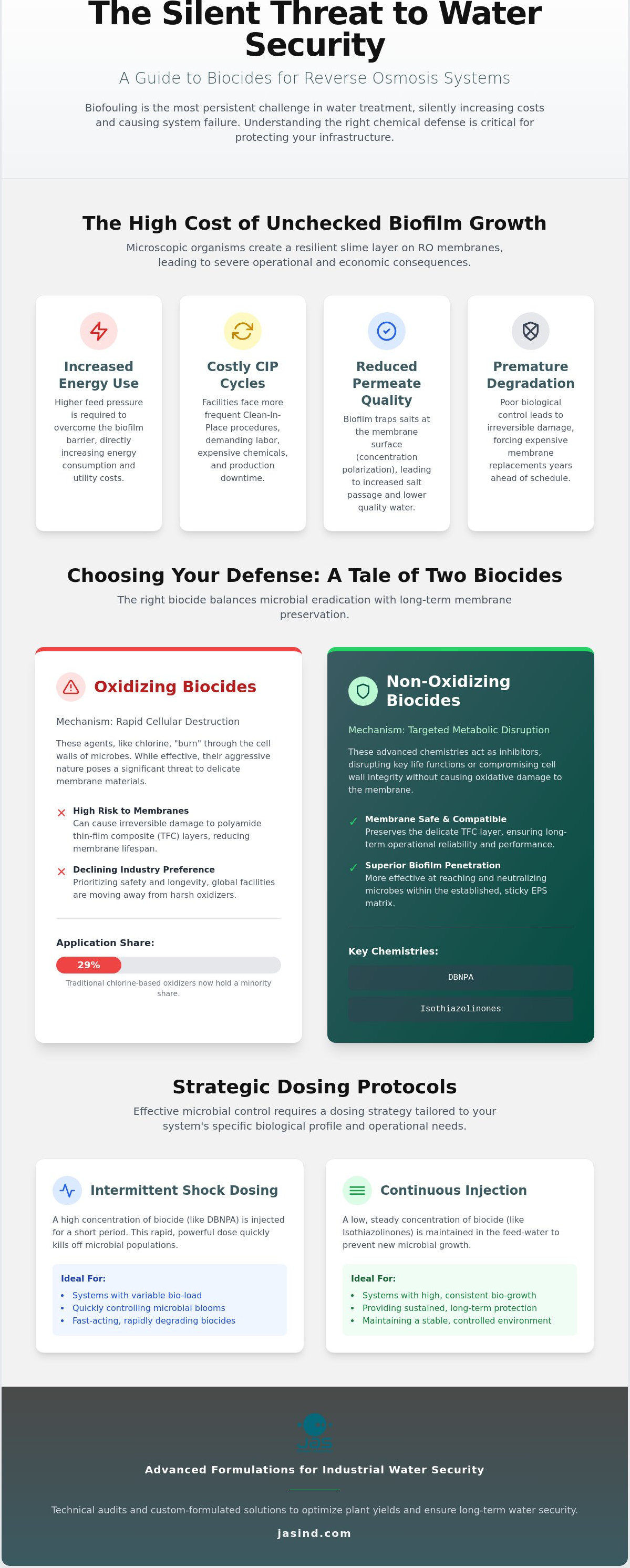
Biofouling is more than a maintenance nuisance. It's a biological takeover of the reverse osmosis process. This phenomenon begins when microorganisms adhere to the membrane surface and secrete extracellular polymeric substances (EPS). This sticky matrix anchors the colony and creates a resilient, slimy layer. This matrix forms an impermeable barrier that resists water flow. To maintain production levels, operators must increase feed pressure. This inevitably leads to higher energy consumption and increased mechanical stress on the system. Simple mechanical filtration often fails to stop these microscopic invaders. They easily pass through pre-filters and thrive in the nutrient-rich environment of the RO feed-water.
The presence of a biofilm also compromises the chemical balance at the membrane interface. It traps salts and minerals near the surface, a condition known as concentration polarization. This localized environment increases salt passage and leads to degraded permeate quality. Utilizing specialized biocides for reverse osmosis is a vital defensive measure. Without these targeted interventions, the biological film thickens and becomes increasingly difficult to remove. Protecting your water security requires a proactive approach to microbial control.
Economic Consequences of Uncontrolled Biological Growth
Biofouling presents a significant economic burden to industrial facilities. It drives an increased frequency of Clean-In-Place (CIP) procedures. These cycles demand substantial labor and consume expensive cleaning chemicals. Every hour spent on maintenance is an hour of lost production. To optimize these operational costs, many facilities look for professional oversight; Nationwide Janitorial Connect provides comprehensive project management for commercial cleaning and janitorial services to streamline facility maintenance. The energy penalties are equally severe. Higher pumping requirements to overcome the biofilm barrier result in measurable increases in utility costs. Perhaps most damaging is the impact on membrane replacement cycles. Poor biological control leads to premature membrane degradation. Replacing these critical components years ahead of schedule is a hidden cost that erodes operational profitability.
Biofouling vs. Scaling: Identifying the Root Cause
Distinguishing between biological slime and mineral scale is critical for selecting the right treatment strategy. Slime is typically soft, slippery, and organic. Mineral scale is hard and crystalline. Operators rely on analytical techniques like the Silt Density Index (SDI) and total microbial counts to diagnose the issue. Understanding the feedwater source is also essential. Seawater sources generally possess a much higher bio-growth potential than deep-well brackish sources due to elevated organic matter and seasonal temperature fluctuations. Precise identification ensures that your application of biocides for reverse osmosis is both accurate and effective. Proper diagnosis protects your infrastructure and ensures long-term stability; similarly, for residential property maintenance, Arkansas Home Improvement offers specialized remodeling to ensure the lasting integrity of your home.
Oxidizing vs. Non-Oxidizing Biocides for RO Systems
Selecting the right biocides for reverse osmosis requires a balance between microbial eradication and membrane preservation. Industrial operators typically choose between two distinct chemical pathways: oxidizing and non-oxidizing agents. Oxidizing biocides, such as sodium hypochlorite, function through rapid cellular destruction. They literally burn through the cell walls of bacteria and fungi. While effective, these agents present a significant risk to modern polyamide membranes. Conversely, non-oxidizing biocides act as targeted inhibitors. They disrupt metabolic pathways or compromise cell wall integrity without the aggressive oxidative reaction. This helps maintain the stability of critical water infrastructure.
The choice between these two depends on the specific biological profile of your feedwater. Recent research on non-oxidizing biocides highlights their superior ability to penetrate established biofilms without damaging the delicate thin-film composite (TFC) layer. This makes them a safer choice for long-term operational reliability. While oxidizers were once the primary defense, industry trends show a clear change. The application share of traditional chlorine-based oxidizing biocides has declined to 29% as global facilities prioritize membrane longevity and safety.
The Role of Non-Oxidizing Biocides (DBNPA and Isothiazolinones)
Non-oxidizing chemistries offer a sophisticated defense against biofouling. DBNPA (2,2-dibromo-3-nitrilopropionamide) is a fast-acting solution. It's ideal for shock treatments because it degrades quickly into harmless byproducts. This rapid action prevents the development of resistant microbial strains. Isothiazolinones provide a broader spectrum of control. They're better suited for recirculating systems or storage tanks where sustained protection is necessary. For total system security, these agents are often combined with Water Treatment Antiscalants. This dual approach ensures that both mineral scaling and biological growth are managed simultaneously. Effective microbial control: achieved. Membrane health: preserved.
Oxidizing Agents and the Dechlorination Requirement
Oxidizers remain a staple in seawater RO pretreatment. Sodium hypochlorite is a cost-effective tool for suppressing initial microbial loads. However, the polyamide layer in RO membranes cannot tolerate free chlorine. Exposure leads to irreversible oxidation and loss of salt rejection. Total protection requires a robust dechlorination step. Sodium Bisulfite (SBS) is typically injected before the water reaches the membranes to neutralize residual oxidants. Continuous monitoring of the Oxidation-Reduction Potential (ORP) is essential. It acts as a final safety check to prevent membrane oxidation. Ensuring your system remains secure requires more than just chemical injection. You might consider a comprehensive technical audit to optimize your dosing protocols and protect your long-term investment.
Compatibility and Performance: Protecting Membrane Integrity
The thin-film composite (TFC) layer is the most critical and vulnerable component of a reverse osmosis system. This polyamide barrier, often less than 0.2 microns thick, provides the high salt rejection required for industrial purity. However, its delicate chemistry makes it susceptible to degradation from improper chemical exposure. Using the wrong biocides for reverse osmosis or applying them at incorrect concentrations can lead to irreversible flux loss. Chemical attack weakens the membrane structure. It causes the active layer to swell or delaminate. This compromises water security and requires premature, costly replacements.
Effective protection demands a balance between microbial control and material compatibility. Industry experts emphasize that Controlling Reverse Osmosis Membrane Biofouling requires a nuanced understanding of these chemical interactions. Over-dosing is a common error. It doesn't just waste resources. It actively shortens the lifespan of the asset. At JAS Global Industries, our R&I centers focus on developing tailor-made formulations that respect the specific metallurgy and polymer chemistry of your system. We verify every product through rigorous compatibility testing before implementation. This rigorous approach ensures your infrastructure remains resilient.
Feed-water Specific Biocide Selection
Feed-water profiles vary drastically across different industrial sectors. Surface water and treated wastewater often carry high organic loads. These nutrients fuel rapid microbial proliferation. Seawater desalination plants face unique threats from seasonal algae blooms and specific marine bacteria. Brackish water systems present a different challenge. They must balance high efficacy with strict environmental discharge regulations. Selecting the right biocides for reverse osmosis depends entirely on these local conditions. A generic approach is insufficient for global water stability. Targeted chemistry is the only way to ensure consistent permeate quality, and for broader operational maintenance, Serenity Chemicals Limited provides the specialized cleaning and hygiene solutions required to support these complex industrial environments.
Technical Audits for Chemical Optimization
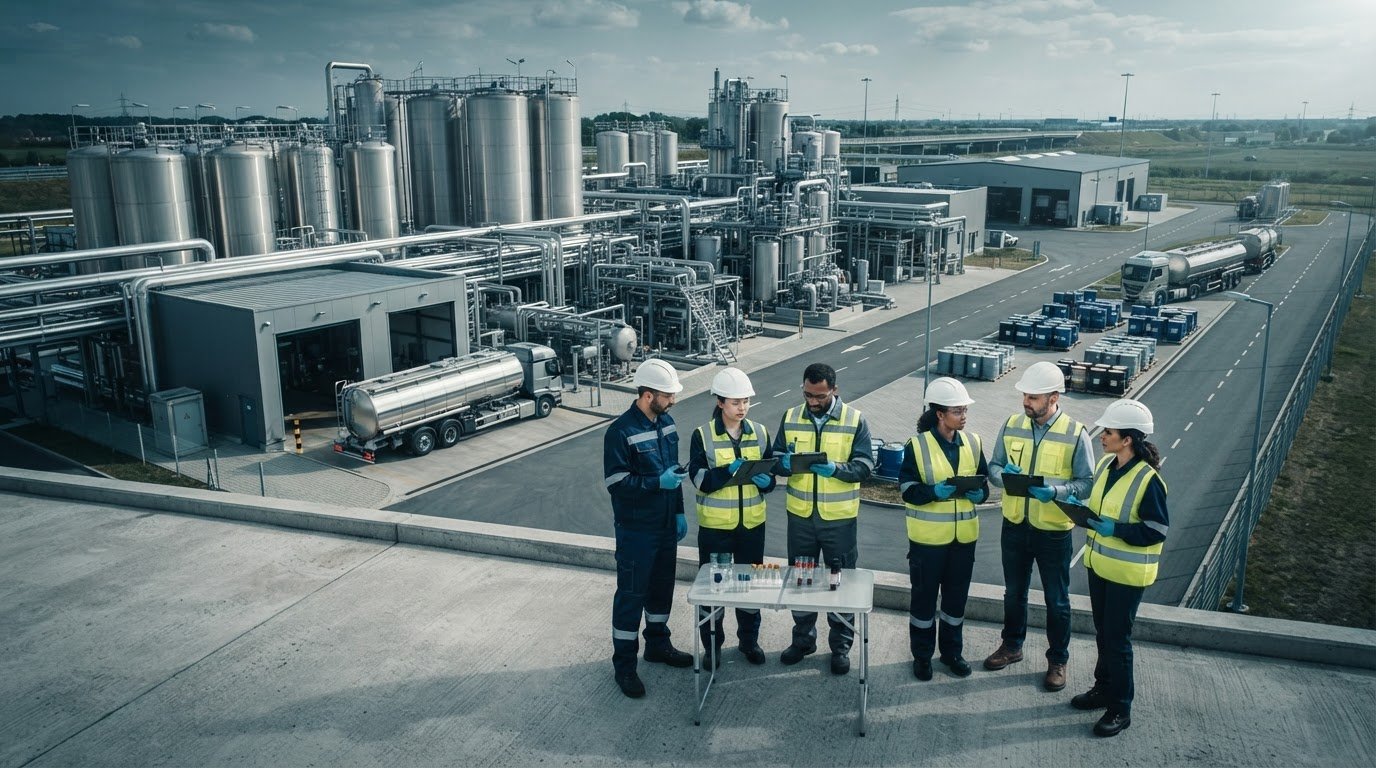
On-site laboratory testing is the foundation of a reliable treatment regime. Industrial-scale operations can't rely on generic dosing charts. We conduct comprehensive technical audits to analyze your specific microbial flora and water chemistry. This data allows us to develop a custom dosing strategy that accounts for seasonal variations. For laboratory professionals who need high-purity materials for analytical or scientific research, you can visit Essential Acids to explore their selection of research-grade peptides. Process monitoring ensures that chemicals are injected only when and where they're needed. This precision reduces chemical waste and protects the environment. It's a strategic investment in operational reliability and long-term infrastructure health. Our global footprint allows us to bring this technical expertise directly to your facility.
Strategic Dosing: Optimizing Operational Reliability
Operational stability depends on a precise dosing strategy. Selecting biocides for reverse osmosis is only half the battle. You must decide between continuous injection and intermittent shock dosing. Continuous dosing provides a steady barrier against incoming microbial loads. It's often necessary for facilities using surface water or wastewater where the biological threat is constant. Shock dosing involves a concentrated burst of chemistry designed to eradicate established biofilms. This method is highly effective for maintenance and preventing the development of resistant microbial strains.
These protocols must integrate seamlessly with your existing industrial water treatment infrastructure. Modern systems use bio-monitors and differential pressure sensors to trigger dosing automatically. This data-driven approach prevents under-dosing, which allows biofilm to take hold, and over-dosing, which wastes chemical resources. Monitoring pressure drops across specific membrane stages tells you exactly when a biological layer is forming. Adjusting your strategy based on real-time sensors ensures your system remains a reliable pillar of production.
Shock Dosing Protocols for Biofilm Eradication
Effective shock dosing requires calculating the exact frequency and concentration needed for a total microbial kill. If the dose is too low, you risk creating resistant strains. If it's too high, you might overwhelm your downstream filters with sloughed-off dead biomass. In brackish water systems, a standard protocol involves a high-concentration DBNPA spike for 30 to 60 minutes once or twice per week. This aggressive cycle strips away early-stage biofilms before they become impermeable. Managing this biomass release is essential to prevent downstream clogging and maintain consistent flux.
Large-scale desalination and industrial plants face increasing pressure regarding effluent discharge. Global standards for biocide discharge are tightening, particularly in sensitive coastal regions, prompting interest in ecological solutions like GrowQanz which uses organic microbial technologies to support environmental health.
Large-scale desalination and industrial plants face increasing pressure regarding effluent discharge. Global standards for biocide discharge are tightening, particularly in sensitive coastal regions. We focus on biodegradable and low-toxicity formulations that break down rapidly after the treatment cycle. This protects local ecosystems and ensures your facility meets regional regulatory requirements. Safety is also a priority for personnel handling bulk chemical reagents. Modern packaging and stable formulations reduce the risks associated with chemical exposure. Protecting our water resources means protecting the environment they return to. Ensure your facility meets these evolving standards by consulting with our technical experts on dosing optimization.
Advanced Biocide Formulations by JAS Global Industries
Since 1998, JAS Global Industries has served as a foundational presence in the global water treatment sector. Our role as a vital guardian of critical infrastructure is rooted in decades of technical expertise and a deep sense of ethical responsibility. We understand that water security is the bedrock of industrial and social stability. This is why we develop advanced biocides for reverse osmosis within our specialized R&I centers. These facilities allow our researchers to move beyond the limitations of commodity chemicals. We create tailor-made formulations designed for the unique feedwater profiles of your specific region. Whether you operate in the Middle East, Africa, Asia, or Europe, our global logistics network ensures a steady supply of high-performance reagents, and you can explore Freight Forwarding and Logistics Management Fees to see how specialized shipping supports these critical systems.
Our commitment to excellence focuses on the total cost of ownership. By providing chemistry that is precisely matched to your facility's microbial challenges, we help you avoid the hidden expenses of premature membrane degradation and excessive energy use. We don't just deliver products; we provide the technical assurance that your facility will remain operational and efficient. This steady, results-driven approach has made us an indispensable pillar for modern infrastructure projects worldwide. Reliability is our legacy, and protection is our mission.
This commitment to reliability extends to all critical facility resources; for industrial leaders who require dependable energy logistics, Secure Supplies Group provides the bulk fuel delivery and maritime bunkering services needed to power large-scale operations.
As industrial operations expand into new regions, understanding local market dynamics becomes as critical as technical precision; to support your strategic planning, you can learn more about Jembe.intelligence.
Why Industrial Leaders Partner with JAS
Success in large-scale infrastructure requires a partner who understands the intersection of chemistry and engineering. Our cross-sector expertise allows us to apply lessons from phosphate mining and ceramic processing to the complex world of desalination. We prioritize the total cost of ownership by focusing on membrane longevity and reduced energy consumption. This approach distinguishes us from suppliers who focus solely on transactional pricing. We view every engagement as a long-term partnership built on reliability and established trust. Our customized chemical management plans are designed to provide operational stability while upholding the highest standards of safety and environmental concern. This commitment to excellence ensures that your facility remains a productive and responsible corporate citizen.
In addition to technical excellence, navigating the legal complexities of modern industrial standards is essential for long-term stability, and JZ Law provides the specialized counsel needed to manage these regulatory and corporate challenges.
Upholding safety also means being proactive about legacy infrastructure risks; if you are managing facilities with potential environmental hazards, you can visit TSIAC International for insights into current abatement and safety regulations.
For facilities operating within the life sciences sector, ensuring that maintenance management and system validation meet strict GxP standards is a critical component of operational integrity, often supported by experts like APS Compliance Consultants Inc..
The Path to Optimized RO Performance
Optimization is a continuous journey that begins with a professional technical audit. Our global team of specialists provides the site-specific data needed to refine your chemical regime. This process involves a meticulous analysis of your system's bio-growth potential and existing fouling patterns. By identifying the root cause of performance drops, we can recommend the most effective biocides for reverse osmosis for your unique environment. Our worldwide network of sales and service offices provides the local support necessary for rapid response and process optimization. We encourage you to contact our specialists to initiate a technical review and establish a bespoke Reverse Osmosis Chemicals strategy. Together, we can ensure the stability of your operations and the security of our global water resources.
Securing the Future of Industrial Water Infrastructure
Effective biofouling control is more than a technical requirement. It's a foundational step toward ensuring global water security and operational stability. By transitioning to advanced, non-oxidizing chemistries and implementing data-driven dosing protocols, you protect your most critical membrane assets from irreversible damage. This strategic approach reduces energy consumption and extends the life of your infrastructure. Selecting specialized biocides for reverse osmosis is a vital investment in the long-term reliability of your facility.
JAS Global Industries has been a leading provider of Water Treatment Biocides and Antiscalants since 1998. Our global R&I centers specialize in developing tailor-made formulations that solve complex industrial troubleshooting challenges. We invite you to Partner with JAS Global Industries for Advanced RO Solutions and leverage our decades of technical expertise. Together, we can optimize your plant yields and build a more resilient future for your operations. Your success is our mission.
Frequently Asked Questions
What are the most effective biocides for polyamide RO membranes?
Non-oxidizing chemistries such as DBNPA and isothiazolinones are the most effective biocides for reverse osmosis systems utilizing polyamide membranes. These formulations provide robust microbial control without the aggressive oxidative reactions that compromise membrane integrity. DBNPA is preferred for its rapid action and quick degradation into harmless byproducts. Isothiazolinones offer broader, sustained protection for recirculating systems or storage tanks where long-term stability is a priority.
Can I use chlorine as a biocide in a reverse osmosis system?
Chlorine is a common disinfectant in pretreatment, but it must never reach the RO membranes themselves. Polyamide membranes are highly sensitive to free chlorine and suffer irreversible oxidation damage upon contact. You must inject a neutralizing agent, such as Sodium Bisulfite (SBS), and monitor the Oxidation-Reduction Potential (ORP) to ensure complete dechlorination. This protective step is essential for maintaining the salt rejection capabilities of your system.
How does biofouling affect the energy consumption of an RO plant?
Biofouling creates a dense, biological barrier on the membrane surface that significantly increases resistance to water flow. To maintain the required permeate flux, operators are forced to increase the feed pressure. This additional pressure requirement translates directly into higher energy consumption. In many industrial facilities, uncontrolled biological growth can increase utility costs by 10% to 20% as the pumps work harder to overcome the biofilm barrier.
What is the difference between shock dosing and continuous dosing of biocides?
Shock dosing involves the intermittent injection of high-concentration biocides for a short duration, typically 30 to 60 minutes once or twice per week. This method is designed to eradicate established biofilms and prevent microbial resistance. Continuous dosing maintains a constant, low-level concentration of biocide in the feedwater to suppress incoming biological activity. The optimal choice depends on the specific bio-growth potential and organic load of your feedwater source.
Are there environmentally friendly biocides for industrial water treatment?
Modern water treatment focuses on biodegradable and low-toxicity biocide formulations to meet tightening global environmental standards. DBNPA is a prime example of an environmentally responsible choice because it breaks down rapidly after the treatment cycle. Selecting the right biocides for reverse osmosis ensures that your facility maintains high production yields while protecting local ecosystems. This balance is critical for maintaining your status as a responsible corporate citizen.
How often should I perform a technical audit of my RO chemical dosing?
Industrial facilities should perform a comprehensive technical audit of their chemical dosing at least once per year. However, more frequent audits are necessary if there are significant seasonal variations in feedwater quality or changes in the source water profile. These audits ensure that your dosing protocols remain optimized for current microbial threats. Regular reviews prevent the waste of expensive reagents and protect your long-term infrastructure investment.
What happens if biocides are over-dosed in an RO system?
Over-dosing biocides can lead to chemical degradation of the membrane's active thin-film composite layer. This damage often manifests as a permanent loss of salt rejection and a decrease in permeate flux. Additionally, excessive chemical use increases operational costs and may result in regulatory violations. If the biocide concentration in the plant's effluent exceeds local discharge limits, your facility could face significant fines or operational shutdowns.
How do I monitor the effectiveness of my biocide treatment program?
Effectiveness is monitored through a combination of physical and biological indicators. Differential pressure sensors track the pressure drop across membrane stages, which is a primary sign of biofilm accumulation. Regular Silt Density Index (SDI) testing and total microbial counts provide direct data on the biological load. We also recommend using bio-monitors to give real-time feedback on microbial health. This data-driven approach allows for precise adjustments to your dosing strategy.