

What if the most significant threat to your facility's 2026 budget isn't rising energy costs, but a microscopic layer of slime less than 1 millimeter thick? This invisible biofilm can reduce heat transfer efficiency by 12.5% in a matter of weeks, leading to catastrophic equipment failure and compromised water security. You recognize that traditional methods often fall short against resilient microbial colonies that thrive in complex cooling systems. Mastering the selection and application of Water Treatment Biocides is the only way to protect your infrastructure from the silent progression of microbiologically influenced corrosion. At JAS Global Industries, we view this as more than just chemistry; it's about the reliability of the systems that support our global community.
You're likely facing tighter discharge limits and more rigorous Legionella monitoring requirements than ever before. This guide promises to equip you with the technical expertise to optimize your chemical dosing and ensure total regulatory compliance. We'll examine the specific chemistries required for high-stress environments, provide a roadmap for reducing operational expenses, and show you how to maintain the highest standards of industrial microbiological control for the long term.
Key Takeaways
- Identify the optimal chemical mode of action by comparing the "rapid-burn" efficiency of oxidizing agents against specialized non-oxidizing alternatives.
- Master the selection of Water Treatment Biocides based on specific water chemistry and metallurgy to ensure infrastructure longevity in challenging high-salinity environments.
- Implement advanced dosing strategies, shifting from manual injection to automated, sensor-driven systems that ensure continuous microbial control and process optimization.
- Explore how tailor-made formulations and technical process audits can transform your chemical application into a strategic asset for global water security.
Understanding Water Treatment Biocides: The Pillars of Water Security
Industrial water systems are the lifeblood of global infrastructure. Ensuring their integrity requires more than basic filtration; it demands a sophisticated approach to microbiological control. Biocides are specialized chemical reagents engineered to inhibit or destroy harmful microorganisms within industrial circuits. In 2026, these Water Treatment Biocides represent the front line of defense in a world where water scarcity and industrial efficiency are inextricably linked. We don't just treat water; we secure the operational continuity of the world's most vital sectors.
Microbial control is no longer a localized maintenance task. It's a critical component of global water security. Uncontrolled biofouling leads to staggering economic losses, with industry data indicating that biological growth accounts for approximately 20% of the total cost of heat exchanger maintenance. These hidden costs manifest as increased energy consumption, unplanned shutdowns, and premature equipment failure. By transitioning from reactive "kill" cycles to proactive Water Security strategies, JAS Global Industries helps partners transform their water systems from a liability into a stable asset. Manufacturing Relationships. Distributing Quality.
The Mechanism of Microbial Interference
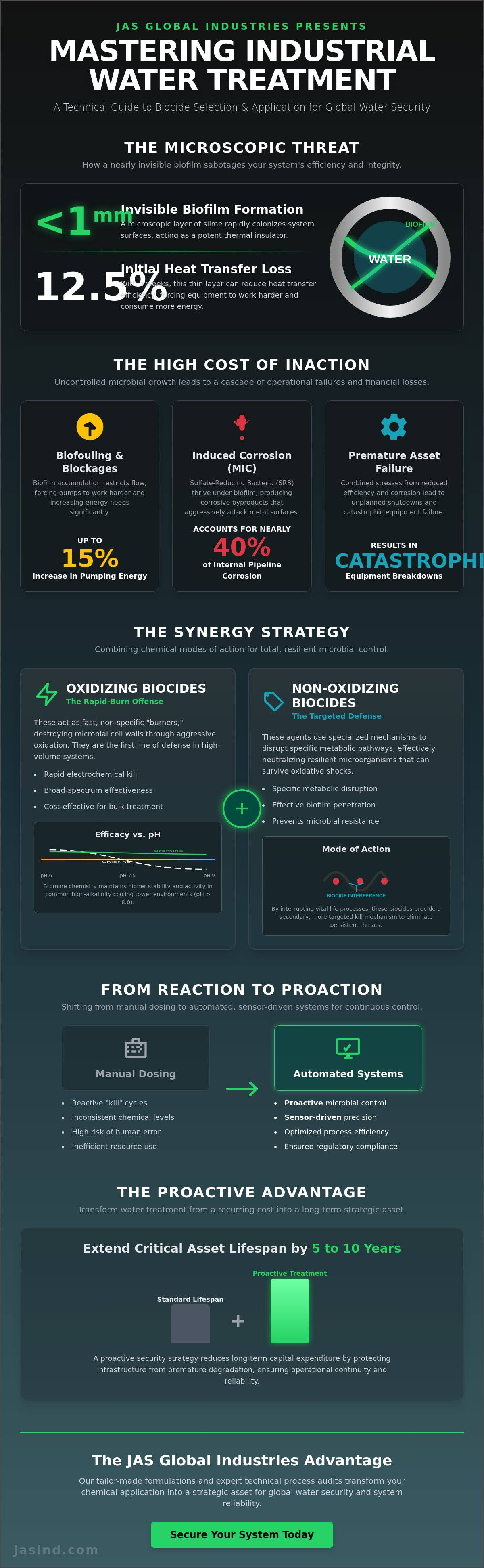
Microorganisms don't exist as solitary cells in industrial cooling towers. They aggregate into complex communities. These colonies produce extracellular polymeric substances (EPS), creating a protective barrier that acts as a thermal insulator. This matrix is significantly more resistant to heat transfer than calcium carbonate scale. The Biofilm Shield is a resilient matrix of extracellular polymeric substances that prevents biocide penetration and reduces heat transfer efficiency by up to 30%. Effective Water Treatment Biocides must be capable of penetrating this EPS layer to reach the underlying bacterial colonies.
Microbiologically Induced Corrosion (MIC)
Corrosion isn't always a purely chemical process. Sulfate-Reducing Bacteria (SRB) thrive in anaerobic pockets beneath surface deposits. These organisms convert sulfates into hydrogen sulfide, a corrosive byproduct that aggressively attacks carbon steel and stainless steel alloys. This activity results in localized pitting, a form of degradation that can penetrate a pipe wall in less than 12 months. Standard corrosion inhibitors often fail in these environments because they cannot reach the metal surface through the thick microbial slime. Total system protection requires a dual-action approach where biocidal control precedes and supports chemical inhibition to stop the biological catalyst of decay.
- Biofouling: Reduces flow rates and increases pumping energy by up to 15%.
- SRB Activity: Responsible for nearly 40% of internal corrosion in oil and gas pipelines.
- Proactive Security: Reduces long-term capital expenditure by extending asset life by 5 to 10 years.
Oxidizing vs. Non-Oxidizing Biocides: A Technical Comparison
Effective microbiological control requires a dual-track approach to chemical intervention. We classify Water Treatment Biocides into two primary categories based on how they neutralize threats: oxidizing and non-oxidizing agents. Oxidizing biocides act as rapid-response electrochemical "burners" that destroy cell walls through oxidation. They're the first line of defense for high-volume systems like industrial cooling towers. Non-oxidizing biocides provide targeted metabolic disruption. They're essential for eliminating resilient microbial strains that survive initial oxidative passes. The "Synergy Strategy" remains the industry benchmark for 2026. By alternating these chemistries, operators prevent the development of microbial resistance and biofilm shielding. This tactical rotation ensures global water security by maintaining system integrity and heat transfer efficiency.Oxidizing Agents: Chlorine, Bromine, and Beyond
Oxidizing agents provide the fastest kill rates in industrial water systems. Chlorine remains a staple, yet its efficacy depends heavily on pH levels. At a pH of 7.5, Hypochlorous acid is only 50% active; efficacy drops sharply as alkalinity rises. This makes Bromine chemistry superior for high-temperature cooling towers and systems with a pH above 8.0. Bromine remains more stable and active in these alkaline environments, ensuring consistent microbial suppression. Modern facilities are increasingly adopting emerging oxidative technologies like Chlorine Dioxide and Ozone. Chlorine Dioxide is particularly effective because it doesn't react with ammonia and maintains high efficacy across a wide pH range of 4 to 10. Technical data from EPRI Water Treatment Strategies confirms that these oxidative paths are critical for reducing total viable counts (TVC) in complex cooling circuits. Ozone provides the highest oxidation potential, though its short half-life requires on-site generation.Non-Oxidizing Chemistries: Targeted Control
Non-oxidizing biocides don't "burn" the cell. Instead, they interfere with the microbe's life cycle or reproductive capabilities. These are vital for long-term preservation and penetrating thick biofilms.- Isothiazolinones: These serve as the industry standard for long-term preservation. They're effective at low concentrations and provide broad-spectrum control against bacteria and algae.
- Quaternary Ammonium Compounds (Quats): These function as both surfactants and biocides. They're excellent for dispersing biological slime and improving the penetration of other chemicals.
- Glutaraldehyde: This is a high-performance sterilant for closed-loop systems. It's highly effective against sulfate-reducing bacteria (SRB) which cause localized under-deposit corrosion.
Selecting the Right Biocide for Industrial Applications
Choosing effective Water Treatment Biocides requires a precise technical audit of the specific system environment. Engineers must prioritize three critical variables: water chemistry, system metallurgy, and contact time. Water chemistry, particularly pH levels and Total Dissolved Solids (TDS), dictates the stability of the chemical agent. For example, bromine-based biocides often outperform chlorine in high-pH environments typical of industrial cooling systems. Metallurgy is equally vital. Using aggressive oxidizers in systems containing copper or galvanized steel can increase corrosion rates by 300% if the chemistry isn't properly buffered. Finally, the contact time required for a 99.9% microbial kill must align with the system's blowdown rate to prevent chemical waste.
High-salinity brackish water and seawater intake systems present unique biological challenges. In regions like the Arabian Gulf, where seawater temperatures exceed 35°C for much of the year, microbial proliferation occurs at an accelerated pace. Environmental considerations are now a primary driver in selection. By 2026, discharge toxicity limits in many jurisdictions mandate that biocides must be 90% biodegradable within 48 hours. This ensures that industrial runoff doesn't disrupt local marine ecosystems.
Total Cost of Ownership (TCO) is a more accurate metric than the initial price per kilogram. A comprehensive TCO calculation includes:
- Energy Efficiency: A 1 mm biofilm layer on heat exchanger tubes can reduce heat transfer efficiency by 25%.
- Asset Longevity: Proper biocide application prevents microbially induced corrosion (MIC), which accounts for 20% of all corrosion damage in industrial piping.
- Maintenance Downtime: Effective control reduces the frequency of mechanical cleanings and membrane replacements.
Biocides for Desalination and Reverse Osmosis (RO)
Protecting sensitive RO membranes is a delicate technical balance. Oxidizing Water Treatment Biocides can cause irreversible damage to polyamide membrane layers, leading to salt passage and premature failure. We utilize non-oxidizing alternatives like DBNPA, which provide rapid control and then quickly degrade into harmless byproducts. For thermal desalination, the compatibility between biocides and antiscalants is essential to prevent precipitation. At JAS Global Industries, we view the protection of these systems as a fundamental pillar of water security across the Middle East and Africa. Our focus remains on ensuring that critical infrastructure provides a reliable water supply for growing populations.
Cooling Tower and HVAC System Optimization
Legionella control is a non-negotiable safety priority. Systems must adhere to international safety protocols like ASHRAE 188 to mitigate the risk of outbreaks. Managing microbial growth differs significantly between open-recirculating and closed-loop systems. In cities like Riyadh and Dubai, where ambient summer temperatures frequently reach 48°C, standard dosing regimens often fail. These extreme climates require customized, high-frequency dosing schedules to combat the rapid biological growth rates triggered by intense heat and high evaporation cycles. We design these solutions to maintain system safety without compromising operational costs.
Implementation: Dosing Strategies and Process Optimization
Precision is the foundation of water security. Industrial operations in 2026 have moved away from manual chemical handling. We now rely on automated, sensor-driven injection to manage Water Treatment Biocides. This transition eliminates human error and ensures that chemical residuals remain within tight operational windows. Automated systems respond to changes in flow rate and water chemistry faster than any manual process can. It's a shift from reactive treatment to proactive system guardianship.
Choosing between slug dosing and continuous feed depends on your specific system architecture. Slug dosing delivers a concentrated shock to the system. This strategy is often superior for maximizing microbial kill because it overwhelms the metabolic defenses of bacteria. It prevents the "selection" of resistant strains. Continuous feed maintains a steady, low-level residual. This is ideal for systems with high makeup water rates or consistent organic loading. Most high-performance facilities now use a hybrid approach to ensure total control.
Effective monitoring validates your strategy. We use ATP (Adenosine Triphosphate) testing for immediate feedback on microbial activity. While traditional dip slides require a 48-hour incubation period, ATP tests provide results in minutes. This allows operators to adjust dosing parameters in real-time. Technical audits complement this data by identifying "dead legs." These stagnant zones are system vulnerabilities where flow is zero. Biofilm thrives in these pockets. Identifying and looping these dead legs is essential for maintaining long-term system integrity.
Advanced Dosing Technologies
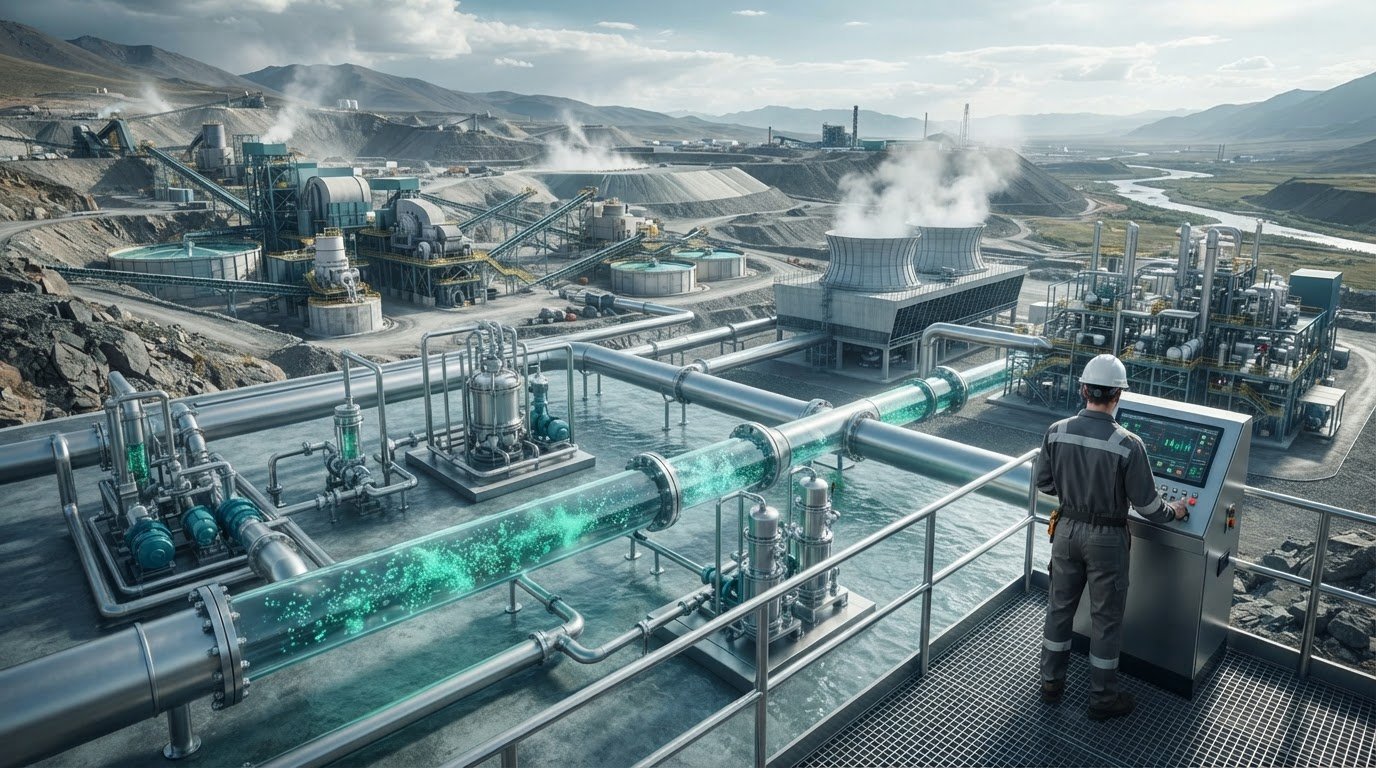
Modern infrastructure integrates IoT controllers for real-time monitoring. These units track biocide concentration and adjust pump speeds automatically. Precision dosing pump calibration reduces chemical waste by up to 12% annually. This level of accuracy protects your equipment from the corrosive effects of over-dosing. Process optimization often pays for itself. In a 2024 industrial trial, optimized biocide delivery resulted in a 15% reduction in energy costs by preventing the formation of insulating bio-foulants on heat exchanger surfaces.
Troubleshooting Common Biocide Failures
System failures often stem from high organic loading. When the organic demand is high, the biocide is consumed before it can reach the target microbes. This requires a recalculation of the dosage based on the "biocide demand" of the water rather than just the volume. pH swings also compromise efficacy. Oxidizing agents like bromine or chlorine lose significant potency when pH levels drift above 8.5. You can identify biocide resistance in a mature biofilm by observing stable or increasing microbial populations despite repeated exposure to chemical concentrations that previously controlled the system.
The JAS Advantage: Tailor-Made Formulations and Global Reliability
For over 25 years, JAS Global Industries has operated on a simple philosophy: Manufacturing Relationships. Distributing Quality. We recognize that standard chemical solutions often fail to address the specific biological challenges of modern industrial circuits. Our approach centers on deep technical consulting and rigorous process audits. By analyzing the unique microbial ecology of your facility, we develop custom Water Treatment Biocides that provide targeted control without the waste associated with over-dosing. This precision ensures that your infrastructure remains protected from the specific strains of bacteria present in your local environment.
Custom Chemical Engineering
Our Research and Innovation (R&I) centers serve as the engine of our technical advantage. We specialize in developing reagents for complex phosphate and potash mining circuits where water quality fluctuates significantly. Our engineers design specific dosing strategies that improve plant operational reliability by preventing biofouling in heat exchangers and cooling towers. This precision engineering has a direct impact on the bottom line. Partners utilizing our custom formulations frequently report a 12% to 18% reduction in total water treatment Opex. We focus on the chemistry so you can focus on the yield.
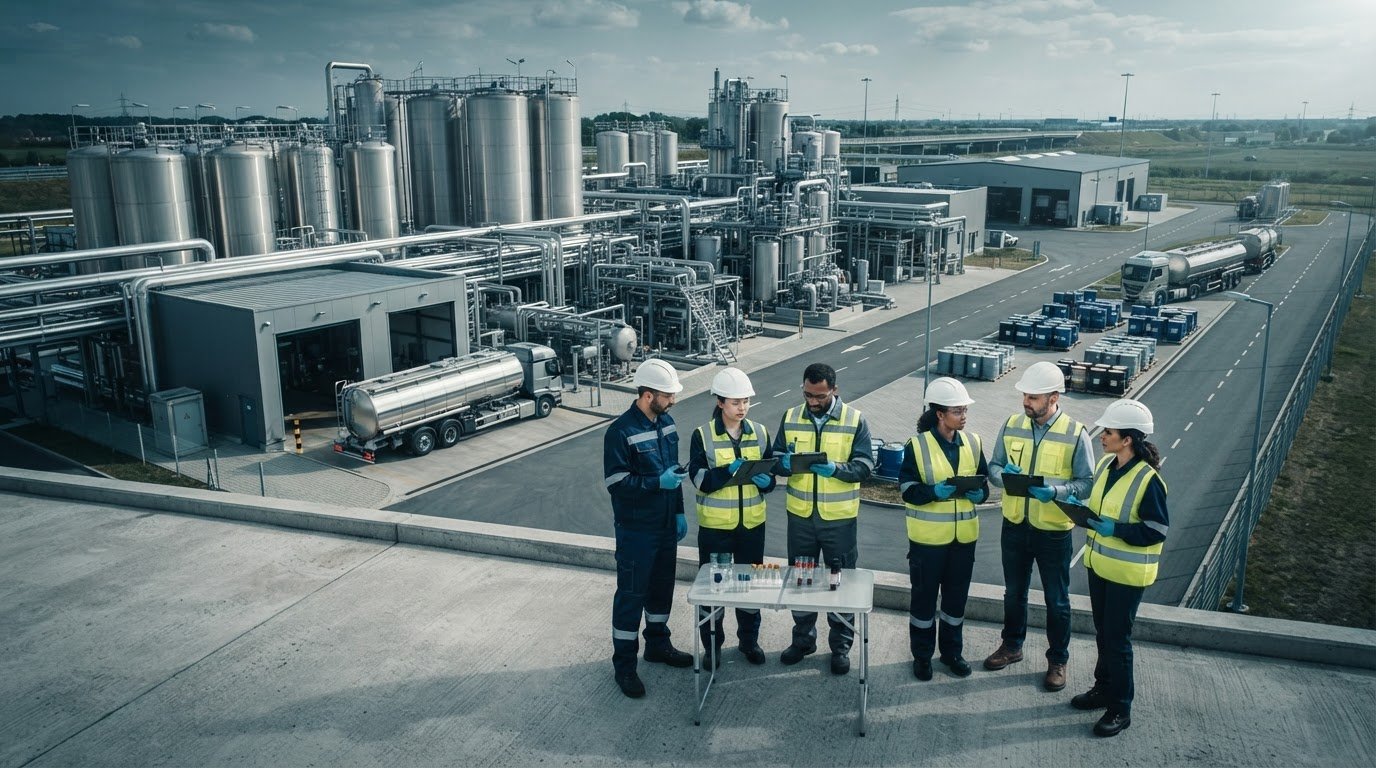
- Technical Audits: Comprehensive on-site evaluations to identify specific microbial threats and system vulnerabilities.
- R&I Centers: Dedicated facilities for testing reagent compatibility with local water sources and specific mineral profiles.
- Operational Reliability: Strategies designed to minimize downtime caused by biological scale, corrosion, and localized pitting.
The "JAS Cares" initiative represents our commitment to the future. It's our framework for balancing industrial efficiency with environmental stewardship. We develop Water Treatment Biocides that degrade safely, reducing the chemical footprint of discharge water. This ensures that your facility meets 2026 environmental standards while maintaining peak performance. By prioritizing biodegradable components, we help our partners navigate tightening regulations without sacrificing biocidal efficacy.
Partnering for the Future
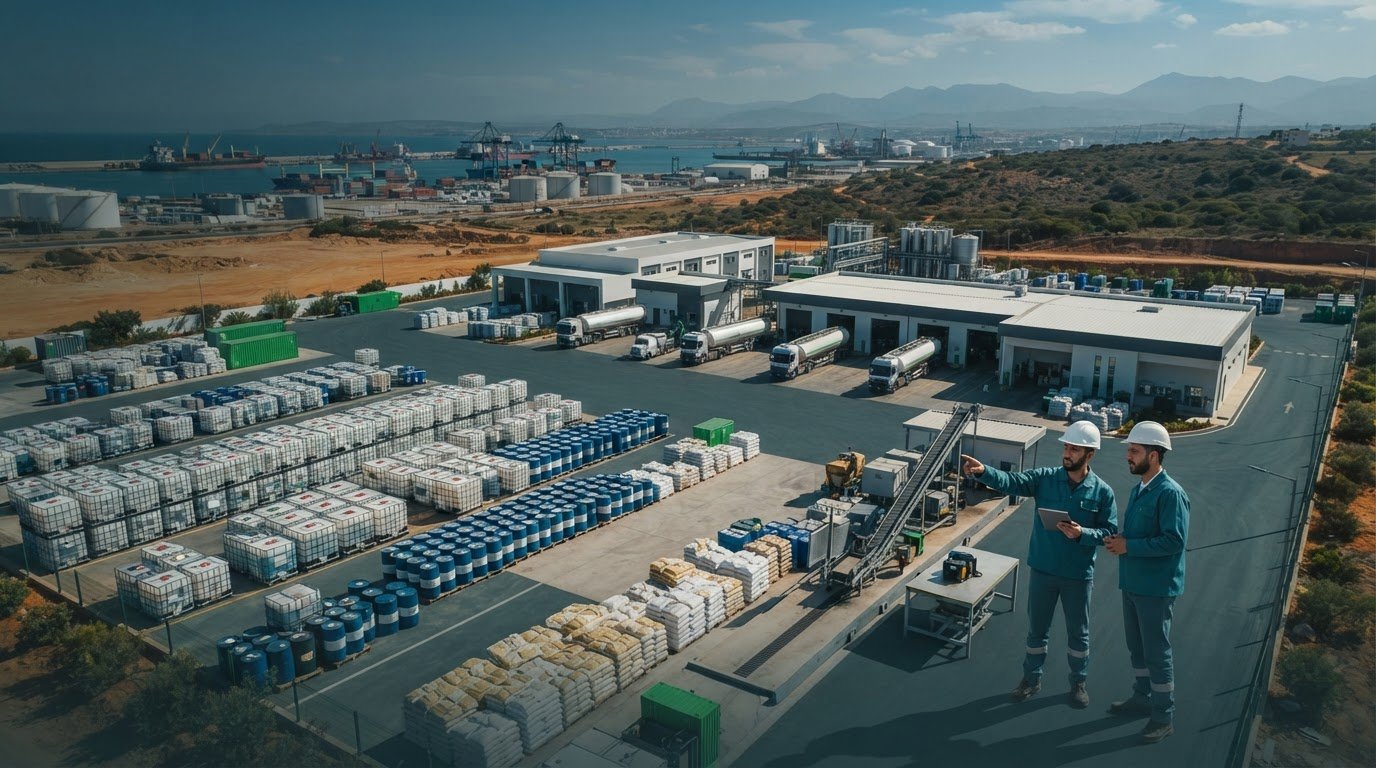
JAS Global Industries is more than a supplier. We're a global visionary partner dedicated to securing food and water security through specialty chemical innovation. Our logistics network ensures a steady supply of critical chemicals across the Middle East, Asia, and Europe, even during global supply chain disruptions. We maintain strategic hubs in these regions to provide localized support and rapid delivery, ensuring your operations never stop due to reagent shortages.
You can reach our specialized teams at our Dubai or Riyadh offices to schedule a comprehensive system audit. We'll work with your engineers to refine your chemical strategy and ensure long-term system integrity. Optimize your water treatment strategy with JAS Global Industries and secure the reliability of your industrial operations today.
Securing the Infrastructure of Global Water Systems
Effective microbiological control in 2026 requires a shift from reactive dosing to precision-engineered strategies. High-performance Water Treatment Biocides aren't just chemical additives; they're essential tools for maintaining global water security. Success depends on selecting chemistries that match specific industrial environments while optimizing process efficiency through data-driven dosing. JAS Global Industries brings a 25-year history of technical excellence to this challenge. Our global R&I centers develop custom formulations that address the unique pressures of modern infrastructure. With a strategic presence in Dubai, Riyadh, and Lisbon, we ensure your operations remain resilient and compliant across international borders. We're manufacturing relationships and distributing quality to safeguard the world's most critical resources. Our team is ready to help you navigate these complex technical requirements with steady, professional confidence. Let's build a more sustainable and secure industrial future together.
Partner with JAS Global Industries for Advanced Water Treatment Solutions
Frequently Asked Questions
What is the difference between oxidizing and non-oxidizing biocides?
Oxidizing biocides kill microorganisms by destroying cell walls and internal structures through chemical oxidation, while non-oxidizing versions disrupt specific metabolic or reproductive processes. Chlorine and bromine are the most common oxidizers used for rapid, broad-spectrum control. Non-oxidizing water treatment biocides like DBNPA or glutaraldehyde offer targeted effectiveness in systems with high organic loads. Oxidizers work quickly but can be corrosive if residuals exceed 0.5 ppm.
How often should biocides be dosed in an industrial cooling tower?
Most industrial cooling towers require slug dosing 2 to 3 times per week to maintain microbial control and prevent biofilm attachment. This frequency accounts for the 48-hour doubling rate of common aquatic bacteria. If your system operates with a high makeup water turnover, you might need daily additions. Monitoring ATP levels ensures the dosage remains effective against the specific biological pressure of your facility.
Can biocides damage Reverse Osmosis (RO) membranes?
Oxidizing water treatment biocides like free chlorine will cause irreversible structural damage to thin-film composite RO membranes within 200 hours of exposure. You must neutralize these agents using sodium metabisulfite before the water reaches the membrane surface. Non-oxidizing alternatives are safer for continuous use because they don't cause the same oxidative degradation. This protection is vital for maintaining the 99% salt rejection rate required in desalination.
What are the environmental regulations for biocide discharge in 2026?
The 2026 EPA and ECHA standards mandate that discharged effluent contain less than 0.05 mg/L of active halogen residuals. Facilities must now utilize biodegradable formulations that achieve 90% breakdown within 28 days of release into the environment. Compliance requires documented detoxification steps for all non-oxidizing agents. These strict limits ensure that industrial operations don't compromise the health of local aquatic ecosystems or municipal water security.
How do I prevent Microbiologically Induced Corrosion (MIC) in my system?
Preventing MIC requires maintaining a bulk water bacteria count below 10,000 CFU/mL through a consistent chemical treatment program. You should implement a dual-action strategy that combines a surfactant to penetrate protective biofilms with a potent biocide. This approach eliminates the anaerobic sulfate-reducing bacteria responsible for 70% of localized pitting in carbon steel pipes. Regular testing for dissolved iron levels helps track the success of your prevention efforts.
Is it better to use a single biocide or a combination of products?
Using a combination of two different products is more effective because it prevents microbial resistance and covers a broader spectrum of organisms. Alternating between an oxidizer and a non-oxidizer every 14 days disrupts the adaptation cycle of resilient bacteria. This synergy often reduces total chemical consumption by 15% compared to single-product regimens. It's a strategic way to ensure long-term system stability and water security.
What are the signs that my water treatment biocide is no longer effective?
A 20% increase in approach temperature or a visible rise in water turbidity indicates that your current biocide program is failing. If your ATP swab tests consistently exceed 500 RLU, the microbial population has likely developed a resistance or a thick biofilm layer. Rapidly dropping oxidation-reduction potential (ORP) levels also signal that the biological demand is outstripping your dosage. Don't ignore these physical signs of system stress.
How does JAS Global Industries customize biocide formulations for mining?
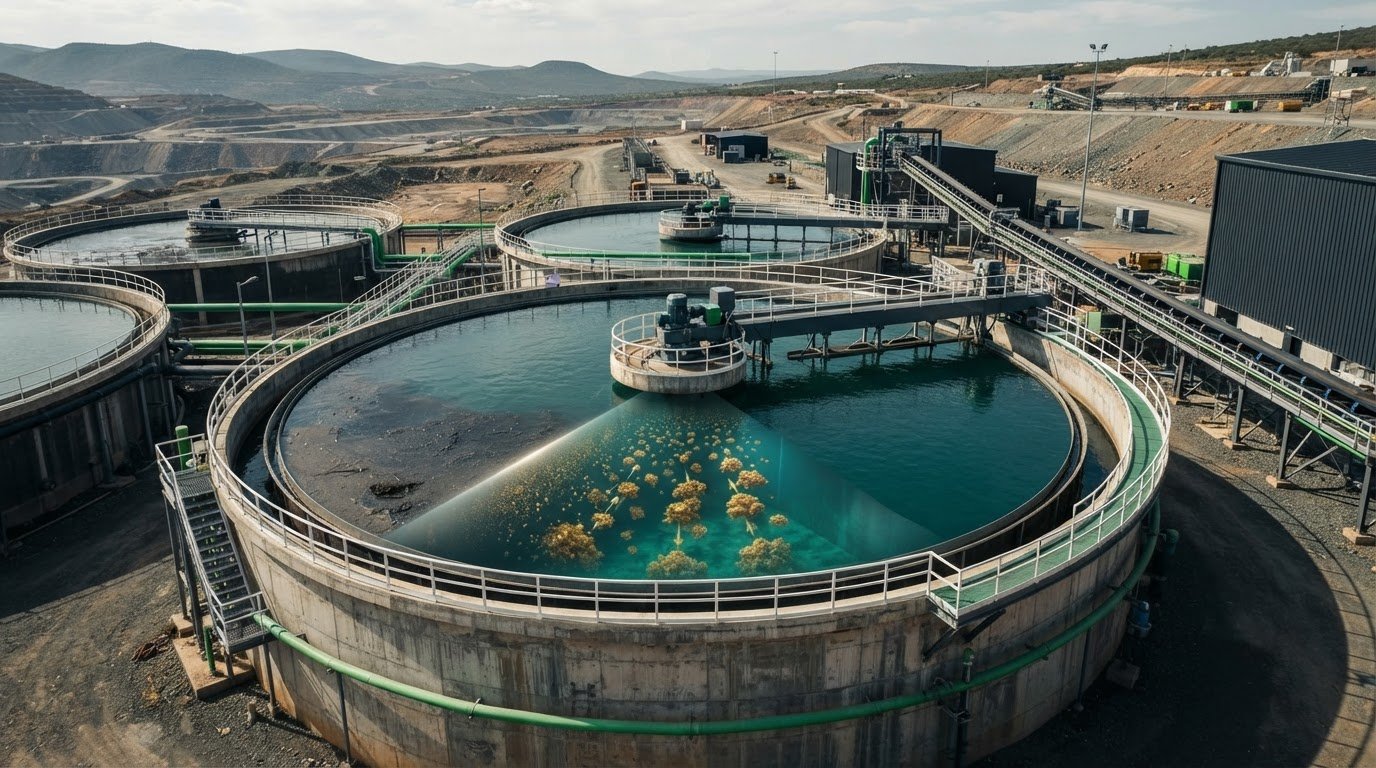
JAS Global Industries customizes formulations by analyzing the specific mineralogy and 4.0 pH levels common in mining tailings ponds. We engineer solutions that remain stable in high-salinity environments where standard chemicals often fail. Our 25-year history allows us to deliver specialized additives that protect infrastructure while supporting global water security. We focus on creating a reliable partnership that prioritizes the unique technical needs of large-scale mining operations.