
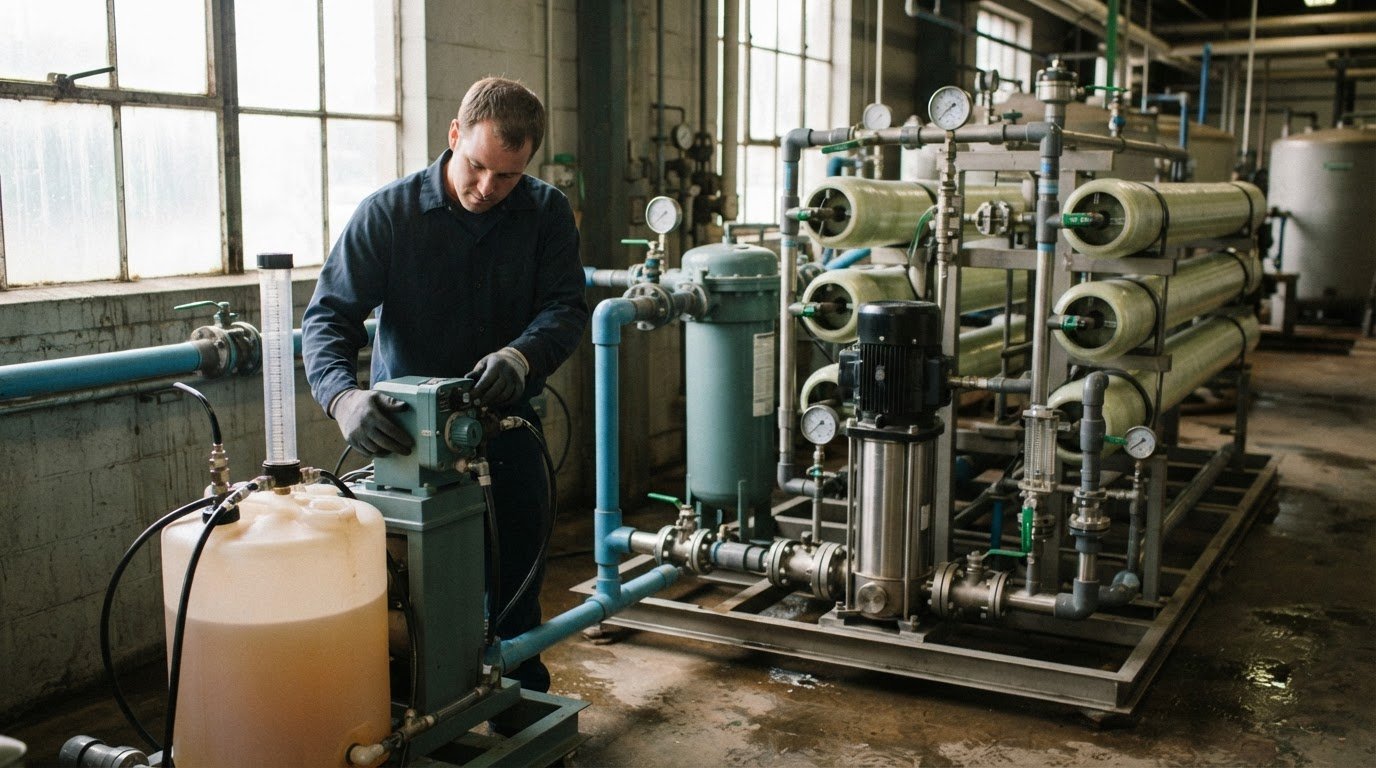
The highest dose isn’t automatically the best dose. Reverse osmosis antiscalant dosing optimization means matching chemical delivery to feed-water conditions and system performance, then checking that the dose controls scale without unnecessary use. Commercial RO systems commonly use 2-6 mg/L of feed water, with the right rate shaped by water chemistry and operating conditions.
It’s easy to focus on the pump setting alone. But a reliable dosing decision also depends on compatibility with pretreatment chemicals and the membrane, as well as whether performance indicators show the system is responding as intended.
This guide explains how to assess compatibility, monitor dosing, and make careful adjustments. It also covers conductivity testing as one way to compare antiscalant effectiveness, along with the cost and environmental considerations of using more chemical than the system needs.
Key Takeaways
- Assess feed-water minerals and compatibility with pretreatment chemicals and membranes before setting a dose. Keep acid and antiscalant injection separate.
- Track permeate production, pressure drop, recovery, and cleaning frequency together to spot changes that may call for a dosing review.
- Balance scale control against chemical use: excessive dosing can add consumption without improving performance, while too little can leave membranes vulnerable.
- Compare antiscalants under consistent conductivity-test conditions to help distinguish formulation performance from changes in the water or operating setup.
1. Compatibility with pretreatment chemicals and RO membranes
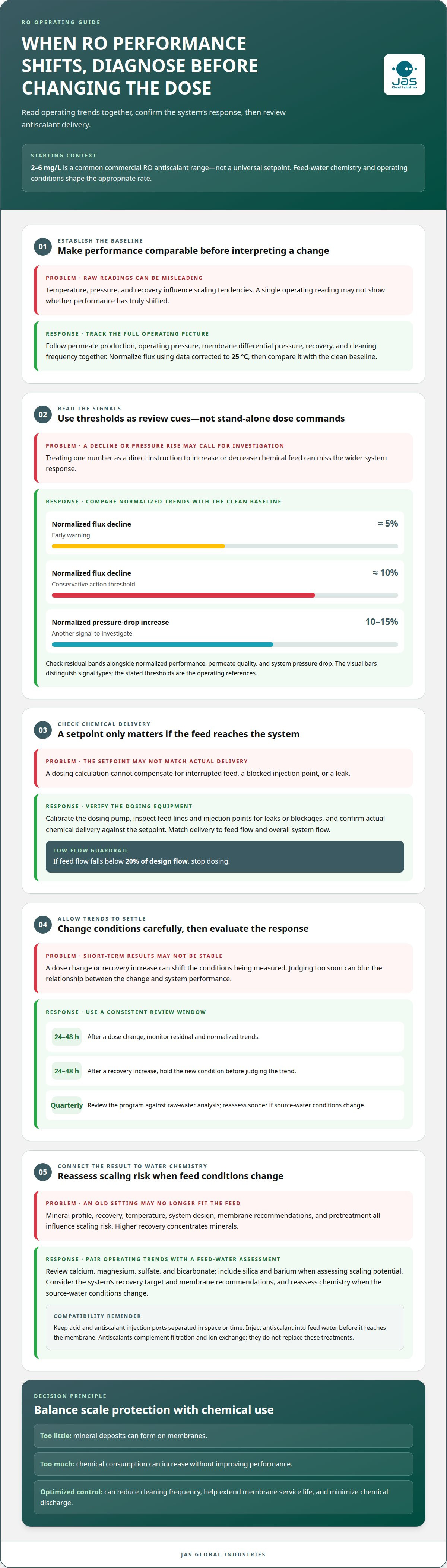
Start with a feed-water analysis before selecting an antiscalant or setting its dose. Measure calcium, magnesium, sulfate, and bicarbonate to identify likely scale-forming minerals. Include silica and barium when assessing scaling potential. Match treatment to membrane manufacturer recommendations, system design, and recovery targets. Effective reverse osmosis antiscalant dosing optimization considers these factors together, not just the pump setting. Higher recovery concentrates minerals, so a rate suited to one operating condition may not suit another. Include temperature in the operating assessment.
Check compatibility with pretreatment chemicals. Keep acid and antiscalant injection ports separated in space or time. Antiscalants complement filtration and ion exchange, but don’t replace these treatments. Inject antiscalant into feed water before it reaches the membrane. Commercial RO systems commonly use 2-6 mg/L of feed water; water chemistry and system conditions guide selection within the applicable program. For example, assess both calcium and sulfate risks when both minerals appear in the feed, rather than basing the dose on calcium alone.
What factors affect the required dose? Feed-water minerals, recovery target, system design, membrane recommendations, temperature, and pretreatment all influence scaling risk. Reassess the chemistry when source-water conditions change. Reverse osmosis antiscalant dosing optimization means reviewing the dose when a changed mineral profile affects scaling potential, rather than carrying forward an old setting without reassessment.
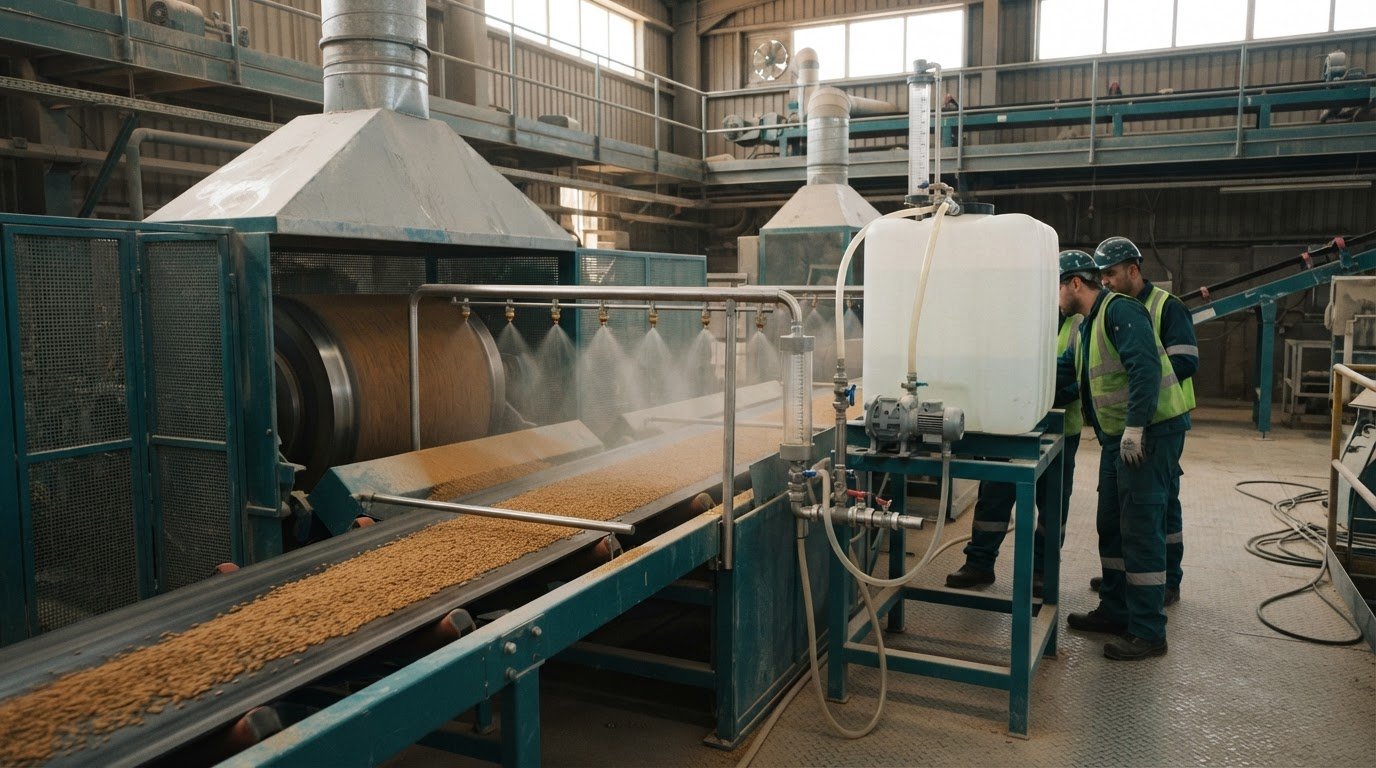
For U.S. drinking-water systems, requirements depend on the intended potable-water application and applicable jurisdiction. Use an antiscalant approved for that use and follow its safety and handling documentation. Calibrate the dosing pump and inspect feed lines and injection points for leaks or blockages. Confirm that actual chemical delivery matches the setpoint. A correct calculation cannot compensate for interrupted feed.
2. Performance monitoring and dosing adjustments
Use operating data to distinguish scaling from normal changes in feed conditions. Track permeate production, operating pressure, membrane differential pressure, recovery, and cleaning frequency together. Temperature, pressure, and recovery all influence scaling tendencies. Remote monitoring can bring these readings into one trend view, helping operators spot performance shifts and compare them with feed-water analysis.
Normalize performance before adjusting the chemical feed. Calculate normalized flux using data corrected to 25 °C, then compare it with the clean baseline. A flux decline of approximately 5% is an early warning; a decline of approximately 10% is a conservative action threshold. A 10-15% increase in normalized pressure drop from the clean baseline is another signal to investigate.
Don’t treat one indicator as a dosing instruction. Check residual bands alongside normalized performance, permeate quality, and system pressure drop. After changing the dose, monitor residual and normalized trends for 24-48 hours. Review the program quarterly against raw-water analysis, and reassess it sooner if source-water conditions change. This helps connect a calcium or other mineral shift with a real performance response.
How do operators use pilot tests and operating data? Compare candidate formulations and dosing strategies in pilot testing, then assess compatibility and performance under the existing system’s conditions. One reported evaluation used a lab-scale unit and two pilot-scale RO units. In full operation, consider normalized trends and residual readings together instead of relying on a single short-term result.
Match chemical delivery to feed flow and overall system flow. If the feed flow falls below 20% of design flow, stop dosing. Following a recovery increase, hold the new condition for 24-48 hours before judging the trend. That interval allows residual and normalized readings to stabilize. For a broader process review, explore water treatment chemistry alongside operating data.
3. Economic and environmental benefits of dose optimization
An optimized antiscalant dose balances scale protection with chemical use. Underdosing can allow mineral deposits to form on membranes; overdosing can consume more chemical without improving performance. Effective control can reduce membrane cleaning frequency and help extend membrane service life. Preventing scale can also reduce energy use and the need for cleaning or replacement, while minimizing chemical discharge supports environmental goals.
Pilot data illustrate why dose decisions should reflect operating conditions. An algorithm reduced dosing to 0.2 mg/L in one pilot RO unit, compared with its supplier-recommended dose of 2.0 mg/L. In a second unit, dosing fell to 0.6 mg/L from 4.5 mg/L. These results are examples, not universal setpoints: water chemistry, pretreatment, recovery, and system design shape each application.
Recovery changes concentrate dissolved minerals and can increase scaling risk. Raise recovery in steps of 1-2 percentage points, then hold each condition for 24-48 hours. Use the resulting residual and normalized performance trends to judge whether the dose remains suitable. This measured ramp helps operators see how higher concentration affects scale control before making another adjustment.
To estimate a dose, relate the target concentration to measured feed flow, then verify chemical delivery against the operating rate. Consider residual readings alongside pressure and permeate trends. Real-time monitoring can flag changing conditions, but any control response should account for feed-water analysis and the system’s scaling potential. This keeps automated adjustments grounded in process data rather than a single sensor.
How does dosing affect fouling, cleaning, and recovery? Too little antiscalant can permit scale deposits and membrane fouling; too much increases chemical consumption without necessarily improving control. Effective dosing can reduce cleaning frequency, while recovery must be managed against mineral concentration and scale risk.
4. Conductivity testing to compare antiscalant effectiveness
Conductivity testing can provide a controlled comparison between antiscalant candidates. Use the same standardized hard-water solution, dose, and test conditions for each sample. The evaluation method uses water with calcium hardness of 5 mmol/L and commonly tests antiscalant at 3 mg/L. A conductivity meter with +/-0.5% accuracy helps keep readings consistent. The useful takeaway is comparative: hold the test conditions steady so differences in readings can be assessed fairly.
Record baseline conductivity before testing, then measure each prepared sample using the same procedure. The method also uses 0.1 mol/L sodium carbonate solution for titration. Keep sample preparation and measurement consistent across candidates, and document the readings alongside the dose and solution conditions. That record makes it easier to compare formulations without confusing a change in test setup with a change in antiscalant performance.
Interpret the results with care. Conductivity reflects dissolved ions, so it cannot identify calcium carbonate or sulfate deposits by itself. Consider conductivity alongside feed-water chemistry and system performance data before drawing conclusions about scaling control. Filtration and pretreatment remain important because suspended particles can contribute to fouling independently of scale formation. Antiscalant helps manage scale risk; it doesn’t replace those controls.
For operating systems, a 5-10% rise in permeate conductivity is a typical alert band for increased salt passage. Treat that operational signal separately from a controlled formulation test. Review it alongside normalized performance and water quality rather than assuming it proves antiscalant failure. This distinction helps prevent unnecessary dose changes and supports a measured decision about how to extend membrane service life.
Use conductivity results as one comparison tool, then validate promising candidates against the system’s chemistry and operating evidence. For an antiscalant suited to RO scale control, explore water treatment antiscalants.
JAS Global Industries: Fertilizer Anti-caking Agents
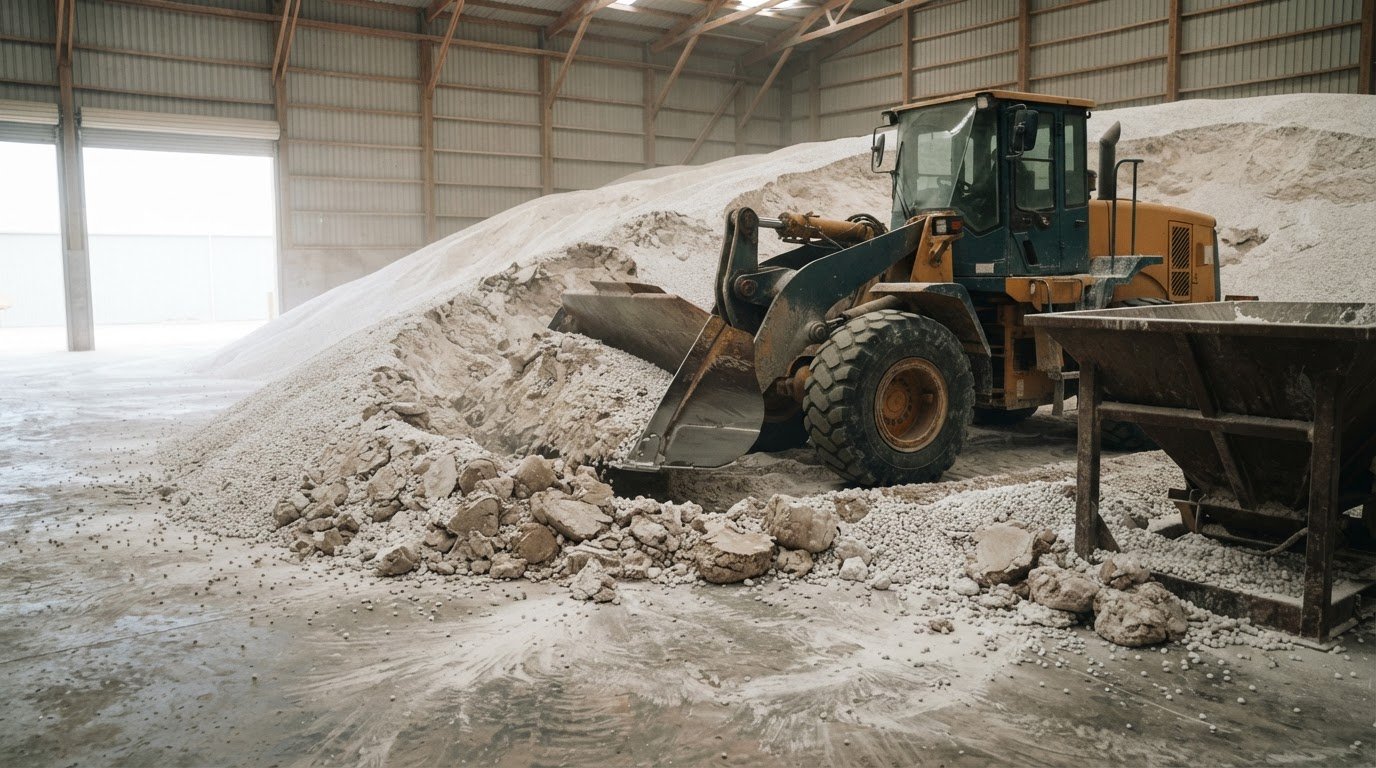
JAS Global Industries offers Fertilizer Anti-caking Agents for fertilizer operations where product handling and storage are priorities. This is distinct from reverse osmosis antiscalant dosing. Match the chemical category to the process need rather than treating fertilizer and water-treatment applications as interchangeable.
For fertilizer processing teams assessing anti-caking support, the relevant discussion centers on material and operating requirements. JAS Global Industries also offers Fertilizer Dust Suppressants, Mining Flotation Collectors, and Mining Grinding Aids for their respective industrial applications.
Contact JAS Global Industries to discuss Fertilizer Anti-caking Agents for your operation.
Build a dosing program that adapts
Make each operating change an opportunity to strengthen process control. Keep a clear record of feed-water conditions, dose settings, and system response. Over time, this history helps your team distinguish recurring patterns from short-lived changes and make decisions with greater confidence. Reverse osmosis antiscalant dosing optimization is not a fixed setting; it is an ongoing practice of matching chemical use to current operating evidence.
Use these records to define how your team evaluates formulation changes and responds to shifts in source water. Consistent criteria support informed decisions across operations, maintenance, and water treatment, while keeping chemical use aligned with membrane protection and resource stewardship.
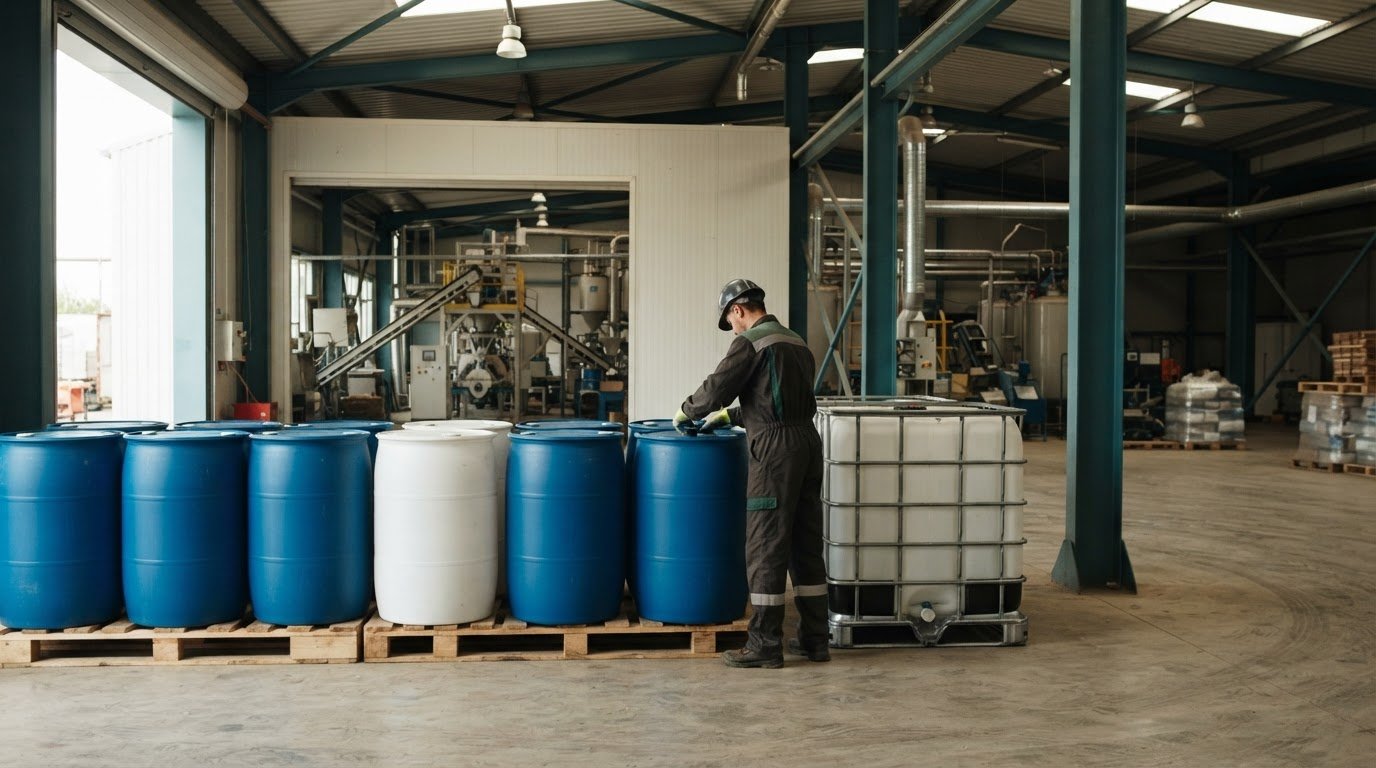
For the chemical side of that work, explore JAS Global Industries’ reverse osmosis chemicals and discuss the needs of your application. Thoughtful decisions today can help build a more reliable and resource-conscious RO operation.
Frequently Asked Questions
What Is Antiscalant Dosing?
Antiscalant dosing is the controlled addition of a scale-inhibiting chemical to RO feed water before it reaches the membranes. The chemical interferes with mineral crystal formation and helps prevent scale-forming material from accumulating on membrane surfaces. For example, a system facing calcium carbonate risk needs a scale-control approach suited to its water chemistry, not a dose selected only by pump setting.
Can antiscalant overdosing cause problems?
Yes. Excess antiscalant can contribute to membrane fouling when calcium-antiscalant deposits form, and it increases chemical use without necessarily improving scale control. If permeate output or pressure trends worsen after a dose increase, review the change alongside feed-water conditions and residual readings. A higher setting alone does not establish better protection; the system response matters.
How often should an RO system’s antiscalant program be reviewed?
Review the program quarterly against raw-water analysis, and sooner if source-water conditions change. A new supply source, for example, may alter the mineral balance and scaling risk even if the RO equipment remains unchanged. Keep analysis and operating records together so each review can compare current chemistry with past dosing decisions and performance trends.
What happens if antiscalant dosage is too low?
An insufficient dose can allow scale-forming minerals to crystallize and accumulate on membrane surfaces. These deposits can restrict water flow and impair RO performance, potentially prompting investigation and cleaning. For instance, feed-water mineral content may change and increase scaling risk while the pump setting stays constant. Reassess dose decisions against current water analysis rather than relying on a historical setting.
How do you calculate the optimal antiscalant dose for a reverse osmosis system?
First determine the dose based on feed-water chemistry, membrane guidance, recovery target, and system design. Then translate the selected concentration into a chemical feed rate using measured RO feed flow and product concentration. Confirm that the pump delivers this rate, then compare residual and normalized performance after an adjustment. This links the calculated setpoint to actual chemical delivery and system response.
How do feedwater chemistry and scaling indices determine antiscalant dose?
Feed-water analysis identifies ions that can form scale, including calcium, sulfate, and bicarbonate. Scaling indices help assess how close the water is to precipitation under the system’s operating conditions, especially as recovery concentrates dissolved minerals. Use both the ion profile and calculated scaling tendency to select a suitable control strategy; a single index cannot represent every scale-forming compound.