

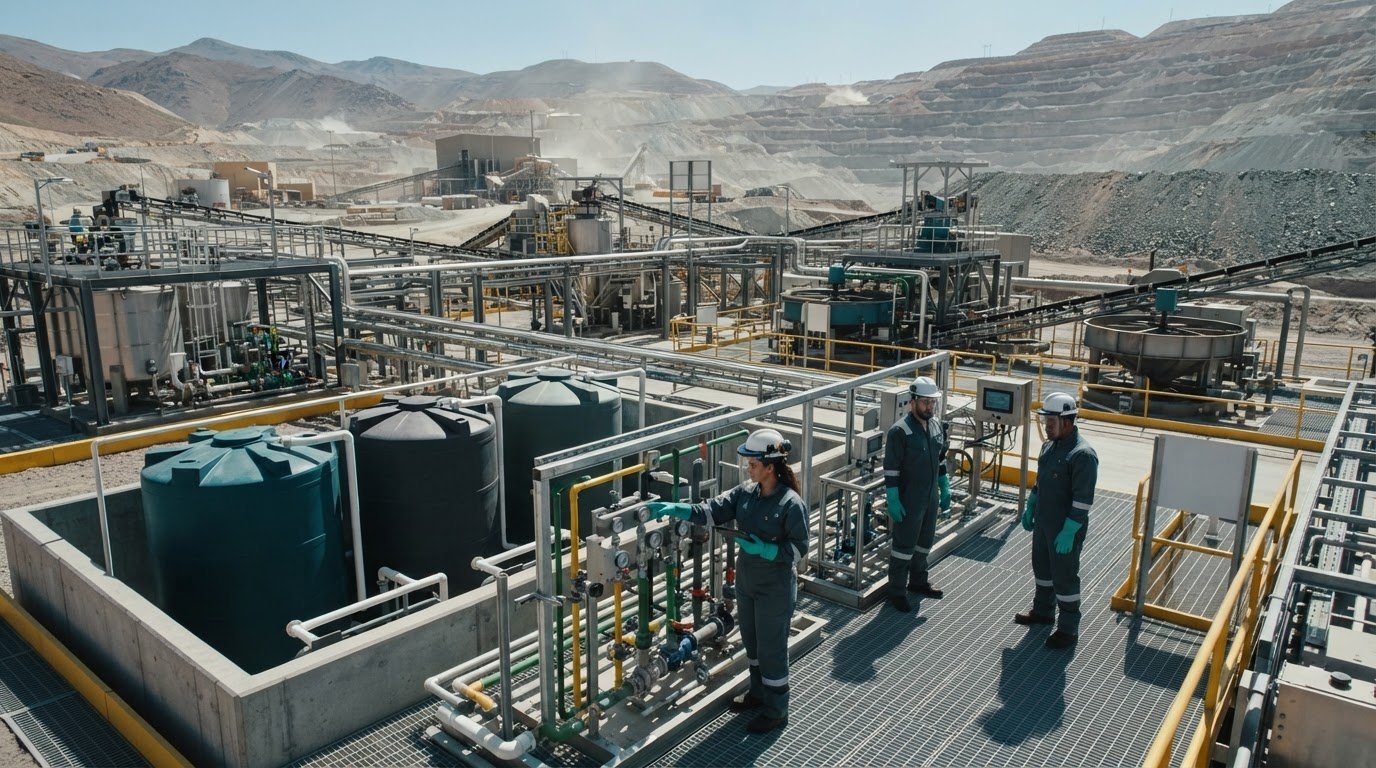
Standard personal protective equipment cannot compensate for flawed plant design. When managing aggressive flotation collectors, frothers, and depressants, true protection requires robust, reagent-specific engineering controls rather than generic, last-line defenses. The safe handling of mining chemicals is an operational imperative where the margin for error is razor-thin. Operators know the stakes: a single exposure during reagent preparation or an undetected pipeline leak can swiftly lead to severe chemical burns, punitive environmental fines, and catastrophic plant downtime.
Balancing high mineral recovery targets with strict workplace safety standards often feels like an uphill battle across evolving international jurisdictions. Chemical stewardship isn't merely an administrative checkbox; it's an indispensable pillar of process integrity and resource security. In this guide, you'll master comprehensive safety protocols, regulatory compliance strategies, and proactive hazard prevention systems for industrial reagents. We outline the closed-loop dosing controls, automated monitoring safeguards, and auditing protocols required to achieve zero lost-time injuries while keeping recovery yields running at peak performance.
Key Takeaways
- Achieve operational excellence through the safe handling of mining chemicals by transitioning from reliance on generic PPE to reagent-specific engineering controls.
- Identify distinct physical and reactivity risks across flotation collectors, frothers, depressants, and flocculants before toxic off-gassing occurs.
- Engineer robust physical barriers, including 110 percent secondary containment and automated dosing loops, to stop hazardous leaks at the source.
- Deploy targeted spill response kits calibrated to site-specific reagent chemistries to shield tailings circuits and nearby watersheds from contamination.
- Leverage dedicated on-site process audits to proactively identify latent handling hazards, eliminate lost-time injuries, and secure regulatory compliance.
Fundamentals of Safe Chemical Management in Mineral Processing
Industrial chemical safety is the systematic mitigation of operational risk from raw reagent delivery to final tailings deposition. Processing plants handle aggressive substances at scale every day. Maintaining operational stability requires treating reagent security as an integrated production priority. Rigorous protocols protect plant personnel, preserve critical infrastructure, and secure surrounding ecosystems. Safe handling of mining chemicals demands a unified framework linking engineering controls, standard operating procedures, and site-wide safety accountability.
A static chemical management binder sitting on an office shelf solves nothing. Effective safety programs live on the mill floor. In modern separation circuits, chemical behavior changes under heat, friction, and shear. Core principles established in the Fundamentals of Mineral Processing show that physical conditioning and chemical addition cannot be separated. Uncontrolled reagent additions compromise froth stability, accelerate equipment corrosion, and increase operator exposure hazards. Operational teams must maintain current Safety Data Sheets (SDS) in physical kiosks and synchronized mobile interfaces across all staging, grinding, and flotation zones.
Regulatory Frameworks: GHS, MSHA, and International Standards
Regulatory scrutiny across global processing facilities continues to intensify. Meeting baseline criteria requires adherence to standardized, enforceable codes:
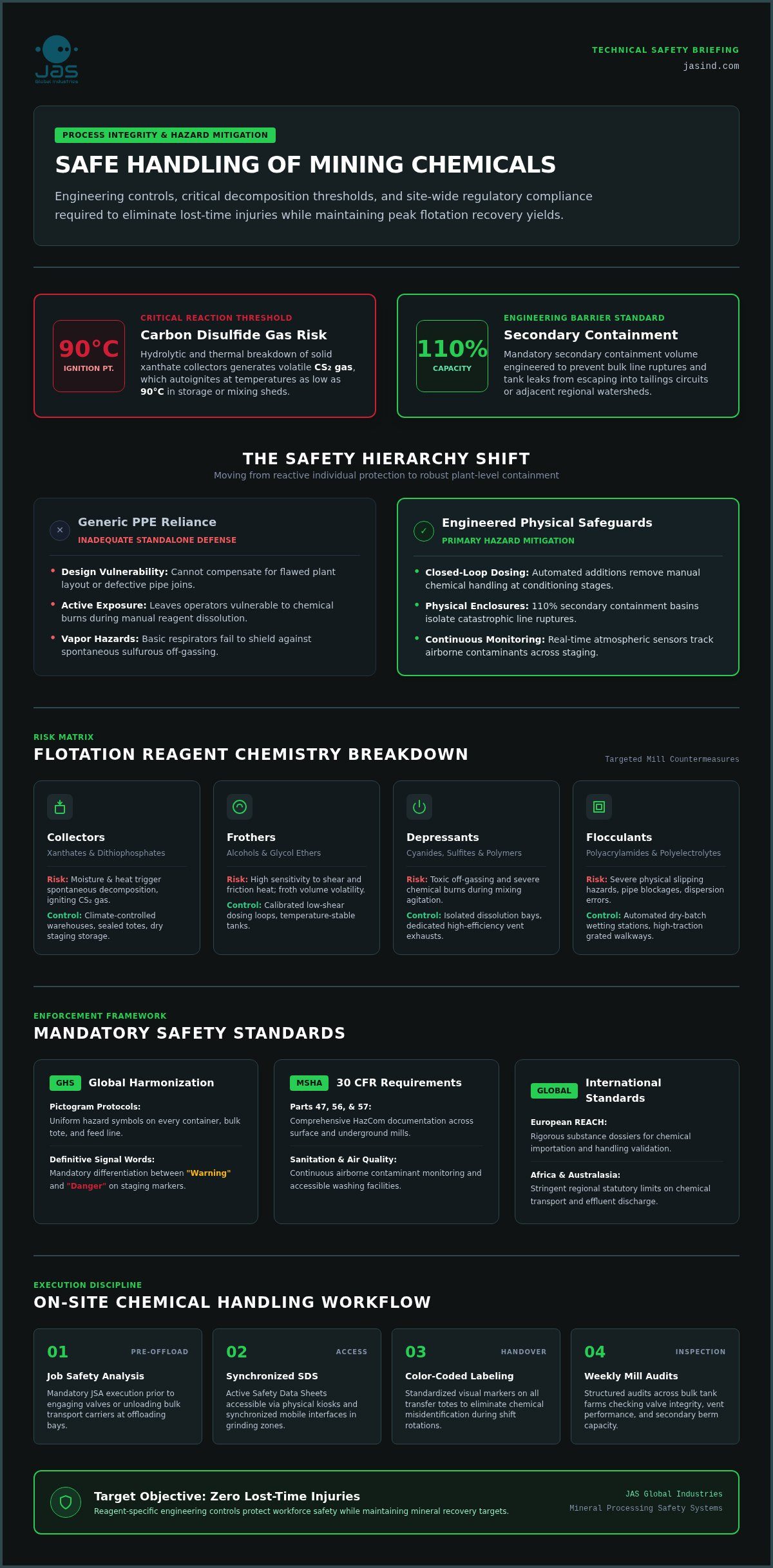
- GHS Mandates: Global Harmonization System protocols dictate uniform labeling, definitive signal words like "Danger" or "Warning," and standardized hazard pictograms across every container, bulk tote, and dosing line.
- MSHA 30 CFR Requirements: Parts 47, 56, and 57 require exhaustive hazard communication programs, continuous airborne contaminant monitoring, and accessible washing facilities across surface and underground mills.
- International Frameworks: Operations spanning jurisdictions must harmonize disparate rules. European REACH registrations demand extensive substance dossiers, while regional mining codes throughout Africa and Australasia impose stringent restrictions on effluent discharge and chemical transport.
Hazard Communication and On-Site Risk Assessment
Reliable operations prevent incidents before reagents are pumped into conditioning tanks. Chemical handling starts well before dosing pumps engage. Plant operators must execute verified Job Safety Analyses (JSA) prior to initiating offloading sequences from bulk transport carriers.
High-throughput shift handovers present severe vulnerabilities. Clear, color-coded container labeling protocols eliminate reagent misidentification when crews rotate under demanding production schedules. Facilities must conduct structured hazard audits across bulk tank farms, reagent dissolution bays, and mixing sheds every week. Documenting valve integrity, vent performance, and secondary containment status guarantees that the safe handling of mining chemicals remains an active, verifiable plant discipline rather than a compliance afterthought.
Reagent-Specific Hazards: Collectors, Frothers, Depressants, and Flocculants
Mineral processing circuits rely on diverse chemical classes, each presenting unique thermodynamic, toxicological, and mechanical hazards. Generic safety advice fails in flotation plants. When xanthate collectors undergo hydrolytic and thermal decomposition in storage tanks or mixing bays, they generate highly flammable, toxic carbon disulfide gas that ignites at temperatures as low as 90 degrees Celsius. The safe handling of mining chemicals requires engineering safeguards engineered specifically for each reagent family.
Protecting plant personnel demands an acute understanding of how these formulations behave under real-world mill conditions, whether during agitation, dilution, or extended bulk storage.
Flotation Collectors and Frother Safety Dynamics
Sulfide mineral collectors, particularly xanthates and dithiophosphates, degrade quickly in the presence of moisture and heat. Solid xanthate pellets packed in bulk bags can generate spontaneous combustion hazards if water infiltrates storage warehouses, releasing volatile sulfurous vapors. Storing these chemicals in cool, dry, and continuously vented areas is essential.
Frothers present distinct vapor accumulation challenges:
- Low Flash Points: Many alcohol-based and aliphatic frothers exhibit low flash points, turning enclosed mixing areas into classified explosive zones without continuous mechanical extraction.
- Aerosolization and Inhalation: Intense turbulence in flotation cells vaporizes glycol ethers and methyl isobutyl carbinol (MIBC), requiring direct capture ventilation to eliminate severe respiratory irritation and central nervous system depression.
- Dermal Permeation: Liquid frother concentrates penetrate standard nitrile work gloves rapidly, demanding specialized fluoroelastomer or butyl barriers during maintenance.
Inorganic Depressants and Flocculant Handling Protocols
Inorganic modifiers introduce lethal toxicological risks. Sodium cyanide, sodium hydrosulfide (NaHS), and sulfur dioxide require rigid pH stabilization above critical reaction thresholds. When acidic pulp mixes accidentally with sulfide depressants, rapid off-gassing occurs instantly. Integrating automated caustic dosing controls and targeted H2S treatment solutions reliably neutralizes dangerous gas generation across flotation, thickening, and tailings circuits.
Mining flocculants present physical containment issues rather than acute chemical toxicity. High-molecular-weight polyacrylamide powders become exceptionally slick when exposed to minimal ambient moisture:
- Fall Hazards: Uncontained spills turn steel walkways and concrete floors into frictionless surfaces that standard washdown hoses only worsen.
- Dust Control: Bulk bag unloader hoppers must feature local vacuum draft shrouds to capture respirable polymer particulates before they migrate into worker breathing zones.
Auditing reagent preparation circuits with dedicated chemical engineering partners like JAS Global Industries helps operations optimize precise dosing systems, eliminating worker exposure while maximizing metallurgical recovery rates.
Engineering Controls: Safe Storage, Bulk Transfer, and Automated Dosing
Personal protective gear offers minimal defense against sudden line ruptures or toxic vapor discharges. The hierarchy of controls establishes physical engineering barriers as the primary defense in processing operations. Isolating aggressive reagents at the mechanical interface eliminates exposure hazards before workers enter mixing areas. The safe handling of mining chemicals requires purpose-built infrastructure designed to contain corrosive solutions and automate fluid transfer across every circuit.
Every bulk installation requires engineered secondary containment. Storage bunds must hold at least 110 percent of the largest vessel's volume, or 25 percent of total combined storage capacity within the enclosure. These structures need impervious, chemically resistant epoxy or polyurea linings to prevent aggressive reagents from degrading structural concrete or migrating into plant subsurfaces.
Chemical Warehouse Design and Incompatibility Segregation
Incompatible reagents stored in close proximity create severe plant vulnerabilities. Warehouses must enforce physical, isolated bays separating strong oxidizers from flammable collectors, and mineral acids from alkali modifiers. Dedicated containment cells require dedicated sumps, flameproof mechanical extraction near floor level, and continuous multi-gas sensor arrays tied directly to central SCADA controls.
Bulk Transfer and Automated Reagent Dosing Skids
Manual reagent handling creates unacceptable operational hazards. Transporting xanthates or frothers in open pails introduces immediate splash risks and inconsistent conditioning rates. Modern plants deploy automated dosing skids that meter reagents into conditioning tanks via closed-loop circuits:
- Sealless Magnetic Drive Pumps: Eliminating mechanical shaft seals prevents hazardous gland leaks during high-pressure liquid transfer.
- Dry-Break Couplings: Bulk road-tanker offloading manifolds require self-sealing fluid couplers and emergency breakaway valves to stop spills if transport vehicles shift.
- Mass Flow Metering: Automated Coriolis meters tie chemical addition rates directly to incoming ore tonnage, eliminating manual operator interaction.
Piping Integrity and Instrumentation Monitoring
Material compatibility determines piping longevity. Standard carbon steel fails quickly against corrosive modifiers. Plants handling aggressive reagents must specify high-density polyethylene (HDPE) or polyvinylidene fluoride (PVDF) lines with PTFE-lined valves. Dual-containment pipe designs protect high-traffic corridors where mechanical impact risks exist.
Continuous monitoring turns passive piping into an active safety system. Digital pressure transducers track micro-pressure drops across transport lines, triggering automatic emergency shutoff valves when line ruptures occur. Combining telemetry monitoring with non-destructive ultrasonic wall thickness testing guarantees the safe handling of mining chemicals, arresting pipeline erosion well before catastrophic breaches interrupt plant throughput.
Emergency Preparedness, Spill Containment, and Incident Response
Accidental releases demand decisive intervention before fugitive reagents migrate beyond processing perimeters. When a pressurized line fails or a transfer hose ruptures, containment speed dictates whether an event remains a localized cleanup or escalates into an environmental crisis. The safe handling of mining chemicals extends directly into emergency preparedness, requiring engineered containment kits, rapid neutralization chemistry, and clear personnel recovery protocols.
Worker survival during caustic or acidic exposure depends on immediate intervention. Industrial safety showers and eyewash stations must be reachable within 10 seconds of identified chemical hazards across unobstructed, level pathways. Delays compound tissue damage exponentially.
Immediate Response Protocols for Chemical Spills
Spill mitigation follows a rigid three-tier methodology: isolate, contain, and neutralize. Responders must cut off upstream line pressures before laying down physical barriers:
- Synthetic Sorbents: Deploy non-reactive polypropylene sorbent booms around spilled liquid reagents. Organic collectors ignite if absorbed with combustible organic cellulose or wood shavings.
- Chemical Neutralization: Apply buffered alkaline agents like sodium carbonate to acid releases, or weak organic acids to caustic puddles, monitoring solution temperature to avoid exothermic violent boiling.
- Mechanical Recovery: Vacuum slurries into dedicated mobile hazardous holding totes using air-operated double-diaphragm pumps approved for combustible zones.
Personnel Exposure Mitigation and Medical First Aid
Direct exposure requires 15 minutes of uninterrupted flushing under high-volume emergency showers. Contaminated garments trap concentrated chemicals against skin and must come off immediately during drenching.
Remote sites must stock specialized medical counter-agents in secure, temperature-controlled first aid stations. Facilities utilizing hydrogen fluoride or related acidic modifiers require immediate access to calcium gluconate gel to halt deep-tissue bone demineralization. First responders must set up dedicated warm-zone decontamination corridors to strip, wash, and evaluate victims prior to handing them over to external emergency medical services.
Environmental Protection and Tailings Dam Isolation
Uncontrolled chemical plumes must never enter general tailings infrastructure or adjacent water basins. Automated motorized penstock diversion gates allow plant operators to direct chemical-laden floor runoff straight into emergency impoundment sumps, isolating the release from the primary tailings discharge loop.
Automated multiparameter telemetry stations positioned along downstream release channels monitor electrical conductivity, dissolved oxygen, and pH in real time. Following physical containment, environmental teams must conduct systematic core soil and groundwater assays to verify zero migration off-lease, demonstrating rigorous execution in the safe handling of mining chemicals. To benchmark your facility's spill containment response and emergency readiness against global mining standards, consult with JAS Global Industries' technical safety team.
Advancing Chemical Safety Through Professional Auditing and Technical Partnership
Sustainable plant performance relies on moving beyond transactional chemical procurement. Mining operations handle thousands of tons of aggressive reagents yearly. Treating safety as an isolated maintenance task exposes sites to sudden compliance penalties and unexpected downtime. True operational resilience emerges when mine managers and specialty chemical producers collaborate as long-term technical partners. The safe handling of mining chemicals requires proactive process optimization that identifies systemic flaws long before incident investigations begin.
The Role of On-Site Technical and Safety Audits
Independent plant reviews uncover latent hazards hidden within everyday mill routines. Comprehensive audits examine bulk tank integrity, transfer skid valving, and secondary bunding to confirm physical barriers remain intact. On-site metallurgical testing evaluates reagent concentrations and dosing profiles directly within grinding, flotation, and thickening circuits.
Optimized reagent chemistry cuts excess chemical consumption. When circuits run with tailored flotation collectors, frothers, depressants, and flocculants, dosing volumes decrease without compromising grade or recovery. Reduced chemical throughput translates directly into smaller storage footprints and lower personnel exposure risks. Exploring an advanced mining solutions portfolio allows metallurgists to align mineral yield targets with stringent environmental containment standards.
Operator Training and Sustainable Chemical Stewardship
Mechanical controls can't succeed if workforce education remains stagnant. Structured educational programs build technical competency across all processing shifts. Training modules must cover specific reagent decomposition pathways, proper barrier PPE donning sequences, and immediate spill neutralization procedures.
Forward-thinking operations don't wait for lost-time incidents to take action. Tracking leading indicators, such as near-miss notifications, pump seal weeping, and reagent consumption variances, builds a predictive safety culture on the mill floor. Partnering with experienced global manufacturers secures dependable, responsibly engineered reagents with documented lifecycle profiles. With an operational history in specialty chemical engineering dating back to 1998, JAS Global Industries combines global manufacturing infrastructure with dedicated on-site technical consulting, empowering processing facilities to master the safe handling of mining chemicals while safeguarding global mineral resources.
Securing Mineral Processing Through Engineered Safety and Stewardship
Transitioning from reactive protection to closed-loop engineering barriers safeguards mill teams while preserving mineral recovery. Reagent-specific containment, automated dosing loops, and rapid neutralization protocols eliminate acute exposure risks before they reach operational floors. Achieving excellence in the safe handling of mining chemicals isn't merely a compliance requirement; it's a foundational discipline that ensures operational continuity and environmental integrity.
Proactive chemical stewardship requires deep technical alignment between processing plants and specialty manufacturers. Backed by dedicated international research centers and integrated production facilities, JAS Global Industries has delivered specialized chemical engineering and on-site process consulting since 1998 across the Middle East, Africa, Asia, and Europe. Partner with JAS Global Industries for safe chemical supply and technical audits to fortify your handling infrastructure, protect your workforce, and secure sustainable metallurgical yields.
Frequently Asked Questions
What are the primary hazards associated with flotation collectors in mineral processing?
Flotation collectors present severe flammability, thermal decomposition, and toxicity risks during handling and storage. Organic sulfur compounds like xanthates degrade in hot or humid environments, releasing toxic, volatile carbon disulfide gas that ignites at very low temperatures. Collectors can also cause acute skin irritation and dermal sensitization upon direct contact. Proper warehouse climate control, inert storage containers, and dedicated forced-draft ventilation mitigate these reactive hazards effectively.
How should mining companies store incompatible chemical reagents to prevent reactions?
Mining operations must enforce strict physical segregation using dedicated bunded bays with chemical-resistant curbing and isolated sumps. Store strong mineral acids away from alkali modifiers, cyanides, and sulfides to avoid generating lethal toxic gases like hydrogen cyanide or hydrogen sulfide. Oxidizers must remain physically isolated from combustible flotation reagents. Ensuring at least 110 percent secondary containment capacity stops accidental tank failures from mixing incompatible chemical streams across warehouse floors.
What engineering controls are most effective for preventing chemical exposure in mines?
Closed-loop automated dosing skids, magnetic drive pumps, and high-integrity polymer piping represent the most effective engineering controls. Replacing manual bucket dosing with automated Coriolis mass flow meters removes workers from splash zones entirely. Installing dry-break disconnect couplings on bulk offloading manifolds prevents fugitive leaks during road tanker transfers. In the safe handling of mining chemicals, prioritizing mechanical isolation over personal protective equipment permanently lowers operator exposure risks across grinding and flotation circuits.
How often should emergency eye wash stations and safety showers be inspected?
Industrial safety showers and eyewash units require weekly operational activation checks alongside comprehensive annual compliance inspections. Weekly flushing verifies that plumbing lines remain clear of sediment, valves actuate instantly without sticking, and fluid delivers at tepid temperatures between 16 and 38 degrees Celsius. Annual audits verify spray pattern dimensions, water pressure, and unobstructed pathway access within 10 seconds of every identified chemical hazard zone throughout the plant.
Can automated chemical dosing systems improve worker safety in processing plants?
Yes, automated chemical dosing systems significantly enhance plant safety by eliminating direct manual contact with concentrated reagents. These systems meter flotation collectors, frothers, depressants, and flocculants directly into slurry streams using programmable logic controllers and flow instrumentation. Automating the transfer minimizes splash injuries, vapor inhalation, and repetitive lifting hazards. Dosing automation also maintains precise chemical consumption rates, preventing excess reagent buildup in plant circuits and downstream tailings impoundments.
What immediate actions are required if a toxic reagent spill occurs on site?
The immediate response requires isolating the source, containing fluid spread with synthetic sorbent booms, and neutralizing the chemistry before mechanical cleanup. Responders must immediately shut emergency isolation valves and isolate the impacted electrical circuits. Neutralize acidic or caustic puddles using verified chemical buffers while monitoring for exothermic reactions. Plant teams must actuate diversion gates to shield tailings circuits and nearby waterways from fugitive chemical plumes.
How does chemical optimization reduce the overall risk profile of mining operations?
Chemical optimization reduces risk by tailoring reagent dosages to exact ore mineralogy, drastically cutting the gross volume of hazardous inventory stored on site. Lower chemical consumption directly decreases transport deliveries, unloading frequencies, and hazardous pump transfers across the plant. Partnering with technical consulting specialists like JAS Global Industries guarantees the safe handling of mining chemicals while maximizing mineral recovery rates through custom reagent formulations and targeted process audits.