
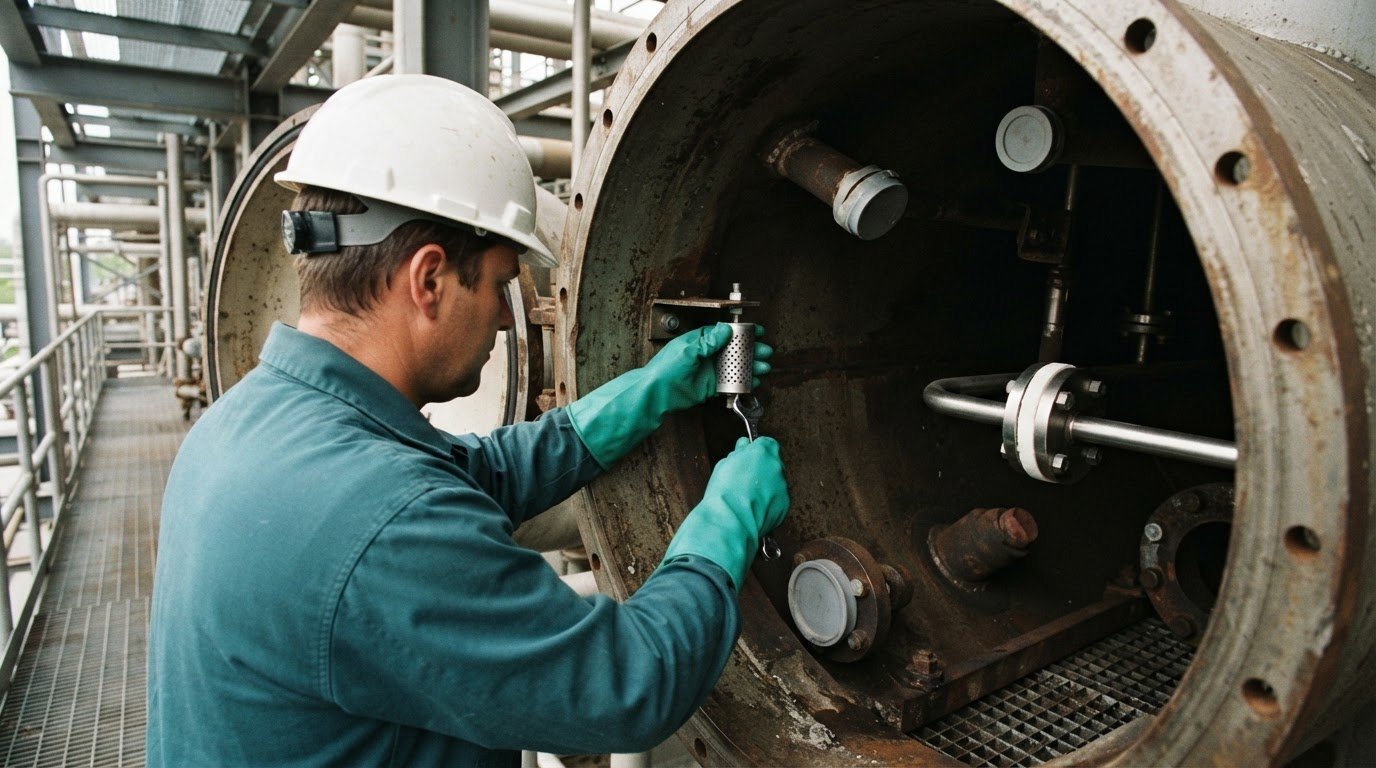
Corrosion is the gradual deterioration of metal through reactions with its environment. In iron, oxygen and moisture can form iron oxide, or rust. For plants, avoiding plant shutdowns due to corrosion starts with protecting idle equipment before moisture, contaminants, or unsuitable metal contact damage exposed surfaces.
A shutdown does not eliminate corrosion risks: idle assets still need a preservation plan suited to their materials, equipment, and expected downtime. Lay-up practices limit exposure, while managing contact between materials and using vapor-phase corrosion inhibitors can help protect metal surfaces inside enclosed spaces. Together, these measures support equipment preservation and a safer, more reliable restart.
1. How ineffective lay-up procedures can lead to equipment failures
Corrosion weakens components and can impair a facility’s performance. Iron reacts with oxygen and moisture to form iron oxide, while corrosion inside a pipe or vessel may go unnoticed during downtime. A lay-up plan should identify exposed surfaces, trapped process chemicals, and areas where temperature changes can cause condensation.
Plan preservation for the expected idle period, while allowing for an earlier restart. A plant may need to resume operations within six to nine months, while mothballed equipment can remain idle for several years. If the protection period is poorly matched, metal may be left exposed or treatment may need to be repeated. In one shutdown case, renewing the protective system every three months cost six times as much as designing it for two years initially.
Before applying preservation treatments, clean specialized equipment and remove process residue. Drain and air-dry coolers where suitable, and maintain the specified chemistry and pressure for the equipment. For example, hot lay-up uses slight pressure and proper cycle chemistry; wet lay-up maintains drum levels and a nitrogen or steam barrier. For longer outages, drain and clean cooling tower basins and inspect the spray nozzles.
Exercise stationary equipment during lay-up by rotating it several times and leaving it at a different angle, such as 90 degrees. Monitor humidity controls weekly and chemical controls every three months. These checks can reveal moisture intrusion or declining protection before a restart inspection.
Corrosion-related downtime can mean lost production, labor, and repairs. In a documented case, renewing a system every three months cost six times as much as designing protection for two years initially. This illustrates why the preservation period should be planned to suit the expected outage.
U.S. corrosion-control and inspection requirements depend on the facility, process, equipment, and applicable jurisdiction. Build the inspection plan around the assets and processes in scope, and document the inspection criteria and findings.
Corrosion under insulation can conceal moisture and metal loss; erosion-corrosion combines material wear with corrosive attack; microbiologically influenced corrosion involves microbial activity. If a leak or suspected failure appears, follow site emergency procedures, alert operations, and arrange an inspection before returning affected equipment to service. For example, promptly replacing a corroded valve component within the allowed outage time can help avoid a facility shutdown.
2. Reducing corrosion opportunities and incompatible-metal contact
Corrosion prevention starts by reducing metal’s exposure to conditions that attack it. Inspect exposed, uncoated, and newly machined surfaces before storage. Apply a suitable preservation oil, grease, wax-based product, or petrolatum tape to create a barrier against moisture and liquid contamination. Choose protection based on the metal, operating environment, and planned storage conditions.
Contact between dissimilar metals can create a corrosion pathway when moisture connects their surfaces. Review component arrangements at joints, supports, fasteners, and temporary storage points. Keep incompatible metals apart or use a suitable insulating barrier where direct contact cannot be avoided. For example, do not place a machined metal part directly on damp wood, paper, or corrugated board. These forestry-based materials can contribute to contact corrosion.
Storage choices matter, too. Where practical, keep metal components enclosed against humid air, and avoid exposing parts to condensation or wet floors. For electronics, protect metal contacts and enclosures from moisture while maintaining the storage conditions required for the equipment. Keep clean components separate from contaminated tools, packing materials, and chemical residue. These controls reduce opportunities for corrosion without adding unnecessary steps to preservation.
Build material inspection into quality control. Record the component material, surface condition, and preservation method, then check that incoming materials match the intended application. Process controls can catch incompatible material choices before installation. A protective coating also needs to suit the substrate and the environment; an unsuitable coating may fail to provide the intended barrier. For projects involving protective finishes, coating chemicals can be part of a considered corrosion-control approach. Good material selection and storage support equipment efficiency and sustainability by helping assets remain fit for service.
Industrial plants can reduce corrosion risk by choosing resistant materials, minimizing locations where corrosion can occur, and limiting contact between incompatible metals. Corrosion-prevention quality control can include process controls and inspection of the materials in use.
3. Vapor-phase corrosion inhibitors for idle plant assets
Vapor-phase corrosion inhibitors protect metal surfaces inside an enclosed space. The inhibitor vaporizes, fills the enclosure, and forms a protective molecular layer on metal surfaces. This barrier helps limit corrosion while assets are idle, including when oxygen and moisture remain inside equipment.
Use this method for suitable enclosed assets during downtime, from short idle periods to several months. First, clean and dry the equipment according to its preservation plan. Then place the inhibitor inside the enclosure and close it so vapor can reach internal surfaces. VpCI emitters can condition electrical enclosures, while vapor-phase inhibitors can preserve boiler internals in a dry state.
Coverage and enclosure conditions matter. One gram of Vapour Phase Corrosion Inhibitors provides coverage for over 55.0 cubic metres. Volatile corrosion inhibitors can protect metallic equipment surfaces for up to two years. These figures provide planning context, but the enclosure’s volume, sealing, metal surfaces, and operating environment determine the appropriate arrangement.
Inhibitors, coatings, linings, and cathodic protection work in different ways. An inhibitor reduces corrosion through chemical action or a protective film; a coating or lining separates metal from its environment; cathodic protection controls corrosion through an electrical method or a sacrificial metal. The right approach depends on the asset and its exposure conditions.
Vapor-phase protection does not remove existing rust. Inspect components before preservation, address existing corrosion, and protect clean metal before damage occurs. In a closed cabinet, position emitters so vapor can circulate around internal surfaces rather than remain trapped in one corner. For complex equipment, include the enclosure boundary and access points in preservation checks. When the asset returns to service, follow its restart procedure and remove preservation materials when required. These steps make inhibitor use part of a planned corrosion-prevention system, not a substitute for inspection or suitable surface preparation.
4. What are the most common causes of corrosion-related plant shutdowns?
Corrosion-related shutdowns can follow damage that develops unnoticed at vulnerable points. Before choosing controls, plant teams need to identify the corrosion type, location, and cause. A leak at a pipe joint, thinning in a vessel, or seized valve can disrupt a process and trigger inspection or repair. Mapping affected components helps link local damage to operating conditions.
Moisture and oxygen can attack exposed metal, while process chemicals can create a more aggressive environment. The chemical involved, its concentration, temperature, and contact time all shape the risk. Review where liquid collects, where equipment cycles between hot and cool conditions, and where seals or coatings have failed. These details help distinguish a recurring process cause from isolated surface damage.
Corrosion under insulation can remain hidden beneath cladding, so visible checks alone may not be enough. Erosion-corrosion can occur where moving fluids wear protective surfaces, such as at bends or flow restrictions. Microbiologically influenced corrosion is another possible cause in systems where microbial activity affects metal deterioration. Each mechanism points to different inspection locations and corrective actions.
Contact between dissimilar metals is another source of localized attack when moisture provides a connecting path. Poor material selection, damaged coatings, and missed inspections can increase exposure. In water systems, treatment conditions also matter: corrosion inhibitors can help manage risk when matched to system chemistry and operating needs. A cause-based review should compare inspection findings with process history, material records, and maintenance observations.
To reduce unplanned outages, prioritize locations where failure could interrupt a critical process, then document the evidence and response. A suspected leak calls for site emergency procedures, operational controls, and inspection before affected equipment returns to service. Discuss corrosion-control needs as part of a planned approach to protecting equipment and maintaining reliable operations.
Identifying corrosion types, locations, and causes is essential to corrosion prevention across industrial plants.
JAS Global Industries: Water Treatment Corrosion Inhibitors
JAS Global Industries offers Water Treatment Corrosion Inhibitors for water systems where corrosion control is part of asset preservation. They are relevant when equipment protection depends on managing corrosion in circulating or treated water, rather than protecting dry, enclosed metal surfaces with vapor-phase methods.
Choosing an inhibitor requires attention to the water system, operating conditions, and materials exposed to the water. These factors shape the treatment approach and help align corrosion control with reliable plant operations. JAS Global Industries develops tailor-made chemical formulations and provides technical expertise for industrial processes.
If water-system corrosion is affecting your preservation plan, contact JAS Global Industries to discuss your requirements.
Make preservation part of the restart plan
Protecting idle assets works best when preservation is part of operational readiness, not a task postponed until commissioning. Align the approach with each system’s materials, water conditions, and expected return to service. This gives maintenance and operations teams a shared basis for keeping equipment ready and avoiding plant shutdowns due to corrosion.
For water systems, corrosion control may be one part of a wider chemical-treatment strategy. JAS Global Industries offers Water Treatment Corrosion Inhibitors, as well as Fertilizer Anti-caking Agents, Fertilizer Dust Suppressants, and Mining Flotation Collectors for other industrial applications.
Bring the system conditions and preservation priorities into the conversation to identify where water-treatment corrosion inhibitors fit your plant’s needs. Contact JAS Global Industries to discuss a practical next step, and continue building a stronger foundation for reliable operations.
Frequently Asked Questions
What is corrosion?
Corrosion is the deterioration of metal through reactions with its surrounding environment. The process can change a surface gradually or cause localized damage, depending on the metal and exposure. For example, rust is a visible form of corrosion on iron, while damage inside a pipe may remain hidden until inspection or operating symptoms reveal it.
Which industries and equipment are most vulnerable to corrosion failures?
Industries handling water, chemicals, slurries, or changing temperatures face corrosion exposure across pipes, tanks, pressure vessels, boilers, and cooling systems. Mining and fertilizer operations may also have process equipment exposed to corrosive materials. Vulnerability depends on materials, operating conditions, and maintenance of protective systems, so asset-specific reviews are more useful than broad industry labels.
How can plants detect corrosion early using inspections, sensors, and corrosion monitoring?
Combine visual checks with non-destructive testing to examine accessible surfaces and identify hidden metal loss. Sensors and corrosion-monitoring devices can track changes in relevant operating conditions or corrosion indicators over time. Compare readings with inspection records and process data. Patterns such as recurring moisture or an unexpected change in system chemistry can help direct attention to vulnerable equipment.
What corrosion inspection methods and intervals are recommended for industrial facilities?
Use visual inspection for accessible surfaces and non-destructive testing when internal condition or wall thickness needs assessment. Set inspection intervals according to equipment criticality, exposure, past findings, and process changes. A high-consequence vessel may need a different plan from a low-risk component. Reassess the schedule after a leak, treatment change, unusual operating condition, or newly identified damage.
What steps should a plant take to build a corrosion management and prevention program?
Start by creating an asset register that records materials, process conditions, and damage history. Rank equipment by the consequences of failure, identify likely corrosion mechanisms, then assign inspection and preservation controls. Track findings, repairs, and treatment adjustments in one record. Avoiding plant shutdowns due to corrosion requires engineering, maintenance, and operations to work together so changes in process conditions prompt timely review.