
Sulfide ore processing plants may achieve a recovery ratio of about 85-90%, depending on material conditions, but no single reagent recipe suits every feed. A reagent scheme for complex sulfide ores must account for the minerals present, their interactions, and the separation goals for copper, lead, zinc, and gold. Low-grade ores add another challenge: reagent choices need to support useful recovery without sacrificing concentrate selectivity.
It’s reasonable to focus first on the collector, but a workable scheme depends on how collectors, frothers, and depressants function together. This article explains how reagent choices shape flotation, what to consider when optimizing reagents for sulfides, and how promoter metals and metal chlorides fit into treatment approaches. You’ll also see why ore characteristics guide the scheme, rather than a universal dosage or fixed formula.
Flotation of copper, lead, zinc, and gold minerals
Complex sulfide flotation separates valuable minerals according to how their surfaces respond to reagents. The scheme depends on the metals present and whether the goal is a bulk concentrate or separate products.
Metals in Complex Sulfide Ores
Complex sulfide ores contain intergrown sulfide minerals bearing copper, lead, zinc, and sometimes gold or silver. This mineral association matters: one flotation stage may recover several metals together, while further separation may be needed to produce individual concentrates.
For example, copper and lead minerals may float together before differential flotation separates them from zinc minerals. Gold and silver can accompany sulfide concentrates, so their recovery depends partly on which mineral particles carry them. Some complex ores have total sulfide content higher than 90%, making mineral associations central to process choices.
Copper Sulfide Collector Families
Xanthates are standard collectors for sulfide flotation, while dithiophosphates can serve as secondary collectors alongside them. Dithiophosphate 31 is an oily liquid collector used in sulfide and oxidized mineral flotation. These families help promote attachment of target mineral particles to air bubbles.
Collector selection matters for lead, zinc, and iron sulfides. A collector that floats several sulfides can support bulk recovery but may make subsequent separation more difficult. In copper-lead-zinc flotation, the scheme must balance recovery with selectivity, since collector response depends on mineral surfaces and their interactions.
Bulk and Differential Flotation Flowsheets
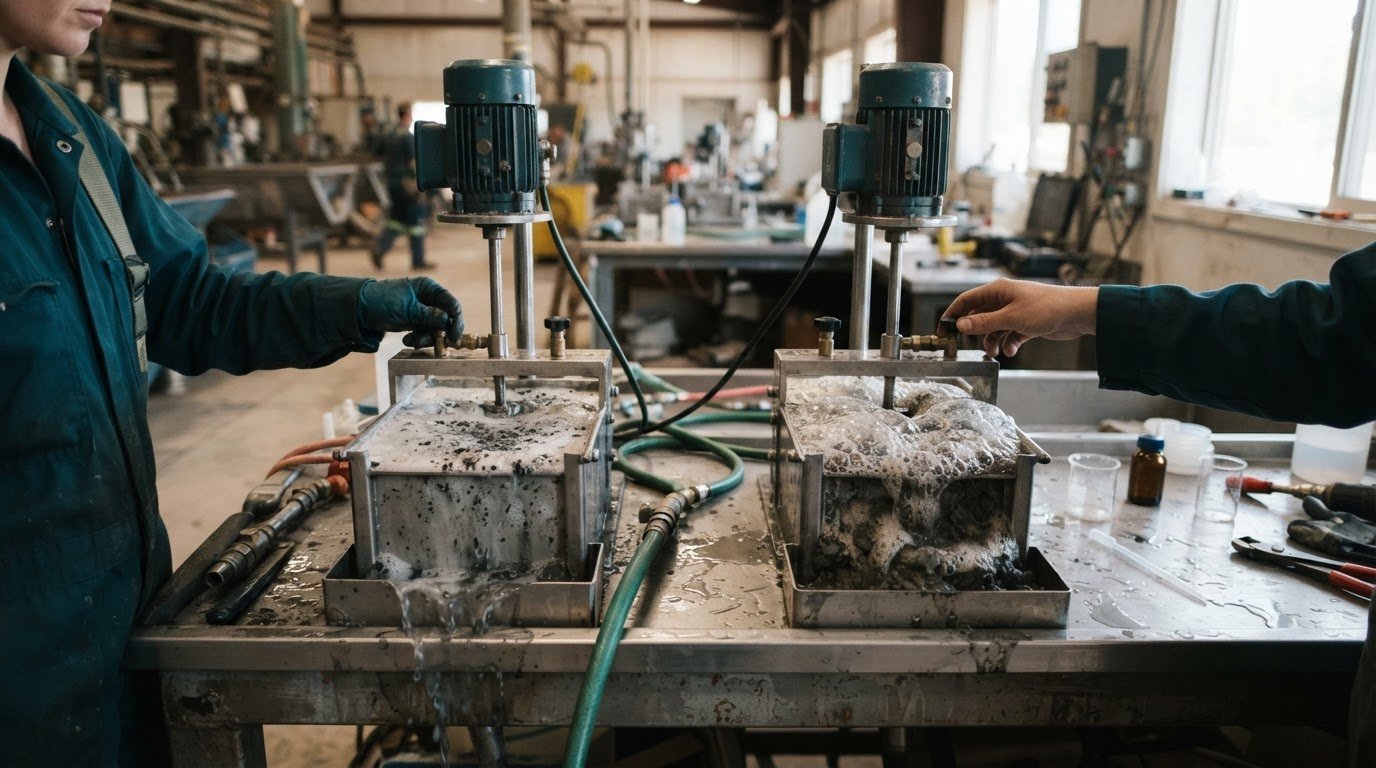
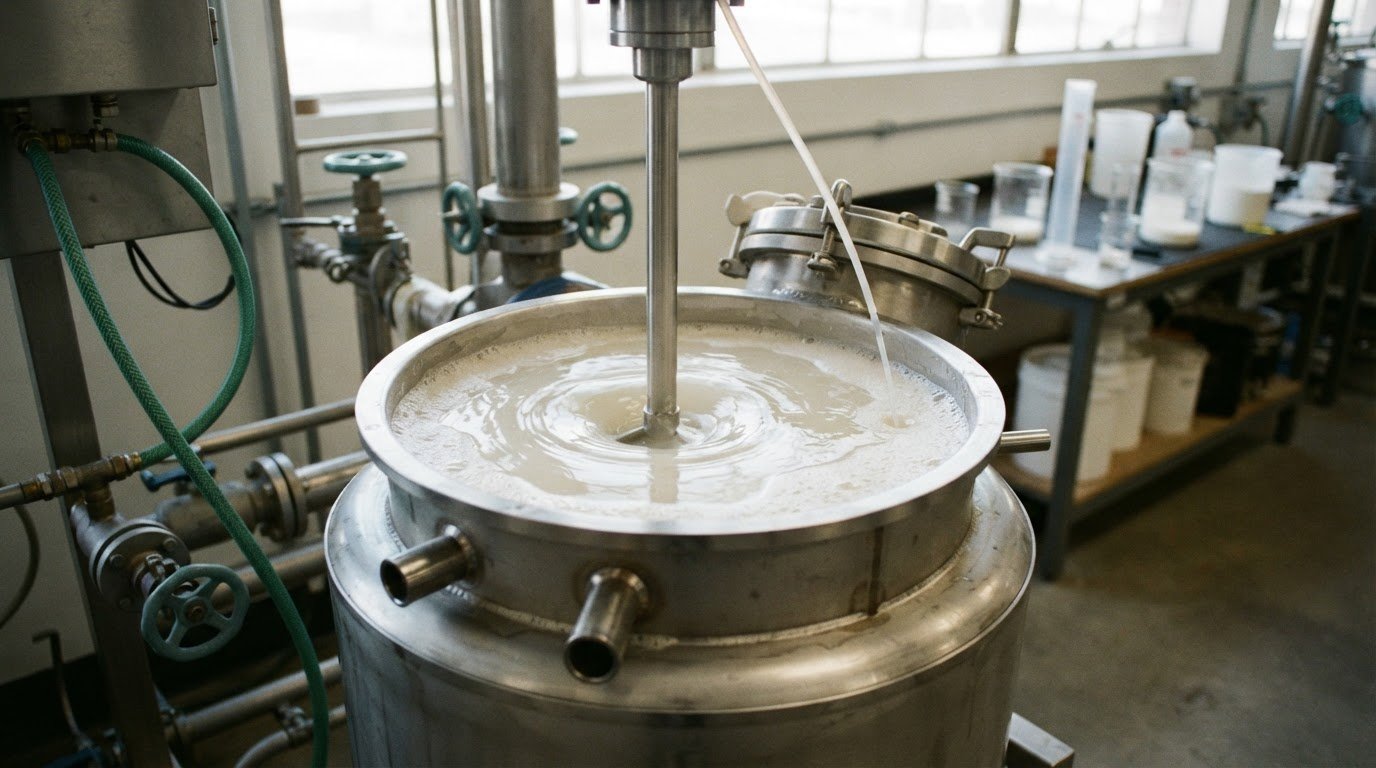
A bulk flowsheet first floats associated copper, lead, and zinc sulfides into one concentrate. The sequence involves crushing and grinding, conditioning the pulp with collectors and frother, and flotation in a cell or column. The bulk concentrate can then undergo differential flotation, where reagents depress selected minerals while others float.
In differential treatment, copper-lead separation may come before zinc recovery, with each stage producing a distinct concentrate. Sulfide plants may achieve a recovery ratio of about 85-90%, depending on material conditions. Roasting is a separate treatment, not a substitute for flotation; its role and temperature depend on the downstream process. Silver cementation uses copper to recover silver from solution through metal displacement, a different route from recovering silver-bearing minerals by flotation.
Optimizing Flotation Reagents for Sulfides?
Reagent optimization balances mineral recovery with separation quality. In polymetallic processing, the appropriate scheme depends on mineral associations, pyrite, gangue, and oxidation.
Selective Reagent Schemes for Polymetallic Ores
A selective scheme adjusts collectors and depressants to separate target minerals from associated sulfides. Copper-lead-zinc ores may use staged separation. When arsenic- or antimony-bearing minerals are present, consider how they report to each concentrate.
This matters because arsenic- or antimony-bearing minerals can affect concentrate quality and downstream processing. Bench tests compare flotation response under different reagent conditions, tracking copper, lead, zinc, and unwanted minerals. Silver and other precious metals may follow sulfide concentrates, so their mineral associations also inform recovery priorities.
PH and Lime Effects on Selectivity
Pulp pH and lime dosage affect which sulfide minerals float and which remain in the pulp. Lime can help depress pyrite, but its effect depends on the ore, collector, and other flotation conditions.
For selective separation, vary pH and lime alongside collector levels, then compare concentrate grade and recovery. A change that improves pyrite rejection may also affect valuable minerals. Oxidation can alter mineral surfaces, so conditions that work on fresh feed may perform differently on oxidized material.
Bench and Pilot-Scale Testing
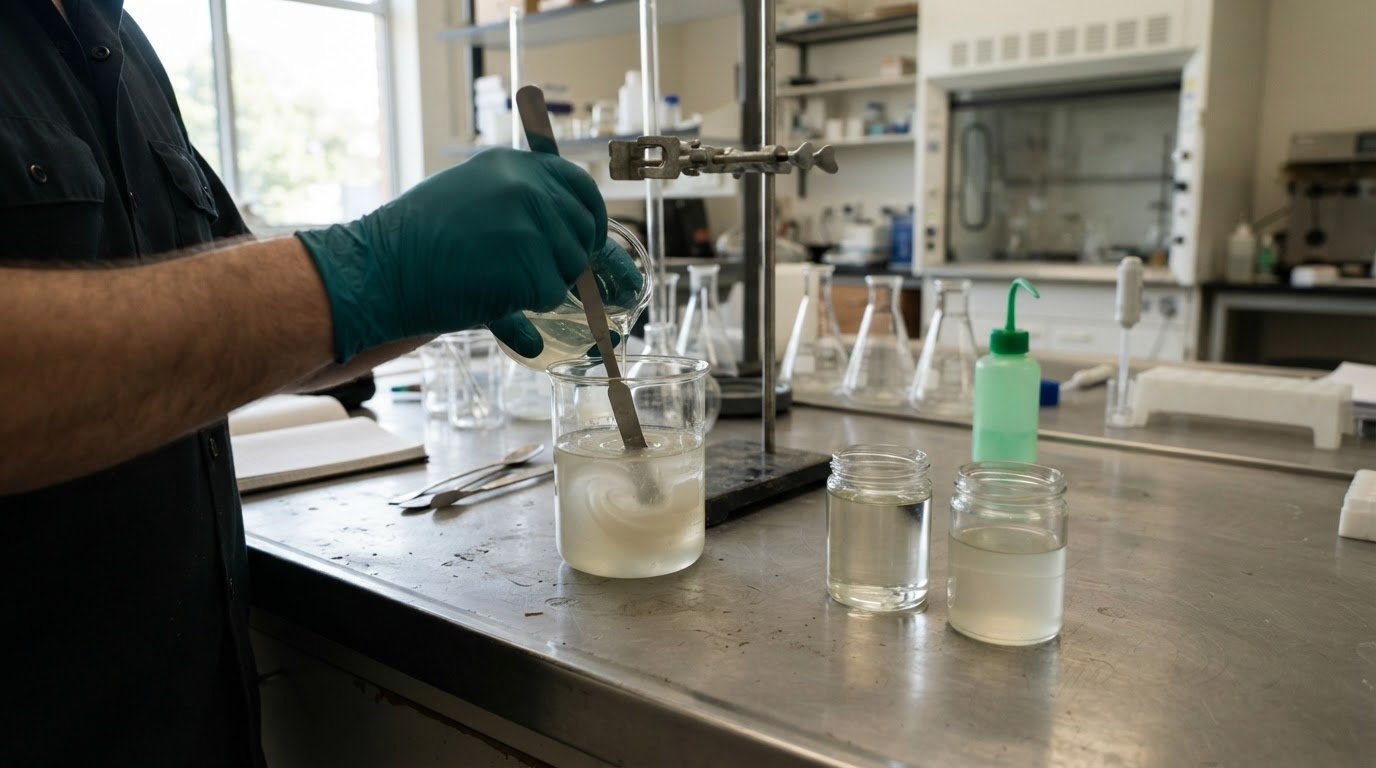
Bench-scale tests compare reagent conditions on representative ore samples before considering a scheme at larger scale. Test collector type and addition, frother, pH, and lime, then measure concentrate recovery and separation from gangue.
Common initial laboratory tests for sodium amyl xanthate use 20-200 g per 1000 kg ore. Results guide further test conditions, rather than defining a universal dose. Pilot-scale flotation then examines whether the selected scheme remains effective under continuous processing, including changes in pulp flow and mineral feed.
Reagent Safety and Environmental Risks
Sulfide flotation reagents require safe handling and storage, spill controls, and process-water management. In the United States, environmental and regulatory review should consider worker exposure, waste handling, discharge pathways, and the requirements applicable to the site.
These risks matter because reagent residues and mineral-bearing water can affect downstream treatment or disposal. A practical assessment documents chemical identity, handling procedures, containment, and waste streams. It also considers pyrite oxidation, which can influence water quality, and refractory material, which may need different downstream processing.
Promoter metals and metal chlorides
Promoter metals and metal chlorides belong to treatment approaches distinct from routine sulfide flotation. Their role depends on the process being tested, concentrate composition, and whether precious metals are targeted. Potassium chloride, or KCl, is one documented metal-chloride example used with precious-metal concentrate. These examples are not universal flotation doses or substitutes for collectors.
In one example, a precious-metal concentrate treatment used 50 grams of potassium chloride. A separate mixture combined 2,062 grams of concentrate with 630 grams of potassium chloride. Another example combined 100.6 grams of concentrate with 50 grams of potassium chloride. The differing concentrate and salt quantities show why each example must be interpreted within its own treatment conditions, rather than copied as a standard recipe.
When evaluating a process, consider how a metal chloride behaves with the specific feed and treatment route. Concentrate mineralogy, sulfur-bearing phases, valuable-metal associations, and the liquid phase can all affect the outcome. Keep these factors distinct: a flotation collector acts on mineral surfaces during separation, while a chloride treatment example concerns a concentrate mixture. They serve different purposes and process stages.
Mixture volume and composition also matter when interpreting a laboratory example. The 2,062-gram concentrate and 630-gram potassium chloride mixture is not directly interchangeable with the 100.6-gram concentrate and 50-gram salt mixture. Each represents a different material balance. Results therefore need to be assessed against the concentrate being treated, the intended precious-metal recovery route, and the next processing stage. This keeps metal-chloride evaluation grounded in the actual feed instead of assumed performance.
Reagent schemes for complex and low-grade ores
Complex, low-grade feeds need a selective mineral-processing strategy, not a fixed recipe. The key decision is whether flotation concentration can separate valuable minerals before smelting, leaching, or another treatment route.
Frothers and Modifiers in Flotation
Frothers support stable, mineral-carrying bubbles, while modifiers change mineral responses during flotation. Their balance matters: excessive bubble persistence or weak selectivity can carry unwanted gangue into the concentrate.
For a low-grade feed, assess frother response alongside collector and depressant choices. For example, a copper-bearing sulfide may need to float selectively while associated minerals remain in the tailings. Modifiers can help manage these interactions, but the right combination depends on mineral associations and surface condition. Chloride treatment belongs to a different processing context, not routine flotation modification.
Reagent Dosages and Conditioning Times
Dosage and conditioning time are test variables, not universal values for complex or low-grade ores. Initial laboratory tests for sodium amyl xanthate commonly use 20-200 g per 1000 kg ore, with the response assessed against recovery and concentrate selectivity.
That range is a starting point for laboratory evaluation, not a plant prescription. Conditioning time also depends on how the reagent disperses and interacts with the ore. A useful test sequence changes one factor at a time, then compares concentrate mass, valuable-mineral recovery, and gangue rejection. Use the results to guide adjustments before scale-up.
Low-grade ore makes the trade-off clear: stronger mass pull can increase concentrate volume while diluting valuable minerals. Compare selective recovery with concentrate quality, then determine whether flotation concentration suits the intended downstream route. Smelting and leaching have different feed requirements, so set the flotation target accordingly.
For complex mining feeds, tailor the reagent scheme to mineral response rather than relying on a generic dosage table. Align frother, modifier, and collector choices with the desired separation and downstream process.
JAS Global Industries
JAS Global Industries supports mining operations with specialty chemicals for flotation and mineral processing, including flotation collectors, grinding aids, frothers, and depressants. These products can support reagent-scheme development where mineral response, concentrate selectivity, and feed characteristics guide chemical choices.
Turn to JAS Global Industries when assessing flotation chemistry for complex or low-grade sulfide feeds and considering how reagent choices fit your process objectives. Start with the ore and separation priorities, not a universal recipe. Share the processing challenge and target minerals to focus the discussion on relevant chemical solutions.
Contact JAS Global Industries to discuss your mining flotation requirements.
Turn Process Priorities Into the Next Step
Frame the reagent scheme for complex sulfide ores around the operation’s priorities. Identify which minerals should report to concentrate, which should remain in the tailings, and how the downstream route shapes those targets. This makes the technical discussion more useful than starting with a reagent name alone.
Include feed variability in the discussion. Differences in mineral associations, oxidation, and grade can change flotation response, so define the conditions that matter to the operation. A clear process objective helps focus on selectivity, recovery, and the balance between them, without assuming one recipe suits every ore.
JAS Global Industries can be part of that next discussion through its mining chemical solutions. Bring your processing priorities into focus, then contact JAS Global Industries to discuss the path ahead. A well-defined starting point supports more purposeful decisions for your operation.
Frequently Asked Questions
Key Stages in Sulfide Ore Processing?
Sulfide ore processing typically moves from size reduction to mineral separation and concentrate handling. After crushing and grinding, flotation separates targeted sulfide minerals from less valuable material. Concentrates then proceed to a suitable downstream route, such as smelting or further treatment. The sequence depends on liberation, mineral associations, and the required products. Poor liberation can limit separation even when reagent selection is appropriate.
How does ore oxidation affect sulfide ore flotation?
Oxidation changes sulfide mineral surfaces, affecting how collectors attach and how particles respond during flotation. Oxidized feed, for example, may behave differently from fresh feed under the same reagent conditions. Compare flotation response across representative feed conditions, tracking valuable-mineral recovery and unwanted material in the concentrate. This helps determine whether surface changes affect selectivity, rather than assuming the original reagent balance remains suitable.
Sulfide Ore Metallurgy: Unlocking Value from Complex Ores?
Sulfide ore metallurgy aims to recover useful metals by matching mineral separation to ore composition and downstream requirements. In a complex feed, copper, lead, zinc, gold, or silver may occur in different mineral associations. A concentrate may therefore carry several valuable metals together. Metallurgical evaluation considers which minerals contain the target metals and whether the resulting concentrate suits the next processing stage.
Treating Refractory Sulfide Ores?
Refractory sulfide ores need treatment that addresses why valuable metals resist recovery through the chosen process. Causes can include close association with sulfide minerals or limited access to the valuable phase. Processing routes may combine concentration with a subsequent treatment suited to the concentrate. The choice depends on mineralogy and the intended recovery route; flotation alone may produce a concentrate without making every contained metal readily recoverable.
What is the typical reagent scheme for flotation of complex sulfide ores?
A reagent scheme for complex sulfide ores commonly combines a collector and frother, with depressants or modifiers where separation requires them. Xanthates are standard sulfide collectors; dithiophosphates can serve as secondary collectors alongside them. Build the scheme around the target minerals and separation objective. A bulk concentrate and separate copper, lead, or zinc products, for example, have different selectivity goals and reagent needs.
What depressants selectively separate galena, sphalerite, chalcopyrite, and pyrite?
No single depressant sequence suits every combination of galena, sphalerite, chalcopyrite, and pyrite. Depressants suppress selected minerals while allowing the target mineral to float, with the sequence shaped by the ore and collector system. Bench tests can compare mineral responses across stages. Assess concentrate composition as well as recovery, since suppressing one sulfide may also affect another valuable mineral.