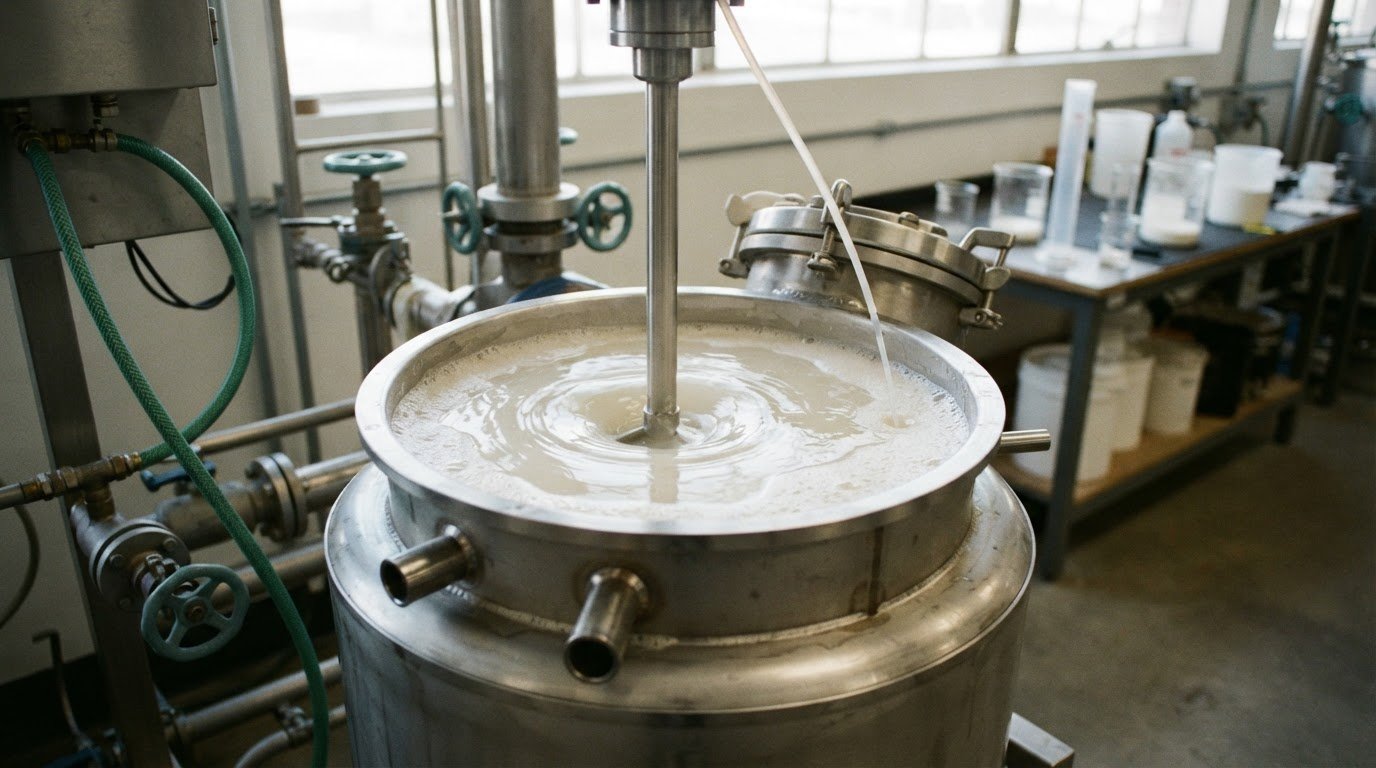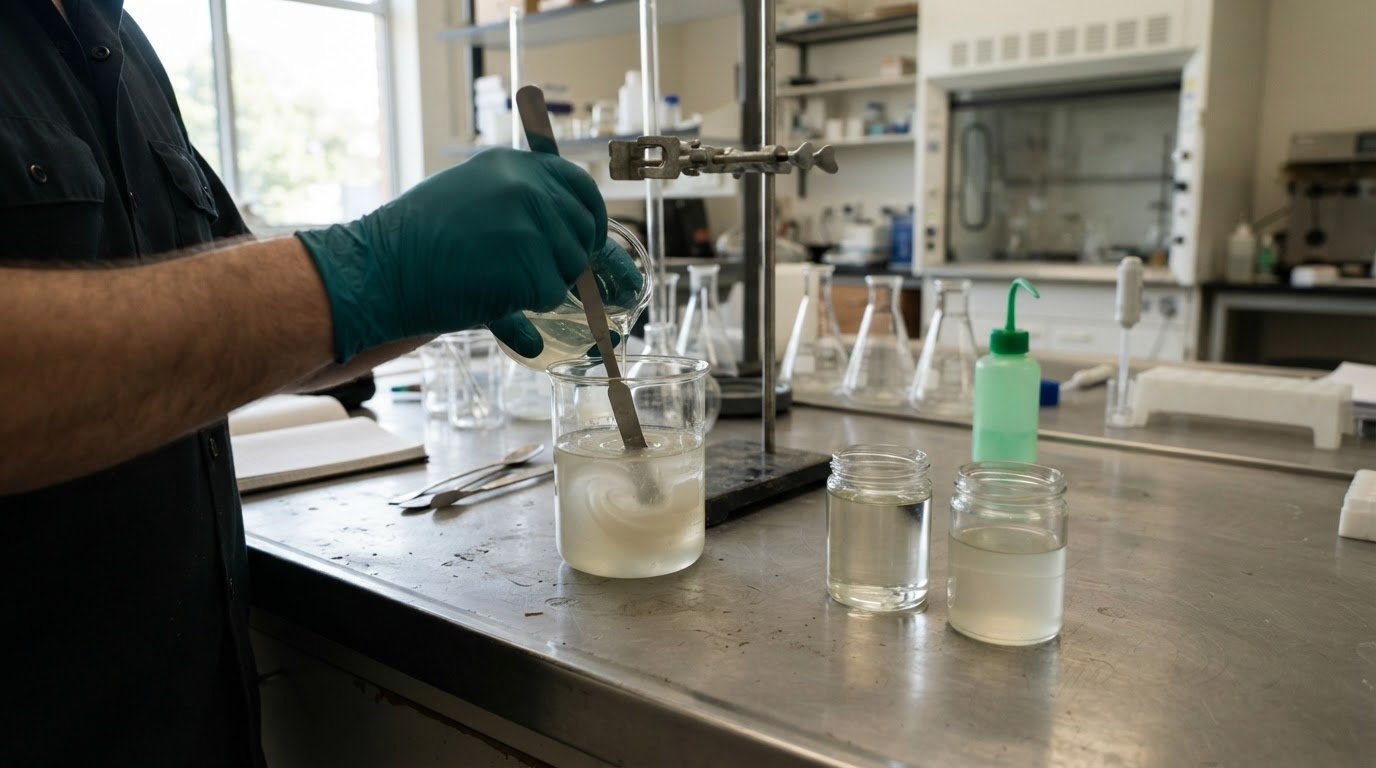

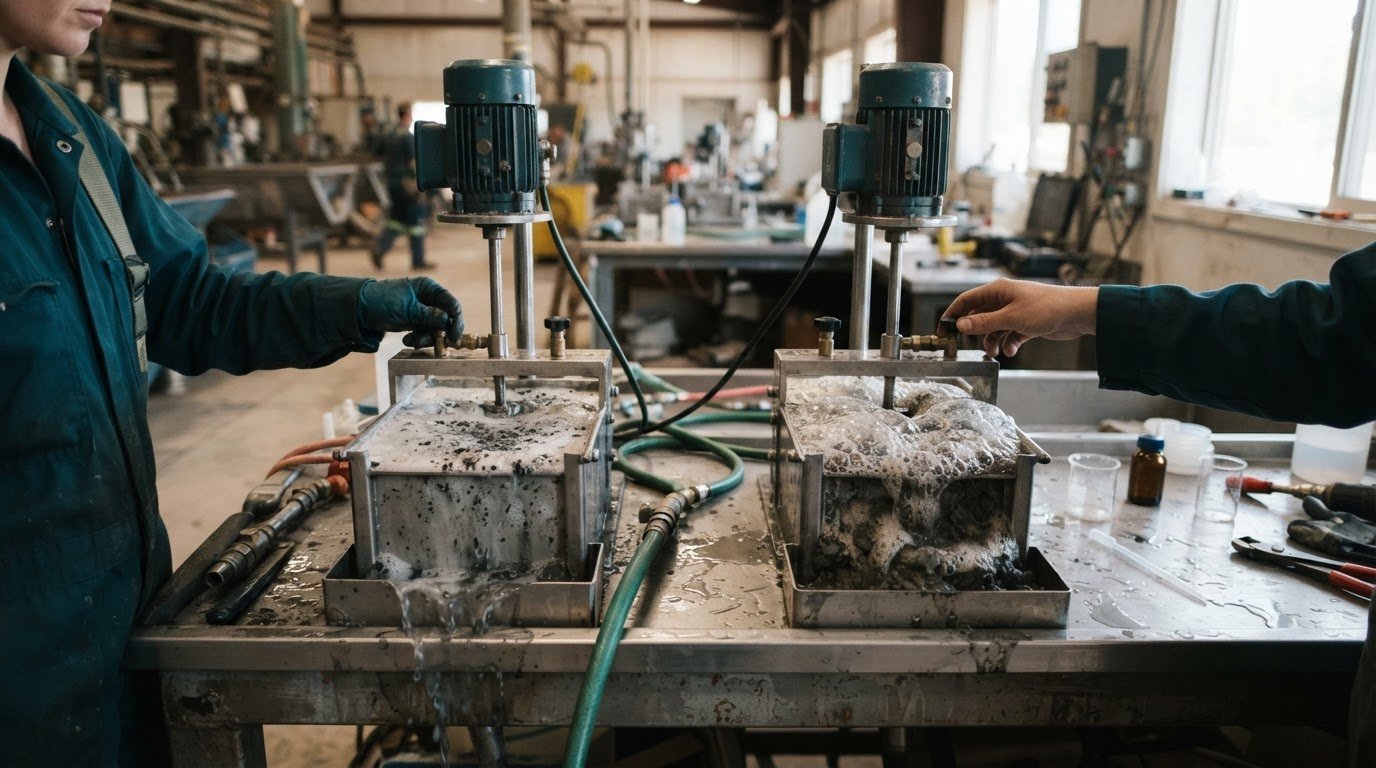
More froth does not automatically mean better separation. Choosing among flotation frother types means considering how each frother’s chemistry affects bubble size, froth stability, and the separation of valuable particles from waste minerals. The right choice depends on the behavior required by the flotation process, not simply on producing persistent foam.
It is natural to focus on whether bubbles form and remain stable: they carry floatable mineral particles through the pulp and into the froth. But bubble-size distribution and froth characteristics matter too, shaping how particles meet bubbles and how selectively minerals separate.
This guide explains how frother chemistry influences these outcomes. It compares alcohol frothers with oil-based options such as pine oil and eucalyptus oil, explains how bubble size relates to particle matching, and outlines why frother choice can affect separation efficiency and selectivity. Together, these points offer a clearer framework for understanding frother performance in mineral processing.
Flotation frother types and chemical structures
Frothers help create the bubbles and froth that carry floatable minerals through a flotation cell. Their chemistry influences surface tension, bubble formation, and froth behavior.
Frother Chemical Structures
A flotation frother molecule typically combines a water-attracting polar part with a water-repelling non-polar part. This structure influences how the frother behaves at the air-water interface and helps form froth. Desirable frothers are organic substances that do not ionize appreciably. Their polar groups may contain oxygen as hydroxyl, carboxyl, or carbonyl, or nitrogen in amine or nitrile form.
Alcohol frothers can produce brittle froths that break down readily. Other examples used in flotation include pine oil, eucalyptus oil, higher alcohols, and cresylic acid. These chemical families do not produce identical froth behavior, so their structures help explain why frother selection can affect mineral separation.
Frother Chemistry and Surface Tension
Frother chemistry relates to surface tension by changing the liquid surface where rising air forms bubbles. This matters because the resulting bubbles and froth provide the medium for mineral separation. For 2EH, the reported surface-tension reduction ability was −0.08 mN/m/ppm. That figure illustrates how a frother’s measured effect can be considered alongside its froth behavior.
Surface tension alone does not determine overall performance. A frother must also produce froth with persistence suited to the flotation process. Alcohol frothers, for example, are associated with brittle froths that break down readily, while other chemistries can produce different froth characteristics.
Typical industrial frother dosage is 5 to 50 grams per ton of mixed solids; application dosage can range from zero to 0.3 kilograms per ton. Operators express dosage as reagent mass per solids mass, or measure frother concentration in parts per million (ppm) in a test or process stream.
Environmental and worker-safety risks depend on the frother’s chemistry and handling conditions. Spills may affect process water, while contact or inhalation during handling can pose exposure concerns. Product-specific safety instructions and site controls guide precautions for substances such as cresylic acid.
Different frothers can be blended: SASFROTH 205 is used as a frother and as a blend for processing various minerals. Blending can adjust froth behavior, but the trade-off is that the combined chemistry may change bubble formation and froth stability, affecting separation performance.
Matching bubble size distribution to particle size
Frother choice affects bubble-size distribution in a flotation cell. Matching bubbles to the ore particles helps air contact the material being separated.
Choosing a Frother for Ore and Circuit
Choosing a frother means matching its bubble-forming behavior to the ore and flotation circuit. Particle size and circuit conditions shape how effectively particles meet bubbles. Operators consider the feed’s particle-size distribution, the separation objective, and the cell’s operating conditions. They can then compare frothers under representative conditions, observing bubble distribution and separation performance rather than choosing by froth appearance alone.
For a specific ore, the choice should reflect the particles that need to attach to bubbles and the circuit’s separation demands. A useful comparison keeps operating conditions steady while testing frother options, so performance changes can be related to frother choice.
Frother Effects on Bubbles and Recovery
Frother type influences bubble-size distribution and froth persistence, which can affect mineral recovery. Finely divided air bubbles diffused through the pulp are more effective than the same volume of air in larger bubbles. Frother selection therefore shapes how air is distributed through the cell, not just whether froth forms.
Bubble-particle matching is central: bubbles must contact particles for them to be carried into the froth. A distribution that supports these contacts can aid separation, while froth stability influences whether attached particles remain carried upward. Frothers can contribute to recovery and selectivity, but results depend on both the ore and the circuit.
In practice, operators assess particle-size range alongside bubble distribution and separation results. If large bubbles dominate, the same air volume may provide less effective contact than finely divided bubbles. If froth behavior does not suit the circuit, changing frother chemistry can alter the balance between particle transport and separation. These comparisons help identify an option suited to the process rather than assuming one choice works everywhere.
For operations evaluating a tailored chemical option, mining frothers are a relevant part of the flotation reagent picture.
Separation efficiency and selectivity
Frothers support mineral separation by influencing froth stability and particle transport. Assess their contribution alongside recovery and concentrate quality, not froth height alone. Recovery tracks valuable material collected; selectivity concerns separating it from unwanted material. A change in one measure can affect the other, so both matter when evaluating flotation results.
A plant trial measured a 3% increase in recovery with DF-1012 compared with MIBC when the collector was fixed. Holding the collector steady helps isolate the frother’s contribution in that comparison. It doesn’t establish a universal ranking: ore properties and circuit conditions influence whether the same frother performs similarly elsewhere.
Coal flotation illustrates why recovery and concentrate quality should be read together. In a Lower Kittanning coal release analysis, combustible-material recovery was 79.2%, while the ultimate clean-coal concentrate ash content was 9.4%. Recovery describes the combustible material recovered; ash content indicates mineral matter remaining in the clean-coal product. Neither measure alone captures the full separation outcome.
Frother effects can also depend on concentration. The highest reported combustible recovery was 86.2% with 2EH at a frother concentration of 10 ppm. That result links performance to a specific frother and test concentration. It is evidence from that evaluation, not a target that applies across every ore, cell, or operating condition.
In column flotation, hydraulic entrainment can carry unwanted fine particles into the froth along with valuable material. A bias factor of 60% is typically used to minimize its negative impacts. This operating condition complements frother selection: recovery gains matter most when they do not come at the expense of concentrate selectivity.
For a useful comparison, keep the collector and operating conditions consistent, then examine recovery and product quality together. DF-1012 versus MIBC with a fixed collector shows how controlled comparisons can identify frother effects. The Lower Kittanning results show why ash content belongs beside recovery when judging separation efficiency.
Common frother types
Common flotation frothers include alcohol blends, natural oils, and coal-tar-derived materials. Their names identify different chemical families, but the practical distinction is how each formulation behaves in a flotation circuit. Pine oil and cresylic acid are widely used frothers, while eucalyptus oil has a regional role in Australia.
Alcohol-based options include mixtures of short-chain alcohols. SASFROTH 5 is a broad mixture of C5 and C6 alcohols used in mineral extraction. This example shows why a frother label may describe a blend rather than one pure compound. Composition helps distinguish products within the same broad family, while performance still depends on the ore and process conditions.
Eucalyptus oil offers a clear example of regional sourcing and composition. Eucalyptus oil made for flotation purposes in Australia from Eucalyptus amygdalina contains about 80% pinene. Its use in Australia is associated with local abundance. That context helps explain why the frother mix used in practice can reflect available materials as well as separation requirements.
Coal tar creosote frothers produce tough bubbles that may suit certain separations. This contrasts with alcohol frothers, which can form brittle froths that break down readily. No family is always superior. Instead, bubble and froth behavior provide a basis for matching a frother to the separation task.
Pine oil and cresylic acid are established choices, while eucalyptus oil and alcohol mixtures illustrate other options. These categories are not interchangeable labels for identical behavior. A sound comparison considers the frother’s chemical family, the desired froth characteristics, and the mineral separation objective. The best fit is the option that supports the process behavior required.
For a process-focused discussion of mining frothers, consider how the frother family aligns with your separation requirements.
JAS Global Industries: Mining Flotation Collectors
JAS Global Industries offers Mining Flotation Collectors and Mining Frothers for mineral-processing operations assessing reagent needs. Collectors and frothers serve different roles in flotation, so considering them together can help frame a broader process discussion.
Turn to JAS Global Industries when reviewing frother selection alongside collector requirements, or when process conditions call for a tailored chemical formulation. Its specialty chemical solutions support process efficiency and operational reliability, with mining applications among its areas of focus.
Contact JAS Global Industries to discuss your mining flotation chemical requirements.
Put frother selection into process context
Consider frother choice as part of a broader review of your flotation process. The right flotation frother types depend on how the ore, circuit, and separation objectives work together. A practical next step is to define the process outcome you want to improve, then consider frother and collector requirements in that context.
JAS Global Industries offers Mining Flotation Collectors, Fertilizer Anti-caking Agents, and Fertilizer Dust Suppressants. For mining operations assessing flotation chemical needs, the discussion can focus on collector requirements and how they relate to frother selection.
Contact JAS Global Industries to discuss your mining flotation requirements. A clear process objective gives that conversation a useful starting point.
Frequently Asked Questions
What are the main types of flotation frothers?
Common families include alcohol-based frothers, natural oils, and coal-tar-derived frothers. Pine oil and cresylic acid are established examples, while eucalyptus oil is used in some regional applications. Commercial blends add another category: they combine alcohols or other components rather than relying on one pure substance. The useful distinction is their composition and resulting froth behavior, not just the family name.
How do alcohol-based frothers compare with glycol-based frothers?
Alcohol and glycol frothers are different chemical families, but neither label alone predicts performance in a particular circuit. Alcohol frothers can produce brittle froths that break down readily. For a glycol-based option, compare its behavior in the actual ore and operating conditions rather than assuming it creates stronger or weaker froth. Assess bubble distribution, froth persistence, and separation results under consistent conditions.
What are common examples of flotation frother chemicals and trade names?
Examples include pine oil, eucalyptus oil, cresylic acid, higher alcohols, and 2EH. Commercial names in the available examples include SASFROTH 5, SASFROTH 40, and SASFROTH 205. SASFROTH 40 is an alcohol blend centered mostly on C5 alcohol isomers, with more than 70% mass purity. A trade name identifies a formulation; it does not by itself establish suitability for every ore.
How do frother properties such as cloud point, HLB, and solubility affect performance?
Cloud point describes when a surfactant solution becomes cloudy as temperature changes; HLB indicates the balance between water-attracting and oil-attracting character. Solubility affects how readily a frother disperses in process water. Together, these properties can influence preparation and behavior in a circuit. Temperature changes, for example, may alter a formulation’s appearance or dispersion, so assess properties under process conditions.
Which frothers are used for sulfide, oxide, coal, and phosphate flotation?
No single frother-to-ore pairing applies universally across sulfide, oxide, coal, and phosphate flotation. Frother selection depends on the ore, circuit, and separation objective, so a choice used in coal flotation should not automatically be transferred to phosphate or metal ores. Compare candidate frothers under consistent conditions for each feed, and evaluate recovery alongside concentrate quality to judge the separation outcome.