
Zero liquid discharge is a water-recovery strategy, not simply a way to treat wastewater before release. In a ZLD system, zero liquid discharge (ZLD) chemical solutions can support pretreatment, while downstream processes recover water and turn the remaining concentrate into solids. The goal is to eliminate liquid wastewater discharge, although the resulting solid or concentrated residue still needs responsible handling.
For facilities with water-intensive operations, water reuse and discharge compliance are closely connected. Reusing treated water on-site can reduce freshwater demand, while limiting liquid discharge can help address discharge constraints. ZLD does not remove the need to manage residual salts and other solids responsibly.
This article explains how ZLD works, including how thermal evaporation concentrates wastewater and crystallization separates dissolved solids. It also covers how recovered water can return to facility processes, when ZLD may support discharge compliance, and why wastewater characteristics shape the treatment approach.
What is Zero Liquid Discharge (ZLD) and why is it important?
Zero liquid discharge (ZLD) is a treatment approach designed to eliminate liquid wastewater discharge from a facility. It recovers water for reuse and leaves concentrated solids or residue that still require management. In industrial plants, zero liquid discharge (ZLD) chemical solutions can support pretreatment as part of this wider treatment approach.
For industrial plants, ZLD links wastewater treatment with water recovery and brine management. Its value depends on the wastewater stream, reuse goals, and the facility’s discharge conditions.
Industrial Wastewater and Brine Management
ZLD manages industrial wastewater by treating it to recover water, then concentrating the remaining brine until solids can be separated. This matters because dissolved salts and other contaminants do not disappear when water is recovered.
A typical treatment train may use chemical conditioning, clarification, and filtration before membrane treatment. Reverse osmosis can reduce wastewater volume, while evaporators concentrate the remaining brine and crystallizers form solid salts. These solids may need disposal or further handling, so ZLD replaces liquid discharge with concentrated residuals rather than eliminating waste altogether.
System capabilities depend on the wastewater’s composition and volume. Suspended solids, oils, and other contaminants can affect pretreatment needs, while dissolved salts shape later concentration and crystallization stages. Zero liquid discharge (ZLD) chemical solutions may support pretreatment as part of the overall process.
ZLD Applications Across Sectors
ZLD systems are used across industrial sectors that generate challenging wastewater streams. Power plants can treat cooling tower blowdown and process wastewater, while mining operations can manage water associated with mineral processing.
Chemical and petrochemical facilities, steel plants, textile manufacturers, pharmaceutical companies, food and beverage processors, and electronics manufacturers also use ZLD approaches. Their wastewater varies: textile effluent can contain dyes and salts, while other processes produce high-salinity or high-strength streams.
That variation matters when selecting treatment stages. A plant’s system may combine equalization, clarification, membrane filtration, evaporation, and crystallization, but the configuration depends on wastewater characteristics and recovery objectives. Managing these corrosive and high-salinity process flows across industries often relies on specialized mechanical and valve systems from providers such as Pro-Mech Engineering Solutions Pty. ZLD is a treatment framework, not a single fixed equipment package.
Drivers of ZLD Adoption
Facilities consider ZLD when discharge conditions, limited water availability, or sensitive receiving environments make liquid wastewater release difficult to manage. No-discharge requirements and stringent effluent limits can also influence adoption.
Water recovery is another driver. Reusing treated water within a facility can reduce freshwater demand, while concentrating wastewater can help manage brine that would otherwise leave as liquid discharge. These benefits must be weighed against energy demand, particularly when thermal evaporation is required.
Planning also accounts for wastewater volume, composition, and variability, alongside recovery targets and long-term operation. These factors shape pretreatment, filtration, and concentration needs. ZLD can support discharge objectives, but remaining salts and other solids still require safe, compliant storage or disposal.
Thermal evaporation and crystallization
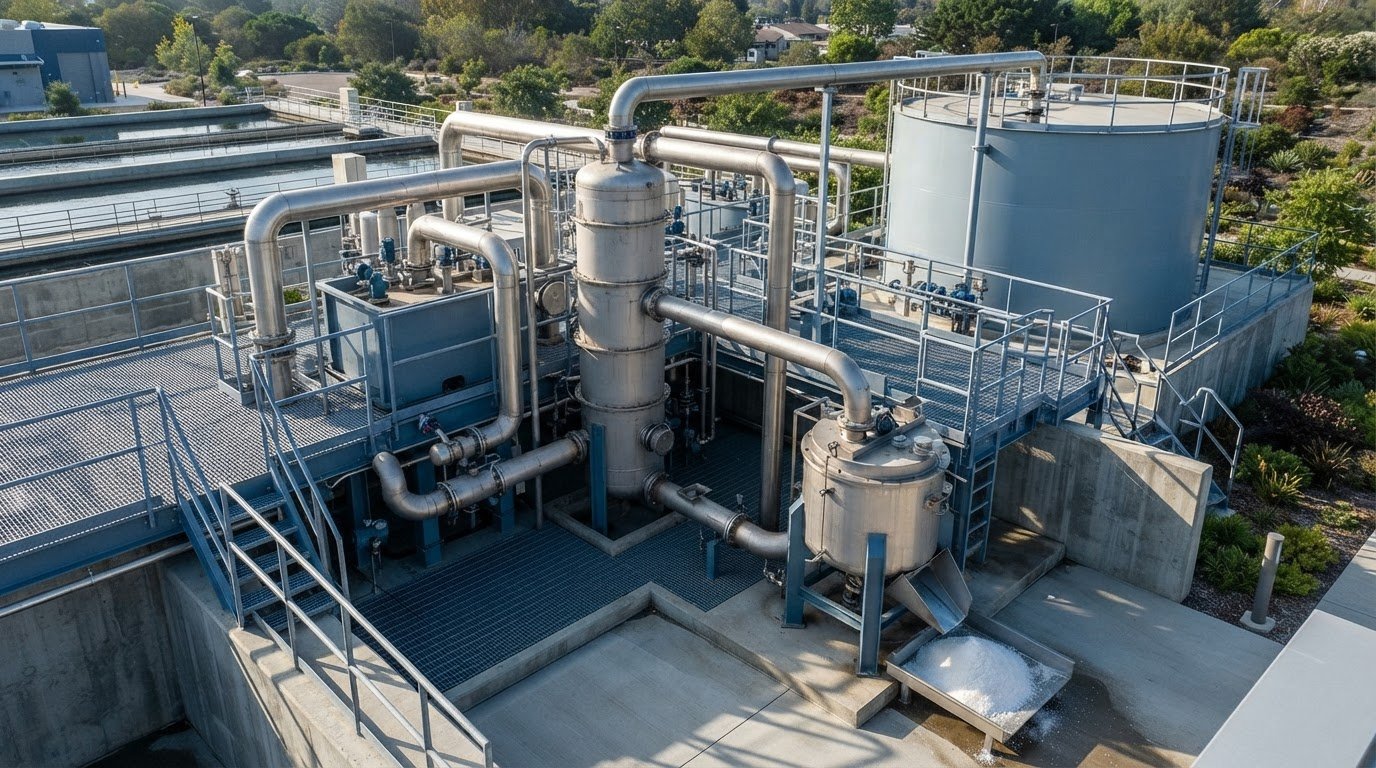
In ZLD systems, treatment stages concentrate wastewater, recover water, and separate dissolved solids. Evaporation and crystallization process the concentrated brine left after earlier treatment.
Stages of ZLD Treatment
ZLD treatment moves wastewater through pretreatment, concentration, evaporation, and crystallization. Each stage prepares the stream for the next, supporting water recovery while limiting liquid residue.
Pretreatment may include chemical conditioning, clarification, or filtration to reduce suspended solids and other contaminants. Reverse osmosis may then separate water and reduce wastewater volume. Thermal evaporation removes more water from the remaining brine, while crystallization turns concentrated dissolved solids into manageable salts. This sequence matters because untreated contaminants can complicate downstream equipment operation.
Evaporators and Crystallizers
Evaporators remove water from concentrated brine, brine concentrators reduce its liquid volume, and crystallizers form solid salts. Together, these units move ZLD treatment from liquid concentration to final solids handling.
Crystallizers process the concentrated stream after evaporation, separating salts for disposal or possible resource recovery. Antiscalants and scale inhibitors help limit mineral scale as water treatment concentrates dissolved substances. The right choice depends on wastewater chemistry and process conditions; equipment type alone is not enough to select a specific chemical.
Brine Concentration and Evaporation Systems
Thermal evaporation uses heat to remove water from brine, while mechanical vapor recompression (MVR) reuses vapor energy. Multiple-effect evaporation transfers heat across successive effects to concentrate a stream.
These configurations affect energy demand and the volume of liquid sent to crystallization. MVR is reported to use about 3% of the energy needed to evaporate the same quantity of water by boiling it on a stove. System design still depends on the feed’s salinity, flow, and recovery objectives. Evaporation reduces liquid volume, but produces concentrated residue requiring further treatment.
Chemical Selection for ZLD
Chemical selection for ZLD wastewater treatment matches pretreatment and scale control to the wastewater stream. The aim is to support stable filtration and concentration without disrupting later recovery stages.
Selection considers water composition, suspended material, salinity, and the intended treatment sequence. Chemical residuals can also affect recovered water and the concentrated brine or solids, so handling and disposal remain part of environmental management. For scale control, water treatment antiscalants are relevant where dissolved minerals may deposit on treatment equipment.
Water recovery and reuse
ZLD combines water recovery with management of concentrated residuals. Membrane separation, thermal processes, and chemical treatment each serve a different function.
Water and Resource Recovery
Water recovery returns treated effluent to suitable facility processes, reducing freshwater consumption. Its value depends on the recovered water’s quality and the requirements of each reuse point.
Reverse osmosis separates water from dissolved salts, while downstream treatment can manage the remaining concentrate. Facilities may also recover waste heat from boilers or process streams to reduce reliance on external energy. Integrating heat with thermal treatment links water recovery to wider resource efficiency, while the recovered water still needs a use suited to its quality.
Mineral and Byproduct Recovery
Resource recovery separates usable minerals or other byproducts from concentrated brine and residual solids. This can turn part of a waste stream into a potential secondary resource.
Crystallization produces solid salts for disposal or, where suitable, potential industrial use. Some ZLD systems can recover minerals or valuable byproducts while recovering water, but the opportunity depends on brine composition and the resulting material’s properties. Recovery is not automatic. Remaining solids still need appropriate handling, so resource recovery complements rather than replaces responsible disposal.
Chemical, Membrane, and Thermal Approaches
Chemical treatment prepares wastewater, membranes separate water and dissolved substances, and thermal technologies concentrate brine through evaporation. Each approach has a distinct role in an advanced ZLD process.
For example, reverse osmosis reduces wastewater volume before thermal evaporation treats the brine. Chemical processes such as precipitation can help prepare streams for later separation. The right combination depends on wastewater composition and recovery objectives. Chemicals support individual treatment stages, but do not replace membrane separation or the heat-driven concentration needed for highly concentrated streams.
Chemicals Used in ZLD Systems
ZLD systems use treatment chemicals according to the wastewater stream and process stage. Examples include chemicals for conditioning or precipitation, along with antiscalants and scale inhibitors that help control mineral deposits.
Selection affects filtration, membrane operation, and later concentration stages. Chemical carryover may affect recovered water or residual solids, so treatment and residual handling belong in the same process design. For reverse-osmosis stages, reverse osmosis chemicals support the chemical-treatment component; membrane separation and thermal treatment remain separate process functions.
Water reuse and discharge compliance
ZLD connects on-site water reuse with control of liquid discharge. Its role in compliance depends on discharge conditions, wastewater streams, and the facility’s recovery objectives.
Water Reuse Practices
Water reuse returns treated effluent to facility processes instead of releasing it as wastewater. This can reduce freshwater consumption and support water management where supplies are limited.
In a ZLD system, recovered water may be reused on-site, while concentrated residuals move to further treatment. The reuse destination matters: process requirements and water quality determine where recovered water can be used. Clearly separating recovered water from concentrated waste also helps facilities manage complex streams and track each output.
For example, reverse osmosis can recover water from wastewater before thermal treatment processes the resulting brine. That sequence links water recovery with reduced liquid discharge, but recovered water and residual solids still require suitable handling.
Discharge Requirements and U.S. Regulations
In the United States, discharge planning can involve NPDES requirements, local conditions, and applicable Effluent Limitation Guidelines. These requirements do not mean every facility must use ZLD. No-discharge permits, stringent limits, limited water availability, or sensitive receiving environments can make it relevant.
Facilities can compare their existing discharge route with the role of a zero liquid discharge system. Standard wastewater treatment generally treats effluent for permitted release, while ZLD aims to recover water on-site and eliminate liquid discharge. This distinction affects both water recovery plans and the management of concentrated salts or other byproducts.
Compliance planning also considers the characteristics and variability of each wastewater stream. Treatment stages and chemical use must suit the stream and the facility’s discharge conditions; concentrated residuals still need safe, compliant storage. ZLD can support discharge objectives, but it does not remove the need to manage solids responsibly.
For water treatment that supports reliable recovery and process efficiency, explore water treatment chemical solutions.
JAS Global Industries
JAS Global Industries supports industrial operations assessing specialty chemical needs alongside process efficiency and reliability. The company develops tailor-made formulations and applies chemical technologies to support operational requirements in sectors such as mining and fertilizers.
For facilities considering ZLD, a useful starting point is understanding how chemical treatment fits the wider process. Wastewater characteristics, recovery objectives, and downstream stages all shape that decision. JAS Global Industries brings specialty chemical expertise and research-led formulation capabilities to industrial partners seeking practical process support. This is relevant when chemical performance is part of a broader operational challenge, rather than when a facility needs complete ZLD system design or an equipment package.
Contact JAS Global Industries to discuss your industrial chemical requirements.
Set a Clear Direction for Your Water Strategy
The next step is to connect your water-management priorities with the role chemistry can play in a wider treatment strategy. Define the operational outcomes that matter most, such as process reliability, water stewardship, or wastewater stream management. That clarity can help frame where zero liquid discharge (ZLD) chemical solutions fit alongside membrane and thermal processes.
JAS Global Industries supports industrial partners with specialty chemical solutions and tailor-made formulations. Its portfolio includes fertilizer anti-caking agents, fertilizer dust suppressants, and mining flotation collectors. These products serve distinct process needs, so a useful discussion starts with your operation’s application and priorities.
Take the next step at your pace. Discuss your process priorities with JAS Global Industries and explore a practical path forward for your operation.
Frequently Asked Questions
How is a ZLD system designed for site-specific wastewater?
A ZLD system is designed around wastewater volume, composition, variability, and recovery objectives. For example, streams with substantial suspended solids may need different pretreatment from streams dominated by dissolved salts. Designers also account for energy needs, operational expertise, and long-term maintenance. These factors determine the treatment sequence and equipment configuration, rather than a standard design applied to every industrial plant.
How much water can a ZLD system recover?
Recovery depends on the wastewater and treatment configuration, so there is no single figure for every ZLD system. For brackish-water reverse-osmosis reject, a multistage electrodialysis or electrodialysis-reversal process can approach 97% recovery. That figure applies to this specific treatment context, not all ZLD applications. Feed composition and the chosen recovery objectives influence how much water a facility can reuse.
What are the operating cost considerations for ZLD systems?
Operating costs are shaped by energy demand, wastewater characteristics, chemical treatment, maintenance, and residual handling. Thermal evaporation can require significant energy, so heat integration and the chosen concentration technology influence operating needs. Facilities also account for equipment upkeep and the safe management of concentrated salts or sludge. A useful assessment considers the full treatment train, not just the evaporation stage.
What components make up a ZLD system?
A ZLD system may include equalization tanks, clarifiers, ultrafiltration, reverse osmosis, evaporators, crystallizers, sludge handling, and automation or monitoring platforms. Not every facility uses every component. For example, the wastewater stream and recovery target determine whether membrane treatment is included before evaporation. Each unit has a distinct role, from managing incoming flow to handling concentrated residuals.
What is the difference between ZLD and standard wastewater treatment?
Standard wastewater treatment prepares effluent for discharge to a sewer or waterway under applicable permit conditions. ZLD instead aims to recover nearly all water on-site and leave no liquid discharge. For a facility with an established discharge route, the key distinction is the treatment objective: releasing treated effluent or recovering water while managing the remaining concentrated solids.
When is a ZLD system required?
A ZLD system may be considered when a facility faces no-discharge permit conditions, stringent effluent limits, limited water availability, or a sensitive receiving environment. In the United States, NPDES requirements and local conditions can inform the decision. These circumstances do not mean every industrial facility must adopt ZLD; the relevant discharge conditions and wastewater streams determine whether it is appropriate.