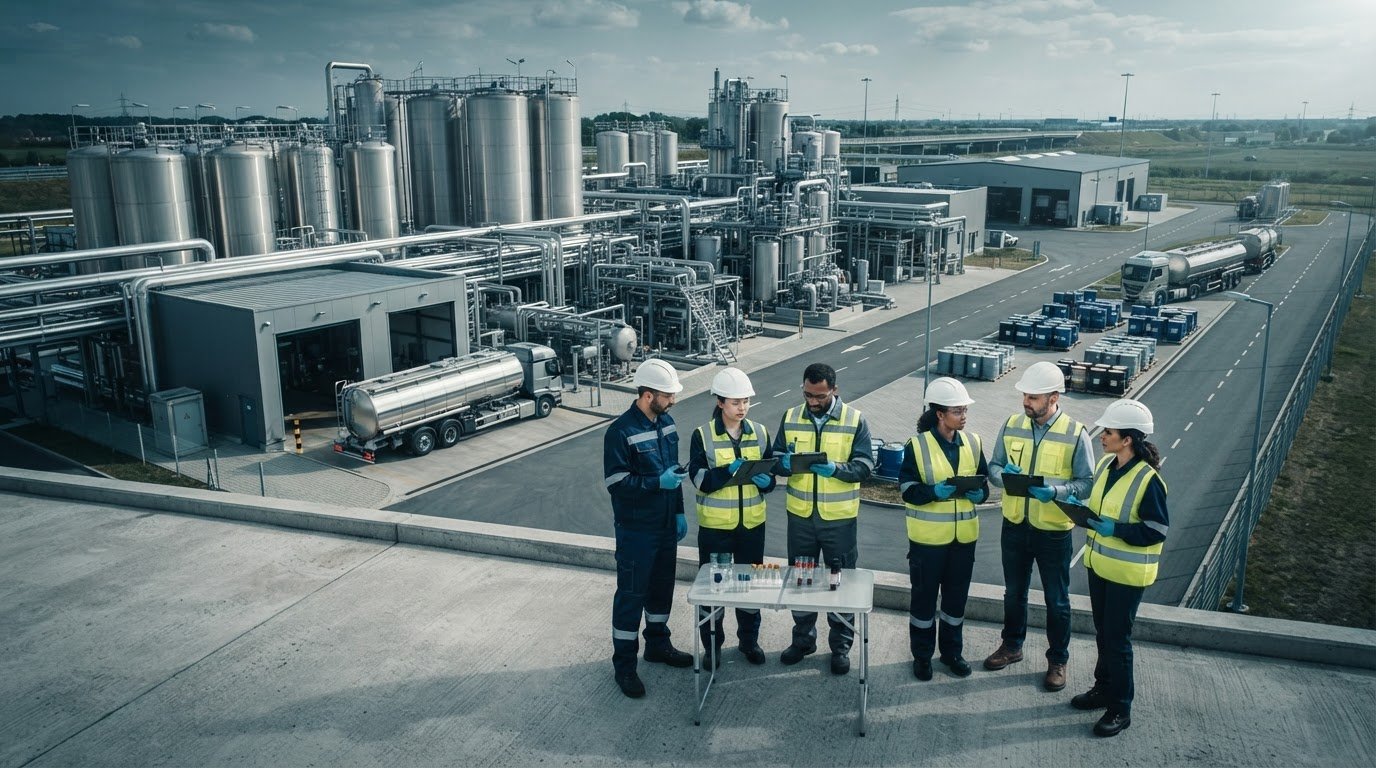


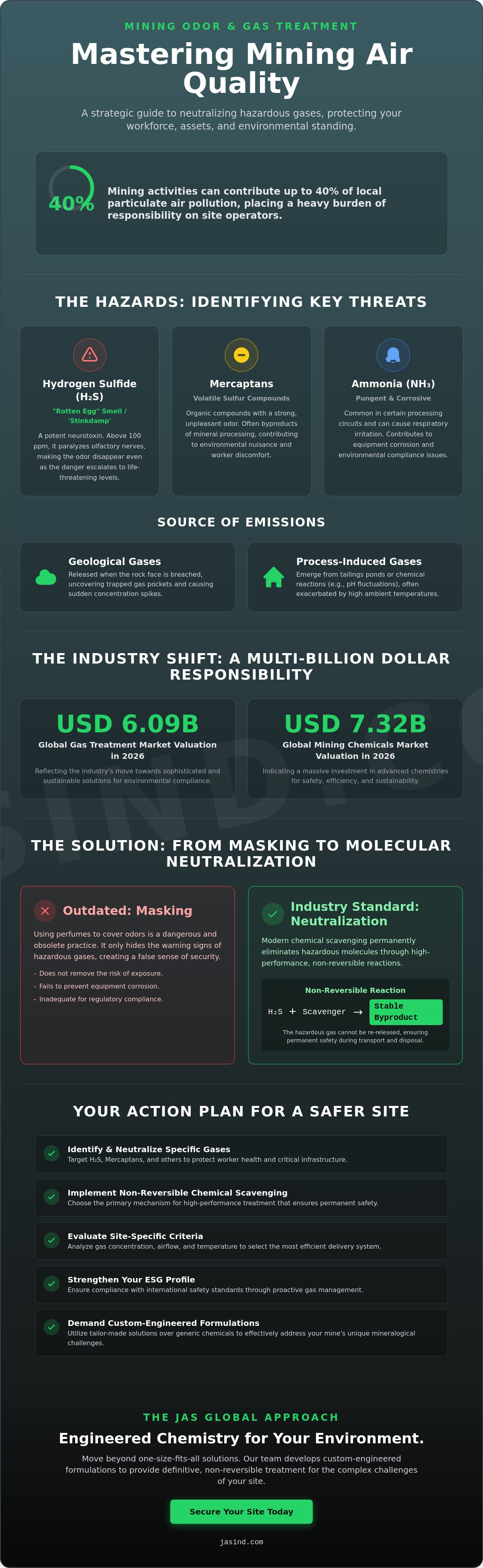
Mining activities contribute up to 40% of local particulate air pollution, a statistic that highlights the heavy burden of responsibility on today's site operators. You already know that managing 'stinkdamp' and acidic byproducts isn't merely about neighborly comfort. It's a non-negotiable requirement for worker health and the preservation of your heavy machinery. Implementing a robust Mining Odor & Gas treatment strategy is essential for Global Mineral Security, keeping your operations reliable and your workforce protected.
We recognize the complexity of maintaining compliance, especially after the Eighth Circuit Court issued a stay on MSHA silica deadlines on April 11, 2025. With the global gas treatment market valued at USD 6.09 billion in 2026, the industry is shifting toward more sophisticated, sustainable solutions. This guide offers expert insights into neutralizing hazardous gases to ensure your site meets international safety standards while maximizing efficiency. You'll learn how performance-driven chemical scavenging eliminates gas pockets and prevents the corrosion of expensive assets, moving your operation beyond simple masking toward true environmental leadership.
Key Takeaways
- Identify and neutralize specific hazardous gases like Hydrogen Sulfide and Mercaptans to protect both worker health and critical infrastructure.
- Implement non-reversible chemical scavenging as the primary mechanism for high-performance Mining Odor & Gas treatment that ensures permanent safety.
- Evaluate site-specific criteria, such as gas concentration and airflow, to select the most efficient delivery system for your unique environment.
- Strengthen your ESG profile and ensure compliance with 2026 international safety standards by addressing environmental nuisances through proactive gas management.
- Understand the value of custom-engineered formulations over generic chemicals to effectively address the complex mineralogical challenges of your mine site.
Understanding the Sources of Mining Odors and Hazardous Gases
Effective Mining Odor & Gas treatment is a fundamental pillar of operational security and environmental stewardship. This process involves the targeted neutralization of volatile organic compounds (VOCs) and inorganic gases such as H2S. These substances aren't merely industrial byproducts; they're volatile elements that can compromise worker safety and accelerate the corrosion of high-value infrastructure. Identifying the specific chemical culprits is the first step toward establishing a secure and compliant site.
Hydrogen Sulfide (H2S), Mercaptans, and Ammonia represent the primary challenges in most mining environments. While some gases are inherent to the geology, mineral processing reagents can inadvertently create offensive odors when they react with specific ore compositions. Additionally, the release of geological pressure during extraction often uncovers trapped gas pockets that require immediate stabilization. Managing these emissions ensures that your facility remains a responsible neighbor and a safe workplace.
Why does my mine smell like rotten eggs?
The characteristic "rotten egg" smell is a definitive indicator of Hydrogen Sulfide. This gas is produced by anaerobic bacteria that thrive in sulfate-rich, oxygen-depleted environments. In deep-shaft mining, workers historically used the term 'stinkdamp' to describe this hazardous accumulation of hydrogen sulfide. While the odor is detectable at low levels, H2S is a potent neurotoxin that becomes life-threatening at higher concentrations. At levels above 100 ppm, the gas can paralyze the olfactory nerves, making the smell disappear even as the danger increases. Maintaining safety requires a rigorous application of Underground Mine Ventilation Principles to dilute these pockets and prevent toxic build-up in confined spaces.
Geological vs. Process-Induced Gases
Gases in a mining environment generally fall into two categories: those trapped in ore bodies and those created during processing. Geological gases are released the moment the rock face is breached, often resulting in sudden spikes in gas concentration. Conversely, process-induced gases typically emerge in tailing ponds or through chemical reactions in the mill. For instance, minor pH fluctuations in flotation circuits can trigger the rapid release of dissolved gases into the atmosphere. Ambient conditions also play a critical role. In high-temperature regions like the Middle East, where temperatures frequently exceed 40°C, the volatility of these gases increases. As the global gas treatment market reaches a valuation of USD 6.09 billion in 2026, the industry's focus has shifted toward a more aggressive Mining Odor & Gas treatment strategy that accounts for these thermal factors to maintain environmental compliance.
Effective Chemical Technologies for Gas Neutralization
Modern Mining Odor & Gas treatment has evolved beyond the outdated practice of masking scents with perfumes. Today, the global mining chemicals market is valued at USD 7.32 billion in 2026, reflecting a massive shift toward sophisticated molecular neutralization. True safety requires the permanent elimination of hazardous molecules. Masking only hides the danger; it doesn't remove the risk of worker exposure or equipment failure. Professional operators now prioritize chemical scavengers that ensure a site remains both compliant and secure.
Non-reversible chemical reactions are the industry gold standard for a reason. When a scavenger reacts with a gas like H2S, it creates a stable, non-toxic byproduct that won't revert to its original state. This permanence is critical for transport and disposal. If a reaction is reversible, the hazardous gas could be released later in the tailings pond or during processing, creating a secondary safety crisis. By choosing non-reversible chemistry, you invest in a definitive solution that protects your long term operational integrity.
Specialty surfactants play a vital role in capturing gas molecules before they ever become airborne. These agents reduce surface tension, allowing the treatment chemicals to penetrate deeper into the ore or liquid phase. This proactive approach is especially important for sustainability. Selecting sustainable chemical programs ensures that these treatments don't compromise the long term health of local water tables. Using biodegradable agents in tailings management is no longer optional; it's a core requirement for maintaining a social license to operate in 2026.
H2S Scavengers: The frontline of defense
Operators must choose between triazine-based and non-triazine scavengers based on their specific circuit requirements. Triazine is highly effective for rapid neutralization in liquid phases, but non-triazine alternatives are often preferred for high-throughput operations where scale buildup is a concern. Reaction speed is the most critical metric here. In a fast-moving mining circuit, a scavenger must work in seconds to prevent gas pockets from accumulating. These scavengers permanently alter the molecular structure of H2S by converting it into stable, water-soluble salts that are easily managed.
Specialized Agents for Pyrophoric and NORM Control
Gas treatment often intersects with other complex safety issues like pyrophoric iron sulfide deposits. These deposits can ignite spontaneously when exposed to air, leading to catastrophic underground fires. Specialized chemical agents neutralize these deposits while simultaneously managing Naturally Occurring Radioactive Material (NORM) that can accumulate in gas treatment equipment. While chemical neutralization handles sulfurous compounds, operators must also consult the Methane Gas Control Guidelines to manage explosive hazards in underground environments. Integrating gas treatment with scale and corrosion inhibition creates a comprehensive shield for your most expensive mining assets.
Selecting the Right Treatment Method for Your Mine Site
Selecting the correct Mining Odor & Gas treatment method depends on three primary variables: gas concentration, site airflow, and proximity to residential communities. In regions like the Middle East or Sub-Saharan Africa, ambient temperatures often exceed 45°C, which drastically increases the volatility of VOCs and sulfurous compounds. A method that works in a temperate climate might fail in these extremes. Operators must balance the immediate need for safety with the long-term impact on mineral recovery and environmental compliance.
Delivery systems generally fall into three categories: atomization, vaporization, and direct dosing. Direct dosing is the most proactive approach. It treats the source before gases can migrate into the wider environment. However, if your mine is near a residential area, surface atomization creates a necessary chemical barrier. You must also consider how these reagents interact with downstream processes. Poorly selected scavengers can interfere with flotation circuits, potentially reducing mineral recovery by 2% to 3%, which translates to millions in lost revenue for high-capacity mines.
A rigorous cost-benefit analysis should look beyond the price per gallon of chemical. While high-pressure atomization systems require a higher initial investment, they often provide a 15% to 20% reduction in reagent consumption compared to simpler spray bars. Efficiency is about contact time and droplet size. In deep-shaft environments, following Federal Methane Safety Standards is essential. Integrating odor control into these established ventilation plans requires a specialized technical audit to ensure all hazardous pockets are neutralized.
Direct Injection vs. Surface Atomization
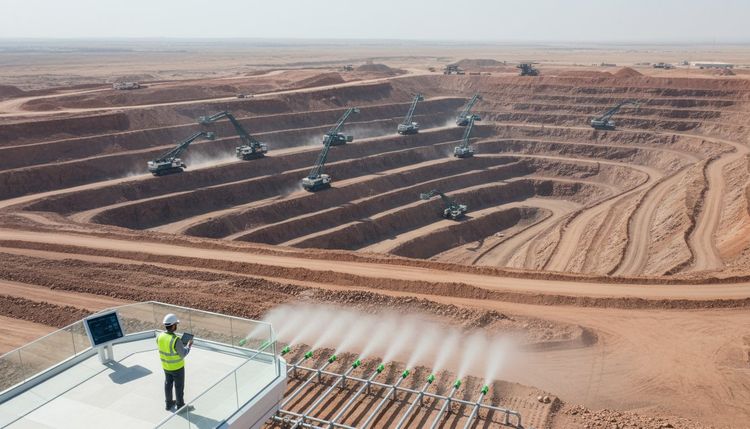
Treating the slurry directly is the most effective way to manage H2S in process water. This prevents the gas from ever entering the mine's atmosphere. For open-pit operations or perimeter defense, surface atomization fans are superior. They project a fine mist that captures airborne molecules before they drift off-site. Choosing between water-based and solvent-based delivery depends on your site's humidity levels and local water security needs. In arid regions, vaporization systems offer a dry-mist alternative that preserves precious water resources.
Masking Agents vs. True Neutralizers
Masking agents represent a significant safety risk in modern mining. They don't remove the hazard; they only hide the smell. This leads to olfactory fatigue, where workers can't detect rising gas levels because their senses are overwhelmed by a "perfume." True neutralizers permanently alter the gas at a molecular level, as discussed in our analysis of chemical technologies. In high-airflow shafts, a neutralizer's effect lasts significantly longer than a masking agent. This provides a stable, secure environment that supports worker retention and operational reliability.
Regulatory Compliance and Safety Standards in 2026
Regulatory frameworks for the mining industry have transitioned from basic safety protocols to comprehensive ESG requirements. In 2026, meeting World Health Organization (WHO) standards for "environmental nuisance" is a baseline expectation for any global operation. Off-site odor migration is no longer just a public relations hurdle. It's a legal liability that can result in project suspensions and significant litigation. Protecting the surrounding community from hazardous emissions is a core component of maintaining your social license to operate.
Investors now use gas management efficiency as a key metric for ESG ratings. A site that fails to control its chemical footprint is viewed as a high-risk asset. Implementing a rigorous Mining Odor & Gas treatment strategy demonstrates a commitment to global responsibility. This isn't just about avoiding fines. It's about ensuring the long-term viability of your infrastructure and the security of the local environment. Proactive compliance protects your brand's reputation and secures your place as a leader in sustainable mineral extraction.
A comprehensive Chemicals Management Plan is the most effective way to coordinate site-wide safety. This plan should integrate gas neutralization with existing water and ore treatment processes. With the global gas treatment market valued at USD 6.09 billion in 2026, the tools available for compliance are more advanced than ever. To ensure your facility meets these evolving demands, you can consult with our specialists on gas safety and custom chemical integration.
Worker Health and Safety (WHS) Obligations
Protecting your workforce is a primary mission. While the U.S. Court of Appeals for the Eighth Circuit issued a stay on MSHA silica deadlines on April 11, 2025, enforcement of Hydrogen Sulfide (H2S) Permissible Exposure Limits (PEL) remains a top priority for inspectors. Beyond the physical risks, foul odors have a profound psychological impact on staff. Persistent exposure to noxious gases leads to decreased productivity and higher turnover rates. A clean air environment is essential for worker retention and operational stability. You can access our Chemicals Management Plan resources to learn more about protecting your team from invisible hazards.
Environmental Compliance in the Middle East and Africa
Regional hubs like Riyadh, Dubai, and Johannesburg have introduced stringent air quality mandates to align with global sustainability goals. In these territories, gas treatment is often a prerequisite for securing mining permits for new deposits. Reporting and auditing your treatment efficiency is now mandatory in many jurisdictions. By utilizing performance-driven Mining Odor & Gas treatment, you ensure your site remains compliant with both local laws and international safety standards. This disciplined approach to emissions management is what distinguishes a visionary partner from a standard industrial supplier.
The JAS Global Approach: Tailor-Made Formulations
Off-the-shelf chemicals frequently fail in the complex, high-pressure environments of modern mining. Generic solutions don't account for the unique mineralogical profiles or the specific chemical interactions within a site's flotation circuit. This mismatch often leads to suboptimal Mining Odor & Gas treatment and, more importantly, can compromise your final yield. We believe that an industrial supplier should be an indispensable pillar of your infrastructure. Our twenty-five-year history is built on providing performance-driven additives that are as unique as the ores they treat. By framing our solutions as essential contributors to global security, we elevate our role from a mere supplier to a vital global guardian.
Our Research and Innovation (R&I) process is designed to eliminate the guesswork. We don't just ship products; we develop custom dosing strategies based on the specific biological and geological realities of your site. This precision ensures that hazardous gases are neutralized at the molecular level without creating secondary chemical conflicts. Our global reach across Europe, Asia, and Africa allows us to bring local expertise to every project, ensuring that your facility remains a stable and reliable component of the world's mineral supply chain. We prioritize the foundational needs of society by ensuring that mineral extraction remains safe and sustainable.
Technical Consulting and Process Optimization
We begin every partnership with a comprehensive on-site technical audit. This isn't a surface-level inspection. Our experts analyze your specific mineral profiles, whether you're extracting Potash, Phosphate, or precious metals, to identify the precise origin of hazardous gases. By customizing reagent formulations, we ensure that gas neutralization doesn't interfere with your plant's yield. In fact, our process optimization often identifies opportunities to improve mineral recovery while simultaneously eliminating odors. This balance of technical industrial expertise and ethical purpose ensures that your operation contributes to global security without sacrificing efficiency. We leverage our twenty-five-year history to provide the reliability you need to maintain a competitive edge.
Securing Your Supply Chain with JAS Global
Reliability is the cornerstone of a successful mining operation. We don't just provide contracts; we manufacture relationships. Our global logistics network ensures that bulk chemical supply remains steady across Europe, Asia, and Africa, even in the face of geopolitical instability. Through the "JAS Cares" initiative, we integrate our social and environmental responsibility efforts directly with your operational goals. This ensures that your Mining Odor & Gas treatment strategy is sustainable, effective, and fully aligned with 2026 international safety standards. Our focus remains on long-term value and the broader human impact of our chemical solutions. You can consult with our technical team for a custom mining gas treatment audit to secure your facility's future and protect your most valuable assets today.
Securing the Future of Global Mineral Extraction
The evolution of the mining industry demands a shift from reactive measures to proactive environmental stewardship. Achieving comprehensive Mining Odor & Gas treatment requires more than standard chemicals. It necessitates a deep understanding of molecular neutralization and site-specific mineralogy. By prioritizing non-reversible scavenging and sustainable delivery systems, operators protect their workforce and their high-value assets. This disciplined approach ensures compliance with 2026 international safety standards while strengthening your ESG profile.
JAS Global Industries brings 25+ years of specialty chemical expertise to your site. Our global R&I centers develop tailor-made formulations that address the unique challenges of major mining operations across the Middle East, Africa, and Asia. We don't just provide additives. We provide the security your infrastructure requires to thrive in a demanding global market. Reliability is our hallmark; sustainability is our mission.
Manufacturing Relationships. Distributing Quality. Contact JAS Global for Mining Solutions.
Let's work together to build a safer, more sustainable foundation for the world's most critical industries.
Frequently Asked Questions
What is the difference between an odor neutralizer and a masking agent in mining?
A neutralizer permanently changes the molecular structure of the gas, while a masking agent merely covers it with a stronger scent. Masking is dangerous because it leads to olfactory fatigue, preventing workers from detecting rising toxic levels. Neutralizers eliminate the hazard entirely. This is the cornerstone of professional Mining Odor & Gas treatment, ensuring that safety isn't compromised by temporary sensory tricks.
How does H2S gas affect mining equipment and infrastructure over time?
H2S reacts with moisture to form sulfuric acid, which aggressively corrodes steel and concrete infrastructure. Over time, this leads to hydrogen embrittlement, causing critical equipment to fail unexpectedly. These failures can increase maintenance costs by 25% or more if left untreated. Protecting your assets requires immediate neutralization to stop the chemical degradation of high-value machinery and ensure long term operational reliability.
Can gas treatment chemicals interfere with the mineral flotation process?
Yes, poorly selected gas treatment chemicals can disrupt the delicate chemical balance of mineral flotation circuits. Some scavengers may compete with collectors or frothers, potentially reducing recovery rates for minerals like copper or gold. We avoid this by conducting technical audits to ensure our formulations are compatible with your specific process water and ore profile, maintaining both safety and mineral security.
What are the primary safety risks associated with 'stinkdamp' in underground mines?
'Stinkdamp' or hydrogen sulfide poses a dual threat of immediate neurotoxicity and potential explosion. At concentrations above 100 ppm, it paralyzes the sense of smell, making the gas undetectable without sensors. This leads to rapid respiratory failure. It also contributes to an unstable environment where gas pockets can ignite if ventilation principles aren't strictly followed, making reliable Mining Odor & Gas treatment essential for underground security.
How can I monitor the effectiveness of my mining odor control system?
Effectiveness is monitored through a combination of real-time gas sensors and standardized olfactometry testing. Sensors provide immediate data on ppm levels of H2S and ammonia. For off-site monitoring, many operations use community feedback logs and electronic noses to track odor migration. Consistent data ensures your treatment system remains within regulatory limits and protects your social license to operate.
Are there biodegradable options for gas and odor treatment in tailings ponds?
Biodegradable options are available and increasingly required for modern tailings management. These green scavengers break down into harmless byproducts that don't contaminate local groundwater or soil. Using sustainable chemistry protects your long term environmental liability. It ensures that your site meets the strict ESG reporting standards expected by global investors and regulatory bodies in 2026.
What role does pH play in the release of hazardous gases during mining?
pH levels directly control the solubility and release of gases like hydrogen sulfide. When process water becomes acidic (pH below 7), dissolved sulfides are rapidly converted into gaseous H2S and released into the air. Maintaining a stable, slightly alkaline pH is a primary defense against sudden gas spikes. Correct chemical dosing prevents these fluctuations at the source, ensuring a stable and predictable environment.
How do I choose between atomization and direct injection for gas treatment?
Direct injection is best for treating gases at the source within slurries or process pipelines. It's highly efficient for high concentration streams where you want to prevent gas from ever reaching the air. Atomization is preferred for managing airborne odors and gases in open pits or along site perimeters. Choosing the right method depends on whether you need to stabilize a liquid phase or create an atmospheric barrier.