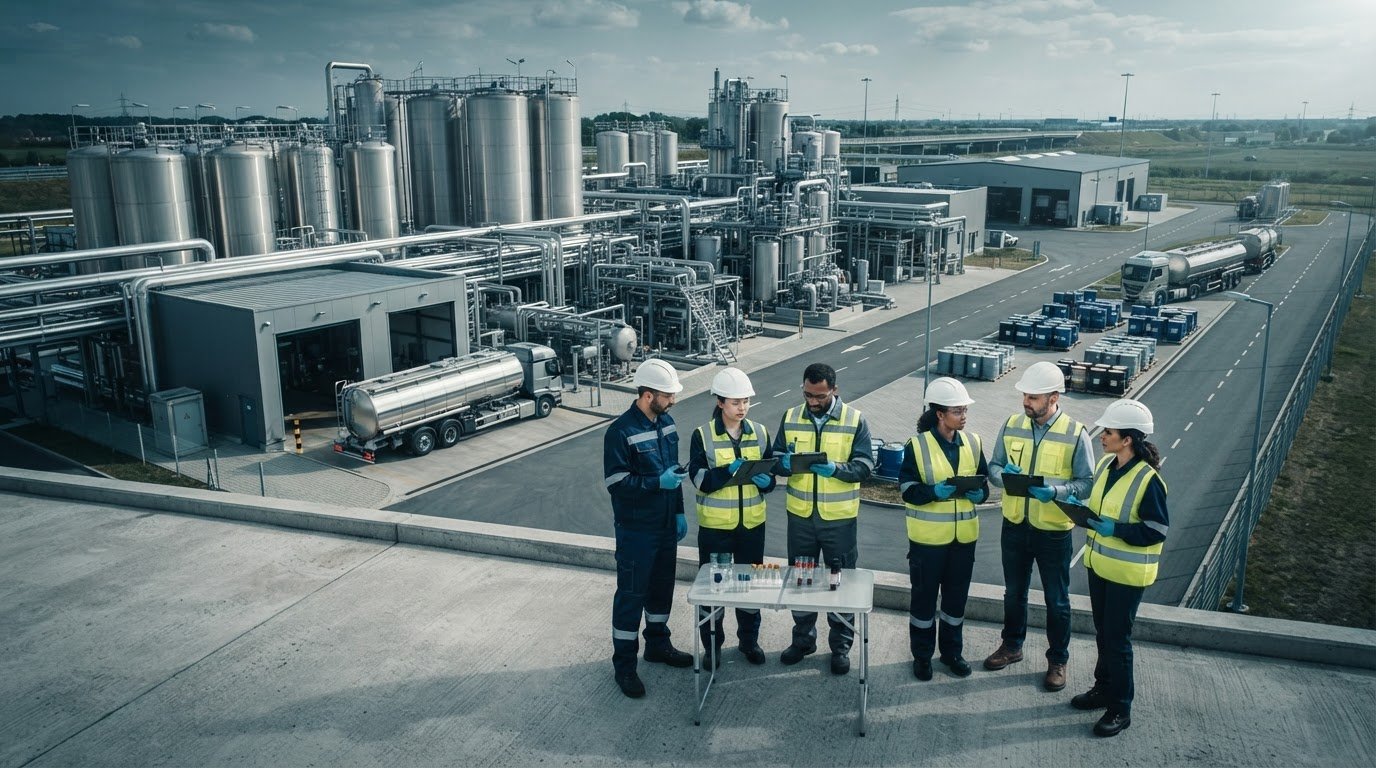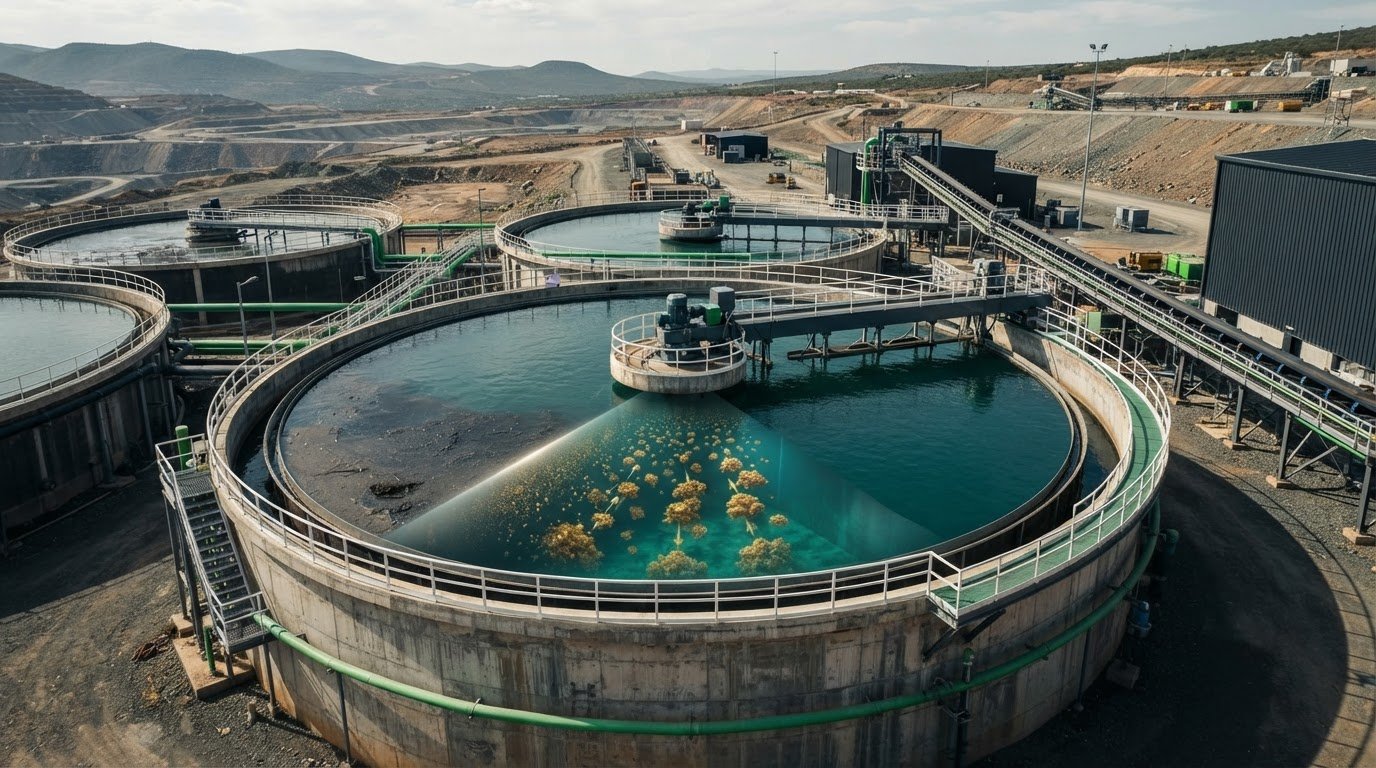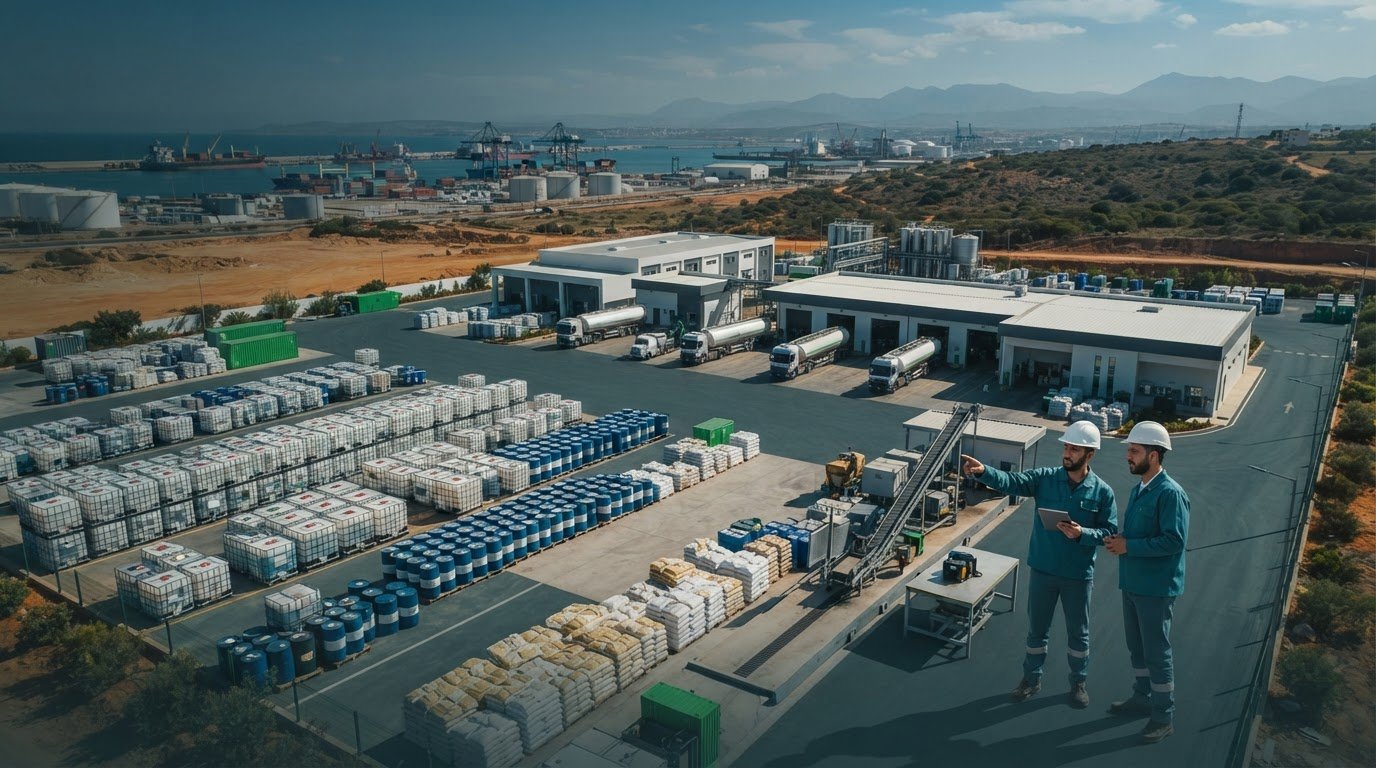


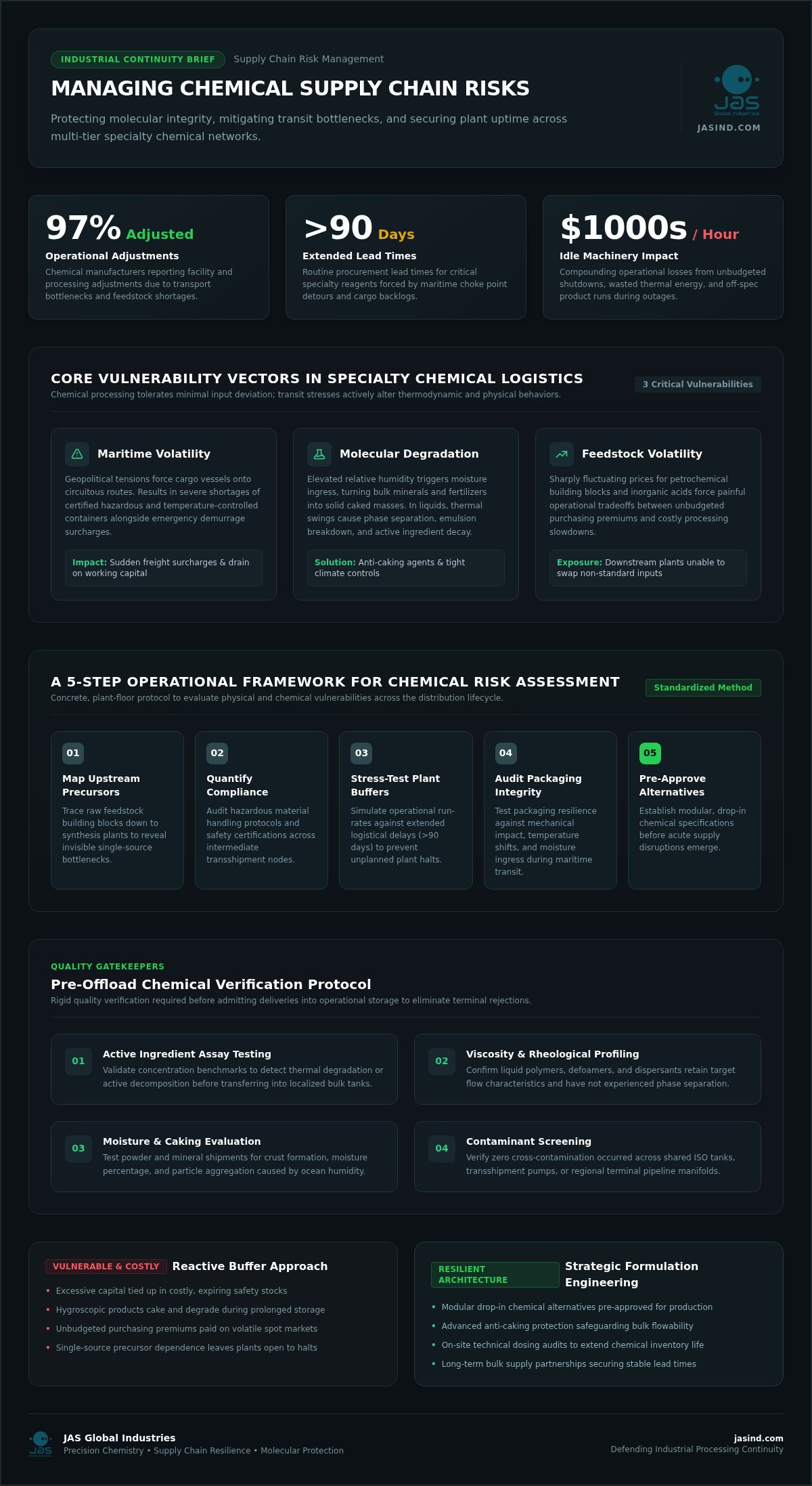
With 97% of chemical manufacturers reporting operational adjustments due to transport bottlenecks and feedstock shortages, securing a shipping manifest is no longer enough to guarantee plant uptime. True resilience demands protecting molecular integrity from synthesis to dosing, not just booking freight containers. For plant directors and procurement leaders, managing chemical supply chain risks has evolved from a routine purchasing function into an essential defense of industrial continuity. You know the mounting operational pressure when delayed specialty reagents threaten an unbudgeted shutdown, or when vital processing additives degrade into caked, unusable waste after weeks in maritime transit.
You shouldn't have to gamble uninterrupted processing on single-source dependencies or volatile cross-border corridors. Discover how to identify, evaluate, and mitigate critical chemical supply chain vulnerabilities to safeguard operational continuity and product integrity. The following guide details multi-tiered sourcing architectures, proactive transit protection methods, and global compliance strategies that insulate your facility against systemic disruption.
Key Takeaways
- Pinpoint invisible single-source bottlenecks and maritime choke points that threaten chemical integrity before shipments leave the port.
- Implement a structured five-step operational framework for managing chemical supply chain risks across multi-tier feedstock networks.
- Transition from costly safety stock buffering to strategic formulation engineering and modular drop-in alternatives.
- Execute on-site technical dosing audits and process adjustments that extend chemical inventory while preserving product performance.
- Structure long-term bulk supply partnerships to ensure volume availability, stable lead times, and regulatory compliance.
Evaluating Vulnerabilities Across the Specialty Chemical Supply Chain
Industrial processing runs on precision chemistry. When a single precursor refinery faces an unplanned outage or a regional terminal halts loading, downstream continuous plants cannot simply swap inputs. Chemical processes tolerate little deviation. Unlike dry manufactured goods, liquid additives and reactive powders alter their physical properties during supply delays. Managing chemical supply chain risks demands assessing exposure from raw synthesis down to localized bulk tanks, accounting for the unique thermodynamic and chemical behaviors of every reagent.
When unexpected disruptions halt supply, the costs compound fast. Industrial facilities face thousands of dollars per hour in idle machinery, wasted thermal energy, and off-spec product runs. Volatile feedstock markets magnify this operational exposure. Sharply fluctuating prices for petrochemical building blocks and inorganic acids force manufacturers into painful trade-offs between unbudgeted purchasing premiums and costly processing slowdowns. Establishing foundational supply chain risk management principles specifically calibrated for specialty chemistry prevents these localized shocks from paralyzing plant operations.
Geopolitical Disruptions and Maritime Freight Volatility
Geopolitical tensions across key maritime choke points force cargo vessels onto circuitous detour routes. Extended transit times stress chemical stability. Average procurement lead times now routinely stretch past 90 days for critical specialty reagents. These maritime bottlenecks trigger severe container shortages, particularly for certified hazardous and temperature-controlled units required for unstable chemicals, where continuous oversight via advanced industrial IoT monitoring solutions like CAPTEMP helps safeguard sensitive assets against out-of-spec environmental excursions. Chemical manufacturers face steep emergency surcharges and sudden demurrage fees on recurring bulk shipments. These logistical bottlenecks drain working capital without solving underlying transit delays.
Chemical Degradation and Quality Vulnerability in Storage
Prolonged maritime transit transforms physical chemistry into an active operational risk. Elevated relative humidity inside cargo holds promotes rapid moisture ingress into hygroscopic materials. Untreated bulk mineral and fertilizer cargo frequently cakes into solid, unmanageable masses during oceanic voyages. Utilizing advanced Anti-caking Agents is essential to protect physical flowability and secure global fertilizer assets against catastrophic storage losses.
Liquid chemical additives face equal peril. Extended transit and fluctuating terminal temperatures accelerate phase separation, emulsion breakdown, and active ingredient decay. Plants must implement rigid quality verification steps before admitting deliveries into operational storage:
- Active ingredient assay testing: Validate concentration benchmarks to identify thermal or chemical degradation before offloading.
- Viscosity and rheological profiling: Ensure liquid polymers, defoamers, and dispersants retain target flow characteristics.
- Moisture and caking evaluation: Test powder shipments for crust formation, particle aggregation, and moisture percentage.
- Contaminant screening: Confirm no cross-contamination occurred within shared ISO tanks or terminal pipeline manifolds.
Managing chemical supply chain risks requires safeguarding molecular stability alongside physical logistics. Ensuring continuous chemical protection protects your processing assets from costly terminal rejections.
A 5-Step Operational Framework for Chemical Risk Assessment
Surveys and credit reports cannot detect a fouled chemical reactor or off-spec reagent batch. Effectively managing chemical supply chain risks requires a concrete, plant-floor protocol that evaluates physical vulnerabilities across the distribution lifecycle. Industrial facilities rely on a standardized five-step operational methodology:
- Map upstream feedstock precursors down to synthesis plants.
- Quantify hazardous material handling compliance across transshipment nodes.
- Stress-test plant buffers against extended logistical bottlenecks.
- Audit packaging integrity against mechanical and thermal transit stresses.
- Establish pre-approved chemical alternative specifications before disruptions emerge.
Mapping Upstream Chemical Precursor Dependencies
Supply security collapses when multiple Tier-1 vendors purchase active ingredients from the same primary chemical park. Trace every critical formulation component back to its initial synthesis site and mineral extraction facility. Identifying geographic clustering prevents sudden shocks when regional environmental inspections or grid curtailments shutter local output. Plant teams must pre-qualify secondary synthesis sources before supply interruptions strike, validating equivalent chemical reactivity in laboratory trials.
Auditing Hazardous Materials Handling and Regulatory Compliance
Hazardous transit demands strict verification rather than self-reported compliance forms. Audit freight carriers against international dangerous goods transport protocols, including IMDG maritime stowage, ADR road transport, and DOT hazardous materials rules. Align your chemical storage infrastructure with EPA Risk Management Program requirements to guarantee incident prevention and emergency readiness during bulk loading. Ensure logistics partners maintain validated Safety Data Sheets alongside rapid-response spill mitigation protocols across every transit hub.
Stress-Testing Plant Inventory Buffers and Reorder Thresholds
Static safety buffers fail during prolonged supply line disruptions. Chemical managers must model plant consumption against conservative 45-to-60-day delay scenarios. Factor in strict climate-controlled warehouse caps, product shelf lives, and elevated storage expenses. Automate dynamic reorder thresholds tied directly to distributed control system processing rates rather than static calendar cycles. Collaborating with technical specialists like JAS Global Industries enables facilities to audit chemical consumption rates and optimize critical inventories under rigorous operational conditions.
Mitigation Strategies: Reactive Buffers vs. Strategic Formulation Engineering
Traditional procurement often defaults to simple stockpiling when logistics networks falter. However, treating reactive chemicals like inert mechanical inventory creates severe hidden liabilities. Flammable processing aids, unstable peroxides, and concentrated acids carry defined shelf lives, strict temperature parameters, and acute environmental hazards. In managing chemical supply chain risks, modern industrial operators are transitioning from passive safety stock buffering toward proactive formulation engineering and integrated technical partnerships.
Building massive physical buffers ties up critical working capital and elevates site liabilities. Holding excess dangerous stock multiplies on-site risk profiles, often triggering stringent oversight under OSHA Process Safety Management standards that demand extensive mechanical integrity audits and emergency planning. Conversely, relying strictly on lean spot purchasing leaves operations defenseless against carrier disruptions. A balanced strategy replaces excess volume with agile, modular chemical solutions.
Evaluating Safety Stock Liabilities vs. Just-in-Time Deliveries
Massive inventory buffers introduce distinct physical risks. Aging chemical drums suffer liner failures, settling, polymerization, and product degradation. To safeguard container integrity and reinforce packaging during extended transit or storage, facilities often rely on specialist distributors like Fosseway Tapes & Fixings Limited for high-performance industrial tapes and sealing materials. Conversely, strict Just-in-Time delivery models leave plants completely vulnerable when port congestion delays critical tankers. Industrial operations require a hybrid posture: strategic regional warehousing paired with active consumption-linked replenishment. Distributing pre-positioned inventories across localized vendor hubs mitigates transit volatility without turning production sites into unmanageable hazardous chemical yards.
Formulation resilience provides operational flexibility when specific feedstock markets dry up. Rather than relying on rigid, single-precursor recipes, agile chemical formulators develop drop-in blends engineered to work with alternate precursors without compromising finished product specs. This flexibility protects continuous industrial operations:
- Mineral extraction continuity: Dynamic ore variations demand responsive reagent chemistry; specialized mining solutions utilize adaptable flotation collectors and tailored frothers to maintain target recovery yields despite fluctuating raw material inputs.
- Modular raw material substitution: Dual-recipe chemistries allow rapid switching between synthetic surfactants and bio-based alternatives based on regional feedstock availability.
- Drop-in performance additives: Granulation aids, scale inhibitors, and defoamers engineered for wide dosing windows tolerate regional water chemistry and temperature variances.
True operational resilience relies on laboratory depth, not larger storage tanks. Partnering with chemical manufacturers that operate dedicated Research and Innovation centers gives industrial facilities access to custom formulation adjustments that resolve precursor shortages before production slows down. Proactive molecular adaptability ensures reliable, cost-effective continuity across any market disruption.
How to Execute an On-Site Chemical Risk Mitigation Program
Enterprise risk policies offer little protection if they remain confined to boardroom slides. True operational defense happens on the plant floor. Managing chemical supply chain risks requires converting macro procurement policies into concrete engineering controls at your intake manifolds, dosing skids, and process lines. When replenishment cycles stretch unexpectedly, extending existing chemical inventories through disciplined on-site stewardship keeps processing plants running without sacrificing finished output specs.
Conducting Technical Process Audits and Dosing Optimization
Over-dosing is an invisible tax on chemical resilience. Operators frequently compensate for process variability by adding excessive reagent volumes, burning through safety stocks weeks ahead of schedule. A thorough engineering audit recalibrates automated injection skids to current line conditions. In cooling circuits and boilers, optimizing scale inhibitors, biocides, and antiscalants according to verified industrial water treatment standards preserves critical thermal transfer assets while lowering active reagent consumption by double digits.
Inbound Material Verification and Quarantine Procedures
Contaminated or off-spec chemicals can foul entire downstream reactors, costing far more than a simple shipping delay. Protect plant operations by enforcing systematic gatekeeper protocols before tanker hoses hook up to storage tanks:
- Pre-discharge analytical screening: Run rapid bench testing on inbound ISO tanks for specific gravity, pH, solids content, and color variance.
- Mandatory quarantine isolation: Divert unverified or suspect loads to isolated holding loops until lab assays confirm Certificate of Analysis (CoA) values.
- Retain-sample library maintenance: Archive verified batch samples in climate-controlled storage for the duration of the finished product's service life to resolve performance claims.
Formulating Emergency Batch Correction and Dosing Substitutions
Supply shocks eventually force facilities to handle slightly off-spec raw materials or deploy secondary additive suppliers. Do not improvise these transitions during an active production shift. Plant technical teams need pre-validated engineering adjustment tables that define allowable corrective measures, including pH modifications, viscosity adjustments, and supplementary additive blends. For toxic emissions, maintaining pre-calibrated secondary scrubbers and standby chemical scavengers for h2s treatment prevents environmental compliance shutdowns when primary reagent deliveries stall.
Protecting continuous operations requires active technical precision on the processing floor. To conduct an on-site process audit and calibrate custom dosing solutions for your facility, consult with the technical engineering team at JAS Global Industries.
Securing Industrial Resilience Through Strategic Chemical Partnerships
Transactional procurement is a brittle strategy in volatile markets. Chasing discounted spot-market pricing might yield minor short-term savings, but it exposes continuous manufacturing operations to abrupt cancellations when global distribution channels tighten. In managing chemical supply chain risks, corporate leadership must transition from transactional vendor transactions toward integrated technical alliances. A resilient supply model transforms the chemical manufacturer from an arms-length seller into an active guardian of your operational continuity.
Structuring Robust Bulk Supply and Service Level Agreements
Effective chemical supply agreements look far beyond standard payment terms and delivery windows. Industrial facilities require comprehensive Service Level Agreements (SLAs) that treat molecular consistency as a fundamental deliverable. When structuring long-term bulk supply partnerships, prioritize clauses that enforce operational stability:
- Strict technical specifications: Define rigid thresholds for active ingredient concentrations, viscosity ranges, maximum moisture levels, and allowable impurity profiles.
- Guaranteed regional stock allocations: Require chemical partners to hold designated emergency buffers within local or bonded warehouses to absorb maritime delays.
- Embedded technical support: Mandate direct access to field process engineers for routine plant-floor dosing audits and rapid troubleshooting during operational anomalies.
Leveraging Global Manufacturing and Regional R&I Infrastructure
Relying on a single domestic plant or a lone overseas producer leaves your production schedules vulnerable to regional factory shutdowns, export embargoes, and port closures. True supply security requires partnering with producers that maintain diversified, multi-regional manufacturing footprints. Decentralized manufacturing ensures that when one region faces energy rationing or logistics bottlenecks, parallel facilities in alternate territories maintain guaranteed supply allocations.
Equally critical is the presence of dedicated Research and Innovation (R&I) centers. Variable regional ore quality, changing water mineral profiles, and seasonal humidity shifts routinely degrade chemical processing performance. Facilities gain immense operational security when their partner possesses the scientific capability to re-engineer formulations for local operating conditions. Operating dedicated manufacturing plants and R&I centers across the Middle East, Africa, Asia, and Europe since 1998, the technical specialists at JAS Global Industries engineer custom chemical solutions and dependable bulk supply architectures that protect mission-critical industrial assets worldwide.
Building Unbroken Chemical Resilience for the Industrial Future
Operational stability is no longer just about tracking shipping containers. Effectively managing chemical supply chain risks demands active molecular stewardship across every stage of the production cycle. By shifting away from hazardous safety stock buffering toward strategic formulation engineering, industrial facilities protect both their balance sheets and their plant uptime. Enforcing rigorous pre-discharge gatekeeper assays alongside automated dosing controls ensures your plant extracts maximum value from every drop and granule.
Since 1998, JAS Global Industries has served as a dedicated guardian of industrial manufacturing continuity. Backed by multi-regional manufacturing infrastructure and specialized R&I centers spanning the Middle East, Africa, Asia, and Europe, we pair dependable bulk supply contracts with direct, on-site technical process audits and custom dosing optimization. Don't leave continuous processing vulnerable to cross-border volatility or single-origin bottlenecks. Secure your operations with custom specialty chemical solutions from JAS Global Industries and anchor your processing lines with proven global chemical security.
Frequently Asked Questions
What are the most common risks in industrial chemical supply chains?
The most disruptive risks involve single-source upstream precursor dependencies, severe maritime transit delays, regulatory shifts, and physical product degradation during transport. When managing chemical supply chain risks, facilities frequently encounter unexpected carrier chokepoints, raw material price volatility, and moisture damage in bulk solid or liquid reagents. Unaddressed, these vulnerabilities lead directly to unscheduled plant shutdowns, off-spec manufactured goods, and substantial unbudgeted operational expenses.
How do transit delays physically impact the quality of bulk chemicals?
Extended transit times expose industrial chemicals to temperature fluctuations, mechanical vibration, and moisture ingress. Granular fertilizers and bulk minerals often experience severe caking, turning free-flowing solids into hardened blocks. In liquid solutions like defoamers, biocides, or flotation collectors, prolonged delays accelerate phase separation, active ingredient precipitation, and emulsion breakdown. These physical transformations reduce chemical efficacy, clog dosage pumps, and force expensive processing interruptions.
What happens if a critical chemical additive arrives off-spec at the plant?
Discharging off-spec chemicals into main storage risks contaminating entire bulk holding tanks and compromising continuous operations. Plant operators must immediately place suspect loads into isolated quarantine loops while running bench analytical assays. If verified off-spec, facilities deploy pre-approved corrective engineering protocols, such as auxiliary pH adjustments or secondary scavenger blending, or initiate emergency replacement protocols with certified backup suppliers before line operations stall.
Can formulation engineering reduce vulnerability to raw material shortages?
Yes, agile formulation engineering creates modular chemical recipes that accept alternative precursor molecules without sacrificing process performance. Instead of relying on a single, rigid synthesis pathway, dedicated R&I laboratories design drop-in specialty additives compatible with varying raw material grades. This biochemical flexibility allows industrial plants to switch input feedstocks swiftly when primary sources face regional export restrictions, environmental curtailments, or sudden price spikes.
How does multi-regional chemical manufacturing mitigate global logistics bottlenecks?
Operating production facilities across multiple continents provides geographic redundancy that insulates operations from regional disruptions. If geopolitical conflicts, port strikes, or localized energy rationing disrupt production in one territory, decentralized chemical manufacturers balance capacity by shifting volume to parallel plants in another region. This distributed infrastructure shortens shipping corridors, reduces oceanic transit exposure, and ensures continuous deliveries to local industrial hubs.
Why is technical consulting essential in chemical supply agreements?
Technical consulting ensures that chemicals perform optimally inside your specific industrial environment rather than existing merely as bulk commodities. Integrating on-site process audits and dosing optimization into supply contracts prevents costly over-application and stabilizes system chemistry. In managing chemical supply chain risks, dedicated technical engineers help facilities troubleshoot raw material variances, audit injection skids, and extend reagent lifespans through verified process adjustments.
How much safety stock should an industrial chemical facility maintain?
Facilities should balance operational run rates against replenishment lead times, typically targeting 45 to 60 days of dynamic inventory for critical additives. Storing excessive reactive chemicals creates acute storage hazards, working capital drag, and shelf-life degradation risks. Plants should combine lean on-site inventory with localized vendor-managed warehouses. This hybrid model guarantees rapid replenishment during shipping delays without overloading the facility with dangerous chemical volumes.