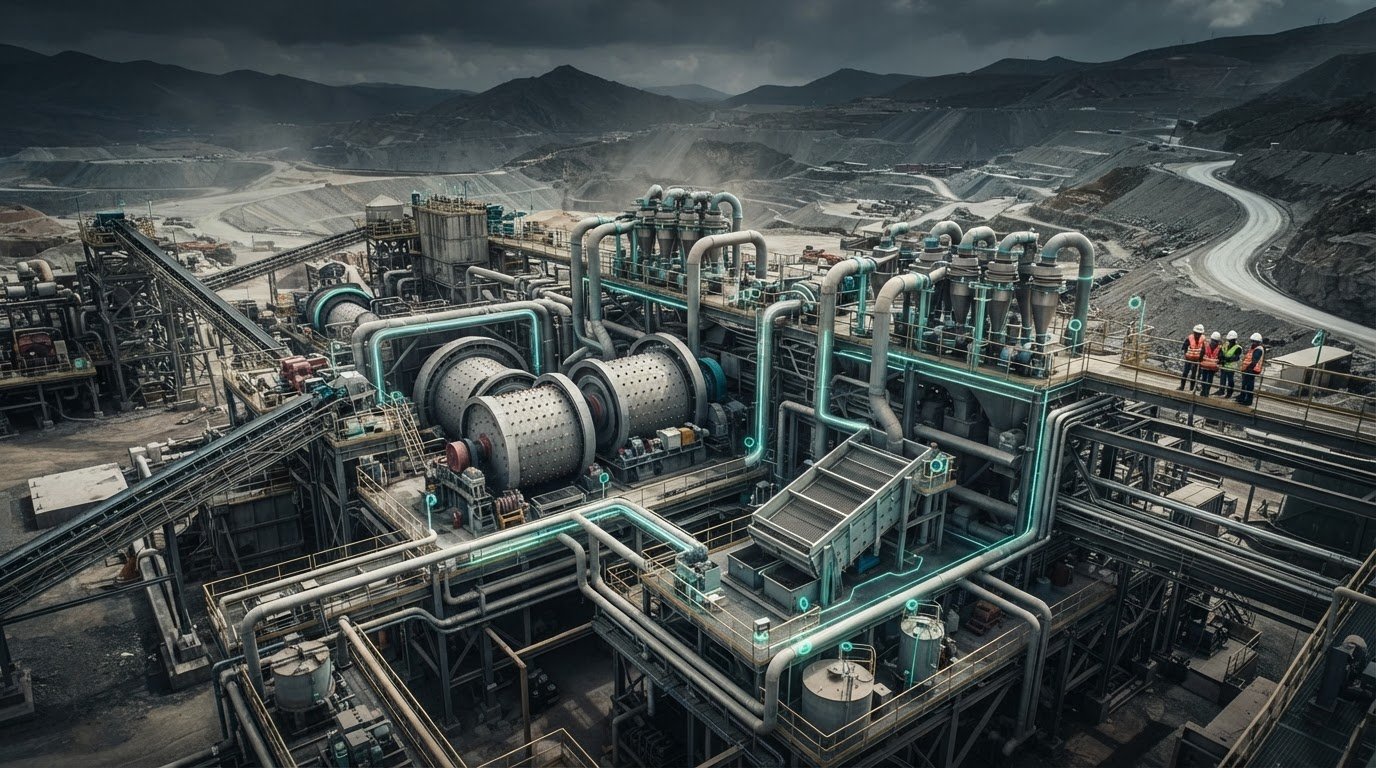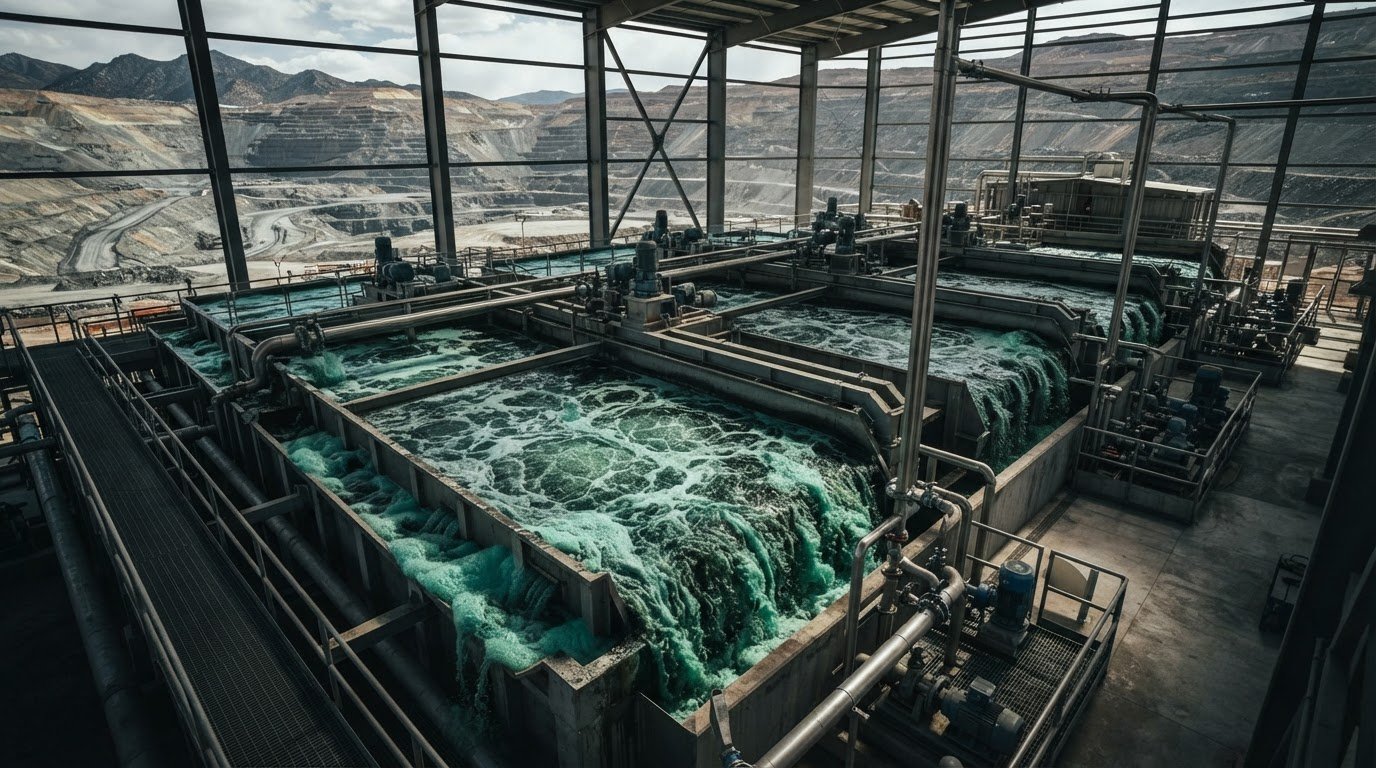

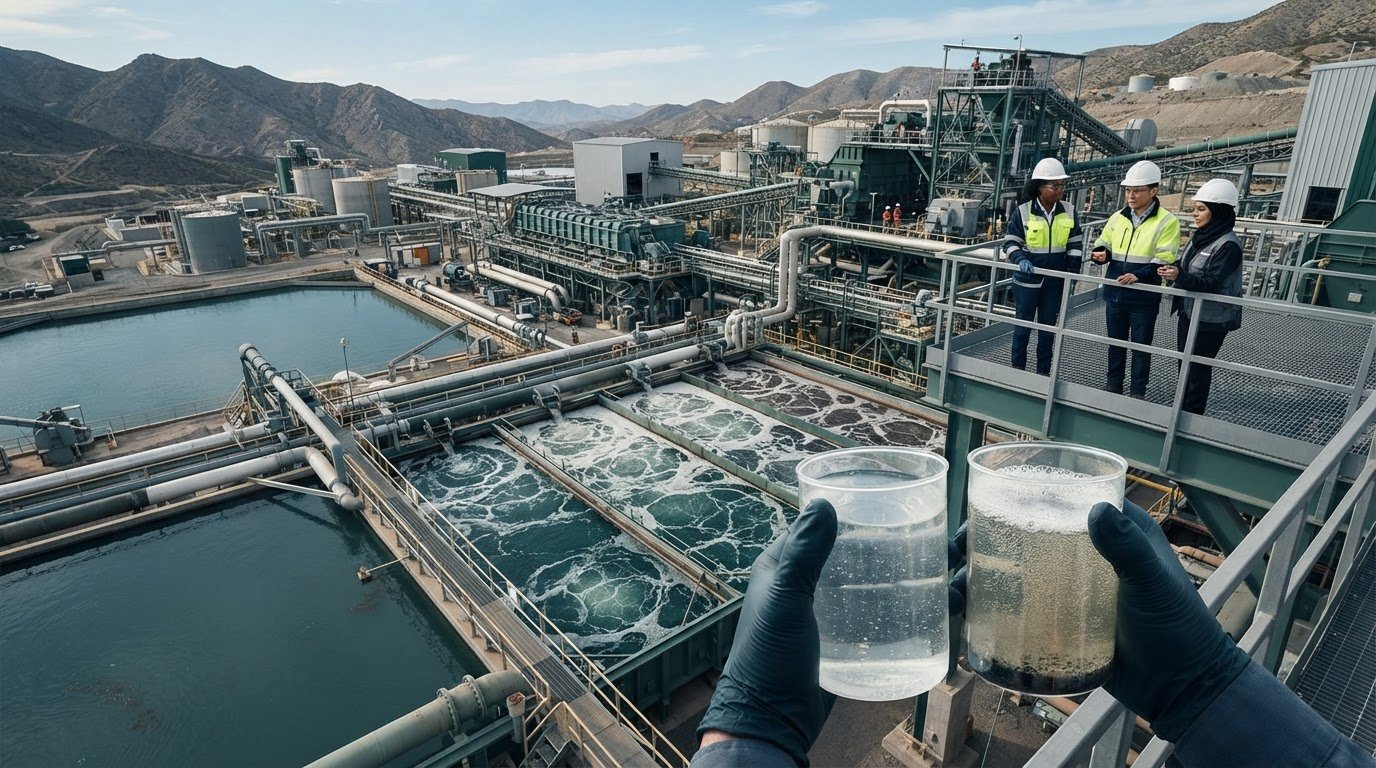
What if the water feeding your flotation circuit is changing results as much as the ore or reagent scheme? The impact of water quality on flotation can be easy to overlook when performance shifts alongside recycle-water proportions, ore characteristics, or operating conditions. Yet changes in pH, dissolved salts, calcium, magnesium, and residual reagents can influence mineral selectivity, recovery, and froth behaviour.
When flotation performance changes, it’s understandable to look first at the ore or operating settings. But process water is not a fixed background input. Its chemistry can affect how collectors interact with mineral surfaces, how frothers behave, and whether recycled reagents help or hinder the circuit.
This article covers which water-quality variables to measure, how dissolved species may affect flotation, and how to distinguish water effects from other operating changes. It also outlines a controlled way to compare water sources and reagent options before changing circuit operations. The goal is to make decisions using evidence from your ore and process, not a generic water-quality checklist.
Key Takeaways
- The impact of water quality on flotation depends on the ore, reagent scheme, operating conditions, and water source, so assess it in circuit context.
- Track key chemistry, including pH, conductivity, dissolved ions, salinity, and residual reagents, rather than relying on a single water-quality measure.
- Compare fresh, recycled, and treated water for variability, monitoring needs, and performance in controlled tests.
- Keep the ore sample, grind, reagent additions, pH, water source, and operating conditions consistent and documented to help isolate water effects.
- Use test evidence to guide ore-specific reagent selection, dosing trials, and practical monitoring plans.
How Water Quality Influences Flotation Performance
Process-water quality is the physical and chemical condition of the water used throughout a flotation circuit. Water chemistry helps shape mineral separation and froth behaviour by influencing mineral surfaces, reagent action, and interactions between particles and air bubbles. This is why the impact of water quality on flotation must be assessed in context. The same water can produce different responses with different ore mineralogy, reagent schemes, operating conditions, or water sources.
Flotation selectively separates valuable mineral particles from gangue by encouraging target particles to attach to air bubbles and rise into the froth. For a foundational overview of the process, see Froth flotation. Water is part of the chemical environment in which separation occurs, not simply a carrier for the solids.
Which water sources enter a flotation circuit?
A circuit may use fresh water, recycled process water, reclaimed water, or blends of these sources. None is universally best. Fresh water can vary with its original source, while recycled water may change as dissolved species and residual reagents accumulate through repeated use. Reclaimed water may also reflect its previous use and treatment. Blending sources changes the resulting water chemistry, so assess the blend as a process input in its own right.
Changes in supply, recycle-water proportion, or seasonal conditions can shift the circuit’s usual water baseline. Record the source and blend proportions alongside process observations. This makes it easier to spot when a change in water input coincides with a change in flotation response.
Why does water quality matter to mineral separation?
Dissolved species can interact with mineral surfaces and affect how collectors and other reagents perform. Water chemistry may also influence bubble-particle attachment and froth behaviour. The direction and size of the effect depend on the ore and operating context. A change in water does not automatically mean recovery or selectivity will worsen.
That distinction matters during troubleshooting. If water composition and flotation performance change at the same time, investigate the relationship, but don’t assume that timing proves cause. Grind size, feed composition, air rate, reagent additions, and circuit settings can also affect results. Compare conditions systematically, keeping other variables as consistent as practical, before attributing a performance shift to water.
To assess the impact of water quality on flotation, connect water-source and chemistry records with circuit performance, while accounting for changes in ore and operation. This gives you a practical basis for deciding which water variables to investigate next.
How Water Chemistry Changes Mineral Surfaces, Reagents, and Froth
Water chemistry can influence flotation through several connected mechanisms. Changes in pH, salinity, dissolved ions, and other dissolved species may alter mineral-surface conditions and affect how reagents interact with particles. These effects can influence selectivity, recovery, flotation kinetics, and froth behaviour, but their direction and strength depend on the ore and circuit.
The same water variable can help one ore respond and hinder another, because mineralogy and reagent conditions shape the chemistry at each particle’s surface. There are no universal water-quality thresholds that guarantee a particular flotation response. Validate useful operating ranges against the ore, water source, and process conditions. A review of the effect of water quality on flotation provides further context on these interacting mechanisms.
How pH, hardness, and dissolved ions can affect flotation
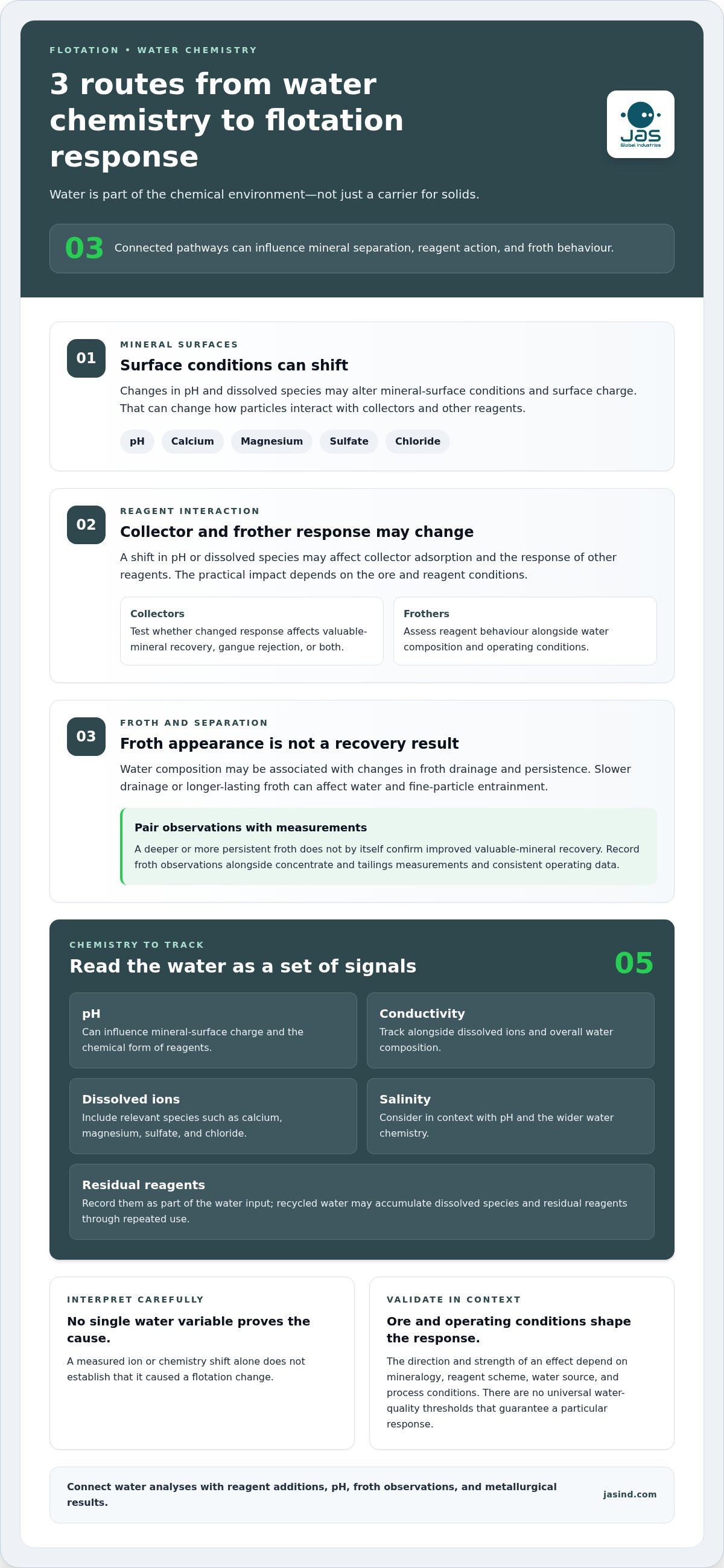
pH is more than an operating number. It can influence mineral-surface charge and the chemical form of reagents, affecting how particles interact with collectors and other reagents. A pH shift may therefore change one mineral’s response relative to another, even when reagent additions stay constant.
Hardness-related ions such as calcium and magnesium may interact with mineral surfaces or dissolved reagents, changing surface conditions and reagent response. Salinity and ions such as sulfate or chloride may also be relevant. Their presence alone doesn’t prove they are causing a performance change. Measure and test them alongside pH and the overall water composition rather than treating them as automatic explanations.
How water chemistry can influence collectors and frothers
If surface conditions change, collector adsorption may change too. A collector that performs selectively under one water composition may respond differently when dissolved species or pH shift. The practical question is whether that change affects valuable-mineral recovery, gangue rejection, or both. Test results, not water analysis alone, are needed to answer it.
Water composition may also be associated with changes in froth drainage and persistence. Froth that drains more slowly or remains stable for longer can affect water and fine-particle entrainment, but appearance is only an observation. A deeper or more persistent froth does not, by itself, confirm improved valuable-mineral recovery. Pair visual froth records with concentrate and tailings measurements and consistent operating data.
For troubleshooting, connect water analyses with reagent additions, pH, froth observations, and metallurgical results. Where practical, change one factor at a time and keep other conditions consistent. This helps distinguish a plausible water-chemistry effect from a coincident operating change. An ore-specific flotation reagent assessment can help turn those findings into focused dosing trials.
Fresh Water, Recycled Water, and Treated Water: What Should You Compare?
Fresh water isn’t automatically the best choice for flotation, and recycled water doesn’t automatically reduce performance. Compare each source against the ore, circuit objectives, site water availability, and operating constraints. The review of the effect of water quality on flotation discusses why water variation and its process effects need to be considered in context.
| Water source | Likely variability | Monitoring needs | Test considerations |
|---|---|---|---|
| Fresh water | Can vary with its source and seasonal conditions. | Record the source and track relevant chemistry over time. | Use it as a reference only if it reflects the circuit’s actual supply. |
| Recycled process water | Composition may shift as dissolved species and residual reagents accumulate or as recycle proportions change. | Track water chemistry and the proportion of recycled water entering the circuit. | Test representative samples and relate results to metallurgical indicators. |
| Reclaimed water | May vary with its prior use and treatment. | Characterize its chemistry and note changes in source or treatment conditions. | Assess its performance in the intended blend and operating conditions. |
| Blended water | Can change as the proportions or chemistry of contributing sources shift. | Record blend proportions and monitor the resulting process water. | Test the blend itself, not just each source separately. |
| Treated water | Can vary with feed-water composition and treatment operation. | Track the treated-water quality and any relevant process changes. | Compare the treated option with the untreated baseline against defined goals. |
When can recycled water support flotation operations?
Water reuse can support resource efficiency, but it requires attention to chemistry. Recycled water may carry residual reagents that affect flotation, while dissolved species can build up as water circulates. Neither outcome should be assumed to help or harm recovery. Track source proportions and water chemistry alongside recovery, grade, and other relevant metallurgical indicators. This helps show whether a changing recycle-water contribution is associated with a repeatable process response.
When should water treatment be evaluated?
Consider treatment when measured water characteristics repeatedly coincide with a flotation impact in controlled comparisons. Define the objective first: improving a flotation response is not necessarily the same as meeting broader plant-water requirements. Compare treatment options against the operational goal, water availability, site requirements, and resulting water chemistry. Treatment is a case-specific tool, not an automatic step for every circuit. Verify that it addresses a demonstrated need and produces water suitable for the intended use.
How to Test Water-Quality Effects on Flotation in Your Circuit
A reliable assessment separates water effects from changes in ore, grind, reagents, and circuit operation. Set a baseline, document each test, and change water conditions systematically. This turns the impact of water quality on flotation from a suspected cause into a question you can investigate with process evidence.
- Define the issue. Specify the response you’re investigating, such as a shift in recovery, grade, flotation kinetics, or froth behaviour. Note when it began and what else changed in the circuit.
- Sample the water. Collect representative samples from relevant points, such as incoming water, recycle streams, or the final process-water blend. Record the sampling location, timing, source proportions, and handling conditions.
- Characterize the chemistry. Choose analyses that address the process question and complement available site data. Candidate measurements include pH, conductivity, hardness, and relevant dissolved ions. Compare results across sources or operating periods rather than treating one sample as a permanent baseline.
- Run controlled tests. Compare baseline water with the alternative source, blend, or condition. Use laboratory or plant trials, keeping other test conditions consistent where practical.
- Review the results. Compare recovery, concentrate grade, kinetics, and recorded froth observations. Check whether the pattern is repeatable before using it to guide operating or dosing changes.
What should a flotation-water assessment measure?
Let the ore and the process question guide the water analysis. For example, if performance shifts as recycle-water use changes, record the recycle proportion and compare relevant chemistry with the circuit response. Keep sampling records consistent, including location, date or operating period, source blend, and handling conditions. This helps you tell whether differences between samples reflect the water being assessed rather than changes in how it was collected or documented.
For every flotation test, log the ore sample, grind, reagent additions, pH, water source, and operating conditions. Also note the test sequence and any deviations. Without this record, a change in recovery or froth behaviour can be difficult to interpret because several variables may have moved at once.
How can operators make test results actionable?
Changing one test variable at a time makes results easier to interpret because it narrows the likely cause of a response. If a single-variable comparison isn’t practical, document the changes and structure the test so their effects can be distinguished. Repeat promising comparisons, then check whether the result holds under relevant operating conditions before changing setpoints or reagent dosing.
Once the diagnostic approach is clear, technical audits, on-site laboratory testing, and tailored chemical dosing strategies can connect water findings with reagent performance and troubleshooting. Explore JAS mining solutions for information on flotation reagents and process conditions.
Turning Water-Quality Findings into a Flotation-Reagent Strategy
Water analysis is most useful when it informs a specific process decision. If a change in water chemistry coincides with a flotation shift, use controlled comparisons to determine whether the reagent scheme needs adjustment, operating conditions need review, or water is not the main driver. The impact of water quality on flotation is ore-specific, so base reagent changes on test evidence rather than assumption.
How should flotation reagents be evaluated when water changes?
Assess collectors, frothers, and depressants as part of the actual ore-water-reagent system. A collector’s response can depend on mineral surfaces and water chemistry. Evaluate a frother alongside both froth behaviour and separation results. Compare candidate strategies against clear metallurgical objectives, such as recovery, grade, selectivity, or kinetics.
Compare options systematically. Consider:
- Expected process fit: Does the candidate strategy address the observed issue for this ore and water condition?
- Test evidence: Does a controlled comparison show a repeatable response against the baseline?
- Operational practicality: Can the approach be applied and monitored within the circuit’s operating conditions?
- Monitoring needs: Which water and flotation indicators will show whether the response remains consistent?
Track water chemistry and reagent additions together during operational reviews. If water composition or source proportions shift again, these records help determine whether reagent response has changed. Don’t treat a single test as proof of a universal reagent adjustment or a guaranteed recovery improvement.
What does a practical process-optimization partnership involve?
A structured assessment connects technical review with test work and evidence-led recommendations. Technical audits can identify process variables for investigation, on-site laboratory testing can compare water and reagent conditions, and tailored dosing strategies can be based on the results. The aim is a practical course of action grounded in the ore, water, and operating context.
Ongoing monitoring matters. Recording water conditions alongside reagent performance and metallurgical indicators helps teams recognize changes in circuit behaviour and respond with better information. It also connects water reuse or source changes with process outcomes, rather than treating water and flotation as separate concerns.
For support connecting water-quality findings with reagent selection, testing, and dosing decisions, Discuss flotation process optimization with JAS.
Turn Water Insights into Better Flotation Decisions
The impact of water quality on flotation depends on the interaction between water chemistry, ore mineralogy, reagents, and operating conditions. Assess fresh, recycled, reclaimed, and blended water against the circuit’s needs instead of assuming one source will perform best.
Measure relevant water variables, record operating conditions, and compare test results against a clear baseline. Controlled trials help distinguish water effects from changes in grind, feed, reagent additions, or circuit operation. Use repeatable evidence to guide reagent selection and dosing, and continue monitoring as water sources or proportions shift.
JAS Global Industries supplies mining flotation collectors, frothers, and depressants, and provides technical audits, on-site laboratory testing, and tailored dosing strategies for ore- and water-specific process evaluation. Discuss flotation process optimization with JAS to connect your water-quality findings with practical circuit decisions.
Frequently Asked Questions
How does water quality affect flotation?
Water quality affects flotation by changing the chemical conditions around mineral surfaces, reagents, and air bubbles. Shifts in pH, dissolved ions, salinity, or residual reagents may influence collector response, selectivity, recovery, flotation kinetics, and froth behaviour. The impact of water quality on flotation depends on ore mineralogy and circuit conditions, so a water change alone doesn’t prove the cause of a performance shift. Controlled comparisons help establish its role.
Which water-quality parameters matter most in flotation?
The most useful parameters depend on the ore and the process question. Common candidates include pH, conductivity, total dissolved solids, hardness, and concentrations of relevant dissolved ions such as calcium, magnesium, sulfate, or chloride. Residual reagents may also matter where process water is recycled. Track source and blend proportions alongside laboratory results, then compare the chemistry with flotation indicators. There are no universal thresholds that apply to every ore and circuit.
Does hard water reduce flotation recovery?
Hard water doesn’t always reduce flotation recovery. Calcium and magnesium ions can interact with mineral surfaces or reagents, potentially changing reagent response and selectivity, but the outcome depends on the ore, water composition, and operating conditions. Assess hardness alongside other chemistry and metallurgical results. Compare representative water conditions in controlled tests, keeping the ore, grind, reagent additions, and other circuit variables consistent where practical before attributing a recovery change to hardness.
Is recycled water suitable for mineral flotation?
Recycled water can be suitable for mineral flotation, but its performance depends on its chemistry and the circuit’s tolerance for changes in water composition. Dissolved species and residual reagents may accumulate as water is reused, while some residual reagents may also contribute to flotation. Monitor water chemistry and the proportion of recycled water, then assess them alongside recovery, grade, and froth observations. Test representative blends rather than assuming reuse will always help or harm performance.
Can changing pH improve flotation performance?
Changing pH can improve flotation performance if the adjustment suits the ore and reagent scheme. pH can affect mineral-surface charge and reagent interactions, which may alter selectivity or recovery. But an adjustment can also change other responses, so don’t rely on a universal target or change pH based on symptoms alone. Compare pH conditions in controlled tests, record reagent additions and operating settings, and judge results against agreed measures such as recovery, grade, and kinetics.
How can I tell whether water quality is causing flotation problems?
Look for a repeatable relationship between a measured water change and a flotation response, while checking for changes in grind, feed composition, air, reagent additions, and circuit settings. Sample relevant water sources and record sampling details, chemistry, and source proportions. Then compare baseline and changed-water conditions in controlled laboratory or plant trials. Track recovery, grade, kinetics, and froth observations. A coincident change is a clue, not proof, until other variables are considered.
Should flotation water be treated before use?
Not necessarily. Water treatment is a case-specific option, not a standard requirement for every flotation circuit. Evaluate it when measured water characteristics are linked to repeatable process effects, or when broader site water objectives call for it. Define the goal first, then compare treatment options against water availability, operating needs, and resulting water chemistry. Confirm any flotation benefit through testing, and distinguish flotation-focused water management from treatment undertaken for other plant requirements.