


Can a sustainable additive truly protect your fertilizer cargo during a thirty-day maritime transit through extreme humidity? Many producers fear that switching to biodegradable anti-caking solutions means sacrificing performance for compliance. You've likely dealt with the frustration of product caking or the threat of environmental penalties for using non-biodegradable additives. We understand that in the global supply chain, reliability is the foundation of trust and stability.
Advanced chemistry has finally bridged the gap between industrial necessity and ecological responsibility. Modern surfactant technology now allows bio-based agents to match or even exceed the performance of traditional petroleum coatings. This article explores how you can maintain 100% granule flowability and minimize dust formation while meeting the strict global regulations of 2026. We will examine the technical innovations that prevent dosing equipment clogs and ensure your operations remain both profitable and compliant. Protecting your product; securing our environment.
Key Takeaways
- Understand the critical shift from petroleum-based paraffins to plant-derived esters to meet evolving global environmental standards without compromising product quality.
- Learn how biodegradable anti-caking solutions utilize a dual-action mechanism to lower surface tension and prevent granule recrystallization in high-humidity environments.
- Compare performance benchmarks between bio-based additives and traditional paraffin waxes, focusing on moisture vapor transmission rates and caking indices during maritime transport.
- Identify the necessary technical audits and operational adjustments, such as temperature and viscosity control, required to integrate sustainable agents into existing production lines.
- Discover how tailor-made chemical expertise serves as a vital guardian for global supply chains, ensuring fertilizer integrity and flowability across international borders.
The Evolution of Fertilizer Anti-Caking: Why Biodegradability Matters Now
An Anticaking agent is far more than a simple coating; it's a sophisticated surfactant essential for maintaining the integrity of fertilizer granules. For decades, the industry relied on petroleum-based paraffins and synthetic waxes to prevent clumping. However, the paradigm is shifting. As global supply chains face increasing scrutiny, the transition to biodegradable anti-caking solutions has become a strategic necessity. This evolution moves away from persistent hydrocarbons toward plant-derived and synthetic biodegradable esters. These modern alternatives offer comparable protection without the lasting environmental footprint.
Regulatory pressure is a primary catalyst for this change. EU Regulation 2019/1009 set a clear precedent for the biodegradability of additives in fertilizing products. Global ESG mandates now dictate industrial chemical procurement, forcing manufacturers to consider the long-term impact of their additives. We view this transition through the lens of a "Vital Guardian." Protecting soil health isn't just an ecological goal. It's the pillar of global food security. Stable nutrient delivery depends on additives that perform their duty during transport and then vanish responsibly once they reach the field.
The Environmental Cost of Traditional Anti-Caking Agents
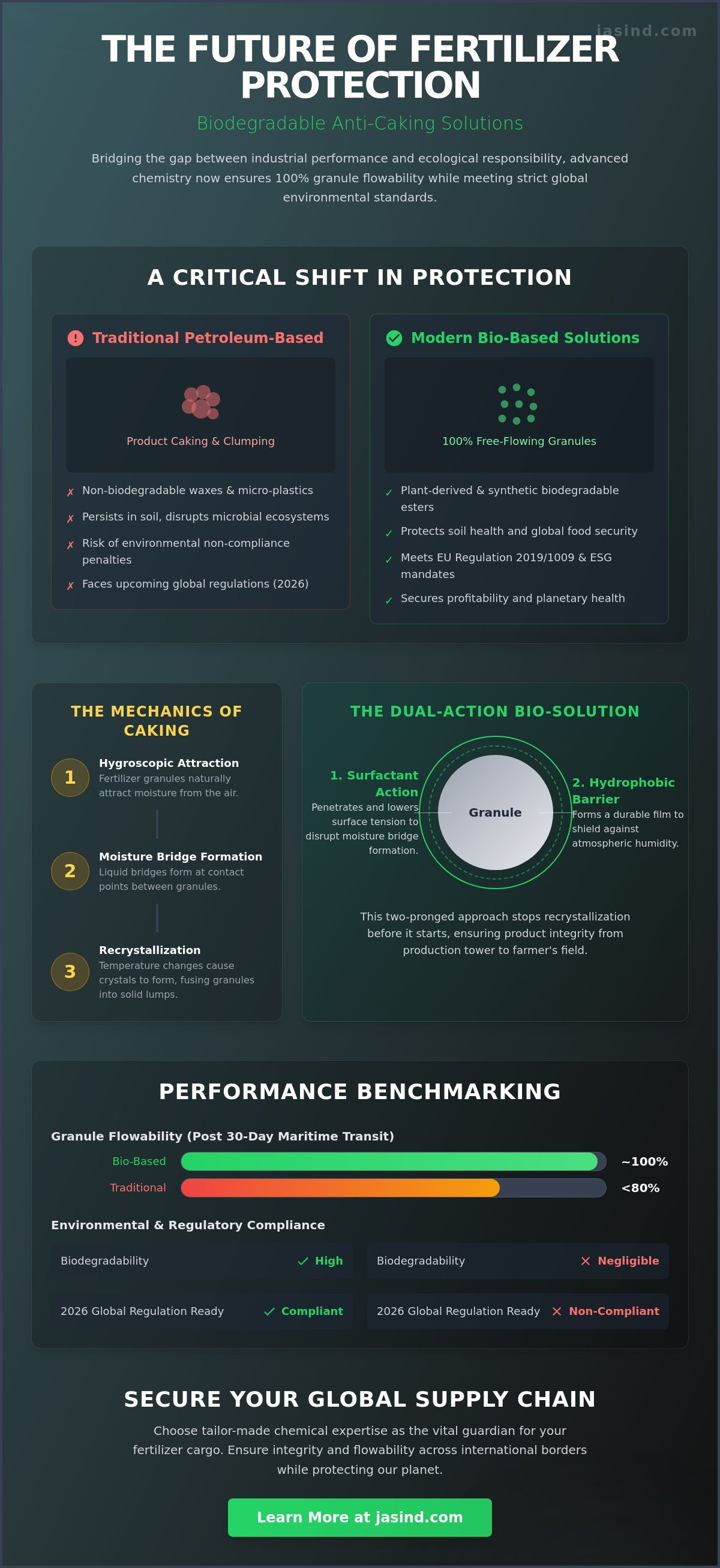
Traditional anti-caking agents often contain non-biodegradable waxes and micro-plastics that persist in agricultural runoff. These substances don't just sit in the soil; they can accumulate and disrupt microbial ecosystems essential for nutrient cycling. Long-term use of traditional amines can also alter soil chemistry, potentially impacting crop yields over time. For exporters, the risk is now financial. Environmental non-compliance penalties in major markets are rising. Choosing sustainable alternatives is now a matter of protecting the bottom line and the planet.
Hygroscopy and the Physical Mechanics of Caking
Nitrogen-rich fertilizers are inherently hygroscopic. They attract moisture from the atmosphere, creating a "moisture bridge" between granules. When temperatures fluctuate during storage or maritime transport, this moisture triggers recrystallization. This turns free-flowing granules into solid lumps. Biodegradable anti-caking solutions combat this by creating a robust hydrophobic barrier. These biodegradable coatings lower the surface tension of the moisture film, preventing the bridges from forming in the first place. This mechanical protection ensures that fertilizers remain easy to dose and apply, regardless of the climate they pass through.
The Chemistry of Flow: How Biodegradable Formulations Prevent Recrystallisation
The science of granule stability relies on molecular precision. While traditional coatings simply mask surface imperfections, biodegradable anti-caking solutions employ a dual-action mechanism to secure product integrity. This process involves both deep surfactant penetration and robust film-forming protection. The surfactant component actively disrupts the formation of crystal bridges between granules. Simultaneously, the film-forming element creates a durable barrier against atmospheric moisture. This two-pronged approach ensures that fertilizer remains free-flowing from the production tower to the farmer's field.
Formulation matters. Performance follows. Modern biodegradable esters function by significantly lowering the surface tension of the moisture film that naturally exists on granule surfaces. By reducing this tension, the chemical prevents water from concentrating at the contact points between granules. This specific action stops the recrystallisation process before it begins. Generic chemical supplies often fail because they lack this level of molecular control. To achieve operational reliability, producers must move beyond bulk commodities toward formulated solutions that are chemically mapped to their specific substrate.
Surfactant Synergy in Bio-Based Coatings
Selecting the correct fatty acid derivatives is critical for performance in diverse environments. A coating designed for temperate storage will often fail in tropical maritime transit. We engineer our surfactants to maintain their integrity across varying climatic zones. These bio-based agents are also designed for total compatibility with fertilizer coloring agents. This synergy ensures that the aesthetic quality of the product remains as stable as its physical flowability. When surfactants and colorants work in harmony, the result is a premium, market-ready fertilizer that resists caking even under extreme pressure.
Custom Formulation for Multi-Component Fertilizers
Complex NPK blends and high-nitrogen urea present unique hygroscopic challenges. Each substrate has a specific critical relative humidity point where it begins to absorb moisture rapidly. A one-size-fits-all chemical approach inevitably leads to product loss and costly quality claims. We address this by adjusting chemical polarity to match the specific fertilizer substrate. Whether it's MOP, Urea, or a sophisticated NPK blend, the chemistry must be tailor-made. Our approach involves rigorous on-site laboratory testing to calibrate dosing strategies. This ensures that every drop of the anti-caking agent provides maximum protection, securing the global supply chain one shipment at a time.
Performance Benchmarking: Bio-Based vs. Traditional Petroleum Solutions
Performance anxiety often stalls the adoption of sustainable additives. Plant managers frequently worry that "green" alternatives lack the structural resilience of traditional coatings. However, technical data suggests biodegradable anti-caking solutions offer a superior Moisture Vapor Transmission Rate (MVTR) compared to traditional paraffin waxes. While paraffin coatings can become brittle and crack during the mechanical vibrations of transit, bio-esters maintain a flexible, self-healing film. This ensures that moisture cannot reach the granule surface even when the coating is under significant physical stress.
We measure this reliability through a rigorous "caking index" test. By simulating the extreme heat and vibration of industrial handling, we've demonstrated that bio-based agents prevent "hard caking" more effectively than petroleum counterparts. This results in a highly favorable cost-to-performance ratio. While the initial procurement cost of bio-esters might be higher, the long-term savings from reduced product returns and fewer quality claims are substantial. These modern formulas also act as highly effective Fertilizer Dust Suppressants, securing the safety of handling environments and the physical integrity of the nutrient package.
Stability During Long-Distance Maritime Transport
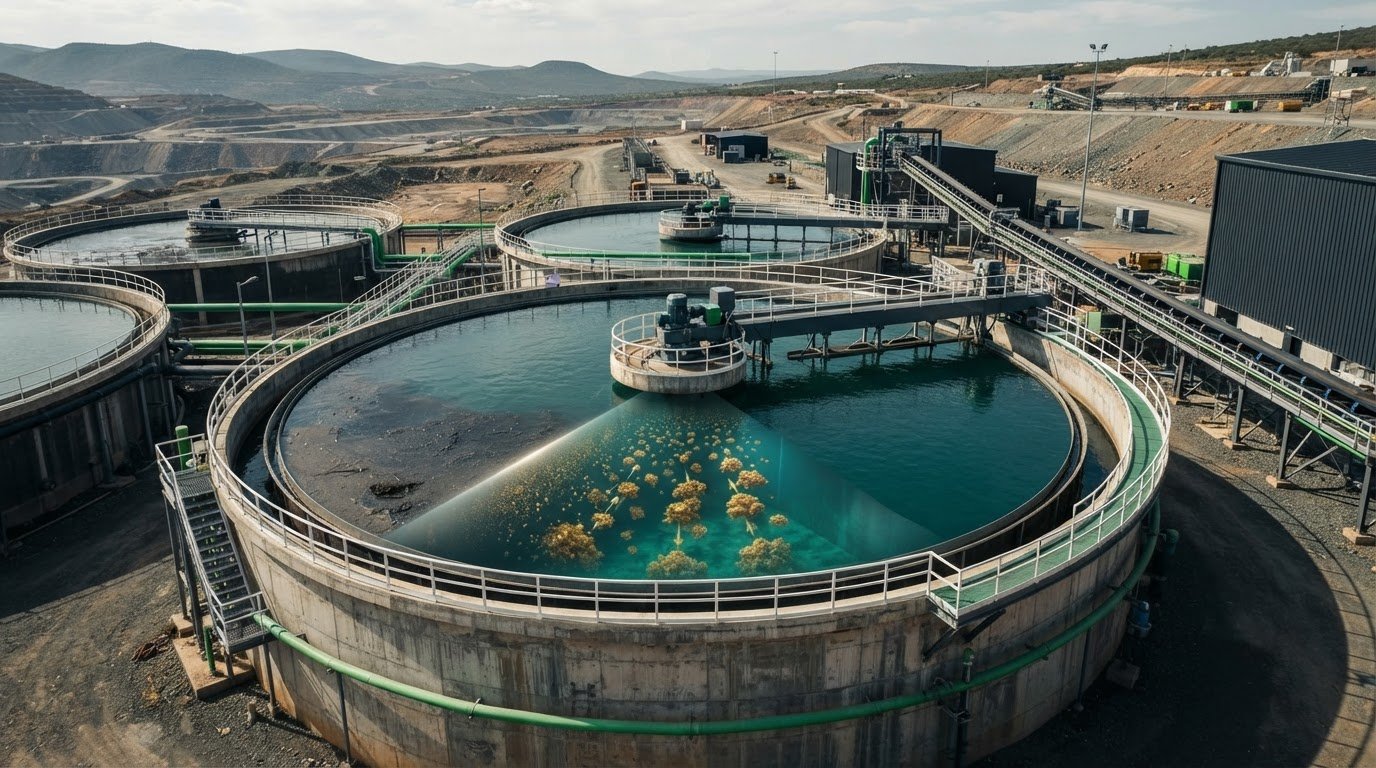
Global exporters must account for the "equatorial crossing" effect. Ship holds experience rapid temperature cycling and humidity levels exceeding 90%. In high-value phosphate exports, traditional coatings often fail, leading to solid blocks of material that are nearly impossible to unload. Our biodegradable coatings are engineered specifically for these conditions. They ensure that fertilizers remain free-flowing during bulk ship loading and unloading, protecting the cargo's value across every ocean. This level of security is essential for maintaining trust in international trade partnerships.
Shelf-Life and Storage Reliability
Reliability doesn't end at the port. Granules must maintain their integrity for 6-12 months in varying warehouse conditions. Stack pressure in large silos or stacked bags can force traditional coatings to migrate, leaving granules vulnerable to moisture bridges. Biodegradable anti-caking solutions use specific surfactants that anchor the coating to the substrate, resisting this migration. Storage stability in the context of biodegradable surfactants is the ability of the protective film to resist migration and maintain a hydrophobic barrier under constant mechanical load. This stability ensures that the product the farmer receives is as high-quality as the product that left the plant.
Operational Implementation: Integrating Green Additives into Existing Production Lines
Transitioning to sustainable chemistry is a precise engineering exercise. It isn't a simple "drop-in" replacement. Integrating biodegradable anti-caking solutions into a legacy production line requires a systemic approach that begins with a comprehensive technical audit. We examine the mechanical efficiency of coating drums and dosing hardware to ensure they can handle the unique rheological properties of bio-based esters. Real-time monitoring is essential in this phase. It allows plant managers to track process efficiency and maintain operational reliability without the risks of manual guesswork.
Viscosity management is often the most significant hurdle during the transition. Unlike traditional petroleum waxes, biodegradable agents require stricter temperature control to maintain optimal sprayability. If the temperature is too low, the agent won't atomize correctly. If it's too high, you risk chemical degradation. Precise application rates are also vital. Optimizing these rates prevents "over-coating," which can lead to equipment fouling and unnecessary material waste. Reliability is built on these small, technical calibrations. To ensure your facility is ready for this shift, you can explore our full range of Anti-caking Agents designed for seamless integration.
The Technical Audit and Dosing Strategy
Effective protection starts with uniform coverage. We evaluate spray nozzle patterns to ensure every fertilizer granule receives an equal share of the protective film. The "point of addition" is equally critical. Typically, adding the agent after the cooling circuit but before final packaging yields the best results. Finally, we focus on the human element. Training plant personnel on the specific handling and storage requirements of bio-based chemicals ensures long-term success and operational safety.
Troubleshooting Common Transition Issues
The transition process often reveals hidden mechanical weaknesses in a plant. Pump pressure adjustments are frequently necessary to account for the different density of bio-based formulations. We also monitor for "bleeding" or oil separation in bulk storage. This can occur if the chemical isn't stored at the correct ambient temperature. Crucially, we verify that the anti-caking agent doesn't interfere with your existing Fertilizer Granulation Aids. Compatibility between these additives is the key to maintaining granule strength and surface integrity throughout the production cycle.
Securing Global Supply Chains with JAS Global Tailor-Made Solutions
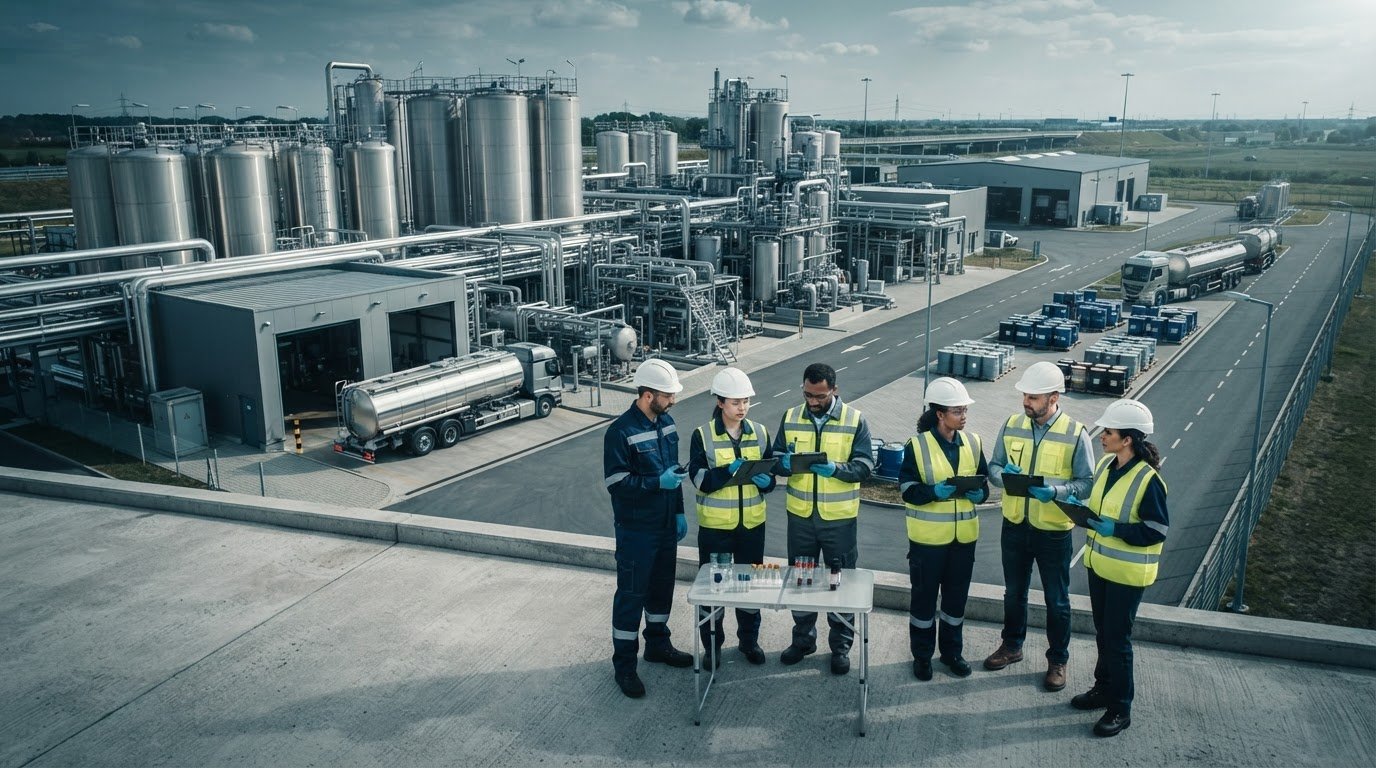
Stability is the foundation of global trade. In an era of shifting regulations and climate volatility, JAS Global serves as a "Vital Guardian" for the fertilizer industry. We protect the integrity of critical resources from the point of manufacture to the final application in the field. Our role extends beyond simple chemical supply. We provide the technical assurance that your product will remain free-flowing, regardless of the distance it travels. With over 25 years of industrial heritage, we've built a reputation for reliability that global producers trust. Our biodegradable anti-caking solutions represent the pinnacle of this expertise, combining high-performance surfactant chemistry with a profound commitment to ecological safety.
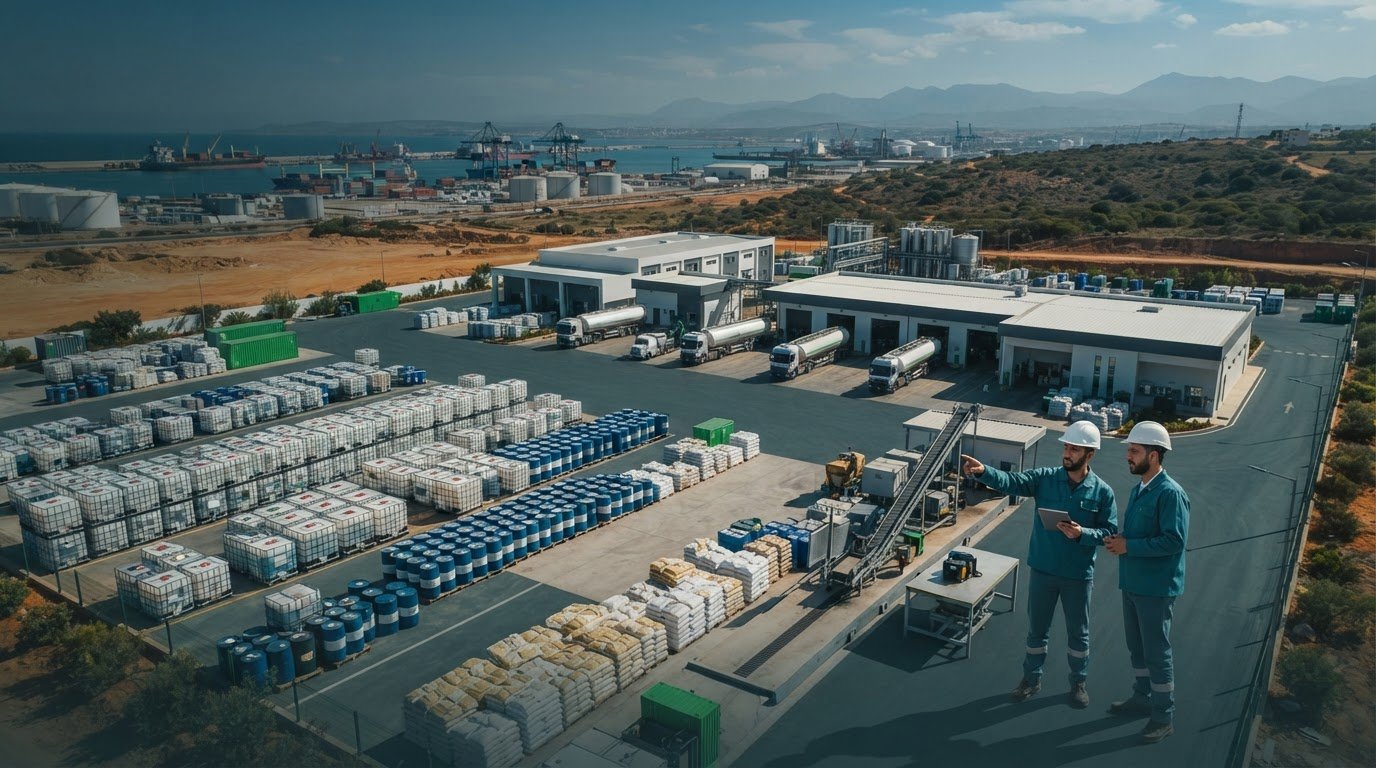
Operational scale requires a global presence. From our strategic headquarters in Dubai, we manage a sophisticated network of service offices and R&I centers. This infrastructure allows us to provide localized technical support to every major mining and fertilizer hub. We understand that every plant has unique challenges. Whether you're processing potash in Canada or phosphates in Morocco, our team is positioned to deliver custom chemical development that addresses your specific operational constraints. This global-to-local rhythm ensures that our technical solutions are always grounded in the practicalities of your production environment.
The JAS Global Technical Partnership Model
Reliability isn't a commodity; it's a co-creation. Our partnership model begins with rigorous on-site laboratory testing. We don't guess. We analyze your substrate to ensure that our biodegradable anti-caking solutions provide the exact hydrophobic barrier your granules require. This technical audit leads to a continuous process of optimization. We work alongside your plant managers to reduce chemical consumption while simultaneously maximizing product yield. Our customized logistics solutions further secure your supply chain, offering flexible bulk chemical supply contracts that eliminate the risk of production downtime. We secure your process; you secure the food supply.
A Commitment to Sustainability and Resource Protection
The industrial landscape of 2026 demands a new level of environmental responsibility. Our mission is to provide specialty chemicals that align with global stewardship goals. We believe that protecting soil health is inseparable from ensuring food security. Our research-driven approach focuses on creating ethical, mission-oriented products that vanish responsibly after their duty is done. This commitment to the broader human impact of our work distinguishes us as an indispensable pillar of modern infrastructure. We invite you to join us in this mission.
Optimize your fertilizer flowability with JAS Global’s biodegradable solutions
Advancing Industrial Performance and Environmental Stewardship
The transition to sustainable additives isn't a distant goal; it's a current operational reality. We've demonstrated that advanced surfactant chemistry allows producers to maintain total flowability while satisfying the most stringent global regulations. By choosing biodegradable anti-caking solutions, you protect your product's market value and the soil health of the regions you serve. Reliability and responsibility are now inseparable pillars of industrial success. Quality preserved. Environment protected.
Navigating this shift requires a technical partner with the scale to secure your global supply chain. With a presence in over 50 countries and proprietary R&I centers in Dubai and Europe, JAS Global brings more than 25 years of specialty chemical expertise to your facility. We offer the stability your operations need and the ethical purpose the world demands. It doesn't matter where your plant is located; our teams are ready to help you optimize your process for a high-yield, compliant future. We don't just supply chemicals; we secure stability.
Consult with our technical experts for a custom anti-caking audit. Let's secure your resources and protect our environment together.
Frequently Asked Questions
What makes an anti-caking solution "biodegradable" in the fertilizer industry?
In the fertilizer industry, a solution is considered biodegradable if it breaks down into natural, non-toxic elements through microbial action within a defined timeframe. These additives, often derived from vegetable esters or synthetic biodegradable polymers, must meet rigorous standards such as OECD 301. This ensures the chemical doesn't persist in agricultural runoff or soil. This transition protects soil integrity while maintaining the stability of the global nutrient supply chain.
Can biodegradable anti-caking agents be used on all types of fertilizers?
Yes, these agents are compatible with a wide range of substrates, including NPK blends, Urea, and MOP. However, effective protection requires a tailor-made approach. Each fertilizer has a unique hygroscopic point and surface chemistry. We adjust the chemical polarity of our biodegradable anti-caking solutions to match specific substrates. This ensures a robust hydrophobic barrier regardless of the mineral composition or the environmental conditions of the storage facility.
How do biodegradable agents compare in price to traditional paraffin-based coatings?
Bio-based additives typically involve a higher initial procurement cost than traditional petroleum-based paraffins. This price difference reflects the advanced surfactant chemistry and sustainable sourcing required for high-performance esters. Producers should view this as a strategic investment in security. The long-term value comes from eliminating environmental non-compliance penalties and reducing product loss during high-humidity maritime transport. Reliability in the field justifies the marginal increase in raw material expenditure.
Do biodegradable anti-caking solutions affect the color or appearance of fertilizers?
High-quality biodegradable agents are engineered to maintain the visual integrity of the granule. They are typically translucent and don't cause discoloration or cloudiness on the product surface. These formulations are also designed for total compatibility with Fertilizer Coloring Agents. This ensures that your brand's specific aesthetic remains consistent while the internal chemistry provides essential protection against moisture bridges and dust formation during handling.
What are the storage requirements for bio-based anti-caking chemicals?
Bio-based chemicals require stable storage conditions to prevent phase separation or "bleeding" in bulk tanks. They should be kept in climate-controlled environments to maintain a consistent viscosity for pumping and spraying. Unlike traditional waxes that can be stored in broader ranges, these specialty agents are sensitive to extreme cold. Proper storage secures the chemical's efficacy and ensures it's ready for immediate application in the granulation or coating circuit.
How does temperature affect the application of biodegradable anti-caking agents?
Temperature is the primary driver of successful atomization in the coating drum. Biodegradable anti-caking solutions must be heated to a specific target range to ensure the spray nozzles create a uniform, fine mist. If the temperature drops, the agent becomes too viscous, leading to uneven coating and equipment fouling. Precise thermal management during the dosing phase is the foundation of operational reliability and granule security throughout the supply chain.
Are these solutions compatible with existing fertilizer dosing equipment?
Most modern dosing systems can handle bio-based additives with minor technical adjustments. You may need to recalibrate pump pressures or select different spray nozzle patterns to account for viscosity differences. We recommend a technical audit of your existing coating circuit before the transition. This ensures that your hardware is optimized for the rheological properties of sustainable surfactants, preventing clogs and ensuring 100% granule flowability for the end user.
What certifications should I look for in a biodegradable anti-caking supplier?
Look for suppliers who demonstrate compliance with international biodegradability standards such as OECD 301 or ISO 14851. These certifications verify that the chemical will degrade responsibly in the environment without leaving harmful residues. Additionally, ensure the provider adheres to REACH regulations for chemical safety. Partnering with an experienced global leader ensures that your additives meet both performance benchmarks and the strict ESG mandates required by modern export markets.