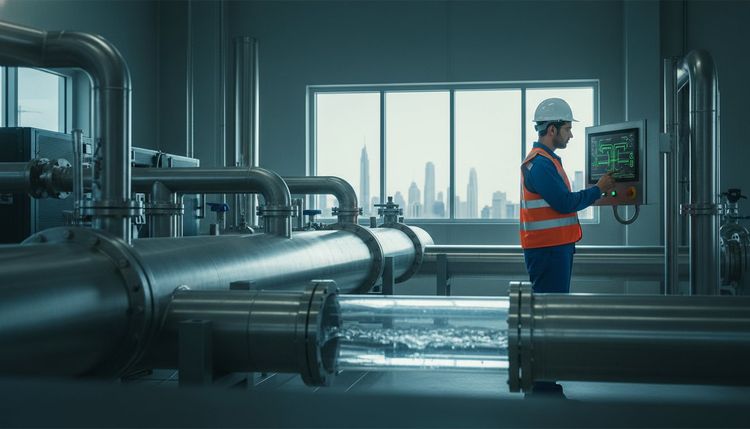
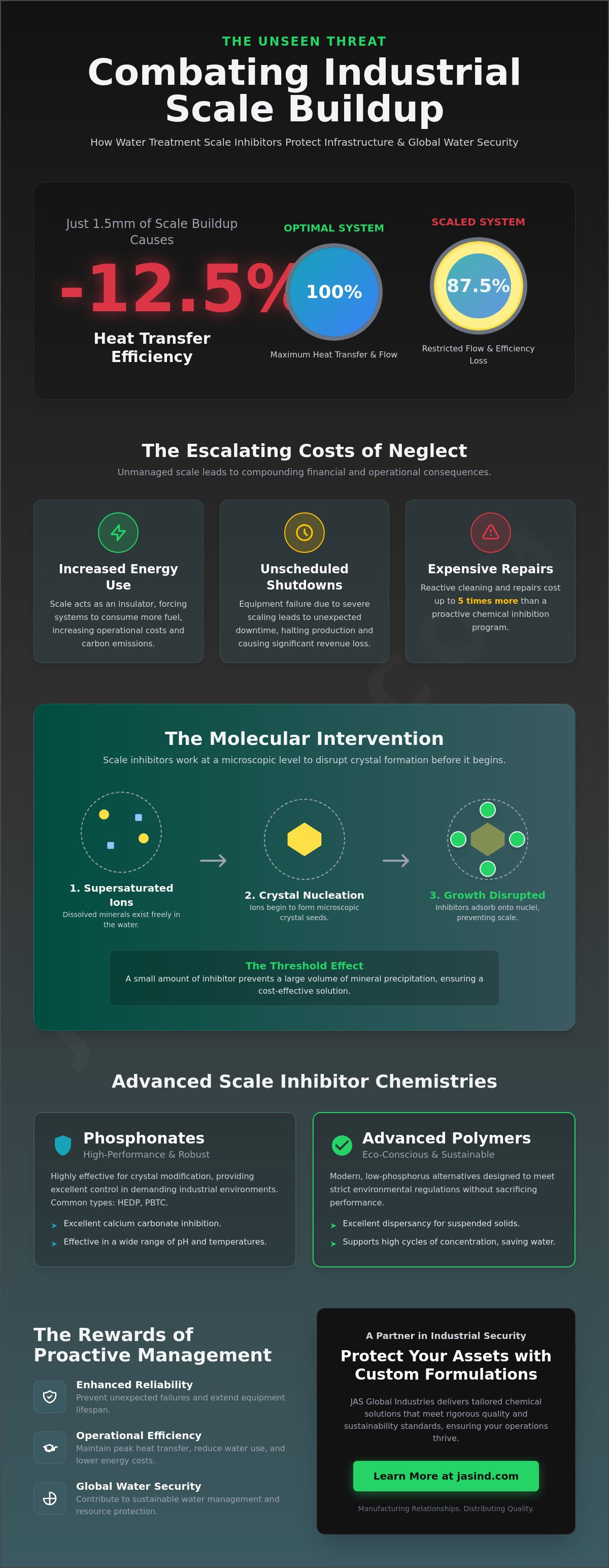
Did you know that a mere 1.5 millimeters of calcium carbonate buildup can slash heat transfer efficiency by more than 12.5% in industrial cooling systems? This invisible accumulation doesn't just drain your budget; it threatens the very foundation of global water security. You recognize that maintaining peak operational reliability is non-negotiable for any large-scale facility. Yet, mineral scaling remains a persistent, expensive adversary that leads to unexpected downtime. It's a challenge that requires more than just a quick fix. It demands a strategic commitment to quality and infrastructure health.
By mastering the selection and application of Water Treatment Scale Inhibitors, you can extend equipment lifespan and reduce chemical consumption through optimized dosing. This guide provides the technical expertise you need to ensure your operations remain efficient while adhering to strict environmental regulations regarding phosphorus discharge. We'll explore the precise strategies and sustainable practices that transform your water management into a pillar of global responsibility. Discover how the right chemical additives protect our shared resources and support a vision of long-term industrial security.
Key Takeaways
- Understand how specialized chemical reagents safeguard industrial infrastructure, framing your scale management as a vital contribution to global water security.
- Explore the molecular interactions that arrest mineral precipitation, allowing for precise control over supersaturated aqueous environments.
- Gain a technical framework for evaluating Water Treatment Scale Inhibitors, from high-performance phosphonates to eco-conscious, low-phosphorus polymers.
- Implement a robust scale management program tailored to the unique mineral challenges of desalination and brackish water systems in Riyadh and Dubai.
- Enhance long-term operational reliability by integrating custom chemical formulations designed to meet rigorous global quality and sustainability standards.
Understanding Water Treatment Scale Inhibitors and Their Role in Global Water Security
Water Treatment Scale Inhibitors are specialized chemical reagents engineered to stop mineral precipitation on industrial surfaces. At JAS Global Industries, we view this technology as a fundamental guardian of infrastructure. Our work over the last 25 years centers on the concept of Global Water Security. By Understanding Water Treatment Scale Inhibitors and their chemical mechanisms, operators ensure that water remains a usable, flowing resource for critical industrial processes. We don't just provide chemicals; we provide the stability necessary for global infrastructure to thrive. Our philosophy of "Manufacturing Relationships. Distributing Quality." means protecting the foundational systems that society relies on every day.
The Critical Need for Scale Control in Modern Industry
Industrial operations rely on the seamless performance of heat exchangers, cooling towers, and high-pressure boiler systems. Without intervention, minerals naturally present in water sources begin to crystallize on metal surfaces. This build-up creates an insulating layer that restricts flow and forces pumps to work harder. We focus on managing the primary scaling minerals that threaten these systems:
- Calcium Carbonate: The most common scale form found in cooling water and boiler systems.
- Calcium Sulfate: A persistent mineral that is often harder to remove than carbonates.
- Silica: A complex scale that can cause permanent damage to membranes and turbine blades.
Effective scale management directly supports corporate sustainability targets. It reduces water waste by allowing systems to run at higher cycles of concentration. When plants use Water Treatment Scale Inhibitors correctly, they decrease their environmental footprint and meet rigorous CSR goals. This alignment of chemical precision and environmental stewardship is core to the JAS Global mission.
Economic Consequences of Neglected Scale Management
The financial impact of scale is often hidden until a system fails. Even a thin layer of mineral deposit creates a massive barrier to thermal conductivity. Industry data shows that just 1 millimeter of calcium carbonate scale can reduce heat transfer efficiency by 10% to 12%. This loss translates directly into higher fuel consumption and increased carbon emissions. To combat this, we utilize advanced chemical properties that work at very low concentrations.
The Threshold Effect is the ability of small chemical amounts to inhibit large mineral volumes by interfering with the crystal growth process at a molecular level. This efficiency is what makes modern scale management cost-effective. Neglecting these chemical applications leads to unscheduled shutdowns and expensive acid cleaning cycles. These reactive maintenance events often cost five times more than a proactive inhibition program. By choosing innovative chemical solutions, industries protect their capital assets and maintain the steady flow of global production.
The Chemical Mechanisms: How Inhibitors Prevent Mineral Precipitation
Industrial water systems face a persistent threat from mineral precipitation. Scaling begins when dissolved ions like calcium, magnesium, and sulfate reach a supersaturated state. In this condition, the water contains more dissolved material than it can naturally hold. These ions collide to form microscopic nuclei, which serve as the foundation for rigid crystal lattices. Water Treatment Scale Inhibitors intervene at this molecular level to disrupt the transition from a liquid solution to a solid deposit. This intervention is vital for maintaining the thermal efficiency of infrastructure and ensuring global water security.
Crystal Growth Modification and Distortion
The primary defense against scale is the modification of crystal growth. Inhibitor molecules adsorb onto the active growth sites of microscopic nuclei as they emerge from the solution. This process interferes with the orderly addition of ions into the lattice structure. Phosphonates, such as HEDP and PBTC, are particularly effective at this interference. They "poison" the crystal surface, which forces the mineral to grow into a distorted, irregular shape. These malformed crystals cannot bond effectively to each other or to the internal surfaces of heat exchangers. Instead of forming a hard, insulating crust of calcite, the minerals remain as a fragile, non-adherent sludge that's easily flushed from the system. This mechanism is a cornerstone of reliability for large-scale thermal desalination plants, where high temperatures accelerate scaling rates.
The Role of Dispersion and Sequestration
Sequestration and dispersion provide secondary layers of protection. Sequestration, or chelation, involves the formation of stable, soluble complexes with metal ions. Chemicals wrap around calcium and magnesium, effectively "hiding" them so they can't react with carbonates or sulfates. Polymeric dispersants take a different approach by focusing on particle management. These polymers increase the negative charge on the surface of any particles that do manage to form. This creates a state of electrostatic repulsion. Since like-charges repel, the particles stay suspended in the water column rather than settling on equipment surfaces.
A 2022 study published by the American Chemical Society emphasizes the importance of Managing Scale in Industrial Water Systems to reduce energy consumption and operational costs. Modern formulations often use a synergy of functional groups, such as carboxylates and sulfonates, to handle diverse water chemistries. This multi-component approach ensures that even under extreme brine concentrations, the system remains clear. For industrial leaders focused on long-term infrastructure health, adopting advanced chemical additives is a necessary step toward operational excellence. These solutions don't just protect pipes; they secure the foundational needs of global industry.
Evaluating Scale Inhibitor Chemistries: Phosphonates, Polymers, and Sustainable Alternatives
Industrial scale management requires a precise chemical balance tailored to specific water chemistries. Choosing the right Water Treatment Scale Inhibitors involves evaluating thermal stability, sequestration capacity, and environmental discharge limits. Modern facilities are transitioning from traditional phosphate-heavy treatments toward sophisticated, low-phosphorus polymers to meet tightening regulatory standards. This shift ensures operational efficiency while maintaining global water security.
Phosphonates: The Industrial Workhorse
Phosphonates remain a primary choice for cooling water systems due to their effective threshold inhibition. Common chemistries include ATMP (Amino Trimethylene Phosphonic Acid), HEDP (1-Hydroxy Ethylidene-1,1-Diphosphonic Acid), and DTPMPA. These molecules prevent scale by distorting crystal growth at sub-stoichiometric concentrations. They offer reliable performance across pH levels ranging from 7.0 to 10.0. This CDC study on scale inhibitor effectiveness provides a technical foundation for how these agents stabilize minerals in complex water matrices.
Phosphonates have specific limitations. High chlorine concentrations often degrade their molecular structure, which reduces their efficacy in systems using oxidizing biocides. Environmental regulations regarding phosphorus discharge also necessitate careful management of these chemistries in industrial blowdown to prevent eutrophication in local waterways.
Polymeric Scale Inhibitors and Dispersants
Polymeric solutions like Polyacrylic Acid (PAA) and Polymaleic Acid (PMA) provide superior performance in high-stress environments. These polymers excel in systems with high temperatures or high cycles of concentration where phosphonates might fail. Co-polymers and ter-polymers are especially effective at dispersing difficult scales like Calcium Phosphate. This is a common challenge in modern cooling towers operating at high pH.
- PAA and PMA: Effective for calcium carbonate inhibition in high-alkalinity water.
- Co-polymers: Engineered to handle zinc and phosphate stabilization.
- Ter-polymers: Designed for the most aggressive silica and iron-rich environments.
The "JAS Cares" sustainability initiative drives the development of biodegradable polymers. These green alternatives provide the same high-level protection as synthetic versions while ensuring long-term environmental safety. We prioritize these formulations to help partners meet their ESG goals without sacrificing system integrity.
JAS Global Industries leads the industry by developing tailor-made formulations for complex water chemistries. We don't just provide chemicals; we engineer reliability. Our twenty-five-year history allows us to manufacture relationships while distributing quality. We focus on the specific thermal stability requirements of your high-temperature processes. This ensures your infrastructure remains protected and your operations stay efficient. We are the visionary partner supporting global infrastructure through innovative Water Treatment Scale Inhibitors.
How to Manage Scale in Industrial Water Systems in Riyadh and Dubai
Industrial operations in Riyadh and Dubai face some of the most challenging hydro-geological conditions globally. Groundwater in the Arabian Peninsula is notoriously hard, with brackish sources often exceeding 3,000 mg/L in Total Dissolved Solids (TDS). While desalination provides a primary water source, the resulting permeate or blended water requires precise stabilization to prevent scale formation in high-temperature cooling loops and boilers. Protecting these assets is a fundamental requirement for regional Water Security.
Step-by-Step Implementation of a Scale Control Program
Establishing a robust defense against mineral deposits requires a methodical approach. It's not enough to simply add chemicals; the program must be tailored to the specific ionic profile of the local supply.
- Step 1: Water Chemistry Analysis. Conduct a detailed laboratory analysis to calculate the Langelier Saturation Index (LSI) and Ryznar Stability Index (RSI). In Dubai's district cooling plants, an LSI consistently above 2.5 indicates a high probability of calcium carbonate precipitation.
- Step 2: Chemical Selection. Choose a formulation based on mineral saturation levels and system metallurgy. Utilizing advanced Water Treatment Scale Inhibitors ensures that calcium and magnesium ions remain in suspension even as temperatures rise.
- Step 3: Precise Dosing Strategy. Install automated control systems that adjust chemical feed rates based on real-time conductivity and make-up water flow. This prevents the common pitfalls of under-treatment, which leads to scale, or over-treatment, which increases operating costs.
Monitoring and Optimization for Long-Term Reliability
Scale management is a continuous process of refinement. Because temperatures in Riyadh can fluctuate by 20 degrees Celsius between day and night, evaporation rates in cooling towers vary significantly. These seasonal shifts change the concentration cycles, requiring immediate adjustments to the treatment protocol. Use corrosion and scale coupons to provide physical verification of the program's success. These metal strips are inspected every 30 to 90 days to ensure no deposition is occurring on heat exchange surfaces.
JAS Global Industries supports these efforts through our specialized R&I centers. We provide operational troubleshooting that goes beyond simple supply. We believe in "Manufacturing Relationships. Distributing Quality." by offering ongoing technical audits for Middle Eastern plants. Our teams analyze site-specific data to optimize the performance of Water Treatment Scale Inhibitors, ensuring your facility maintains peak efficiency while reducing water waste. This proactive partnership transforms a standard vendor relationship into a strategic alliance for industrial stability.
Protect your critical infrastructure with a custom scale management strategy designed for the Middle East. Partner with JAS Global Industries for expert technical support and audit services.
Optimizing Operational Reliability with JAS Global Industries’ Custom Formulations
Industrial success depends on the stability of core infrastructure. JAS Global Industries serves as a vital guardian of this stability, providing the chemical foundation for global Water Security. We've spent 25 years refining a business philosophy built on Manufacturing Relationships. Distributing Quality. This dual commitment ensures that every client receives more than just a product; they receive a dedicated partner focused on long-term operational health. By framing our chemical additives as essential contributors to global infrastructure, we move beyond the role of a traditional supplier to become a cornerstone of your industrial efficiency.
Tailor-Made Formulations for Unique Industrial Challenges
Effective scale management requires a deep understanding of site-specific chemistry. Our engineers conduct rigorous technical audits to develop custom dosing strategies that address specific mineral profiles and flow dynamics. We don't just supply Water Treatment Scale Inhibitors; we integrate them into a comprehensive regimen that includes corrosion inhibitors and biocides. This holistic approach prevents mineral buildup while protecting equipment from oxidative stress and microbial growth. It's a total water treatment solution designed to eliminate the hidden costs of scaling, such as increased energy consumption and unplanned downtime.
Our manufacturing plants across three continents provide a robust supply chain, ensuring that critical chemicals arrive on time, every time. We maintain strict adherence to ISO standards, which reinforces our promise of quality. Whether you're managing a desalination plant or a high-pressure boiler system, our formulations are tested under extreme conditions to ensure reliability. This global reach allows us to secure your operations against supply chain volatility, providing peace of mind for facility managers worldwide.
Partnering for a Sustainable Industrial Future
JAS Global Industries acts as a Global Visionary Partner, aligning industrial output with environmental responsibility. Our professional technical audits are designed to maximize plant yields and minimize environmental footprints. In recent applications, our custom chemical strategies have helped facilities reduce water waste by 15% and improve heat transfer efficiency by 12% to 18%. We see industrial chemistry as a tool for sustainability, where optimized systems consume fewer resources and last longer.
Through the "JAS Cares" program, we emphasize the human impact of industrial chemistry. We're committed to supporting the foundational needs of society, including food and water security. We invite you to leverage our technical expertise and bulk supply capabilities to secure your facility's future. Our consultants are ready to provide the specialized insights needed to transform your water management strategy into a competitive advantage. Partner with JAS Global Industries for advanced water treatment solutions.
Securing the Future of Global Water Infrastructure
Effective scale management isn't just about operational maintenance; it's a critical pillar of global water security. Since 1998, JAS Global Industries has provided the technical expertise needed to combat mineral precipitation in the world's most demanding environments. From the high-salinity challenges in Riyadh to the industrial hubs of Dubai, the right Water Treatment Scale Inhibitors ensure that infrastructure remains resilient and efficient. Our research and innovation centers across Europe, Asia, and the Middle East continue to pioneer sustainable polymer alternatives that replace outdated chemistries without sacrificing performance.
With over 25 years of experience, we've learned that every system requires a precise, data-driven approach to prevent costly downtime. We're committed to manufacturing relationships and distributing quality across every border. It's time to optimize your operations with solutions that protect both your bottom line and our shared resources. Let's work together to protect your assets and contribute to a more water-secure world.
Consult with our technical experts for a custom scale management audit.
Frequently Asked Questions
What is the difference between an antiscalant and a scale inhibitor?
Antiscalants and scale inhibitors serve distinct roles in mineral control. Antiscalants primarily prevent the precipitation of dissolved minerals like calcium carbonate, while scale inhibitors interfere with the crystal growth and attachment process on metal surfaces. Modern water treatment scale inhibitors often combine both chemistries to provide 99 percent protection against fouling in high-volume industrial systems. This dual approach ensures operational continuity and protects the infrastructure of global desalination and mining facilities.
How do I calculate the correct dosage for a scale inhibitor in a cooling tower?
You calculate the required dosage by analyzing the makeup water chemistry and the system's cycles of concentration. Multiply the target concentration in milligrams per liter by the makeup water flow rate in cubic meters per hour to find the hourly feed rate. For example, a system operating at 5 cycles of concentration typically requires a 5 to 10 ppm feed rate to maintain thermal efficiency. Accurate dosing prevents mineral buildup and protects 100 percent of the heat exchange surface area from degradation.
Are scale inhibitors safe for use in Reverse Osmosis (RO) membranes?
Scale inhibitors are essential for maintaining the integrity of Reverse Osmosis membranes. Specialized formulations prevent calcium sulfate and silica from clogging the 0.0001 micron pores of the membrane surface. Using these chemical additives extends membrane life by 2 to 3 years and reduces the frequency of necessary acid cleanings. This protection is a cornerstone of global water security, ensuring reliable access to clean water across 150 countries where JAS Global Industries operates.
Can scale inhibitors work in high-temperature boiler systems?
High-temperature boiler systems require thermally stable scale inhibitors to prevent catastrophic tube failure. While traditional polymers may degrade at temperatures exceeding 200 degrees Celsius, advanced synthetic sulfonated polymers remain effective up to 300 degrees Celsius. These agents sequester hardness ions and disperse sludge, maintaining 100 percent thermal conductivity across the boiler tubes. Reliability in these environments is vital for the 24 hour operations of global food processing and energy plants.
What are the environmental impacts of phosphonate-based scale inhibitors?
Phosphonate-based inhibitors offer high efficacy but contribute to phosphorus loading in wastewater streams. Industry data shows that approximately 80 percent of industrial phosphonates are removed through adsorption onto sludge during primary treatment processes. To meet 2024 environmental standards, many facilities now transition to biodegradable alternatives like polyaspartic acid. These sustainable choices ensure industrial growth doesn't compromise local ecosystem health or the mission of global water security.
How often should water analysis be performed to ensure scale inhibitor efficiency?
You should perform comprehensive water analysis at least once every 24 hours for critical industrial cooling systems. For stable, low-pressure systems, weekly testing of pH, conductivity, and calcium hardness levels remains the industry standard. Monitoring these parameters ensures that your water treatment scale inhibitors are performing at peak efficiency. Regular data collection allows for 100 percent adjustment accuracy, preventing scale formation before it impacts production uptime or equipment longevity.