

Effective odor control is no longer a matter of masking unpleasant smells; it is a critical pillar of resource security and infrastructure protection. You understand that managing volatile organic compounds and acidic gases is a relentless challenge that directly impacts your bottom line. Utilizing advanced odor control chemicals for mining operations has become essential as the industry navigates the April 2026 MSHA compliance deadlines for air quality and increasing scrutiny over emissions. It's a reality that community trust and worker safety are now as valuable as the ore you extract.
This guide explores how specialized chemical formulations mitigate hazardous gases like H2S to ensure operational safety and long-term reliability. You'll learn how to navigate the 2026 regulatory environment while preventing the costly corrosion of your most expensive infrastructure. We will examine the shift toward bio-based scavengers and real-time monitoring systems that define the modern standard for responsible mining.
Key Takeaways
- Learn why transitioning from simple masking to molecular neutralization is critical for maintaining community trust and worker safety.
- Understand the specific chemical mechanisms, such as H2S scavenging and encapsulation, that provide a reliable barrier against hazardous emissions.
- Discover the strategic application of odor control chemicals for mining operations within complex environments like froth flotation circuits and tailings storage facilities.
- Identify the role of technical audits and tailor-made dosing in ensuring operational stability when dealing with fluctuating ore grades.
- Gain insights into how custom-engineered formulations contribute to global resource security and long-term infrastructure protection.
The Strategic Importance of Odor Control in Modern Mining
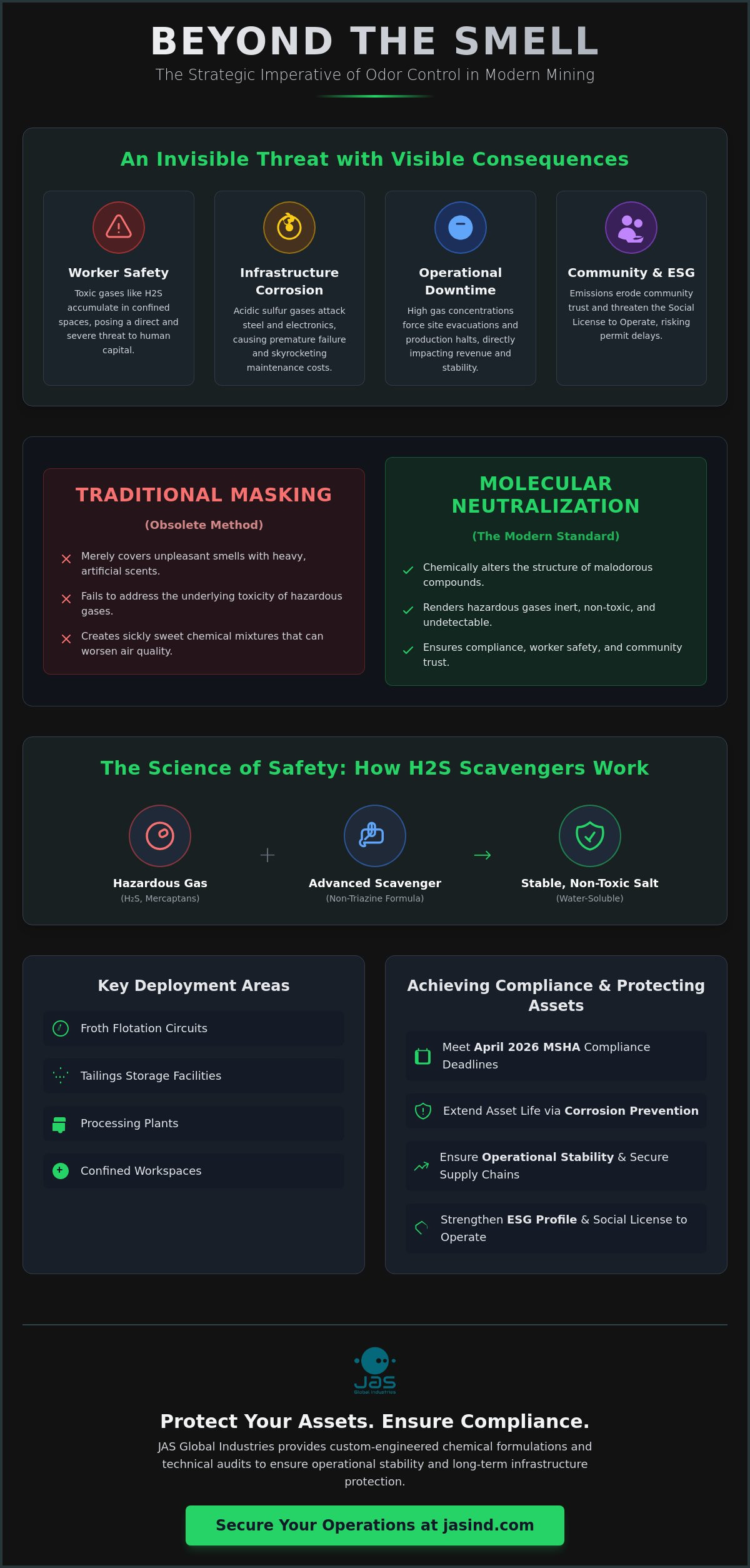
Mining odor control is more than a courtesy; it's a precise chemical intervention. It involves the neutralization of volatile molecules, specifically Hydrogen Sulfide (H2S) and mercaptans, which are naturally generated during extraction and chemical processing. These compounds don't just smell; they represent active chemical threats. Deploying advanced odor control chemicals for mining operations ensures these molecules are stabilized before they can affect the surrounding environment or the workforce.
This management is a fundamental component of global resource security. When an operation is stable, the supply chain is secure. Odor control provides this stability by addressing two critical fronts. First, it protects worker safety in confined spaces where gas accumulation reaches toxic levels. Second, it preserves community relations. A mine that manages its emissions effectively is a mine that maintains its standing as a responsible neighbor and a reliable global supplier.
Beyond Nuisance: Odor Control as an ESG Pillar
Air quality management is a primary driver of a mine’s Social License to Operate. Community complaints regarding air quality often lead to regulatory interventions or permit delays. By 2026, environmental compliance standards have evolved to demand more than just visual dust suppression; they require the mitigation of invisible chemical emissions. This shift has rendered traditional masking agents obsolete. Old methods merely layered heavy scents over foul odors, creating a sickly sweet mixture that failed to address the underlying toxicity. Modern operations now rely on molecular neutralizers. These specialized odor control chemicals for mining operations bond with and alter the structure of malodorous compounds, rendering them inert and undetectable.
Economic Impacts of Uncontrolled Mining Gases
The financial consequences of ignoring gas emissions are severe. Sulfur-based gases are highly acidic and aggressively corrosive. They attack the structural integrity of processing plants, eating through steel supports and degrading sensitive electronic control systems. This chemical wear leads to premature equipment failure and skyrocketing maintenance costs. Beyond physical damage, there is the risk of operational downtime. If gas concentrations exceed safety limits, entire sections of a mine must be evacuated and ventilated, halting production for hours or days. In modern mining, odor control is a technical safeguard for both human capital and physical assets. It's a proactive investment that prevents the degradation of expensive infrastructure and ensures the continuity of the extraction process.
Chemical Mechanisms for Effective Gas and Odor Neutralization
Understanding the molecular interaction between treatment agents and volatile compounds is the first step toward true operational security. Effective odor control chemicals for mining operations don't just mask smells; they fundamentally alter the chemical structure of hazardous gases. This transformation is vital for maintaining a stable environment. Traditional methods often relied on chemical oxidation using peroxides or permanganates. While these agents are powerful, they are also aggressive and can introduce new corrosion risks to expensive processing equipment. Modern mining demands a more nuanced approach that balances high-reactivity with material compatibility.
The regulatory landscape reinforces this technical necessity. For instance, federal standards under 30 CFR § 57.5066 Maintenance Standards establish that unusual odors from diesel equipment serve as official evidence that maintenance is required. This principle extends to the broader mine site. Odor is an indicator of chemical instability. Neutralizing these odors through advanced chemistry is therefore a primary maintenance and safety function rather than a secondary aesthetic concern.
H2S Scavengers and Sulfur Neutralizers
Hydrogen sulfide management requires a targeted response. Traditional triazine-based scavengers are common but often lead to calcium carbonate scaling in pipes and vessels. Advanced non-triazine scavengers are now the industry standard for mining fluids. These agents react directly with H2S and mercaptans to form stable, non-toxic, water-soluble salts. Precision in dosing is critical. Because H2S solubility is highly dependent on pH, sulfur-neutralizing chemicals must be calibrated to the specific alkalinity of the process water. For a deeper analysis of these reactions, consult our H2S treatment guide to understand gas-phase chemistry in industrial settings.
Advanced Molecular Encapsulation
Molecular encapsulation offers a sophisticated alternative to traditional oxidation. This technology utilizes honeycomb-structured molecules that physically trap volatile organic compounds (VOCs) within their internal cavities. Once trapped, the odorant is no longer volatile and cannot be released into the atmosphere. This mechanism is non-corrosive and preserves the longevity of plant assets. By using custom-formulated reagents, operators can address site-specific mineralogy without the risks associated with harsh oxidizers. If you are looking to enhance your site's gas management profile, consider exploring our specialized mining odor and gas treatment solutions.
To maximize the efficiency of these chemicals, surfactants are often integrated into the formulation. These agents reduce the surface tension of the treatment solution. This allows for better penetration and increases the contact time between the odorant and the neutralizer. In tailings management, the use of biodegradable formulations is paramount. Ensuring that odor control chemicals for mining operations break down safely within tailings storage facilities prevents long-term environmental accumulation while providing immediate gas suppression. This dual-action approach secures both the current workforce and the future environment.
Application Zones: From Froth Flotation to Tailings Management
Precision application is the hallmark of a mature mining operation. Identifying the specific zones where volatile gases originate allows for targeted chemical intervention, which is far more efficient than site-wide masking. In underground environments, ventilation systems are the first line of defense, but they often require the support of atomized neutralizers. By integrating odor control chemicals for mining operations directly into the air handling units or misting lines, operators can neutralize H2S and diesel exhaust odors before they reach the working face. This proactive approach ensures a stable, breathable atmosphere in the most confined areas of the mine.
Odor Control in Mineral Processing Circuits
The froth flotation circuit represents a complex chemical ecosystem where multiple reagents interact simultaneously. Collectors like xanthates are indispensable for mineral recovery, yet their decomposition frequently releases pungent sulfurous byproducts that can overwhelm a processing plant. A common industry failure is using aggressive neutralizers that inadvertently interfere with the surface chemistry of the ore. Our approach ensures that odor management remains synergistic with the primary extraction goals.
Effective odor control must maintain a neutral profile regarding mineral recovery rates. When integrated alongside mining grinding aids, these neutralizers help stabilize the slurry environment without disrupting the bubble-particle attachment in flotation cells. This technical balance prevents the operational trade-off between air quality and yield, positioning odor management as a contributor to overall plant efficiency rather than a disruption.
Tailings and Waste Rock Management
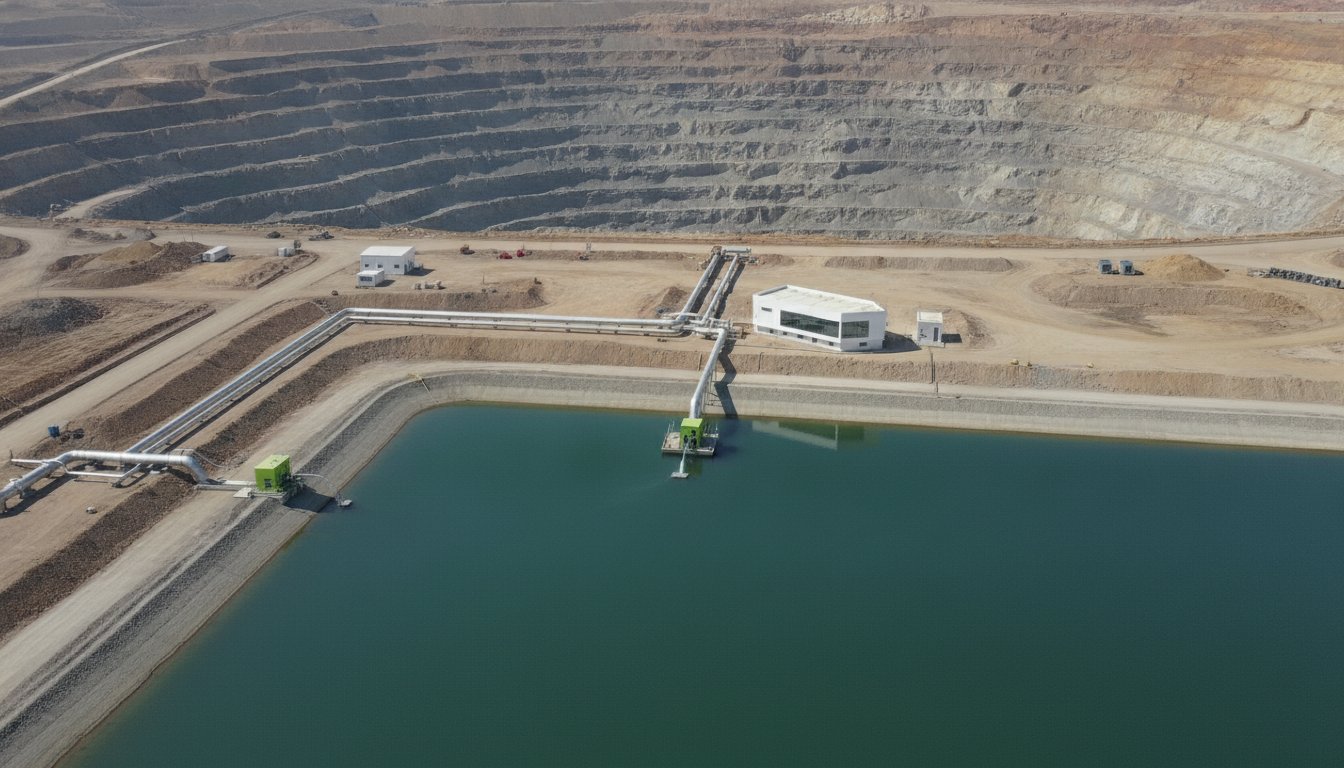
Tailings storage facilities (TSFs) present the largest surface area for potential odor emissions. Large-scale TSFs often suffer from anaerobic decomposition in stagnant process water, leading to persistent community complaints. To manage this, topical application of odor-absorbing polymers creates a molecular barrier on the water’s surface. These polymers trap rising gases, providing immediate relief while biodegradable agents work beneath the surface to address the biological source of the odor.
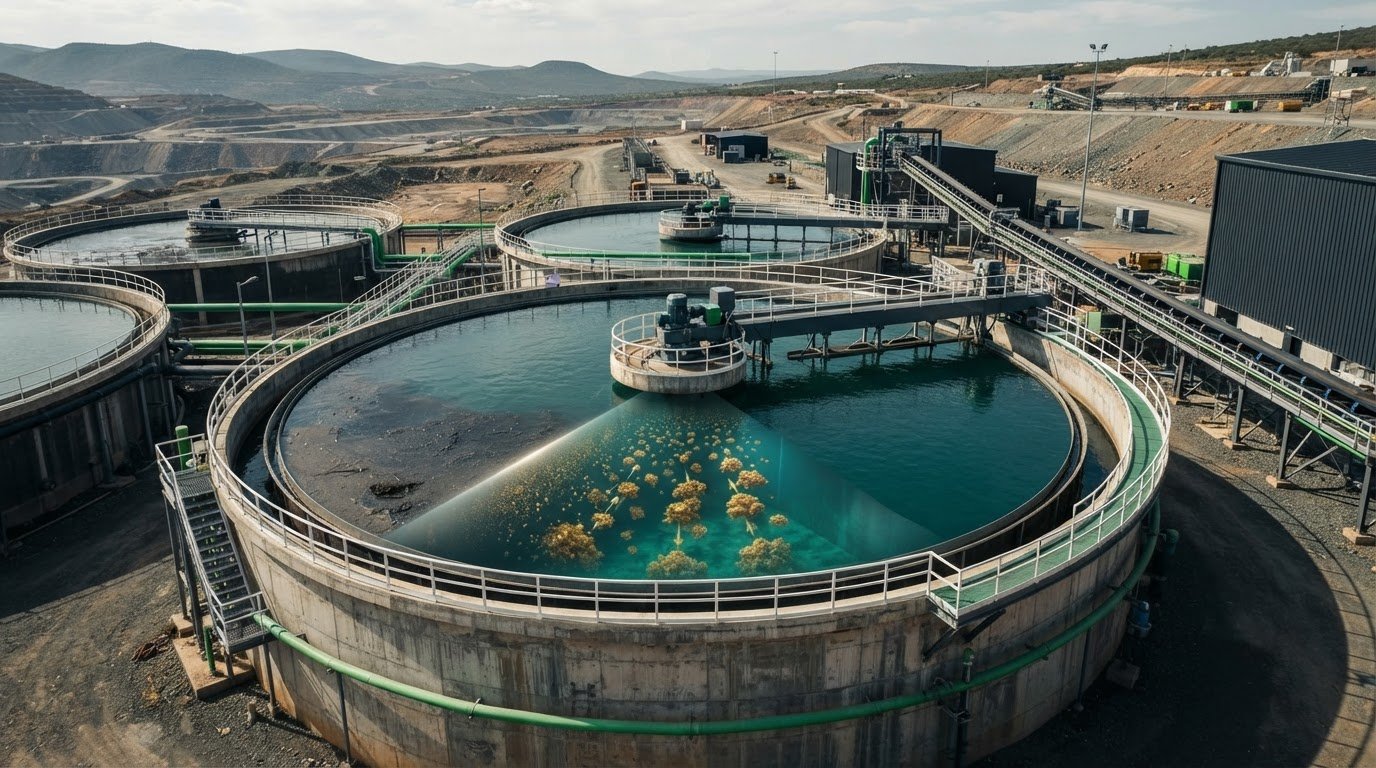
Operational stability in water recovery is also a priority. Odor treatment chemicals must be fully compatible with the mining flocculants used in thickeners and clarifiers. If an odor neutralizer disrupts the flocculation process, it can lead to high turbidity in recycled water and increased downtime. By selecting formulations that respect the ionic balance of the water circuit, mines can achieve high-quality water recovery and effective gas suppression simultaneously. This integrated strategy secures the mine's social license while protecting the integrity of its environmental management systems.
Optimizing Performance: Technical Audits and Dosing Strategies
Precision execution is the difference between a reactive site and a resilient one. Implementing odor control chemicals for mining operations requires a rigorous, data-driven approach to ensure that every drop of reagent contributes to site stability. A technical audit isn't a mere formality. It's a blueprint for operational security. By identifying gas concentration peaks and mapping their movement through the mine's ventilation or processing circuits, operators can move away from guesswork. This structured analysis ensures that chemical interventions are both effective and economically sustainable.
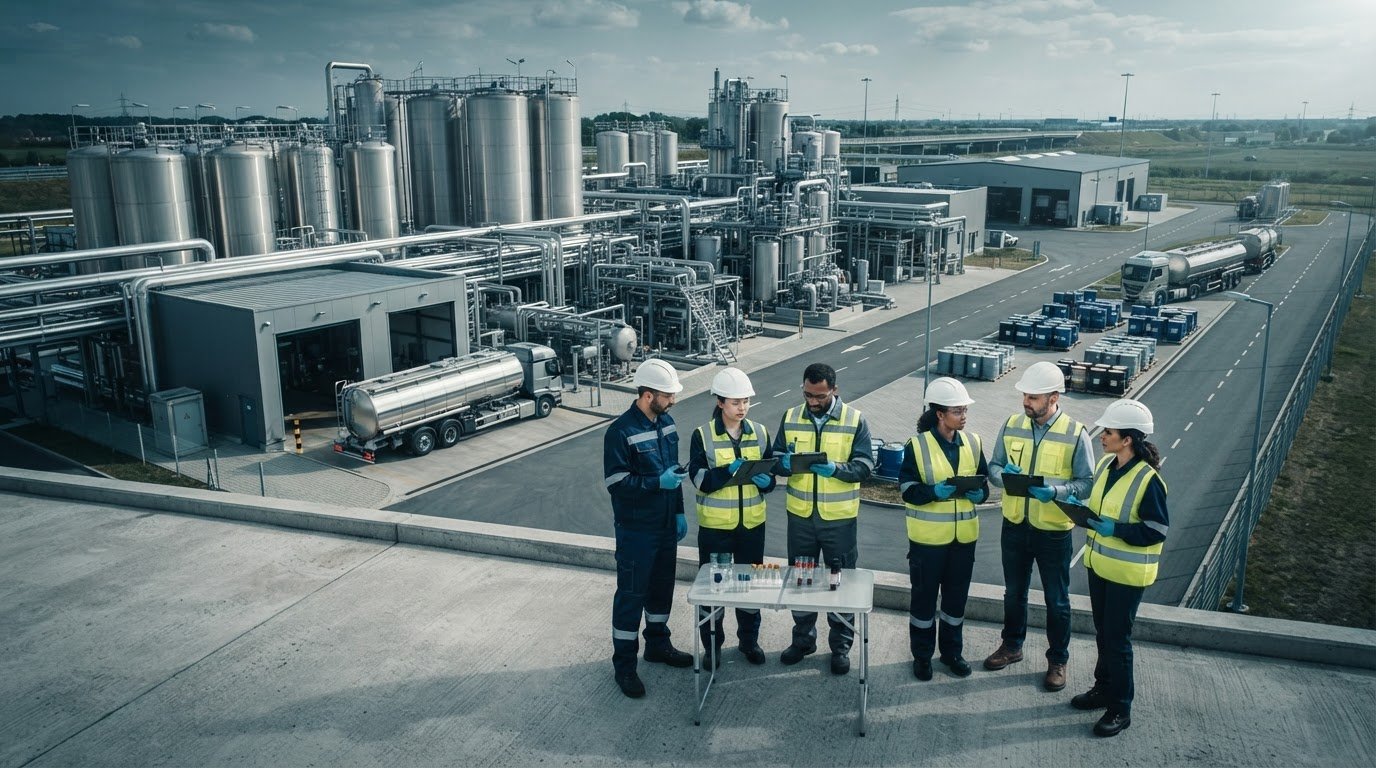
On-site laboratory testing plays a vital role in this refinement process. Formulations must be tested against the specific mineralogy and water chemistry of the site. When ore grades fluctuate, the chemical demand changes. Relying on a static dosing rate leads to either hazardous gas breakthroughs or significant chemical waste. Laboratory insights allow for the adjustment of formulations in real-time, ensuring that the neutralizers remain compatible with the complex slurry environments discussed in previous sections.
The Technical Audit Framework
A professional audit follows a logical progression from baseline assessment to pilot execution. This systematic flow builds confidence in the selected solution. The framework typically includes:
- Step 1: Baseline gas mapping and source identification. We use high-precision sensors to locate the exact points where H2S or VOCs are generated, establishing a clear starting point for treatment.
- Step 2: Chemical compatibility testing. This ensures that odor neutralizers don't disrupt the performance of existing process reagents, such as collectors or depressants.
- Step 3: Pilot-scale dosing. Small-scale implementation allows us to determine the optimal parts-per-million (ppm) levels required for full-scale suppression.
Precision Dosing and Automation
The integration of automated dosing pumps with real-time gas monitoring systems is the modern standard for resource protection. These systems utilize flow-proportional dosing, which automatically adjusts the chemical output based on the volume of material or air being treated. This automation is particularly critical in environments where temperature and humidity fluctuate. High heat can accelerate the release of volatile compounds, while humidity affects the efficacy of atomized neutralizers. Automated systems account for these environmental variables, maintaining a consistent safety profile without human intervention.
Efficiency in these systems is measured by how well they manage resources while hitting safety benchmarks. Dosing optimization is the balance between chemical cost and air quality targets. By reducing waste and preventing the over-application of reagents, mines can protect their bottom line while upholding their environmental commitments. To ensure your site is operating at peak efficiency, you can request a comprehensive technical audit through our specialized mining odor and gas treatment services.
Tailor-Made Solutions: The JAS Global Industries Advantage
JAS Global Industries brings more than 25 years of technical expertise to the global mining sector. We don't just supply chemicals; we provide resource security. Our mission is built on "Global Guardian" values. This is a commitment to safety, stability, and ethical supply chains that protect both people and infrastructure. In an era where regulatory pressure and community expectations are at an all-time high, having a partner that understands the broader human impact of technical solutions is essential. We act as a foundational industry presence, ensuring your operation remains an indispensable pillar of modern infrastructure.
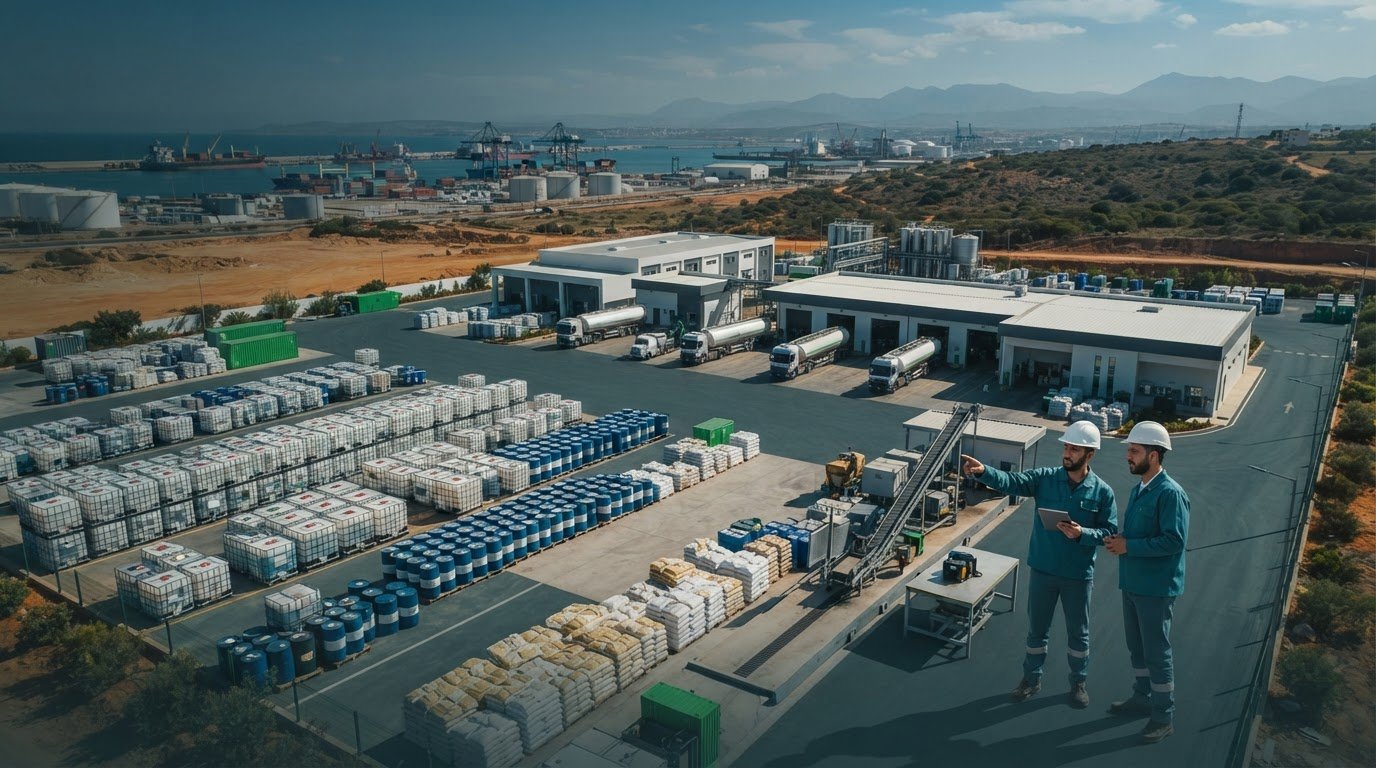
Reliability at scale is a core requirement for any major extraction site. Our bulk chemical supply contracts are engineered for industrial-scale reliability. We understand that a break in the supply chain can lead to immediate safety risks and operational halts. By maintaining a robust global logistics network, we ensure that the necessary reagents are always on-site. This consistency allows operators to focus on their primary production goals, knowing that their gas management systems are backed by a secure and ethical partner.
Custom Formulations for Complex Mining Environments
Generic, off-the-shelf products often fail in the face of complex ores and fluctuating mineralogy. Our global Research & Innovation (R&I) centers exist to solve these specific challenges. We develop site-specific odor control chemicals for mining operations that are tailored to your unique process water chemistry. This bespoke approach ensures that neutralizers outperform generic alternatives by targeting the exact molecular profile of your site's emissions.
Our deep expertise in industrial water treatment provides a significant competitive advantage. Because odor control is often a function of water chemistry, this synergy allows us to manage gas emissions without disrupting the recycling of process water or the efficiency of your water recovery circuits. We maintain service offices in key mining regions to provide on-the-ground support, ensuring supply security even in the most remote locations. This integrated expertise protects your social license to operate while maintaining peak plant performance.
Partnering for Operational Excellence
We believe in long-term partnerships rather than simple commodity transactions. This partnership begins with the technical consulting and baseline mapping discussed in previous sections and continues through full-scale dosing implementation. We don't just ship a product; we integrate with your team to refine dosing strategies as ore grades evolve. This collaborative model ensures that your odor control strategy is always optimized for both cost and efficacy. It's about building a stable and sustainable future for the entire industry. Consult with our mining chemical specialists to optimize your odor control strategy and secure your operation's long-term stability.
Securing Operational Stability Through Technical Excellence
Effective air quality management is no longer an optional secondary concern; it's a fundamental requirement for the modern mining enterprise. By moving from surface-level masking to sophisticated molecular neutralization, you protect both your human capital and your physical infrastructure. Implementing advanced odor control chemicals for mining operations ensures that your site meets the stringent 2026 compliance standards while maintaining the trust of the communities you serve. Success in this area requires more than simple logistics; it demands a deep technical synergy between mineral processing and gas-phase chemistry.
Operational since 1998, JAS Global Industries provides the specialized expertise necessary to navigate these complex challenges. Our global manufacturing reach and dedicated R&I centers allow us to develop tailor-made industrial formulations that address the specific mineralogy of your site. Whether you're managing H2S in confined spaces or treating tailings storage facilities, our team is focused on your long-term stability. Optimize your mining operations with JAS Global custom chemical solutions. Together, we can build a secure and sustainable future for global resource extraction.
Frequently Asked Questions
What are the most common chemicals used for odor control in mining?
The industry primarily utilizes H2S scavengers, chemical oxidizers like hydrogen peroxide, and advanced molecular encapsulators. These reagents target specific volatile organic compounds and acidic gases generated during extraction. While traditional masking agents exist, modern operations prioritize neutralizers that bond with and alter the chemical structure of malodorous molecules. This ensures that the root cause of the odor is eliminated rather than hidden.
How do H2S scavengers differ from simple masking agents?
H2S scavengers create a permanent chemical bond with sulfur molecules to render them inert and non-volatile. Masking agents only layer a stronger, often pleasant scent over the foul air without removing the hazardous gas. Using odor control chemicals for mining operations that focus on scavenging is essential for worker safety. It prevents the accumulation of toxic gases that masking agents simply ignore.
Can odor control chemicals interfere with mineral flotation recovery?
Improperly formulated chemicals can disrupt the surface tension and bubble-particle attachment necessary for efficient mineral recovery. It's vital to select neutralizers that are chemically compatible with your specific collectors and frothers. High-quality solutions are designed to be ionic-neutral. This ensures that air quality management doesn't come at the expense of your plant's overall yield or recovery rates.
Are mining odor control chemicals safe for the environment and tailings ponds?
Modern industrial formulations are increasingly biodegradable and bio-based to ensure they don't accumulate in tailings storage facilities. These agents break down into harmless byproducts that won't disrupt downstream water treatment or local ecosystems. Selecting environmentally responsible chemicals is a key part of maintaining a Social License to Operate. It protects the long-term stability of the surrounding environment and ensures compliance with 2026 ESG standards.
How is the required dosage of odor control chemicals determined?
Dosage is determined by calculating the parts-per-million required to neutralize the peak concentration of detected gases. This calculation considers the volume of the air or slurry being treated and the specific reactivity of the neutralizer. Fluctuating ore grades and processing speeds require dynamic adjustments. Precise dosing ensures that the operation remains safe without wasting expensive chemical resources or over-treating the system.
What is the role of automated dosing systems in mining gas management?
Automated dosing systems integrate real-time gas sensors with variable-speed pumps to provide an immediate response to changing gas levels. These systems eliminate human error and ensure that neutralizers are only applied when and where they're needed. By utilizing flow-proportional dosing, mines can maintain a consistent safety profile while significantly reducing chemical consumption. It's a critical component of a modern, data-driven gas management strategy.
How does temperature affect the performance of odor control reagents?
Elevated temperatures increase the volatility of organic compounds and accelerate the release of hazardous gases like H2S. Conversely, extreme cold can slow down the chemical reaction between the neutralizer and the odorant. Professional odor control chemicals for mining operations are stabilized to perform across a wide thermal range. This stability is crucial for remote sites where environmental conditions can shift rapidly between seasons or shifts.
Why is a technical audit necessary before implementing a chemical solution?
A technical audit provides the baseline data needed to design a custom chemical intervention that actually works. Without identifying the specific gas sources and concentration peaks, any chemical application is likely to be inefficient or ineffective. The audit also identifies potential compatibility issues with existing process reagents. This proactive step prevents operational downtime and ensures that the chosen solution provides maximum protection for your infrastructure and personnel.