
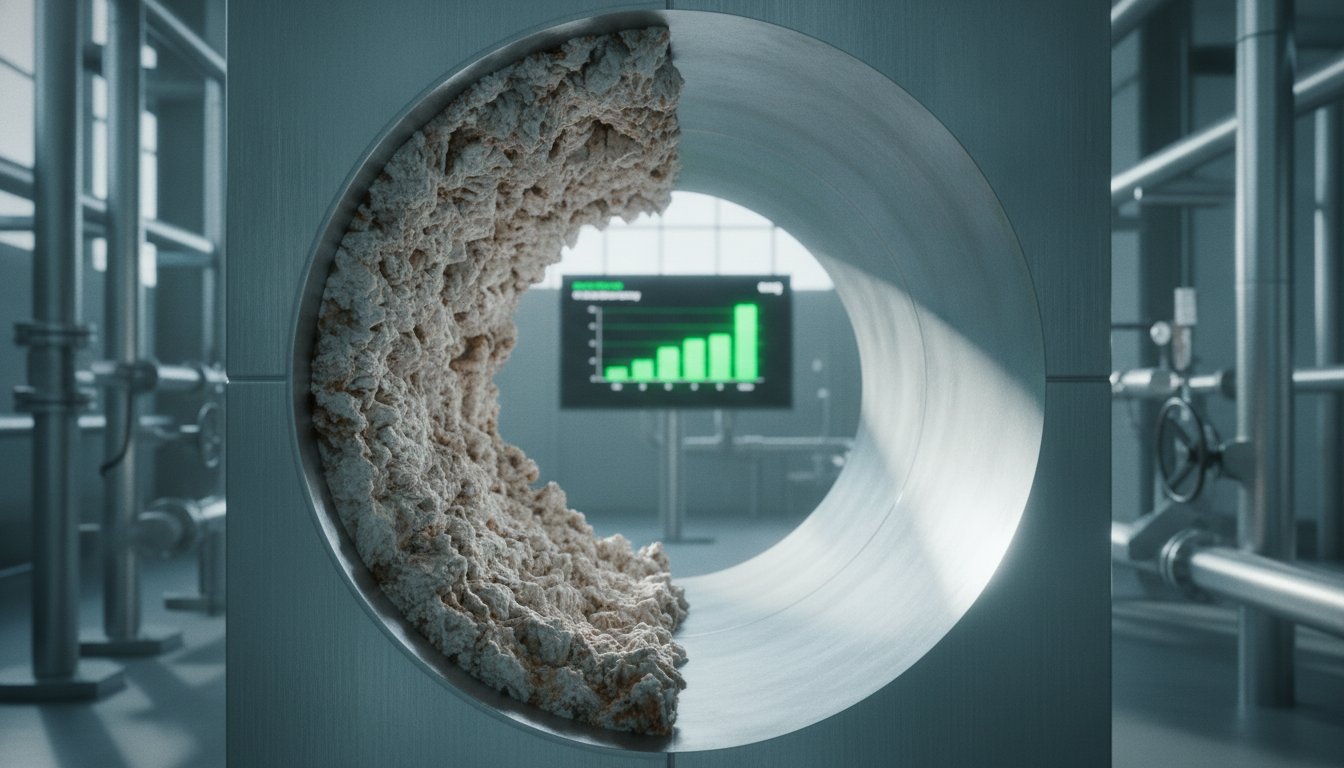
Scale inhibition is not a commodity purchase; it's a strategic intervention in your plant's reliability. With the global scale inhibitor market reaching 2.24 billion dollars in 2026, the stakes for your infrastructure have never been higher. Understanding how to choose a scale inhibitor requires matching molecular mechanisms to your system's unique water fingerprint. You likely recognize that unexpected mineral scaling does more than just clog pipes. It drives up energy costs and triggers equipment downtime that threatens your operational stability.
We'll help you master the technical and operational criteria for selecting inhibitors that safeguard your infrastructure and optimize process efficiency. This guide provides a strategic roadmap for protecting your assets against fouling while ensuring chemical compatibility. We'll explore the latest shifts toward biodegradable solutions and high-performance sulfonates, giving you the tools to extend equipment lifespan and reduce maintenance frequency. By the end, you'll have a clear framework for optimizing chemical dosing and securing the long-term health of your industrial systems.
Key Takeaways
- Identify the specific mineral species, such as Calcium Carbonate and Barium Sulfate, that threaten your infrastructure and operational stability.
- Execute a precise technical audit to master how to choose a scale inhibitor that remains effective across varying pH levels and mineral concentrations.
- Evaluate the performance of Phosphonates and sulfonates under high-temperature conditions to ensure long-term thermal and chemical stability.
- Distinguish between threshold, sequestration, and dispersion mechanisms to select the most efficient intervention for your specific water circuit.
- Leverage advanced research and innovation to optimize chemical dosing, resulting in extended equipment lifespan and reduced maintenance frequency.
The Fundamentals of Mineral Scaling and Industrial Impact
Scale inhibition is the strategic application of specialized chemistry to prevent mineral precipitation on industrial surfaces. It's a critical defense mechanism for the integrity of global infrastructure. When we examine the Fundamentals of Mineral Scaling, we focus on three primary culprits: Calcium Carbonate, Calcium Sulfate, and Barium Sulfate. These minerals don't just settle; they bond to metal surfaces, forming dense, insulating layers that choke system efficiency. Identifying these species is the first step in learning how to choose a scale inhibitor that effectively protects your assets.
From a "Global Guardian" perspective, scale management is a pillar of resource security. Efficient systems consume less energy and minimize water waste. When industrial processes run without interruption, global supply chains remain stable and reliable. Scale isn't just a maintenance nuisance. It's a significant economic drain. It causes severe flow restriction and leads to premature equipment failure. Even a thin layer of scale on a heat exchanger acts as a barrier to thermal transfer, forcing systems to work harder and drive up operational costs. Mastering how to choose a scale inhibitor is therefore essential for any organization committed to sustainability and fiscal responsibility.
The Mechanism of Scale Formation
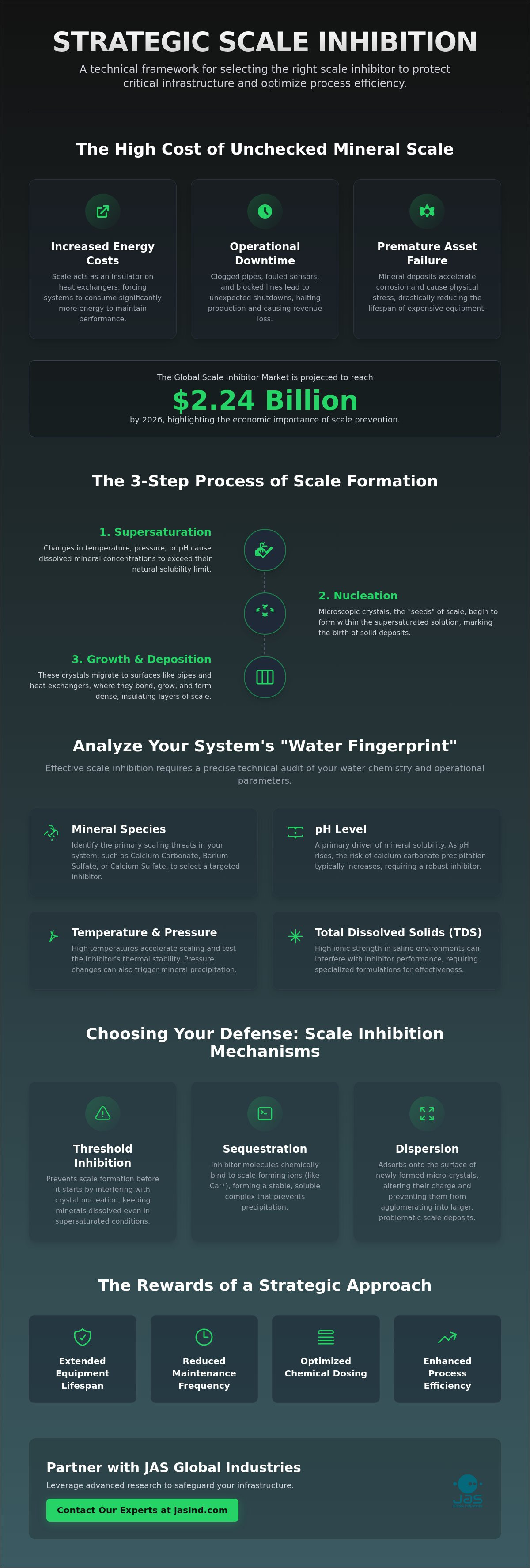
Supersaturation drives mineral precipitation. It occurs when the concentration of dissolved minerals exceeds their natural solubility limit, often due to changes in temperature or pressure. This trigger leads to nucleation, which is the birth of microscopic crystals. These crystals then migrate to heat exchange surfaces where they grow into stubborn deposits. We categorize these as "hard scale," which possesses a dense crystalline structure, or "soft scale," which is more amorphous and sludge-like. Both forms impede performance and require distinct chemical interventions to manage effectively.
Critical Industries at Risk
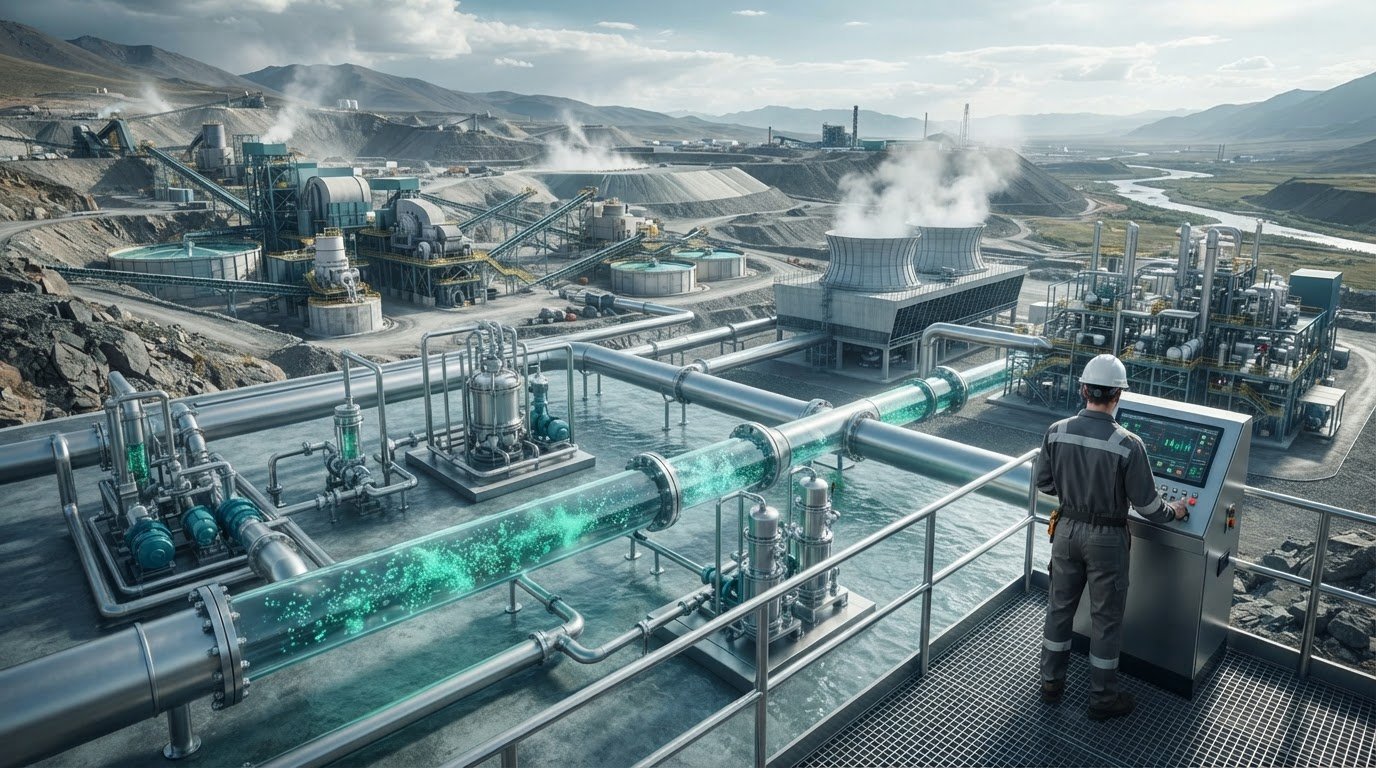
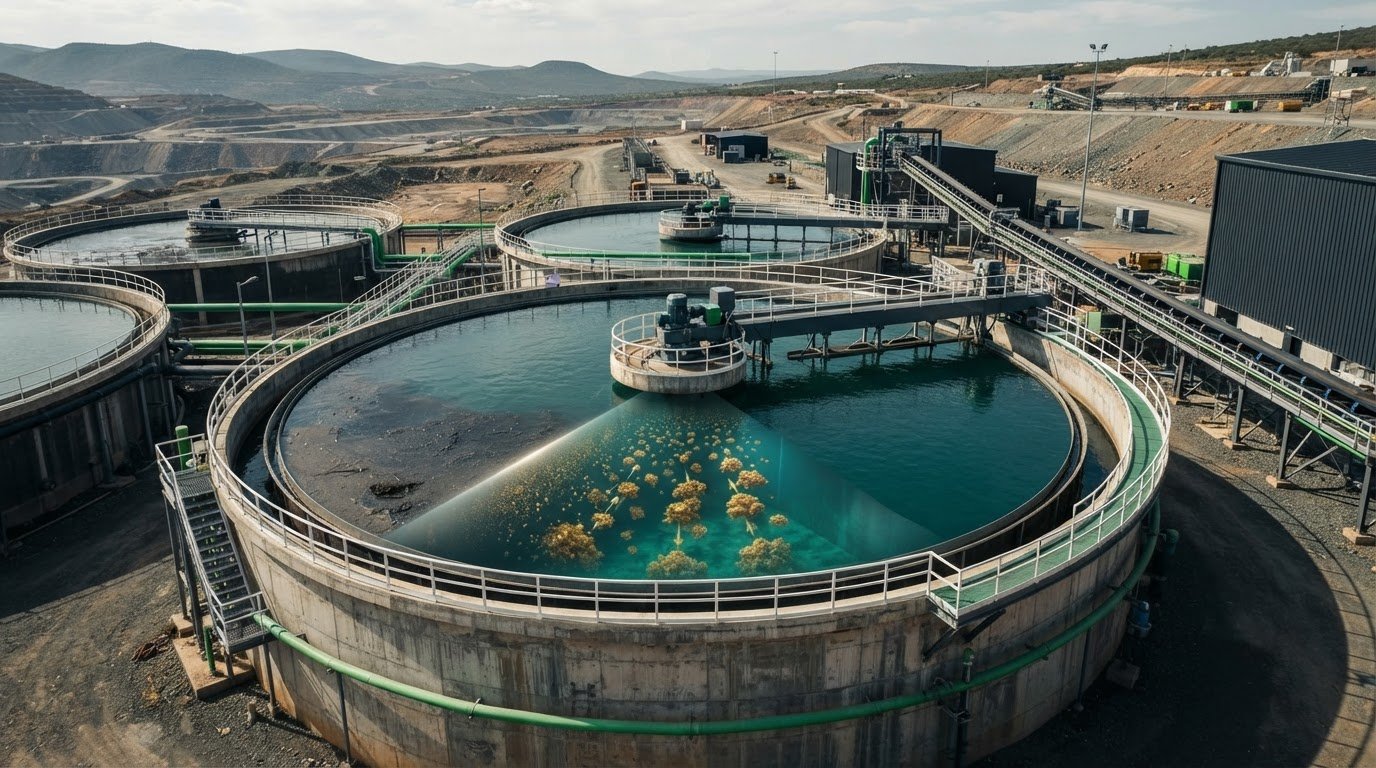
Scale management is vital for industrial water treatment. It ensures that cooling towers and boilers operate at peak efficiency without the risk of sudden fouling. In mining flotation and mineral processing circuits, scaling can foul sensitive sensors and block reagent delivery lines, halting production. Thermal desalination and reverse osmosis plants face even harsher conditions. Without high-performance antiscalants, membrane surfaces would fail rapidly under the stress of mineral accumulation. Proper inhibitor selection ensures these critical facilities continue to provide the water and materials society depends on every day.
Evaluating Water Chemistry and System Parameters
Every industrial water circuit possesses a unique "Water Fingerprint." This technical signature is the baseline for operational security. You cannot rely on generic solutions when the stability of your infrastructure is at stake. Mastering how to choose a scale inhibitor begins with a rigorous analysis of this fingerprint. It requires a deep understanding of how specific ions interact under the unique stresses of your facility. By treating water chemistry as a strategic variable, you move from reactive maintenance to proactive resource protection.
The pH level of your system is a primary driver of mineral solubility. As pH rises, the solubility of calcium carbonate typically decreases, accelerating the risk of precipitation. Temperature gradients further complicate this balance. High-temperature environments don't just increase the rate of scale formation; they also test the thermal stability of the inhibitor itself. If a chemical formulation degrades at the heat exchange surface, it leaves your system vulnerable. Partnering with experts to source specialized water treatment scale inhibitors ensures your system remains resilient against these fluctuating variables.
Total Dissolved Solids (TDS) and ionic strength also dictate chemical performance. In high-salinity environments, the "background noise" of non-scaling ions can interfere with inhibitor molecules. You must evaluate how these variables impact the threshold inhibition concentration. A formulation that works in a low-TDS cooling tower might fail in a high-salinity mining circuit. Precision in these measurements is what separates a reliable operation from one plagued by frequent fouling.
Hardness and Alkalinity Ratios
Determining scaling potential requires calculating the Langelier Saturation Index (LSI). This tool helps you understand the relationship between calcium hardness and carbonate alkalinity. When the LSI is positive, the water is scale-forming. The challenge intensifies when transitioning from fresh water to brackish or seawater sources. These complex water bodies contain higher concentrations of sulfates and magnesium, requiring a more sophisticated approach to how to choose a scale inhibitor that can handle multi-species scaling.
Operational Constraints
System residence time and flow velocity are critical operational variables. If water remains in a heat exchanger for too long, the kinetics of crystal growth can outpace the inhibitor's effectiveness. Conversely, high flow velocity creates shear stress that can strip protective chemical films from pipe walls. Identifying "hot spots"—areas where temperature peaks and flow stagnates—is essential. These zones are where scale is most likely to form first, serving as the primary targets for your chemical protection strategy.
A Comparative Analysis of Scale Inhibition Mechanisms
Selecting a chemical intervention is a matter of molecular precision. Once you have established your water fingerprint, the next step in how to choose a scale inhibitor involves matching the specific scaling threat to the correct inhibition mechanism. Industrial systems require a defense strategy that is both robust and adaptable. We categorize these chemical actions into three primary pillars: threshold inhibition, sequestration, and dispersion. Each serves a distinct role in maintaining the stability of your infrastructure and ensuring the security of global resources.
Phosphonates, such as PBTC, HEDP, and ATMP, are the industry standard for high-temperature stability. These molecules are essential for protecting heat transfer surfaces in thermal desalination and power generation plants. Their ability to resist thermal degradation ensures that your system remains protected even under extreme operational stress. Conversely, polymeric inhibitors like polyacrylates and polymaleates focus on crystal modification. They distort the mineral's structure, preventing it from adhering to metal surfaces. In 2026, the evolution of "green" and biodegradable scale inhibitors has become a central focus. Modern formulations now offer high-performance protection while meeting stricter environmental standards for phosphorus discharge and biodegradability.
Threshold Inhibition vs. Sequestration
Threshold inhibitors are highly efficient. They prevent crystal growth at sub-stoichiometric levels, meaning a very small dose can inhibit a much larger concentration of minerals. This is the most cost-effective method for large-scale water circuits. Sequestration, or chelation, operates on a 1:1 molar ratio. It is typically reserved for systems with lower volume or extreme mineral concentrations where specific ions must be completely isolated from the process. Understanding these ratios is a fundamental part of how to choose a scale inhibitor that balances cost with performance.
Crystal Modification and Dispersion
Crystal modifiers work by interfering with the geometric growth of the mineral lattice. By distorting the crystal shape, these chemicals prevent minerals from forming the dense, interlocking structures known as "hard scale." Dispersants then play a vital role by keeping these micro-crystals suspended in the bulk water flow, preventing them from settling in low-velocity areas. The most resilient industrial programs often utilize a synergistic approach. Combining phosphonates for threshold protection with high-performance polymers for dispersion creates a multi-layered defense that maximizes equipment lifespan and minimizes downtime.
The Decision Framework: How to Select the Right Formulation
Selecting an inhibitor is a technical decision that impacts the stability of your entire operation. It's not enough to simply identify a scaling mineral; you must understand the environment in which that mineral exists. A strategic decision framework ensures that your selection provides long-term security for your infrastructure. Understanding how to choose a scale inhibitor involves a systematic evaluation of your system's operational DNA. This framework moves beyond surface-level observations to ensure the chemical solution matches the physical reality of your water circuit.
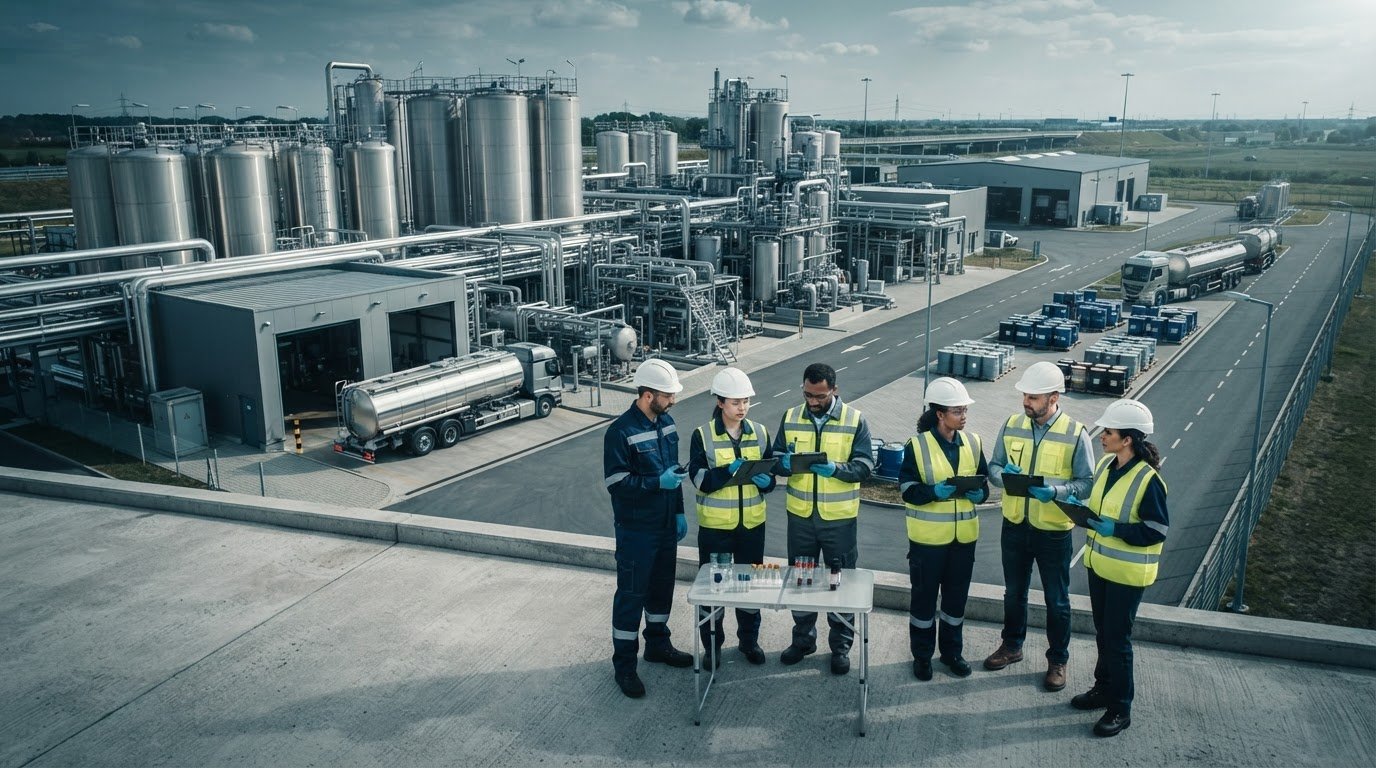
The first step is a comprehensive technical audit. This involves reviewing flow rates, temperature fluctuations, and system residence times. Once the audit is complete, you can match the scale type, such as silica or sulfate, to the molecular mechanisms discussed in previous sections. You must then verify chemical compatibility with existing biocides and corrosion inhibitors. Before full-scale implementation, conduct laboratory "jar tests" or pilot-scale evaluations to provide empirical evidence of performance. Finally, establish a precise dosing and monitoring protocol to maintain long-term stability and prevent unexpected fouling.
Chemical Compatibility and Synergy
Antagonism between chemicals can compromise your entire treatment program. Some scale inhibitors react negatively with oxidizing biocides, leading to a loss of efficacy for both products. Holistic protection requires integrating scale control with high-performance corrosion inhibitors to ensure all metallic surfaces remain secure. In sensitive industrial processes, pH-neutral formulations are often preferred to avoid disrupting the delicate balance of the process water. Ensuring these chemicals work in synergy is a vital part of how to choose a scale inhibitor that won't interfere with your existing reliability standards.
Cost vs. Performance Optimization
Operational efficiency is measured by the Total Cost of Ownership (TCO), not the chemical price per kilogram. While a premium inhibitor might have a higher initial cost, its high-efficiency threshold properties can significantly reduce system blowdown and energy consumption. You should evaluate the ROI through these energy savings and the extension of equipment lifespan. Custom formulations further optimize this balance by reducing chemical waste and minimizing the environmental footprint of your discharge. For organizations seeking to enhance their resource security, request a technical consultation for custom scale inhibition programs to ensure your facility operates at peak performance.
Monitoring is the final pillar of this framework. Real-time data allows for precise dosing adjustments as water quality fluctuates. By maintaining this steady state, you protect your infrastructure from the high costs of unplanned maintenance and premature failure. This proactive approach transforms chemical management into a foundational component of your industrial stability.
Partnering for Process Optimization: The JAS Global Approach
Operational stability is the foundation of global resource security. At JAS Global Industries, we don't just supply chemicals; we act as a vital guardian for your most critical assets. Our role as a strategic partner in mining solutions and water treatment is defined by a commitment to technical excellence and ethical responsibility. When you evaluate how to choose a scale inhibitor, you're selecting more than a product. You're choosing a partner dedicated to the long-term health of your infrastructure. Our Research and Innovation (R&I) centers are the heart of this mission, where we transform complex water chemistry data into high-performance, tailor-made formulations.
Generic, off-the-shelf solutions often fail to meet the demands of high-stress industrial environments. These systems require site-specific strategies that account for fluctuating mineral loads and extreme temperatures. Our technical field support teams work directly with your operators to ensure every dosing protocol is optimized for your specific circuit. This hands-on approach reduces chemical waste and protects the environment, reflecting our deep-seated commitment to sustainability and community well-being. By integrating our expertise into your daily operations, we help you master how to choose a scale inhibitor that delivers both protection and efficiency.
Tailor-Made Formulations for Complex Systems
High-stress systems, such as those found in phosphate or potash mining, demand molecular precision. Standard chemicals frequently lack the thermal or chemical stability needed to prevent fouling in these environments. JAS Global develops site-specific scale inhibition strategies by simulating your exact system parameters in our laboratories. Our R&I teams have optimized mineral recovery processes through advanced chemistry, allowing plants to significantly increase their yield while reducing the frequency of acid cleaning cycles. This level of customization ensures that your investment in scale control yields the highest possible ROI while securing your process reliability.
Global Reach, Local Expertise
Our presence in Dubai, Riyadh, and Europe allows us to provide localized technical audits and rapid field support. We understand the unique challenges of different regions, from high-salinity water sources in the Middle East to strict environmental regulations in Europe. This global reach, combined with local expertise, allows us to offer long-term technical consulting that goes beyond simple product delivery. We focus on process optimization and the security of your supply chain. To begin securing your facility's future, Contact JAS Global Industries for a comprehensive system audit and a personalized roadmap for operational reliability.
Securing Operational Stability through Molecular Precision
Protecting industrial infrastructure requires a shift from generic chemical application to strategic molecular intervention. You've seen that mastering how to choose a scale inhibitor depends on rigorous water fingerprinting and matching specific mineral threats to advanced inhibition mechanisms. By integrating technical audits with high-performance chemistry, you ensure the long-term security of your resources and the efficiency of your global operations. These steps transform maintenance from a reactive burden into a foundational pillar of your corporate sustainability.
JAS Global Industries has served the global mining and water sectors since 1998. We rely on ISO-certified manufacturing plants and proprietary R&I centers to develop custom formulations that meet the highest standards of reliability. Our technical expertise acts as a guardian for your most critical systems, balancing industrial output with global responsibility. Take the next step in optimizing your facility's performance and protecting your essential infrastructure. Consult with a JAS Global Technical Expert for a Process Audit today. We look forward to securing your operational future together.
Frequently Asked Questions
What is the difference between an antiscalant and a scale inhibitor?
Antiscalants and scale inhibitors are terms often used interchangeably, though they describe slightly different chemical actions. An antiscalant primarily prevents the precipitation of mineral salts from a supersaturated solution, while a scale inhibitor interferes with the crystal growth process once nucleation begins. Both are essential for protecting industrial infrastructure. Understanding these nuances is a key part of how to choose a scale inhibitor that fits your system's specific flow and mineral concentration.
How do I know if my current scale inhibitor is working effectively?
You can verify effectiveness by monitoring the Langelier Saturation Index (LSI) and analyzing the mineral concentration in your system's blowdown water. If the concentration of dissolved minerals in the effluent is lower than expected based on your concentration factor, minerals are likely precipitating as scale. Frequent pressure drops or reduced heat transfer efficiency in exchangers are also clear indicators that your current chemical program requires a technical audit.
Can scale inhibitors be used in high-temperature boiler systems?
Scale inhibitors are suitable for high-temperature boiler systems provided the molecules possess high thermal stability. Phosphonates like HEDP or PBTC are frequently selected for these environments because they don't degrade under intense heat. Choosing a formulation that maintains its molecular integrity at high temperatures is a critical component of how to choose a scale inhibitor for steam generation and power plant applications where reliability is paramount.
Are there environmentally friendly scale inhibitors available for 2026?
Biodegradable and green scale inhibitors are widely available in 2026 to meet stricter global environmental standards. These formulations use advanced polymer chemistries that provide high-performance threshold inhibition without the environmental persistence of traditional phosphonates. Companies are increasingly adopting these solutions to reduce their phosphorus discharge and align with sustainability goals while maintaining the security of their industrial water circuits.
How does pH affect the dosage requirements for scale inhibitors?
pH levels directly dictate the solubility of mineral species and the ionization state of the inhibitor molecules. As pH rises, the scaling potential of calcium carbonate increases significantly, which typically necessitates a higher dosage of the inhibitor to maintain stability. Precise pH control is necessary to ensure the chemical intervention remains effective without over-treating the water circuit or wasting valuable resources.
What happens if I overdose a scale inhibitor in my system?
Overdosing a scale inhibitor can lead to chemical fouling, where the inhibitor itself precipitates out of the solution. This often happens when the chemical reacts with divalent cations like calcium to form an insoluble complex. This not only wastes expensive chemistry but can actually restrict flow and reduce heat transfer efficiency. It creates the very problem the treatment was intended to prevent, threatening your system's operational stability.
Can scale inhibitors remove existing scale deposits?
Scale inhibitors are designed to prevent the formation of new mineral deposits, not to remove existing scale. While some high-performance dispersants can slowly erode soft deposits over long periods, hard crystalline scale usually requires mechanical cleaning or specialized acid descaling agents. It's far more efficient to maintain a steady inhibition program than to rely on reactive cleaning that risks equipment downtime.
Is a scale inhibitor compatible with reverse osmosis membranes?
Scale inhibitors are highly compatible and often essential for the security of reverse osmosis membranes. They prevent mineral precipitation on the membrane surface, which would otherwise lead to rapid flux decline and permanent membrane damage. Using a dedicated RO antiscalant ensures that the system can operate at higher recovery rates while protecting the sensitive membrane infrastructure that critical water supplies depend on.