
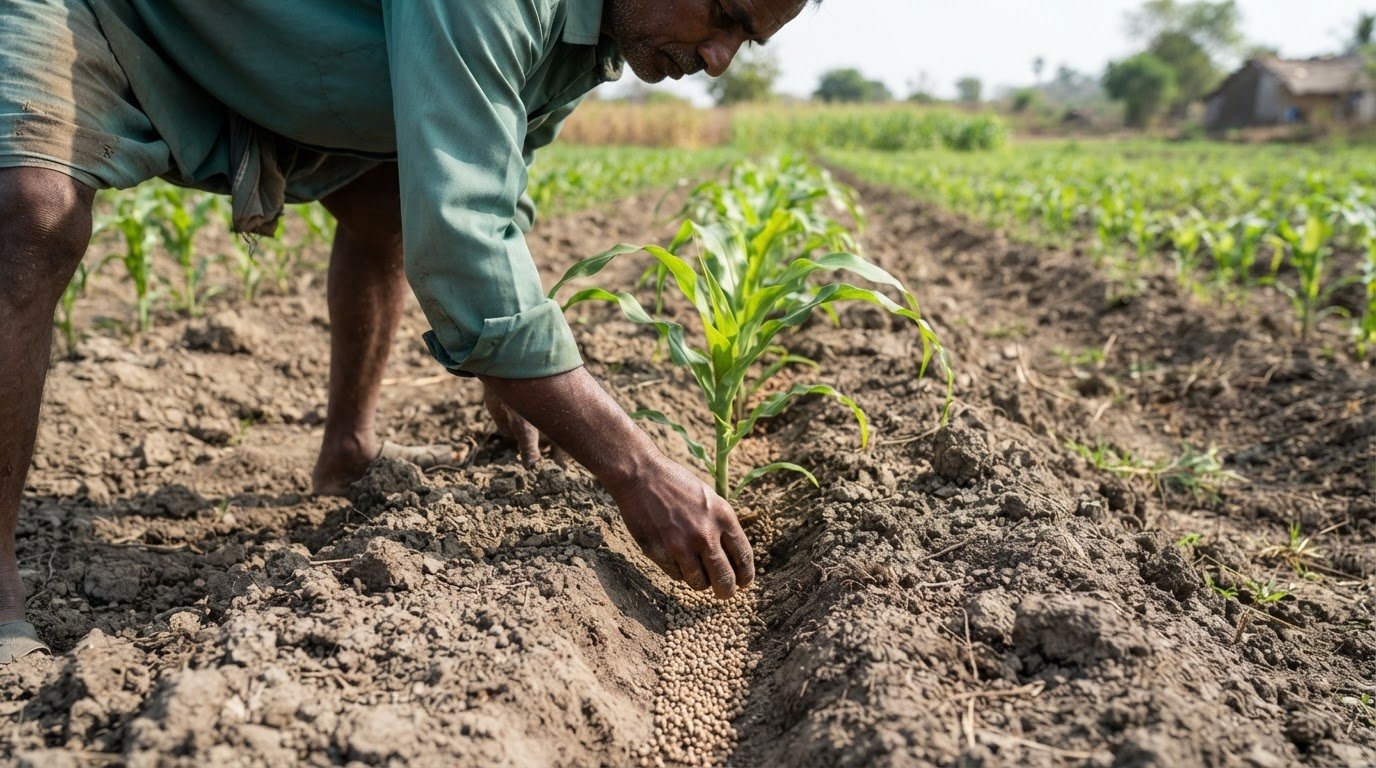
Coatings can change how a fertilizer granule releases nutrients: polymer-coated fertilizers can be engineered to release them over periods ranging from 30 days to 18 months. Current fertilizer coating technology trends span controlled-release polymers, biodegradable materials, and nanoparticle approaches, each balancing nutrient timing with coating performance and environmental impact.
That balance matters for growers managing different soils, crops, and application needs. In India’s smallholder landscape, microbial coating technology raises practical questions about aligning nutrient release with local growing conditions instead of relying on a one-size-fits-all approach.
This article explains how controlled-release coatings work and why manufacturers coat fertilizer granules, then examines market growth and the shift toward biodegradable nanoparticle coatings. It outlines where these materials may fit, what affects their performance, and how research is addressing the challenge of delivering nutrients effectively while reducing persistent coating residues.
What are controlled-release fertilizers?
Controlled-release fertilizers regulate nutrient release through a coating or another designed barrier. Slow-release fertilizers supply nutrients gradually, often through lower solubility or biological breakdown. The distinction is practical: controlled-release products are designed around a release pattern, while slow-release describes the gradual supply itself. Both can support crop nutrition by aligning nutrient availability more closely with plant demand.
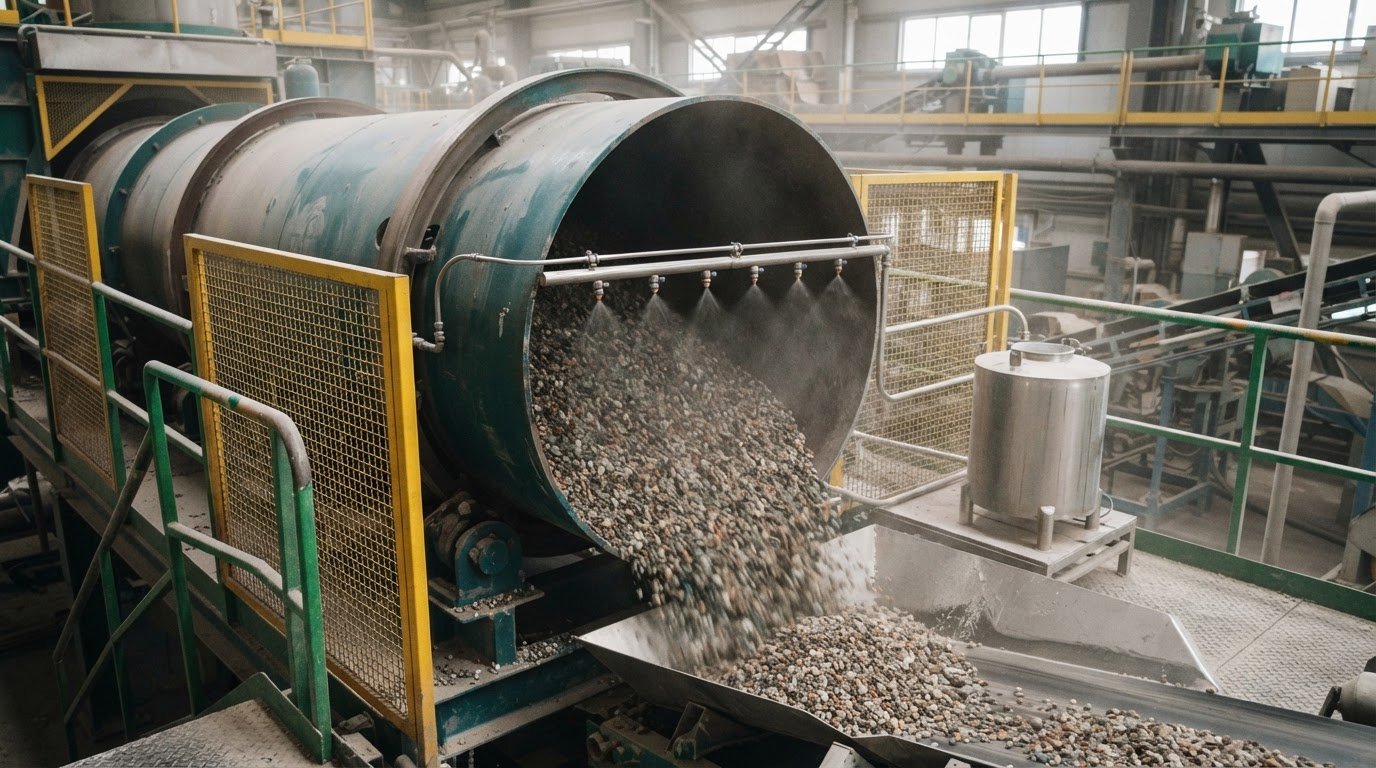
The main coating types are polymer, sulfur, and biodegradable coatings. Polymer coatings form a semi-permeable membrane: water enters, dissolves the fertilizer core, and dissolved nutrients diffuse outward. Sulfur-coated products release nutrients as soil microorganisms degrade the sulfur layer, typically over 6-16 weeks. Biodegradable coatings use materials designed to break down after application. Oil-based coatings mainly suppress dust and condition granules; typical application is 0.5-2% by weight, and they do not primarily control nutrient release.
Coated fertilizers serve commercial agriculture, horticulture, and turf management, where nutrient timing can support application planning and reduce leaching. Polymer-coated products can be engineered for release periods from 30 days to 18 months. Higher temperatures generally accelerate release, so temperature is a key factor in optimization. Soil pH, salinity, and microbial activity also affect performance, particularly for sulfur coatings.
The technology has a longer history than modern polymer membranes. In 1842, Sir John Bennet Lawes patented a process converting phosphate rock into superphosphate with sulfuric acid. For Germany, quality-control analysis can document coating composition, granule coverage, release behavior, and labeling for the intended market. In the United States, applicable requirements depend on the product and state; manufacturers assess composition, labeling, and support for controlled-release claims.
Coating failure can disrupt the intended release pattern: cracks or uneven coverage may expose fertilizer cores, speeding dissolution and increasing nutrient losses. Soil and temperature conditions also affect release, so no single application rate or timing suits every U.S. crop. Crop nutrient demand, soil analysis, product release profile, and label directions guide rate and timing. Oil-based coatings address dust control and granule conditioning, not controlled nutrient delivery.
Why Coat Fertilizer Granules?
A coating changes how nutrients reach soil and roots. By slowing nutrient release, coated fertilizers can supply plants over a longer period, helping reduce leaching and improve nutrient-use efficiency. Effects on soil depend on the coating: sulfur left behind can react with water and acidify soil. Polymer coatings, meanwhile, influence when nutrients become available, affecting plant growth and fertilizer management.
Research attention is increasing. A bibliometric analysis of 15 years of publication data found that publications on coated fertilizers steadily increased from 2010 through 2024. That trend reflects ongoing work to improve release profiles and environmental compatibility. For farmers, the practical question is whether a coating’s release behavior aligns with crop demand, soil conditions, and the intended growing period, rather than simply whether a granule is coated.
Precision agriculture can make that alignment more specific. Soil analysis, crop nutrient requirements, and application timing can inform where and when to use coated fertilizer. A field with variable soil conditions may need different nutrient plans across its management zones. Matching a fertilizer’s release pattern to those conditions can support productivity while limiting nutrient movement beyond the root zone. The coating is one part of the plan, not a substitute for informed nutrient management.
Temperature, moisture, and soil conditions all influence performance. Higher temperatures generally accelerate nutrient release, while soil pH, salinity, and microbial activity particularly affect sulfur-coated products. Moisture influences release by allowing water to interact with the coating and fertilizer core. Farmers can compare a coated product’s stated release profile with crop demand and field conditions before planning application. This links fertilizer coating technology trends to practical decisions in agriculture.
Fertilizer manufacturers develop coating technologies to improve nutrient-release profiles and environmental compatibility. Coating design must therefore bring release behavior and environmental considerations together.
Market growth rate
Forecasts show expansion across global fertilizer coatings, but estimates cover different product categories and periods. The fertilizer value-added coatings market was valued at USD 2,600.0 million in 2025 and is forecast to reach USD 3,885.8 million in 2035, growing at a CAGR of 4.1% from 2025 to 2035. This outlook points to sustained demand for advanced coatings, while environmental priorities and farming practices shape product development. The figures describe a market forecast, not a guaranteed outcome for every coating type. Reading fertilizer coating technology trends alongside their market definitions helps clarify what each forecast measures.
Slow-release coated fertilizers show a faster projected trajectory. Their market was valued at USD 2.52 billion in 2025 and is projected to reach USD 5.18 billion by 2035, with a CAGR of 7.5% from 2027 to 2035. The difference from value-added coatings reflects distinct market definitions and forecast periods. For agricultural businesses, this growth highlights increasing interest in nutrient delivery technologies, alongside challenges such as matching release profiles to crops and local conditions. These fertilizer coating technology trends point to growth across segments with different uses and market scopes.
In the United States, the fertilizer value-added coatings market is projected to grow at a CAGR of 3.7%. Country-level forecasts for microbiome-tuned coating systems are higher: India is forecast at 19.6%, China at 19.1%, and Germany at 16.4% from 2026 to 2036. These rates concern a specific emerging segment, not each country’s entire fertilizer coatings market. The global microbiome-tuned segment is forecast to grow at 18.2% during 2026-2036, reflecting a specialized area within the wider sector.
There is no single typical U.S. cost or price premium for coated fertilizers. Price depends on product formulation, coating material, intended release profile, and purchase volume; a quote establishes the applicable price. For market analysis, compare forecasts only when their categories, geography, and time periods align. A broad coatings estimate and a microbiome-specific forecast measure different opportunities. Together, fertilizer coating technology trends point to expansion in established markets and advanced approaches, while environmental performance and practical crop use remain central.
Biodegradable nanoparticle coatings for granular fertilizer
Biodegradable nanoparticle coatings aim to balance nutrient control with reduced persistence in soil. A coating matrix can combine biodegradable polymers with nanoscale materials, shaping how water reaches a fertilizer granule and how nutrients move outward. The design challenge is maintaining useful release behavior as the coating breaks down. This matters for nitrogen fertilizers, where nutrient losses can occur when release timing and crop demand do not align.
Environmental performance is a central test. Plastic residues from non-biodegradable fertilizer coatings can accumulate in soil at up to 50 kg/ha/year. Biopolymers are described as biodegradable, biocompatible, and nontoxic, with potential benefits for soil quality. Those qualities alone don’t establish field performance. A meaningful biodegradability assessment defines the test environment, breakdown endpoint, and residue profile. Results are comparable only when evaluation methods align; the coating’s breakdown products and effects on soil also matter.
Emerging materials include biochar and plant residues. One reported approach used biochar, cotton stalks, and maize cobs to form semi-interpenetrating networks under 320 W of microwave radiation for 390 seconds. The resulting material illustrates how agricultural residues can become inputs for coating development. Another reported fertilizer-release result was 93% in 11 days. That figure describes a specific result, not a general release rate for biodegradable coatings.
For fertilizer manufacturers, application technology must preserve granule coverage and repeatable release. Research includes polymer-based, nanostructured, and biodegradable coatings, with formulation and application conditions influencing the final layer. A practical sequence is to select a coating matrix, apply it evenly, then assess nutrient release and breakdown under relevant soil conditions. Coated granules must deliver nutrients reliably while limiting persistent residues. That is the opportunity in sustainable coating development, and the challenge is demonstrating both outcomes together.
JAS Global Industries
JAS Global Industries helps fertilizer producers address handling and conditioning needs alongside decisions about coated granules. Its specialty chemical offerings include fertilizer anti-caking agents, dust suppressants, and granulation aids. These products are relevant when storage, dust, or granule-processing challenges affect fertilizer operations; coating choice and nutrient-release design remain separate technical considerations.
For teams assessing fertilizer coating technology trends, start by defining the operational need: dust control, caking prevention, or granulation support. This focus helps shape a practical discussion about chemical solutions suited to the process. JAS Global Industries develops tailor-made formulations for its partners, connecting product development with process requirements without positioning handling agents as controlled-release coatings.
Contact JAS Global Industries to discuss fertilizer handling and conditioning needs.
Turn coating priorities into process decisions
Translate fertilizer coating technology trends into operational priorities by identifying whether the immediate need is nutrient-release design, granule conditioning, or reliable handling. Keeping these goals distinct helps teams assess materials and process requirements without treating every coating or additive as interchangeable.
For fertilizer operations focused on handling, JAS Global Industries offers fertilizer anti-caking agents and fertilizer dust suppressants. Its broader specialty chemical portfolio also includes mining flotation collectors. These offerings address specific process needs; biodegradable coating development and controlled-release performance are separate technical considerations.
Bring your fertilizer handling or conditioning priorities into a practical discussion with the team. Contact JAS Global Industries to explore the next step for your operation. Clear priorities create a stronger foundation for responsible process decisions and continued progress.
Frequently Asked Questions
How is India's Smallholder Landscape Adapting to Microbial Coating Technology?
Adoption depends on whether microbial coatings suit smallholders’ crops, soils, and application practices. Microbiome-tuned systems are an emerging market segment, but market forecasts do not show how widely small farms currently use them. Practical evaluation can focus on crop-specific nutrient needs, compatibility with local soil conditions, and whether the release pattern fits the growing cycle. Field results across varied smallholder conditions remain important to judging their value.
What are the Drivers, Restraints, and Key Trends of the Market?
Demand is driven by interest in nutrient-use efficiency, targeted fertilizer practices, and coatings designed for environmental compatibility. Constraints include balancing reliable nutrient release with coating breakdown and soil effects. One key direction is microbiome-tuned formulation, which seeks to align coating performance with biological conditions in soil. Manufacturers also need to assess release behavior and environmental outcomes together, rather than treating either as a standalone measure.
What are the latest fertilizer coating technology trends in 2025-2026?
Biodegradable materials and microbiome-tuned systems are prominent emerging directions for 2025-2026. The microbiome-tuned fertilizer coating system market is estimated at USD 98.94 million in 2026 and projected to reach USD 526.69 million by 2036. Within that market, polymer coatings are projected to hold a 49.2% share in 2026. These figures describe a specialized segment, not the entire fertilizer coatings market.
How do controlled-release fertilizer coatings compare in nutrient release, efficiency, and crop yield?
Coatings differ in how they regulate water entry and nutrient movement, so compare products by their release profile under relevant growing conditions. Efficiency can be assessed by considering how closely nutrient availability matches crop demand and whether losses beyond the root zone are reduced. Crop yield is a separate field outcome influenced by crop, soil, weather, and management. A coating’s release design alone does not establish a yield increase.