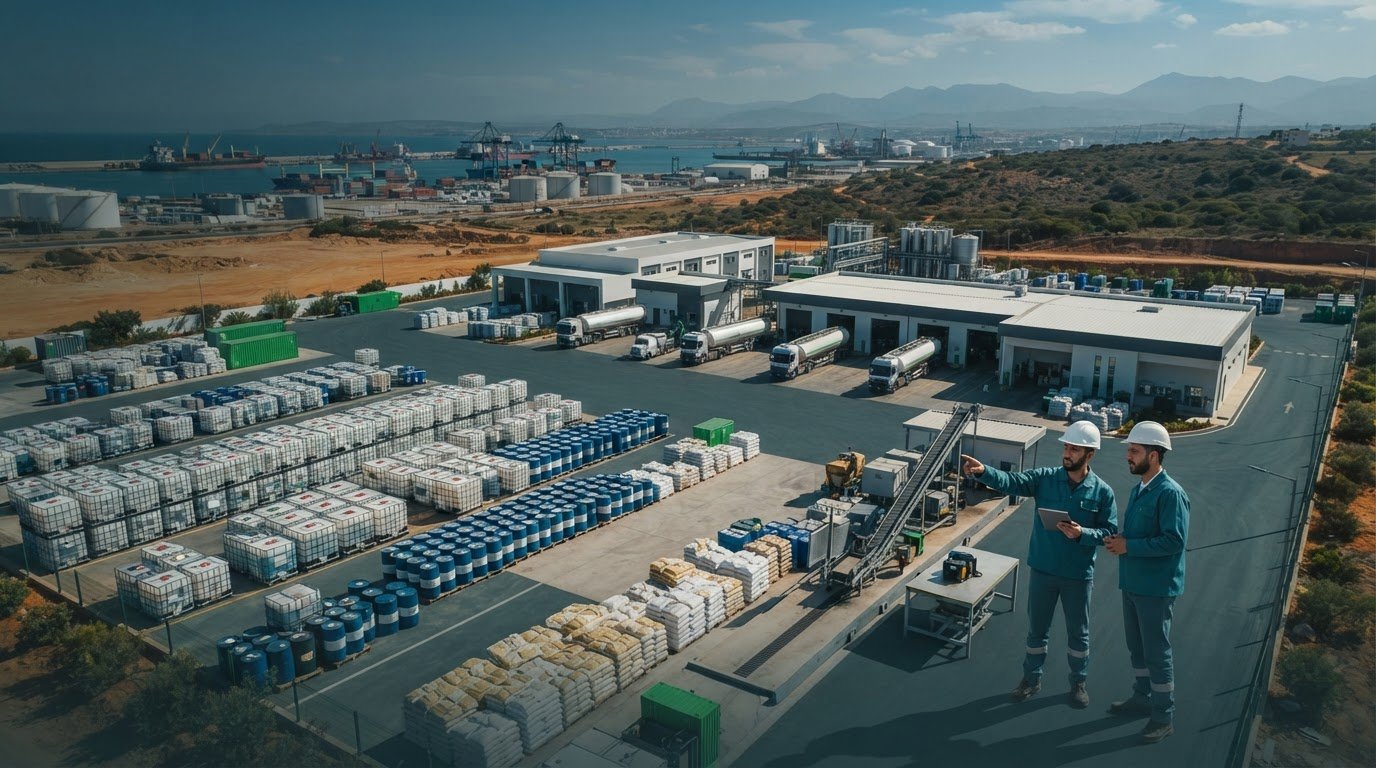

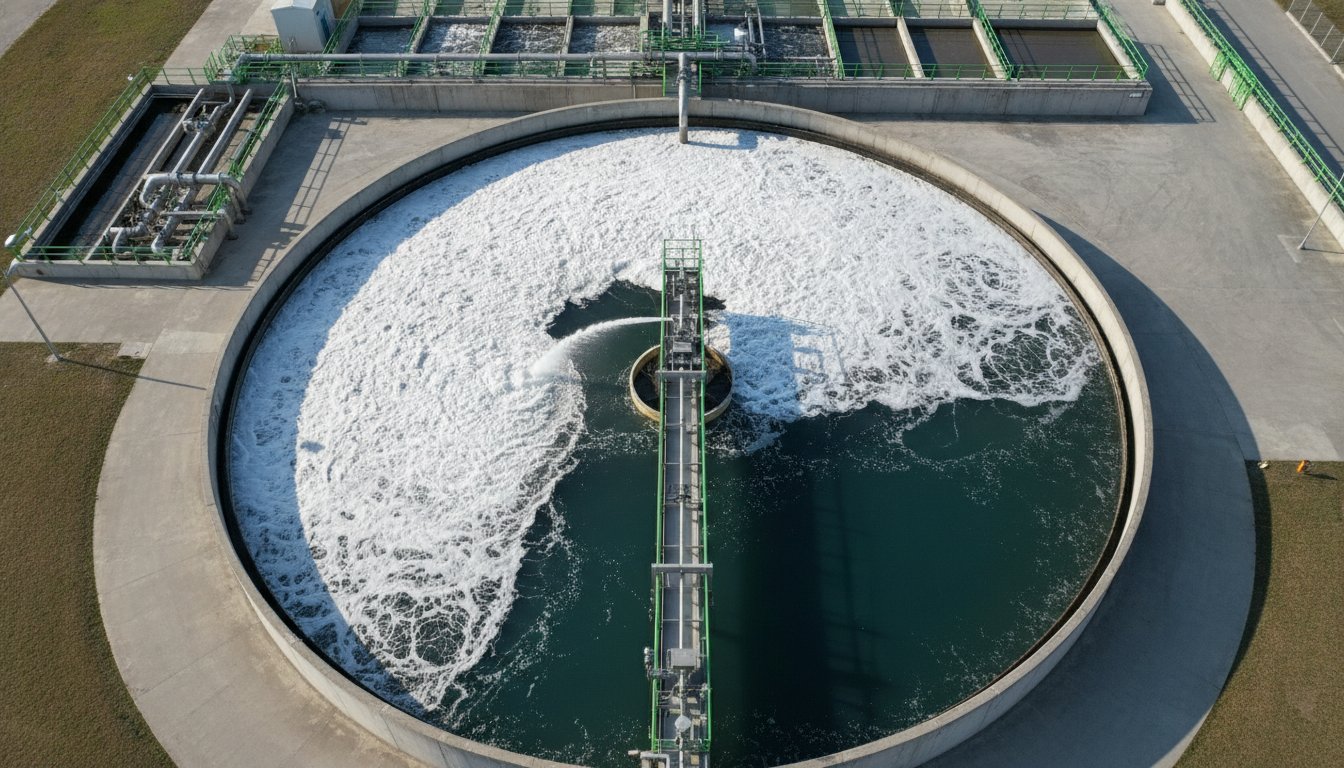
By 2026, the global high-performance defoamers market is projected to reach 2.81 billion dollars, reflecting a critical reality: foam is no longer just a surface-level nuisance. For plant managers, uncontrolled foam represents a direct threat to infrastructure stability and regulatory standing. Selecting the right defoamer for industrial wastewater treatment is essential to prevent equipment overflows and ensure that sensors provide the accurate data required for process security. It's the difference between a high-functioning facility and one struggling with costly biological interference or inaccurate readings that compromise safety.
You likely recognize that inconsistent foam control leads to chemical waste and potential EPA non-compliance. This guide will help you master the technical selection and application of industrial defoamers to protect your process efficiency and the integrity of global water resources. We'll explore diverse wastewater streams, optimized dosing strategies, and the shift toward sustainable chemistries. By the end of this article, you'll have a strategic framework to ensure your facility operates as a reliable, compliant pillar of modern infrastructure.
Key Takeaways
- Identify the economic and operational risks of uncontrolled foam, ranging from pump cavitation to hazardous vessel overflows.
- Explore the chemical physics behind foam destabilization, focusing on how agents penetrate the bubble lamella to create localized weak spots.
- Master the technical selection of a defoamer for industrial wastewater treatment by aligning chemistry with specific pH and temperature variables.
- Apply precision dosing techniques and diagnostic tests to prevent over-application and protect downstream filtration systems.
- Leverage specialized industrial expertise to develop tailor-made solutions that ensure long-term process stability and environmental compliance.
The Critical Role of Defoamers in Industrial Wastewater Management
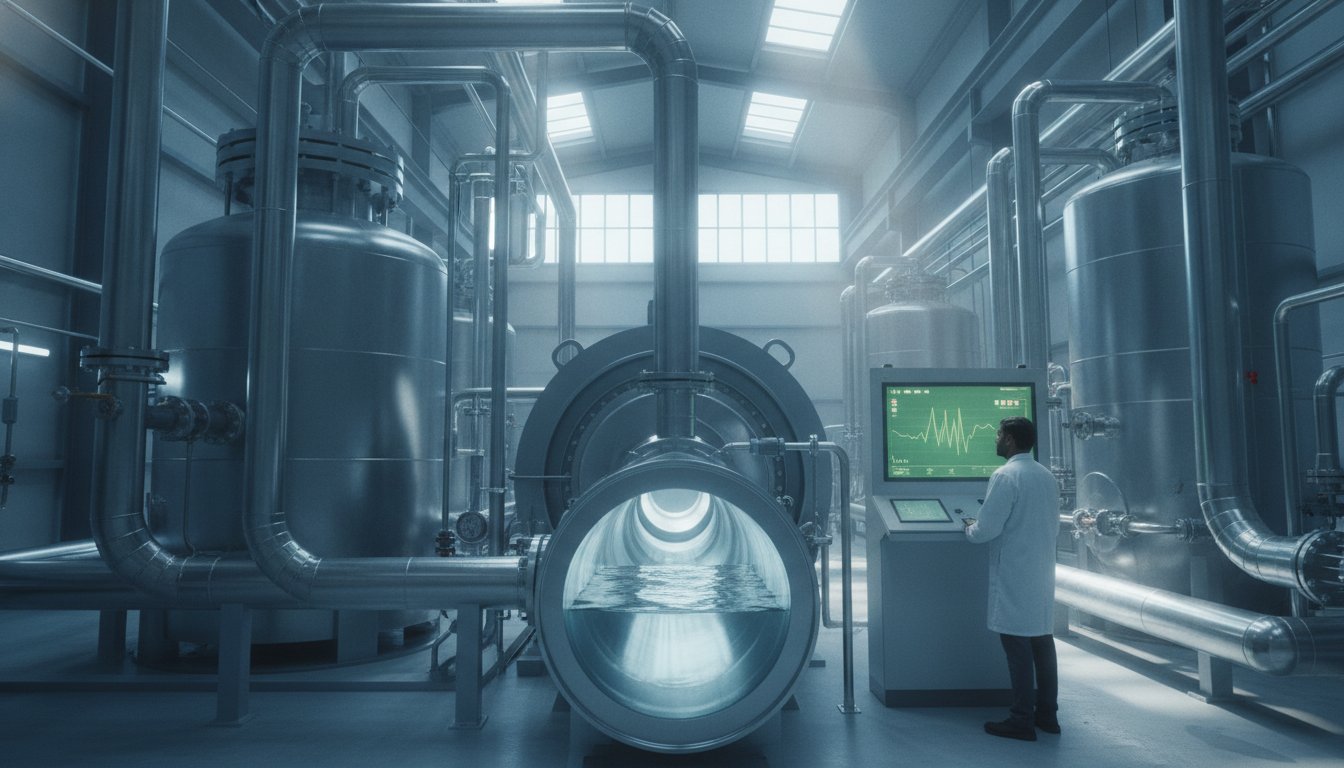
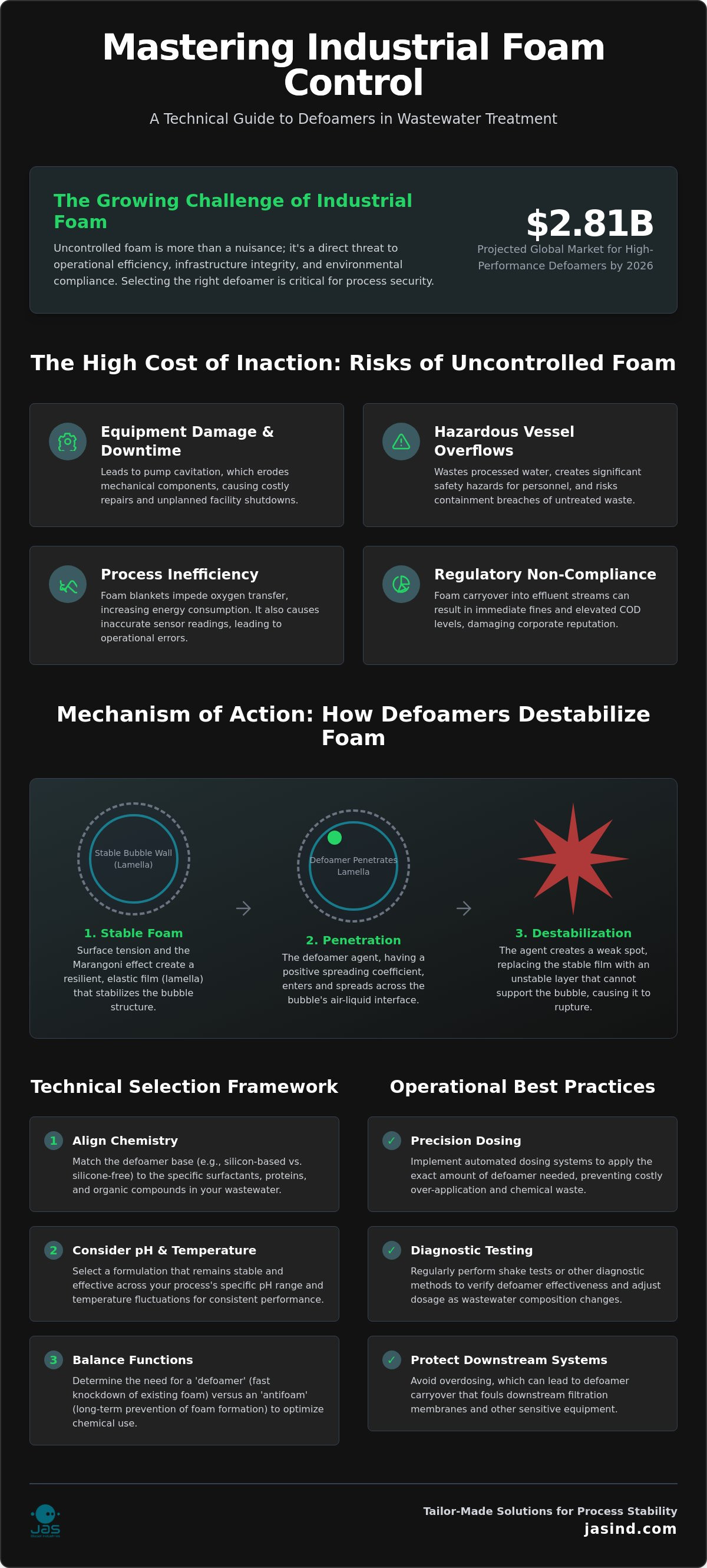
Industrial defoamers are precision-engineered chemical agents designed to destabilize and eliminate surface foam. They aren't just additives; they're essential components of industrial water treatment strategies that safeguard global resource security. When foam goes unchecked, the economic consequences are severe. Uncontrolled foam leads to pump cavitation, which erodes mechanical components and forces unplanned downtime. It causes vessel overflows that waste processed water and create significant safety hazards for personnel on the factory floor. Protecting infrastructure and securing resources are the dual pillars of modern waste management.
Understanding the origin of foam is the first step toward effective control. Mechanical foam typically arises from high-shear aeration or agitation within the treatment plant. In contrast, chemical foam is driven by the presence of surfactants, proteins, or other organic compounds. To manage these complex systems, a high-quality defoamer for industrial wastewater treatment must be applied. These agents work by lowering surface tension, a process detailed in technical overviews of How Industrial Defoamers Work, which allows bubbles to coalesce and collapse rapidly.
Foam as a Barrier to Process Efficiency
A thick foam blanket acts as a physical barrier that severely impedes oxygen transfer in aerobic digestion stages. This oxygen starvation forces the system to work harder, increasing energy consumption and reducing treatment capacity. Additionally, foam interferes with the accuracy of ultrasonic level sensors and automated control systems. Inaccurate readings lead to operational errors and potential system failures. A single foam-over event in a high-volume industrial tank can result in thousands of gallons of untreated waste escaping containment in minutes.
Environmental and Regulatory Implications
Discharge violations aren't just expensive; they damage a brand's reputation as a responsible corporate citizen. Foam carryover into effluent streams often results in immediate fines from regulatory bodies. Because foam is frequently stabilized by organic agents, its presence is often linked to elevated Chemical Oxygen Demand (COD) levels in the discharge. Effective foam management is a pillar of corporate environmental responsibility. By utilizing a reliable defoamer for industrial wastewater treatment, facilities protect local ecosystems while ensuring their own operational longevity. We view this not as a simple chemical application, but as a commitment to the stability of our shared environment.
Mechanisms of Action: How Industrial Defoamers Destabilize Foam
Foam is a complex physical structure. To eliminate it, we must understand the forces that keep it alive. A bubble survives because of surface tension and the Marangoni effect, a phenomenon where liquid flows to restore thinning films. This film elasticity allows foam to withstand mechanical stress and remain stable. An effective defoamer for industrial wastewater treatment works by disrupting this equilibrium. It enters the bubble lamella, the liquid layer between air pockets, to create localized weak spots. Once the defoamer penetrates this layer, the bubble loses its structural integrity and collapses. It's a precise chemical intervention designed to restore process order.
The speed and success of this process depend on the spreading coefficient. A positive coefficient ensures the agent spreads rapidly across the air-liquid interface. This action replaces the resilient surfactant film with an unstable layer that cannot support the bubble's weight. In industrial settings, we distinguish between knockdown speed and long-term prevention. While a defoamer collapses existing surface blankets, an antifoam prevents the initial formation of bubbles. Balancing these two functions is vital for maintaining Environmental and Regulatory Factors while maximizing plant throughput. If your facility faces recurring stability issues, exploring specialized defoaming agents can provide the necessary protection.
Silicon-based Defoamers vs. Silicone-Free Alternatives
Silicon-based Defoamers are the industry standard for high-intensity foam control. They offer exceptional efficiency at remarkably low concentrations, making them a cost-effective choice for large-scale operations. Despite their power, some operators worry about their impact on biological flocs in secondary treatment. Modern formulations prove this concern is often unfounded; silicones can be engineered to remain inert toward beneficial microbes. However, for processes sensitive to silicone carryover, such as specific chemical synthesis or coating lines, silicone-free alternatives are the preferred choice. These formulations utilize mineral or vegetable oils to provide reliable control without risking downstream contamination. Precision selection ensures both process safety and chemical compatibility.
Powder Antifoams and Specialized Solid Delivery
Powder Antifoam serves a distinct role in dry-blended industrial products and specific wastewater pits. These solid-state agents are engineered for sustained release, providing consistent control as the active ingredients slowly dissolve into the stream. They're particularly effective in environments where liquid dosing equipment is impractical or where long-term prevention is more critical than immediate knockdown. For these agents to work, they must meet strict solubility requirements to ensure uniform dispersion throughout the water column. Proper dispersion ensures that every cubic meter of effluent receives the protection it needs to remain stable and compliant. Consistent delivery leads to consistent results.
Selecting the Right Formulation for Diverse Industrial Streams
Selecting a defoamer for industrial wastewater treatment is a technical challenge that requires a deep understanding of fluid dynamics. A generic approach often fails because industrial streams vary wildly in chemical composition. For instance, temperature and pH levels directly influence the "cloud point" of a defoamer. This is the specific temperature at which the chemical becomes insoluble and begins its active work. If the stream temperature fluctuates outside this window, the agent may remain dissolved and ineffective, or it might fall out of solution too quickly, leading to oil slicks and wasted resources. Stability is the foundation of efficiency.
Compatibility with existing surfactant chemistry is another critical variable. Surfactants that stabilize foam in wastewater often compete with the defoamer for space at the air-liquid interface. Understanding Foam Dynamics in Wastewater Sludge helps operators recognize when high-viscosity sludge requires a specialized, heavy-duty formulation. In extreme industrial environments, custom-tailored solutions are not a luxury; they're a necessity for maintaining the security of the water cycle. We prioritize long-term value over temporary fixes.
Defoaming Challenges in Mining and Mineral Processing
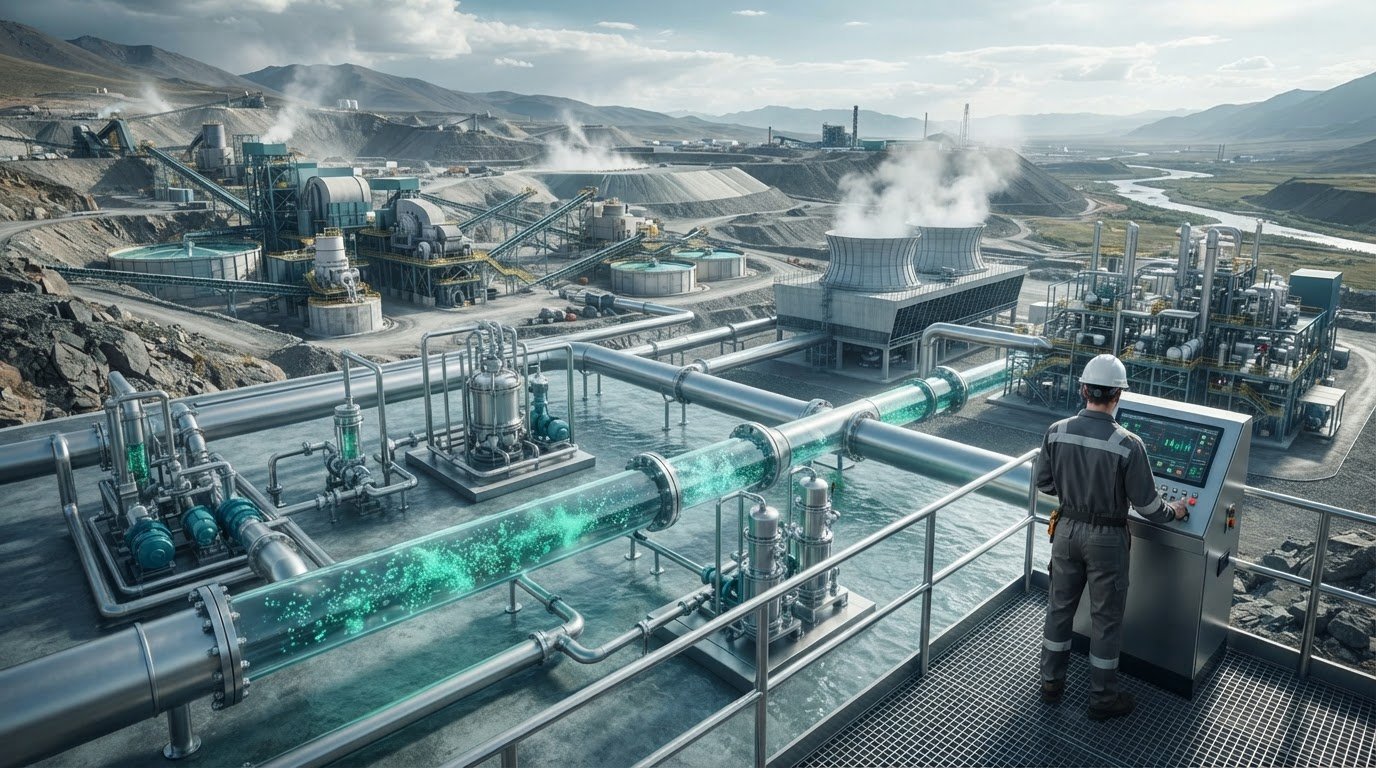
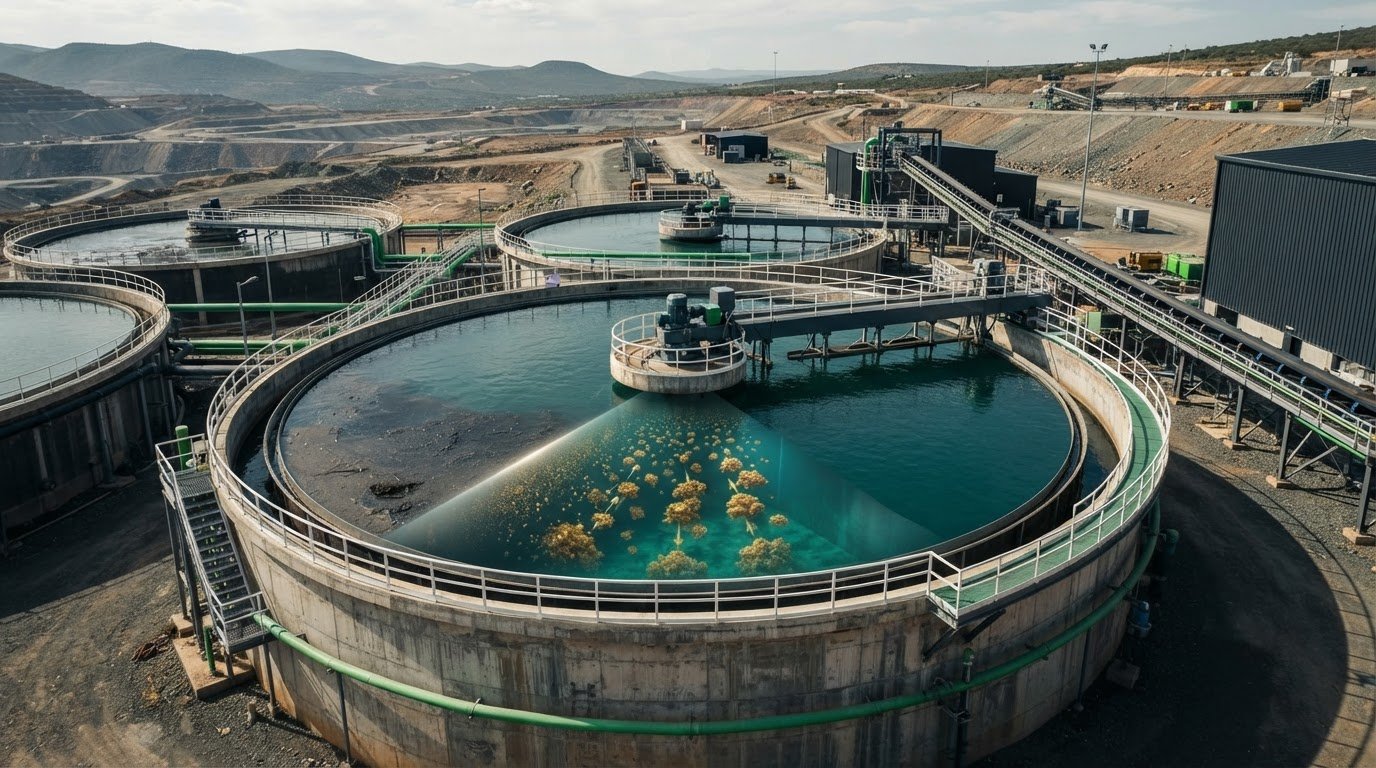
Mining operations face unique hurdles, particularly within flotation circuits where frothers are intentionally added to recover minerals. The challenge lies in managing foam in the tailings and wastewater stages without disrupting the upstream recovery process. By integrating a defoamer for industrial wastewater treatment with other mining solutions like flocculants and collectors, operators can manage air entrainment in heavy slurries. This coordination ensures that mineral recovery remains high while the wastewater remains manageable and safe for discharge or reuse. It's about protecting the throughput of critical global resources.
Foam Control in Fertilizer Production Wastewater
Fertilizer manufacturing often involves the aggressive digestion of phosphate rock with acid, a process that generates massive volumes of CO2 and subsequent foam. This foam can block pipes and interfere with the flowability of the final product. Using the right defoamer helps prevent anti-caking issues by ensuring that the liquid-to-solid transition occurs in a controlled, gas-free environment. High-nutrient streams with high electrolyte concentrations require defoamers that won't degrade in salty, high-conductivity conditions. Reliability in these streams is essential for global food security and infrastructure stability.
Operational Best Practices: Dosing and Application Strategies
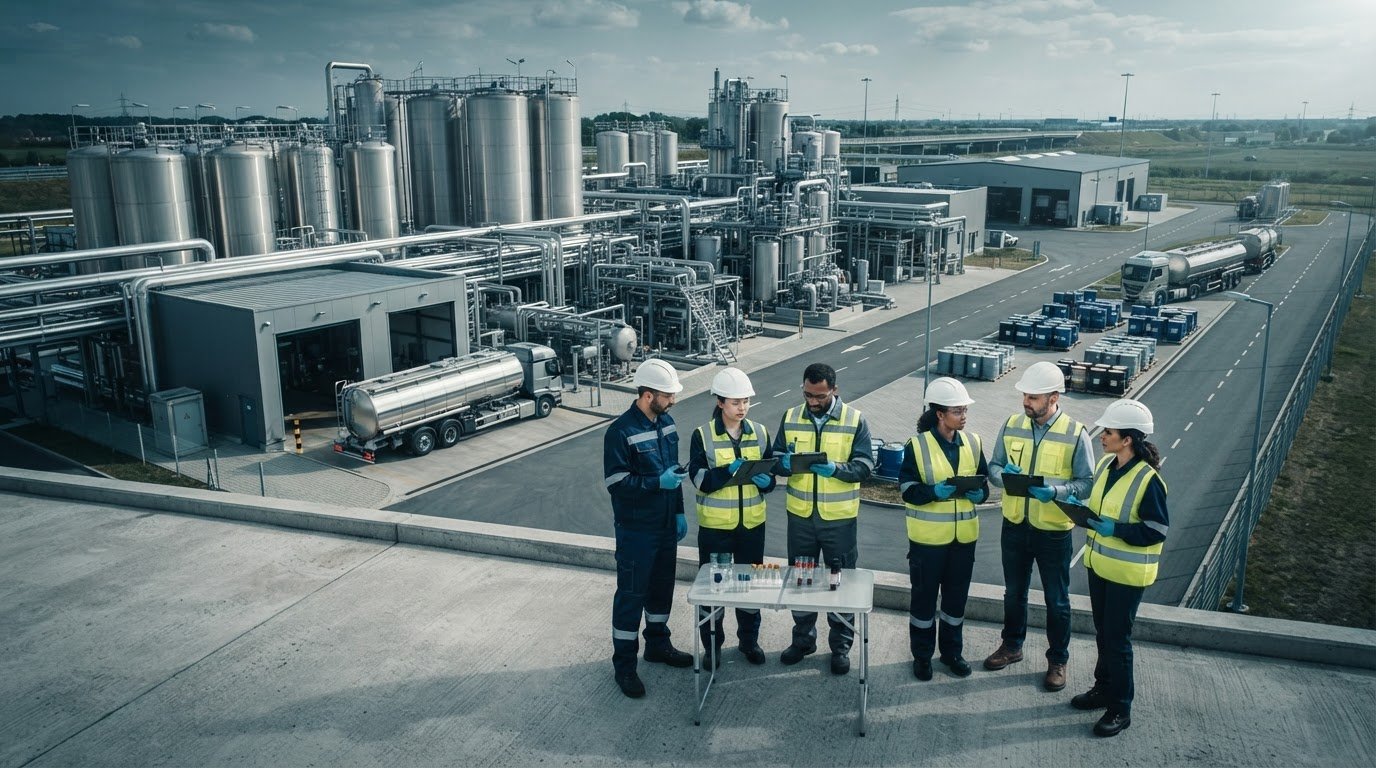
Precision dosing is the hallmark of a mature industrial operation. Applying a defoamer for industrial wastewater treatment requires more than a simple volumetric estimate. It demands empirical data. Before full-scale implementation, operators should conduct a "shake test" or "sparge tube test." These bench-scale evaluations determine the minimum effective concentration required to collapse foam without compromising effluent quality. Efficiency saves resources. Reliability builds trust. By establishing a baseline through testing, you protect your system from the volatility of unmanaged chemistry.
Over-dosing is a common but costly mistake. Excessive chemical addition leads to the formation of oil slicks on the water surface and the blinding of downstream filters. These outcomes don't just waste money; they create new operational bottlenecks that threaten plant stability. To ensure effective chemical dispersion, identify the "point of maximum turbulence" in your system. This high-energy zone facilitates the rapid distribution of the active agent throughout the fluid. Modern facilities now implement automated dosing systems linked to foam sensors for real-time, responsive control. If you're ready to improve your plant's efficiency, consult with our technical specialists to design a customized dosing regimen.
Strategic Dosing Locations in Wastewater Plants
Location determines the role of the chemistry. Upstream application focuses on prevention, stopping foam before it compromises aeration efficiency. In contrast, downstream application serves as a knockdown measure for residual surface foam. Dosing at the aeration basin is common for biological control, while the secondary clarifier may require targeted intervention to prevent carryover. For emergency foam events, "slug dosing" provides a high-intensity burst to regain control of the process quickly. Every drop must be strategically placed to maximize impact.
Monitoring and Process Troubleshooting
Effective management relies on Key Performance Indicators (KPIs). Tracking defoamer consumption against foam height allows for the optimization of dosing rates over time. This data-driven approach helps identify seasonal variations in wastewater composition, such as increased surfactant loads during specific production cycles. As ambient temperatures shift, the viscosity of the defoamer itself can change, requiring adjustments to pump settings to maintain a consistent flow. Protecting your process means staying ahead of these variables. A proactive monitoring schedule ensures that your facility remains a reliable pillar of local infrastructure.
Advanced Defoaming Solutions by JAS Global Industries
JAS Global Industries operates as more than a chemical supplier. We act as a vital guardian of global resource infrastructure. While previous sections outlined the technical mechanics of foam control, JAS provides the specialized expertise required to execute these strategies at scale. Our commitment to Research and Innovation (R&I) ensures that every defoamer for industrial wastewater treatment we produce is a tailor-made response to complex industrial challenges. We don't believe in universal solutions. Instead, our laboratories analyze the specific chemical signatures of your wastewater to engineer agents that deliver maximum efficiency with minimal environmental impact. This precision protects both your equipment and your bottom line.
Reliability is rooted in our global footprint. With manufacturing plants strategically located across international corridors, we ensure supply chain security even in volatile market conditions. This stability allows our partners to maintain continuous operations without the risk of chemical shortages. Our technical consulting services go beyond product delivery. We conduct comprehensive on-site audits to identify root causes and design custom dosing strategies that prevent waste. It's a holistic approach to industrial security. Our specialists work alongside your team to ensure every application is optimized for your unique flow rates and contamination levels. We prioritize long-term value over simple logistics.
Sustainable Chemistry for Global Impact
Our chemical solutions support the transition to a circular water economy. By optimizing the efficacy of our defoamer for industrial wastewater treatment, we help facilities reduce their overall chemical footprint. High-efficiency chemistry lowers the energy requirements for aeration and reduces the carbon footprint associated with wastewater processing. We align our foam control strategies with your corporate ESG goals. This ensures that operational success contributes to community well-being and environmental protection. Protecting water is protecting our future. We view sustainability as a core component of industrial maturity.
Partnering with JAS for Operational Reliability
Choosing JAS means accessing an international network of sales and service offices dedicated to your success. We prioritize long-term technical partnerships over simple transactional agreements. Our team acts as an extension of your operational staff. We provide the wisdom and integrated support needed to navigate evolving regulatory landscapes. We act as a foundational industry presence; essential, reliable, and focused on the fundamental needs of society. Contact JAS today for a comprehensive technical audit of your wastewater foam issues. Let's secure your process integrity together.
Securing Process Stability and Global Water Integrity
Effective foam management is more than a surface-level fix; it's a fundamental requirement for industrial security. By mastering the physics of bubble destabilization and implementing precise dosing strategies, you protect your equipment from damage and your facility from regulatory risk. Choosing a high-performance defoamer for industrial wastewater treatment ensures that your biological stages remain efficient and your sensors provide the accurate data required for automated control. Stability is the result of technical precision and strategic planning.
JAS Global Industries stands as a vital guardian in this process. Since 1998, we've leveraged our global R&I centers to develop tailor-made formulations for the world's most demanding sectors, including mining and fertilizer production. Our worldwide logistics and technical support network ensure that your operations never face the uncertainty of supply chain disruptions. We invite you to optimize your wastewater process with JAS Global Industries technical solutions. Together, we can transform foam control from a recurring challenge into a reliable pillar of your infrastructure. Your commitment to efficiency is the first step toward a more secure and sustainable industrial future.
Frequently Asked Questions
What is the difference between an antifoam and a defoamer?
Antifoams are preventative agents added to a system to stop foam from forming in the first place. Defoamers are reactive chemicals designed to destabilize and collapse an existing foam blanket that has already developed. While many industrial professionals use the terms interchangeably, the technical selection depends on whether your goal is long-term prevention or immediate knockdown of surface bubbles.
Will using a defoamer affect the performance of my biological treatment plant?
Correctly selected formulations won't harm the beneficial microbes in your secondary treatment stages. Modern agents are engineered to be inert toward biological flocs, ensuring that oxygen transfer remains efficient. It's essential to use a defoamer for industrial wastewater treatment that's specifically designed for biological stability to avoid disrupting the nutrient removal process or harming the biomass.
How much defoamer should I use per 1,000 gallons of industrial wastewater?
Dosing requirements vary significantly based on the concentration of surfactants and the specific nature of your waste stream. Most high-performance formulations are effective at remarkably low concentrations, typically between 5 and 50 parts per million (ppm). This usually translates to a range of 0.005 to 0.05 gallons per 1,000 gallons of effluent. Always conduct a bench-scale test to determine the precise dosage.
Can silicone-based defoamers cause issues in downstream filtration or RO membranes?
Silicone-based agents can cause membrane fouling or filter blinding if they're applied in excess. These insoluble oils may deposit on the surface of Reverse Osmosis (RO) membranes, which reduces permeate flow and increases the frequency of required cleanings. For facilities with sensitive downstream filtration, silicone-free alternatives or water-based emulsions are often the safer choice to maintain long-term infrastructure integrity.
Are there biodegradable defoamers available for environmentally sensitive sites?
Biodegradable defoamers are readily available for sites with strict environmental discharge permits or sensitive local ecosystems. These formulations often utilize vegetable oils, fatty alcohols, or esters that break down naturally without leaving toxic residues in the effluent. Choosing these sustainable options helps facilities meet corporate ESG goals while ensuring full compliance with modern environmental protection regulations.
How do I test the efficiency of a new defoamer formulation in the lab?
Laboratory efficiency is typically measured using the sparge tube test or a standard shake test. In a sparge tube test, air is bubbled through a wastewater sample to create a controlled foam height. The technician then records the time required for a specific dose of defoamer to collapse the foam. This empirical data allows for the comparison of different chemistries before moving to full-scale trials.
What happens if I over-dose the defoamer in my wastewater stream?
Over-dosing a defoamer for industrial wastewater treatment leads to the formation of visible oil slicks and potential discharge violations. Beyond the unnecessary chemical expense, an excessive agent can coat sensors and lead to inaccurate level readings. It also increases the risk of downstream membrane fouling, which forces unplanned maintenance and reduces the overall stability of your treatment infrastructure.
Can temperature changes affect how well my defoamer works?
Temperature fluctuations directly impact the viscosity and solubility of defoaming agents. As water temperatures rise, certain chemicals reach their "cloud point" and become more active; others might lose their spreading coefficient entirely. Cold weather can increase the viscosity of the defoamer itself, making it difficult to pump and disperse. Monitoring these seasonal shifts is vital for maintaining consistent, reliable foam control.